Take ACTION NOW! - #OneRule
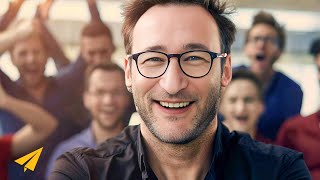
Evan Carmichael cuts together clips from Simon Sinek, Jocko Willink, Mel Robbins, Tim Ferriss, and others on why you need to act now. Mel Robbins explains her 5-second rule: your brain will talk you out of it if you wait. The speakers agree that action kills procrastination, stress, and fear faster than thinking does.
Chapters
Initiate the action.
Take action.
Taking action.
Taking action.
Do the action.
Act now.
Took action.
Hello, Believe Nation.
My name is Evan Carmichael. My one word is believe, and I believe that entrepreneurs will solve all of the world's major problems. So to help you on your journey today, we're gonna learn how to take action. And also, guys, if you're watching, if you hear something that really resonates with you, please leave it down in the comments below, put quotes around it, you might win a prize. But also, when you write it down, much more likely to stick with yourself as well.
Enjoy. You speak to businesses and companies and leadership teams and employees and stuff. Without mentioning names, I don't want to put you on the spot, but have you gone and talked to a company that's been in trouble? And then spoken to their team and then checked in on them after you've spoken to their leadership team? And what did that look like? Did you notice a noticeable change? Did they come to you and tell you that this has helped our organization out and our culture is much improved because of it?
You mean, does my shit work? I mean, Sure. Here's the problem with my stuff. You gotta do it. And I am not anybody's, like, you know, mom or dad. I'm not gonna do it for you. And I have a very laissez-faire approach of it. I once had a client, this is a bunch of years ago, that said, "What guarantee do I have that your stuff will work?" To which my answer was, "None." Like, I'm giving you a tool. You can— it's like a hammer. You can use it broadly or narrowly. You can build a table, you can build a house. It's the same tool. You can use it for marketing, you can use it to completely revitalize your entire culture. And even though I'm gonna sell you the most beautiful hammer, I'm not gonna guarantee the structural integrity of the house, right? It's your business. You wanna ignore all my stuff? Ignore it. I don't care. It's your— and if your business collapses, you know what happens to me?
Nothing.
Like, I don't mean to be cold about it, like, of course I want the people I work with to do well, but it's not mine, it's theirs. And I take no emotional responsibility for the decisions they make. So yes, there are many people that I've had the pleasure of working with, some who worked for dysfunctional organizations, that went on the hard journey of completely changing the way they lead and completely revitalizing their culture, and it has great success. It's not because of me, it's because of them. Right? At the same time, there are many people who came in like, "What an amazing speech," and did nothing. You know, "Thanks, that was great." You know? And I don't— of course it's going to fail. You know? So I think that we have too much— especially in the consulting world or the design world, everybody's so paternalistic about it. And designers are famous for this. Right? They get so personally offended when the client chooses the wrong thing. "Oh, they're such idiots. Don't they know we're trying to help them?" Or, "Who cares?" Like, it's their frickin' business, right? That's what you find. I've had that. Instead of arguing with somebody for them to make the right choice, which— because we genuinely want to help them— what I have found is if you push the accountability onto them— because when we argue, we're taking accountability. This is better. This will help you. We're taking responsibility, accountability. But if we say, look, we've been doing this a bunch of years, we know more about design than you do. I'm telling you for every reason that I can outline for you why this will help you more. But if you don't want to do it, that's fine. It's your business. Do what you want. The minute you switch the accountability and put it all on them, amazingly, they're much more open to your opinion because now they're responsible.
One night, Chris had gone to bed. I had been struggling, struggling, struggling. We still had all the same problems. We still had a lien on the house, still facing bankruptcy, still fighting like crazy. I was still unemployed. He still— they still hadn't figured out, like, the solution yet for the business. And I was about to turn off the TV, and there on the TV, there was this rocket launching, and I thought, oh my gosh. That is it! I am gonna launch myself out of bed like a rocket ship, like NASA right here had launched me out of that bed, and I'm gonna move so fast that I don't think.
Mm.
I'm gonna beat my brain. Now, here's a really interesting point. Um, I talk a lot about your instincts and inner wisdom. And we can get into this a little bit later, but a lot of us talk about the fact that you have a gut feeling. But what all this research that I've done for the book and all the speaking that I do, what I've discovered that's fascinating is actually when you set goals, when you have an intention on something that you wanna change about your life, your brain helps you. What it does is it opens up a checklist and then your brain goes to work trying to remind you.
[Speaker] Yeah.
Of that intention that you set. And it's really important to develop the skill, and I say that word purposefully, the skill of knowing how to hear that inner wisdom and that intention kicking in and leaning into it quickly. So for me, my brain saying, "That's it, right there. Move as fast as a rocket, Mel." I wanted to change my life. And I think most people that are miserable or that are really like dying to be great and dying to have more, we wanna change. We wanna live a better life. We wanna create more for our families. We wanna be happier. The desire is there. Again, it's about how do you go from knowledge to action. So the first thing in this story that's important is realizing that the answer was in me. And my mind was telling me, pay attention. Could have also been the bourbon. I had had a couple of Manhattans that night. Anyway, the next morning, the alarm goes off, and, um, I pretended NASA was there. It's the stupidest story. I literally went, "5, 4, 3, 2, 1." I counted out loud, and then I stood up. And I'll never forget standing there in my bedroom. It was dark. It was cold. It was winter in Boston. And for the first time in 3 months, I had beaten my habit of hitting the snooze button. I couldn't believe it, and I thought, "Wait a minute. Counting backwards? That is the dumbest thing I've ever heard in my entire life." Well, the next morning I used it again and it worked. The next morning I used it again and it worked. The next morning I used it again and it worked. And then I started to notice something really interesting. There were moments all day long All day long, just like that 5-second moment in bed where I knew—knowledge—what I should do. And if I didn't move within 5 seconds, my brain would step in and talk me out of it. Every human being has a 5-second window. Might even be shorter for you. You have about a 5-second window in which you can move from idea to action before your brain kicks into full gear and sabotages any change in behavior. Because remember, your brain is wired to stop you from doing things that are uncomfortable or uncertain or scary. It's your job to learn how to move from those ideas that could change everything into acting on them.
People want to know how to stop the laziness and they want to know how to stop the procrastination. And, you know, they have some idea in their head, you know, some kind of a vision of what they want to do, but they don't know where to start. They don't know where to start it, you know. They don't know where to start. And so they say, "Hey, where do I start? And when's the best time to start?" And I have a very simple answer for that. Here and now. That's it. You want to improve? You want to get better? You want to get on a workout program or a clean diet? You want to start a business? You want to write a book or make a movie or build a house or a computer or put together some mobile application? Where do you start? You start right here. And when do you start? You start right now. You initiate the action aggressively. You go, because the idea isn't gonna execute itself, and the book isn't gonna write itself, and the weights out in the gym, they're not gonna move themselves. You have to do it, and you have to do it now. And that means you gotta stop thinking about it and stop dreaming about it and stop researching every aspect of it and reading all about it and debating the pros and cons of it. Just start doing it. Take that first step and make it happen. Get after it and get after it here and now.
Take action. Whatever you want to do, whatever you're thinking about it, you will not get it until you take action. Make that move. Make it a small step. If you want a house, go get a rug. You know what I mean? If you want a new car, go get some car freshener. Take action. Make this thing happen for you and it will happen. Action, action, action. You know, one thing that, um, you know, I can really attribute to every failure in my life, whether it be personal, financial, um, in any kind of way, business, whatever, uh, it's because of a lack of my attempt to take action. I did not take Action. And it kind of changed once I got the fact that action is the key. Um, it changed my life in many, many ways.
I think stress— you can be, uh, I think one of the things that's very important to note about stress is that stress primarily comes from not taking action over something that you can have some control over. So if I find that some particular thing is causing me to have stress, that's a, a warning flag for me. What it means is there's something that I haven't completely identified, perhaps in my conscious mind, that is bothering me and I haven't yet taken any action on it. I find as soon as I identify it and make the first phone call or send off the first email message or whatever it is that we're gonna do to start to address that situation, even if it's not solved, the mere fact that we're addressing it dramatically reduces any stress that might come from it. So stress comes from ignoring things that you shouldn't be ignoring, I think in large part. So stress doesn't come— people get stress wrong all the time, in my opinion. Stress doesn't come from hard work. For example. You know, you can be working incredibly hard and loving it, and likewise you can be out of work and incredibly stressed over that. So, and likewise, if you kind of use the, you know, use that as an analogy for what I was just talking about, if you're out of work but you're going through, you know, a disciplined approach of, you know, a series of job interviews and so on and working to remedy that situation, you're going to be a lot less stressed than if you're just worrying about it and doing nothing.
One of the functions of belief is taking action. We did a survey of about 2,000 top entrepreneurs, and we noticed that one of the things that people who win in that world have is a bias for action. If they have an inspiration, they act on it. I mean, how many of you have ever had a great idea, talked about it, thought about it, didn't do it, and then someone else did it and was successful, and you went, "Darn, I should have done that"? Maybe it was buy that piece of property. You know, we all have that piece of property we wish we'd bought. You know? Anyway, so we're going to be looking at the idea that taking action is part of law of attraction. See, a lot of people think you can just sit in your room, meditate, visualize having the perfect car, the perfect house, the perfect relationship, and then it'll kind of just come to you. And I always say, unless you live at the bottom of a hill where there's a road, it's probably not going to be a Cadillac show up in your living room, right? So think about this. The last The first 6 letters of the word attraction spell what? A-C-T-I-O-N, action. Now there's 2 kinds of actions that are critical. There's obvious actions. If you want a certain kind of car, you should go down and test drive it. You should find out how much it costs. You should see what it costs to maintain it. You should go, you know, spend, I like to test drive a car 3 or 4 times, go down to the dealer, take a camera, stick my head out the window, say, "Take a picture of me, I'll be back to buy it." You know, put it up on my refrigerator, look at it every day. Eventually, you know, those kind of things produce car, right? Saving for it and so forth. But there are also things called inspired actions. All of a sudden you get an inspiration to do something and you didn't know what it was. You don't have a sense of like, "How's this rationally gonna make sense for me to move forward in my life?" I'll give you an example. A friend of mine, Dr. Ignatius Piazza, graduates chiropractic school. He wants to move to Monterey near Pebble Beach where the golf course is. And he gets there and he says to the local chiropractic association, "Like to join you, I'd like you to help me get my practice started." And they said, "We don't need any more chiropractors. We have one chiropractor for every 8 people in this area. It's too many." Now he could have said, "Okay, let the external reality control his internal experience," but he didn't do that. He said, "I'm gonna think about this and visualize it and believe in it and something will come that I will do." And what came to him to do was to take 6 months before he opened his office and put a pin where he wanted his office, and then concentric circles, knock on every door in every neighborhood saying, "Hi, I'm a new doctor in town. Could I ask you a few questions? You know, I'm starting this practice. Should I open from 5 till 9 in the morning, or should I be open from 5 until 9 at night for people who have 9-to-5 jobs? Which would be better? Should I advertise in this paper or that paper? Should I call it Ignatius Piazza Chiropractic or Chiropractic West?" Then his last question was, "If I have an open house, would you like to receive an invitation?" They said yes, he wrote it down. Now over 6 months he knocked on 12,500 doors, talked to 6,500 people, and gathered over 4,000 names of people who said, "Yes, I'd like an invitation to your open house." Now when he opened his office 6 months later in a town that did not need another chiropractor according to the professionals, his first month in practice he netted $72,000. In his first year in practice his gross income was over a million dollars. I was giving a talk and mentioned this story just about 5 years ago, and this happened about 25 years ago. Someone said, "He knocked on my door and he left his card." And 2 years later I needed a chiropractor and I called him because we work with people we know, we've had an experience with, right? So he trusted his intuition. He took action on it. Other people would say, "Oh, guess I can't have what I want." You got to be willing to take the action.
You can't just wait for inspiration to act. That's the biggest mistake people make. Don't wait to be inspired to do the action. You have to do the action first, and then you'll be inspired. So what I would do is I would sit there and draw out the comic, and I would come up with it. But some days I'd come home from school, sit down, and go, I'm just gonna wait for the inspiration to hit me. I'm gonna wait for the idea to come fully formed, and when I got a joke, then I'll go draw it. And I would sit there for maybe 3 or 4 4 hours and then go, "All right, screw it. I got to get up and do this. I got to do the process. I got to sit there and just start drawing. I don't even know why or how I'm going to get there." And then 2 things would come together and it would be, "Oh, there's an idea. Oh, there's the first panel. There's the second panel." And then it would come together. Always. It would not take very long. I would fight that process so much because what was I doing? I was waiting for inspiration before I acted. It's always the other way around. Act first. Then the inspiration will come. Draw first. Then the inspiration will come. Just start shooting, then the inspiration will come. Just start moving, then the inspiration will come. Don't wait. So many people wait or tell you they're gonna write this novel or they're gonna do this, they're gonna make this film. They never do it because they're waiting for all this stuff to come to them.
It comes through doing it. Don't wait. Go, do it, act now. And really accepting we need you, we need you, we need you. You are the 1%. You're the percent that says I'm gonna wake up. You are the lightworkers. You are the ones that have accepted this call in this lifetime at this time. You have decided to wake up and chosen to say, yes, I'm here to be of greater service than just to feed myself, right? I'm here to feed the world. I'm here to give love. I'm here to be an expression of that truth. Don't hold that back. Don't play small. We can't, we need you. And so really, if you are anyone in this room who has been sitting on that book idea, waiting a little bit longer before you start that teacher training, or doing 10 more teacher trainings before you actually teach, if that's you guys, start and the pressure will be off. I can't begin to tell you, I could cry just saying this, the day I taught Ego Eradicator, I was 2 weeks into my teacher training and I said, eff it, let's go. And I just went, and I felt so much pressure off. I felt so much lift because I just knew, I felt this technology must be shared. I can't hold it, I can't keep it for myself, I can't just sit in my apartment by myself like this. I gotta give this. And sharing it, the pressure, it just lifted. It was like, huh, thank you, thank you, thank you. And I wasn't the perfect teacher, and I look back and I was teaching Ego Eradicator wrong. Everyone's arms were like this, everyone was breathing backwards, it was a mess, but I did it. And I started. And in those moments when we just get to go, just go, the pressure's off, and then we clear the path, and we are guided to the next right action. And that is the most magnificent thing we could do right now.
I find it quite inspiring. You were in film publicity originally, and then at a certain point you decided that you wanted to direct. Can you tell us how you got from there to here?
Well, I was one of those ladies standing on the side, you know? And they work hard, and no one ever really gives them a shout-out. I thank you all, the publicists in the corner. You know? And as a person who loved film and wanted to make film, you're standing there supporting filmmakers telling their stories, and it's something that I love doing. But for me, there was always a little bit of— I don't know, jealousy, but just like, "Wow, that's great what they're doing." And so at the moment when I actually started to write and try to direct my own stuff, I was still doing publicity for other people's stuff. Films. I was trying to make my own films. I was asking for permission, pitching people, trying to get contacts and network and do all the things that don't matter, because the only thing that matters is your work. And so when I finally realized that and started to make small things and try to move them around festivals and just, you know, just share my work, you know, the energy behind that positive intention started the ball rolling. And I've only been making films for 5 years. And I only quit my job full-time 3 years ago because I was still holding on to publicity as a security blanket. And so, and so yeah, you know, I look at, you know, each year that's passed and all I've tried to do is continue to make work, whether I have the money to make a film, a narrative, a doc, a commercial, a TV show, directed an episode of Scandal, a documentary about Venus Williams, whatever I, a story I want to tell through whatever medium, short, film medium, TV medium, commercial medium, full-length documentary feature. That's something that I really learned from Spike. Lee, not Jones. I'm sure Jones is nice, but— I was talking to a lady, she was like, Spike Jones? No, lady, Spike Lee. But, you know, remember he did commercials with Jordan. He's done almost as many docs as he's done narratives. He's made a film every year for the past 20 years. I mean, he's really the blueprint. Print of just not even a black filmmaker, a filmmaker who has just continued to make work. And so that's, that's how we're here now.
Your book is titled Nothing to Lose, Everything to Gain.
What does that title mean to you?
You know, it's a mindset. So it's a mindset that I had when I was on the streets and when I lived, you know, in boys' homes and I was in juvenile hall. And the essence is, is when you have nothing to lose, you either backed into a corner or, and you cower and you submit, or or you fight your way out. And so I've been backed into a corner a few times, both when I was a kid, but then also in my professional career when I decided to become an entrepreneur. When the recession hit, you know, I had to apply that same mindset.
Now, it's your mantra.
Why do you think so many people don't live with that mindset today? I mean, there's a lot of fear out there, fear of the unknown.
Yeah, you know what, fear is a trap, and people are domesticated, so to speak. So, you know, they're comfortable. And if they just realize that they have nothing to lose, you know, these middle-class folks that are, you know, they think they have something to lose. They think that their reputation with their neighbors or their credit or their Louis Vuitton luggage or whatever it is, is worth holding on to. If they just ventured out there, started a business, took action, they'd realize there's a better life.
Thank you guys so much for watching. I hope you enjoyed. I'd love to know what did you take from this video that you're going to immediately apply apply somehow to your life or to your business, leave it down in the comments below. I'm really excited to see what you have to say. So thank you guys again for watching.
I believe in you.
I hope you continue to believe in yourself and whatever your one word is. Much love. I'll see you soon.
More from Evan


How the Biggest Mistake in History Created A Trillion-Dollar Empire | Sergey Brin



9 Machiavelli Principles That Force People To Respect You | Machiavellian Philosophy



The First 10 Words That Instantly Ruin A Sales Conversation | Vanessa Van Edwards

The Top 1% Mindset Behind The First $5 Trillion Company | Jensen Huang (Nvidia)

