The 18-Minute MINDSET Shift That TRANSFORMED George Michael’s Life!
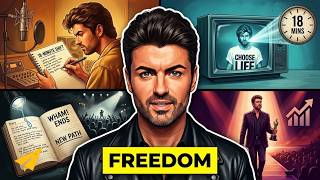
George Michael discusses his path to fame, his legal battle against his record label to free artists from exploitative contracts, and how coming out publicly felt like a responsibility to young gay listeners. He reflects on performance anxiety, losing loved ones, and how those experiences changed his approach to music.
Chapters
There was some kind of chemistry between us that we absolutely hadn't counted on. Did you display an early talent for singing or for—
I didn't actually. I got thrown out of the choir.
It's a ridiculous situation to sign a contract when you're 18 years old and be held to it for your entire professional career.
I used to get really, really paranoid, and after every show I'd have to go straight back to the hotel and talk to no one.
He was an English singer-songwriter, record producer who rose to prominence for his part in the duo Wham! He's best known for known for his work in the '80s and '90s, including hit singles "Last Christmas" and "Wake Me Up Before You Go-Go." He sold over 100 million records worldwide. He's George Michael, and here's my take on his top 10 rules of success. Rule number 2 is my personal favorite, and I'm curious to figure out which one you guys like the best. And as always, as George is talking, if he says something that really resonates with you, please leave it in the comments below and put quotes around it so other people can be inspired as well.
Enjoy!
The first mention of George Michael in my life was by Mark Dean, who ran this little label called Intervision, and he said, I have signed an act that you're going to love, and they're going to be huge, and they're called Wham! And I said, they're called Wham! He said, yes, they're called Wham!
They were starting to get noticed on the UK music scene, but what was it about Wham! that made them stand out from the competition? I think, to be honest with you, great songs and, you know, a formula that we didn't realize we had. You know, these two young boys doing this kind of Butch Cassidy and Sundance thing, but in a very kind of camp way. And I think there was something about the fact that it was all very obvious that our relationship as friends was real. There was some kind of chemistry between us that we absolutely hadn't counted on, you know, but the world seemed to see pretty quickly. But what about the business of being what you are now, the musician, the songwriter? I mean, did you display an early talent for singing or for—
I didn't actually. I got thrown out of the choir.
Did you?
I was thrown out of the choir for, I think, as far as I know, it was for talking. And I always remember my dad used to say to me, you know, because I used to say, Dad, that when I was like, you know, 16, 17, 18, and my dad was threatening to throw me out of the house if I didn't get a job within a certain amount of time. So obviously I went out and got jobs, but I was saying I want to be a singer, you know, I think I'm going to be rich and famous. Um, and he would say, you know, everybody wants to be a pop singer, everybody wants—
I said—
and I would say, no, Dad, everybody wants to be a pop singer when they're 12, you know, when they're 12. I, I, this is my whole life, this is what I want to do. But, um, but, but, uh, I've lost my train of thought.
But was it to be rich and famous, your ambition? I mean, was that—
no, I think I had two very, very strong ambitions, and they've all always fought against one another, always. And one was a passion for music and an ability to communicate through music and really a sense of purpose through music. And two was this desire to be— and rich and famous is not right because actually rich never came into it. I actually realized about 6 months ago, someone put a question to me and I actually realized that at no point during my early life when I was in all my ambitions, or even when I started to realize my ambitions, at no point did it ever occur to me that one of the byproducts of this would be that I could buy whatever I wanted, or, you know, live in a big house, have a flashy car, all the things that are very pleasant, you know. But it really hadn't occurred to me. It never occurred to me. So I didn't want to be rich. I just wanted to be filthily famous.
I signed that contract and I understand the premise of sanctity of contract, but it's such a ridiculous, such a ridiculous situation. Firstly, you are almost always signing people in a very vulnerable position. I mean, I definitely was in a very vulnerable position.
On the first contract at the age of 18?
Exactly, I was at the age of 18, and many bands are signed that young. Some are signed a little older, but Whenever they're signed, they're desperate. Whenever they're signed, they think it's gonna be their only chance, you know. But more importantly than the balance of that situation, which is very unfair, is the fact that there isn't one other industry that operates on this basis. If I were an author and I fell out with my record company in the way that I have, the worst I would have to endure was the fact that I would have to— that they would have the first option on my next book. So you're talking about 2 books. It's a ridiculous situation to sign a contract when you're 18 years old and be held to it for your entire professional career. Why, why would any court uphold that situation? The judge seems to have found in my case that I reaffirmed this contract at all, at the given points of my renegotiations. But did I really have any choice? The choice that I had was to go along with that length of term or to do what I've done now, which has been an incredibly difficult process.
The abiding fact, obviously, for the judge was that you had voluntarily and with expert advice signed these contracts.
Are you talking about the first contract?
Well, all through, really.
All through, yes. I mean—
I mean, on the one hand, we see your quandary, in other words. But I mean, for him, the abiding fact was, and I guess for many people, was that you did sign them. On balance, you decided it was better to sign them than not. And that's why you're left with the consequences.
I think it— but I think that's a very, very odd— position to take. I think that, in all honesty, I think that there is more to consider in this case than my situation. I mean, from my point of view, I really honestly do not expect the public to have any great sympathy for a man who's very wealthy. You know, I'm in good health, I'm very wealthy, and I have a lot of public support, and I completely accept that. I'm not looking for public sympathy. I just don't believe that if you are wealthy, that your principles are supposed to be, uh, null and void, that you, that you're not supposed to fight for, for, for what, for your principles. All artists accept that, have accepted for years and years, that they get a considerably small piece of the pie considering that they are the raw product, and people go out and buy what they give. But I have to be honest, it's never been a big problem for me. Being paid less than other artists has, has always been a problem for me in terms of pride. In terms of the money I was making, I'm lucky enough to be one of the people that sells enough records that I don't care. I mean, I have a very good lifestyle, I'm very wealthy.
I'm—
I would also have to add, I'm nowhere near as wealthy as tabloid press would let you believe, but I'm perfectly happy with the money I've got.
And they say £80 million.
They say £80 million. Let's just say it's— let's just call it a fraction, all right? But it's still a fraction more than a half, between a half and two-thirds. I'm not telling you that. I wouldn't tell the court that. I'm not going to tell you that. But let me put it this way. I think I've got something to complain about simply because in principle it's wrong. The end result is that I'm still a very wealthy man. So really, I can understand people thinking he should shut his mouth, but the principle is wrong. And this case is— has decided— or it's not over yet. I mean, I emphasize, it's not over yet, but this case will decide, um, the future of all art— of all artists in my position.
There were times in the last 5, 6 years that I was very tempted to just say, you know what, forget it, this is too difficult, you're not gonna come up with the album that you need, and you're driving yourself crazy with it. And I was, and of course on top of that I was getting quite a kicking from the press. So at that point in my life with so much going on emotionally, watching, you know, being kicked about by the media and the press and the industry almost wishing that, um, and said, almost wishing that my career was over. I just was, I was almost ready to give up. Um, but part of my motivation, a very strong part of my motivation to keep going, was I always knew how terrible it would look to young gay kids that were worried about coming out. Um, not that they necessarily see a great parallel with a, uh, you know, someone who was outed when they were 35, but I think it is a very— it would look— it would be a horrible way to leave my career, to leave people thinking that my sexuality took away my market, because I just knew that wasn't true. And I felt a kind of responsibility, not only to myself but to young gay people, to say, look, I—
because I was—
felt absolutely sure that my market hadn't left me, so I felt it it really important to say, look, it is not damaging if you are— if you have ability, it is not damaging to have the confidence to come out. And that in certain parts of life it really doesn't matter anymore, in certain careers it really doesn't matter anymore. And I think just the success of the record this time round, and I hope its continued success, will alleviate that perception, you know.
I'm looking forward to getting more and more comfortable with it and my voice getting stronger and stronger as the tour goes on, you know.
What do you do to prevent it from—
Nothing.
You're just lucky.
I'm just lucky.
I mean, I have lozenges that I suck the whole day out of paranoia, but no, really, since I learned to relax about it, I've found it much easier, actually. I used to get really, really paranoid, and after every show I'd have to go straight back to the hotel and talk to no one, you know, and it's so dull and so boring and actually led to more throat problems because of the anxiety. But I'm much more relaxed about it now, and my voice seems to be fine, so— and I feel ready to do it. And it also feels very honest, you know, it feels very honest. Um, I would not be ready to come out and do another 3 years of a greatest hits tour, and even though there are some of my greatest— quite a few of my greatest hits in this, it's something completely different, you know, and that's what I need right now. You know, I don't want to— as I said, I don't— I'm not really interested in repeating experiences again and again, and I like to challenge myself to improve as a vocalist. And believe me, singing with an orchestra is one way to do it, really.
So what challenges do you see lie ahead?
Uh, well, the dance album is a challenge. I think it will be a challenge with the media. Um, but, uh, but the challenge of this tour really is to see what kind of a singer I can be by the end of it. By Christmas, I think I'll see just what my potential as a singer is at this point in time, you know. And I hope that I'll be a better singer than I've ever been.
You haven't been all that kindly handled by the critics, have you? I mean, music critics, only the public like it, it's the usual syndrome. I mean, why do you think the critics are inimical to you? Why do you think they give you so much stick?
I think it's exactly that.
I think it's because we do own up to everything that we do.
We're very honest about how we market ourselves. We're probably the only band at the moment who are totally unashamed of being screamed at. And I think it's like we do everything that everyone else does, only everyone else is very subtly camouflaging the ways of selling themselves. And we just think, you know, there's no reason that you don't have to— It's not insulting your public to do it and to tell them you're doing it because they enjoy it just the same way. I mean, marketing is marketing and image is image. No one thinks that's really us. I think deep down, I don't think anybody thinks that we're what we portray ourselves to be in our videos or anything. But because we make it so obvious that we're mucking about, I think people— we like blow other people's cover and it's irritating to a lot of people.
In another headline-grabbing move, George announced that his next album, Patience, will be his last record on sale to the public and future releases would be available for free download only. Well, actually, what I said was it'd be available for free or for charitable donation if people wanted to. And the actual truth is nobody donated anything, so I kind of withdrawn the idea, as it were. I mean, what I've said and what I still believe is that in order to make my life work for me in an industry which is falling apart, I think the things that I want to say, are those things that I still have to say, I think are out of place now in the medium of pop. So I think I might have to look for other avenues in which to write. Because I'm not who I was even 5 years ago, you know, I've got some brand new ideas now and I want them to be of some use. I want to— I've always believed that my creativity is, is, is with me for a reason, you know. And that, that always wanting to have a positive effect in life with what you create is something that is hard to give up, you know. Even though it'd be lovely to be self-indulgent, I do really believe that there's a reason that I, that I was given this gift. And it doesn't just have to be in my voice, you know. It's about, um things I want to say.
In the breaks of this tour, I understand that you're recording a new album, which is very different from the Symphonica tour. It's modern dance music. How do you combine the two?
Well, the thing is, I'm interested in the two, you know what I'm saying? I've always had— I mean, I think I'm pretty well known for having there being a fairly even balance in my successes in terms of ballads and up-tempo songs. And so that's kept my kind of lyric writing, uh, the lyric writing element of what I do going constantly, because I'm working in my mind on that. And this is all much more about my voice, you know. Um, so I think, I think at my age, to be able to have those two things going on and to know that they'll both be heard to a degree is quite remarkable. I'm, you know, I'm thrilled about it, to have that kind of momentum and in my own brain at this age, you know. I mean, obviously you can't come on a show like this without mention of the wanking in the toilet thing. Which wanking in the toilet thing?
Which one? The arresting.
Oh, of course.
That one.
Yeah, the one I'm worried about.
And the time I got caught.
Yeah, that one. Yeah, possibly it's the last time. I think this is the thing, this is the thing, that the way you talk about it is it— you're fantastic sort of unapologetic about it. And you didn't go into hiding, you didn't, you know, sort of go, you know, draw the curtains. Like, that was it, the next night you were out in a restaurant in LA having dinner. Absolutely. Well, I mean, what's to apologize for? You know, I'm a gay man. I'm, I'm, at the time I was like 36 years old.
Can I be—
if I'm perfectly honest, if I'm perfectly, perfectly honest, outside of my career, I've had a terrible run of luck that started about 10 years ago. I've I've watched a partner die, I've watched my mother die. I went— just after that, I went to see a back surgeon who told me that if I didn't have 2 vertebra removed within the next 6 months to a year, that I could be paralyzed. So you just learn to have a different perspective. I don't give a toss if people have a real problem with me, you know, having—
Thank you.
I have a different perspective on life. I lost a lot of great things, but I still have a lot of incredible things. Incredible things, and the press doesn't really enter into it. I don't care if people never see my face in the next, you know, for the rest of this century. The body of work is safe now, you know. If I get hit by a bus tomorrow, you know, people will remember what I've done and they'll still enjoy it, you know. I'm so lucky. I mean, people make brilliant music all the time that doesn't get played for 20 years, and for some reason mine just sits in that pocket where it does. And, uh, such an incredible thing to, to feel that you've achieved that. It's very possible that pop has had the best out of me that it's going to get. Even though I want to be making music till the day I die, it's perfectly possible to say, you know, 25 years on the charts is pretty good going, and you can't expect to be relevant forever, you know. Um, but the body of work I've done already, 5 albums in 25 years, not exactly prolific. But I think pretty good in terms of quality.
Thank you guys so much for watching. I made this video because my video editor Christina asked me to. Thank you for that, Christina. So if there's a famous entrepreneur that you want me to profile next, leave it in the comments below and I'll see what I can do. I'd also love to know what did George say that had the biggest impact on you and why. Please leave it in the comments and I'm going to join in the discussion. Finally, I want to give a quick shout out to Tuan Nguyen. Thank you so much for picking up 10 copies of my book and continuing to spread the love and gifting them to other people. I love the pictures, keep them coming, man, and I appreciate all the support. So thank you guys again for watching. I believe in you. I hope you continue to believe in yourself and whatever your one word is. Much love. I'll see you soon.
More from Evan


How the Biggest Mistake in History Created A Trillion-Dollar Empire | Sergey Brin



9 Machiavelli Principles That Force People To Respect You | Machiavellian Philosophy



The First 10 Words That Instantly Ruin A Sales Conversation | Vanessa Van Edwards

The Top 1% Mindset Behind The First $5 Trillion Company | Jensen Huang (Nvidia)

