The 40-Year-Old Rookie Who Shocked The 2026 World Cup | Vozinha
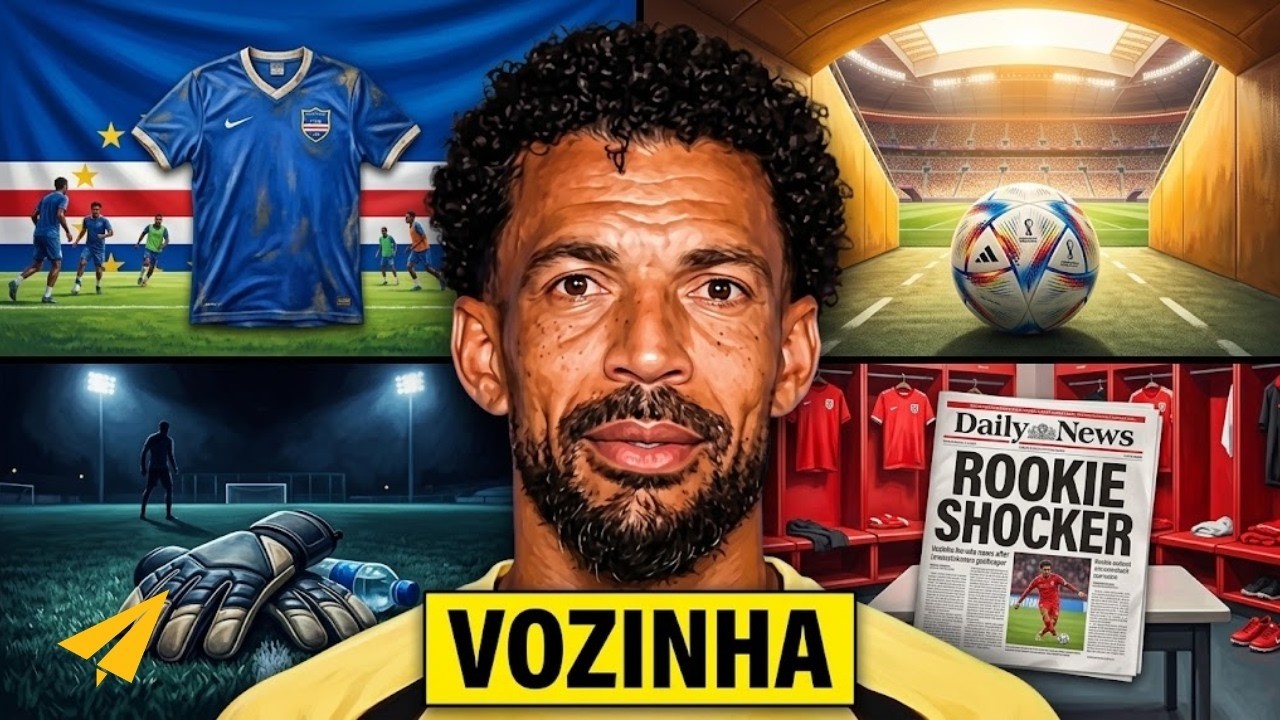
Josimar Évora, a Cabo Verde goalkeeper, made his World Cup debut at 40 and drew 0-0 against Spain in 2026, then signed with Chile's Colo Colo. The video traces his path from street ball to late professional start at 25, alongside stories of Messi's growth-hormone struggles and Jordan's use of anger as fuel.
Chapters
This man was mocked as Little Granny as a kid and still became the hero who stopped Spain at the 2026 World Cup at 40 years old.
Meet Fozinha!
He was born in 1986 in a small city in Cabo Verde. His father was in the military and his mother had to work long hours just to get by, so his grandparents raised him. Now, growing up, he spent most of his time playing football in the streets with older boys who were bigger and stronger than him. He was competitive and he hated losing. So when the older boys knocked him around and he couldn't fight back, he'd go home upset. They teased him, saying he was gonna run home and complain to his grandparents. That's how he got the nickname Vozinha, which means little granny in Portuguese. He didn't like it, but he kept showing up to play every day. He was shorter than most boys his age, and when he tried out for teams, coaches would turn him away because they didn't think he had the size to be a goalkeeper. That didn't stop him. He kept training on his own and playing wherever he could. It took years before anyone gave him a real chance. He didn't turn professional until he was 25 in 2012, which is very late for a footballer. He started at a small local club in Cabo Verde with no big contracts and no attention from the outside world. To keep playing, he left Cabo Verde in 2012 and moved to Angola. When he got there, another goalkeeper on the team already had his real name. Josimar. So he put Vozinha on his shirt instead, and that name stayed with him everywhere he went after that. Over the next 10 years, he played in Angola, Moldova, Portugal, Cyprus, and Slovakia. He kept moving, kept working, and never stopped representing Cabo Verde, playing in 4 Africa Cups of Nations tournaments along the way. But in 2025, he was dropped for a younger goalkeeper. He said, it was a very hard time. I was thinking of stopping with the national team. His teammates convinced him to stay, and he listened. In 2026, Cabo Verde qualified for their first ever World Cup. In their very first game, they faced Spain, the second-ranked team in the world, while Cabo Verde was ranked 67th. Nobody expected them to hold on. Spain fired 27 shots at Vozinha. He saved 7 of them, kept a clean sheet, and earned Cabo Verde a historic 0-0 draw. He was named player of the match. When the final whistle blew, he dropped to his knees and cried. His grandparents, who raised him, had passed away and weren't there to see it. His mother couldn't make it either because she couldn't afford the U.S. visa fees in time. After the match, U.S. Congressman Hakeem Jeffries contacted the State Department and had all fees waived. 6 days later, his mother was in the stands in Miami watching Cabo Verde play Uruguay. He once said, I am 40 now, but I was not a professional until I was 25. This is a reward for all this journey. I would tell 18-year-old Vozinha to be really proud of himself. He worked a lot.
It was all worth it.
You don't need everyone to believe in you. You just need to believe in yourself long enough to get your shot. Vozinha did it for 40 years. If you've been here before, drop a hashtag believe in the comments below so I can feature you here in a future video. And if you're new, welcome to Believe Nation, the only channel that helps you believe in yourself daily, one video at a time. Believe. Imagine you're 24 years old and you spend your days on a construction site. You are wiring a house. Your hands are all cut up. The sun is brutal and the pay is small. And at the end of the day, you go home, wash off all the dirt, and go play football on a dirt pitch with your friends. It's work, wash, play. Nobody scouts on that pitch. No agent has ever called you. There's no plan B being drawn up for you by anybody. You've wanted one thing since you were a kid. You want to be a professional goalkeeper. And every coach who's ever looked at you has said the same thing: you're too small. So you keep wiring houses. Now imagine doing that until you're 25 years old before one single club offers you a professional contract. That was Josimar José Evora Dias from the port town of Mindelo on the island of São Vicente in Cabo Verde. Before football paid him anything, he worked construction and worked as an electrician to help his family get by. 16 years later, at 40 years old, he walked onto a field in Atlanta in front of more than 67,000 people and stopped the best team in the world from scoring. You know him by the name the neighborhood kids gave him to make fun of him, Vozinha. It means little granny. The nickname that was an insult. He was almost called something else entirely. His father wanted to name him Valdano after the Argentine forward Jorge Vandano. The Cabo Verdean authorities refused to register it, so he was named Josimar instead, after the Brazilian right-back who lit up the 1986 World Cup, the same year that he was born. His father was in the military. His mother, Ana Evora, worked long hours to keep the family going. So he was raised by his father's parents on São Vicente, in a house that wasn't his parents' house. He played street football against boys who were older and bigger than him. He hated losing, and when the bigger boys knocked him around, he'd go home upset. The other kids started teasing him about running home to his grandmother in Portuguese. Portuguese, that's Vozinha, little granny. That's how he got the name. In his own words, in my area, the other boys were much older, and I'd always be playing with them in the street, getting kicked about a lot. He didn't like the nickname, but he kept showing up to the same street to play football anyway. Years later, when he finally got a contract in Angola, there was already another goalkeeper on the team using his real name, so he had a choice about what to put on the back of his shirt. He could have been Josimar too. Instead, he picked the name the kids used to laugh at. He said, when I arrived in Angola, there was another goalkeeper named Josimar, and I said, I am not going to put Josimar II on the shirt. If everyone knew me as Vozinha in Cabo Verde, that's what I would be. The insult went on the shirt. It stayed there for the next 14 years through 7 countries, and it's the name that ended up on a World Cup team sheet. Turning pro at 25, coaches had passed on him for years because of his size. In football, that judgment usually comes early and it usually sticks. Players sign academy deals at 15, 16 years old. By 25, scouts have already made up their mind about you. And Vozinha, he was a short kid in a position, goalkeeper, where height is the first thing that anybody looks at. But then he grew. He ended up 6'2, which is a perfectly ordinary height for a professional goalkeeper. And by the time his body caught up to the window that he had to go get a deal, a lot of people said that that time was just closed. He can't go get a professional contract. And he didn't sign a professional contract until he was 25 years old. Before that, he played for a few small clubs, Cabo Verdean clubs, Ribeira Bote, Derby, and Batuque while the electrical work paid for his life. Goalkeeping is the one position, though, in football that rewards a late starter. Researchers looking at when football players actually peak found that goalkeepers get their first major individual award nominations at an average age of 28, compared to just over 25 for forwards and midfielders. So a goalkeeper wins games by knowing where to stand and when to come off his line. Both of those get better every year you play, and neither of them needs you to be very fast. 7 countries and nobody watching. What happened after 25 years is the part that nobody wants to make a movie about. He went to Angola, then Moldova, then Portugal, then Cyprus, then Slovakia, then back to Portugal's second division. 7 different countries, leagues almost nobody outside those countries have ever watched a minute of. Small crowds, not a lot of money, a new language every couple years, and 90 minutes at a time where one mistake could get you dropped from the team. So think about all the moving alone. A new club means a new city, a new apartment, the new teammates who speak a different language than you, and a coach who has to be convinced every time that you're his first choice. Vozinha did that 6 times after the age of 25. Every one of those moves was a brand new addition, and he was never once the young prospect that anybody was excited about having on the team. He never got a big move. He never had a season where the whole sport suddenly noticed him. Every single year he went back to work at a level that was never going to make him famous. The Cyprus years were the closest that he came to settling down. 5 seasons at one club, 116 league games, and a Cup Winners' Medal in 2019. Then he moved again to Slovakia, where he kept 13 clean sheets in a season for a team almost nobody watching this video would be able to name. What he did get was good. In one season in Portugal, he faced 8 penalties and saved 5 of them. By his late 30s, he had a division-best 11 clean sheets in a season, and behind him sat more than 90 international caps, the second-highest total in the history of Cabo Verde. But none of them ran smooth. He played 4 Africa Cup of Nations tournaments along the way, and at the 2021 one, he was sent off in the 57th minute of a last 16 defeat to Senegal after a collision with Sadio Mane. His 2 brothers took different roads from him. Delmiro played in the Cypriot 2nd division and Kleder moved to Brazil, studied theology, and tutors math in a town in Pernambuco. Meanwhile, Vozinho, the goalkeeper who admired Rogério Ceni growing up, was the one who stayed playing in the game. Also, if you wanna take real action after this video, I made a free worksheet just for you. It covers the top lessons from today, gives you space to write biggest takeaways, and helps you build a simple action plan It's 100% free. Just click the link in the description below to go grab it. I'll see you there. The year they told him he was done. In 2025, Cabo Verde started a qualifying campaign for the Africa Cup of Nations and the coach picked somebody else. The new goalkeeper was Bruno Vareira, younger, trained in a big European academy, and Vozinha was 39. He sat on the bench and did not play a single minute of that campaign. And the team didn't even do well. Cabo Verde finished bottom of their group and missed the tournament entirely. So picture where he was at the end of 2025, 39 years old, 14 years of professional football behind him, dropped by his own country for a younger man, watching from a bench while the team lost anyway, with nothing on your calendar that looked like any future reward was coming. He was going to quit, and you could see why. He had done everything the long and hard way. He had earned the place with 14 years of work in leagues that pay badly and get no coverage, and he had 90-odd caps for his country. The reward for all of that now was a seat on the bench. There was no version of the next year that looked any better than the one he was in right now. In his words, he said, it was a very hard time. I was thinking of stopping with the national team. So what changed his mind? It was his teammates. No big speech from a coach, no new big contract. His teammates talked to him. They told him to stay because the World Cup qualifiers were coming and they wanted him there. So he stayed. He was 6 months away from the biggest side of his life and he had no idea. The save nobody filmed. The Spain match is the most famous one. The save that actually got him there is the one that nobody talks about. So during the World Cup qualifying campaign, Cabo Verde played Cameroon at home. Cameroon has been to 8 World Cups. Cabo Verde had been to none.
Zero.
So late in the first half, Cameroon's André Frank Zambo Anguissa got his head on the ball and Vozinha clawed it away. Cabo Verde won 1 to nothing, and that result is a big part of why they finished above Cameroon in the group. Ask him for the most important save of his career, and that's the one that he names, not the ones that the world saw. At the World Cup, which makes sense once you look at the actual charts. Cabo Verde, they finished 4 points above Cameroon. Take that 1-0 game away and the group ends differently, and a country of 600,000 people watches the World Cup on a television like it always had instead. October 13, 2025. So Cabo Verde is an island country of about 600,000 people off the west coast of Africa. It had never qualified for a World Cup. In the final qualifying group, they were up against Cameroon, a country with 8 World Cups behind them. On October 13, 2025, Cabo Cabo Verde played Eswatini at home. The government declared a half-day national holiday so the country could watch. Cabo Verde won 3-0 and finished 4 points clear of Cameroon at the top of the group. They became the 2nd smallest country ever to qualify for a World Cup. Now, to understand what that means here, you have to know one more thing about Cabo Verde. More Cabo Verdeans live outside the country than inside it. Generations have left for Portugal, for France, for Angola, for the coast of New England. So qualification landed for every family that had left those islands and scattered across 4 continents as much as for the 600,000 people still living on them. The half-day holiday was for them as well, wherever they were watching from in the world. Vozinha, the guy who'd been on the bench a few months earlier, played that match with the captain's armband on and kept a clean sheet. He'd let no goals in. The 90 minutes that changed his life. June 15th, 2026, Atlanta. Cabo Verde's first match at the World Cup ever. Their opponent was Spain, the European champions and one of the favorites to win the whole thing. Cabo Verde went into that tournament ranked around 63rd in the world. Nobody outside the islands expected them to hold on for 20 minutes. A 40-year-old goalkeeper with no club was about to face the best attacking team on the planet in front of a full stadium, and the sensible prediction was a comfortable Spanish victory. Spain took 27 shots. Cabo Verde took 6 shots. Spain had 65% of the ball. 7 of those Spanish shots were on target. Vozinha saved all 7. Late in the first half, he denied Oyarzabal, then Laporte, then Torres, who also hit the crossbar. Final score: 0-0. He was named Man of the Match. At 40 years old and 12 days old, he became the oldest goalkeeper ever to keep a clean sheet on a World Cup debut. When the whistle went, he dropped down and cried against his own goalpost. His grandparents, the one who raised him and gave him the name on his shirt, had both passed away before the tournament. His mother wasn't in the stadium either because the family hadn't been able to cover her visa costs in time. After the story went around the world, that got sorted out. 6 days later, she was in the stands in Miami watching her son play Uruguay. He had been raised by his grandparents because she was working. She had missed the biggest night of his life over paperwork and money, and she made the second biggest one. The whole world found out at once. Before that match, Rosinha's Instagram account had around 50,000 followers. Within 24 hours of the Spain game, it passed 7 million. By the end of the tournament, he was the most followed goalkeeper on the planet. Then it got strange in the best way. In June 2026, a Spanish biologist named Jesus Ortega described a new species of small red slug found in the Caribbean and named it Aldisa Vozinhai. There's a living creature on this planet named after a goalkeeper from São Vicente. Back home, streets in the municipality of San Miguel were renamed in his honor and in honor of the national team's nickname, the Blue Sharks. The kid the neighborhood laughed at has streets named after him. Argentina. Cabo Verde weren't done after Spain. They drew 2-2 with Uruguay, scoring their first World Cup goals, and then 0-0 with Saudi Arabia. 3 matches, 3 draws, no defeats. The smallest nation ever to reach the knockout rounds. So let's look at what that group table actually said. Spain first, Cabo Verde second, Uruguay and Saudi Arabia below them. A country of 600,000 people finished above a 2-time world champion without winning a single match. That put them in Miami against Argentina. Messi lobbed him in the 29th minute. Vozinha kept going. He made 8 saves that night, including a free kick in the 73rd minute and a point-blank stop on Messi deep in extra time before Cabo Verde lost 3-2. He was later voted into the tournament's Dream 11 by the fans. Cabo Verde went home having played four matches at a World Cup, lost once, and taken a point off the European champions. The goalkeeper who did most of that work had been left out of the same national team's previous campaigns without playing a single minute. What forty looks like when Vozinha walked into that World Cup, he didn't have a club. His contract in Portugal had ended. He was one of the lowest paid goalkeepers at the entire tournament, and he arrived without a team to go back home to. He was forty years old and. In August 2026, Colo Colo of Chile signed him. Thousands of fans came to the airport just to meet him. The kid who got told that he was too small, who wired houses to pay for the bills, who turned pro a decade later than the players around him, got his biggest contract at age 40. He said to himself, we work in life to have moments like this. I am 40 now, but I was not a professional until I was 25. And then he said the line that I want you to take with you. Ask about what he'd say to his younger self. He said, I would tell 18-year-old Vozinha to be really proud of himself. Think about that 18-year-old. Nobody wanted him. He had no contract, no money, and a nickname that started off as a joke. Every single thing that happened at 40 was built by him in the dark when nothing about it looked like anything was working. So if you're in that part of your life right now, the part that nobody is clapping for, stay He was 24 doing electrical work. He was 25, signed his first contract. He was 39 on a bench about to pack it in. He was 40 walking out in Atlanta to face Spain, and 40 when a club on the other side of the world sent thousands of people to an airport to meet him. None of those years were wasted, and he had no way of knowing that while he was living them. Neither do you. Your Spain match hasn't been scheduled yet. Keep going. And congratulations, you're one video closer to who you're meant to be.
Believe.
Now let's learn the incredible story of Lionel Messi.
At age 11, Lionel Messi was a talented soccer player in Argentina, but he was tiny for his age. Doctors diagnosed him with a growth hormone disorder that stunted his growth. He needed expensive medical injections every night or he might never grow to a normal height. Messi's family couldn't afford the treatment for long, and no local club would cover the cost. Some coaches told him he was just too small His future in soccer was in doubt despite his skill. But on the other side of the world, one club saw something special in him. In 2000, FC Barcelona invited 13-year-old Messi for a trial.
Their youth coach watched the little boy dribble through players twice his size.
Messi was shy and very small, but his talent was unmistakable. The coach quickly said, sign him, don't even think about it. Barcelona agreed to pay for Messi's treatment and move his family to Spain. They even signed the contract on a napkin that day because they didn't want to wait. Lionel Messi went on to become one of the greatest footballers of all time. In 2022, the kid once called too small led Argentina to win the World Cup. You have to fight to reach your dream. You have to sacrifice and work hard for it. Lionel Messi. His story shows that size and setbacks don't decide your destiny. Your heart and your talent Lionel Messi's journey from a fragile, undersized kid to a world champion is a pretty incredible example of overcoming setbacks and turning what most people think is a weakness into a strength. It wasn't easy. He faced painful treatments and doubts from other people and moments of real fear if his future would work out or not, but he never gave up on his dream. So think about that. At 11 years old, Messi stood at 4'4. He had not grown in 2 years, and without that treatment, Doctors said he might top out at just 4 foot 7 as an adult. Every night, this little boy had to inject a needle of growth hormone into his legs so he could have a chance at a normal life. That medicine cost over $1,500 each month, and that was money his family did not have. His father was a steelworker, and his mother cleaned part-time, and they struggled desperately to pay for the treatment. One local club, Newell's Old Boys, helped for a while and covered some of the bills, but even they couldn't keep doing it. They weren't willing to invest long-term in such a young, Tiny player. No other club in Argentina would pay either. To them, it was too expensive and too risky. There was no guarantee Messi's treatment would make him grow or make him a star. Some thought it just wasn't worth it. So imagine how that would feel for young Lionel, right? To hear that people who should have been in his corner decided he was too small and not worth the cost. His dream was on the line, and it must have been heartbreaking. But despite all of those doubts swirling around him, Messi did not let it stop him. He loved football too much. He was incredibly good at it. His coaches and teammates at the Newell's Old Boys could see his skill whenever he played. He might have been the shortest kid on the pitch, but he was often the most talented. He was scoring hundreds of goals in youth games, leaving the audience in awe. He refused to let his height define him. So every night when he took those injections, he was effectively telling himself, I'm not giving up. I'm going to do whatever it takes to reach my dream. He learned to give himself the shots at age 11. Which is a scary thing for a kid, but he did it, and that built up his toughness and his self-reliance. So instead of feeling like a victim of his condition, Messi kept practicing and honing his skills. He stayed focused on the one thing that he could control— his effort on the field. And then when he was 13, that opportunity came from across the ocean. A few people in Barcelona had heard whispers about a tiny boy with giant talent. They saw videotapes of Messi weaving through defenders like magic, and Barcelona's youth academy invited him for a trial. Can you imagine how Messi must have felt flying to a new country, hoping that this was his chance. He was shy, he was in a strange new place, and everyone around him in the trial was much bigger than him. And it all came down to this moment. Not just a football career, but the possibility of a normal life for him was on the line. So Messi stepped onto that field in Barcelona and played like his life depended on it. And in a way, it did. He scored 5 goals in the trial game. He dribbled through players nearly twice his size, the ball seemingly glued to his foot as he weaved through defenders. The coaches watching were Within just a couple of minutes, one of Barcelona's directors was convinced this kid was a rare gem. Messi was the smallest on the pitch by a long shot, but he was also the most spectacular. And the director was so amazed that he took the slow walk around the field to collect himself, and then he immediately told his staff, sign him, don't even think about it. They didn't want to lose this wonderkid to anyone else. In fact, Barcelona was so eager to secure Messi that they grabbed the nearest piece of paper, which happened to be a simple napkin at the restaurant that evening, and signed a makeshift contract on the spot. That napkin promised that FC Barcelona would pay for Messi's medical treatment and take care of his family as long as he would play for them. Imagine the relief and the joy that Messi and his family felt at that moment. One day they're on the verge of having to quit the treatment and possibly see Lionel's dream fade away. The next, a world-famous club was saying, we believe in your son and we will help It was the chance of a lifetime. Messi and his family uprooted their lives and moved to Spain. It was a leap of faith fueled by hope. But even after arriving in Barcelona, the journey wasn't easy. Messi was in a new country, far from all of his relatives and his friends. He was still a small developing kid who had to keep taking his injections and keep proving himself on the field. He missed home, and at one point his mother and siblings actually moved back to Argentina because the adjustment was so hard. leaving Messi in Spain with his father. There were moments of loneliness and homesickness. Many 13-year-olds would have broken down or lost focus, but not Messi. He kept going to training every day, quietly doing the work. His teammates and coaches noticed his determination. He was usually the smallest player in every single match, but he played with a giant heart. And over the years, that weakness people saw in Messi— his short height, height actually became one of his greatest strengths. Because he wasn't big and tall, he developed a low center of gravity, which gave him amazing balance and agility on the pitch. Defenders would tower over him thinking they could knock him off the ball, but he would just zip right past them. His quick, low strides and unbelievable ball control left opponents chasing shadows. In fact, opponents initially underestimated him because of his size, and that made it even easier for Messi surprise them with his skills. He turned his body's build into an advantage for him. He couldn't outmuscle the big guys, so he outsmarted and outpaced them. He perfected his dribbling, making it an art form. It's said that because he was never going to outjump or outpower others, he focused on mastering the aspects of the game he could dominate. And he absolutely did. The very thing that some viewed as a limitation became part of what makes him arguably the best of all What an amazing turnaround. The kid who was once considered too weak and small to invest in became a player known for his incredible skill and balance on the ball. And year after year, Messi rose through the ranks. He starred for Barcelona's youth teams, then quickly for the senior team. By 17, he made his professional debut. By his early 20s, he was dominating world football. He broke record after record, racking up goals and winning awards. He became a multiple-time World Player of the Year. All of this success was built on a foundation of hard work. Of heart and hard work, Messi didn't magically become great. He worked for it. The injections helped him grow to a normal height. He ended up around five seven, but it was his dedication that made him a giant in the sport. He sacrificed his childhood comforts for his dream, moving to another continent, enduring medical treatment, training relentlessly, and it paid off beyond anyone's expectations. And in 2022, more than two decades after that 13-year-old boy signed the napkin contract. Lionel Messi stood on top of the world. The little kid from Rosario, Argentina, the one many thought might never grow or never make it, lifted the World Cup trophy as the captain of Argentina's national team. It was the ultimate triumph, the kind of moment every kid dreams about. Try to picture Messi in that moment, holding the World Cup high, tears in his eyes, a nation cheering his name. The boy who once had to beg clubs to help him pay for medicine had just led his country to the pinnacle of football.
It's like a fairy tale.
But it's real, and it happened because Messi refused to quit. He refused to let his setback define his destiny, and instead, he used it to motivate his journey. Now let's turn this inspiration to you. Messi's story is pretty extraordinary, but the truth is every single one of us faces challenges and setbacks in life. They may not be the same as Messi's, but they can feel just as overwhelming. So maybe you have something in your life that feels like a weakness or an unfair disadvantage. It could be a health issue like it was for Messi.
It could be a physical trait or a lack of money or support.
Maybe people around you are telling you that you can't do something, that you're not talented enough, you're not tall enough, you're not smart enough, or you're just not enough. Maybe you've even started to believe them. And I want you to think about Messi's story and realize that those people can be wrong. Your weakness can become your strength. Your setback can set the stage for an incredible comeback. And the first The first step is to believe in yourself and your dream, even when others don't. Messi had a few people who believed in him, his family, and eventually that one Barcelona scout. But through all the lonely nights and tough days, Messi himself had to believe that his dream was possible. If he didn't have that self-belief, he would've quit long before Barcelona ever came calling. So whatever your dream is, hold it tight, even if it feels like the odds are against you. Remind yourself why you want it and that you can do it. Second, be ready to fight and work hard for that dream. Like Messi said, you have to fight to reach your dream. You have to sacrifice and work hard for it. There's no way around this truth. Messi sacrificed a normal, easy childhood. He worked harder than everyone else on the pitch. You might have to put in extra hours, learn new skills, or face your fears. It might be painful, it might be tiring, but that's the price of admission for making a dream come true. True. And the good news is that hard work and sacrifice makes the success so much sweeter in the end. Every injection Messi took, every morning he woke up early to practice, every time he pushed through his homesickness, all of that built him into the champion that he eventually became. So what are you willing to sacrifice to overcome and reach your dream too? Third, look at the ways to turn your specific weaknesses into a strength. So this might mean developing other areas to compensate, Using your unique situation as motivation. Messi's height pushed him to develop insane dribbling skills and field vision. In your case, think creatively. If, for example, you feel academically behind, maybe that struggle teaches you a better work ethic than others, which will serve you later on. If you come from a tough financial background, maybe that will drive your hunger to succeed and make you more resourceful. History is full of people who turn their weaknesses into strengths. Michael Jordan, in my opinion, the greatest basketball player ever, was once cut from his high school team because the coach thought he wasn't tall enough or good enough. And that rejection crushed him, but it also motivated him. He practiced even harder. He showed up every day determined to prove himself. Jordan grew a bit taller, yes, but more importantly, he grew tougher. He came back and made the team and he kept improving until he became a legend. Oprah Winfrey, she was fired from one of her first television jobs and was told that she was unfit for TV because she got too emotional on camera. It would have been easy for her to think, maybe I'm just not cut out for this. But instead, she kept going. She found her own style and eventually revolutionized television with her empathy and her authenticity. The very thing that she was criticized for became the cornerstone of her actual success. So these examples, they go on and on. You can find tons of them. The key is these people, they don't let setbacks or criticism stop them.
They use them.
They learn, they adapt it, and they kept going. Kept moving forward. So you can do the same. Whatever you're facing right now, try to see the seed of opportunity inside it. It may not be obvious at first, and it definitely won't be easy to overcome, but that challenge could be forging you into someone stronger and more special. It might be teaching you perseverance or patience or more creativity. It might be giving you a story that will inspire others one day. I know when you're in the middle of a struggle, it's hard to see any kind of positives. I'm sure young Messi had nights And he just felt too tired of it all. Tired of the needles, tired of being told no. But he pressed on, and so can you. Remember, setbacks don't decide your destiny. Your determination and your heart do. Messi's story could have ended in defeat, a boy who didn't grow and gave up on football. But he decided that wouldn't be the end of his story. He chose a different ending, one he had to fight for, but one that was worth every sacrifice. You have that power too. Your story is still being written. And you are the author. The pen is right here; it's in your hands, even when circumstances make it feel like it isn't. So, the next time someone tells you that you can't do something, think of Lionel Messi holding that World Cup trophy. Think of how many times he heard "can't" and how he proved them wrong. Let that light a fire inside you because you have something special in you, just like Messi did. It may not be obvious to everyone yet; it might not even be obvious to. you, but it's there. And if you nurture that talent or passion, if you protect it from the naysayers and feed it with hard work and belief, it will grow. In life, we all have moments where we feel small, when we feel like the odds are stacked against us. But remember, being small didn't stop Messi from reaching the absolute peak of his field. A setback at 15 didn't stop Michael Jordan. A harsh criticism didn't stop Oprah. And your challenges do not have to stop you. In fact, they can push you even further than you ever They can become the reason you succeed. Your heart, your talent, your grit— those are what will determine how far you go, not the obstacle in your path. So take Messi's words to heart. Fight for your dream. Work hard for it. When you stumble, get back up. When you feel weak, remember it's an opportunity to become stronger. Embrace the journey with all of its difficulties because that is what shapes you. Keep going. Keep believing. And one day you'll look back and see how far you've come. Just like Messi can look back at that 11-year-old boy and say, look where we are.
Now let's learn the incredible story of Michael Jordan. Michael Jordan had a secret to get psyched up. He'd make up insults and take everything personally to motivate himself. If an opposing player even looked at him wrong, or sometimes did nothing at all, Jordan would invent a story that they disrespected him just to light a fire. In one famous case, a no-name player, LaBradford, Smith had a great game against him. Jordan pretended Smith said, nice game, Mike, in a mocking way. In reality, Smith never said it. Angry, Jordan dropped 36 points in the first half of their very next matchup, utterly destroying him. Years later, Jordan admitted he made that story up to psych himself up. This habit of turning any slight, real or imagined, into competitive motivation became legendary in The Last Dance documentary. It shows how far he'd go to never lose. I failed over and over again in my life, and that's why I succeed. Michael Jordan. I'm not a huge fan personally of leaning into the dark side to get your energy, but it can be extremely powerful in short bursts. What do you think? Why anger can boost performance. Michael Jordan wasn't the only one to turn negativity into motivation. NFL legend Tom Brady similarly kept a chip on his shoulder after being the 199th draft pick, using that feeling of disrespect to drive himself to greatness. Walt Disney's newspaper editor once fired him for lacking imagination and having no good ideas. Instead of giving up, Disney proved them wrong by later creating Mickey Mouse and Disneyland, transforming that early insult into motivation for success. These stories show a common pattern. Sometimes being doubted or insulted Fires people up to work harder and achieve more. Why does this dark side motivation work? Anger and frustration can light a spark under you. When you feel angry, your body pumps out adrenaline, your heart beats faster, you feel a surge of energy, and you focus on defeating the challenge in front of you. Psychologists say all emotions have a purpose, even the negative ones. Anger is basically a signal that something is wrong or unfair, and it prepares you to fix it. In Jordan's case, anything that felt like disrespect became gasoline to a high-powered engine, fueling his drive to win. Anger might feel like a negative force, but it can actually give you a surge of energy to overcome the obstacles in front of you. In fact, scientific studies have found that people perform better on challenging tasks when they're a bit mad compared to when they feel neutral or indifferent. In one set of experiments, participants were purposely made angry by saying facing insults or frustrating problems, and then given hard problems and games to tackle, the results were pretty clear. Those who got angry first persisted longer and scored higher on the tough tasks than those who stayed calm. The anger created extra effort and focus toward the goal, often leading to greater success. As one researcher put it, anger increases effort towards attaining a desired goal, frequently resulting in greater success.
So a little bit of that fiery feeling can push you to do what you didn't think you could do.
Interestingly, positive emotions alone aren't always enough in high-stakes moments. We usually prefer to feel happy, relaxed, but mixing in some anger can supercharge motivation. A recent psychology study suggests that a mix of emotions, including negative emotions like anger, results in the best outcome. So in other words, tapping into your dark side once in a while in small doses might give you an edge when you face a difficult goal. It's like how Michael Jordan famously found any little slight and said, I took it personally. That mentality gave him an extra competitive edge when he needed it most. The dangers of living in anger. While anger can pump you up to win, living in a constant state of anger has serious downsides. Michael Jordan could turn it on during a game, but you wouldn't want to carry that fury all the First off, being angry too often is hard on your health. Studies show that people who are frequently angry are more prone to health issues like high blood pressure, heart attacks, strokes, and chronic pain.
It also hurts your relationships.
If you're always irritable or lashing out, friends and family won't exactly enjoy being around you. Another big risk of leaning into the dark side is it can lead to bad decisions. Anger is a powerful emotion, But it isn't very smart on its own. When you're mad, you might act without thinking of the consequences. Research has found that while anger boosted people's success in a task, it also made them more likely to cheat or behave unethically to achieve that success. In one experiment, angry participants solved more problems, but they also were more willing to bend the rules to win. And that makes sense. Anger just wants to remove the obstacles, and sometimes it doesn't care how. If you let anger control you, you might end up doing something that you regret, like hurting someone or breaking someone or cheating in pursuit of your goal. As psychologist Dr. Heather Lynch explains, the intense responses that come with anger are not necessarily leading you towards a good or beneficial response. Because of these dangers, it's important not to stay in attack mode constantly. Think of anger like a burst of fuel— great for short sprints, It's intense, but too toxic to use all day. And if you're angry all the time, it will drive out positive feelings and leave you stressed and drained. Even Michael Jordan, as ferocious as he was on the court, didn't live his entire life in vengeance mode. He could turn it on and enjoy his victories after the game. But for the rest of us, the key is making anger serve you, not control you. Use it when you need that push, but don't let it take over your mindset or turn you into a person that you don't want to be. How to harness the dark side productively. So how can you lean into the dark side safely, using anger or frustration as a tool without burning yourself out or doing something you'll regret?
Here are a few tips.
Number 1, use it sparingly. Save your anger boost for when you truly need extra fire, like a high-pressure project, a competition you've entered, or you're trying to overcome a slump. For everyday motivation, it's better to rely on positive habits and passion.
Yeah, that's a good point.
Think of anger as a secret weapon for special situations, not your daily fuel.
Next, pick a specific target.
If you're going to tap into anger, focus it on a clear goal or challenge. So maybe someone said you can't do something. Fine. Use that comment as energy to prove them wrong. Michael Jordan didn't just rage aimlessly. He directed his anger at winning the next game. Choose one enemy, a problem, a doubter, and channel your intensity into beating that target. And only that target. Next, stay in control. The point is to let anger motivate your work, not make you lose your cool. So channel that fire into practice, into planning or extra effort, not into yelling at people or making rash moves. If Jordan felt disrespected, he responded by training harder and playing harder, not by fighting, at least off the court. Use that edge to push yourself, run an extra mile, study an extra hour, double down on your craft rather than to lash out on others. Next, set a timeline. Don't live in anger for too long. It's stressful and exhausting to stay mad. Give yourself a mental time frame to use that I'll show them energy. So, for example, okay, I'm going to spend the next hour totally focused, fueled by this frustration, and knock this task out of the park. And after that, let it go, cool down, and reset to a positive mindset. Remember, anger is a sprint, not a marathon. Next, reconnect with your positive why. After you've used that burst of dark energy, refocus on the positive reasons You do what you do. Maybe you ultimately play basketball because you love the game, or you build your business because you want to help customers. Don't let your whole motivation become anger or revenge. Those can kickstart you, but long-term success comes from love, passion, and purpose. Even Jordan was fundamentally driven by his love of competition and winning, not just hatred of losing. Use anger as a jump cable, but keep your main engine running on positive fuel like passion, curiosity, and self-belief. Light and dark in balance. To maximize your potential, you don't have to be angry all the time, but in those moments when you're feeling flat or facing a huge challenge, channeling a bit of that dark side can give you a powerful boost. Michael Jordan showed that even imagined insults could ignite a real flame in his performance. A short burst of anger or indignation can shock you out of complacency and into action. It can make you say, enough, I'm going to give it everything I've got. And sometimes that's exactly what you need to break through a barrier. Just remember that anger is a tool, not a lifestyle. Use it wisely. It can help you smash a goal or silence a critic. But if you rely on rage for too long, it will cost you in your health, your happiness, your relationships. So take a page from the champions. When someone doubts you or life knocks you down, you could take it personally for a moment and let that light a fire in you. Then channel that fire to do something great.
Prove to yourself what you're capable of.
After you've turned that spark into success, let the anger go and enjoy the win because you earned it. To watch the top ten rules of success from Cristiano Ronaldo, check the video right there next to me. I think you'll love it. Continue to believe, and I'll see you there. He's a professional football player who plays for Real Madrid and the Portuguese national team. He's the first player to win four European Golden Shoe awards.
More from Evan


How the Biggest Mistake in History Created A Trillion-Dollar Empire | Sergey Brin



9 Machiavelli Principles That Force People To Respect You | Machiavellian Philosophy



The First 10 Words That Instantly Ruin A Sales Conversation | Vanessa Van Edwards

The Top 1% Mindset Behind The First $5 Trillion Company | Jensen Huang (Nvidia)

