The Ask Evan Show #3 - Cofounders, outsourcing, eating habits, overcoming fear, legal advice
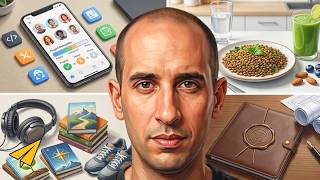
Evan Carmichael answers questions on picking cofounders, outsourcing platforms like Upwork and Fiverr, eating habits for entrepreneurs, overcoming fear through small steps and morning routines, and when you need written contracts. He recommends lentil breakfasts, standing desks, and breaking big goals into manageable pieces.
Chapters
Hello and welcome to the #AskEvan Show, episode 3, where I'm answering your questions to help you grow your business. Let's jump in! First question: YouTube viewer, love you guys, Tiger8oi. Hey Evan, can you help me? What type of skills should I look for in a co-founder to start a Web 2.0 startup? I pretty much have zero skills to start a tech company, so I've been wondering who I should recruit. I was thinking of a UX front-end coder, or should I go for a full web developer? Do most web developers also know a bit of UX? Is one partner enough? Is a team of 3 too crowded? Any other skills I should look for? Hey, this is a great question, and I love it because I get so many people who write in, who ask me questions on YouTube, on my radio show, who are the business person and they have zero tech skills and they want to start a tech company. Okay, if you want to have success, if you look at the tech companies, look at any tech companies achieve rapid success, look at who the founders are. You always have somebody on the team who's the tech guy, who's the tech genius who gets all the stuff done. So you can't just hire that out. If you want to build a successful technology company, you gotta have somebody on your team who loves the technology side. So I love that you understand your weakness here and you're trying to find it out. With partnerships, you gotta make sure it's the right one. You gotta find the right person who not only has the skills you need, but also fits from a personality and a values point of view. This is like getting married. And so many people jump into partnerships because it makes sense on the skills, it looks good on paper, and everybody's happy at the beginning when everything's working and you're trying to crunch out a product. But when things get tough, how are you gonna handle it? That's where partnerships tend to fall apart. And so I would start with one person. If you don't know these guys yet, I would start with one person. Find them, like really do your homework to find that right person. Work together on a small project first, see how well you guys are going along before making a decision to get married. You're dating before you're getting married. Find that one person who's a tech person, partner up with your business skills, and launch the company. Take it from there. Okay, next up, Ramar. Hey there Evan, I very much like your videos, was wondering if you can make a video about outsourcing. Please include your top 5 websites for that outsourcing. So this is great, I love outsourcing. I think as an entrepreneur, if you want to have success, you need to focus on what you do great, what you're awesome at, and get rid of everything else. Eliminate, automate, delegate, so that you're focusing on what I call CEO time as much as possible, the big picture stuff to help you grow your business. So outsourcing is an awesome way to do it. My favorite single outsource website is oDesk. I found a lot of great people on oDesk. I, I've listed a number of videos on how to have success with oDesk. I've used oDesk to hire Christina, obviously my video producer here, marketers, virtual assistants, programmers. I love oDesk. I'm a huge fan. But you gotta make sure you're doing it right. So that's my number one for sure resource for outsourcing. Apart from that, I've done some things on Fiverr, some things for business, some things for fun where people would do things for $5. It's interesting to see. What people do for $5. I use it mostly for fun stuff that relates to my business. I had Morgan Freeman prank call my agent and a couple other people, but I've used it for business too where I've had my videos, for example, these YouTube videos transcribed, and somebody would do up to, I think it was 60 minutes of audio for $5. And so there's some opportunities for business, just make sure that it kind of fits with what you need. Apart from that, I've looked at, I've used, what else have I used? I've used 99designs, great resource for anything graphic design related, where you can post a project and people from around the world bid on it. And so if you're looking for graphic design work, that's my favorite place to go to. I think that's it. I've tried a lot of different sites, a lot of different services. I'm trying to think of things that I would feel comfortable recommending to you. Those would be my 3. You asked for 5, I'm giving you 3, but the 3 are gold. So, oDesk, Fiverr, 99designs, but really oDesk, place to be. Okay, up next, Jovana. Oh, Jovana Milanović. Milanović. Mi— Mi— Mižanović. Okay, Jovana, I want you to make a video to tell me how to pronounce your name because I probably butchered it. Anyway, great question. She wrote in to say, can you share your food from Any food for thought on the food habits of a healthy entrepreneur? This is a great question, and a lot of entrepreneurs are not healthy. You know, you're working crazy hours, you're stressed out, you're working 80 hours a week, 100 hours a week, you're putting everything you got into this, and it can be hard to look after yourself, both from a food perspective as well as health, fitness, just general well-being. And this happened to me. You know, I went on a cruise and I came back and I didn't have the greatest eating habits. I wasn't massively overweight, okay? You see my video I'm not like, I'm not putting on the pounds here, but it scared me that when I got on the cruise ship about halfway through, I was over 200 pounds, which for me is a lot. You know, I was, I was a buck 60 when I got to university, and 180, 185 has been kind of my typical weight. But 200 plus, that for me was like a huge shock. I got, I got to change something. And a couple of things that helped with my good eating habits. So, 1, lentils in the morning. So every morning I have lentils and I have some spinach or arugula on top, and it fills you up, it's super healthy, gives you lots of fiber, and way better for you than going for a bowl of cereal. Then I have a smoothie, and my wife makes these amazing smoothies for me. I tried making them myself, but as Nina can testify, mine aren't very good. I'm not a good smoothie maker. Maybe I can learn. Actually, Nina has a great video on it. Christina, pop that video up in there. Nina makes a great smoothie recipe that you guys can follow along, and maybe I should follow along to see how to do it. I don't know, something to think about. From there, I've been trying to cut down on processed foods. All the stuff that you hear, right? All the basic usual stuff that you hear, right? I don't eat a lot of meat. I don't eat any processed foods and sugar. I drink a lot of water with lemon. That's what I got going on right here. Yummy. I try to have, I don't know, lots of these glasses every day. And I have the one cheat day. So that's coming from Tim Ferriss' 4-Hour Body. The one cheat day is usually Saturday. We'll go out and eat whatever. You know, I might make bacon and eggs in the morning, and then we'll go to get a huge sugary drink, and then a junky lunch, and then chips, and junky dinner, and then dessert. And yet by the end of it, actually by the end of it, I'm so I get so full of crap on a Saturday that for the next 4 or 5 days, I don't want to see crap anymore because I've had too much of it. So actually it works out well. On top of that, healthy lifestyle, you know? Do something to get out of the office, to get out of your desk, to move around. I use a stand-up desk so that your legs don't shut off. I'm sitting here at a table, but typically I'm standing up. Dancing salsa 20-25 hours a week. And so find something that you love to do that gets you energetic, and you bring that to your business. When you are energetic, when you're healthy, your business will be a lot healthier as well. Alright, next up, Ryokusan, who writes in to say, "Chasing your dreams rather than having your dreams chase you. But what more paralyzing an obstacle than sheer fear? How do you find not simply the courage to stop being afraid, to stop doubting, You can get there and change the world, at least in your own way, without having to fear you're not good enough. To know you're it, to know you're every bit of potential burning inside you, waiting to be ignited. How do you get over that obstacle and set the world on fire? Hey, this is an awesome question. And I think as entrepreneurs, we go through these phases where we are excited, passionate, ready to go out and change the world, believing in yourself, knowing that, yeah, today's the day, I'm awesome, I can do it. And then the next day you wake up and you're starting all over again and you doubt yourself and you're afraid and you don't think you can do it. You think, "Who am I? I'm not good enough. I don't have experience." And it's a constant, constant roller coaster. And you guys, you're entrepreneurs, you know what I'm talking about. Even if you won't admit it to anybody else, you don't talk about it, you know what I'm talking about. And every entrepreneur thinks about quitting at some time, multiple times in their life. So you're not alone if you're going through that right now. How do you keep it going? So here's the thing, here's what helps me. One is you create a routine. You gotta have a routine. You gotta have a morning routine, that sets you up for success right at the start of the day. I've talked about it a few times in the videos that I have. You need to have music that gets you excited, bobbin', movin', gets you feelin' it, songs that inspire you. You gotta have something that you watch, read, consume that lifts you up, that builds you up, that gives you confidence. For me, I might watch Eric Thomas videos. I love reading my comments from you guys who always inspire me and make me feel like I can, I should go, I gotta go do more, I gotta go help more people. So you gotta have something in the morning. You put the music on while you're making your breakfast, and then you have some task that gets you set up for the day. And you schedule that. You create an environment that supports you, because most of us have these environments that don't support us. That you wake up and the media that you consume and the friends you hang out with and your daily routine, it doesn't support big thinking, breaking through, setting the world on fire, right? What do you do in your daily routine that makes you want to set the world on fire? Create that environment. You have a choice. You can design that for yourself. Okay? So that's one, getting that routine. The second thing I want to talk about is sometimes when you have the big goal, it looks like it's insurmountable. Sometimes you look at that and say, "Yeah, I'm going for that. Yeah, I'm going to hit that mountain. I'm going to cross that. I'm going to knock down that castle," whatever it is. You know, like, "I'm going to go for that goal." And other times you look at it and it's too big, too scary, too daunting. And what I found really helps is breaking that down into smaller steps and doing things that scare you a little bit, but in steps. So if that big step today seems like it's too big, maybe tomorrow, or maybe yesterday that was no problem, but today it's too big, take a smaller step, take a smaller step, take a smaller step. And the story I like to tell is when one of my first speaking gigs that I had was in Brunei in Asia, and they asked me to come. I just sold my company. They asked me to come and speak to them. And share my expertise, whatever advice for entrepreneurs, and I was scared to do it. I was scared. This is my first big speech. It was going to be broadcast on live television. There were, you know, 1,000 people in the room, whatever it was, and I was freaking out, and I kind of secretly wished that they would call me up and say, "Evan, it's off," whatever reason, right? I was kind of hoping that would happen, but they didn't, so I went. And it was awesome. And I was scared to do it, and I did it anyways. And now doing that again is easy, right? I could do that again. If you put me in Madison Square Garden with tens and tens of thousands of people, I'd probably be a little scared the first time I did it, but then I could do it again. And so if you're afraid, then whatever next step you want to take, make it small, make it a little bit easier, make it a little less scary. Do it, and then you could do that again, and you can go to the next one and do that again. And slowly you make your your way up. As you keep conquering these little goals, you become less fearful, more successful, and you're not just sitting there doing nothing. Because sometimes when you look at that big goal and you're down here, like, that is way too big, I can't do it, I'm nothing, I'm not going to be able to do it, and you do nothing as a result. So small steps, as you take those small steps, you'll become a lot more courageous, and once you do it once, it's easy to do again. Great question. Okay, last up today is Jackie Sue, who's been a huge fan of the channel for a while. Supports me on Patreon. Thank you, Jackie. Christine, let's pop the Patreon link up here for those of you who are fans. Thank you so much, I appreciate it. He has a 3-part question that relates to legal work, and so he's writing in to say, as I feel my explanations are too scattered, here's a summary of my points. 1, will there be any law approach in forming partnership with another company, such as contracts, or is it just a verbally mutual agreement to help each other out? Lots of ways to skin a cat here. You can form an official partnership where somebody owns a piece of your company, or another company owns a a piece of your company, they're taking equity in your business, or you can just have a verbal arrangement. If you're doing a marketing arrangement where they're helping to support you, you're helping to support them, you don't necessarily need a contract. If they're getting a commission, if they're getting a cut of everything that you sell, then yeah, then you want to have a contract written down so you don't come back and later they say, "Hey, well you said 40%, but why are you giving me only 20%?" So you want to— if there are specific rules that you're laying out, you want to have it written down. So it just depends on the arrangement you're setting up, but if you're doing a formal arrangement, a formal partnership, either as a supplier or commission agent or equity investor in your business, then you want to have it written down. Number 2: Can a sole trader business form partnerships with other companies and still remain as a sole trader? So again, the partnership here depends on what you're giving up. You know, maybe you're giving up a piece of your company, in which case you're not going to be a solo entrepreneur anymore. You can't be a sole proprietorship. Maybe you're just giving up a commission for everything that they sell for you. You know, if they sell 100 products of yours and you're giving them a 25% commission, then they don't own a piece of your company. You're still a sole proprietor, but you're giving up that 20% just in sales commission. So again, just depends on the arrangement that you want to set up. And number 3, once I form a partnership with a particular company, let's say a graphic designer, does that mean I can never work with other companies that are also graphic designers? And again here, totally flexible, depends on what you write into the agreement. You can form an exclusive arrangement with a company, in which case you won't be able to work with other people, but typically if that's going to happen, there's going to be a premium in the contract. So as an example, when I had my first software company, I would form international partnerships with people to sell my software, and some of them I would have an exclusive arrangement with, where, you know, if you're going to be my seller in Japan, I would only sell through you. I would not partner up with anybody else. Any leads that I got from Japan, I would send to you so you can make all the money from it. But they had to pay me for that right because exclusive is a lot more exclusive, right? It's a lot more special. It's a lot more risky putting it all in one person. And so it depends on what you write up. So you can write in, say you're getting a graphic design firm to work with, you can write to say you are the only company I'm gonna work with but there should be something coming back to you for giving up that right. Otherwise, you keep it open. You don't say that this is the only way to do it. Anyway, great questions. Thank you guys so much for watching episode 3 of the Ask Evan Show. Let me know what you think. Ask a question below if you have one for me. You could be on the next episode. And believe. Subscribe to the channel if you want to see more. Thank you guys so much for watching. I'll see you soon. If you want more believe energy running through your veins, sign up for the newsletter below. It's free. You're going to love it. Hi, I'm Jason J. Ros Fonseca of RiseOnline.com, and I want to say Evan Carmichael's newsletter is consistent, fun, inspiring, and it's the only newsletter I prioritize and look forward to. Period.
More from Evan


How the Biggest Mistake in History Created A Trillion-Dollar Empire | Sergey Brin



9 Machiavelli Principles That Force People To Respect You | Machiavellian Philosophy



The First 10 Words That Instantly Ruin A Sales Conversation | Vanessa Van Edwards

The Top 1% Mindset Behind The First $5 Trillion Company | Jensen Huang (Nvidia)

