The BEST Ways to Become a CHAMPION in Your LIFE! | Lewis Hamilton | Top 10 Rules
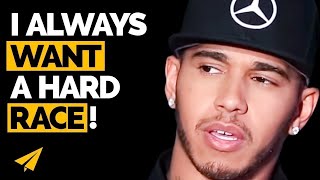
Lewis Hamilton shares rules from his seven-time F1 championship career: a hardcore race mindset, relentless preparation, and channeling emotion into focus. He describes losing a championship by one point as a catalyst for growth, and emphasizes giving 110% while learning from both wins and defeats.
Chapters
I'm generally pretty hardcore, you know. I want a hard race. I want to be destroyed afterwards.
My dad would say, you know, my son's gonna be the first black Formula 1 driver. Everyone kind of thought, yeah right.
We harness energy without even noticing it, and whether it's good or bad.
My goal this weekend is to win this race. All the other stuff is all just noise.
He's a British Formula 1 race car driver currently racing with the Mercedes-AMG Petronas team. He's a 2008, 2014, and 2015 Formula 1 World Champion. He's the only driver in the history of the sport to have won at least one race in each of the seasons he's competed in. He's Lewis Hamilton, and here's my take on his top 10 rules for success. Rule number 1 is my personal favorite, and make sure to stick around all the way to the end for some special bonus clips. And as always, if Lewis says something that really, really resonates with you, please leave it in the comments below and put quotes around it so other people can be inspired as well.
Enjoy!
The first year— Yeah.
—was the first year I'm like, I'm at McLaren, I've got the 2-time world champion. He just won the championship in 2006. 2007, he's got number 1 on his car, I'm gonna be number 2 because that's how it goes. And I remember sitting, you know, testing, just studying, studying, studying. I've gotta make sure that I— Somehow I'm going to match this guy. I believe in myself that I'm— somewhere in me there's the speed to keep up with and beat this guy. So, I mean, before the first race, Ron said in his office, he's like, you know, look, you know, you've got to expect and don't be surprised if you're half a second behind Fernando at the first race. You don't know what that did to me inside. I was so— What did it do to you?
It just boiled me inside.
Because he obviously undervalued— not undervalued me because he obviously gave me the role, but he was not expecting me to be able to answer to his special new guy. And so— So he said, "You expect to be beaten?" Yeah, yeah. And so— And your life had not been about expecting to be beaten. No, no. So, I mean, I trained like crazy. I prepared. He did beat me in qualifying, and he did beat me in the first race. But I finished just behind him, third. And after that, I think I beat him in the next race. No, I didn't beat him.
I think maybe the third race I beat him.
And then I beat him in the championship at the end of the year, my first year, my rookie year.
What I do love is when I do a race and on the edge the whole— You know, the last race, for example, I was dead at the end. I was pushing so hard and really enjoying it. That's what racing's all about. I'm generally pretty hardcore, you know, I want a hard race, I want to be destroyed afterwards. It doesn't matter if, of course I want to win, but as long as you've put up a good battle and you've given 110%, you've left with zero, you know, it's not like, oh, I had a couple percent left, but I finished the race. I'm like, I want to be completely depleted after the race, knowing that I gave it my all and I didn't make very many mistakes, and then I can go home proud.
Unfortunately, there are people with the talent that don't have the money. I kind of look at it like, if any of you have seen Cool Runnings, when they tried to raise money to go to Bobsleighing, and all the people that they approached just laughed at them. And, you know, it was the same for us. You know, my dad would say, you know, my son's gonna be the first Black Formula 1 driver. Everyone kind of thought, yeah, right. But, you know, he kept going and it happened. You know, we got there. So never give up. For me as a driver, I just grow, I change, I improve all the time through experiences.
Not race by race, not just race by race, but in life, you know.
I'm always taking all these different experiences, positive or negative, extracting the best bits out of them, learning, becoming older and wiser. I mean, I'm 23 years old and I think I'm quite wise for my age.
I think I still got a long way to go, but then when it comes to driving, I just excel.
I push beyond limits when I'm training.
I go beyond the pain barriers.
I just do everything I can to make sure that when I arrive at the racetrack, I've already got 2, 3 tenths on the other I think we as human beings, we harness—
we harness energy without even noticing it, and whether it's good or bad.
And I think I harnessed all those different experiences and—
at school, you know, when the teachers were negative, and with those parents, and I just kept it. And I kept it bottled inside, and I used it on the track. My dad would always say— 'Cause a kid would push me off the track and I'd have aggression. I'd be like, you know, I wanna go and push that guy over or, you know, flick him in the ear or kick him or something. And he would say, "Do your talking on the track. Just don't say anything. Just do your talking on the track." And that applied to everything in my life. So just do your talking on the track. So I'd get on the track and I'd drive the wheels off the car.
When I came to Formula 1, in trying to get— well, getting to Formula 1 was tough. I had to win everything. I was led to believe I had to win everything championships, so I had to make sure that I studied about the car. Every change that I made, that I had to write it down and study it, have a catalog at home of all the changes I made of all my setups. So when I got to Formula 1, changed the front roll bar, I know exactly what changes that's going to make to the car. And so I had to really build up a good understanding of mechanics and I think, you know, when I got to McLaren, my fitness level had to take another step to another level. So I was training ridiculous amount of hours a week, and which I hated, and spending a lot of time at the factory. Would sit down with an eng— I had, would have probably 4 to 5, probably 4 engineering meetings every day. At McLaren. This is before my first season, after my GP2 season, to understand all the different scenarios, the race strategies, the tyre, the steering wheel. There was an incredible amount of information that I didn't have to do before. Before, I just get in the car in Formula GP2, and now I could, you know, do a couple of maps, read a couple of maps, try and understand where the track's going, and work with the setup, but Formula 1, there's tons and tons of information. And that was really the biggest step that I had to make. I had a steering wheel I took home and I had to study it. I looked at it every morning and every evening, tried to close my eyes and know where the switches were. And obviously just getting up to speed in my first 8 test days I had, trying to catch, get on the pace and not make mistakes and have the fitness level to just keep it up. That was the biggest stepping stone for me. And, you know, I got to my first race and, you know, I was fourth. I came fourth in my first race. I was ready because I really did. I couldn't look back and say, I wish I'd done some more of that because I did everything I could. The challenge of joining Mercedes is obviously going to a team that's struggled for the last couple of years. They've not won as many championships. They've not been competitive in this this era of car design. You know, this era of car design came out in 2009, and obviously you have the top 3 teams that have been there, and now Lotus have also come in and started competing, and Mercedes finished 5th in the championship last year, so it's taken a team that's struggled and helping them to climb up the ladder and get higher up, so I want to be a part of that. I want to get in there, and I want to help develop a car, push it in a certain direction. I feel that I'm I'm good at, and perhaps other drivers are not as good at, maybe, who knows. But taking that car across the line and winning is the ultimate goal.
How do you prepare yourself to be so focused, to handle all this massive stress? Really, it's trying to just remain focused on the job at hand and the task. My goal this weekend is to win this race. All the other stuff is all just noise. And it's just, I guess it's just through experience, kind of been able to silence all that and stay focused on what's the most important thing. So not be distracted by all the media, all the cameras. You know, I mean, there's tomorrow, there's so many interviews, mostly with the same people that we always have. So I've been talking to these guys for for 10 years, but, and they're often asking the same question that they asked me 2 weeks ago. But obviously they have something more to talk about this weekend because the last race was terrible. But I think it really is just trying to, I guess, compartmentalize really. That stuff put over here, put it in a box, and then, you know, keep the energy and your focus on the one thing that matters most. All that other stuff does not matter. What matters is me and this team, how we're going to get from Friday or Thursday this week, for example, to Sunday standing on top of that podium. And it's sleep. It's what I eat. It's what I spend my time doing, making sure I get to bed early, all these different things that add up to it. And sometimes you do it all perfect and it doesn't go well. But that's life. And you just hope that— in doing all the right things, but it's also trying to find a balance. You know, you need to enjoy life as well. You know, at some stage I'm gonna— my career will be over, and I want to look back and say I did— I enjoyed absolutely everything. Every moment in the car, every moment out of it. Oh, it's fun every time. As soon as you put your suit on, it's fun. It's— the whole weekend's a complete blast.
And although it's very, very political and very serious and everything like that, which you need to be because it's immensely intense and competitive. But it's so much fun. You get in that car and I'm like a kid. I know what to do with it. And I'm like a kid with a new toy.
Hello, I'm James Corden. This is Lewis Hamilton. Hey. I've got one lap to ask as many questions as I can. Lewis, are you ready? I'm ready. Okay. On your marks, get set— Oh! Okay! Oh my God! Right, favorite thing Film? Coming to America. Favorite football player? Messi. How many crashes have you had? Oh my God! I'm asking for me more than for someone else. It's okay. How many push-ups can you do?
80? 90? Yeah, me too.
90, 95. Okay. Who's your hero? My dad. Is there anything more exhilarating than Formula 1? No. Do you wish your girlfriend was hot like me? See him through. No, my God, Lewis! I thought you were going to be amazing at this. We're just going over all the corners.
He's sweating a bit.
Yes, just a touch. Right, true or false, you wear your helmet in bed? False. Do you ever play with your helmet in bed? You were going to sing me a song. What song would you sing me? Smack My Bitch Up. Okay, okay. Oh my God. Favorite car? Favorite car? Yes, this one. Smart or casual? Casual. Sebastian or Fernando? Neither. Come on, you got to pick one. Sebastian or Fernando? Fernando. Front carbon or back carbon? Made the ball! Oh my God, come on now! Do you still get parking tickets? Nope. What do you wear to bed? Nothing. What's the best city in the world? London. Boxes or brakes? Oh my God, box Whoa, what's in there? Close! Come on now! Oh my God, we're done, man! Thank you, that was amazing! I can't feel my legs, it's ridiculous! Thanks.
Thank you guys so much for watching. I made this video because Langman asked me to. So if there's a famous entrepreneur that you want me to profile next, leave it in the comments below and I'll see what I can do. I'd also love to know what did Lewis say that really resonated the most with you? What is gonna have the biggest impact on your life or your business after watching this video? Leave your thoughts in the comments below. I'm gonna join in the discussion. Finally, I want to give a quick shout out to Gaela Caneza. So much, Gaela, for picking up a copy of my book. It really, really, really, really means a lot to me. Thank you guys again for watching. I believe in you. I hope you continue to believe in yourself and whatever your one word is. Much love. I'll see you soon.
When you're building up to Formula 1, you're obviously preparing to race, but you're not prepared for what comes along with being a Formula 1 driver. The pressure of such a big team, sponsors, media, sitting in front of— sitting on stage talking. You're not prepared for that. You're not put through a school or through other interviews for it. So you arrive in the deep end without being able to swim. And I mean, I made a lot of mistakes. I got into— obviously, I was quick on track. That was the easy part. It was everything outside. Lost the first year in 2007 by 1 point, which was, you know, depending on how serious you take your job, it was emotionally traumatizing the first year. Came back the next year somehow, came through that experience. And then in that last race, I had to finish 5th. I started 3rd, I think it was, and I was 4th, 5th, 5th, and then with probably like 6 laps, 7 laps to go or something, I was down in 6th. And the guy that was ahead of me was Sebastian Vettel. And there was— if, you know, if I had to do— if I couldn't do anything to even to save my mother's life, and my mom was over there on the edge of the cliff, I had to pass him to— in order to— I couldn't get past him, um, you know, I couldn't get past this guy. And for those laps, I was just— wasn't giving up, but I could see that dream fading away. And then the last lap, some guy was on slick tires, I was on wets. He was stumbling. There's quite a few of them were stumbling. I was overtaking cars here and there. I had no idea where I was. I thought they were back markers. The guy came across the line and thought he, for a second, was world champion. And then I came across the line 17 seconds later. And I crossed the line and I thought I lost the world championship. So my heart, sunk. I mean, I was distraught. And then I don't know why it took so long, but like 12, 13 seconds later they told me I was world champion. And I mean, I didn't know what the hell was going on. And I think just at the time after that big whirlwind of media, back at the factory, there was so much tension. I think I wasn't— I guess I was just— I was only 23, so I just don't feel I was— don't forget, you know, growing up I Instead of hanging out with friends on the weekends and doing normal kids' social life stuff, I was racing. I was with adults. So I missed that a lot, that maturity growing up stage. And I don't feel I was mature enough to really be able to embrace the whole experience and enjoy it. So I tell you, it was not a great— whilst it's amazing that I won the championship, I just wasn't able to enjoy it and rolled into the second year, the year after that, for example. But the last two championships have really, I guess, coming of an age, been able to really absorb it and enjoy the moment because so much work has gone in from my family. So, you know, I don't take it for granted, the opportunity that I have, for one. There are so many people that would cut their leg off to be in my seat and do what I do. So I make sure that I just maximize every time I get in the car. I'm representing my family every time I get in that car. And so there's nothing— there's no time for second place. Of course, those experiences when you have those lows, like the world— losing the world championship, only make you stronger when you do, or realize that, you know, these heights and lows— see, once you've had the low, you appreciate the highs even more. So, and so presumably particularly frustrating for you this, this season. I mean, it's early days yet, Yeah, but it's a killer season. It's terrible. Obviously, I had a couple of amazing years, the last two. I would say this is, you know, luckily through the experience of the 10 years of racing, you kind of, you know, you have the ups and downs. And I definitely think these past 5 races have been massively testing for myself, my mechanics, for my engineers. I think each time I see it as a challenge to rise. I see it as a challenge to I'm going to be facing the media right now, but I feel terrible.
I'm angry that I lost the race or something like that.
But it's a moment for me to— kids that are watching, to me to say the right things. It's a moment for me to lift my guys up who are probably feeling just as much as me or back at the factory who work nonstop to build my car. So there's so much going on. And I feel like sometimes— I feel often when I do myself— when I do it right, I feel so much— I come out of it so much stronger. And so I do feel this is just, you know, trials and tribulations. This is a period of time of growth for me that whilst there's always growth no matter— you know, I met Nelson Mandela once in— when he was 90, for his 90th birthday, and he said to me that he was still learning at that time. So I have a long way to go, hopefully.
I think the Advice that I would give would be to try and get as much running as you can. Take your time. It's so easy to just get ahead of yourself and think, "Oh, I'm ready for this. I'm ready to take the next step." You just gotta take your time. That was really the fortunate thing I had with all my support from my dad and from from Ron was just trying to make sure that we didn't rush it. And you just take your time, get lots and lots of miles under your belt, lots of racing experience, wheel-to-wheel racing, and utilize every second you get on track. I do everything. I do— I love jet skiing, going out on quad bikes, motorbikes, surfing, rock climbing, pretty much anything with an engine. Yeah, I try to do as many things as I can. I like to do water skiing, I like to do wakeboarding and mono skiing, so I pretty much do quite a few things, but those are the things that I do to— My dad would be like, "You shouldn't be doing any of those things, 'cause you race a Formula 1 car. You don't need to do it." But when you're not racing, you need something to keep that adrenaline and that hunger going.
More from Evan


How the Biggest Mistake in History Created A Trillion-Dollar Empire | Sergey Brin



9 Machiavelli Principles That Force People To Respect You | Machiavellian Philosophy



The First 10 Words That Instantly Ruin A Sales Conversation | Vanessa Van Edwards

The Top 1% Mindset Behind The First $5 Trillion Company | Jensen Huang (Nvidia)

