The BIGGEST Mistake Holding You Back from Wealth | Ramit Sethi
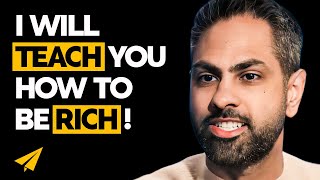
Ramit Sethi says the biggest wealth mistake is quitting your job to start a business without savings or a safety net. He built his business from a $4.95 ebook to $12,000 courses while keeping his day job, and teaches people to identify what they actually want to spend money on, then scale that deliberately instead of obsessing over cutting costs.
Chapters
Something I encourage a lot of entrepreneurs to think about. I think a lot of people, they will go from their full-time job, quit. They have very meager savings, and suddenly they're like, this has to work. Well, now you've put yourself in a bad position. Either start it while you have a full-time job, do it on the side, and don't tell me you don't have time. You have time. And the second thing is build up your savings. Your savings are going to give you the runway or the flexibility to try different things. A business is not easy, especially going from zero to one. It's pretty hard. And if you're under a time crunch where you have like 2 months of cash left, you're going to start making bad decisions. Need motivation? What's your top 10 of belief nation? Hey, it's Evan Carmichael, and I make these videos because in my first business I was making $300 a month. I quit on my business partner, and the thing that saved me was studying the stories of super successful entrepreneurs. So I hope that this story today helps give you the motivation you need, because I still need it too myself. So today let's learn from one of the best, Ramit Sethi, and my take on his top 50 rules for success. Enjoy. The average of the 5 people you're surrounded with, that is a very powerful idea. And instead of closing the door on the people you hang out with, why not open the door to some new people? Why not find people who go to your conference, for example, or who are on my site, people who are ambitious, who have gone through these programs and say, you know what, can we set up a weekly check-in? It could be 5 minutes, it could be over text, but let's set up this check-in and just say, what'd you want to do last week? Did you execute? Why or why not? Every week, 9:00 AM Monday, let's do it. That's how you suddenly meet a group of people who are unapologetically ambitious. And that will change everything for you because instead of having to drag people to these self-development conferences and they say, that's weird, I don't wanna do it, the people you actively seek out are gonna be like, yeah, I'm in, let's do it. And that's powerful. Yeah, so find the new communities that you can have these conversations with. And don't cut everyone out of your life, but just start having those conversations with people that are more aggressive. Yeah. Like, do you know what I told people to do on my Instagram account? So I told people, it's important to find other people who support you. A lot of you are waiting around for some like millionaire to fall off from the sky and invite you to their private group. It's never going to happen. Never. Uh, instead, why don't you start it yourself? And I said, go into my comments, write who you're looking for, and then invite someone to join you. Like that. You don't need to wait. No one's coming to rescue you. It's not a Disney movie. Nobody's coming. It's only you. So take control and go find someone and then build that together. So how do you go from a group of people who complain about a $4.95 ebook to a group of people who are delighted to pay tens and tens of thousands of dollars? How do you create a community of 30,000 loyal, happy customers? These are consumers. These are people like you and me. They're in this room. And they are spending thousands of dollars once and then doing it again and again. And in fact, when they buy, their top criteria, not even their top 5 criteria, is about price. We do a ton of research, we collect hundreds and hundreds of thousands of data points. This is one, we ask people, "Why did you not join our course?" Look at the comments. It's too expensive. Another pivotal moment here. The world will try to drag you down in price. Silicon Valley will try to drag you down in price and say, "Nobody would pay for that." People don't pay for insert blank topic here. And if they do, they'll only pay $5 a month. Well, we don't believe that. We actually believe that there's room in the market to be the best. And we mean build the best products, select the best customers, and service them in the best way. We have no intention of playing in the $5, $50, $100 market. I'd rather give away our content. Than play in that market. So how do we do this? The key insight I learned was don't just listen to the first response, 'cause that's politically correct, that's what they'll tell you. But when you build something that is so good, it solves such a big burning pain in their life, then price is a mere triviality. And if you think about it, we all, we intuitively know this, we all have something in our life that we would pay anything for. Maybe it's, a business class ticket for your mom to come visit you so she can stretch out her legs, right? Maybe it's a beautiful leather jacket, maybe it's a bag of chips, you just love these chips, whatever. We all have something we'd pay anything for, and the same can be true for your products as well. There are some people around us who just seem like they are born with natural confidence. You know who I'm talking about. They're super smooth, super confident, they always know the right thing to say. Think about, President Obama. He just seems like a smooth guy. Think of one of his famous "Yes, we can" rally speeches. Not being political here, just talking about his oratorical skills. What do you notice about how he speaks? He's powerful. He's decisive. He speaks slowly and almost never stumbles or stutters. His points are clear. And they're to the point. He's the epitome of confidence when it comes to a speaker on stage. So when you look at somebody like him, it's very easy to assume that he has some innate ability that he was born with. Either you have it or you don't. But the truth is, confidence is a skill. And President Obama, just like all confident people, built that skill. He practiced it over a lifetime. So here's a simple example of how you can control your confidence in less than 20 seconds. Take something you routinely say, like what you did this weekend, and change the way you say it. I want you to channel your inner super confident person. It could be Barack Obama, it could be Susan Sarandon, it could be whoever you want. Don't focus on who it is. Don't even worry about what you say. Instead, focus on changing how you say it. Sit up straight. Speak slowly. And imagine what you're saying is incredibly important because the people listening want to hear it. Let me show you an example, a little before and after. Yeah, uh, I can't even remember. I mean, I think it was pretty good. It was actually pretty crazy, but I just went to a movie and saw some friends, you know, the usual, I guess. Now let's compare the after. We had a great weekend. I was with the kids on Saturday, then Michelle and I caught a Broadway show and finished the night at that new sake bar downtown. Now, what'd you notice? Notice first that I'm intentionally using someone else to role-play. This really lets us get into play-acting without worrying about our own life, our own Saturday. Ooh, maybe I don't have as cool of a life as going to a sake bar. Don't worry about that. All we're doing here is working on our delivery. Remember, nobody sees inside of you. They don't see how confident you are, how much work you spent practicing, All they see is the way you answer a question or the way you sit when you're talking to them. So when it comes to confidence, confidence can actually come from the outside in, not just from the inside out, which is what everybody tells you. So instead of waiting for it to just magically appear, where's my confidence? Where is it? We're actually changing our behavior. Something everyone can do. And we're letting the confidence follow. The external influences the internal. And once you master this concept, you can apply it to a lot more than just how you speak and how you sit. Also, to make sure you're actually taking action after watching this video, I've designed a special free worksheet just for this video. The worksheet will highlight all the lessons learned in this video as well as pull out our 3 favorite learnings and quotes that will inspire you to actually do something. The worksheet will also give you space to write down what your key takeaways are and your specific plan of action to make sure you're getting results. If you want the worksheet designed specifically for this video, absolutely for free, there's a link in the description below. Go click on it and start building the momentum in your life and your business. I'll see you there. When anyone says, you know, I bought a business class ticket, Notice the almost instinctive reaction. It's like, "Ugh, what a show-off," and all these other things that come along with it. And I want to challenge people. I have this principle I call the D2C principle. And instead of being derisive and saying, "Oh, so stupid. That's ridiculous. I would never do that," I actually want to encourage everyone to be C, curious. Why would a guy like Lewis intentionally spend money on a business class ticket? Man, he earns good money. He has a lot of options. He must know something that I don't, and I want to understand why. So from D to C, and if you start to take that perspective, especially on high earners and how they spend their money, all of a sudden you stop saying that's ridiculous, or if I had $1 million, I would never do that. Instead, you say, why did that person spend on that? And I want to know. Maybe I don't agree. Maybe, you know, you become a multimillionaire and you don't want to spend on business class. You just don't care. But it's, it's interesting that you do it, and I'd like to know more. Yeah. If you go to this site, I Will Teach You to Be Rich, you can see the names of the products, but you can't buy. Why? Because I don't want you to go and just look at the course and just say, do I like this or not? Do I feel like— it's not a pack of gum. These are works of art that we spent years and millions of dollars building and testing. And so what I want to do, instead of just trying to get money quickly, I wanna build a relationship. So the only thing you can do, you can read 12 years of free material, you can look at our thousands of YouTube videos, but if you wanna know more, then I wanna send you free material through our email list. And so you can see there's lots of places to sign up to get tons of bonus material. Now if you do that, suddenly you and I have a relationship, and I can send you emails, and on and on. So we have, you know, many hundreds of thousands of people who are on our email list and they get emails from us 4 or 5 times a week. Isn't that a lot? Yeah. Well, a lot of people, I've heard that I email more than people's girlfriends, boyfriends, moms, dads. I say, I love it. Because our emails break all the rules. They're really long. People say, oh, nobody has time, make it quick. Wrong. If you have something interesting to write, people will read 20-page-long emails. And we don't allow people to buy until the time is right. When the time is right, we open up our course. You can join if you choose. If not, that's totally fine. Who here has felt some sort of rejection in the last 30 days with your business? Come on, don't bullshit me. Everybody does. And you know, the crazy part is they won't tell you the truth. They'll never say, uh, you spent the last 4 years of your life building a photo sharing app, and the truth is I don't really care if my photos aren't organized. They'll never tell you that. Just be like, ah, I think the price is a little high. Remember that $5 ebook I created? I had people who were like, Ramit, love the ebook, but I don't trust PayPal. But I do trust the US Postal Service. So if you could set up a PO box, in fact, I'll buy 2 copies. And naive Ramit in 2006, I was like, okay. So I actually set up a PO box, and I was like waiting, like where's my bushel full of checks? And over the course of an entire year, I received one check for $4.95. Don't make my mistakes. The thing is, they'll never tell you why. They'll never tell you why. So I want to show you how we handle nos. Here's a script, I'd like to show it to you. This is from a student of ours who applied for a program, he was accepted, and then he didn't join. Let me read it to you. Hi Karthik, I noticed you were interested in testing blah blah blah, and you filled out the application, but you didn't sign up. 'How come? The course is closed now, but I just wanted to reach out and find out what's up.' So this is written very intentionally. First, people don't like to be told, 'Hey, you said you were gonna do something and then you didn't do it.' They don't like it. But we still want to find the answer to our question. So we did a couple things in this email, and we've tested this. One, we kept it really short. Two, it's super conversational. Notice the phrases, "how come?" Or, "let me know what's up." Sometimes we say, "out of curiosity." We're not saying, you know, we're not being super corporate about it. And then third, we have to be really clear, we're not trying to sell. In fact, the course is now closed. We cannot collect your money, we don't want it. We get massive responses. So if you have had people who are on your email list or in your customer base, they have not bought something from you, you're sitting on a gold mine. The type of answers we get from this are amazing. They'll say things like, well, I'd love to join, but course looks awesome, but I'm in Australia, and I can't fly to New York. We're like, dude, it's an online course. But that's not their fault, it's our fault for not communicating that. Or we get people who say, this course looks amazing, but it's really expensive, and I can't convince my husband or wife to buy into it. That's actually really valuable, so now we can add that to our FAQ. So we collect these data points at every stage of the customer experience before the product, in the product, if they refund, et cetera, et cetera. I can't tell you enough, you have to listen to the customer. Why is it hard for us to talk about money? Why is it scary? Why don't we talk about it enough with our friends or family? Why is that? There's one great study showing people would rather talk about their sex lives than their amount of credit card debt. I love that. I think that's totally true. It's true. 100%. And Think about what money means. It means that you were successful in this culture. And I am here, you know, people know me as the I Will Teach You to Be Rich guy. And I have always said money is an important but small part of living a rich life. Just because you make more or less doesn't mean we're better friends. Not at all, has nothing to do with that. But it is important for people to be in control of their money, whether they're making $15 an hour or $15,000 an hour. And there are people I know who make that. So that just simply shows, are you in control of your life at whatever level you are? It's embarrassing for people. They're never taught this. And then suddenly they graduate and they're supposed to know what tax withholding is and what a 529 and 401(k) and all this crazy stuff is. Nobody taught it to them. So my goal here, the reason I'm talking about this is for people to feel more confident about their money, for them to take control, and for them to stop being afraid and listening to random people giving them advice. Who are your money mentors? Who's been your mentors? You know, I've studied most of the greats, and I read their stuff. I think it's absolutely fascinating to know from different types of investors, different types of personal finance personalities, but the people that influence me most come from from the world of psychology. They come from different worlds. So we have an amazing professor, B.J. Fogg, one of my mentors, Brian Wansink at Cornell who wrote an amazing book, Mindless Eating, which is so close to money. It's just about food. All these guys, Cialdini of course, who teach us about the true theoretical psychology of why we do what we do. Those are the people who actually influence me the most. I actually wanna make the case against Extreme frugality. Everybody, everywhere you turn, you hear people telling you what you can't do with your money. No lattes, no jeans, no vacations. Save it up in a little treasure box. And then one day when you can't even see anymore, then you'll be able to take the greatest vacations of your life. Who wants to live like that? I would rather you set your automatic savings goals. You set your automatic investing goals. and then you take the rest of your money, your guilt-free money, and you spend it extravagantly on the things you love. One way, very simple, when you go to the grocery store, maybe you buy a bunch of pre-cut vegetables. Now, when I was growing up, my mom thought this was a huge waste of money. I now think it's a great use of money because it buys back my time. Another thing you can do, a lot of people live in New York, hire a dog walker. You have a dog, you may not have time to walk that dog in the middle of the day, Boom, dog walker done. And then as you become even more successful or more strapped for time, there are even more ways that you may want to spend your money. You may want to hire an assistant to help plan your travel. You may want to spend for a business class flight because when you arrive, you're getting straight to work. These are all different ways that you can be thinking of buying back your time. As a general rule of thumb, I want you to be saving 5 to 10% of your take-home income, and I want you to be investing 10% of your take-home income. If you do that, you're on a good track, and that means that the rest of your money after your fixed expenses like your rent or your mortgage is guilt-free money. I didn't ever start the site to generate revenue, so it was a blog. In fact, I didn't generate a cent of revenue for about 3 years, and I didn't put ads, I didn't do anything because I didn't want people to think that this was some way for me to make a quick buck. I mean, the name of the site alone, it already kind of makes you like, who's this weird guy? So eventually, um, about 3 years after starting it, I said I want to just try selling something on the side. I'd never sold anything online, and this was late 2006, so there weren't a lot of people selling a ton of stuff online. But I said let me put together a small ebook. It was about 30 pages, and I sold it for $4.95. And I, I absolutely love this because first of all, that number is so small. And now, you know, we have courses that sell for over $12,000, and, and yet that $5 ebook was the most scared I've ever been about selling anything. So remember, I've been writing for free for for 3 years, probably 3 to 5 times a week. I had a community that was really loyal. So these people were, there were like hundreds of comments on posts. And I'm like, oh my God, I'm gonna post this. So I post the ebook, it was a good ebook, and it was beautifully designed. And I was afraid that people would call me a sellout, that people would say, oh, so this is a trick. You've just been building this up so you can sell. And actually, that's exactly what happened. I had people, and the comments are still live, you can go back and look at it, where people said, oh, I will teach me to be rich. And oh, so clearly you've jumped the shark. All these horrible things. And as an entrepreneur, that really hits you in the gut because I felt betrayed that I had been doing this for free for years. And I felt that, people were questioning my ethics, that why would I play a 3-year trick, right? And just all these— and also, when you think about it, is selling really tricking someone? No, I don't believe it is. But back then, I was scared to sell. I didn't think anyone would buy. I was selling from my heels, which means I was almost apologizing, right? So many entrepreneurs do that. Oh, I'm afraid, so what am I gonna do? I'm gonna lower my price. Yeah, that'll make me them love me. And, and of course, all of those things were wrong. What stood out to me though was that while there were all these loud vocal minority commenters who were worthless, they were never going to buy no matter what, right? There was a quiet group of people who were buying, and I could see the numbers. They were buying, they were sending me really positive emails, they were opening my emails more. So So I could see the math. And I was kind of confused. How come there's this loud vocal minority of complainers, and then there are these people who are actually loving it and saying, what's next? Right. So that's when I made the decision that I didn't understand what was going on, but there was something going on here. Yeah. And I want to figure it out. And over the next 3 years, I dived deep into the psychology of selling, into how to create world-class class products, pricing, basically how to create value that people are so happy to pay that price is a mere triviality. What's a few simple things that they should be doing right now to have a checklist to do before the end of the year to then crush for a whole 12 months moving forward? All right, I'm going to give you something called the ladder of personal finance, which tells you where your money should go. Okay, this is just step by step. Put your money here. And if you want to know all the details about it, you can check out the system. So in the book too, it's in great detail in the book. Got it. All right. So if you've got some money lying around, what should you do with it? First of all, if you've got a 401(k) match at work, you should max that out. That's free money. Take advantage of it. And if you're not sure what that means, go to your HR person and say, does this company match any 401(k) contributions? If they say yes, do what I said. Next, if you've got debt, pay it off. Pay it off aggressively. You know what's interesting is that most people in debt who I talk to don't actually know how much they owe. And that's shocking. You would think, of course they would know. No, they don't, because who wants to proactively— Stare at their debt all day. Yeah, and just feel bad about it. But you know what? You feel much better when you have a plan. And the number one question I ask folks when they tell me they have debt, I say, number one, do you know how much you owe? They never do. Number 2, for the rare people who say, you know, $15,000 or $70,000, whatever, I say, what is your debt payoff date? You can actually plug it in. You can pay— plug in a debt payoff calculator online. You can map it all out and you will be able to know the exact month your debt will be paid off based on how much you're spending right now, based on how much you're contributing to that debt payoff. Now, you will be able to see that if you add an extra $50 a month or $100 a month, that thing will actually oftentimes shorten by years because of the interest. It doesn't matter if it's going to take you 3 months or 4 years to pay off your debt. It doesn't matter to me. What matters is that you know the date. Okay. So that's number 2, pay off any debt you've got. 3, if you've got money left over, go to your Roth IRA and if you can max that out, that's a great tax-advantaged account. So it grows tax-deferred. Is that right? Yeah. Yeah. Okay, so, um, uh, that's 3. That's 3. Okay, it's actually post-tax money. And then 4, if you still got money, you're going to go to— back to your 401(k), which is another tax-advantaged account. You're going to max that out. If you still got money, you're going to create a non-taxable, non-retirement account and just put your money in there. Now there's a few other wrinkles to this. There's HSAs available. There's also your emergency fund that's talked about in the book, and all these all these things, they're details. But that just shows you, when you've got money, this is where you go. There's a structured way of thinking about it. A ladder towards financial success. Exactly. And if you follow the steps, it's almost like a waterfall. It just goes from step 1 to step 2 to step 3, and your money's going where it needs to go automatically. And you will feel great. You'll feel great, which is so important. And also, you're going to look at your accounts and see debt's going down, investment and savings are going up. And all of a sudden you wake up 6 months from now and you're like, oh my God, I didn't realize I have that much saved in my savings account. That's because of the decision you made today. After running this business for 12 years, I think I learned, I think my beliefs changed. Um, I believe now that the world will always try to get you to be vanilla. The world wants you to do everything like them. They want you to lower your prices. The world will pull you down. They want you to make your website look like everybody else's. Easy, fast, secure. And the minute you do it, they abandon you. The world wants you to look exactly like it, and the minute you do it, they will abandon you. I think that there are definitely systemic problems when it comes to things like inequality, when I think it comes to things like student loan debt. Yes, those are problems and there needs to be a lot of work done on those. And we can simply look at history to see how crazy tax rates are compared to where they've been historically, or how crazy student loan debt is compared to where it was historically. But whenever I hear someone who starts complaining about the large-scale societal problems, I just have one question. I say, do you invest in your 401(k)? And it's one thing to talk about systemic problems systemic problems, and we should talk about them and tackle them. But the best thing we can do for ourselves is to focus on what we can control. And that's what I believe. That's why I'm here. Some people work on systemic problems. I'm here to help people one-on-one with their money and their psychology. Yeah, that, that to me is a very interesting and powerful approach. I come at it the same way. I was giving a talk at Google and there was an African-American gentleman in the front row. And basically the question was like, is it harder for me, and my answer was, yes, that seems pretty apparent, but now what? So you can go try to tackle that systemic problem, and I'm super glad that there are people who are wired for that, but for me, I'm always like, what can I do right now today? Because when you're dealing with huge systemic problems, you're basically, you're doing something amazingly altruistic for the next generation, but the odds of you being able to reap the benefits of that are pretty slim. Limb. Yeah, yeah, I agree. And I think that when you can start to take control and make one step after another— for example, for people who are in debt, it's so interesting. When people write me about how to get out of debt, over 90% of them don't know how much they owe. So if you don't know how much you owe, I understand that. Why would you want to open up the emails and the bills? You don't know what's inside, but you know it's bad. But the first step to doing that, to paying it off, is to open it up, confront reality, get real, and then make a plan. And all of those things can be done in and of yourself without regards to what's going on outside your house or outside your email inbox. In college, you get interested in finance. How did you start getting that interest? Another, another accident, which was I took that first scholarship I got and I invested it in the stock market. So they had written the check to me. This is 1999, 2000. I take that money. I think I know what investing is, which I don't, and I lose half of that immediately. That's not a good thing to do with your college scholarship money. So I was like, oh man. And I started studying personal finance. Now finance and personal finance, very different things. If we look outside the street, we see investment bankers. They have nothing to do with money that you and I operate with on a daily basis. So I started reading and I saw all these experts saying these, these old chestnuts we've heard over and over: keep a budget, don't spend money on lattes, never go on— never do anything with your money, just sit at home like a hermit. Yeah. And at the same time, I was studying human psychology, I was studying persuasion, I was studying all these facets of human behavior at Stanford, and I just realized, like that book The The emperor has no clothes. I realized that all this expert advice didn't actually work. So when people say keep a budget, great in theory, nobody keeps a budget. When people say don't spend money on lattes, great in theory, nobody listens to it. In fact, I don't even wanna listen to it. Like I go out, I wanna go out, I wanna buy a round of drinks for my friends. I want to be able to go in a taxi if it's really hot outside or whatever the case may be. And the experts spent the last 50 years telling us all the things we can't do with our money. And so I started developing a philosophy of what you can do and living a rich life. And that doesn't mean putting it all in a savings account and just counting your pennies every day. I think it actually means living life. Sometimes I learned that people just aren't ready to buy, and that's just the way it goes. Like, we had people that have been on our list for 6 years years. They've seen some of these products be launched like 7, 14 times, and then one day they'll just buy randomly. And I see it come across my dashboard, I'm like, what is this? So I'll email them, hey, notice you've, you know, joined finally after 7 years, what's up? And they're like, they'll tell us the most interesting things. They'll be like, oh, well, I tried to do it on my own, it didn't work, so I'm finally ready. Or, oh, I paid off my debt, or just because. And so my key lesson from that was just to be patient. If you've put the right process into place, if you've selected the right customers, if you've built the best products, you have the best marketing, our philosophy is it's just a matter of time. So we grow up with these things I call invisible scripts, and these are the scripts that are beliefs that are so powerful we don't even realize that they're, they're around us. That's why they're invisible. So a classic one in America is the American dream is Buying a house. Where did that come from? And in fact, there's all these phrases that people use like, you're throwing money away on rent, they don't make more land, you know, and on and on and on. If you really deconstruct that and you actually run the numbers, you might discover that actually buying a house is often not the best investment. And this is super counterintuitive. People get really mad because real estate is religion in America. But if you actually dive in deep, you might discover, wow, there's a lot of parties who want me to spend a ton of money. That's why, for example, I could buy today, but I rent. And when people hear that, they're like, wait, I thought the I Will Teach You to Be Rich guy is rich, so why is he renting? They get very confused because real estate is religion. You know, another thing that is really common today for people is there's no way to get ahead, right? Especially for young people. Social Security won't be around, etc., etc. And I just don't believe in that. I think if you go on to Reddit or you go on to these places where it's a lot of people who are disaffected young people, they create an echo chamber of other people who want to victimize themselves. Then you have a choice. Do you want to be reading those threads? Or like I was reading the comments on your YouTube videos. I was like, these are the best YouTube comments I've ever seen. People are positive, constructive, they're pointing out things they saw in the 32nd minute of the video, meaning they actually watched the whole thing. Those are the kind of people that I want people to be around. So it's not impossible to make money, there's actually a lot of people making money. It's not impossible to get ahead, pay off debt, even invest and grow. There's a lot of people doing it. But if you're surrounded by people who constantly complain about how difficult it is and it's impossible, guess what, you're gonna absorb those invisible scripts. You'll notice that a lot of these online entrepreneurs, what do they tend to brag about? Have you noticed? Number 1, how much money they make. Yes. Number 2, subscribers. How many subscribers. And number 3, how big their team is. Have you ever noticed that? And also number 4, how little they work. Oh, I make a million dollars, I only work 2 days a year. Okay, go fuck yourself. So, so you'll notice that we don't brag about how much money we make. We've mentioned a couple of times some remarkable results that we've generated, but we don't go around bragging about how much money we make. We don't brag about how many people we have. We don't brag about how little we work. I work a lot, and so does our team, and we love it. I would rather spend our time bragging about our students' results, and that's why you see us putting them front and center. We put their photos, we put their full links to their websites, we fly them into New York and do full case studies with them. Very expensive, but it's the right thing to do. I'd rather talk about how we took ordinary people, like the people watching, and helped them build massively successful businesses, or learn how to cook, or lose weight, whatever. I'd rather talk about that than, oh, look how many people I have, and look at our budgets, and da da da da. How does one become rich in an environment where there's 2% Treasury rates, and unemployment is high, it's difficult to get a job for a young person, person, how do you do that? You know, I think there's a few ways of looking at it, and the first thing I would consider, especially based on psychology, is to focus on the big wins, right? So the latte example is bad advice because one, it doesn't work, and two, it's minutia. Saving $2 or $3 a day doesn't really do anything in the grand scheme of things, and it makes us feel guilty, right? Instead, if we get these 5 or 10 big wins right we never have to worry about lattes or the size of our Diet Coke ever again. For example, starting to invest early, getting your asset allocation right, not buying real estate simply because you think it's the best investment like so many people believe. If you get these 5 or 10 big wins right, negotiating your salary, etc., you never have to worry about the little things. There is room in the market for the best. The things that we do in product development and growth and customer service, and all the groups that we have. It's about craftsmanship. It's about spending whatever it takes to build the best product. We do test, we do A/B test, we do all of that, but taking the time— because when we launch something, we know that it has to be the best. That's how we honor the students who joined our programs. There's room in the market for the best. Don't ever let the market pull you down. You should pull the market up with you. There's two key things that stop people from moving forward, and it stops them for months, years, even decades. So the first one is, I don't have an idea. Oh, you don't have an idea? So what does that mean? You're just gonna wait for an idea to fall down from the sky? Oh, I don't have an idea either. You find an idea and you search out for it, and you generate hundreds of ideas, and then you slice and dice them and test them. So that's number one. The idea that you're— and a lack of idea is stopping you. That should never be the case. There are ways to generate ideas and then test them for profitability. That's what we talk about on our site. The second thing is, I don't have any time. Please give me a break. You don't have any time? Yes, you do. So it's almost like if you say I don't have time, that's a politically correct way to say this is not a priority, because no one can ever disagree with you and say Hey, you actually have time. It's sort of very politically incorrect to say, but if somebody says, I don't have time, like, yeah, I'm really busy too, man. So don't say that. When you start using phrases to describe yourself in a negative way, it becomes a self-fulfilling prophecy. So like I used to say, I'm just a skinny Indian guy. I used to weigh 50 pounds. I was very skinny. I was 50 pounds skinnier than I am now, and I was like, I'm just a skinny Indian guy. I didn't put on any muscle. Wrong! I just wasn't eating enough and I wasn't working out. But because I said that, it became part of my identity. So when you say, I don't have time, I'm so busy, or the worst, I'm overwhelmed, then you become overwhelmed. Yeah. So if you fix those two things, know that you can find not just one idea, you can find hundreds of ideas. And the second thing is, you do have time. The world is under your control. The world does not control you. If you change those two things, you are very likely to succeed. I was giving a talk and I asked somebody what they love spending on, and she said clothes. She said she loves buying clothes. I said, great. And she was so excited. I love just whenever you ask people, their eyes light up. And I asked her, what would it look like if you quadrupled your spending? And she said, I would have clothes everywhere. Like all day long I'd be ordering online. I'd be sending half of them back. And I said, where do you shop? And she said Topshop. And I said, okay, so you quadrupled your spending, where would you shop? She said Topshop, I just have a lot more. And it was fascinating because when you ask people what they love spending on and what, if they could spend more, what would they do? Most people have never thought about it. She had limited herself into the box of Topshop. Now, I don't know, Topshop's perfectly fine, that's fine, but I guarantee you if you quadrupled or 10x'd your spending on the thing you love, your money dial, you might shop at a different brand. You might even fly to the factory that makes them and get a behind-the-scenes tour, as I did when we went on our honeymoon. So why I'm sharing this is that so many of us operate in a linear way. Oh, if I have this thing I like— I like coffee, I might get 2 coffees a day. But what if you actually truly love it? You might go to the coffee factory and bring your family with you. So there's this whole idea of what you can do with a rich life, and it doesn't just mean more stuff. It could be experiences. It could be security, like buying a house in a place that keeps you safe, or staying in a hotel where you're around things that are comfortable for you. There's so many different ways to look at a rich life, and most people, I want to challenge them to really think what it would feel like to spend more on the thing they love. Of course, if they cut costs mercilessly on the things they don't. I liken my journey with money to the journey that I took with fitness. About 10 years ago, I decided to get into— get more fit, and I started with a very simple reason, which was pure vanity. I was like, I want to look like that. And I think vanity can be a good reason to get started with something. But I think if any of us have done something that we got good at, whether it be an instrument or programming or a different language, you might start for one reason. What I found is that I ended up falling in love with the craft and the discipline to go every single day and to know that, yeah, you might look a certain way, but that's actually a byproduct of all the work that you've put in every single day and perfecting that craft. Same with money. Whereas I used to go after money, now I realize that money is the byproduct of doing all the right things. And I actually remember this as recently as 6 months ago. We're on our honeymoon. And I love hotels. I keep a list of hotels that I want to go to, and like, I love them. And I remember we were staying at the, the last place on our honeymoon, and we were already happy because we're on our honeymoon and just having the time of our lives. But I remember being even more happy because I was at this dream hotel that I'd been wanting to stay at for years. And I was trying to figure out, why am I so happy, even happier than the baseline. And what I realized was being able to be there with my wife, but also be able to be there and not have to worry about, can we afford this? Or can we order room service? That meant that I had done all the right things for years. I'd showed up at work, I got a team, which is an amazingly talented team. We made the right decisions. We We recovered when we made the wrong ones. And now this is the payoff. This is one of the rewards of our rich life. What about online launch, your first launch, your first product maybe? What do you see? What are some big red flags people need to look out for? One is discounting. So if you truly built a product that's amazing, why on earth would you discount it 50%? It makes no sense. Wow. Second, people trying to create their first product that's $1,000 or $2,000. $100. Big mistake. We recommend our Zero to Launch students start at a $50 product. Why? Because you learn certain things at $50, at $500, at $1,000. You learn certain things about what needs to happen in a launch, what kind of pricing psychology you're going to encounter, what type of customers are you going to get. You will learn that at $50, but it's different at $500. Mhm. And so we want our students to go methodically up the value chain, that's how we went from a $4.95 product to like $12,000. We didn't just jump from A to Z. You're the CEO of your business. You decide. If you wanna run a McDonald's type of business, awesome. McDonald's is an amazing company. If you wanna run a Louis Vuitton style type of business where you're focusing on select customers, you can do that as well. Don't ever let anyone pressure you into one decision. You are the CEO and you decide. Really fast, define a rich life for people, because I think that's going to be a key component to this whole discussion. Well, it's different for everyone. My rich life early on was to be able to go to a restaurant and order appetizers, because I never did it when I was a kid. Like, ever. We would go and we'd eat out once every 4 to 6 weeks if we had a coupon, and we would like share 2 Cokes with the whole family, and we would never order appetizers. So I was like, I'm going to do it. And then the next dream for me was to be able to hop in a taxi if I lived in New York during the summer without having to take the train and sweat before a meeting. Now my dreams got bigger, and there's a variety of things that are my rich life, but everybody's is different. So some people— I have people in my book, they're like, I used your book, my wife and I retired at 35 and 36, we drive around in an RV. I don't want to drive around in an RV, but he and his wife do, and I love that. So a rich life is what you define, and when I ask people, "What's a rich life to you?" they usually say two things: freedom, which is a very nice word, but it's kind of generic, and they say a number, usually a million bucks. And I say, like, "Freedom, what is that to you?" And they're like, "I want to do whatever I want when I want." And I'm like, "Get specific. Do you want to order appetizers? Do you want to do yoga at 3:00 PM?" And that's where the conversation stops. So if you're watching, I want everyone to think, what is your rich life? And take it from the clouds to the street. I want to buy 3 different Lululemon tank tops a month because I don't ever want to have to wear an old one. Whatever. Go as crazy as you want. I want to travel for a month and I want to bring my family with me. Great. A rich life is different for everyone, but it is about your definition. In my own life, There are several things I just don't care about. Don't have a TV. I use a MacBook Air that's 7 years old. I know I should probably work off a dual monitor setup, but I just don't care. And I've lived in the same apartment for 10 years and I've rented. And I know the society tells you that renting is throwing money away. That's not true. These are things that I just don't care about. But on the other hand, convenience, I'll spend essentially anything. Hotels, I will spend essentially anything. And there's a few other examples. My wife and I together, we're coming up with our own money dials. Relationships is a big one for us. So I would encourage everyone to really take this concept and think about it. And don't stay at the surface level. You're— if it's fitness like yours, great. Really think about what that looks like. Another woman in DC, she was into fitness too. And I said, what would your life look like if you quadrupled it? She's like, I would be shredded. I was like, love it. Think big. Don't talk yourself out of it. So that is what I've learned about money dials. I see tons of entrepreneurs. They have all their designs amazing. They have the best headshots. They get the coolest funnels. They just forgot one thing. They forgot to build something that people actually want. And so you can have the best photography. But if you are not solving a true problem that people are saying, take my money, please take it, then no amount of art is going to help you. I started off with a lot of self-study. I went to watch at that time the Today Show, or tonight, sorry, Tonight Show. It had a ton of celebrities. And if you watch celebrities, they are the absolute best in the world at public speaking. Watch them, notice their mannerism, Notice their tonality. Notice their body language when they're telling a story like this versus when they're telling a story like this. And so I started watching, and that was the first part. The second part was I got lots and lots of practice. Public speaking is one of those things you can't learn it just by reading a book or even watching YouTube videos. You got to get out there. So if you don't have opportunities to do it like presentations in class, or, you know, you're speaking on panels or something. Where else can you do it? Who else knows? Where else could you find opportunities to practice your public speaking? Toastmasters? Awesome. You can create a book club or join some kind of organization where you have to go around and talk about something. Find a way. And then finally, when I got more intermediate, I started getting more formal training. I did I did a media training group in New York. I hired a speech coach for my Forefront Chicago speech. It was my best speech ever, and that was because I had reached the limits of my speaking ability, so I hired a coach. So that was my trajectory, but I think the key thing is there. Number 1, you can start with some self-teaching. Number 2, you need practice. You need to take a lot of swings, and then if you get more intermediate or advanced, you can hire coaches and things like that. I also think that there are other money lenses, other ways to look at the world. We heard in the back from the woman who said that she loves to spend on convenience, which is my money dial. Feel safe, feel relief, feel luxury and fortunate. Safety is something that we all kind of intuitively get when it's for someone else. Oh, we'll spend extra so that our kids are safe. Never going to question that. But when it comes to our own spending, we put back that frugality lens so much of the time. It's been drilled into us by society. There are other money lenses. There's the money lens of results. I could get a workout on YouTube, or I can pay a personal trainer for better and faster results. There's experience. Why do you think people go to a really nice restaurant, right? 5+ courses, the experience. There's pure luxury. This sweater is not going to last 10 times more longer than that sweater, but you just want it. And so sometimes we need to— I think of it almost like a musician. You want to have the note of frugality, but you don't want to be a one-note player. Sometimes frugality is the perfect note, but sometimes there are other notes you want to put in: security, luxury, results, whatever your money lens is. I don't want anyone in this room and anyone watching to be a one-note player. There are different notes to use at different times. I don't like budgets for several reasons. Number one, they don't work. When you talk to any American and they know they should keep a budget, and yet they don't. And why is that? Because number one, it makes people feel bad about themselves, and if there's anything Americans are good at, it's avoiding feeling bad. Number two, they don't know how much they owe or how much they spend, but they know it's bad. And so who's gonna go through the work of actually writing down this stuff or opening up some account and then looking at it? They might do it for one month, they may do it for two, but after that it's And I've seen this consistently through my own millions and millions of readers. What I prefer is something that is similar but very different. And that is, instead of looking backwards at what you spent, look forward and say, where do I want my money to go? And so what I do in the book is I recommend some specific percentages. Here's how much you should be saving. Here's how much you should be investing. And this one people really love. Here's how much you should be spending on guilt-free things. Be spending. You want to buy a leather jacket? You want to go out to an amazing dinner? Awesome, be my guest. So I want people to not necessarily look backwards in their spending, but actually look forward. And as part of that, focus on the things they love as part of their rich life. That is much more motivational. It also sticks a lot more than every month looking at what you spent and feeling bad. Let's add some context around your investment desires. I think that one of the mistakes that a lot of financial people make is they try to make everything about math. Hey, Tom, let me tell you all the reasons what you just said is wrong. And let's look at the return rates. And you might listen to me politely, but deep down, you're like, I don't like what this guy's saying. Let's actually start with psychology. Okay. What you just told me is, hey, I like gamification. I don't want to think about it. And I have a long, long time horizon. Okay, let's start there. Perfect. And you also said something really important, which is you like to create. That's what drives you. Just managing what you've got is not exciting. Are all those things accurate? All right. So here's what bad advice would be. And then here's, I think, what would be better advice. Bad advice would be, Tom, sell all that bullshit. It's all like crackpot stuff. Put it in a simple target date fund and get on with your life. Come on, Tom, that's what the investment returns say. And you're gonna be like, get the hell outta here. Better advice would be, hey Tom, it sounds like you wanna have some control over your investments. It sounds like it actually drives you to see, you know, at what price you're purchasing it. But it also sounds like you don't wanna think much about the basic mechanics. So, why don't we do something like this? Why don't we take 80%, 90% of your portfolio and put it in low-cost funds, and take 10% and say this is total play money? In fact, you have to play with it or invest it or spend it in some way. And if it's going to be on NFTs or Bitcoin or whatever, great. Suddenly, now you have a real thesis, which is this is long-term stuff. We kind of know the returns there. Great, I'm going to be safe no matter what happens, but I'm also going to be making— giving room for my psychology, my need and desire to track things and gamify it and play with it. When you ask people, what's your rich life, they often give you very similar answers. I want to do what I want when I want. Okay, that sounds pretty good. What do you want? And then people get very quiet. It's something we haven't really deeply thought about. Another common answer people give is, I want to travel. I think that's awesome. Where do you want to go? Somewhere in Europe. I want to know the details of your rich life. I want to know where you want to go, when, what airline seat you want to fly in. Who you want to take with you, even where you want to eat. The details are what makes a rich life rich. I want to give you a couple of examples of how unique and personal a rich life can be to you. One of my readers told me that his goal was to retire in his 30s with his wife and to travel around the US in an RV. Now, that's not my rich life. I don't want to go anywhere near an RV, but I love and I admire that they designed their own rich life for themselves. My rich life is very different. When my wife and I decided that we wanted to travel more, we thought about what would make it magical. So for example, for our honeymoon, we went on a very long extended honeymoon across the world. Started in Italy, brought our parents with us because that was a special thing for us. And then after Italy, our parents left, we continued on to Kenya on safari, India, and Thailand. At each place, making it our own, staying in beautiful hotels because I love hotels, also eating at local people's houses, going on food tours, things that made it unique and special for us. I share this with you because I want you to know that your rich life is yours. Your rich life could be picking up your son from school every day at 3 PM. It could be buying a $1,000 cashmere sweater, or it can be traveling for 3 months a year. There's no judgment here. Your rich life is yours. What I want to do is inspire you to think about the vivid details of your rich life and then to craft it, to design it, to make it yours so that your rich life fits you almost like a handmade glove. Many people, especially in America, are buying things that if you probed them why they're getting it, it boils down to, I want to feel good for a couple of hours. I want to spend money I don't have to buy things I don't need to impress people I don't even know. On the other hand, though, it's perfectly okay if you say to yourself, you know what, I really want that. Yes, get it. Let me show you how to even dream bigger. So I think for this person, what I'm willing to bet is that they are playing whack-a-mole with their money. So they wake up, they start the month. Ooh, I'm motivated. I need to save some money. I really should do that. And then by the end, they're scrolling Instagram, they're reading their emails with links to stuff to buy, and they buy this and they buy that and they don't even really care about it. I would rather have them sit down and say, you know what, what do I love? Stop dreaming small, dream big. I want a leather jacket. I'm gonna make this up. Maybe I could get a leather jacket from Gap. Dream bigger. Maybe you can get an even cooler leather jacket or something you really love. Okay, great. What's it gonna take to get that? I'm gonna need to I'm going to save for X months and I'm going to discipline myself by automating the money so I don't have to log in every day. And by the— you're building this muscle of discipline, of automation. And at the end, the payoff is you get that thing you truly loved. What a lot of people might discover, which I think aligns a lot with the minimalist philosophy, is I didn't really even want this leather jacket. Yes. I think that's ultimately the message of minimalism is you probably don't I don't want that. And my message is, maybe you did. And if you did, awesome. Now you know the work that it takes to get there, and now you can plan for something even bigger next time. What do you love spending money on? I don't mean like, I mean love. You and I intuitively have something in our lives that when we spend money on it, it excites us, makes us happy. And if I asked you, what would you like to spend even more money on? You know it. Think about it. There are some common categories that fall under what I call money dials. And I call money dials because you can turn that dial up and you might even be excited to spend more on it. Let me give you a few categories. Some of these categories could be eating out. That's one of the most common ones. Health and fitness, travel, convenience, and a variety of other categories. So take a second right now. Think about what you would love to spend more money on. Okay, got it? Now I'm gonna ask you a few guided questions. I'd like for you to follow along. What if you could spend 2 times the amount of money you you currently spend? What would that look and feel like to you? Okay, for example, if you eat out every so often, what would it look like and feel like to double your spending on it? Well, for most of us, the answer is not much. So I'm going to push you a little bit. What if you could quadruple your spending on that money money dial, right? Turning that dial up 4x, what would it look and feel like? Now I want to point something out to you. A lot of people think linearly here. You know, for example, I remember asking this question on book tour when I was in Washington, D.C., and somebody's money dial was eating out. And when I asked him, what would it look like if you could quadruple your spending? His answer was, well, I'd probably have to go on a diet because I'd be eating out 4 times a week. Hahaha. It's one of those hahaha jokes because deep down everybody knows we're thinking linearly. We're thinking if I quadruple my spending, I have to quadruple the frequency. But that's not true, is it? In the DC example's case, I asked him, hmm, what if you 10x'd your spending? What would you do then? And he sat there for a second and then he said, you know, I have a list of every Michelin-starred restaurant in town. And I knew I was getting somewhere. I said, who would you take with you? And now it got very quiet. And he said, my family. I said, why? He said, because they've never been able to afford to go anyplace like that. This is an example of a money dial. When you quadruple your spending, or the next question, what if you 10x'd your spending? It doesn't necessarily mean that you would 10x the frequency. Yeah, sure, if you want to eat out double, fine. If you want to buy 2 times the amount of clothes, great. But think about all the different dynamics. Think multi-dimensionally. For example, if You might not just shop at the same place. You might actually level up. You might buy higher quality. In fact, if you truly 10x, if you turn that money dial all the way, you might take your mom and you might fly to Italy and get something custom made for both of you. What a magical experience. If you love health and fitness, you might not just work out twice a week. You might actually get a personal trainer or even fly to India for a 1-week yoga retreat. Now I know that these questions can sound unusual because for most of us, we've never thought about spending more on the things we love. We've only been told you have to spend less. But if you don't have a reason to earn and save and invest money, then it's no surprise that you're not motivated to do it. In many ways, money can buy you happiness. It can buy you convenience. It can buy you memories. It can buy you experiences. And for some people, it can also buy you things that you just like. You like a nice t-shirt? Fine. Money can solve that for you. So what I want you to do is to truly go through this exercise Start off with that thing you love. What is it? Is it health and fitness? Is it travel? Is it eating out? Is it convenience? And so on. Then what if you could 2x your spending? Easy. Not much would change. What if you could 4x your spending? And then what if you could 10x your spending? What would it look like? What would it feel like? Remember, I want you to not just think about frequency, Think about how it would make you feel. Think about what that experience would be like. This is the beginning of really thinking about how money can affect your happiness and craft your rich life. The typical advice that you hear is to shrink and cut back on everything. But as I've always said, there's a limit to how much you can cut. There's no limit to how much you can earn. There are really 3 ways that I talk about in terms of getting stable, and it's the CEO strategy. Cut costs. We all know the flavor, but I'll give you a specific example. I had somebody reach out to me and say, "Ramit, my wedding isn't for 7 or 8 months. What do you think I should do?" I said, without missing a beat, I said, "You got to cancel it." As someone who has planned a large wedding, I know how painful that is. To just think of all the money lost, all the planning, all the time. But at a time like this, money in your pocket is worth more than money in your pocket later. So money in your pocket now is worth more than money in your pocket later. That means if you have to cancel certain things that are going to incur fees later, fine, deal with the fees later, but get the money in your pocket. That's C. E, earn more. We can talk about earning more in a second. But there's a whole opportunity there to start businesses and start earning more. O is really something that a lot of people haven't thought about right now. So whether you have a job or not, you can call up the companies that you owe money to or you transact with, and you can get some surprisingly great results. For example, your student loan company. If you guys owe student debt, if you owe credit card debt, If you have a cable bill, a cell phone bill, or even a landlord, you pick up the phone and this is what you say. You say, I've been a good customer for 3 years. COVID-19 is making it difficult for me to be able to pay my bills like I usually do. I'd like to know what options you have available for me. And my readers have used this script. A lot of them have gotten their payments paused with no finance or interest charges. And some of them have even gotten rent waived. So there's a lot of opportunity. You're talking about possible hundreds or even $1,000+ with one phone call. That is how you start. What I do with my financial system is I set a target each year. This is how much money I'm going to save and invest. And those numbers are aggressive. That's a lot of money. You're going hard. Yeah. Like every year. So like 10%, 30%? Yeah. So anywhere between those ranges. And we have folks who, of what you earn. Correct. Yeah. And, and then remember, whenever I make any unexpected income, let's say I did a speaking gig or something. Yeah, I might get myself some— I might go out to dinner, but the rest I'm just putting straight in investments. Wow. Okay. So that money grows aggressively. And I also want to remind everybody, especially the entrepreneurs watching, I know you have a lot of entrepreneurs. You wouldn't believe how many entrepreneur friends I know who have a good business and they don't invest at all. And that's a huge mistake. What should you be investing in if you you have a good business. Simple, low-cost target date funds is a great way to go. Entrepreneurs— index funds. Yeah, index funds. Yeah. They get a little too smart for their own good. They say, I could just put that money in my business. And I always say, look, I'm glad you have a business that's throwing off tons of cash. That's awesome. Most businesses don't last 80 years. Yeah. So be smart. Give yourself a small Plan B. Put $5K a month, $10K a month, whatever's appropriate for your level of success. And hey, maybe your business does really well. That's awesome. But maybe one day something goes wrong. Always want to be prepared. You never want to have your back against the wall. So I just want to encourage everybody, whether you're making $250K or $2.5 million for the high earners here, don't get too smart for your own good. Keep investing and saving. If you bring anyone on the show who tells you what's going to happen in the stock market, they're an idiot and, and/or they're lying. So I'm not going to do that. Nobody knows. And you'll find this in politics and money. A lot of people want to be comforted by essentially a parental figure, somebody who comes in here and tells you it's all going to be okay, or conversely, it's all going to shit. And they prey on people's weaknesses as to what's going on. The best investors are humble. They know that nobody knows. Knows anything. What do we know? We know that over time, the market continues to return approximately 7% to 8%, and that's over 100-plus years. We know that there are always people on Reddit and Twitter who've got these fanciful narrations of what's going on in the world, and they all disappear once the narrative is proved incorrect. So people have been talking about inflation forever. Very low inflation. And in fact, even the recent inflation numbers are, I think over 30% of it is due to used car prices, okay? If you try to peg your investments to macroeconomics, you will be potentially losing out on lots of money. If you don't build a habit of saving right now, you're never gonna do it. You didn't do it when the economy was good. You're not doing it when the economy's bad. You're never going to do it. I want everyone listening to force themselves, take advantage of the situation and really change your behaviors. Get that emergency fund in order. Yes, it will cost you because you won't be investing right now, and that sucks. But if you don't have 12 months, that is the price you pay for not having saved it, and it's okay. All of us are operating at different levels. We all have different advantages in society. It doesn't mean that you're being penalized. Or that you're morally wrong, but I do believe you should focus on the emergency fund first, invest second. I'd like to issue a challenge for everybody listening. All right. Everybody listening. I call it the $100 challenge. I would like for you to think about something you love, and I would like for you to spend $100 in the next $48. Now here are the rules. You're not allowed to spend it on your kids. You're not allowed to spend it on your pet. You're not allowed to spend on anybody else. It's only for you. And if you have a high net worth, I want you to adjust that number upwards. I spoke to a couple on my podcast. This episode is coming out in just a couple of weeks. They have an $8 million net worth, and I issued the same challenge to them. They adjusted the numbers upward. So it's up to you. The point is, I want you to build the skill of spending, and I want you to write me. Send me a DM on Instagram, or if you're on my email newsletter, send me an email. My email's all over there. I'm on Twitter as well. I want to hear what you did with your $100 challenge. The point of this is to show yourself, you know what, I, I'm worth it. I can spend on myself. And when I do spend $100 or $500, whatever the number is you choose, the world is not going to end. My retirement is not going to fall off track. I can do it and I can experience satisfaction, happiness, convenience. $100. That's what I would like to issue that challenge to everybody listening. I finally boiled these down into what I call Ramit's Money Rules. Always have 1 year of emergency fund cash. Okay, fine, you could make it 6 months or a year, whatever. But here's another one: never question spending money on books, appetizers, health, or donating to a friend's charity fundraiser. Each of those is very meaningful to me because I didn't grow up being able to afford appetizers. So now if I eat out with a friend or whoever, I say, look, whatever you like on the menu, just order it. And that feels amazing. What does it cost me? An extra $20. But it feels incredible. And then there's some really big ones. Anytime I take a flight over 4 hours, business class, or be able to pay in full for large expenses, including a wedding, dream honeymoon, or even a house. Those are really big rich life dreams and rules. What I would challenge each person as they think about their rich life is I would love for them to say every week, I love fresh flowers. It feels a little indulgent to me, but it just makes me feel so good. And so I'm going to buy fresh flowers for myself every Beautiful. I'll tell you what, you know, I think that you remember the book The Emperor Has No Clothes. I remember learning about money while I was studying human behavior and psychology, and I remember a moment where I said, the emperor has no clothes. All this advice that people give us about money, like cut back on lattes. I intuitively just said, I don't want to do that. I don't want to live a life where I'm cutting back on $3 expenses. And tracking every single penny for my entire life. Like on a budget. Yeah, and like living a life of scarcity. Oh, I can't spend money on lattes, I can't go out, I just gotta go in a cave and save money for 80 years, and maybe I can live life. I didn't wanna live like that. And I looked around and none of my friends did either. And here we are in beautiful Manhattan, a lot of people here don't wanna live like that. So I wanted to live in a way that allowed me to say, I wanna do I want to go out and buy a round of drinks for my friends. I want to spend on the things I love, and I don't want to be sitting there typing in Excel every single day for 3 hours. My rich life is to set up my systems, automate them so that they run beautifully, and then get off my chair and live outside the spreadsheet. That's my rich life. And so I started Integrating Psychology and Money, and it grew and it grew, and now it's got millions of readers, and here I am. This is more the art of it. The art of it is setting dreams that are things you actually want. And a rich life, you know, let me tell you what a rich life is. A rich life can be picking up your daughter from school every day at 3:00 PM. That could be a rich life for you. A rich life could be buying a $1,500 coat A rich life could be traveling 2 months a year. Money matters, of course. Money is a small but important part of a rich life. But if you ask people listening right now, "What is your rich life?" you'll often find that they haven't really thought about it. It's too intimidating. It's too scary. And deep down, they don't believe they can achieve it. So, they say words like travel and I want to get healthier and I'd like to clean my out. All fine. You should probably clean your garage out. I've seen some of these garages. They're absolutely atrocious. I said, don't look at mine, dude. Don't look at mine. Yeah, no judging. However, you know, when it comes to money, so much of it is negative. People think about money, they've been warned of all the things that can go wrong. Oh, you better increase your savings rate. Ooh, don't do this. And what I'm here to talk about is what you can do with your money. Why money should be a source of joy and adventure and memorability. That is much more inspiring and much more likely to cause a real change in your life. You know, I teach people how to negotiate their salaries and how to negotiate fees from their credit cards and bank accounts. So rent is just a natural one because for most people, rent is their largest single expense. It's a high leverage point. And this is just a typical way that Americans believe that they simply have to accept what's handed to them, right? Oh, my bank leveraged a $37 late fee on them. Well, your bank works for you. Why don't you call them up and ask for them to negotiate that? And they will. Chapter 1 of my book. Well, I did the same thing with rent. You don't simply accept a rent increase. You want to understand the context around it. So my building was quite aggressive. They would always try to raise rent. Of course they would. It's a capitalist system. Of course they're gonna try to maximize their profit. I get that. No hard feelings, but you need to know that I'm gonna maximize my opportunity as well. So I would always have my eye on articles on New York City rent, and I would just file 'em away. You know, I would tag 'em. And then when time came for my lease, We'd have a meeting and they would say something like, we want to raise your rent X dollars. And I would say, so first I would understand the power dynamic at a time like this right now, tenants have very low power. Okay. Very low. So you try to negotiate your rent. You have low power because there's a housing shortage and there's more demand. That's why prices are going up. Simple supply and demand. Sometimes, especially during the 10+ years I lived in New York, prices were going down. So I would go in there and I would use my briefcase technique. And that is a whole procedure of how you can present to clients or a boss and you can negotiate $10,000, $20,000, $30,000 raises. And I would say, "I appreciate you. Tell me where you came up with that number." And they would give me some bullshit. And I would say, "Okay, thanks. Now let me show you my research." And I would show them that the comps in the neighborhood We're down, you know, 6% sometimes or flat. And I would say, so that rent increase isn't going to work for me. In fact, I would like to discuss a decrease. Now landlords will almost never decrease your rent. They play lots of games. If they decrease it, it has to show. So what they would do instead, they would say, we'll give you a couple of months free. I said, great. I will take it. And of course, I took that money and I flowed it through my Chapter 5 automation system. Some of it got invested, some of it got saved, and some of it got spent on guilt-free spending. Over 10 years— this is going to shock people— over 10 years, I essentially paid the same amount in rent at the beginning and at the end. Let me say that again. That's incredible. It's crazy. My rent went up and down, and that is how rent works. Everybody listen. Rent does not just go up. Rent is subject to the laws of supply and demand, just like chicken. Yeah. So if chicken prices go up and down and gas prices go up and down, so does housing. The key is you have to ask. My rent went up sometimes and I accepted it. You know, I would try, but negotiation is a dance and sometimes It stayed flat and that was fine. And sometimes it went down and I took the win. Over the course of 10 years, it went up and down, up and down, but essentially it ended up with a slight increase, basically flat. What kind of people do I want to surround myself? Notice I'm not even at the point of recommending specific people to follow. That's way later. What do I want to follow? And you might— and these, by the way, Ramit, not to cut you off, but I'm also thinking these are phenomenal values-based conversations for couples to have, right? I mean, if you're planning with anybody this year, holy crap, is this a phenomenal, uh, dinner with wine conversation. If it's Cheryl and I, that— this is powerful stuff. Totally, totally. It's so much richer when you can bring in your loved ones to this conversation. And it's such a beautiful thing to be able to say, you know what, I, I realized that I think I need to make a change, and "My wish, my dream would be that you come along with me and we do this as partners, but I really need your help." Oh my God, has your spouse or your partner ever heard you say that? Wow, that's so incredibly connective. So, you start making a list of what you do want to surround yourself with. And I think this is where people feel ashamed. They might, for me, I want to surround myself with beautiful things. I like beauty and I like simplicity. So I'm looking at, you know, like a Japanese monastery. I want pictures of that when I open up certain places that I follow. I want beautiful design, handmade pottery. Now, for a lot of people, that feels shameful to say. It feels kind of frivolous. I don't care. That's what I want. For you, it might be, I want to improve my fitness, or I want to become more adventurous and spontaneous. Awesome. Now you've written these values down. And finally, and finally, and finally, step 3 is you can go out and seek some of those people out. That's how I would do it. You know what? Every time I ask people their rich life and I probe, their first answers are never what we ultimately settle on. But as we start talking about it and we spend a lot of time really probing and pushing, why that? Well, what if you dreamed a little bigger? And they also smile the whole time because no one has ever asked them, what is your rich life? And really asked them why. Never. So usually if it's something like a handbag, right? Something tangible. Most people start off by saying like this. Well, I know, I mean, I guess I'd like a purse. It doesn't have to be like the fanciest purse, but you know, I'd like this handbag. And like maybe once every decade, it could be like a nice one. And I go, what if it was every year? And what if it was that brand, the most beautiful version of it? And their eyes light up because no one has ever talked to them about the thing that deep down they love, what I call their money dial. Instead, it's kind of seen as frivolous, particularly things like handbags, which I don't agree with. I think you could buy a beautiful handbag for the craftsmanship, for the functionality, or just because you want it. For those people who can't see Rami right now, he's winking at me. So I know what to get you for Christmas. Thank you very much. Please continue. And, you know, I'm hoping as I'm asking these questions that their partner is seeing and can model this, because you'll usually find that when one partner is nervous because they think that it's frivolous, that there's a reason for that, that their partner has said something multiple times in the past like, well, why do you— you don't need a handbag like that. You don't need that kind of car. And yeah, you don't need it, but we're here talking about your rich life to start. We're gonna get to the spreadsheet stuff, we're gonna get to your spending plan, but let's just start off with your vision of what a rich life is. That is exciting. The first thing you can do is to— this is a really hard exercise because you have to examine inside, and people find it very hard to examine what is invisible to themselves. So what I like to do is to and they look at somebody else, somebody else who they admire and is successful. Let's take you. So we're talking about Jim. What does Jim do that is different than what I do? And then we dig deeper. Why does he do it? Why did Jim move from the West Coast to the East Coast? Now, I don't know, I'm just analyzing this, but I can come up with 3 reasons, and I'm probably within 80% accuracy. Why does Jim wear this t-shirt? Why does he dress this way? Where does he eat? Now, of course, you might not know what Jim does on a day-to-day basis, but you might pick someone in your community. And when you start to do that, you go from a place of what I call disparagement to curiosity. This is a critical thing. It's really easy for people to disparage someone. I used to do it when I was in my early 20s. I would walk on a plane, all the people were sitting in business class, I'd walk past them to the back And you judge. I would totally judge them. Yeah, it's like, why would they spend all that extra money, 3 times as much to— For what? We're all getting to the same place. Ha ha, they're so stupid. It's very funny how in our puritanical society, people feel superior because they save more money or because they don't spend as much. When in reality, instead of disparaging other people who maybe eat at a nice restaurant or take a certain type type of trip, it would be much better to say, why do they do that? They— if they can afford to be sitting in business class, what's going on that would make them want to spend 3 or 4 times the price? What do they know that I don't know? And if I had done that in my 20s, I would have been way more open-minded. Instead, I was like, oh, so dumb. I felt superior. But that's not the right way to go. To bust your own invisible scripts, you got to be curious about about why other people are doing what they do. My real question is not what kind of multifamily real estate you're going to buy. My question is what are you going to do with your money? And if you can't answer that in a hypothetical scenario, then I guarantee you have no answer to what you're going to do with your own portfolio. Those people, this is what they're going to do. They're going to save, they're going to have an enviable savings rate, 30%, 40%. They're going to recalculate their Monte Carlo simulation 35 times a month. They're going to post about it on Fat FIRE and other FIRE forums, and they're going to judge everybody who has less than a 32% savings rate because, oh my God, financial literacy is out of control in America. And then, they're going to move to Florida, get some leathery skin, and die. That's the life. That's it. And I say, where did you eat? Who did you take with you? Did you go skydiving once or did you buy a nice shirt? Something. Did you donate generously? You know, create a rule for yourself. I'm only donating 30%. Sorry, I'm only tipping 30% or higher. What are you going to do with your money? And the answers are very lackluster. I want to share one more example, Joe, because this one also drove me crazy. Bring it, because you're not at all passionate about this, so bring it. I want to finally see some passion. Yeah, I know. So, there's this guy on a forum who is young. He's like 28 or 30 years old and he has a huge net worth. It was something like $12 million. Okay. Some guy sold a company, whatever. And his question was, where should I live to minimize taxes? Okay. Now everybody just listen right now. First of all, I know that there are approximately 3 topics we can talk about where everyone's going to get mad and also everyone doesn't know what they're talking about. Number 1 is taxes. Number 2 is tipping. Number 3 is the price of weddings. I've written about them all. Just Google Ramit Sethi and any of those words. So, this guy has $12 million. Do you understand how much a 30-year-old is going to have if they have $12 million at that age? Hundreds of millions of dollars. You physically cannot spend that kind of money. It's impossible, okay? And he's optimizing for where he can minimize his taxes. Taxes. Now, if the guy wants to live in Florida or Dallas, Texas, God bless. I love it. If you— if that's your rich life, do it. I, I love it. But I know it's not. I know that this person who could live in any city in the world, that's not his rich life, because the first question he's asking is, how do I minimize my taxes? Now let's zoom out. I don't want to judge just this person for taxes. although I am, I want to talk about why do we think this way? And the answer is we only have one note that we all play, and that is how little can I pay? It doesn't matter whether the amount is, you know, $10,000 that you save or a much larger amount. Invariably, if you've been saving and/or investing for a while, you will ultimately have an amount where you have to decide what to do with it. And most of us spend our entire lives focusing on just the saving part. But I think probably every single one of us has a parent or a relative or somebody older than us who does not know how to enjoy their money. And they still drive around town to save money on gas. And you say, look, you've got enough. What are you going to do with it? And then ultimately they will say something like, well, I guess I'll just give it to my kids. Your kids don't want the money. They want you to have a good life. They want you to spend it on the things you love. And so that's why I'm so passionate about this. In fairness, some of the kids want the money, but a lot of kids also want their parents to have a great life. Okay. I did not make an allowance for those people. They're like counting the clock. Oh, that's sad. So, you know, I have found that you cannot tell people who struggle with spending money, hey guys, you really need to spend more money. It's just, it goes in one ear and out the other. It's not even a factor in their life. That's why I spend so much time saying, what's your rich life? It's very much like the same. You can't tell someone who loves chocolate cake, cut out the chocolate cake. Instead, we say, hey, let's add a little bit more delicious chicken. Let's add some really good asparagus. Yeah. You still want the chocolate cake. Cool. But it's probably going to just naturally become a little bit less of a part on the plate. So when I, when I talk about their rich life, when I understand the texture, the color, I don't want them to say travel. I want them to say, I'm going to Indonesia for 4 weeks with my beautiful wife. We're going to sit in seat 2A or 2D, and this is where we're going to stay. And this is what we're going to do. And we're even going to have a food tour and we're going to do this and that. Now it's vivid, vivid enough that they get excited about it. I also use the stick where I say, okay, right now you're 38 years old. This was a couple that I spoke to and I said, by my calculations, by the time you're in your 60s, you will have over $26 million. When are you going to start spending your money? And they looked at each other and he goes, well, probably when I retire. And I just point blank said to him, I don't believe you. Do you believe him? And the wife said, no, I don't believe— of course I don't believe he can even spend his money right now. And so what I encouraged them and what I showed them was, would you rather end up at 60 with some amount of money, or would you rather end up at 60 with just a little bit less money, but a lifetime worth of experience? Ultimately, when I'm speaking to people like this who find it difficult, they're just afraid, afraid that they'll lose it all. And as I probed him, you know what he told me? His dad. Had lost all of his money late in life. So you often find these family challenges that they cannot escape from. How did he lose his money? Do you remember? How did his dad lose the money? He was in another country and he made a series of bad investments and bad deals and lost it all. So they've constantly lived with this fear, as by the way, all of us do based on the cues we were raised with that I could lose it all or that I'll never be rich or that the rich are all evil. And those are some of those invisible scripts that we have to work through if we want to work with our partner together towards a rich life. Dan Kennedy has this beautiful quote that I love. He says, why spend less when you can spend more? Why spend less when you can spend more? It totally blows people's mind. But we all intuitively have an area where we just get it. If you have children and I said to you, why don't you just optimize and get the cheapest baby food and the cheapest diet, they'd be like, this is crazy. So why is it different for ourselves? Why do we talk ourselves out of that? And that is the thing that I want people to do with Money Lenses is to say, you know what, it's okay to just play with the concepts in your mind. And then when you find something you love, go and spend just once and see what it feels like. I had a woman I was speaking to yesterday. She said that when she took a trip to London recently, recently. Her first money lens was cost. And so she saved money. She got sort of these seats that were the cheapest. She got to the hotel. She was hungry. Everything was closed. She called downstairs. Closed. So she remembers that trip being hungry, tired, cramped, all cost. The next time she took a trip, she started asking herself a question. What would it take to make this a spectacular experience? So she was using the experience money lens. Okay, she said it cost her a little bit more, like a couple hundred bucks more, but this time she planned better. She spent 2 or 3 hours planning her seat. She had a list of restaurants ready to go. She got to her place, she was refreshed, she felt great, and now the whole memory of that second trip is, as she put it, spectacular. So it doesn't have to cost a lot, but you have to be intentional about what money lens you're using. I started the blog while I was in college. I started it in 2004, and it wasn't some burst of genius. It was that I was trying to teach my friends about personal finance, and I would sit there and listen at the dining halls, and they'd be complaining about my overdraft fee or something. And I would say, hey, why don't you come take my free 1-hour class? And they said, that sounds awesome, and then they would never show up. Yeah. So what I learned later is that people don't really want to go to events about money. It makes them feel bad about themselves. You also don't really want to learn from your friends because your friend is your friend you go out drinking with. It's not your friend you listen to about asset allocation, right? And also, I had a lot learn myself. Um, I was talking about banking and budgeting, which college kids don't care about. So that didn't work. I did that for a year and a half. It's very frustrating. I would show up, nobody would come. But I just felt like I had something that the world needed to hear, and I just said, let me start a blog. Maybe I'll start it and these lazy college kids will read it from their dorm room. And that turned out to be exactly right. People liked to read someone like them. Instead of lecturing them, I would just talk, and I would talk to them about all the things that people like you and I care about. We got that cheap friend who never puts in a tip when we go out to eat, like all these things that are just day-to-day real life. And over time, that blog grew and grew, and that eventually turned into a business. So when was the tipping point where you decided, okay, I'm gonna I'm gonna focus on the blog full-time. Well, that was something I thought about a lot, um, because at a certain point the blog was kinda starting to grow, and there was, you know, like 100,000 monthly readers and then 150,000, and I started getting people emailing me, and it started to get into this thing that I realized was a little bigger than I had ever imagined. But I told myself, I'm working at PBwiki, I'm committed, And so, the mental exercise that I ran with myself was, I'm not even gonna think about doing this full-time until my blog generates more income than my full-time job for 4 months in a row. [Speaker] Oh, wow, okay. [Speaker] And it, like, it would happen 1 month and then it would stop. So I had to reset. So it kinda just allowed me to put that thing out of my mind instead of constantly agonizing over it. And finally, it started to actually happen consistently and consistently. That didn't mean I just jumped ship. Then I could start to actually think about it, because I knew that the financial concern was not that big of a deal. If you take somebody and you just talk, I do this a lot. They'll be at one of my talks, or they are on my newsletter, or following me on Instagram. And I'll give you an amazing example that just happened recently. I had a woman who wrote me, came up to me and she said, "Ramit, can you help me convince my husband not to waste money?" And I go, "Okay, what's going on?" She goes, "He spends so much money on iced tea." And I was like, "Here we go." I go, "How much money?" And she goes, "He buys iced tea 20 times a month, like almost every day." I said, "How much is this iced tea?" She said, "It's $1.50 each time." So in my head, I'm like, this is insane. Been talking about this, but I knew there's something here, so I want to unpack it. I said, out of curiosity, what's your household income? No response for 20 minutes, okay? And then finally she comes back, she goes, I'm not comfortable sharing that. I said, just give me a range, okay? What do you think her and her husband's household income is? I know the story. I would have guessed otherwise. $80,000, $100,000? Like a nice $600,000. And the— this is a perfect example. Like, rationally and logically, we should literally not be talking about this because it's a rounding error, but there's something going on in her belief system that made her fixate on Ice-T. And so for anybody, whether it's Ice-T or whether it's, you know, lattes is a classic example— everybody tells you not to spend money. I'm like, that's the worst advice ever. Buy as many lattes as you want. Or some people, they just love, for example, clothes, right? I like clothes. They love it. But everybody around them has told them things like, that's shallow, that's a waste of money, you should invest in your Roth IRA. And so what do they do? All of us, we're torn apart because we live in a paradoxical society that is both puritanical, telling us we should retreat into a cave and do nothing, but then we We go on Instagram and everyone's in Bora Bora wearing— it's ridiculous. And so what do we do? We just buy everything and then we feel guilty. It's the worst possible response. So what I do is first I say, what do you love spending money on? Love. And nobody talks about this. They always say, oh, let me see your budget, you're overspending. And everyone's just like, ah, forget this. I'll never come on here and berate someone for their spending because I've seen it all. When they talk about what they love, then I say, what would it feel like to be able to spend 2 times or 4 times as much on that? People have never thought like that. Then once we start from a place of aspiration of what do we want, let's work through the mechanics of how to get there. Because you made it this far in the video, I want to celebrate you. Most people start and don't finish. Most people never actually follow through. Most people say they want something something, but they don't ever do the work to actually get it. But you are different. You are special. Believe Nation, you made it here all the way to the end, and I love you. So as a special celebration, if you put a hashtag #believe down in the comments below on this video, I will showcase you and celebrate you somewhere on the screen in a future video because you are awesome. For 10 more amazing rules from Grant Cardone, check the video right there next to me. I think you'll love it. Continue to believe, and I'll see you there. If you got $1,000, I would like just keep investing in yourself until you got another $1,000, and then invest in yourself. You should start making money faster. You know, there's things I bought that I didn't get a return on right away, but I didn't quit investing in a course or a workshop.
More from Evan


How the Biggest Mistake in History Created A Trillion-Dollar Empire | Sergey Brin



9 Machiavelli Principles That Force People To Respect You | Machiavellian Philosophy



The First 10 Words That Instantly Ruin A Sales Conversation | Vanessa Van Edwards

The Top 1% Mindset Behind The First $5 Trillion Company | Jensen Huang (Nvidia)

