The Brutal Truth About "Good Ideas" No One Wants to Hear | Larry Ellison
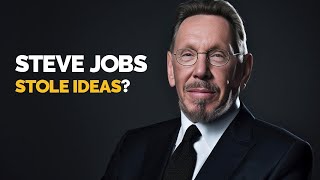
Larry Ellison explains why Oracle succeeded where others failed: engineering obsession over marketing spend, a culture of relentless competition, and replacing the entire management team when the company hit $1 billion. He argues that copying the crowd guarantees failure.
Chapters
Oracle is a very competitive company, and I think there are a lot of competitive people at Oracle, and I enjoy competition.
Don't simply conform to conventional ways of thinking.
Translating a good idea into a great product is unbelievably hard. We probably spend less money in marketing than any company our size in the world.
We reached $1 billion in revenue, and we were having serious management problems all over the place.
Our goal was to get to 50 employees, and the goal My goal really was not so much to make a lot of money. My sister once said to me that whenever I got too close to one of my goals, I immediately moved the goalposts further away.
So your question was, are we a loser? No!
If you do everything everyone else does in business, you're gonna lose.
What do you think Google runs on? I'll ask you later.
Do they run on water vapor?
He's an American entrepreneur, businessman, and philanthropist. He serves as the executive chairman and chief technology officer of Oracle. As of April 2016, Forbes estimated his net worth to be $50 billion. $3.2 billion. He's Larry Ellison, and here are his top 10 rules for success.
Oracle's a very competitive company, and I think there are a lot of competitive people at Oracle, and I enjoy competition. I think life is, is kind of a series, a series of acts of discovery. Also, and I think we're all interested in our limits, what we can accomplish in life. And discovering our own limits. And we might find that in sport, we might find that in business. I think we're always looking to discover new things, and new things about each other, and new things about ourselves.
Think things out for yourself. Come to your own judgments. Don't simply conform to conventional ways of thinking, conventional ways of dressing, conventional—
ways of acting. That a lot of this, a lot of things are based on fashion.
Even morality at times is based on fashion. It was once fa— you know, slavery was once not considered not to be immoral. You know, people are shocked that the ancient Greeks had slaves, that we had slavery in this country as recently as, you know, 130, 140 years ago. So there are more moral facts. You have to really go back to first principles and think think things out for yourself, whether they're scientific principles or moral principles or business ideas or product ideas. You have to think things out for yourself.
Ideas— good ideas— there are a lot of good ideas. There are a lot of good ideas. There are a lot of good ideas. Translating a good idea into a great product is unbelievably hard. There are so many details. People accuse Steve of stealing the Macintosh from Xerox, with the Alto computer. I was at Xerox PARC, so I used the Alto a lot. Finishing the Alto and turning that into the Macintosh was enormously complicated. And there were so many things that had to be done that Xerox had not done. There were a few good ideas in the Xerox machine. But Steve would translate good ideas— not always his good ideas. But he would translate good ideas into finished product unlike anyone in our industry. You have to— I mean, Henry Ford didn't invent the car, but he made it cheap and he made it popular and he made it accessible to the American people. Steve would translate good ideas into finished brilliant products. We probably spend less money in marketing than any company our size in the world. We have a tiny marketing department. And everyone says, "Why, why, Oracle's, you know, all about sales and marketing." We are the largest employer of MIT and Caltech engineers in the world. We are the largest employer of Stanford and Harvard and CMU mathematicians in the world. We are overwhelmingly dominated by engineering at Oracle. The idea that we are a sales and marketing company, which people will sometimes, will write about quite often, is ludicrous on the face of it because all of our customers who buy Oracle already have it. And if you already have Oracle, there's nothing a salesman can tell you about how great it is to make you buy more. GE already uses it. The Defense Department always— already use it. All of our customers, 98% of our sales or more, are to existing Oracle customers. If we don't have the right product, People don't buy more. We will— before the acquisition, we spent $3 billion a year in software engineering. The company is all about engineering. It's the only thing that works. Suddenly we'd hit a wall.
We were— we reached $1 billion in revenue, and we were having serious management problems all over the place. And the people who were running the company, the billion-dollar company, were the same people that had run the company when we were a $50 million company. 1/20th the size. And I had an incredible sense of loyalty to those people who'd worked with me to build Oracle. And it was a very painful realization in 1990 that I was gonna have to change the management team, that the company had outgrown the management, that people who are good at running a $50 million company are not necessarily— those aren't the same skills They're just different. Not one is better or worse. They're just entirely different skill set in running a $50 million company than a billion-dollar company. And both skill sets are rare and precious. But we needed a different group of managers. Virtually the entire management team had to be replaced. That means I had to ask people who I'd worked with for a decade to leave. I had to fire people. And that was the most difficult, the most difficult thing I had to do in business, asking a bunch of people to leave Oracle.
Our goal was to get— we started with 4 employees, and our goal was to get to 50 employees. And the goal really was not so much to make a lot of money. I wanted— to me, a lot of money in those days was I wanted to own a house, I wanted to have a nice car, and I wanted to work with interesting people and do interesting things, and I thought if I could control my own environment, have a small consulting company, and Oracle started out as a software consulting company. We worked for Tandem Computer, if anyone remembers those guys. We worked for IBM, we worked for a lot of different tech companies in Silicon Valley doing contract programming, fixed-price contract programming, and we did pretty well, actually. And again, the idea was just to have a a small software contract software company. A bunch of, you know, we thought we were hotshot programmers and we thought we could make a decent living doing just that. And quite by accident, we built a product. My sister once said to me that whenever I got too close to one of my goals, I immediately moved the goalposts further away. And I think in business, you can always do more.
Hi, Rolf Winkler from the Wall Street Journal. I had a question about your apps business. I guess it's— you've built a phenomenon that generates phenomenal cash flows and a lot of people— it's done so a lot by locking in customers to older software and raising maintenance fees a lot year after year.
That's not true. A lot of them— Wait, wait, wait. Let me just stop you. We do not raise maintenance fees a lot year after year after year. People buy more software and they pay the same maintenance fees that they always pay.
I guess the point I'm— Mark Andreessen, for instance, has famously said that none of the startups that work with Andreessen Horowitz run Oracle. And I guess I'm wondering over time—
Well, I know, I know. We just have to rely on General Electric and AT&T and Verizon rather than— I'm saying if there's a generation of companies that's running Oracle— Which of the Andreessen Horowitz companies have we lost? Anyway, they run— By the way, they run— The next generation of large companies isn't going to run Oracle.
Does Does that end up causing your business to shrink dramatically over time?
Well, again, we— no, our business isn't shrinking. It's growing and it's growing rapidly. And we have all of our applications in the cloud starting June 6th. It took us 6, 7 years to rewrite all this stuff for the cloud. Okay. Our major competitor, our major competitor, SAP, didn't do that. So if you look at the market in total, you know, that we have— you have two very large companies, SAP and Oracle, in applications, and then a bunch of smaller—
Salesforce and Workday. What about those guys?
Well, it's gonna be very interesting to monitor Workday. We compete with Workday all the time, and we beat Workday all the time. So, in the cloud, our Fusion HCM has been out for a while. Again, these are much smaller companies, but we are fully in the cloud come June 6th with a fully integrated suite. So I expect, you know, Salesforce will continue to grow. I expect we will be bigger. We're around in pure SaaS, in pure SaaS, no hosting, nothing else but pure SaaS, we're around $1 billion right now, round numbers. Sorry, what?
About $1 billion.
But SAP, everyone, I mean, what are they going to do? If we take share from SAP in ERP— Salesforce doesn't do ERP. Workday has got very, very primitive— I'll give you a couple words on Workday. They don't use a database. They don't use a database. They use an object store, so they can't really do reporting. And they use Flash as a user interface, so they can't run on iPhones or iPads. Besides that, they're great.
All right, on that note, over here.
So I'm not worried about Workday. I do think Salesforce has built a franchise over a long period of time, and they're going to be a formidable competitor in their space. I don't think Workday is. Whenever we have a head-to-head with Workday in the cloud, our human resources versus their human resources, we almost always win. And that's before we were fully launched. So I'm not worried about them. Their product's too immature and they're too small and frail. I'm not— SAP. And they made horrible architectural mistakes. Horrible. No database. Mark uses a really good database. Use a really— Salesforce uses a really good database. You know, they use Oracle. NetSuite uses a really good database. Amazingly good database. They use Oracle. And they use really good middleware. You know what they use? They use Oracle.
Alright, alright, we're going to get to the next question. Workday.
Alright.
So, your question was, are we a loser? No!
Fantastic. Ralph, Ralph, that's how it's done.
I think most of the guys, the only guys I have trouble with are the Google guys. Really? Larry and Sergey you have trouble with? Larry specifically. Larry specifically. I think— Larry per se. Yeah, Larry per se.
Why?
Because he makes the decisions over there. He runs that company. No one else runs that company. And they decided— let me be very clear. When you program, when you write a program for the Android phone, you write it, you use the Oracle tool, Oracle Java tools for for everything. And at the very end, you press a button and said, convert this to Android format. We don't compete with Google. We don't do anything Google does. We just think they took our stuff and that was wrong. That's a completely separate issue.
But I mean, you think they're evil?
Uh, I think what they did was absolutely evil. And you blame Larry Page? 100% Larry Page. So if what they did is evil, that makes Larry Page evil. No, it makes what he did evil, which is quite different. And I know his slogan is, don't be evil. Exactly, that's what I'm talking about. And I think he slipped up this one time. So he's a good guy except this one time when he— This really bothers me. I don't see how he thinks you can just copy someone else's stuff. It really bothers me. You can't conform in business. You have to be very careful. The only way— if you adhere to conventional wisdom, if you do everything everyone else does in business, you're going to lose. The only way to get ahead to really get ahead is to be different. My objection to cloud computing is the fact that everyone— this is, you know, cloud computing is not only the future of computing, Eddie, it is the present and the entire past of computing is all cloud. I mean, Salesforce.com has been around for more than a decade, and so is NetSuite. You know, NetSuite's been around longer than Salesforce. and people are saying, "Well, that's cloud computing." You know, Google's now cloud computing. Everyone's cloud computing. My objection to cloud computing was everyone simply looks around, "Oh, like, yeah. Like, I've always been doing cloud computing." You know, it's like, "Yeah, like 10 years ago," but cloud computing, the term's only 4 years old. "Yeah, like, yeah, but I, you know, like everything is in the cloud now, you know?" And my objection is the absurdity. You don't like that? No, no, it's not that I don't like the idea of what is— I mean, it's this nonsense.
I mean, the guys say, "Oh, it's in the cloud." Well, what is that?
Then you say, "Are we dead?" Yeah, we're dead. If there's no hardware or software in the cloud, we are so screwed. But it's not water vapor. All it is is a computer attached to a network. What are you talking about?
I mean, what do you think Google runs on? I'll ask you later.
What do you think they run on, water vapor?
I mean, cloud? They have databases.
How about the next question?
And operating systems and memory and microprocessors and the internet. And all of a sudden it's, no, it's none of that, it's the cloud. What are you talking about now? So the VCs— I love the VCs. Oh, we only fund— is that cloud?
Oh yeah.
Oh, whoa, whoa.
Microsoft Word, change internet to cloud.
Mass change. Give it back to these nitwits on Sand Hill Road. I—
I—
Thank you so much for watching. I made this video because Wafi Wafinho asked me to. So if there's a famous entrepreneur that you want me to profile next, Leave it in the comments below and I'll see what I can do. I'd also love to know which of Larry's top 10 rules meant the most to you. What changes are you going to make in your business as a result? Leave it in the comments below. I'm going to join in the discussion. Thank you so much for watching. Continue to believe, and I'll see you soon.
More from Evan


How the Biggest Mistake in History Created A Trillion-Dollar Empire | Sergey Brin



9 Machiavelli Principles That Force People To Respect You | Machiavellian Philosophy



The First 10 Words That Instantly Ruin A Sales Conversation | Vanessa Van Edwards

The Top 1% Mindset Behind The First $5 Trillion Company | Jensen Huang (Nvidia)

