The Brutal Truth About Writing a Book No One Wants to Hear
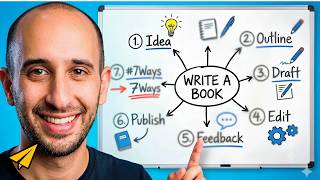
Evan Carmichael walks through seven steps for writing and launching a book, from outlining and choosing between self-publishing and traditional houses to running a beta test with readers and building pre-launch momentum. He uses Jack Canfield's story of 144 publisher rejections before success to show why persistence matters, and emphasizes that genuine motivation beats writing just for credibility.
Chapters
Hello, Believe Nation! My name is Evan Carmichael. My one word is believe, and I believe that entrepreneurs will solve all of the world's major problems. So to help you on your journey today, we're going to talk about 7 ways to write a book for beginners. So I launched my first book with Penguin Random House in December of last year. I'm in the process of writing my second book, and I have the first my first draft, just finished, super excited about that. And I've been getting a lot of questions from you guys asking me about the process. How do I write a book? What does it look like? How do I make sure that my book is a success coming out of the gate? And so today I wanted to share with you 7 ways on how to do it that I think you'll enjoy. Tip number 1: actually want to write a book. This might sound like a no-brainer, but I think a lot of people want to write a book for the wrong reasons. A lot of people want to write a book because they think they're going to get them credibility, you think it's gonna open up doors, and it can, and it does. I think it was a lot more true 10 years ago than it is now. I can open up almost any door I want just using my YouTube channel and my social media, much more than the book helps me do that. There weren't as many avenues as there were before, and so you needed to have a book, but now it's not as necessary. I wouldn't say that it's not important at all. I think a good book can definitely help you open up a lot of opportunities, but it's not needed. If that's your goal, there's a lot of other ways around to do it. Writing a book is really hard, right? For me, it was a 2-year process. The second book is coming along a little bit faster. So you have to really want to do it. If it's a bucket list thing that you have to do and you're deeply passionate about it, you have a message that you want to share, this, this needs to come out, right? You need to give birth to this thing. It's that important to you. Then you should go out and do it. If it's part of your marketing strategy and a nice to have, then I think there's other more effective ways you can. So just want to make sure that that's for anything you're doing in life, in business, you're starting a company, for an important reason, not just trying to make money or just prove something, right? So you have to really, really, really, really want to write a book. If you are, the next 6 tips are for you. Tip number 2 is create an outline and a schedule. What I found really helpful for me was to create an outline at the start. So my book, Your One Word, we've got 7 chapters, it's 3 sections, and so I start from the top. What's the big idea that I want to get across? And this works really well with nonfiction, but also with fiction. What is, what is the main thing that I'm trying to get across? And then how does that break down? So I have 3 main sections of the book. Okay, what do those 3 things look like? And then within 3, then how do I divide those into different chapters? Great, okay, so I have these chapters here, these chapters here. Great, all makes sense. Now I can set to work on individual chapters. And in that chapter, what do I want to talk about? And go page by page by page. And so I find it really hard to think big and think small at the same time. So I do my big thinking first. That's the outline, that's the overview, that's what we're trying to accomplish, that's the general breakdown of the sections. And then once it's all planned out, even just a headline or a title, then I can get to work on actually building that page and I trust that it fills in with everything else that I'm trying to do. It fits the strategy, it fits the structure really well. Also, if your goal is to get it into a publisher's hands, they want to see an outline, they want to know what you're doing, they want to see a sample chapter as well to be able to submit to them and get a sense for your writing style. And I think for the scheduling part, creating the schedule for yourself to make time, right? It's a lot of work to write a book, and so you need to dedicate time in your schedule. You're not just going to have pockets that magically open up, and for me at least, I needed to find dedicated time to do it. Everybody has their own process. Some people love writing 2 crappy pages a day, and they spend half an hour every morning writing. For me, that didn't work. I needed to have chunks of time. If I sat down in the morning and tried to have 15 to half an hour, 15 minutes to half an hour of writing, it took me that long just to get into the zone of writing and then I would stop to go do something else. I need to block off my whole day. So while I was writing Year One Word, that was my whole Tuesday. I would spend the entire Tuesday writing my book. I would walk, I would get out of my place, I would walk to a local coffee shop, I would answer your questions and document the journey as I went along, and when I got to the coffee shop, I would shut out all distractions and just write. It took me about 30 minutes to get into the zone, like, okay, now I'm flowing, and I tried to stay there as much as possible. So, if it's really, really important to you that it gets done, put it in your calendar. Make time for it. And again, this is for everything, not just writing a book. You gotta prioritize the things that are important to you and put them in your calendar, or they won't get done. If you're just waiting for some time to magically appear, guarantee you it's not gonna happen. Schedule it in. Tip number 3 is decide whether you want to self-publish or use a publisher. It really just depends on what your goals are. If your goal is primarily financial, you want to be able to make money from it and you want to be able to control a lot of the aspects of it, then self-publishing is the way to go. You can make all the money, just a tiny commission from whatever goes to Amazon and the other resellers, and you get to decide everything— book cover, all the words inside, everything, every aspect about it. You get to have full control over so it's exactly your vision and it gets out there, that's self-publishing model. If your goal is to have reach, if your goal is to be able to use your publisher's brand name recognition, then you go with a publisher. For me, my goal is to help a billion entrepreneurs. And so I wanted, I always wanna work on projects that have the ability to have a massive impact. That's what I strive for every single day. And so self-publishing wasn't the route that I wanted to go. I wanted to go with a major publisher because I value not just their ability to help me with the editing and all that stuff, 'cause you can hire somebody for that, but distribution, promotion, having the brand name attached to it. Not so much that adding Penguin on my name really means a lot, but Penguin on a book can mean a lot. And so I wanted to give the book the best chance to have big reach, to get into the bookstores, to get name recognition, and so that's why I went with a publisher. If you're gonna go with a publisher, I highly recommend trying to get a literary agent first Literary agents basically represent you. They're like a real estate agent but for your book instead of for your house. Their job is to know all the different people, all the different publishers, where they have money, what books they're interested in, and create, basically create a bidding war. When I was doing mine, we had 5 calls with publishers on 2 days back to back to back to back to back to back. And it created kind of some drama, right? So we talked to one and talked to another and talked to another, and we ended up increasing the commitment significantly from where we started. Started. And so when you can create that kind of bidding war, it gets people more interested in you, and you need a well-trained literary agent who has the connections to make that happen for you. So if you're gonna go the publisher route, I recommend going with a literary agent. They usually will take a percentage of your deal, but it much, much, much more pays for itself, as well as the advice and the positioning, compared to if you try to do it by yourself.
So tip number 4 is to overcome rejection. So I have a series on Evan's channel called Unlocking Lily, and one of the challenges I had to research famous speakers, and a lot of them wrote books. But one of the authors that really, really resonated with me is Jack Canfield. So Jack Canfield was rejected by 144 publishers before he was able to publish his book Chicken Soup for the Soul. Can you imagine if he gave up after the first publisher? Or even the 50th one? Or the 100th one? We wouldn't have access to his books and his message would have been completely lost. So many millions of people actually benefited off his books. So that's the same thing for you. Anytime you're rejected, keep going. And I know, I know rejection is so hard. Especially if you put your entire life's work and effort into this book and it just gets shut down and rejected. So that's why you need to keep going and going through all the rejections and overcome them, because it's important to you. Your message needs to be out there. And then there's a funny old saying: there's a lid for every pot. So every time you bring a book to a publisher and they say no, Go to the next one. Go to the next one. Keep going and you will find a lid to your pot.
Tip number 5 is have a test audience. This was actually something surprising that's not really done in the publishing world. When I was getting close to the draft of my first book, Your One Word, I was getting ready to get it out there and let people know about it. I said, okay, so what do we do with test audiences? How do we get feedback on this? And they said, well, we don't, we don't do test audiences. We don't get feedback. And it's something that's really common in a lot of other industries. You know, in software, before you start selling your product, you send it out to your beta testers and they test it and they tell you what's wrong with it and how it can be fixed. In the movie business, they'll make a movie and have test screenings and then they'll see what the audience reaction is and maybe change the ending or change different scenes because they thought that would make people laugh but they didn't laugh, so let's switch it up. Or they got too scared at the end and then walked out, so let's switch that up. In the book business, it's not really done. They're so concerned about people getting early access they don't like seeing it being shared too much, and they don't just— it's just not part of how the industry works. And I find it so incredibly helpful to do. So I printed off 30 copies of my book. I actually printed it off at Alex's old condo. That was a fun day. And I had these binders, and I shipped them and gave them to people who were in my local area. Some were entrepreneurs, about half entrepreneurs, half weren't entrepreneurs, so they wanted a general perspective. And the feedback was so helpful. I actually trimmed my book down to half. I wrote 2 books. So they wanted 60, 70 pages. 65,000 words in the book and I wrote like 120,000, 130,000 words and half the book is gone, was cut based off the feedback that came from my test audience. And so I highly recommend that you print off 20 to 30 copies of your book before it goes to final print and just get feedback from people who are inside your target market and outside just to get tips, suggestions, and yeah, see about grammar errors and all that kind of stuff, but more like how did it resonate with you? Did you like this part? And the thing I really paid attention to, especially if you're working on a nonfiction book, was where people underlined and the notes that they wrote to themselves. I didn't care what they wrote. I wasn't really paying attention to how it was impacting them, but, huh, this page got a lot of people underlining and writing notes in the column, and these 4 pages nobody cared about. Pretty easy to decide which pages to cut from the book. So have a test audience. Tip number 6 is get ready for pre-launch. It's not just about writing a great book. You have to have marketing. You need to promote it. You gotta get exposure from it. It's really important. And so I think an easy way to do it is actually to start documenting the process along the way. So when I was launching Your One Word, every week I'd make a new video. I would update you guys with how I was doing, where I was at, my concerns, my victories, and then I would answer your questions about the whole process as well. And so I think documenting your process, documenting your journey, whether it's on YouTube or Twitter or Instagram or Facebook or wherever you live, start to build a little bit of a community up and get people to join you on that path so they are excited for the book coming out. They're ready to buy in advance. Have bonuses that relate to the book and give an incentive to buy early and to buy multiples. I think one of the biggest mistakes I made in my bonus package was I didn't have a 2 option. So you could buy 1 book, I think it was then 10 books, and then up like 25 and up from there. But a lot of people ended up buying 1 book and another book for a friend. I didn't have a 2-book bonus option, so doing it again, I would have something for if you buy 2 books, it's an easy entry point. But not just waiting for it to launch and hope everything goes okay. Carefully planning the pre-launch of it, counting down on your website, showcasing kind of features of what's going to be in there, documenting the process so people can join you on your journey and they're excited for it. And you get a chance to talk about your book over and over and over and over again without it being promotional because you're providing value and updating every step along the way. Tip number 7 is keep marketing. Just because your book has come out, it doesn't mean you should stop marketing. It's not just about week 1 when it just comes out. It's constantly marketing, marketing, marketing, marketing. And hopefully your book ties into what you're currently doing, whether you're a thought leader, whether you're an entrepreneur, whatever it is that you're doing, your book hopefully kind of fills a void and it's kind of part of your ongoing process. And ideally you can involve it in the things that you're doing. So a couple examples of how we do it. One, content. So I make content. I'm a YouTuber, I have, you know, Twitter, I have other accounts, social media, and I always have consistent content around the book. On my Snapchat, Instagram, and Facebook, and Twitter, it may just be reading a quote from the book. Almost every weeknight I'll read a quote from the book and post that as a quick 10-second video. I use the book in, I use the book in my videos. Let's line that up. The book is always kind of seeing product placement in here. I say what my one word is at the top of the video. I thank people at the end of videos who bought the book and give them shoutouts. I ask people to remember what their one word is at the end of the video. So like creating content that includes the book where relevant. I don't try to force it in situations where it doesn't work, but sometimes the book will be in the 7 ways, like number 5 is find your one word. It's applicable. It's part of my process. And so creating content that feels natural, that's not just promotional content, but naturally fits because there's value in the book that you created. The second thing that I do that is really helpful, it's worked out well, kind of a hack that I haven't seen a lot of other people do, is every week my assistant will go to Amazon, pull up my book page, and then see what related books are recommended down below. So it might be a Grant Cardone book, it might be Gary Vaynerchuk's book, it might be Tim Ferriss's book. Whatever the most relevant book is for my book that week. And then my assistant will then go to YouTube where I'm most known and have the biggest following and start connecting to other YouTubers who have done book reviews on those other books. And she'll reach out and say, hey, I see you did a review of Gary Vaynerchuk's Jab, Jab, Jab, Right book or his new book that just came out. I have a book opportunity for you. Here's Evan. He's got a book called Your One Word. It's really related to what Gary's doing and I think I think you'll enjoy it. And if you want Evan to be a part of your video, let me know. And so I'm often either being interviewed for the book or providing a voiceover for the book, depending on how they do their videos. And so that's been a highly effective way. So I've lined up around 40 or 50 YouTubers who profiled my book just by having simple outreach on related books. And the third thing we do around marketing is really following up with the readers. You know, a lot of readers don't even read the book. Any book. Like most people who will buy your book, it will just sit there on the shelf and they'll never read it. It just collects dust. And that— I would much rather sell 10 books and everybody read— those 10 people read the books and sell 100 and nobody reads it, right? And so having a way to follow up with readers and making sure that they're consuming the content, they need any help. We do a lot of work. So one of the things that we tried to do in the pre-campaign is collect emails. I wish I did something stronger in the book. One of my regrets is I wish like on the first on the first page it said, email your receipt to this email address and we'll send you bonuses, because that way you can collect a lot more email addresses. Most of the people who bought my book were through Amazon and I don't know who they are, so I have no way of following up with them. It's frustrating. But we did collect a lot of email addresses from our readers and they get put into a sequence where every month I'm sending them an email that's related to the book, that's asking how they're doing, that's checking in, did you find your one word, can I help, can I be a resource, do you have any questions, if you have any problems. I also send them a video of the month that's answering somebody's question, so it's an unlisted video that you don't have access to unless you bought the book, and you get that once a month. And I'll also make a customized video for everybody, and just a quick 10-second video. Hey John, thank you so much for picking up my book. I see you're from California. I really appreciate the support, man. I was just in California, you know, last month. If I come back again, it'd be great to be able to connect and do something together. What's up, Jonathan? Alexandra, happy Tuesday. What's up, man? Greetings from Toronto all the way out to Jamaica. Yeah, just a quick personal video and people really appreciate it. So my goal is to follow up because some people never pick up the book and read it, or some people like after the third message they read it and they write back because they feel guilty like, oh, I haven't read the book yet. You want the people who've read your book to spread it. Like, word of mouth is so important for an author trying to get their book out, because you're not spending money on Super Bowl commercials, right? You don't have a million-dollar ad campaign. And so you want the people to spread it for you, and if they haven't read the book, then they can't spread the message. And so thinking about ways to collect people's email addresses, put them in the book, give them bonuses. I also write in the book, like, if you're having any problems finding your own word, email me. I put the email address in there so people connect through that method as well. And if you can get them finding value in the book, they're much more likely to tell their friends. And so those are 3 of the ideas that I'm using for my book, Your One Word, and I encourage you to find ways to continue to market it so it's not just a one-off thing, launch date, and then you forget about it. So those are my 7 tips on how to write a book for beginners. I made this video because Nazem Abdrabbo asked me to. So if you want me to cover a topic in a future 7 Ways video, there's a link in the description You can go check it out there and vote for your next favorite topic. I'd also love to know what did you think of this video? What was your favorite tip? What was most applicable to your process? Is there an 8, 9, 10 that I missed that you want to add to the list? Please share it down in the comments below. I'm really excited to see what you have to say. I also wanted to give a quick shout out to the legendary Brian Tracy. Brian, thank you so much for picking up a copy of my book, Your One Word, and sharing your review and posting to Twitter. Really means a lot to me and I'm so I'm so glad that you enjoyed the book. So thank you guys so much for watching. I believe in you. I hope you continue to believe in yourself and whatever your one word is. Much love. I'll see you soon.
More from Evan


How the Biggest Mistake in History Created A Trillion-Dollar Empire | Sergey Brin



9 Machiavelli Principles That Force People To Respect You | Machiavellian Philosophy



The First 10 Words That Instantly Ruin A Sales Conversation | Vanessa Van Edwards

The Top 1% Mindset Behind The First $5 Trillion Company | Jensen Huang (Nvidia)

