The FASTEST Route to Success: Learn from Joss Whedon
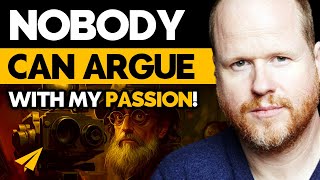
Joss Whedon shares ten rules for success, from his work on Roseanne and Buffy to directing Avengers: Age of Ultron. He treats film production like a military operation, avoids toxic people, and says understanding your own duality is essential. Whedon describes the personal toll of relentless work and his first real vacation after years of nonstop production.
Chapters
Really toxic people I avoid.
I treat film like the military.
I got out to Hollywood and discovered an incredible lack of money.
You are all going to die.
Hello, Believe Nation. I'm Evan Carmichael. My one word is believe, and I believe that entrepreneurs are going to solve all of the world's major problems. So to help you on your journey today, we're going to learn from director Joss Whedon and my take on his top 10 rules for success. Rule number 2 is my personal favorite, and I'd love to know which one you guys like the best. And as always, as you're listening, if something really resonates with you, there's a message that really holds true to you, please leave it down in the comments below and put it in quotes so that other people can be inspired. And when you write it down, it's much more likely to stick with yourself as well. Enjoy.
Do you like actors? Generally speaking? I'll just be back in a couple minutes.
The weird thing is— La la la la la la la. As many of my best friends are actors as writers. I love actors, and I did not think— you know, I had sort of— again, in the old school, It's an adversarial relationship. And I've worked with my share of divas, but I also have enormous respect for divas. They're usually people who do something extraordinary and know it and show up and do it. And you have to deal with a lot of other stuff, but they usually come in and say, "You're gonna have to deal with a lot of other stuff. I'm a diva, so here we go." And then you get this beautiful work and you're like, "Okay." Thanks for the heads up. Really toxic people I avoid. I cast for sanity. That's a very important thing to me. But toxic people are different than divas. Divas are complicated, but they know that there is a simplicity to what they're going to give you that you need and want. And truly toxic people are just about trying to tear something down. Whether it's somebody else in the thing, whether it's the story, they're about power. Those people have no business in my life, as far as I'm concerned, in the industry.
As a filmmaker, you have to— it's sort of the bad teacher thing. You have to be sure when you're working for somebody else, that's it, they're the boss. I treat film like the military.
I always have.
Film and television. When I'm working for someone and If they're Henry Fonda in Fort Apache and they're making all the wrong decisions, I listen to them because someday I'm going to take over and I'm going to expect the same thing. And it's not that I don't want dissent or I don't want creative collaboration. That's very exciting for me. But you have to be in charge, know what you want, and know that you have the ability to get that. And it requires a lot of fierceness and a lot of belief, more belief than other people are going to have in you. When I shot— the first thing I ever shot was a pilot presentation for Buffy, and it was a nightmare. None of the crew understood what I was trying to do or thought I could do it. And it— and there was a point at which I just wanted to fold. I was just, can I please go home now and be a writer? But I was miserable just being a writer because I wasn't creating the thing whole that I wanted to. And at some point in the shoot, I just said to myself, this is it, this is your pep talk. You're either going to go home and and regret it for the rest of your life, or you're going to go in there and run this thing. And I never looked back.
Your first work, it was a television job. I mean, I think it's Roseanne. Is that correct?
Yeah, that was my first job.
So was that— did you always want to do television? I know that you come from a television family. Or did you go out to Hollywood to work in film or television? How did that work?
I would never do television. That was beneath me. I studied film. And my best friend senior year used to taunt me. He was like, you're going to be a third generation television writer.
I'm like, I am not.
Who is?
He's like, 3GTV.
He'd call me that all the time. And then I got out to Hollywood and discovered an incredible lack of money. And so I sort of started poking my nose around and then realized, oh, there's some very good television that's being made. And as soon as I started writing it, it was really the first writing I'd ever done. Over my television specs that I wrote trying to get a job, and that's when I fell in love with writing, was through television. So, and I had the privilege to work on Roseanne, which was, you know, the best show on. I mean, really, it had a level of reality that no other show was really busting out just then.
Was it difficult to push a storyline like Willow and Tara's, you know, lesbian love on TV at the time?
No, we did it very gradually. I'm not sure they knew that that's what it was.
Sometimes they're like, boy, that seems like a very intense spell they're casting.
I'm like, yes. Sorry, my voice is so loud in my ear that I— but, you know, again, I've always sort of approached things with the idea of of that whoever is giving me all that money to put it on is my partner, and that, you know, I'm not working against them. I'm trying to work with them. I'm trying to find the space between my artistic expression, their commercial needs.
And my artistic expression is commercial.
I want to make things that people like. I'm not wearing a beret and sitting in a garret and smoking, because it makes me—
Makes my stomach hurt.
But I understand what they need and what they want.
And I like that.
And I also think with audiences, I used to say, we could have made Buffy the lesbian separatist. But let's start with Vampire Slayer and ease them into it. And you always want to sort of get people at the edge of their comfort level. There are a lot of things that I do that people are like, whoa, that's pretty edgy. I'm like, really? I don't— it surprises me that it's not more mainstream.
Let's just say hypothetically the two roads diverged in a wood and you took the path less traveled. Part of you is just going, look at that path over there, it's much better, it's— everybody's traveling on it and it's paved and there's a— there's like a Starbucks every 50 yards. It's This is wrong. This one, there's nettles and Robert Frost's body, and somebody should have moved that. I think that just feels weird. And not only is your mind telling you this, it is on that other path. It is behaving as though it is on that path. It is doing the opposite of what you are doing. And for your entire life, you will be doing on some level the opposite not only of what you are doing, but of what you think you are. That is just going to go on. What you do with all your heart, you will do the opposite of. And what you need to do is to honor that, to understand it, to unearth it, to listen to this this other voice. All right, I'm losing this now because otherwise it's coming off in a dramatic fashion at the wrong time. I know I worked on this hair for a long time, so I had to bust it out. You have, which is a rare thing, the ability and the responsibility to listen to the dissent in yourself, to at least give it the floor, okay? Because it is the key not only to consciousness but to real growth. To accept duality is to earn identity, and identity is something that you are constantly earning. It is not just who you are.
It is a process.
That you must be active in, and it's not parroting your parents or even the thoughts of your learned teachers. It is now more than ever about understanding yourself so you can become yourself. And I talk about this contradiction and this tension. There's two things I want to say about it. One, it never goes away. And if you think that achieving something if you think that solving something, if you think a career or a relationship will quiet that voice, it will not. If you think that happiness means total peace, you will never be happy. Peace comes from the acceptance of the part of you that can never be at peace, that will always be in conflict. If you accept that, everything gets a lot better. The other reason is because you are establishing your identities and your beliefs, you need to argue yourself down because somebody else will. Somebody's going to come at you. They're— whatever your belief, your idea, your ambition, somebody's going to question it. And unless you have first You won't be able to answer back. You won't be able to hold your ground. You don't believe me? Try taking a stand on just one leg. You need to see both sides.
Because I never studied writing, I just sort of had to learn on the job. My entire family, my mother, my father, everyone around them, teachers and writers and very erudite, very articulate people. It was not hard for me to sort of find a voice But it took me just training on the job, working relentlessly since the day I started, to sort of discover what it was that I was doing and sort of discover the structures behind the voices that I was creating.
How did you settle on Much Ado? I mean, is it your favourite Shakespeare play, or is it just—
It's up there.
It's not my very favourite, but it is, it's one that we always talked about doing because We knew Amy and Alexis should definitely be Beatrice and Benedick, and, um, and it's all in one place, and, uh, you know, it's, it's, uh, sort of low stress. But for years I just didn't have a take on the material, and then finally, um, when I realized I did, I said, okay, it's go time. Um, and that really— that movie exists because of years and years of working with actors that I absolutely knew could do that as though it were live theater, could walk on set and never get it wrong. And because we, you know, the schedule was exactly the same as a TV show.
No, actually it was worse.
And it was actually tighter than a regular network TV show. And, you know, obviously the language is slightly different and no stage directions practically. So it was like a ton of work every day, and you can only do that when you know you have an ensemble who is, you know, just strength to strength. So it's really them. They're, they're my secret. I mean, I'm my secret.
It's about me. The pressure isn't greater if you have characters that already exist, or in the case of the Avengers, Some of them, you know, had been cast and had their own films. Some of them were beloved from comics, but we were reinventing them for the films. Meeting everybody's expectations really just means meeting your own. It means that you understand these voices and that the people you're making the film for hear them the same way that you do. People at Marvel are very clear that when you make a film of a comic book or when you make a film with a character from another film, you cannot do exactly what was done before. You have to translate it to your own film, and you do it in their style, in their, you know, sort of the house style of Marvel, which, uh, you know, which I grew up with and I feel I understand pretty well. But, but you have to make it personal, and you have to translate it, uh, to a new audience, to somebody who hasn't seen or read or any of the other things. While keeping the essence of the thing. And, you know, somebody will always argue with the way you do it, but nobody can argue with my passion for doing it. And I think that's what people are really looking for, more than the specifics of, well, in the comic his costume had epaulettes here, why didn't you blah blah blah.
You've had a really wonderful few years, and you've had a lot of— And it's over. You've had a good run.
Thank you for coming.
How do you feel about it? How do you feel about where you are right now? Are you—
That it's over?
Yeah, that's how we always feel, right?
Yeah, this is a bad one. I mean, I know that you get that after any project, probably.
It's over.
Yeah.
The jig is up.
Yes.
They're gonna know.
Yeah. Yep, it's worse this time. Partially because of the Ultron thing, which was difficult. And I should just say, because I feel like part of, like Ultron, I'm very proud of. There were things that did not meet my expectations of myself. And then I sort of, I was so beaten down by the process. And some of that was conflicting with Marvel, which is inevitable. But a lot of it was about my own work and then, and I was also exhausted. And then we went right away and did publicity and I sort of created the narrative wherein I had not quite accomplished it. And people just ran with that and so it became, "Well, it's okay. It could be better, but it's not Joss's fault." And I think that did a disservice to the movie and to the studio and to myself. Ultimately, it was not the right way to be because I am very proud of it. The things about it that are wrong frustrate me enormously. And I had, you know, probably more of those than I have on the other movies I've made. I also got to make, for the second time, an absurdly personal movie where I got to talk about how I felt about humanity and what it means in very esoteric and bizarre ways for hundreds of millions of dollars. Like, the fact that Marvel gave me that opportunity twice is so bonkers and so beautiful. And the fact that I come off of it feeling like a miserable failure is also bonkers, but not in a cute way. Like, it becomes problematic. And I don't know what it's like for you. I took my first vacation ever after that movie. And I don't mean ever, but my first vacation that was more than 2 weeks in 25 years, except for one 4-month vacation where I wrote the Buffy musical. And that was the only— and so, and really set out to do nothing, to accomplish nothing. And I'm proud to say that I have truly accomplished nothing.
Did you get there?
Yeah, I really— I got to a higher state of fuck all.
For you, that's a major departure.
I'm proud. I'm also— but my resting state is is not a good one.
You work hard. I mean, you—
I work hard. I love to work. I love the work that I do, and I'm very happy and grateful about it. When I'm not doing it, I remember that I hate myself. And so it's not good so much to be— So the vacation's over. Now I'm writing again.
And so things are getting better.
Are you back at it? Do you feel—
Oh, yeah.
Oh, yeah.
When I was sitting where you guys are sitting, the speaker was Bill Cosby. Funny man, Bill Cosby. He was very funny and he was very brief, and I thank him for that. But he gave us a message that I really took with me, that a lot of us never forgot, about changing the world. He said, you're not gonna change the world, so don't try. That was it. Like, he didn't buy that back at all. And then he complained about buying his daughter a car, and we left. Um, and I'm— I remember thinking, you know, I think I could do better. I think maybe I could be a little more inspiring than that. And so what I'd like to say to all of you is that you are all going to die. Okay, so this is a good commencement speech because I'm figuring it's got to go up from here, right? It can only get better. So this is good. Um, I mean, it can't get more depressing. You have in fact already begun to die. Okay, um, you, you look great, don't get me wrong. And you know, you are youth and beauty. You are at the physical peak. Your bodies have just gotten off the ski slope on the peak of growth and potential, and now comes the black diamond mogul run to the grave.
Thank you guys so much for watching. I made this video because Telling It Like It Is 2000 asked me to. If there's someone you'd like me to profile in the next top 10, check out the link in the description and go and cast your vote. I'd also love to know what was your favorite message from this video. What did you learn from this video that you're going to immediately apply somehow in your life or in your business? Please leave it down in the comments below. I'm really curious to find out. I also want to give a quick shout out to Oscar Andermo. Oscar, thank you so much for picking up a copy copy of my book, Your One Word, doing a review on your YouTube channel, and posting it on your Twitter account as well. I really, really, really appreciate the support, man, and I'm so glad that you enjoyed the book.
Today's book report is The One Word by Evan Carmichael.
So thank you guys again for watching. I believe in you. I hope you continue to believe in yourself and whatever your one word is. Much love. I'll see you soon.
If there's a story, like, it doesn't have to be Shakespeare, that you haven't written, that's a universe that you haven't created, what about it has to be artistically fulfilling or challenging for you to pursue it? Because for me, what was surprising about you doing Shakespeare wasn't that it's not sci-fi or fantasy, it's that you, for the first time in a long time, worked on a project that you hadn't written, and it wasn't a universe that you hadn't created.
Yeah, you know, really the only things I directed that I hadn't written at all were episodes of The Office and Glee because I loved those shows and I knew the people who were doing them. And I was going to say I had free time, but I'm pretty sure I mean my career was on the skids. But, and I, but something like The Avengers, It's been cast. There's a whole, you know, there's a huge history that I know. And it's all, you know, if you can't find your own way in, then you just don't do it. The fact of the matter is, because I've been a script doctor, because I've been a showrunner, I was used to coming in when things were already set. After the pilot of a show, everything, a lot of the work's been done and you're you know, you're interpreting what, what you've got there. When you come in as a script doctor, you know, they're like, and then it goes into a plane. I'm like, I have a way better idea. They're like, we already bought the plane. So, you know, you just sort of, you have to, you know, you find the heart of the thing, you find your heart of the thing. With Marvel, I said, look, I know what you want. This is what I want. I want to make a war movie. I want to make The Dirty Dozen. I want to make Black Hawk Down. I don't want to make a squeaky clean perfect. I want to take a toll on these guys. And they're like, we get that, we love it. Do it in the Mighty Morphin manner and everybody wins. So we knew going in, you know, that I had my obsessions and that they fit in that universe. With this, you know, it's a question of, you know, interpreting his work for the way I would, which is in a depressing fashion. You know, it's very easy to fall in love with something.
What?
The entire world is covered with water? Include me in. And yes, you can get heartbroken, but you have to start that way. And the parameters, they always exist. If you're doing a genre, if you're doing, you know, it's a comedy. They must laugh already. You know, the page is not totally blank. So how much of it is filled in, whether it's completely written like this, whether it's, you know, whether a lot of elements are set like The Avengers or whether it's a show that's yours, but it's been on for 3 years, you know, you always have to find the new way in. How do you go from like super big budget Avengers to this compressed 12-day shoot in your home? Honestly, there's no difference between the big movies and the little ones for me. You know, you're always fighting everybody's schedule. In this case, because they all had day jobs. In the other case, because they were all famous. You're always getting your set at the last minute. You're always behind. You're always worried about the same things. You're always trying to communicate the same things. Shooting is shooting. Storytelling is storytelling.
If you're not writing about yourself, why are you writing? For me, if you're not telling a story, spinning a yarn is fine, and there are some people who are great at it, and they're great at things that I'm not great at, like intricate heist plots and things that I admire and envy. But if you're sitting down to write something or make something that's gonna take 3 years out of your life, why would you not wanna tell people something something that's important to you to say. I don't mean a moral. I just mean an examination of the human condition. You want to be able to talk about the politics of personality. And that's something it took me a while to find. I started to find it on Alien Resurrection, which is the last thing I wrote before Buffy.
Before the show.
And that was the first time I went, "Oh, this is a metaphor." And the only way this works is if I feel the way she feels. And that was sort of like the beginning of becoming a storyteller instead of a yarn spinner. And to me, if I can't do that, if I can't make that connection, then I'm wasting people's time. And as much as I may look back at anything I've made and go, flawed, flawed, flawed, flawed, flawed, embarrassing, embarrassing, I never feel like I did that. I never feel like, well, I wasted somebody's time. That's the biggest brag I'm going to give you.
More from Evan


How the Biggest Mistake in History Created A Trillion-Dollar Empire | Sergey Brin



9 Machiavelli Principles That Force People To Respect You | Machiavellian Philosophy



The First 10 Words That Instantly Ruin A Sales Conversation | Vanessa Van Edwards

The Top 1% Mindset Behind The First $5 Trillion Company | Jensen Huang (Nvidia)

