The FASTEST Way to Build Wealth | John Paul Dejoria's Tips in 9 Minutes
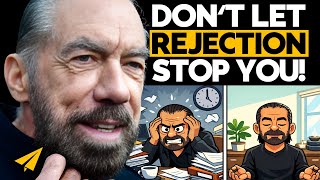
John Paul DeJoria built Paul Mitchell, Patron tequila, and John Paul Pet from homelessness by believing in himself, refusing to quit after rejection, and making products people actually wanted. He hired people who could do multiple jobs, treated early customers like family, and worked harder than anyone else willing to work.
He's the son of divorced immigrant parents. When he was 9, he sold newspapers and Christmas cards to support his family. Today, he's worth almost $3 billion. He's John Paul DeJoria, and here are his top 10 rules for success.
Well, you get there through, one, believing in yourself. As you know so well, when we started, we had $700, made it day to day barely. But we believed what we did was the very, very best. And it goes on the premise, if you realize that you're going to run across a lot of rejection. I say this time in and time out. Be prepared for the rejection, no matter how bad it is. Don't let it overcome you or influence you. Keep on going towards what you want to do no matter what. No matter whether your bills are paid, not paid, someone says no 1,000 times. Again, go back to be as enthusiastic on door number 100 as you were on door number 1. But believe in yourself. And it's really all about Knowing you have a great service or a great product that'll put you in the reorder business. So you're never selling, you're trying to get it in someone's hands, whether it's a service or a product, knowing it's so darn good that they're going to want to order it again or tell a friend about it to order. And that's the real secret there. I've been homeless twice in my life, and when you're down and out, it's not an easy thing. The first time I was homeless, I was 23 years old. Second time is when I started John Paul Mitchell Systems, and I was in my 30s. Instead of thinking how bad things are and, "Oh my God, things are bad. How do I exist in this bad situation?" I looked at how do I get out of it. One time I had no money, had a car that had a broken radiator, had to keep on putting water in it, but I would go around collecting old soda pop bottles, take them in, 2 cents for a little one, 5 cents for a big one, get some money and look for part-time jobs no matter what they paid. I wanted to get out of it. I didn't want to be, "Okay, I'm going to have to stay this way for a while. How do I survive?" I look at how I got out of it. Get out of it. And by gosh, you can get out of it. America does work. You just have to do something. It's a combination of one, the product, but you could also have the best product in the world, but unless you tell people about it, get them to use it, it's just going to sit there. So it's a combination of a couple of things. One, that product was exceptional. Same with Patron Tequila, Paul Mitchell, or John Paul Pet. Exceptional product. But then one must do what those that maybe aren't quite as successful don't want to do. Whatever it takes. Work 7 days a week from early morning till late at night. A lot of rejection comes your way. Overcome that rejection and know that what you have is so good, eventually you'll get through it. Eventually get in the rear of your business. Successful people do the things unsuccessful people don't want to do or have a very difficult time doing, guys. Very difficult time. And that is keeping yourself going when nothing's working. When everyone else is saying no, no, no, no, no. First thing would be, in your category, make it the best you possibly can. So when the end result is the consumer is tasting it, is it something they want to get again? That's number one. Second thing is, have a story or excitement behind it which is true. We did that with Patron, for example. We had a tequila tasting test back in 1989 at Spago's Restaurant, and we just won hands down. So there was some validity Not just from taste, but from what was going on. But in any product, let's say you want to start an envelope company, Steve. I think you can come in anything. You have to know yourself that it's the best you can do, and then you have to be willing to tell enough people until enough people say yes. Once they say yes, you have to put your personality into it. Go by and thank them. Make sure it's going well. A lot of people just shoot something out to get, can I get 1,000 customers? Where they have the first 50 or 100 and don't pay attention to them. You must pay attention to your first customers, unreal attention. It's easier to keep somebody than it is to try and get somebody new. Let's do the best we can with what we have. See, we want to live in the now, and usually when you're down and out or having difficulties, your mind is working very fast. Not your being, your mind is working very fast, and it's working off a lot of nows from the past. So a lot of experiences from the past and worries of what may happen in the future are going through your mind. Well, if you could eliminate that by saying, okay, there's nothing I can do about the past, that's done, yesterday's newspapers, can't change them. And who knows for sure what's going to happen in the future? Let's be here right now, take what resources we have right now, act upon them, and act towards a good future goal. So you were actually going along the street trading in, you know, bottles to get a nickel apiece? Yeah, yeah. In those days, actually, actually it was the second time I was homeless, okay? But in those days you got 2 cents for a little pop bottle. 5 cents for a big one in every grocery store and every liquor store. You would just bring them to them, they give you the money. And you know, you do what you have to do to exist if times are lean. But at least this nation affords us that opportunity. If you know where you're at, well, how can I best make it to survive? Not, oh, poor me, how do I entrench myself for long-term survival? It's, how do I survive right now and get myself to the next step? That's the attitude you have to have. For starters, we know we have a darn good product, but if we take the time with ourselves and our staff to go in there and tell them all the ways to use it and reassure them not as only a good product, but here's how you use it to create a good salon experience, or the consumer, when you take it home, to keep your hair the same in between visits. You fill a need in the marketplace. One, there's a need, of course, to buy a product or another product, but the next one is you must constantly remind them how to use it properly, which makes you a little different. Now granted, Maybe there's another one used the same way, but nobody told them. We're amazed at times when people are using some of our finest products and didn't know there's other ways to use it also. It's through education. You must constantly reinforce the education and why it's so good. I don't care what you have in life, no matter where you are in your life, there will always be somebody that needs it more than you do. So whenever you can give, as little as it might be, or whether it's of your own self— I know my, my 20s, my early 20s, I didn't have a lot of money, but at Thanksgiving and at Christmas, I'd be in Griffith Park in the lines at the feed-in. I'd be feeding people. They came in the lines there. I was there at the feed-in. I could serve really good. I could cut a turkey so cool, man. I got really good at that. I was a good server. It made me feel good because I was part of giving back. As you are part of giving back, it opens you up. It opens you, the human being, up in a huge way. You as your soul, the entity inside of you, opens up. It's the most amazing thing. It's not about poor me, me, me, me, poor me, no, I'm gonna get my little corner over here, poor me. It's about, hey, I'm gonna give. I may not have any money, but I'm gonna open that door for you. You need a helping hand, I'm gonna be there for you. I'm gonna lend a helping hand. Your whole being opens up when things like this happen. When we hire people at Patron or John Paul Mitchell Systems, the people we hire do more than one thing. We purposely give someone the responsibility of several positions. They're paid extremely well. We take more than good care of them, but it gives them the opportunity to be in something that if times are ever tough, you don't have to eliminate anybody. They can migrate into a variety of things because they're already doing it. Now, as business thinks about this and they start hiring people from the beginning with fewer moving parts, we probably have 1/4 the amount of staff that our competitors have, you know, per capita and per, you know, what we do in business. But We hire where you do more than one thing. In fact, I think it's one of the things that's going to make America great. It made America great in the past. It hasn't been quite as great as it could be, but it will be in the future. Where people instead of getting one job to do one thing all the time, that they draw it out because it gets so boring, they do 2 or 3 things. All of a sudden they're happy what they're doing, they're excited about it, and their day is full. Long-term entrepreneurship is liking what you do, Who you do it with and who you do it for. If you're not having fun, then you're only in business to make some money. I still work. I work every single day, but I love what I do, so I have fun. So it became a lifestyle. When you're working, it becomes work. It's not fun. When you're working becomes part of your lifestyle because you like it, it's fun. I look forward to calling on salons. I look forward to walking in someplace and saying, "Thank you for using Paul Mitchell." I look forward to walking into a cocktail lounge. Wow, thank you for having Patron on the menu. To people in the hip-hop industry, thank you for singing about Patron. The country and western industry, thank you for doing this. In other words, I like it so much that I appreciate so much also the people that like it too. It's a lifestyle and it's a good one. So if an entrepreneur can make a lifestyle that they like with the people they want to deal with part of their business, it'll be long-term and it will prosper because you are having fun. Everyone wants to have fun.
Thank you so much for watching. I made this video because Mo Modern asked me to. So if there's a famous entrepreneur that you want me to profile next, leave it in the comments below and I'll see what I can do. I'd also love to know which of the 10 rules you feel most connected to, which helped you the most. Leave it in the comments below. I'm going to join in the discussion. Thanks again for watching. Continue to believe, and I'll see you soon.
More from Evan


How the Biggest Mistake in History Created A Trillion-Dollar Empire | Sergey Brin



9 Machiavelli Principles That Force People To Respect You | Machiavellian Philosophy



The First 10 Words That Instantly Ruin A Sales Conversation | Vanessa Van Edwards

The Top 1% Mindset Behind The First $5 Trillion Company | Jensen Huang (Nvidia)

