The Greatest Wayne Dyer Lessons on Faith, Purpose and Peace
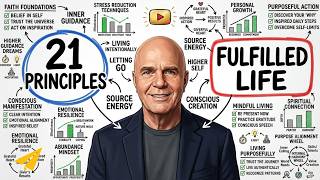
Wayne Dyer discusses the Law of Abundance and how thought shapes reality, using stories of recovered stolen items and callers struggling with career blocks, anxiety, and self-worth. He teaches that scarcity is a mindset and recommends affirmations like "It's on its way" and prioritizing connection to a divine source.
Chapters
Peace doesn't come from controlling life. Peace comes from letting go.
Just let go and let God.
The harder you try to force everything to happen your way, the more frustrated and exhausted you become.
I just gave in and I just let go. This is just more about your ego than anything else.
If you keep trying to control every outcome, you'll miss the miracles that are trying to enter your life.
When you get in a state of love and you're living from that place of divine love and you're with people that you love, these magical things begin to happen. I've been immersed in that a divine place of love. And when you're in that, so many miraculous things, uh, happen.
In the next 3 hours, you'll learn the lessons that help millions of people stop fighting life and start living with greater purpose, faith, and peace.
A special thanks to Hay House for partnering with us to release this video exclusively here on my YouTube channel.
If you've been here before, drop a hashtag #believe in the comments below so I can feature you here in a future video. And if you're new, welcome to Believe Nation, the only channel that helps you believe in yourself daily, one video at Dr.
Wayne Dyer joins us in Maui, and how are you doing today, Dr. Dyer? I'm sure it's beautiful. I'm here as always.
Yeah, it is. It's a beautiful morning. I just had a nice massage. I'm getting ready to go in the ocean after the show.
It's good to hear from you. It was good to see you last week too. You made a rare in-studio appearance. That was nice.
I did, I did. I'm gonna have to start charging for those. What I wanted to talk about just for a few moments here this morning. This whole idea of that most of us have been raised to, um, to be ordinary. And being ordinary isn't so bad. I mean, ordinary to me, it's the problem with being raised to be ordinary is that you're just ordinary, you know, as you go through your whole life, sort of average. Which means that you fill out the forms and you, you obey the rules and you go to school and you get good grades and you have a family and you raise your family and you get a job and you stay at that job and until you retire and then you die. And that's sort of like going through life with sort of a life that's almost been programmed for you by your culture, by your society, by your parents, by your business, by your education system and so on. And we have a tendency to just go through life thinking that that's really all there is. But this program and this book I'm writing and all All of it is really about being extraordinary. And extraordinary doesn't mean that you go past ordinary, because if you're living at an extraordinary level of consciousness, a very high level of consciousness, there's still a lot of ordinariness in there. You know, there's still a lot of rules to obey that are— that you must obey, and there's still a lot of forms to fill out, and a lot of the things that everybody has to do when you live in a physical world. But there's also the calling of being Being extraordinary is the calling of the soul. And your soul, that invisible place within yourself, it doesn't really want to win. It doesn't want to be better than anybody else. It doesn't want to have a good job. It doesn't want to pay the bills. That isn't what it wants. It wants to expand. It wants to grow. It's more obsessed with or connected to or thinking about the infinite because it is infinite. It has no beginnings. It has no ends. And its desire is it resists being circumscribed. It resists being fenced in. It resists being told what to do. It resists having to be just like everybody else. That's the soul of ours, just wants to just be free. It wants to be free to be able to explore and expand and to know that the words of Jesus in the New Testament are really true. True, that even the least among you can do all that I have done and even greater things. We are all miracle workers, and we have within us this sort of this divine capacity. And none of us, when we're children and going through all of the hoops that we jump through in our life, are ever really reminded about our divinity and about the— our infinite nature, and that all things truly are possible. And that's, uh, and that involves changing your subconscious mind around from all of the things that it's been programmed to do to begin to suggest to your subconscious mind, to this invisible part of you, that, uh, that you can heal yourself, that you can attract the right people into your life, that you can have abundance in your life, that you can have divine love show up in your life, uh, in a very positive and big way. But in order to accomplish something, you must first expect it of yourself. And it's one of the reasons why so so many people are stuck at ordinary, stuck at average, is because they don't have expectations for themselves to go beyond that, to live at an extraordinary level. And when we did the public television show, my friend Anita Moorjani from Hong Kong, we flew her over there to have her be a part of the show. And you talk about extraordinary beings and extraordinary consciousness and someone who has, you know, been at the doorway of death and come back. To tell us that we need to just treasure our magnificence and live in a space of love. And for the last few weeks, I've been just immersed in that divine place of love. And when you're in that, so many miraculous things happen. I'll just tell you one last story before we take calls. And that is, I was really fighting with my— not fighting, that's not the right word. We had a little difference of opinion about what I should be wearing doing this show, which we always do.
I think I heard a little bit about this.
Yeah, right.
No, this is—
and I was going to, you know, I just wanted— I live on an island and I rarely ever have shoes on. And when I do have shoes on, they're just sandals. And to tie my feet up and, you know, put socks on, and that's part of being, you know, contained, if you will, fenced in. My feet, I guess, just want to expand and be free. I don't know. But at any rate, I had just insisted that I was going to wear no shoes and wear sandals on the show. And my producer, Nikki Patel, she just said, no, I think you should wear it. You should wear those. It's not going to look right. And I had all kinds of things, thoughts about it. And, and finally I just gave in and I just let go. And in the morning I said, Wayne, this is just more about your ego than anything else. So I decided that I was going to go over and buy a pair of shoes and make Nikki very, very happy. So I went over to the mall not too far away from there and got these shoes. And it was really beautiful because on the way back, walking with the shoes, I encountered a a homeless man. And this homeless man, his name was Ken. He was 36 years old. He was from Boston. And he was very, very dirty. Smelled and looked like— he looked like it was morning. It was about 11 o'clock in the morning. And he had, you know, he just smelled of alcohol and looked like he was just really out of it. In fact, he was walking across the street and stumbling so bad that I stopped the traffic and took him and walked him over. And he told me he hadn't eaten in 2 or 3 days. So I walked him over to a restaurant that was right there in San Diego, and I sat him down and went in and got him soup and salad and a sandwich and so on. And actually was able to reach him. Before that, I was— all I was doing was talking to whatever drugs or alcohol was taking place with, you know, in his body. And I was— put my arm around him, and I finally got him to talk, and I got him to actually smile and make a huge difference in his life. And I told him that, you know, that And I told the woman who was getting him the sandwich and the soup and all of that, because she didn't want to serve him. She said, he's caused trouble around here before. And I just— all I said to her was that, you know, the same God that is in you making these sandwiches is in him and in all of us. And I'd like you to just serve that. Just serve, serve the God in him rather than serving his body. And she changed her whole opinion. She went out. He was sitting at a table outside and She went out and asked him what kind of soup he'd like, what kind of salad, you know, what kind of sandwich would he like, and would he like to eat it there or whatever. It's just an act of kindness. And he actually smiled, and he was so sad and deep. His eyes were just watering, and, you know, he was just so unclean and so on. And I really felt that I had touched him in a deep way. And I thought to myself about Nikki and my friend Mira, who had told me to get the shoes and let your ego go. I feel that that whole, you know, that everything happens for a reason. And having that conflict, and I went over it for 3 or 4 days before, I couldn't get off of this idea that who is anybody to tell me what I should be wearing on my own public television special and so on. And when I suspended that, when I let go of all of that, not only did I get the shoes, which I, even I admit, look, the whole thing looks a whole lot better. But I think about Ken, our 36-year-old friend from Boston, walking those streets and he wouldn't have been touched in that way. And I somehow, I had a feeling that he was going to leave there and get himself cleaned up just by the smile. And I could see almost, I could see that spirit within him just smiling a little bit, like maybe I don't have to be stuck here out in these streets and end up as another casualty, former military person who just lost it. So that was— wow, that was incredible.
So many people are in that position though, especially military, and it's so sad. You know, San Diego is such a big military town, right? Yeah, I mean, I'm not surprised, unfortunately, to hear that he's in that position.
No, in the month of July this year, I don't know if you know this or not, but this is an all-time horrible record. 32 American soldiers committed suicide, took their own lives. It's the first time it's ever been that number that high in one month. So, you know, these wars that we're fighting and so many of these soldiers are now on antidepressants or antipsychotics and anti-anxiety drugs, and they're combining it with alcohol and so on, and it turns them into, you know, the whole thing. This whole war business is horrific on everyone involved in it. So, but anyway, I think he was one of them that had been involved in it.
So, well, it sounds like you really touched him in a profound way.
Yeah, and I— but it was the disagreement. It was like the whole thing within myself that as I was walking back from the little mall where I bought the shoes. As a matter of fact, I encountered so many people that were looking for help and were having their lives turned around. Because when you get in a state of love and you're living from that place of divine love and you're with people that you love, these magical things begin to happen. And, uh, anyway, it was joyful. When I was just in London, I had to— went through the same thing because I didn't take any shoes over there and I didn't know. And it got pretty cold out there, whether— whether I was going to go out there on set. So I went and bought a pair of shoes, never put them on. So this is my third pair of shoes that I've worn. This one I've worn once. The others I haven't even worn yet. And I have another pair that I've maybe worn twice.
But that's great. I'm going to look for that when I see it, when I see the special, because now I'll know the story.
Well, if you want to find it, Reed was there and he tweeted or Twittered or whatever that is, however that works, a picture of me rehearsing. And two of my daughters got it and sent me back a picture of myself and my shoes. And they said, Dad, you look skinny and you've got shoes on.
What happened?
I said, I lost my ego. I let go of it and I let a spirit take over and maybe help the homeless man.
That's a great lesson.
And alcoholic. Yeah, yeah. That there's something—
let go of the ego.
Even in the— but even in the conflicts that we have in our life, very often if we just suspend the source of the conflict, let go, surrender, that somebody else is going to benefit from it as well. And lots and lots of stories like that.
Absolutely, it is a great lesson. Yeah, so we have—
anyway, it's a great show. Let's go to the phones.
Yeah, we have about 7 minutes, so we could probably take one or two. We have a full board here waiting to talk to you, so let's start in Minneapolis, Minnesota on line 2, and I believe it is Aruna. I hope I said your name right. It's very pretty.
Yeah, no, you did. Oh my God, you picked my call! Dr. Dyer, I'm a huge fan and I met you in Maui in October 2010 and you called me up on stage because I was pregnant and you thought I was too young and all that stuff.
Oh yes, you were only 14. How old were you?
Actually 30.
I know, but you look 14. You look so beautiful. I remember you. Yes.
Oh, thank you. Thank you for remembering me. Um, well anyway, I was calling because, um, Well, my husband and me, we've been having some issues. He's a great provider and he's always thinking of ways to do it better and all that. And part of that is that he likes to be prepared for absolutely anything. And to him, that means thinking of all the possible bad things that could happen, being prepared for it. And a lot of the time, it's all he can talk about. Like, what if our baby becomes a drug addict when he grows up, or our house gets robbed, or one of us dies? And it just really brings me down. And I realized that if I change the way I think about it, maybe this can be easier to deal with, because, you know, he's afraid to talk to me because he doesn't want to bring me down, and I'm afraid to talk to him because, you know. So I was just hoping you could help me with thinking about this.
That's very— yeah, it's very interesting. Uh, Arjun— is your name Arjuna, or—
it's Aruna.
Aruna?
Yeah.
Where is that from?
It's, uh, it's, it's a, it's a Hindu name, um, and it comes from Karna. Yeah, it was the sun god's charioteer, but yeah.
What you're describing, Aruna, is a very common practice amongst people, and it's one of the reasons, uh, that so many negative things show up in people's lives, because we become what we think about. And I know that that's a hard concept to get across, but I think your husband will get— ultimately will get to this. But the best way that you can deal with it is, uh, I think the way that you are handling it. In other words, if he knows that you don't want to hear all the negative possibilities of things that might go wrong. Because when you put your attention on what you don't want, you align yourself with the universal subconscious mind, which will offer you experiences that match up to what it is that, uh, that you are creating in your mind. Your subconscious mind, the— your— here's your subconscious mind at work. You picked up the phone, you dialed the number, you, uh, you know, got up this morning, you, uh, took care of your baby, you, you got dressed, you took a shower, and you prepared to watch the show. All of these things that you did, you didn't, you didn't have one conscious thought about them. I mean, you're just like, on and on it goes. You just do things. Your whole life is, um, is orchestrated by this subconscious mind that you've trained it to do. It knows how to do all of the things that it's doing. But our subconscious mind also gets programmed with images about what we can't do, about what is wrong, about how terrible the world is, about how weak we are, how poor we are, how sick we are, how, you know, all of these kinds of things as well. And what you have to do is begin to retrain your subconscious mind and help your husband to do that. And what I would suggest to him is that you say to him, when we go to bed at night and we get into bed, and just before we go off to sleep, let's put into our subconscious mind where we're going to marinate now for the next 8 hours, let's put into our subconscious mind the things that we want, you know, and act as if they're already true. So that, you know, I am healthy, my daughter is healthy, my— I live in a, you know, in a prosperous world, I have a great job, I am content, I, you know. And even if those things aren't true, just begin to say those kinds of things because your subconscious mind, it does— it's very impersonal. It doesn't distinguish between what you are experiencing on a daily basis or what you are feeling, you know, as a result of the way that you choose to think. And just get him to just do that. Just as I say, let's, let's play a little game. You know, when we go off to sleep tonight, let's just say, I am— and after the words I am, which are the name of God, you know, I am happy, I am content, I am, I am free of fear, and so on. And just begin to practice that, because ultimately, when you put your attention on what you don't want, your subconscious mind then joins with the universal subconscious mind, God, the creative source of all the universe, and it says You know, so this is what you want? You want more of, you know, drug addiction and sadness and poverty and so on? And this is how so many people— most of us out there don't realize that these thoughts that we have about, you know, the disasterizing and the awfulizing about all of the things that are going to happen are ways that we can create it. We may not create exactly the scene that we are thinking about, but we create emotions and energy which match up to those things that we call fear. And in A Course in Miracles, it says there is only two emotions that you have to deal with. There's fear and there is love. Your husband is living in fear, and fear is really, you know, and the Course also says that everything that is fear cannot be love, and everything that is love cannot be fear. And love Love is just like contentment. Love is God. I mean, that's right out of the New Testament. It's right out of the Bhagavad Gita. It's in all of the great spiritual texts. God is love. God is love. I mean, and so, you know, you don't want to be living in that fear because when you're in fear, there is no love there. There's, you know, God doesn't say, I am afraid. God says, I am content. I am prosperous. I am the way.
I am the truth.
I am the life. This is— it's a process, and like, um, but it's just— I mean, we've had this conversation many times, and my thing is that while I'm going through it and while he's sitting and talking to me, I really— I mean, I want to hear him out, but it's just, you know, it gets to me. And I understand we will— and I'm going to get him to listen to the show and things like that.
Yeah, I think that— but more than that, when he says, uh, I am afraid that our child is going to become a drug addict, All you have to say in response to that is, I see our child as living a life of well-being. That's what I see. You don't have to argue. You don't have to make him wrong. You don't have to, you know, just constantly remind himself. It's like they got me this iPad and it's got this wonderful little thing on it. It's called Trash, you know, and it's— and I never saw this before. I think this is great. We need this in life. Somebody sends you negative stuff that you want to hear, you just push a button and off they go into Trash. You can even watch it go.
Goes whoop.
And then you push delete and it's gone forever. God bless you, my dear. Thanks for calling.
I love you.
We've got some great people lined up here waiting to chat. So just—
can I just take one minute, Diane?
Where should we go? Absolutely.
Can you hear me?
Yeah.
Oh, okay.
I had mentioned before the show, I was— I've done a film, a part of a film with a woman here on Maui. Her name is Elizabeth Crowe, and she's doing a thing on aging and saging and, you know, 50 is the new 30, 60 is the new 40, and I'm 70, and I think they're turning it to 70 is the new 10. I think I'm about a 10-year-old.
I like it.
But anyway, it's a great film, and what they do, uh, she did all the recording and, uh, and all of that, and then they need to raise the money to be able to put it out there. So if anybody'd like to contribute to that, uh, and they can learn more about it, all you have to do is just type in, uh, growthefilm.com. You can't Google it, you just, uh just type it in, growthefilm.com. You can know more about it. Myself, Jacob Lieberman, brilliant man over here on Maui, and a woman who's an archer, who's a Zen archer kind of thing. And she's interviewed people in their 60s and 70s and so on. And I think it's going to be very fascinating. But it takes money to put these things together, and people make contributions. And it's one of the new ways that people have of raising funds for really very important projects because, you know, these are done with a lot of love, but they still take money to do it. So growthefilm.com, look it up and, uh, make a little contribution there, and maybe we can get this thing rolling. Because we did about a 2-hour interview, and I think it's going to be great. She's a terrific lady.
Wow, that sounds interesting. Aging and saging.
Yeah, you can look that up on Grow the Film.
I will.
I'm going to check that out.
Grow the Film. You know, I just wanted to say I saw Paul Simon over the weekend. He just turned 70, And he was amazing.
Paul Simon is 70?
He's 70.
That's depressing, but then I'm 71.
But just to show, you know, his voice sounded just, you know, as always. He was just incredible. And so he's not missing a beat, dancing on the stage and loving life. So I think that's really the key is do what you love and everything else will follow.
I just saw a special with James Taylor. And who's the gal that was on with him? Carole King. Is it Carole King?
Oh yeah.
The two of them, they had a special on that.
That was, uh, that was on PBS, wasn't it?
It was on PBS. It was so good. I just, I bought it and recorded it. And because I contribute to PBS all the time.
That's great stuff.
But then, and they're, they're up there in that age group as well and doing, you know, and then of course I saw Mick Jagger not too long ago and he looked like he was about 14 up there dancing and going crazy. So It's great taking his Geritol and being a rock star, you know.
He's doing what he loves and it shows.
That's right, me too. I know the feeling.
Anyway, okay, well, let's go to a couple more people here.
Simon is 70 years old.
It was his birthday on Saturday when we were at the show and everyone was singing happy birthday to him. And yeah, he's, he's incredible.
I don't know how that happened. Yeah, me too. Well, let's go over Troubled Waters.
Oh yeah. Um, line 8, let's go to Jesus in San Diego.
Oh my God, you are with us!
Oh my God, this is a miracle!
Well, go ahead with your question. You're on with Dr. Dyer today.
Yeah, this is Jesus I'm talking to.
I'm so, so excited.
Uh, this is actually my first time in on a show like this. Uh, I love all your books. I have read so many books.
I speak Spanish and English and I get both languages. And, uh, oh my God, I'm so—
ah, my God, I'm the one who should be like that.
I've got Jesus calling me, you know. I'm the one who should be doing that.
What's up?
What's up? What's on your mind, my friend?
Well, through my whole years, I've been losing so many different loved ones. And I always make excuse not to keep going sometimes.
And I know it's hard to, uh, like when your dad dies, when your grandmother dies.
And I'm a widower too, like 14 years now, but I remarry again. But it's been like so much stuff in my life that sometimes I say, why has to— I have to go through all this.
Well, I think the answer to that is, is that is our preoccupation with death as some kind of a punishment and some kind of a terrible thing. I think one of the real beauties of meeting Anita Moorjani and having her come to my public television special and getting to know her and, and spend time with her in such a loving way as I did for the last week is when her book comes out. Have you read it, Diane? Dying to Be Me. Have you read any of the—
No, I'm trying to get the manuscript.
Yeah, it's called Dying to Be Me. And what she discovered and what Abraham speaks about— Abraham always says if you really understood how beautiful it is when you leave these bodies of ours and no longer are constrained, you know, by the physical world, the, you know, realities— that she said you would never have a thing called a death penalty because it would— because death is like, it's the greatest thing that you'll ever be able to experience. And everything that materializes, and everyone— just think about that— every single thing that has ever shown up on this physical world, and every human being who has ever been here, has the same destiny. You know, death is just— it's a part of life, and we couldn't survive without it. So it's— and all the things that are necessary, all the beautiful things like breathing and love, lovemaking and eating, and they're all— they're all designed you know, with making us feel better and pleasure and enjoyment and bliss, why would death be one of those things that aren't that way? So if you can get over that, and that's what Anita brings back with her experience of near-death experience, is that it's a— and it's like what we say is what we miss them and so on. But the fact of the matter is, you know, I have an uncle that passed away. He was very, very close to me, my mother's younger brother. And, um, you know, I don't miss him at all because I, I feel— in fact, I can see him right now. I feel him close to me as anytime I ever talk about this. He was one of the people I was closest to in my life, and he's just, he's just always there for me. And it's like, if you can get that— we, we have a tendency to live our lives on the basis of what our senses tell us. You know, if he's not here, if I can't see him, if I can't touch him, if it's like then it doesn't exist. But there's so much more to our lives and who we are than what we experience with our senses. I mean, the whole— our senses just give us like one tiny little quarter inch of reality, and zillions of endless miles of all the things that are beyond our physical capacity to experience them are there. Live in that place. Recognize your spirit and the spirit of those others and be joyful. About it and know that this is your destiny as well as everyone else's as well. And it's all perfect. It's all perfect. Be at peace with it, Jesus.
Be at peace with it.
Yeah, I think it's just because of my culture since I'm from Mexico, and it's just like weird. I think it's just that moment of transformation.
I've got news for you, my friend. You're not from Mexico. You're from God. And I'm not from Michigan. I'm from God. And there's nobody here from Afghanistan. We're not— none of us are from any place other than God. We all came from God. We all return to God. We are all one. We speak a little different languages and we have a little different color of our skin and we have a little different cultural things. But who we are, we are all God. We're just disguised in all of these funny little things that, that we think are our reality. And they're so unimportant. That's where I would remind myself, forget that cultural stuff, you know, know that you and I and everyone, we're all one.
Right.
Thank you, Jesus.
Yeah, good talking to you. I love it.
God bless you.
And let's go.
I talked to Jesus today.
I had to take it. I had to take the call. I know, you know, Jesus in San Diego, it was pretty good.
You don't say no to Jesus in San Diego. Absolutely not.
You let him through. And let's go to, uh, the other side of the country, to the East Coast. Kristen in Boston on line 3. And thanks for holding, Kristen. You're on with Dr. Dyer.
Hi, Dr. Dyer.
Hi, how are you, dear?
It's hard to follow Jesus.
Hahaha.
Well, you're a god, so you can handle that one as well.
It's a real pleasure to talk to you. I wanted to say thank you. I've been trying to conceive a child for about 5 years now, and there's been a lot of ups and downs, and I just, you know, your books, your books, you've really helped me out of the dark days. I want to say thank you. Mm-hmm. And my question was, I just wondering if you had any advice for me for fulfilling my wish to have a child.
Well, I don't want to be facetious, but more ups and downs, okay? I think that, you know, in one of my books— I think it's— have you read my book Inspiration?
No, I read Power of Intention, See It When You Believe It, many others.
Yeah, get that book because there's a story in there about someone who couldn't conceive, a very Very, very important, powerful story, and you'll be able to contact that couple as well. Um, and, and this— here's, here's my take on this. Um, you know, and it's like everybody that— everybody that comes into this world doesn't come here because we want them to come here. We all show up when we're supposed to. We all leave when we're supposed to. It's all orchestrated by a divine organizing intelligence of which we are connected to. And if we can want and want and want and insist upon and demand that we have a child and think that if we go through in vitro and we do all of these kind of things, that that's what's making it happen. But the truth of it is it's happening because it's supposed to happen. Because I just think that God or the divine source or the Tao or whatever you want to call that thing which allows everything to come into creation brings it or calls it. So I would get totally at peace with it. I would stop the anxiety. I'd stop the stress about it. In fact, I'd stop trying. In the Lord's Prayer, it's like those very— thy will be done, you know. And thy doesn't mean that you're outside of it, but you are a part of thy. And just, just imagine it. Just see it and, you know, put into your intentions, you know, I am a parent. I am content. I am happy. I am, uh, you know, free. And just allow, just simply allow. When you make love, make love from that perspective, not from the perspective of we're going to see if we can, you know, be with your husband in the most beautiful and peaceful, loving way and just like forget about it. Because so often this is exactly what happens in the process of conception is that when you take the stress away and when you take the worry away and you take the fear away fear away, and you just move into a state of love, into pure love, and just let it be. I mean, the Beatles had it right, just let it be. And if you're supposed to have a child, there's nothing in this world that's going to be able to stop it. It doesn't make any difference. I know I have a child like that. We were on birth control. We were doing everything we possibly could to not have a child, and we still had this child. This child just came through despite all of our efforts not to. And if you're not supposed to, You can go to get tested endlessly, and you can go through— and, um, maybe there's a child out there that you're supposed to take care of. Very often when people who go through, um, the— this process that you're speaking about, very often as soon as they give up and they just let go, and very often when they adopt a child, that's when they find out they get pregnant. I mean, that story, you've heard it a thousand times, I'm sure, you know. And it will happen for you too. How old are you?
I'm going to be 39 in January. So that's what I always hear in my head is the clock, and I know I need to forget about it and just be.
Yeah, yeah.
If it's meant to happen, it will.
Absolutely. And you know, that's true of everything in life. It's just let go, align yourself with that intention, see yourself as, you know, holding a baby. Just see that, you know, I am a parent, I am a happy parent, I am a content. See that, see the child and all of that. And then, you know, that child might be birthed by somebody else. It might be, you know, because a father isn't a sperm donor and a mother isn't just someone who can deliver a child. You know, mothering has nothing to do with that. It's just about anybody can do that. It's the person that is there to take care of and to be there for and so on. So, uh, and then there's just, there's an awful lot of children out there that need to be mothered by, you know, by loving people who want to have a child. Just let go and let God. I mean, I'm telling you, that's the most. And I don't know why, Kristen, but I see it happening for you soon. I really see it happening for you. I can't predict, you know, those kinds of things. I don't like to, but I, for some reason, I see that happening. And go out and get the book Inspiration and read the whole thing, especially the story about— and then contact the people in there, and they will tell you how they just went into a spiritual divine place. They saw this child, and this— and they brought their child to the— and they had tried for years and years and years to conceive a child. It's all, it's all perfect, sweetheart.
It's all perfect.
I needed to hear that.
Yeah, it's all perfect.
Let it go. Let all the anxiety go.
Let it go. Absolutely.
Okay.
Absolutely. God bless you, dear. And, um, I see little babies in your future. I can see it. I see, I see a little girl. It's all dressed in pink. And you know, and you know what her name is?
What?
Waynabel.
What do you think? Maybe her middle name?
Waynabel. And when I see you in Boston, you know, I'm telling you, my last child, all it took was a hug. So you know what, we'll go over and we'll find a closet. I'll give you a big hug and that'll probably take care of it.
Okay, that's great.
God bless you, my love.
Thanks, Dr. Guy. Bye-bye.
You're welcome. Why are you laughing?
What's wrong with—
what's wrong with Waynabel? Huh?
I was thinking weenie. Waynella.
I'll go with Waynella, but I like— I like Waynabel. Waynabel is cute.
She'll have to think it over. Well, let's go to Texas now while we still have some time and talk to Terry. She's on line 4 in Austin. It's a great city. And Terry, thanks for calling today.
Hello.
Hi.
Hi, Terry. How are the bats? How are the bats over there in Austin?
It's excellent. I moved here about 3 weeks ago, and it's an incredible city. It's beautiful.
I love it.
Do you know what I'm talking— when I say the bats, do you know what I'm talking about?
I haven't even seen the bats yet. I'm just, you know, that's part of my— why I'm calling is I'm so stuck out about trying to find a job and made some big changes in my life. I moved from Santa Fe to here and trying to live my dream and, you know, get— change the difficult situations in my life that were there and really making big changes.
First of all, don't call them difficult. They're all perfect. All of those, you know, be grateful for the storms of your life because they really are what allow you to grow. So all of the— that's one of the great lessons that we have to learn, sweetheart, is all those things. Yeah, just, it's just like, be grateful for all of it, you know. Just, uh, when I was on this, this last trip, I ran into the bookstore because I wanted to There was a man down there in San Diego who balances rocks. It was just the most amazing thing. He takes these great big rocks and he puts another one on top and then a little rock and then he'll have— and he finds their center of balance. And it was just an amazing thing. And I wanted to get him a book. I had written a book called Being in Balance. So I went into this bookstore and I thought they might have it, but they didn't. And I gave them a copy of The Power of Intention. I went over and talked to him. The little man, his name was Rabindra. Sarkor, I think it is. You can look this guy up. He's a fascinating guy on the internet. Anyway, while I was in the bookstore, there was a woman in there. Her name was Tina. And I started talking. I got talking to her and she recognized me and blah, blah, blah. And all she did was put down she's going through a divorce and she's telling me my husband is, you know, giving all these terrible names in front of her kids and all of that. And I was thinking about her and I bought her a book, one of my books to give there. It's the only way I can get royalties. I buy my own books and give them away. But anyway, it was like, you know, and I wanted to tell her, you know, don't be keep calling your ex an asshole. Don't be, you know, finding all the things that are wrong with somebody out there. You know, just like be in a state of gratitude. Everybody's just, we're just doing what we know how to do. And all of these, what we call horrific experiences, like I talked about at the beginning of the show, you know, about not wanting to have my shoes and whether I should or I shouldn't. And then when I give up and I just let God in and I just do the right thing and let somebody else be right and let myself You know, just then, you know, a homeless man maybe is now, you know, getting treatment. Who knows? You know, at least he got a meal. Um, anyway, I know that's a long lecture, but tell me what you—
what's your—
and what's your first name again?
Terry.
Terry. Terry with a T. Okay, Terry. So, so you're in Austin and you're looking for a job?
I'm a singer and I'm, you know, always juggling. I know your daughter has a beautiful voice and she's amazing. And I'm kind of in that place where I want to go into the more spiritual aspect of my music. And it's— and I just get really scared. And, you know, I've got to work and have a job to bring in income. And I've moved.
Do you have any CDs or have you put anything together?
I did, yeah. It's called Heart, actually. Yeah. And it's about aligning yourself and living the line, you know, to the universe and You know, it's called Heart.
H-E-A-R-T. Heart.
Yes, it's called Heart. Uh-huh.
Well, how do, how do people find it? I want to hear. I want to get a copy of it. How do I do that?
You definitely can get a copy.
No, I want to buy it, but I want other people to do that as well. That's my, my job is to help people to fulfill their dreams.
Wow, and this is huge. I'm just talking to you, it's amazing. Um, cdbaby.com.
And CD Baby dot com.
Uh-huh. And it's Terry Lynn Browning.
Terry Lynn Brown.
T-E-R-R-I-L-Y-N-N-B-R-O-W-N-I-N-G. Terry Lynn Browning.
Yeah.
CD Baby dot com. Now, do you write the music or, uh—
I do, yeah.
Okay, come on, sing us something. Sing us a song.
Oh my goodness.
Um, I want to hear your voice, just, just clear, and just see yourself, and just give us about 1 minute of, uh, one of your favorite songs that you've written.
'Cause I'm a hard-headed woman. I've always been this way. Ain't got no time for compromises. I don't care what they say. 'Cause I'm a hard-headed woman. I ain't nobody's fool. You can't take that away. I won't take nothing from you. I was not prepared.
That's great.
I know you were not prepared. Come on, guys, let's hear a little applause over there.
I listened to my meditation this morning and I asked the universe for my voice, the music.
Oh, I love that.
Hard-headed woman. I like that.
It's Aretha Franklin. I actually wrote it for her. And, um, but that's the only song that would come into my head.
Well, it was perfect. And this is how you do it, Terry Lynn Browning. This is how you do it. It's like you just go out there and you sing and you let God take care of it. And, you know, things will work out and I mean, you know how many things had to happen for what just happened now to take place? Diane had to decide, should I take this call from Texas or should I— because there's like 8 lines or 12 lines in there. She could take it.
The whole house blew up. The door was ringing, the dog was barking, 3 people came to the door while I'm on hold. I'm really freaking out.
And that's how you do it.
Yeah.
And you volunteer at places, you go out there and sing, because if it's your calling If it's in your heart, if your heart tells you this is what I have to do and I can't not do it, then you just— it's like I'm out here, I'm at 71 years old, I'm traveling all over the world, busier than I've ever been, giving lectures, writing books, doing movies, you know, as many— it's like my life is as full as possibly can be. And the reason that I do it is because if I didn't do it, I feel like I would just die, you know. I mean, it's like it's, it's my calling. And you've, you've got that calling. So you go out there, and you know what? You go over to a place where people— like where my mother lives. My mother lives in an assisted living center. She's 95 years old, and people come over there and they entertain. It doesn't matter who you sing for or whatever, do whether it's at a school or wherever you are, um, and all the rest of it will just, just get taken care of because that, that inner voice that says this, this is who I am, this is why I'm here, you can't deny that. That's your soul, and it wants to expand. It doesn't want to be constrained. Doesn't want to be held back. We got to go, sweetheart.
It's the end of the show.
God talks and I'm listening, and you're— it's right here. Thank you so much.
Cdbaby.com, Terry Lynn Browning. Come on, folks, get out there and get her CD. I'm going to do it myself.
Thank you.
God bless you, beautiful. Thank you.
That's so awesome. You know, she's in the live music capital of the world. I mean, there's so many bands there. You open a bathroom door, there's a live band. She'll find someone where—
in Austin.
Austin, Texas. Yeah, she's in a great place. Awesome show today, Dr. Dyer.
See you on Halloween. I'll tell you my Halloween joke next week.
Okay.
Dr. Dyer is here with us.
Dr. Dyer, good morning.
Good morning. How is— how are you in Hawaii today?
I am great in Hawaii. It's probably evening someplace else, but I'm, I'm just doing fine.
Good.
I was going through a Oh yeah, through a body cleanse.
Oh, you are something I've never done before, cleansing up my body.
And what, what particular cleanse are you doing?
Anything you care to share?
Oh, it's called the Ultimate Cleanse. I don't know, you just take a lot of mineral or a lot of herbs and a lot of fiber, and, uh, and you don't get too far away from a bathroom.
I have, I have experienced many cleanses like that myself.
Sometimes it's fun to do.
Yeah, just, uh, well, I read a story in the paper when John Wayne—
you remember John Wayne? Are you old enough to remember John Wayne? John Wayne passed away. He had something like 55— autopsy reports that he had 55 pounds of like wasted fecal material in his colon.
55 pounds of old steaks, if I would guess correctly.
Yeah, just stuff that had been accumulated in his colon and so on. And I thought, well, time to try it.
Well, some cleanses, you know, they focus on the colon. Others are— you can have a gallbladder cleanse, a liver cleanse. You can specify if you want to.
Well, I'm so clean everywhere else, and I'm so pure.
Honestly, all that swimming you do in the ocean every day, you probably— your skin is probably just pretty good from the exfoliation and the seawater all the time. So yeah, that's one organ that needs to cleanse as well.
I've already been in there this morning.
I know, I imagine so.
Well, anyway, we're on Maui and it's a beautiful day and it's getting close to August and I'm getting ready to go film. I'm going to be doing a film called From Ambition to Meaning. And then I'm going to go spend some time with my friend Elizabeth— I mean, Ellen DeGeneres. I don't know why I named her Elizabeth. And her friend Portia. And then I'll be back writing again. So let's see who's calling.
Sounds great. And then of course you'll be back in Maui by October for your seminar that you have there.
The whole world is coming to Maui. Yeah, that's, uh, that weekend. Yeah, that's just before Halloween. Uh, we have 3 days, Friday, Saturday, and Sunday on Maui at the Westin on Kaanapali Beach. And it's just a fabulous time. Come and spend a little extra time here as well.
I just wanted to mention that because I know people are already starting to think about the end of summer and where things are going in the fall.
And we're filling that thing up, by the way. People are of signing up quickly, so that's great.
Come along.
Aloha and mahalo.
Well, let's see what's going on with Mina now, our first caller of the day. Mina is coming to us from Finland. Mina, welcome to the program. And what time is it right now in Finland?
Yes, hi. I can't believe I got through right away. Wonderful.
Great.
Is it 10 or 11 o'clock at night there?
Yes. Yes, it is, it is, yes. I work as a mental coach and I'm pretty new in my job. I've been researching all this, this area for about 20 years and I finally found the strength to start doing what I love doing. So I work with stress management and I also offer athletes mental coaching and I just love doing my work. But in this country you cannot talk about energy, you cannot talk about Law of Attraction. You have to keep things very simple and not try to make any waves, if you know what I mean. And it's sometimes, it's so hard to not get discouraged because people are not very open to these things yet.
Well, that's your role, and you have a calling, but that calling is not just for you, but it's for, you know, for an awful lot of other people living over there in Finland. I know a lot about your country. My secretary Maya has— her maiden name was Hirtenen, and she's from Helsinki, and she's been with me for 32 years. And I lectured in Helsinki not too many years ago, and I found great openness to these ideas. Now Tell me, I'm very interested. When you said you have to be cautious, you have to be careful, why do you have to be cautious and why do you have to be careful?
Well, like when I work with athletes.
Right.
I don't think athletes get any mental coaching here. The mentality is that you practice hard, you train hard, and then you just go and do your thing. But anything to talk about psychology, My clients, they let me know that they want everything, they want practical advice. I teach visualization, I talk about how different thoughts affect our brain and how our brain, what happens in our brain affects our body and action. And that's okay, that's accepted, but you cannot talk about God, you cannot talk about spirit because you start getting really funny looks and people get really tense.
I mean, but you know, yeah, but I've been getting funny looks my whole life and you have to get used to funny looks because, you know, you have to become someone that's the highest level of self-actualization. What you want to teach your clients and whoever they may be is to learn to become independent of the good opinion of other people. And to know that when you speak from your heart, when you go within and you have a strong knowing about what you are speaking about, that reluctance that you're seeing, those funny looks that you're getting, that resistance that you are encountering generally is just a habituated way of reacting to anything that they're not familiar with. So that if you, whatever it is that you might say, if they've never heard of it before or if they've never done it, I've always believed very, very strongly in what Tilopa said is to have a mind that's open to everything and attached to nothing. Now here's the thing, if you don't believe that yourself, if you don't have this kind of an awareness, and if you are going to be monitoring and editing what you say on the basis of how it's going to be received, yeah, you're sending already an artificial message. You're saying something like, here's what you're saying to your clients: what you think about me and what your reaction to me is more important than my own feelings about what I'm doing. And once you start to convey that kind of an energy or that kind of context that you put it into with your patients and your clients, you're automatically going to lose them because they can see that you're not, you know, that you're being careful, that you're being cautious. I think you have to throw all that caution to the wind. I think you have to let it go and go to a place within you where you say, I know this to be true. And I'm going to share it with you, and I see your reluctance, and let's talk about your resistance to this, because, um, all of that resistance is nothing more than an obstacle or a blockage to the highest place that you can get to in your life. Don't let yourself be the same kind of skeptical person that your clients are. You must come from a much higher and a much stronger understanding and a knowing that what you are speaking about is your truth. And I've been talking about these things in front of audiences all over the world for 3+ decades, and you can't imagine how much mail I've received and how much criticism I've had in the press. And I'm gonna tell you a story. It was written by H.L. Mencken, who was a journalist way back in the 1920s, and he used to get a lot of letters of criticism. And finally he decided to respond to all these letters of criticism and all this resistance and reluctance that he got, and he mimeographed or copied a letter that he wrote, and he sent it out to everybody who was reluctant. And the letter said, dear so-and-so, I have just received your letter of criticism. I am sitting here in the smallest room in my house. Now you can imagine what room that is, the smallest room in his house. He said, I'm sitting here in the smallest room in my house with your letter of criticism before me. Soon it will be behind me. And that was how he responded at all times. In other words, you just have to flush that criticism away and come from a place of your own internal integrity, and you're going to get a lot more converts and a lot more people being helped. Because there is definitely something to this idea of the power of attraction and the ability to use our minds to create and manifest what we want for ourselves. And you know it, and I hear it in your voice, I hear it in your heart. Don't ever let yourself be dissuaded by somebody else's opinions that it might not be something they're used to.
You see, I have a very strong and very close personal relationship with God. I mean, that is— I mean, it's my life. But when clients let me know in private that, okay, we'll give you this job and you get to train all these people, but you better keep it very simple so that they don't get upset. It is, in a way, I don't think there is anything wrong If I keep the so-called religion out of it, if I talk about things on a, you know, on a very, um, I don't mention— yeah, I don't mention God, but I think that's why loving oneself and self-esteem and all that.
Absolutely. And I think that's wise. I think you— I think keeping— there's a big difference between religion and spirituality, you know. Um, you know, generally when you talk about religion people want to argue with you. Generally, when you talk about spirituality, people want to listen, and I think that's a big difference. You know, there's, there's needs to be no argument, and, and no one needs to be telling other people what their religious persuasion ought to be. But when you know that there's an energy, and that an invisible energy, and it's that from which all things originate and to which all things return, you don't have to call that God. You can call it, you know, Lao Tzu called it the Tao. You know, you can call it divine mind, you can call it spirit, you can call it whatever you want to call it. It doesn't make any difference what you call it. As long as you understand and recognize there is a fundamental quantum mechanics truth to all of it. There is a physical truth to all of this. And what science is beginning to establish now with quantum physics and so on is just a confirmation of what, you know, what people like Jesus were saying 2,000 years ago, you know, that it's the spirit that gives life. We're beginning to realize that particles don't come from particles, that everything in the universe comes from this place called non-being and all things return to it. Keep religion out of it and just keep spirit in it and you'll be fine.
I have one last quick question. I am really tempted to think big even though I have all these challenges in front of me. I used to live in the US. I read a lot of books that are written in your country and I still want to think big and believe that I can accomplish things that nobody is perhaps doing here yet in a way that I want to do it. And I just want to— I pretty much already know what you're going to say, but isn't it okay?
I don't think you do.
Yeah.
I don't think you do because I think, you know, in the Tao it says, you know, the Taoist masters or people who live— people of the source, great spiritual masters accomplish great things. By thinking small. They say the journey of a thousand miles begins with a single step. I'll tell you, it was 21 years ago that I gave up alcohol in my life. 21 years ago. And I haven't had any alcohol in my body for 21 years. Now that's really big to me. That's really big because I drank every day. That's big. And you know how I accomplished that? By thinking small. By being— by thinking about what I can do. If 21 years ago, if I would have said I'm going to go two decades without drinking, I would have had to go have a drink to think about that.
Okay, I see what you're saying.
Yeah, yeah, yeah.
I've been sober myself for 17 years, so, uh-huh.
So, and you did that by doing it one day at a time, one step at a time. Yeah, a building, you know, of 100 stories begins with a single brick. A journey of 1,000 miles begins with a single step. Take the step that you can take and you'll accomplish great things and big things. When you think big, it almost always takes you away from that. Okay, thank you so much for your call from Finland.
Thank you.
And you know, we have, we have, uh, over here in this country, in Maui where I live, we have these rainbows. You know what a rainbow is?
Yes, yes.
Okay, now, and my secretary taught me the one word I know in Finnish is satinkari. Is that right?
Satinkari, yes.
Is that a rainbow?
That's it. Yes, it is.
Are you impressed? Are you impressed? One word in Finnish.
I am, yeah.
And we have satinkaris here every day.
Thank you.
God bless you.
Thank Thank you. Okay, bye.
Bye-bye.
Thanks for your call, Mina.
Are you impressed there, Summer? I mean, it takes a lot to impress you, I know.
You know, I constantly refer back to when you were a professor, when you did teach, and therefore you do know a considerable width and breadth of facts and figures that— no quizzing me on geography.
I'm saying a lot of words in Finnish.
Well, languages I'm not so bad at, though. I don't know any Finnish, I must say. Now we've only got about a minute before we're going to go to break here, Dr. Dyer, so I'm going to wait to bring on our next caller.
Okay, I'm going to give you one more Finnish word then. Oh, so you know two! I was driving down to Key West many years ago and there were these buzzards along the road, you know, who were picking at all the corpses of things, you know what a buzzard is?
Oh yeah.
And I looked at that and Maya screamed out, "It's a korpi kakta! It's a korpi kakta!" And I said, "A what?" And it's like, that's the word for buzzard in Finnish is korpi kakta.
Ooh, you know, and that sounds— I like that even better than the first one.
Yeah, because they go after the corpses.
Yeah, yeah.
So that's the little lesson for today. You know, you get a lot of trivial information if you tune into this show.
And names and everything. Okay, well, we'll be coming right back after this with more of Dr. Wayne Dyer's inspiration. Well, Dr. Dyer, let us move from Finland, from Mina, who we spoke with in the first portion of the show, all the way to California now, my area, Oceanside, California. Janetta, you're on line 6, and you are live. With Dr. Wayne Dyer.
Hello, Dr. Dyer, how are you?
I'm good, how are you, Janetta?
Okay, it's a Monday and I'm trying to make it the best day.
Good for you, it's the only day you got.
That's right, that's right. I, um, kind of have a lot of different things that I would love to discuss with you, but I'm trying to focus in on the most current obstacles. Had many, many obstacles in many, many years, and usually it relates to relationships and money and letting, you know, things come to me and my thoughts and, you know, correcting those. And there was a lot of abuse in my life and a lot of abuse with my mother and father, and I've been taking care of my mother who's been ill and also been abusive to me, but I still felt that in my heart I wanted to do the right thing and take care of her. So I've had a lot of setbacks. I'm a self-employed insurance agent. Taking care of her took a lot of time away from making a good substantial income. And so I'm back on track and trying to get through some of the obstacles I've had. And I just wondered why, you know, so many times I've corrected my thinking or examined it and see what's going on and where's that coming from, why am I getting difficult people, you know, just like in relationships there were difficult people. I wanted those people to stop coming to me and people who wanted my service and that I could offer them the best service that would serve them. And even doing all that and doing a lot of work, I still would find that other people are selling the same exact product and they're moving along it faster than me, or they're getting more income than me. And I don't know if it's me creating it or some things there just have to wait and be patient. You know, I go back and forth.
Yeah. Well, I think that, um, you know, just listening to what you're saying, there's an element of looking, you know, for whether or not you're being successful on the basis of how things are going outside and also how you stack up to, you know, other people's performances or other people's luck or whatever it is that might be.
Well, I thought that that might be part of it, and I looked into that. That was kind of hooked into my mom's abuse. And trying to make my validation of who I am. And if I didn't make a certain income, then I was noticing that all those feelings would come up, and they're basically about whatever was told to me that I wasn't good enough, whatever. So I get past that and I get working on it, and still things just stay like— it seems like the income level doesn't go up.
Yeah, that's— so that's one of the real hard ones for so many of us because we're so impatient. With divine timing. And divine timing means exactly what it says— it's divine timing. And if you could begin to measure your level of, uh, happiness, success, health, all of those things that you really want for yourself, if you could look for a different standard for measuring how effective you're being, and that would be on the basis of, uh, how you feel about, uh, you know, what you're doing in your life. I hear something really profound coming out of you that I don't think you give yourself nearly enough credit for, Your mother abused you and you have made a decision to support and help and guide and assist and be there for her. That's a profound statement that you have made. And I wonder if it's, if you've really been able to really push yourself into this awareness that this is the highest place that you can be in your life. And that if you can do this, if you can just suspend what it is that's coming to you and what you're looking for. And understand that the door doesn't open for those, uh, additional, you know, that additional income or that additional anything else that you're looking for until you are in what Lao Tzu called living this, you know, the virtues. And that's what you seem to be wanting to be doing, but there's leftover stuff of yes, but, you know, yes, but she did this to me, yes, but I shouldn't have, you know, yes, but it stopped my income, the time that I was doing that for her took me away from all of this. And instead of that, what I would be saying is that, that you've learned one of the great lessons that all of us have to learn, and that is how to reach out and serve, as particularly in a place where, you know, where you would think that they maybe— that she's not as deserving of that.
Yeah, I did go through that lesson with that, and maybe because I brought that up, it was probably to justify that I'm not where I should be in my own estimation of my income because it got down to zero.
See, I would let go of the income thing, really and truly. I know that's— you might think that's easy for me to say, but that's always been my way, is to let go of that. To never— I've never used these. I can't afford it or it's not going to come.
Yeah, I know.
I've always known that it was on its way. And you know when it's most on its way, Janetta? It's most on its way when you are in that God-realized place of reaching out. Where are things with you and your mom right now?
Um, well, right now I'm just tending to her basic needs.
Mm-hmm.
I'm not going beyond that.
Maybe I would really recommend you do as much of that as you can. I would surround this woman with as much forgiveness as much love as much—
Well, he got violent, so I had to remove myself.
Yeah, but you don't have to see her to do that. You know, this is—
oh no, I don't have to see her. You're right, you're right. You mean surround her with love and energy?
Yeah, absolutely. This is, this is like a real, you know, and even you might even be able to take some of that violence away from her because, you know, it's like the prayer of Saint Francis: where there is hatred, let me bring love. And when you bring the love, it's like darkness and light. I always love that example that when you, when you enter a dark room and you put light in there, it not only does it get rid of the darkness, it converts it. It converts it to light. And the love will convert it. And when you are there, your income is going to start going up, and the things that you are looking for in that physical are going to go up when you're not noticing it, when you're not looking for it, when you're not anticipating it. And instead, you have shifted, and you're saying, I am going to take this time in my life to be as kind, as loving, as Godlike as it's possible for me to be. And I'm just going to let the pieces fall where they may. And if the income isn't there, even if it goes down to zero, I am still going to be content. I'm going to be— I'm going to be happy. And I know that things are going to shift. I know that they're going to shift. And just have that knowing. Go to that place of ultimate serving. Ultimate serving. You're doing it on a restricted basis right now. She's your test. She's your greatest test right now, your mom.
Well, I told her a couple of months back that she was basically my angel that was teaching me all of what I needed to know. And she really did bring me the lessons I needed. Definitely. There was no doubt about it.
And she will not be able to react with violence to that kind of consciousness, Janetta. She can't. It won't happen. She'll react with— you know what I suspect? I suspect that your mom is loaded with guilt about—
oh, she is. Yeah, she was an addict on morphine and narcotics for many years. We got her off of it.
Yeah.
And I think some of the reaction of the violence came from a side effect of the drug.
Yeah, it's, you know, and so there was detox from that kind of a thing. Yeah. But yeah, you know, I know I— my own mom is 92 years old, and, um, she had to put two of her children into foster homes and orphanages when, uh, you know, we were just babies, and for a long period of time. And even to this day, as much as I adore and love my mom, I still see those remnants of her own sense of why did I do this and feeling guilty about it and so on, especially since it's become more public because of my life and so on. And I always try to just surround her with that and just say, you know what, no one, no one can get down on anybody else for doing what they knew how to do given the circumstances of their life. And who's to say that if I'd been given those same kind of circumstances that I would have been able to handle it any better, you know?
Well, mostly I'm getting problems with other people telling me to stay away away from her because that is such a stupid thing for me to do because of the boundaries I'm not setting and allowing the behavior to go on and on and on.
And then this is your mom. This is your mom. You don't want to stay away from her. You want to surround her with love. You want her to cross over into the next, you know, that was my goal, is that she crosses over with knowing that, with a carpet of love, on a carpet of love. You surround that woman with love and you'll see everything else just fall right into place. I promise you.
But I still have to work. I mean, I still have to do what it takes to make work happen, right?
You're not going to stop working. You know, in fact, you'll probably attract—
I'm overworking.
Yeah, you'll attract different kinds of opportunities where you'll have more profitable work just show up in your life.
Okay.
You won't be able to— try it. Just try it between now and next Monday. Just try what I'm talking to you about.
All right.
You know, just send out this kind of love, this loving embrace. Okay, and get past all of the anger and so on. You know, it's like, uh, this is your mom. Don't you be listening to anybody else tell you that she doesn't deserve love. I don't care how violent she is, okay? She still deserves to— she deserves to be loved just as much as you do and all the rest of us do as well. Okay, okay, my dear.
Thanks for your call.
Thank you. God bless you.
Take care. Dr. Dyer, let's crisscross the coast now and head out to New York. New York. On line 5, we have Veronica wishing to speak with you. Veronica, you're on with Dr. Wayne Dyer.
Hi, Summer. Hi, Dr. Dyer.
Hi, Veronica.
Hi.
How are you this morning?
Mm, this afternoon here. I'm great.
How are you?
Good. I'm perfect, especially now that I get to talk to you.
Oh, well, I'm perfect too then.
It's a love fest.
Yeah.
What's on your mind, Veronica?
Well, I was actually— I've been reading a lot of books on suicide lately. You know, I've frankly had a personal interest in it and sort of an academic interest in it.
Mm-hmm.
And I realize I listen to the show all the time and I've listened, you know, to the archives, and I don't think that I've heard you discuss suicide on the show, Dr. Dyer, and I was just really curious about You know, so many religions have— there's so much hostility and damnation expressed when someone commits suicide, so I just wanted to hear your thoughts.
Well, you know, there's so many angles to that and so many— I've written a bit about it, but it's, you know, there's so many forms of suicides, you know. I mean, everybody who smokes a cigarette, you know, every day is committing suicide in a way. You know, everything that we do that is self-defeating or self-sabotaging in our lives is a form of suicide. It's a form of self-destruction. And so much of what we practice in our lives is— now, when you're talking about the actual act of ending your life in this moment and so on, I always think that intuitively, innately, within our DNA, within everything that comes into our— that we come into this world with, there's something in there that says— and it's right out of the Old Testament, right out of Proverbs— it's like, it's choose life. Life. It's first, you know, above all else, choose life and don't destroy life. Don't destroy anyone else's life. Don't destroy any of the life that God creates, like animals and even insects and, you know, and so on. That the natural way of being is one in which you have great respect and love and adoration for love, including this body of ours. But, you know, I don't think that— I think committing suicide is a is a false notion because we just, we don't die, you know. All we're doing is just taking off this old shoe, you know, that is tight and that we don't, we're not comfortable with, called our body, and discarding it. And, and that which makes the decision to do that, that which thinks about that, is impervious to suicide. It's, you can't kill thought. You can't kill them because there's no form. There's no form to it. So that all the religious admonitions about it and all the things people, you know, immediately going to go to hell and you're going to just roast in hell for the rest of your life because you've violated one of God's laws. I don't believe in any of that at all. I don't think suicide is really possible. I think that we can leave our bodies and we can leave them at our discretion whenever we want to. It's a choice. It's part of the free will that all of us are given. But I would encourage anyone who contemplates that to know that as long as you are here and have a breath left, that there's something that you can be doing. And doing that something for other people is much more important than thinking about yourself. Generally speaking, the suicide patient is the person who, uh, forgets that the only person they hurt when they commit suicide is the people that love them the most. So it's kind of a It's a self-sabotaging and non-spiritual thing to do. That's my reaction immediately off the top.
Okay.
Yeah.
Okay.
Yeah.
Yeah. Thank you, sweetheart. God bless you.
Okay.
Thank you very much.
Yeah. And Dr. Dyer—
choose life.
Yeah.
Well, Dr. Dyer, we have some time to explore more questions with our callers today. I'm seeing lots of great questions actually to choose from. It's making it really hard right now for me.
I just wanted to read one thing here before we—
yes, next call, please do.
It was in response to the woman in California who, uh, Janetta, I think, was whose mom, uh, she had to take care of and her income had gone down and so on. This is one of the most profound things that I've ever read. It's out of the Hua Hu Ching. It's the Unknown Teachings of Lao Tzu. And in verse 59, it says, if you wish to become a divine immortal angel, Uh, which really means, uh, to be able to live at a God-realized place in your life and to have all of the things, all of the abundance, all the prosperity, all of the health and so on, show up in your life. It says then you have to restore the angelic qualities of your being through virtue and service. It really means returning to the place from which you came, restoring the angelic qualities of your being through virtue and service, which is what I was advising her. This is the only way, it says, to gain the attention of the immortals who teach the methods of energy enhancement and integration that are necessary to reach the divine realm. It's the only way, it says. These angelic teachers, the angels, the guidance that you seek from, you know, outside of yourself, it cannot be sought out. You can't go after— you're not going to get it on this show, you're not going to get it in a book, you're not going to get it anywhere. It is they who seek out the student. And this has been my experience throughout. It's not because I want it so badly that I'm going to go after somebody and I'm going to, and I'm going to have it, and I'm going to want it, want it, want it, and by wanting it, it's going to come to me. They seek you out. It says, when you succeed in connecting your energy with the divine realm through high awareness and the practice of undiscriminating virtue, the transmission of the ultimate subtle truth will follow. This is the path that all angels take to the divine realm. Now, this is a very profound teaching because what is really saying here is that once you get past what it is that you are looking for for yourself and put your attention on being godlike, that is in serving, then it says the mystical techniques for achieving immortality are revealed only to those who have dissolved all ties to the gross worldly realm of duality, conflict, and dogma. As long as your shallow worldly ambitions exist— that means you're worrying about money, worrying about whether I think how things are going to go, how much is coming into your life, and so on— as long as your shallow worldly ambitions exist, the door will not open. The door won't open. You've got to let them find you. And this is what I say to all of you out there who want something, who worried about your income and so on, is if you take your attention off of what's in it for me, how can get more, your own ego and all of those things, and just begin to practice this undiscriminating virtue, the virtue of serving, the virtue of simplicity, the virtue of reverence for all of life. And just practice that. Just be out there and then know, have a knowing that whatever you need for yourself will show up. That's when the door opens and the door will never open as long as you're worried about. And that was the conflict I always had with The Secret, the movie and the book and so on. So, but so much of that was placed on what's in it for me. Rather than on how may I serve, because when you say to the universe, give me, give me, give me, you get back more from the universe matching that, saying give me, give me, give me, and you're constantly feeling the pressure of not having enough. But when you put your attention on how may I serve, how may I serve, what can I— the universe's response back to you matches up to that thought which says, how may I serve you, how may I serve you, and these things begin to show up. When you're not chasing after them. They will seek you out when you're practicing this virtue. Okay, that's my little talk about that.
Hmm, it's good advice.
Yeah, and it's all I can say is I got the mic, okay, and it works for me. I mean, this is the Wayne Dyer Show. I mean, if you want somebody else's show, you know, if you want the Donald Trump Show, you got to go someplace else where you think, you know, where you do something. But the Wayne Dyer that I, you know, the way that I have lived my life, I have always found that when I shift off of me me, then I let them find me. And I, I'm considered to be one of the luckiest guys in the world, and I consider myself to be that way as well, because these teachers always find me because I'm never attached to any of the stuff that shows up in my life. I just let it move on and give it all away. And everyone who knows me knows that's what I'm like.
Yeah, it's a relief to get out of yourself sometimes. Yeah, it really is as well, you know.
And you let them find you. The door will not open as long as your shallow worldly ambitions exists. It won't open. Okay, good.
I have a caller now on line 8 for you. Her name is Jessica. She's calling from Los Angeles, California. Jessica, welcome. You are live with Dr. Wayne Dyer.
Hi, how are you both? Hi, Dr. Dyer. You're amazing. Thank you for taking my call.
Oh, you're very welcome, and you are too.
Thanks. I want to follow my bliss, and I feel as though the process of living and having a job and supporting yourself and all of that, it just has sucked the life out of me and I need to plug back in. And you know what I'm trying to say? Plug back in and get that energy from the inside out. And hopefully— and I'm also at a crossroads, so I would love to find a job that is more, I don't know, probably, um, how can I say it, more matching to my— I don't know. And that's another thing. I want to follow my bliss, but also I can't get clear on what it is that I want.— and probably the reason being is because I'm not plugged in. It's hard for me to follow an internal compass that I somehow feel either I have lost or is just numb right now.
What do you think, Jessica, the purpose of your life is? What do you think you're here for?
Well, listening to what you just said, it is service.
Yeah, but even beyond that, I mean, and if you were to serve and reach out and all that What would be the result of that? How would you feel inside if you were living that life that I just described on the radio here, that one of undiscriminating virtue and reaching out and so on? What do you think would accrue to you? Do you have any idea?
What I think the purpose of life is, in my opinion, in my little world, my life, is to create. Only by experiencing or by creating something, whatever it may be, you know, a good job, you know, accomplishing a good task, or It is in the process of creation in which you feel connected and alive.
That's very good. And when you're doing that, when you're in that process of creation, because that's really what God is doing, isn't it? I mean, whatever it is that we think of as God, whatever that the source of all things is, that invisible non-being place of ours, it's always in the process of creation. But when you are aligned that way, when you're doing that, see, I think it boils down to one word. Jessica, and that word is happiness. Yeah, the purpose of life is to be happy. It's just happiness. And if you're able to do that, if this is a moment that you are experiencing that kind of happiness, and the way that generally speaking, the way that we find more of the happiness, which is the absence of sadness, the absence of anxiety, the absence of stress, the absence of worry, the absence of fear, all of that stuff that we keep looking for in the right job and in the right circumstances and the crossroads of our lives and so on. On. If we could just say, you know, it's like, what I want for myself is to be able to be happy. And I have found that the best way, you know, when I am absolutely the happiest in my life is when I'm the most natural, when I'm the less thinking about what I'm going to do or what I'm going to get or how much money I'm going to make or how well my books are doing or how my kids are doing and so on. And just let myself be in that space of oneness and, you know, with it all. I would recommend for you— I don't know why I'm saying this, but I would recommend for you that you take a week or so and you just get as far away from everything that you're accustomed to in Los Angeles and all of the, you know, the whatever it might be, all of the smog and all of the cars and all of the, you know, the traffic and all of the people and all, you know, and all of the worries and the jobs and all of that, and get yourself out into nature where you can be alone in nature for about a week or so. Someplace way out there, you know, out in a cabin someplace in a woods. I don't know if you have family or if you have children, if you can pull something like that off, but yeah, that when you're in nature and then you're listening instead of talking, you're just listening, and the only thing that you hear are the crickets and the birds and the wind and the waterfalls and the whatever it might be wherever it is that you are. Somehow I see you in a cabin out way, way out someplace place. I don't know where it is, but, and just being with nature, and your answers will all come to you in that place. That's what I hear. That's what the universe seems to be telling me to say to you this morning. Does that make sense?
Thank you. Totally. You have no idea. I just don't have time to explain to you why you said that. But, I mean, I do, but you don't.
I would love to tell you that.
Tell me. Huh?
Tell me.
I'm actually, I'm on vacation and I'm seeking for another place, and my family lives out in in an island, so I could actually go there right now if I wanted to.
Do it. Go today.
I love it.
Thank you. God bless. And let me know how that works out, because the answer is out there in nature. It's out there for you.
I will let you know. Thank you.
Okay, babe.
Thanks.
God bless you.
Bye, Jessica. Well, Dr. Dow, we've got just a few minutes, so let's just briefly touch on Patricia's Patricia's question. She's calling from New Vineyard, Maine on line 9. Patricia, welcome to the program. Briefly, what's going on with you?
Hi, Patricia. Hello, Dr. Dyer. What a privilege. Thank you so much for taking my call. And I know we have very little time.
Yeah.
I found my gift. I'm an amazing educator and I'm really good with the kids I work with. And I hate it. I hate having to deal with difficult parents, and I quit my job. My father is quite ill, living very far south of here, where I'm picking up my whole family and I'm moving them. And it's because I want to be there for him, because he's an amazing human being, but I also realized that it's because I can't deal with the pressure of unrealistic parents. And they love me. The accolades come constantly, to the point where I'm numb to them. Them. And it's all this, "You're so great, you're so good to my kid, and you've taken such good care of us." And I'm really, really good at what I do, but I gain no pleasure from it anymore. And I know eventually I'm gonna have to go back to work. My husband's wonderful and he's working, and so I can be home with the kids and my dad when we finally move. But I'm eventually gonna have to go back to work, and teenagers are my passion. It's where I want to be. But it's a cycle, and after 5 or 6 years, when I'm the one that they dedicate the yearbook to, or I'm the one who gets to speak for the students, I don't want any part of it. I'm burnt out and I don't know why. I don't know how to get that balance so that I can continue to love it and do the good work that I'm so capable of doing.
I don't think you're burnt out on the good work. I can hear it all over you. I can read it throughout. It's like you have an aura about you of that. I think what you're burnt out on is being consumed with what other people think about it. If you could just let that go— just let it all go, you know, and put a sign right on there on your dashboard, uh, and on your refrigerator: What you think of me is none of my business. That means good or bad, you know. Maslow said to be independent of the good opinion of other people is the highest place that you can get to. If you can just do it because it's your calling and because you know that you're— and let all of the accolades and let all of the, you know, whatever the system of external kinds of things coming at you you can just dismiss all of that and just stay on your purpose. But I have a— I feel a much stronger calling. I think that's why we took this. I think your father needs— I think you need to be in a place where you can take care of your father in the last period of his life.
Do you really think that's the case? Because I've started to question that. I've started to think that maybe I've— I am going, and I—
there's, there's no way. But you, you have to— my friend Ram Dass had that with his stepmother when she passed away the last year of his life, and his own father as well. And he said it was the most enlightening time that he ever spent in his life. He found— and he wrote 2 or 3 books after that. And it was when he just, you know, he had to put his father on the toilet and he had to wipe him and he had to put him back and he had to put a diaper on him. He had to do the same with his stepmother and all of that and take him in the shower and said it was like 24 hours a day of serving. And he said it gave him the greatest sense of freedom that he'd ever had in his life. I think your dad needs you.
Thank you, Dr. Dyer.
And I think you need to do it for yourself, you know, and you'll— then you'll know why you work and do the work that you do. Thanks for your beautiful call.
I love you.
Love you too. Thank you.
Namaste.
And Dr. Dyer, thank you also for another great week.
You're very welcome.
Welcome to Dr. Wayne Dyer's Inspiration with Dr. Wayne Dyer. That's right, you've tuned in to Dr. Wayne Dyer's Inspiration. I'm Summer McStravick, the show's producer. And thank you for joining us today. I'll be handling all of your calls as Dr. Wayne Dyer answers your questions, and he also has a little bit of information to give you here at the beginning of the show about a topic that we select each week. So there's a little bit of education going on as well as some entertainment. Today he's going to be talking about the idea of resistance and acceptance. What does it mean when you have obstacles in your life? When do you resist? When do you accept? How do you handle those things that go wrong for you? Dr. Wayne Dyer has his own perspective on this, as always. So, Dr. Dyer, please take it away.
Yes, and good morning— well, or good afternoon, or good evening, wherever you are in the world. I just got out of the ocean again on Maui, and I'm getting ready to leave and head to, uh, be with my family in Florida. The whole thing about obstacles, very interesting, because as many of you have heard me say I'm writing a book now about the Tao Te Ching that was written 2,500 years ago, the foundation of Taoism, 81 verses or chapters that Lao Tzu put together. And I'm writing 81 essays about how to apply each one of those in our lives. And one of those, in verse 58, it says these words, and I just wrote an essay about this just last week. I call it, the essay, I call it Living Untroubled by Good or Bad Fortune. And in the Tao, it says that bad fortune is what good fortune leans on, and good fortune is what bad fortune hides in. I'd like you to just think about that for a moment. What wisdom was Lao Tzu offering to us 2,500 years ago when he said that good fortune is what bad fortune hides in, and the other way around, bad fortune is what good fortune leans on? So that basically what he is saying is that everything in the world of the 10,000 things, everything in the world of the physical, the physical world that we're all in, nothing is ever the same. It's never straight. It's never always just one way. No matter what it is, the universe doesn't know how to be straight. It's a crooked universe. If you look at a mountain range, you'll see that a mountain range, it's never just one great big flat, thing on the horizon. It goes up and then it goes down. It goes from hills, it goes down into valleys, then it goes back up into hills and then down into valleys. This is the natural landscape of everything in our world. Our sound, the sound waves that you're having come into your ears right now that are coming from my voice moving my tongue and my teeth and my lips and my jaw and air aspirating, going out through the airwaves, those little sound waves, if you can look at an oscilloscope and see what they look like, They have hills in them and then they have valleys in them. They go up and then they go down. There's a natural cycle to everything in this universe.
There's this—
we have the seasons, we have the sun and the earth all in a constant state of movement. And as Einstein once said, nothing happens until, until something moves. So as long as you're in the world of the form, in the world of the physical, the material world, you're always moving. There is, uh, so if you're always moving Think about that for a moment. And you're in a place that you call bad fortune, or a place that you call obstacles, and you're continuing to move, which you have to. You have to move. Nothing stands still in this universe. Nothing is flat or straight.
It's all crooked.
The only thing that you can do if you're moving and you're in a valley and you're in a low point, or what you call an obstacle, the only thing that you can do is move out of it, move into a direction where you're heading towards the mountaintop. And this is what he means when he says that Good fortune is what bad fortune hides in, and the other way around. In this, at any moment that you are in the face of an obstacle of any kind, no matter what it is, no matter how difficult, no matter how struggling it seems to be, how much struggling you seem to be doing in your life, understand that as you— if you keep moving from the place that you are, and you have to move, you can't stay still otherwise you're dead, you have to understand that in the midst of that obstacle, in the midst of that difficulty, you have the option always to know that good fortune is hiding in there and waiting for you. And once you have that, one of the things it says in the Tao is that you can get any place in the world, any place that you want to be, as long as you start from here. From here means that you don't take on big problems. The Tao says that sages or great masters or the, the people of the enlightened beings never take on a big problem. Because they look at whatever is they're facing in this particular moment and they deal with that. And that means it says that small things can be scattered, it can be scattered very easily. Now I can just tell you from a personal perspective, many of the, uh, things that I quote would call obstacles in my life— and about 6 years ago I had one of the most emotionally difficult and shattering kinds of things that had ever come my way. I just wasn't anticipating it. It was a very difficult thing, it was a very personal thing that was involved and with my family and my wife and all of this. And all of a sudden, there I was, 5 and a half, 6 years ago, at the age of 60 years of age, uh, looking at, um, at something that I just never anticipated. I never thought I would have to deal with again in my life. And there I was, alone and, uh, and struggling with this thing. And what I have done in those 5 and a half or 6 years is I have, um, I remind myself always of what Lao Tzu said here, that in the midst of a great of a great misfortune, good fortune is just hiding. It's hiding in there. So in the last 5 years, I have written 5 books, from Power of Intention to Inspiration, 2 children's books, and Being in Balance, which is just coming out now. I've produced 4 television specials for public television. I've created a whole series of CDs and tapes, among the best work that I've ever done in my life. And each time I would complete something, I would say, I set it there on my writing table. And every time I look at that writing table and I I see what I've been able to produce in the midst of what I thought was a bad fortune was in fact a very good fortune, not just for me but for everyone else that I work with and try to influence and try to teach and try to help as a teacher on this planet. So that's— and today, some 6 years later, that whole horrendous thing that I just didn't think I'd get through and that seemed so depressing and seemed so daunting so big a problem to face, has been turned into a love story. But more than the love story that it's been turned into, what has happened is I have been able to find the really, really good fortune that was hiding in there. And I reached down inside of me and found a more compassionate place to write from, a higher place to write from. I felt closer to God than I've ever felt in my life, uh, and relied upon that divine organizing intelligence to work with me and through me. Now, the reverse of this is also true. It also says that good fortune is what bad fortune is hiding in, so that when you are at the top, when you're at the mountaintop, and if you're continuing to move and you're at the peak, there's no place else for you to go except back down into one of those valleys again. So that when you can get outside of yourself and see the— get the perspective of looking at both good fortune and bad fortune as both just kind of temporary places along this path that we have chosen when we, when we incarnated into this physical world. And that as good as things are going, and at the very peak, at the very top, which is where I was 6 years ago— I thought I was in the happiest, most divine, most beautiful place that it was possible for me to be in my relationship and with my wife and so on. And in fact, something was waiting there for me. And that thing that is called a valley, or that thing that is called misfortune, that is going to be there, and then you're going to go back up, and then you're going to go back down. All of it, all of it is divine. And when you look for— when you're in the midst of misfortune, you're in the midst of an obstacle, you're in the midst of a deep struggle, no matter what it might be, if you can look for inside of it and say, you know what, this too will pass, and inside of this misfortune there's nothing but fortune waiting, because that's the nature of the cyclical nature of this whole universe, that that which is up will go down In fact, just think about this whole concept. If we didn't have a concept called bad fortune, then we wouldn't have one called good fortune. In order to be able to experience and know what we mean by something that is difficult, we must have something that is easy as well to contrast it to. That's the nature of the paradoxical, uh, dichotomies that we all live in in this physical world. So be at peace with wherever you are and understand each obstacle or each bad fortune that is coming that has something hidden deep within it that is going to provide with— for you something grander and greater than you ever anticipated. And 6 years ago, I could never have anticipated having a radio show that goes all over the world, having sold millions and millions of books, having been able to raise $110 million for public television. Because all of these kinds of things have come out of what I thought was a misfortune, which was in fact nothing more than good fortune hiding in it. That's my message.
So I suppose my response to you is, and how do you keep your spirits up throughout it?
Well, uh, if you can step outside of it and look at it, and instead of saying, isn't this terrible and isn't this awful, you can just sort of picture yourself there in the valley. And as you picture yourself in the valley and you say, I'm going to continue to move, I got to move, everything has to move, and if I'm in a valley and I'm moving I can only move out of the valley. I can only move in an upward direction. And having that knowing is all that you have to do.
And that's what we're here for today, to help all of you listening right now move up out of that valley. Get some great advice from Dr. Wayne Dyer. Well, Dr. Dyer, would you like to go straight to calls?
I'd love that.
All right, we've got Sandra waiting on the line from Tustin, California. Sandra, welcome to the program.
Hello.
Hi, Sandra.
Hi, how are you, Dr. Dyer?
I'm great this morning, thank you. How are you?
How are you?
I am wonderful. I am studying your book, "The Power of Intention." Thank you so much for being a vehicle for this wonderful work to come to us.
Oh, my pleasure.
And I have a question for you. I am in the middle of great difficulty now dealing with my 23-year-old son. He had a blood transfusion when he was 3 months old. And he got both the HIV and the hepatitis C viruses.
Uh-huh.
And, uh, I was raised in a spiritualist, uh, family, and I'm not gonna ask you why this happened or why me or anything like that, but the thing is, now he decided decided he doesn't want to live anymore and he has stopped taking all his meds.
He has what? I'm sorry, I missed that.
He, he decided he doesn't want to go.
Right, I heard that. And what else did you say?
He stopped taking all his medication and he is like skin and bones and he lives on his own and I'm very concerned, you know. And when I go on meditation I see everything perfectly fine, and then when I try to accept that his wish is not to live anymore, I start seeing, thinking about details about the funeral and stuff like that, and that's not good, right? Because I'm creating that reality. So I need your help.
What is his, what is his life What is his life like when he is on the medication? You said he has the HIV virus and he also has hepatitis C?
Yeah.
So what is his life like when he's fully on medication?
Oh, he does wonderful. You know, he's very strong, he's happy, but he doesn't stay on it very long.
So what is it that is motivating him to stop taking that medicine if it makes him so up and so happy? Is he healthy? When he's on the medication?
Yes, he is very healthy, very strong.
So there must be something more to this than, um, than, than just the presence of these, uh, of these viruses in his body.
What do you mean?
What would motivate him to, uh, decide that he doesn't want to live any longer if he could stay on medication?
I heard that, uh, I heard through my oldest son his oldest brother that— I don't know, but it seems like it had something to do with the heartbreak or not finding a girl that would accept a guy like this or something.
Was he in love with someone before?
We're not sure because he shuts us off. He doesn't want to see anybody in the family at all, so it's very, very hard to get through to him.
Yeah, well, I, you know, I can't deal with him because he's not here. I mean, if he would call in, I certainly would. Yeah, but we have to look at you as his mom, right? Do you think that he has a right to decide that he doesn't want to live any longer?
Yes, he does.
You believe that? Yes, that it's okay?
Yes, yes, I think he'll have to answer for that, but right, but that's— have the right.
Yeah.
And would you, would you forgive him if he did do that?
I've already done it. You have already done it. I just need to, to know Do we keep trying to help him and bring him to doctors and insisting with him, or do we totally leave him alone?
Well, he's 23 years old. He's an adult. He's making his own choices, and he has lived with this awareness for a very, very long time. And how long has it been since he stopped taking his medication?
That we know of, I mean, our knowledge was It was like 3 weeks ago, that's when we realized he did that, because that's when— I hadn't seen him since Mother's Day, so when I saw him, he was skin and bones, and I was really shocked.
So he's not eating and all of that. On the other hand, it may be that it isn't because he's not taking his medication. It may be that this is just the impact that the virus is having on him at this time. Whatever it might be, my dear Sandra, I think you've got to put his death and your death and everybody else's death into the kind of perspective that will allow you to, to feel blissful and, and peaceful and, and joyful rather than full of despair and desolation.
And as if, you know, there's nothing that you can do.
Go to a place within yourself and understand that the moment that you leave your body, the moment that he leaves this body, under whatever conditions conditions, he decides to leave it. And not taking medication is not suicide, by the way.
It is—
it is a choice. I mean, it is a choice for him to, uh, to decide to live his life and to see whether or not he can do it without this medication. And I, to tell you the truth, I might be tempted to do the very same thing myself, to, to, to go within and, and to decide, uh, you know, at this time in my life whether or not I have within me the power to heal myself of this, or whether this This is a calling to come home, to come home to God, to come home to the most blissful, perfect, beautiful experience that any human being could ever have the moment that he leaves this body. And to give him that freedom and to give that freedom to yourself as well, to stop the drama within you about this whole idea of death. I mean, you know, 2 or 3 million people come into this world every few minutes and 2 or 3 million people leave every few minutes when we have 8 billion people on the planet. That's just in the way of things. That's a part of what I was talking about before, that within this misfortune that happened to this young boy when he was just a baby, there's a great fortune in that. And I suggest that his— maybe he just has a very strong internal desire to, uh, to no longer have his body be this battleground where disease is fighting one way and medicines are thrown in another way, and he's watching the whole process.
Um, yes, he took a very destructive path because he started start using drugs and stuff. And he said he had an experience, an epiphany. He said God talked to him and told him to stop because he was not sent here for that.
Yeah, and he may come to that realization as well and may, you know, he may have a whole long life ahead of him. Whatever it is, it's important for you to be at peace with whatever decisions that he makes and to let him know that whatever decision he makes and however he decides to live his life, that you are going to surround him with love, that you are his mom, that it's unconditional, that there's no way that you can— there's nothing that you could do, nothing that you could do that could stop me from loving you and caring for you and thinking about you in the most positive and loving of ways.
That's it.
That's the—
that's what you can do. And I, and I think you'll find that if you do convey that to him, not the sadness, not the pain, not the fear that I hear in your voice. But the love, the complete unconditional love to know that there's no accident, even when that little baby went and had that transfusion, that there's somehow, there's something at a much higher place that allowed that to take place. I believe, by the way, that we sign up for all of those things even before we come into the world.
I do too. I do.
You know, and whatever it is that he had to learn, and he'll come back and And I don't think that there's any punishing God out there. I don't think God is a withholding God.
Not at all. Not at all. No, I've had a near-death experience myself, and yeah, all I experienced was love and total bliss, complete and total bliss.
It's honest.
If you ever listen to Abraham, read Ask and It Is Given, a really important book that's published by Hay House as well. And in there she says, she talks, you know, Abraham is a collection of disembodied spirits, and they say said, they say over and over again, if you ever knew how beautiful and perfect an experience this idea of death was, you would never call it a punishment, and you would never be able to have something called the death penalty. It's the most beautiful thing that could ever happen. Thank you, Sandra, for your call.
Well, Dr. Dyer, I know you also have a couple of new books coming out soon. One of them is Being in Balance, and you have another children's book that will be out in stores pretty soon.
Yes, it's called Unstoppable Me, and it's based upon a a book I wrote actually years ago for parents called What Do You Really Want for Your Children? I wrote it based on the teachings of Abraham Maslow, how to raise self-actualizing, fully functioning children into becoming adults. And so we decided to write a little children's book based upon those chapters called What Do You Really Want for Your Children? It's called Unstoppable Me. It's great, it's a picture book, it's really terrific, and I'm excited about it.
Great, so everyone can look forward to that book. That means you have two children's books out now, by the way. We did a show about the book Incredible You, but also the one you just mentioned that you wrote so long ago. There is a show about that in our archives, our Listen Again archives.
What Do You Really Want for Your Children?
What Do You Really Want for Your Children? That's it. You have so many books, I have to file every title away in my mind. Please forgive me. So anyway, our listeners can go to the Listen Again archives and hear Dr. Dyer speak about that topic. So all you parents, go check that out as well. Well, Dr. Dyer, let us get on with more of our callers. We have many people waiting to speak with you and some really interesting calls. This one is from Adina and she's calling from England. Adina, welcome to our program. You're on line 9.
Oh, thank you so much. Hello, Summer. Hello, Dr. Wayne. I just love you. Thank you so much for taking my call.
Oh, you're very welcome. I love you too. I'll be over there. I'm coming over there to London next week. I'm coming over for QVC.
Oh, okay. Oh, that's wonderful. Well, yeah, I have to tell you that I'm here. I live here. I married my husband a year ago, just coming up on it, and I started listening to Power of Intention, and from that onset I got over here in 3 months. So I know that it works, and this is just a wonderful way to live my life. Thank you for being the instrument. And, well, I'm kind of— this is just something so new. When I first moved here, I had a very serious drug problem since I was 16. I ended up cleaning up my act with that when I was about 30. And I was very deeply rooted in a 12-step program.
Right.
And I found unconditional love through those people. They taught me a new way to live, and it was a lovely way to live. So I moved here, and that became completely vacant from my life. I could not find those meetings to go into. And I was really struggling with it very badly. I became very depressed, and this was a dream of mine to come here, so I knew that it was something I had to do. Well, I listened to your archives, I guess, a couple of weeks ago, and you had mentioned the book A Million Little Pieces, right, and about how to take responsibility, that maybe, you know, I'm not an addict, that, you know, and it made sense to me, and I found myself furiously, you know, researching this problem, and I do absolutely— that is my truth. Truth today, 100%. I don't have, you know, any question about that. But tomorrow, I'm going to talk to one of these women that I'm— I mean, these are my friends. These are my dearest friends, and I love them to death. But in the 12-step program, there's such a deeply rooted thing of denial, and, you know, meeting makers make it. And I am a bit fearful about telling her, and then I'm wondering, do I need to tell her? But I'm not ashamed of how I feel, but I am frightened. And I'm just wondering if you could shed some light on the situation.
Sure.
I've played around with the world of addictions my whole life, so, uh, and I don't, I don't at all call myself an addict, and I don't call myself an alcoholic, even though I haven't had a drink in 19 years. And I don't put those kinds of labels on myself. That was one of the beauties of A Million Little Pieces. Did you read that book?
No, I'm getting it. I just didn't get it, but I read as much as I could about this young man, Mr. Fry, I think his name is.— Right.— and that's SMART Recovery and that kind of a thing that just says about taking responsibility and I don't call myself an addict now.—
No, I think the idea of putting labels on yourself, see the thing to remember is like I was saying at the opening of the show is that the universe is hills and valleys, it's ups and downs, which means that everybody in it is always in a constant state of some kind of cyclical nature as well, moving up one way, moving down another, that you happen to be on an upward place right now in your life when it comes to this, just this whole area of addiction and so on. And you also have to know that at the peak of that, there's also— there's going to be other things that are going to come along to challenge you. And whether or not you decide to go back to that lifestyle that you had before, or whether you just take on a different— a whole different approach, which you probably will— you're probably closer to God now and probably feel stronger as a person. But you have to Remember that each person is different. There are some people who need to go to meetings and who need to have a program that they can put their finger on and say, okay, I'm on this step and I'm on that step. But the idea that that's the only way that anybody can overcome an addiction in their life is just as silly as saying that the 12-step program or whatever isn't worth anything at all and nobody should pay any attention to it. The fact is that each person has to find their own way. And regardless of whether— and this is what you need to tell this woman— regardless of whether you decide to be in a program or not in a program, whether you decide to take a, a meetings approach and to have sponsors and to have somebody else help you with that, or whether you take the option of just making the decision to stop it, whatever it is, that the only thing that is going to keep you sober in your life is the present moment, each and every day decision that that's not the place you want to go to today. Not tomorrow, not forever. In the Tao, it says that the, you know, a journey of a thousand miles begins with one step. And it also says that from this place, from this place, you can solve any problem as long as you stay in this place. And in this place, the problem of stopping drinking or stopping drugs is, um, is not a very big, big thing at all, because all you have to do is just take this hour or this day and decide not to do it. That's all you have to do is take this hour or this day and not do it. That's a very small thing to do, and anybody can do that. But if you look at it and say, my God, I'm 35 years old, and that means when I'm 65, that means 30 years I can never ever have— oh my God, that's just too big. Tao masters are great enlightened people, don't take on big problems. They take on one day, one step at a time, and in the process of doing that, a big, big problem becomes a very simple and easy thing to do.
Does that make sense?
Oh, it absolutely does. I just— for me, I couldn't ignore the fact that I couldn't get to them, and I was really trying to resist it. I found that every time I tried to start my own meeting, an obstacle would come up and stop it. And then I heard you say, or someone— it might have been this gentleman— labeling myself as an addict is a negative thing.
And that's one of the worst things that you can do. That's like labeling yourself as a fat person, or labeling yourself as, you know, even as a woman or as an American or as a— you know, that Kierkegaard, the great Danish theologian, said, once you label me, you negate me. That I no longer am me, I now must be the label that I have applied to myself. And I, you know, even this whole business of recovery, I mean, there's a lot of people who will disagree, but I, I think it's perfectly fine to— for you to say to yourself, I'm not in recovery, I'm recovered. You know, that's not a part of my life anymore today. In this day, that's just not a part of my life. And today I am not in recovery, I am completely and totally recovered.
Oh, that's awesome. Oh, thank you for changing my life.
And, and, oh, you're so welcome.
I look forward to meeting you. We're going to that thing in October. I don't care how we're going to get there.
Oh, you're going to come to the morning and afternoon?
Oh yes, I mean, the, the, uh, I feel the October 27th, that weekend, right?
In San Francisco.
I don't know how we're getting there You'll be there.
We intend to be there.
I would get signed up because it's going to sell out. I would definitely get signed up. But you know what, I'll see you there and come up and talk to me about that as well. And congratulations, by the way, on letting go of that. How long has it been since you've done any of the things that you were addicted to?
Oh, it'll be 6 years in November. So it's been a while and I'm just so grateful.
You know what I love about this call? The thing I love most about you is that you have taken this obstacle, this difficulty, this struggle that you lived with with, and you have decided to turn it into serving other people from what you have learned. And that's, that's the reason why you went down there in the first place. So you ought to be really, really grateful for those, uh, those days and years or whatever it was of those addictive behaviors, as I am as I look back on them and all the difficulties and all the struggles and the people that I hurt and the way that I felt and the, and my body having to recover. Some of the greatest lessons that ever came my way came out of that.
I respect those.
I do feel the same.
Yeah, thank you, Tweha.
God bless you.
Namaste. Well, Dr. Dyer, let us now go to Stephen. He is calling us from Canada. Stephen, welcome to our program. You're on line 1.
Hi, Dr. Dyer.
Hi, how are you?
Good. Um, it's an honor to talk to you here.
Thank you.
Basically, I find myself, uh, split in two really, like I have two personalities really. I have one personality that just does what he wants and really feels connected, loves life and everything, and then I have this other side of me that feels really down and kind of like a shadow or something. Mm-hmm. And I'm trying to figure out a way where I can always stay connected, like, or tools that I can use to try to keep to keep that part of me alive longer than falling back into the shadow type thing.
Uh-huh.
How does the shadow show up?
It seems like it's almost like a burnout phase or something similar to that. Like, I'll work on projects and I'll do my photography and everything and I'll feel really inspired and then all of a sudden, like the next day or something, I'll just feel really down or tired, you know? Yeah.
I don't feel like meditating that day and it's just, it seems very cyclical, like up and down.
What you're saying is so in line with what I was talking about here. I don't know, have you been on for the entire hour?
Yes, I have, yeah.
When I was talking about the hidden in good fortune is bad fortune and vice versa is that the nature of this whole universe is one of cycles.
Cycles.
Everything appears in cycles. Everything. And nothing, nothing appears as constant. And the only thing that's constant, according to the Tao particularly, the only thing that's constant is the Tao itself. When they asked Lao Tzu what is real, he said, that is real which never changes. So think about that which never changes. You know, it's like, I remember Joel Goldsmith once saying that, that don't ever think that God's going to be doing anything different an hour from now than God is doing right now. And so that when you are asking God, you know, or asking your source to provide you with something that you feel is missing in your life, what you're really believing is that somehow God is going to do something different an hour from now than he's doing now. And behind that assumption is the belief that God, or your source, or the Tao, is a withholding source. It's withholding. It's like giving to some, and it's— but that's a complete and total illusion. The Tao, or God, or the source withholds So that what you can do with all of this is to step outside of yourself and in the quiet and in the peacefulness of your meditation or whatever, you can just notice. What is your name? What is your first name?
Stephen.
Stephen. Stephen, you can just, you can notice Stephen and you can notice that right now he's completely inspired and he's feeling terrific and he's, and then you can notice also in this next moment that he's feeling, he's a little pissed off and he's a little upset about this or he's a little depressed. Or he just doesn't really feel like it. And you can almost become amused by all of that as you become the observer, as you become the noticer, as you become the witness, rather than that which, you know, identifying yourself with that which is taking place within your body. And then I say to you, Stephen, welcome to the real world. I mean, welcome to the world that all of us, particularly— I can speak for myself as a person who gets a lot done— that, you know, I'm one of the laziest people I know. And, and as much as I get done, I sit around a lot and I meditate a lot. And there's lots of times when I just don't feel like writing, or I just don't feel like doing any of this, and I don't feel like being up, and I don't feel like being anybody's guru, and I don't feel like being, you know, and I feel like just going within. And sometimes I feel like just getting under the covers, and sometimes I feel like crying and just being sad. And then other times I watch myself and I notice that that passes, and I feel just phenomenal. I feel absolutely great, and I sit down and the writing comes, and it just just flows and it's so beautiful. And then I'll just sit there right in the middle of that and say, wow, isn't this amazing? Knowing that in the midst of that great, good, wonderful feeling that I'm having, that it's very likely that, uh, you know, it's only a telephone call away from something happening to one of my kids someplace on the planet. Or knowing that the news is going to come on and probably somebody else is going to blow themselves up and try to kill somebody. And, you know, You know what, you're up as the witness, as Lao Tzu said, that when you understand that the only thing that's real, the only thing that's real is that which never changes, which is everything else in the world of the 10,000 things. Everything in the physical world, in the material world, is in a constant state of coming and going, is up and down, is good and bad, is right and wrong, it's male and female, it's north and south, it's American and Canadian or whatever it is. It's all of these things that we have done to escape from the oneness that we are, which is the oneness that when you're there, you just notice all of that. You smirk at it and you laugh at it and you don't tell yourself there's anything bad happening. Does that make any sense to you?
Yeah, it makes sense.
So I guess really the thing you could have faith in is that you could never get stuck in a corner, that everything will change, that there's cycles in life.
As long as you're in a physical body, as long as you're in the material world, the closer you get to being a person who is God-realized, the less these fluctuations will go up and down again. You'll get to a point where you'll say, "Flucked again." You have to say that very carefully.
Fluctuations. Okay. I'm going to make a sign for my wall of that, Dr.
Dyer.
Pardon?
I know.
You behave yourself.
Watch how you edit this piece, okay? Oh no.
Thanks for your call, Stephen.
Thanks, Stephen. Enjoy that. Enjoy it all. Enjoy the fluctuations.
Thank you.
Maybe I'll spell it the long way. Watch the fluctuations.
Yeah, enjoy getting fluxed.
Oh, now we're delving into deep territory there.
Let's keep it moving.
I don't know.
Where your mind is. Mine is pure. I'm in a pure state.
Let's keep it moving. Although we are going to go to a caller who I believe may be having trouble with her love life. So let's bring her on. Mary, she's in Brooklyn, New York. Please welcome to our program and forgive our body humor.
Okay, it was great listening to the whole time.
Hi Mary.
Hi Dr. Dyer, how are you?
I'm good, sweetheart.
I just have a really quick question. I seem to be fairly successful in other parts of my life when it comes to my career, and I've been reading your books. I read Florence Scovel Shinn. I practice what I can. However, when it comes to my love life, I always feel like I'm missing out, like it's I can't make a party or an event, I get terribly depressed, like I could have missed or met the love of my life. And I, I'm an author and I want to help women meet men and get married, but I don't seem to have that for myself. How can I?
Have you ever had that?
I was engaged, but it didn't work out.
So you have had it?
I have. I was engaged.
Yeah, but I mean, if you got engaged, if somebody proposed to you and you walked around saying, this is my fiancé, you've experienced Yes, I have. So you know about that.
But I want to be married.
Yeah. And I feel—
I get too down about it when I can't make it, or if I go out and I just can't make it. I just get hard on myself.
Yeah.
The love of your life is God. And if you make that the number one priority in your life— and I don't mean this from a religious perspective, I just mean if you just marry your source, just marry your source, and you got you, you know, if you The only word I can come up with is trust. I mean, you just have to simply have a knowing within you that it is all perfect. And if you try to go to events to try to meet the person that you are destined to be with for the rest of your life and be married to, quote, you're probably going to miss the phone call of having him call you when you should have been staying at home and doing what you wanted to do. You know what I mean?
I mean, even when I go out, I don't meet anyone.
But you can second-guess yourself on this, uh, throughout your entire lifetime.
What do you write about?
I write about relationships. I'm a fiction writer.
What do you like to do most of all? Of all the things in the world that you love to do, what do you love to do most?
I love to help women, and I love to inspire women.
Okay, so that is what I would be doing if I were you, because when you're doing what you you are in harmony with your spirit, and you're in harmony with your highest self. You're in harmony with God. You're in harmony with the Tao when you are doing what you love. Just do what you love. And in the process of doing what you love, the person that you are looking for will show up, and they'll show up unexpectedly, and they won't even look anything like what you thought, you know. And it's like I always tell people, because I do this, I do it 5, 6 times a week, I always tell people, go to your yoga class class. Okay, find a Bikram yoga studio. And you're in New York City?
You're in Brooklyn?
I have a few around here.
Pardon?
I have a few nearby.
Do you?
Mhm.
Well, if you just go 3 or 4 times a week and just start that— I have met some— I do it on Maui here. I've met some of the most like-minded, loving, beautiful people that I could ever, ever imagine. And I see them just at yoga, just doing—
just the word yoga means union, you You know, and union is about relationship.
I would practice that. That's where I would be, and you'll see. You watch and see.
All right, Mary, we've got to let you go. The show's ending. Thank you so much, Dr. Dyer. We'll see you next week. Dr. Dyer, welcome to your program.
Thank you. It's nice to be back.
Great. Well, today we have a hot topic: fulfilling the Law of Abundance. And I hope you're going to share with us so we can understand whether we're living in a world of scarcity or abundance and how we get back into that abundant realm.
Well, the world is just the way it is, and it's certainly filled with plenty of prosperity and plenty of abundance. It's amazing that this little planet of ours just circulates in the midst of this great void and spins around and produces enough food to take care of everybody, all 7 or 8 billion of us that are on here every single day, day in and day out, and then replants the waste that we have and starts the whole process all over again. There's an endless flow of abundance that the universe is and that is ours. And we are, we are products of that. We are all pieces of that abundance. And what happens is we came from that place and then we show up here and we start believing in scarcity and we start believing in lacks and we start thinking in terms of these lacks and shortages. And before you know it, we start attracting what we think about because one of the real laws of the universe is that you get what you think about, whether you want it or not. And if you're thinking about what's missing, if you're thinking about what's wrong, if you think about what used to be, what you can't get, if you're thinking about how bad your luck is or how terrible the economy is, if these are things that take up a lot of the energy of your life and your thoughts, you'll find yourself attracting them. Not so much because it just shows up in your life, but because that's what you act upon, because we act upon what we think about. And there are some people who go through their life and they're able to keep their thoughts on what they would like to have in their life. They keep their thoughts on having it show up. They believe that it's on its way. They don't put their attention on what's missing or what used to be or what other people think they ought to have. They have a different mindset. We all live in this— it's amazing— we all live in the same universe, and some people believe that it's a universe that has nothing in it and it certainly has no opportunities in it for me, and I can't get anything done. Can't, and other people living in the very same universe believe that they can attract it into their life. And we oftentimes call these people lucky, and we call them people who are just fortunate, or that they just happen to be in the right place at the right time, and, and God smiled down on them, and so on. But there's really something very, very powerful for each and every one of us when we understand that we can have this. I've often told the story of living in an orphanage when I was a little boy and, and always having money in my pocket, always knowing how to be able to attract things into my life, because I just, I guess I just had a knowing even when I came in that I was entitled to have what I put my thoughts on. And while I watched all the other kids, you know, always talking about not being able to have this or not being able to have that, I just went about collecting soda pop bottles or going shoveling people's snow or cutting their grass for them or carrying out their ashes because we used to have coal furnaces all over the neighborhoods where I lived in Mount Clemens, Michigan. And I was able to act upon what I was thinking about, which is what I wanted to create for myself in my life. I remember being about 13 when my mother got us all back together and I had a paper route and I had saved and saved and saved and saved and I got a brand new bicycle, a green bicycle. It was a Raleigh. And I was the most excited kid in the— because I finally had a bike that I could actually pump the tires and it would be easy to ride it through, ride through the neighborhoods delivering my papers and so on. And the second day that I got it, it was stolen. Right out in front of Steve King's house on Baross and Dupre in Detroit. And I walked out there, no bicycle. And I remember going back and my mother said, you know, I said my bicycle's been stolen and everybody was all upset. And I was up and counting the amount of money that I had and figuring out a way to go back down to the store where I had bought that bicycle and seeing if I could get the Schwinn, which is one that I really wanted. And I put $8 or $10 down on it. I think the total cost of the bike was about $40. And made an agreement with the proprietor of the Schwinn store to allow me to have the bike. In other words, rather than thinking about, "Oh my God, I don't have a bicycle now, poor me," and I'm telling you I was 13 years old delivering the Detroit News in the afternoon, I had another bike the very next day because my thoughts were on, "This is what I'm going to attract. I'm going to be able to create it." And once I realized that it was gone, and that's very interesting because that's still the way I operate to this day at the age of 66. If something disappears in my life, it wasn't gone. It wasn't too long ago that I had an automobile stolen, which was a very, very strange experience. The only thing I was really upset about is that I missed my yoga class that day, because by the next afternoon I had another car. I just went out there and figured out a way to make it happen. This is the Law of Abundance. This is the Law of Attraction. This is the Law of Prosperity. It basically boils down to: put your thoughts, put your energy, put your attention on what you intend to create. And you want to know, I know there's people out there listening who are saying, well, that's easy for you to say. You know, you're rich and you're famous and you've got this and you've got that. But that's the reason that I am in this place in my life is because I've always thought this way and that has always worked for me from the time. I can never remember in all the 66 years of my life and working since I was 8 or 9 years old, I can never remember being unemployed even though there were times when I was— there were times when other people around me, even members of my own family, my own brothers, were down there trying to figure out unemployment insurance when we were in depressions and things like that. It just was never a part of the consciousness that I brought to it. And the people who really need to hear this message the most are the people who live in the worst of circumstances in their lives, the very worst of circumstances. I used to drive every day on my way down to work when I was in Florida Florida, living in Florida, I used to drive through the worst neighborhood in the whole community. It was a neighborhood where there was broken glass everywhere. The houses all needed to be painted. There were people sitting around outside on their front lawns and doing practically nothing except sitting around playing cards and smoking. And most of them were actually overweight and so on. And it was a neighborhood of high crime and certainly a place that really needed to be fixed up. And I used to drive about 2 or 3 miles through that, and I used to know I didn't notice. And then in the newspaper one day they said the unemployment rate was 75% in this neighborhood. 75% of the males, the adult males in that community were unemployed. And I used to drive through that and I used to think, my goodness, if 3 out of every 4 people in this neighborhood are unemployed, you would think that they, since they're not working, that they would be able to pick up the broken glass. And they would be able to clean up the lawns and they'd be able to at least wash their homes and keep it clean.
Clean.
But it wasn't happening that way. And in the places where the unemployment rates were very, very low, the neighborhoods looked a whole lot different. So that really it was the way that people were thinking that was allowing them to live in these kinds of circumstances in their life. And the people who live in the worst of circumstances need to know that they've got to begin to change the way they look at things. And when you change the way you look you look at your life and what opportunities you have and what you can create for yourself, the world that you look at begins to change. That's how I see prosperity. I'm inviting you out there. If you want to talk to me about how to create it for yourself in your life, I'm going to open up the phones now.
All right, Dr. Dyer. Well, speaking of career and work, we have Mary on the line from Houston, Texas. And Mary, do you have a question for Dr. Dyer about your career?
Hi, Mary.
Hi. Thank you so much for taking my call.
You're very welcome.
How are you?
Well, thanks for all of your work, yours and Deepak. Mom tuned me into you guys when I was really young, so I feel very blessed.
Oh, well thank you. You're still pretty young because I'm still young. I know.
I couldn't believe when you said 66. I said, "Wow, that's awesome. That'll work." Actually, my question is right on topic. All of these principles, I've lived them so I know them. I know what my purpose is. What has been manifesting in my life starting a few years back is definitely not a reflection of what my thinking, my attitudes, and the like— it's not an accurate reflection. And of course, and it's not for the better. So I am just so completely stumped.
What is it that's been manifesting that isn't— that you think—
well, a few years, a few years back, I was, I was blackballed in my career, but I gave that no power because I know that God is more more powerful than anything that can manifest.
Right.
I'm a firm believer that this is a rich universe. There's plenty for all of us. I just— I know that. I have lived it. And the scarcity that has manifested is stunning, is absolutely stunning. I hit brick walls everywhere I turn, and I'm just— I'm stumped because this is not the way it should be.
What is it that you would like to be doing that you're not doing?
I would like to be back on the air. On air as an anchor or reporter, getting the truth out there.
And that's what you were doing?
And I'm absolutely— yes, and I'm well qualified for it. I know that that is my purpose.
Yeah, you have a great voice. Stick around, we're going to take a little break. I want to talk to you about that, okay? Can you hang on?
Let's get back to Mary. She's in Houston, Texas, and she was just asking Dr. Dyer about her career.
Yes.
Hi, Mary.
Hi, thank you so much.
So you are an on-air personality?
Absolutely, yes sir.
On radio, television?
In both actually. I spent a lot of time in radio and then I moved into television.
Yeah, you're a great woman.
Actually, and thank you, thank you. It's a gift. I know where it comes from and I appreciate it.
Me too.
And actually, I mean, even that to me, it doesn't matter. It's not an issue of I have to be back on TV. TV, radio, it doesn't matter, you know. I know that's my purpose and I've known that since I was very young.
So it's not—
and I'm just completely completely stumped. I'm stumped.
Does it ever occur to you that there's something else that God has in mind for you that is not in harmony with what you think it is that you would like to do?
Absolutely, yes, it has. And that being the case, then the doors would open in that direction too, in whatever direction. It's not— and I'm not, I'm not affirming this and I'm not putting this out there, but the statement of what is visibly a fact at this time is that no doors are open.
It's interesting.
None.
I'm writing a book on the Tao right now.
I don't know if you've ever read the Tao Te Ching, but I'm calling it Change the Way You Look at Things, the Things You Look at Change, How to Live the Tao. And what the Tao Te Ching— Tao is the most ancient, probably spiritual text that has survived over the recorded history. It's 2,500 years ago or so. So by Lao Tzu in China. And one of the— and there's 81 verses in there, and that's not an accident that there's 81. You know, the symbol 81 is infinite source once. And one of the things that the Tao teaches is about the ability to be able to stay in the hills and the valleys of your life. So that— and to be able to stay with the constancy even though the valleys and the hills begin to show, because they always will. Will. There is, you know, in the material world there's this duality. There's ups and there's downs and there's good times and there's bad times and there's, you know, all of those kinds of things. And as the downs show up, as we go into one of the valleys, and when you get into the valley and you may be at the lowest point of the valley, the only thing that can happen when you're at the lowest point of the valley is that you have to start coming out of the valley. You can't go down any further. So, and then when you get to the very top, when you get to the mountain, The only thing that you can do when you're on the mountaintop is, if you're moving and continuing to move, is to come down into the valley. And life, like, you know, if you look at sound waves and if you look at all of the things that we know, you know, they're all these hills and valleys, these ups and downs. And when one comes along, when they, rather than saying what's wrong and why is this happening and this shouldn't be and, you know, I'm attracting all the wrong things and so on, I think one of the things to do is to be able to get very, very peaceful and to make an effort to really enjoy whatever it is that you're perceiving to be a scarcity, which may be the greatest blessing that's ever come into your life. You know, that when you're in those down places— I mean, I can— I mean, certainly many, many people talk about this when they have accidents or when they have an illness that comes along, or, uh, you know, and things like this. When they get to those very, very low points, that, that spiritual advancement, uh, is almost always precluded by a fall according to the Kabbalah. And that might be what you have to do, is just to be at peace being there, because there's a sense of— what I'm getting from you, Mary, just a little bit of like an impatience with it, like you're pissed off about it, you know. It's like, or almost like you can't believe that this kind of valley behavior is really occurring in your life. Does that make any sense, or is that just—
No, yes, no, I completely understand. And actually, I passed that a few years back in terms of that, because it's actually more of them. I guess anxious isn't even the correct word for it. In other words, when you're in the valley— and I completely agree, and I truly understand with the knowingness what you're saying about where you're at— but I have to come out of it. You have to come out of it. And what concerns me— and I know, and I trust that this is helping others as well— what concerns me at this point is that even in meditation, that I'm always, you know, instinct is always very strong. That little voice has always been very strong and has always been right on. What is starting seep in. This is what concerns me, is the— it's not going to happen.
Yeah, that's it. That's the— here's the danger spot, and that's when you've left.
Exactly, exactly.
So when you leave God behind, and that's when your ego starts taking over and start telling you, see, this stuff doesn't really work, and this is, you know, you've got to really— that's when you have to be most cautious. And to tell you, okay, what do I do?
What does one do when that starts happening?
The words that you have, that it might not happen with, it's on its way. Way. Just those 3 words, it's on— or those 4 words, it's on its way, it's on its way. And then you start looking for evidence of its on its way-ness rather than it probably won't happen. And anything that shows up that might be just the slightest little inkling that things are moving in that direction— and, and I suspect that right after this phone call that you'll, you'll see something in the paper or on television, or somebody will say something to you, or in your meditation, or, or something will show up in the mail mail, there will be something there that will reflect this new alignment that you have with what it is that you would like to attract is on its way rather than it probably won't happen. Don't ever allow yourself to think that it won't happen. And besides that, you are in a totally, completely prosperous universe. I mean, you are breathing, you have enough air, you have enough water, you have enough food, and that basically your well-being is already firmly entrenched. I can hear it in your voice. Yes. Yes. With it. Stay in that state of appreciation and knowingness that what you desire is on its way.
It's on its way.
It's on its way. That's your affirmation for the rest of this week.
And I know that there's other callers. I just wanted to— Mom, uh, we went to Unity in Houston years ago in 1991. You spoke at Houston. Your talk was The Universe Within. And I've got to tell you that that has— I know it's been a long time ago, but that was just an absolutely— not only was it inspirational, but it's just been such a blessing.
Oh, well, thank you. That's Howard Baker's—
people remember cassettes?
Yes, I remember. That was in Houston, right?
Absolutely, yes. And I just wanted to let you know, because I mean, you closed that with saying, when you doubt what created you, you know, when you have it— well, actually, you say when you doubt yourself and your knowingness, yeah, you're doubting the very source that created you.
And the reverse of that, Mary, is that when you trust in yourself, you're trusting in the wisdom that created Thank you. So the beauty of the Tao is that it teaches that God is not a concept that is external to ourselves, that God is in nature and in us and in every living creature. And all we have to do is stay— is remember that we are God. We are pieces of God. We are— we came from— what we came from is what we are, rather than seeing this divine source of abundance as something that's out there giving, dispensing, uh, you know, its goodies to some and holding them back to others.
Others.
That's not how the universe works.
No, we are expressions of that.
Absolutely. Yeah, you are God. Don't even be afraid to say it. I am a piece of God. I am God.
All right, Mary, thanks so much for your call. Oh, Dr. Dyer, that's funny when she was able to quote back to you something you had said to her so many years ago.
'91.
Makes me think people are just taking what you say and storing it in there and changing their lives with it.
Oh, that's beautiful.
Let's go on to, uh, Kelly. She has a question for you as well. Kelly from Midland, Michigan, welcome to the show.
Hello, thank you so much. Hello, how are you? You are so great. I just wanted— it's awesome that I get to talk to you.
Oh, it's awesome for me to talk to you, especially in Midland. I used to go up there when I was a young boy.
Oh wow, that's awesome.
Yeah, Bay City and that whole area up in the middle part of the state. I loved it up there.
Yeah, I'd like to be in Maui though. That's where I'd like to be.
Me too.
No, there's flights every day. I mean, you know, you don't have to stay away.
A very peaceful place it sounds like.
Yes, it is.
Yes, Dr. Dyer, I have a question. I have had problems pretty much all my life. I'm 33 and I have constant anxiety within me and it's just kind of like a real uneasy feeling that maybe something's going to happen, but I just can't seem to get rid of it. I just know what kind of pointers or tips you could give me that would kind of help me out on that.
First of all, the year that you are right now is one of the real magical years of your life, that 33rd year of your life. It's the year that Christ gave all of the Sermons on the Mount and all of the, you know, the work and left this planet. It's a very divine year, okay, for you. And I'm not trying to be a psychic or trying to be—
oh no, that's fine—
astrologer or whatever, but respect the year 33 in your life. It is oftentimes the trigger point between leaving the morning of your life and returning to the afternoon of your life. So this is something that you've carried around with you a long time, I assume, right?
Yeah, pretty much my whole life.
Yeah. Are you married?
Um, yes, I am. Two boys.
Two boys.
Okay.
And do you work?
I actually teach senior aerobics, really part-time, about 5 hours a week. Uh-huh. So I actually would love to become like a holistic practitioner. I've always really loved people. Helping people and doing whatever I can for people.
A holistic practitioner in what way?
As far as like just herbal medicine and things like that.
Oh, I see.
Okay.
All right, so but this anxiety thing is like that you're always seeing something that's, you know, there's some kind of disaster looming ahead of you.
Yeah, which kind of stops me from, you know, what are the—
what's the disaster? What is it? What do you think that the— what could it be? Is it like a physical thing? Is it a mental thing? Is it physical?
And just I worry a lot about, about dying and and things like that, so I try to do what I can to not think of those things, but it's just kind of a looming thing.
Yeah. What do you think of that?
I feel nervous all the time, just like while I'm doing the dishes, while I'm taking the kids to school, everything.
Uh-huh. Okay. So, and when this thing like about dying, I mean, that's one of the big fears. That's another thing that the Tao really teaches us about is that, you know, there is no such thing as death, and that, and it's like a real revelation when you get that, you know. That you can't die. There's no place for you to go. That, uh, you know, everything that composes decomposes, but that which is eternal is that which never changes, which is what you came from and what you're headed to. But enough on that. I mean, I don't want to go off on that. I could do 6 hours.
Oh, that's fine.
But it's getting peaceful with all of this stuff. It's like, there's a wonderful thing that my agent used to tell me years ago before he passed away. It was, uh, he said, I'm an old man and I've had many troubles most of which have never happened. I think that's really an important thing to keep in mind and remember, that almost virtually everything that you are worried about and consumed with, fearful about, have never happened. And they— so they only exist one place, and that's it. You know, that's in your head, in your mind, in the way that you have chosen to process your life. Do you take medication?
Yes, I do, actually anti-anxiety medication and a depression medication also.
Yeah, and do you feel good about that?
Um, not really. I'm just kind of so worried that if I didn't have it, that I would just—
So you worry about, about what would happen if you didn't even have your medication, right?
Yeah, which is bad. I don't like feeling dependent on it because— and I even try sometimes to not actually take it just so I can feel like I, you know, because I do have some control. I don't like the idea of being out of control, right? All right.
You have like, this is your, this is the afternoon of your life. You're the morning of your life, uh, the things that you learn in the morning of your life become in the afternoon of your life, they become lies. And what you're suggesting here, what you're offering here, is that as you enter this stage of your life, this newest, this time when you are moving into a place where what you want for yourself is to be able to help others, to be able to serve others, to be able to provide holistic health services for to be able to teach others aerobics, all of these wonderful kinds of things that you want to do. In other words, you want to serve humanity. You want to serve others and know in the process of doing that that you are going to feel fulfilled. You are going to feel like you are on purpose and so on. Is that correct?
Yes, definitely.
Okay, so that's what you want. Now, that's the afternoon of your life. These are the things that you— because in the morning of your life you learned it's important for me to be a good girl. It's important for me to get good grades. It's important for me to please my mother and my father. It's important for me to be a nice person. It's important for me to be a religious person. Whatever it is, you learned a whole lot of things about what the top priorities of your life were to be in the morning of your life. Now you've moved into the afternoon of your life with a whole new set of objectives, a whole new set of things that you really want to do that are based upon an inner kind of calling that is pulling you towards living more in spirit, in spirito. And yet you're still trying to live the afternoon of your life by the rules of the morning of your life, by fitting in, by taking drugs, by being dependent upon some doctor telling you what you can do, by all of these kinds of things. And you're living a lie. I mean, it's a lie. It's not like such a horrendous— it sounds so horrible to say that you're living a lie.
No.
But it is in terms of what you want and what rules or what principles that you're trying to apply to your life. Life, it just isn't working anymore. And the, the things that work that were true for you in the morning of your life become lies in the afternoon of your life. And I suggest to you, you've got to move quickly into— because you're making a transition into having your energy that you offer up to what you want more in alignment with what it is that you would like to have. So unaligning yourself from the past means really working towards seeing a holistic practitioner called a physician who really believes that being on medication for anxiety is something that he would like to see removed from your life rather than you become having a lifetime dependency upon it. So that you are working towards not having that, either cutting down your dosages or getting the care of a physician who really lives from this perspective. And they're there, they're all over the place, okay?
These people are out there.
That's the first thing. Second thing is to go within and to begin to meditate and to begin to act upon on what it is that you really want to do. As you feel yourself more and more aligned with your purpose, with why you're here, with what your calling is, there's no room for anxiety. Anxiety is really a non-spiritual thing to do. It's like a detachment. It's almost like a denial of the presence of God in your life to be anxious, because you have nothing to be anxious about. You came in here perfectly. You're going to leave exactly on time when you're supposed you're in a universe that knows exactly what to do, and it's only your ego that's interfering with all of it. Now that's a very short lesson of what I think you can do.
I just think you're wonderful.
I think you are too.
You're a blessing.
I love you, my dear. Take care.
Love you too.
Thank you so much.
Thank you.
Thanks, Kelly.
Namaste.
We're going to let her go now. We have someone waiting from the other side of the world. Manisha is calling from Dubai. I'd like to bring her on the program.
Hello.
Hi, Dr. Dyer. Hi. How you doing?
I'm doing great. We spoke before.
Yes, we did about 2 months ago.
Yes, I remember. How are you?
I'm doing very well. I've been keeping track of all your shows online and I've been listening to all of them.
Ah, that's so wonderful.
Yeah, and I also ordered the book Being in Balance and somehow got my hands on it and I'm like reading through it.
It's not even out yet. You got it ahead of time.
I manifested it.
I know that. I love that.
That's great. Well, yeah, I know. It really is. So I'm reading through it and And so far the experience has been great.
Ah, that's wonderful. So what's your question today from Dubai?
My question today is, I'm a great believer of your theory, you know, how you say that thoughts are things and they manifest themselves into the reality of our life, our circumstances, the people that surround us. Well, whilst I'm a great believer of this whole theory and I've seen, I've had experiences of things manifest in my reality through my thoughts, I'm also a believer of the theory of karma. But somehow I feel that this conflicts with— they conflict with each other because what the theory of karma says is that the circumstances and reality of our life are unfolding based on our past actions. So basically everything is predetermined as a result of prior actions, which makes us very helpless.
Well, you know, I only have a minute or so here to deal with karma, but I think that I just, you know, whether you call it a theory or whatever, I'm a very, very powerful believer in the Tao and what Lao Tzu taught us. And one of the most important things that I learned in studying and reading the Tao is that, you know, this idea of time and past lives is not a possibility. It's a complete and total illusion because there is only now. That's all we have.
And this idea of a past life being, you know, giving us that karmic experience that's paying us back for things that we did.
It just doesn't fit in with the fact that there is no past, there is no future, there's only now.
Well, Dr. Dyer, we have another caller for you. It's Kanika in— or I hope I'm pronouncing your name right, sometimes it's tricky— in Hastings-on-Hudson, New York. Kanika, welcome to the program.
Oh, hello, Miss Mistravigle. How are you? I'm Kanika, by the way.
Kanika! Kanika! I need a phonetic— somebody to hand it to me written out with all the little swashes on it. Hi, Dr. Dyer.
Hi, how are you? I'm all right, and yourself?
I'm great, thank you.
Oh, cool. Yeah, I just finished reading your book, The Power of Intention. I thought it was a great read.
Thank you.
Thank you. My question for you actually is abundance-related in 3 different areas because I'm lacking in it severely.
You are?
Yeah, you could say that. It's money problems, friend problems, and date problems.
Uh-huh.
And I've had that great desire to move on a different level with that, but there's a block there. See, I guess maybe it's fear, or maybe I don't feel like I'm deserving, or there's probably a little, a little bit of all of that.
You can analyze it to death though.
Yeah, definitely.
Yeah, and never come up with a satisfactory answer. You know, when you talk about like a lacking abundance in 3 areas like that But immediately what came to mind was, what is your primary relationship in life? What is your very first relationship? Uh. Your primary relationship. Do you have a primary relationship?
With myself mostly.
Not even with yourself. Just like with anybody else. Is there anybody that you have a primary relationship with?
My mother.
Your mom. Do you live with her?
No. She actually lives on the West Coast.
Uh-huh. And you're not married?
No, I'm single.
Have you been married?
Never. I've actually been single 6 years.
So single 6 years?
Yeah. Before that, um, I was dating someone for a year and then I broke it off and I just primarily focused on college. And when I graduated 2 years later, I've had the intention to go out there again, but I just never did. I guess it was like I said, it was like a block there or fear of like getting the kind of people in my life. And it's the same thing with friends. I've had friends before in the past, but I've attracted pretty unhealthy friendships.
So, and when you were dating, you were dating men?
Yeah, men.
Yeah. And you're not doing that now because they're the wrong kind that come, or you— this just hasn't happened, or you just don't want that, or what?
I guess it was partially the wrong kind, like kinds that I was not attracted to primarily. And I know there's a lot of anger issues towards my father there.
Yeah, I could hear that.
So I think that's what's blocking me from dating, and I'm dealing with it now, and it's like coming up to the surface now.
How old are you?
I'm 28.
And your father was what, abusive?
He wasn't— no, he's a good person, but when I was younger, he was never there. Sort of like in your situation where your father was never there, right? You were angry at him for a long time, right? That's my situation. I was I was— oh my God, I had a lot of hate for him because he was gone. I always thought that he loved my siblings more than he cared for me because he was barely there. But I figured on one level—
where was he when he wasn't there? Because we only have a few minutes. Where was he when he wasn't there? Where did he go? Was he working or was he—
um, no, he's married to someone else and they lived in another area. Yeah.
So you feel like you were abandoned by him?
Yeah, I did.
Yeah. And then today, if you were to— like, when the relationship that you were in for that period of time, did you feel like, always feel like this person was going to walk out on you?
Yeah, I did.
Then did they do that?
Oh no, I left him actually.
You left him? Yeah. But there was always this overriding kind of fear within you that somehow you're just not worthy of— this person's going to love you and he's going to leave because he's going to find out who you really are, and that who you really are within you is just not really that great. Yeah, yeah. Okay, so when I ask you about who your primary relationship with— we're trying to do therapy that we could do for, you know, for several sessions, and we're trying to do it in 3 or 4 minutes. I'm sorry to be rushing you through.
Yeah, that's no problem.
Yeah, but I would suggest to you, in the way of just very sort of instantaneous kind of things that you can do, is to create a— your number one priority in your life, your number one relationship in your life, to be with God. God, whatever God means to you, even if you're an atheist, okay? But whatever that source from which all things emanate, if you can just make that the number one, the first thing that comes into your mind when you start thinking about whether you're not worthy of having somebody in your life, whether you're going to be abandoned, whether or not that person is going to disappoint you, whether or not the money is not going to be there, whether, you know, all of the, the friends, that the wrong kinds of friends are going to and instead just make your number one friend— I call it my senior partner, you know— make your senior partner the person that is always with you and that you never ever have to believe isn't there. And know that that senior partner only creates beauty and only creates value and only creates goodness, okay? Because good and God are synonymous. So that you are in a constant relationship with that which is good and beautiful and perfect and divine. Mind and see that and just see that and know that that's the only thing that can come to you. And then just watch. Begin to watch as you— as the friends begin to show up and as someone who wants to date you begins to show up and as that job opportunity, whatever it might be. Just instead of looking for all the things that are going to be wrong with that person and that isn't going to happen, it isn't going to work out, they're going to leave you, whatever— look for what's right about them now in this moment, only in this Be in this moment. That's like the key to all enlightenment and the key to all happiness and the key to joy and everything else, is to learn to be in this moment. I saw a movie the other day, um, it's Dan Milman's new movie, The Way of the Peaceful Warrior. I don't know if it's out where you are right now, but it's a— no, I don't believe it's sort of an art film kind of thing, so you'll have to look for it and you'll probably be able to get it on the internet. The Way of the Peaceful Warrior. And it's really learning about now. When I have a little joke that I do with my children when I say say, what time is it? Then they answer. They always have to answer now, you know, not, not 10 after 4 or 3 minutes to 6 or whatever. Now it's always just now. Be now and be there with your senior partner. Good. Always in a state of goodness. And you're going to start seeing yourself attracting good people, good friends, a good lover, and, and whatever absence of money as well, by keeping your primary first First relationship. It's not to yourself. It's not to your mother. It's not to your father. It's to God. And you know what? Give your father some slack. He just did the best that he knew how to do.
Yeah, I know.
You know, same with my father. I mean, you know what? Greatest teacher. I know that when I pass over, this guy's going to be right there saying, didn't I do a great job? I got the hell out of your life and allowed you to be the person that you were destined to be. If I'd have stuck around, you know, I probably would have screwed it up.
Up.
Yeah, that makes sense, dear.
Yeah, it does make sense. It makes sense on a conscious level. I do believe that my father was doing the best that he could, but I guess on a subconscious level there's still a lot of that anger there.
Well, you know what, he's the greatest teacher you ever had. So you know what, I would say unconditionally love him. Try it. Try sending him unconditional love. He did what he knew how to do given the circumstances of his life. Life, and you really can't ask any more of anybody else, you know, and you can't undo it anyway. So your anger is just your— it's when you have anger towards your father for what he did, you are really insulting God. Yeah, yeah, really, because that's your senior partner and it's always good.
Yeah, that's really deep, Dr. Dyer.
Yeah, and you're a beautiful, beautiful soul. I just, I feel like I could reach my arms out right, right across the waves here and just put my arms around around you. Oh man, you're a beautiful lady.
Thank you.
Thank you.
God bless you for calling.
God bless you too. God bless you, Summer.
Oh, thanks, Kanika.
Okay, take care. Have a good one.
I love that name, Kanika.
I do too. You know, she's got a really beautiful voice too. I, I just get the sensation—
don't you just feel such a warmth? Yes, I do. Gooseflesh on me just because she's got so much love and so much beauty in her that she just doesn't, doesn't recognize it. I just, uh, I just Sending lots of love. My goodness, we're at the end of the show.
She's on her way. Yes, Dr. Dyer, are there any parting thoughts you want to give us to think about this week regarding abundance and bringing more of that into our life?
Well, basically it's really about knowing that— I like what we talked about at the very end there, what I talked about with this business of making your number one priority, your number one relationship, above your children, above your parents, above yourself, above everything— your job, your co-workers, workers, make your number one priority in your life your relationship to your source, and know that the source is always with you and is always, always providing regardless of the hills and valleys that come into your life. And then be in a state of gratitude for all that you do have rather than being upset about what you don't have.
And congratulations, you're one video closer to who you're meant to be. Believe.
If you want to learn the secret to finding your purpose, check the video right there next me.
I think you'll love it.
Continue to believe, and I'll see you there.
And his whole theory is— and he's, you know, he's not a medical doctor, he's not a physical therapist, he just got really interested in the body to trying to heal himself. And then he's the one who Jack Nicklaus credits with keeping him from, uh,
More from Evan


How the Biggest Mistake in History Created A Trillion-Dollar Empire | Sergey Brin



9 Machiavelli Principles That Force People To Respect You | Machiavellian Philosophy



The First 10 Words That Instantly Ruin A Sales Conversation | Vanessa Van Edwards

The Top 1% Mindset Behind The First $5 Trillion Company | Jensen Huang (Nvidia)

