The Secret To Great Public Speaking (How To Captivate Any Audience)
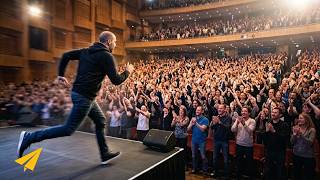
Evan Carmichael coaches SpeakerSlam winners Michelle Wieger (who has narcolepsy and a service dog) and Rimsha Ahmad on turning competition wins into speaking careers. He teaches the "hug vs. push" mindset to beat stage fear, how to scale a core message like "invisible disability," and how to structure talks from 30-second clips to five-hour workshops. He also covers monetizing through facilitation packages and building an audience with daily videos that blend personal stories and evergreen themes.
Chapters
I'm coaching Michelle and Rimshaw today to help them become world-class speakers. They recently won 1st and 3rd place at a huge international speaking competition where I was a judge. Michelle has a condition called narcolepsy and brought her giant service dog named Quinn right onto the stage. And Rimshaw gave an incredible speech about standing up for social justice and making a real difference. In this video, we talk about how to beat fear, figure out your core message, and turn your story into daily YouTube videos. Enjoy. All right, so we're here with Michelle and Rimsha, and they were recently at an event called Speaker Slam. I was a judge for it, and they were our number 1 and number 3 winners of this international speaking competition. And as part of that, we agreed to come here and do this session as well to try to coach them up on their journey to be speakers. So welcome aboard.
Thank you. Thank you.
We also have Quinn. If you're wondering why we have this giant dog, why don't you tell us quickly the story about Quinn and why she's here?
I have narcolepsy, which is a sleep-wake disorder. Basically, it's like having your phone battery, and if you were charging it all night long, you wake up and it's still at a maximum of 40%. That's me. But even worse, that battery can drop to 5% without warning at any time, and that's where Quinn comes in. She will tell me to sit down before I fall down, keeping me safe so I don't fall asleep in public.
I love it. And why don't you give us a quick background on you, Rimsha?
I'm a keynote speaker, essentially, and I talk about mental health, I talk about human rights, and I also like to help people unmask their voices and create a life which is their own and to help the world also. Yeah.
Awesome. So it was a fun event. There were what, 14 speakers?
14.
It's always hard at events like that because it's one speech after another after another after another. And one story kind of blends into the next into the next. And so especially with you, it was like 5.5-minute speeches. Max. But that's what's going to happen in general when you go and do any kind of speaking as well. It may not be that tight of a time and it may not be, you know, 14 speeches in 2 hours or whatever it was, but you're usually at an event that could be a 2-day event and there will be multiple speakers. It's like, how do you become the memorable person that people walk away with the message from, right? And so you guys did that successfully coming out and, you know, winning. That was the— this was the culmination, was like a international tournament that there were qualifying rounds to get to, and then here were the winners. And so I had the honor to judge you guys. How can I help? How can I be of service? What are you guys trying to build and grow, and how can me or my audience be of value to you?
Because I'm sort of in the beginning of my journey right now, I have questions sort of in the beginning stages of what it means to be a speaker or an advocate or an educator. And my question is What are some of the strengths or beliefs that are very important as you transition into something like this?
It's hard to do something brand new, right? But you guys have already overcome that hurdle, right? I mean, I don't know when you both first started speaking.
Yeah.
The first time you get on stage is the worst, right? Super nerve-wracking. And also, I mean, how many times have you given that speech? Right? You practice and practice and practice and practice and practice. And when you go and you speak corporate or you speak on stages, it's nice to have a breadth of different topics and speeches that you can give as well. But the belief, I think, is that your message matters and is going to help somebody.
Right.
And I think you both have that. Yeah. The danger is when you're on stage with all these other speakers, it's like, "Oh, but they're so good." Right? It's like, oh yeah, my message matters. But then when you're with all these other people, oh, it's like, it's not, it's not, my story is not as good as them, right? I remember I did a speech in Whistler on the west side of Canada, and it was the last speech I did before COVID and it was all mystery speak. Like, the speakers didn't know who the other speakers were, and I was one of the speakers. And before me was David Goggins. I don't know if you guys know David Goggins.
Yeah, I love him.
He's like the most intense human alive. Yeah, you know, he's crazy. And then after me is Peyton Manning, who, uh, he's one of the greatest quarterbacks in football of all time, right? So I'm like, I'm between David Goggins and Peyton Manning? Are you kidding me? Like, what the heck am I going to talk about to these guys, right? This is crazy. Massive, like, imposter syndrome, right? Right. And usually when I'm doing any kind of speaking gigs, there's other people on stage as well who, you know, you respect and admire. It's like, oh my gosh, how am I on the stage with them? And it's easy to go into scarcity mindset mode. Even you, you barely even qualified for this thing, right?
Yeah, I technically didn't. I was out. I got 4th place in the semifinal. I was out. 4th goes home. And I had to believe in myself enough to ask the organizers, is there ever a chance for a 4th place person to go into the wild card, the playoff essentially? And they said less than 1% chance. And I said, great. And here I am, and I won the whole thing in the end.
Right. So who shows up the best on the day? And you showed up great on the day and won. And you shouldn't have been there.
Shouldn't have been there.
And so I have two techniques that I use before getting on stage. One is a push, and one is a hug. And sometimes I need more hug than push, and sometimes more push than hug. But the hug is I'm here to serve. Like, stop being selfish, stop thinking about me and the pimple on my nose and whoever else is speaking and whatever else problems are in my head, and I'm here to serve, right? It's like, you both have an incredible message that you're here to serve and you're here to help. And if you don't show up as your best self, you're doing a disservice to the people in the audience. Maybe not everybody, but there's— I couldn't get over the fact that like, everybody in the audience is gonna love me, or like, love the message, but there's one person in that audience that's believable, right? I don't know how many people were in the audience when we did our thing.
500.
500? So it's believable that there's one person in that audience that what you're going to share is going to be life-changing for them, right? Like, that's a believable thing. And at least it is for me. And that's what I would— I would peek behind the curtain and just try to find somebody. Like, I'm here for her. I'm here for her. Like, that person needs this message. I can help. I'm there talking about YouTube. At this event. And I know more about YouTube than David Goggins. And what the heck does Peyton Manning know about YouTube, right? Like, he can crush me at almost anything else probably, but not YouTube. And so I'm Peyton Manning of what I do, right? And so I'm gonna go out there and talk about what I do, and I'm gonna try to serve. A little extra hack for that is I try to get there early and talk to people in the audience and just mingle. And like, why are they here? Who are these people? Just to make it feel more friendly. So I'm not talking to a stage full of strangers and cold faces. And so that helps me.
I noticed that. I was going to say that you came into the makeup room, and you were trying to get to know us and talk to us.
Yeah.
And I didn't talk at that point. That was interesting. But I noticed that you did that, yeah.
Yeah. And I wasn't super nervous being a judge. I've judged a bunch of things before. But when I'm a speaker, I always try to go early and hang out with people just for my own comfort.
Right.
And then I try to find that person. Like, I try to find one person I have some kind of connection to and why they're here. Because you can probably connect your speech to, like, why they're there, right? They're trying to learn. They're trying to be inspired. They're trying to get better. There's a pain in their life that they're trying to solve, right? There's like, there's something that you can connect your speech to. It's more heart and less head. I want to get on stage feeling like I'm going to impact at least one person. I'm trying to find like one or two people in the audience that I can remember because I already met them in the hallway before. Right, so that's a very nice hack, at least for me.
So that's the hug one?
That's the hug. Yeah, she's on it. She's like, "Okay, give me the notes, Carmichael. Gotta move on." No, the push is I don't— I like doing difficult things.
I'm that person too.
Yeah, it's not even a competition like I'm gonna go out there and crush David Goggins or Peyton Manning. It's just the fact that I'm scared means I have to do it. I'm gonna do it because I'm afraid. I don't want to do things that— I don't want to say no because I'm afraid. You know, like it's not a good enough reason.
Yeah, and I want to talk about that because, you know, Dan, when I first reached out— Dan is the owner and co-owner of SpeakerSlam— I didn't want to actually compete because because I didn't believe in competition on inspiration. But he convinced me, and I was so glad that I did, because I think it levels you up in some ways, right? Because you're pushing to do better. And of course, you're trying to do better than others, but also you're trying to better than your own self at some level. Do the best, essentially. There is competition.
I have 3 trigger words— scary, difficult, or hard. If I say those, if I write them, if I think them, then I have to do it just because. 'Cause I don't wanna teach myself, "Oh, it's hard, so I'm not gonna do it." Like, that's not a good enough reason. And so that, even saying it gets me fired up. Like, "Yeah, what am I gonna go do right now?" And so it's a mix. Sometimes, like, so for example, some people, a lot of my contemporaries in the speaking world say, and maybe this is helpful or maybe this is terrible advice. Customize it for you, but don't say you're nervous, say you're excited is a common one, right? Because it's the same. Yes, it's the same feeling. You get the sweaty palms and your heart's racing. Like, I'm not nervous, I'm excited. Yeah, I hate that.
Okay.
Yeah, because I want to teach myself I do things that I'm nervous. Yeah, that I'm scared, so I do scared. I don't need a hack to like convince myself that I'm excited. No, I'm scared, and I, you know what, I do things that make me scared.
It's interesting. I'm trying to go back to my stage. I love being on stage. I'm so comfortable being on stage. But before that, there's this energy that you're trying to harness. And I don't know whether it's scared or excitement. But whatever it is, I love that. And then going up on stage just makes me feel so grounded. At that point, it's just grounding.
So I need both. Again, it's the hug. I'm here to serve. I'm going to help somebody. And like, I'm scared. That's not a good enough reason. Get out there and do it, Karma Kaur. Everybody has their own— things that they do. Some people need it to be super cold, and like, we're all wearing like crazy jackets because they need it. Like, big name people, like, I need— they need to be super cold. Some people need to be left alone, like, 20 minutes before, like, don't, don't, don't talk to them. Like, they're in their flow.
Yeah.
Some people need to jump on a rebounder. Some people like warm up their legs and like hit themselves and do all sorts of stuff. And others like need to talk. So you find your rhythm. But for me, I have to figure out, am I— do I need more of the hug right now? I need more of the push right now. And it's never the exact same percentage, but it's always, it's always a combination. It's 80/20 or 20/80 or 50/50 or 70/30. It's always some combination. For me, I would take what that feeling you have and the excitement would be, or whatever the feeling is. Usually like service. I'm trying to help. I think somebody— if you can deeply connect to somebody here needs my message, It may not be everybody, but like somebody here, this is a life change. Because that's what I said on stage when I had our— my like 2 minutes or whatever. Yeah, we've all been impacted by somebody's speech at some point, right? Like there's been some speech you've heard that changed your life that now you're doing this, right? So like you, why can't you be that for somebody else? And like you can and you will. And somebody here in this audience, like this is their moment, but only if you show up. Yeah, that's right, right? And if you're afraid or you back out, or you don't deliver the line that you're supposed to, right? When they do Broadway shows, they'll often give the performers a scary note or the safe note, and depending on how they feel going in, they decide. The song will work either way, but they're either going for like the crazy note, the crazy high note or crazy powerful note, or it's an octave lower and it's like a safe delivery. And it's 50/50, like sometimes they go for it and sometimes they don't. It's like, how you feeling in the moment? I hate that. Like, I only want to do the scary note, right? It's like, 'cause that's the thing that brings the whole show home. Not throwing shade at, you know, the Broadway singers, right? But like for me on stage, I only want to say the thing that I hope will have an impact on people. And I don't, it doesn't mean that I always get the result that I want. You can always do better. You guys can look back at the video and find a million things that you could have done better. We're always our worst critic, right? You can watch like, "I can't believe I did that, I can't believe I said that, I had this memorized, why did I look like that? What am I doing with my face?" Right? All these things, right? It's fine. And watch it back. You know, like one of the biggest mistakes I made early on is I just, I couldn't watch it back. I was so self-critical I couldn't watch it back. But you're actually then cheating your mission. Because if you don't watch it back, you don't get better. So it's not watching it back to be hard on yourself, it's watching it back to get better so you can serve more people. —like the minute you can connect it to service, you'll do more.
I'm a lot like you. I love hard things. It gets me totally jazzed up. And I'm wondering, if you had all of the assets that I currently have, what would you do and where would you go from here? So I'll give you the quick brief. So I have a 14-year-old tech business. Does really well. I have been speaking for a year and a half and just became a member of the Canadian Professional Speakers Association. Just won this contest. I've got a pretty interesting dog, an invisible disability, and a best-selling book about how to follow your dreams. And I have a whole 10 followers on YouTube right now. Very impressive, I know.
A couple of the speakers messaged me hoping to get this opportunity and say, "Do you have any feedback on my speech? Like, can you give me any guidance on like what I should do next?" And, um, I— it kind of sucks that there wasn't like an opportunity for us really to debrief and give some feedback and what the different judges were looking for. I think in looking at yours, the invisible disability idea is a great message that people can really connect to because we all have something that is an invisible disability, something that holds us back. And so that is a unique angle versus just like how to live your dream life, right? Because then how to live your dream life, you're in the Tony Robbins, Mel Robbins, like it's a really hard, very hard space, space to break into. It doesn't mean that that's not the ambition because, because then also in figuring out your invisibility allows you to lead that, right? In the moment where you had to bring Quinn into the event and like, okay, here's why Quinn's here and I have a disability, guys, right? Like that's a That's a powerful moment. I think for you being able to better tie it to what's— how do I find my own invisible disability? I think people got captured by your story, which is great. And it is a crazy story. And especially when you're in a speaking competition, everybody's going to go and share a— typically a sad story from their past, and some people cry on stage and some people cry in the audience. The downside of that, and it's almost— I feel bad saying it, but like one sad story bleeds into the next, into the next, into the next. So like you lost this person and then this person died, and it's like, it's just too hard to remember because they're all the same, right? You won't get that as much when you go corporate because you're not up against a bunch of people who are selling the same stories, right? So that's more valuable. But in a speaking competition like this, almost everybody has a very similar story. And so then you don't stand out as much. But like, invisible disability is a cool story that if you— and it's tough in 5 and a half minutes, right? Like, that's part of the limit too. But as a speaker, you need to take your message from 30 seconds to 5 hours and everything in between and be able to speak in soundbites. Depending on what. So 5.5-minute speech is doable, yes. A 30-second soundbite, doable, yes. A 5-hour workshop, yep. And just go deeper, right? For both of you, like for any speaker, you have to be able to up and downscale depending. And a lot of speakers got killed on the points because they went over. Yeah, they did. And the way that that competition was judged was harsh if you went over. Harsh. Like, you have to know the rules. And I remember somebody in the green room saying, I don't care if I go over, I need to get my message out. Okay, but you're gonna lose. The way this is scored, I don't have control over that, right? So that's how the competition is. You have to stay within the rules of that. But I think the more you can make people think about your message— so yours was very personal around the disability, but even redefining what does disability even mean, that we all have something and it's invisible, and what is that? How do I identify what the thing is for me? And how do I find a solution? What's my quin? It could be a whole thing now. Obviously Quinn has a lifeline of like how long that will last.
I'll just name them all Quinn forevermore.
But that idea, like, what's my Quinn? Like Quinn becomes— Quinn is a solution to an invisible disability, right? So you could brand all of that. So now I'm leaving thinking, if I left your session with what's my invisible disability and then what's my Quinn, that's life-changing. It is. Right? And that's much— that actually helps you accomplish the, um, How to Live a Better Life, or whatever the book is called.
But don't snooze your dreams.
But the framing, like, don't lose your dreams, is poor positioning because you're in a world where that's a very competitive space and there's nothing to differentiate you. But you actually have a crazy story. That should be the lead. Like, the whole— like, I mean, should— do whatever you want to do.
Hey, I'm here for the advice.
Just makes it easier for you to stand out. The theme of invisible disability is powerful, and then like, what's your quin, or whatever you want to call it. If somebody leaves a session thinking about that, then you start to win a lot more, not just competitions, but speaking gigs, moving people on YouTube, et cetera. If I look at yours, right? I'm trying to think back now to like all these presentations and like one Lourdes and the other. I think you had one of the most powerful deliveries. You could tell that you deeply cared about this cause. The hardest part is connecting it to, like, me, like, what should I do? So is there— if the theme is going to be around social activism, then maybe it's your cause, or maybe there's a cause that I believe in that I should be more engaged in. And so I think both of you won and did well based off of the delivery of what you had and the story, but not as much on the connection to, like, I can go make a change in my life. And that's a struggle in a 5.5-minute thing, right? But the more you can connect it to me that I, I need to make a change, then I'm leaving that session thinking, oh my gosh, like, that wasn't just attending some inspiration. I gotta go, I gotta go shift something. And that's always going to be a challenge.
Do you tie that into everything you do, like even Shorts on YouTube? Like, every piece of content always ties back to what can they do themselves now?
It's harder in 30 seconds, right? But if you ran with— even if you ran with invisible disability and making me— and you telling your story shines a light on me because I don't have narcolepsy and I don't have a dog. So like, so then so what, right? Now it's obviously a great story, and so like people were cheering you on for the great story. And if it requires an extra step for the audience to then think, oh, Do I have an invisible— what is an invisible? And even disability is not just a— like, narcolepsy is a thing, but it's also— you can expand it beyond just a physical disability. It's a mental— it's a lack of belief. It's not chasing your dream. Like, we all have no confidence. It's caring what my mom thinks about me. It's like there's all of these things that people have that could be invisible disabilities that can be broken through, and we just need a Quinn to help us through it, right? Like, that's an extra step that wasn't laid out, that could be. And same thing for you, like, crazy powerful speech, and it's just, wow, that's like, that's power. But what do people then go home and do afterwards? Yeah, probably not that much. I'm sure for a few people, right? I'm sure for you. But like, the goal is, how do I reach more people? Instead of 5% of the audience, how do I reach 20% of the audience, right? So they go home and do something. So making the connection back to, I may not care deeply about your cause, but But the idea of, hey, there is a cause that you care about, you should go do something about it instead of sitting on the sidelines. Right? Yeah. So stop sitting on the sidelines and go play your part in the world, right? Whatever that is. Yeah. Making that connection then leaves people with like an aha moment that, oh my God, I got to go. I got to go do something. If I think about some of the other speakers and feedback I gave, I don't remember everybody's name, but the guy who did the singing, What's Your Song, right? Trying to get some audience participation is always great where you can. Like, invisible disability is a great workshop exercise. Share with your partner what your invisible disability is. Like, that works great in a conference setting, in a corporate setting, right? That they're now sharing for the first time. They're— so just at the moment where you're like, you are so afraid to have people know that you have this disability. Now you have them write down their disability. And by the way, now share it with the person next to you. And like, it's this release that, oh my God, I have this thing and I'm normal because they have something too. And then you think that's a big deal. Narcolepsy, that's not that big a deal. I have this, right? And so like now they're making connections, right? Same thing for the social causes, right? Like write down a social cause that you've been sitting on the sidelines on and you haven't done anything on, you feel guilty about. Write that down, share it with your neighbor. And they're like, people start doing stuff on it, right? And it's because of your presentation. Now you can't do that in a 5 and a half minute speech, but it expands easily to a workshop, right? That you can sell to people. And How speakers make a lot of money is not just getting paid to speak, it's then selling the facilitation afterwards. Yeah. Right? So you go on, you speak, and you speak to Royal Bank or whatever. Cool. But that's a one-time speech. Maybe you come once a year and share something. But if it's about social justice, well, how can they then implement this for the next 12 months? What does that look like? And you sell a package. Yeah. So I'm gonna do the speech to your corporate event, but then I'm going to come back once a month, once a quarter, and help your team go through how to actually implement what I talked about. And same thing for you. Yours now becomes much of a communication, right? Let's— hey, understand that people are struggling and have all these things that they're afraid to talk about. If you want to increase retention and camaraderie and loyalty and morale, like, sharing these things is actually very important. So I have my 30-minute speech, but then we have a quarterly workshop that I can teach all your team on how to actually execute it. This is a weird thing about the speaking world. The people who hire you don't want to change themselves. They want you to change their people. Yeah, right. So like the CEO comes in and hires you. Ultimately, it's like, but if I change the CEO, everything changes. It's great, right? You will probably get very little buy-in from the senior management. Probably. Like, you might get a visionary, but like, probably very little. But if you can just change my people, that'd be amazing, right? So it's like, oh, but that's like— you should really be involved. But this, like, give them, give them what they're asking for and then actually give them what they need, right? It's like the way to actually change the CEO or their senior is to change the people and work your way into the organization and then work. It's like, you know, it'd They're getting all these results that maybe you should do something too, right? You can start to lead it in there because that's always a frustrating point when people start to go corporate. Yeah, like, what do you mean you don't— you're not going to be part of this? Now just come and change my people. That's what you're being paid for. Back to like, what do I do with all these assets? I don't know, one of these things. I'm not quite sure. Um, the positioning, the packaging matters so that it can start to reach more people. I think Invisible Disability is a cool thing that can be that can be released in the messaging, trying to get aha moments for people to see that, hey, I'm— I have something myself. It's— you're in your story, see something in me that is much broader. The more you can tie to something that you're currently facing— I gave this feedback to, um, the woman from Switzerland, Reggie. Yeah, that's her name. Uh, she was dealing with it, like she was just told that she can't have kids. And she didn't go very deep into the pain on that, which she should have. And it's Swiss and it's different culture and you're not as— but if you want to sell to the American-speaking market, you need to be more emotional. And I'm sure it must have been hard. Like, you can't have kids now. It's too late. That's got to be brutal. And so how did she deal with it? And she's still dealing with it. That's courageous. Like, to talk about something that happened in the past is one thing, right? But like, I'm still struggling with this right now, and I don't have the answer, and I'm trying. I thought she had the most courageous speech of anybody just because of that. The singing guy, was it Patrick? Patrick, yeah. He alluded to it that his song was 99 Bottles of Beer on the Wall, and he wanted it to be Don't Stop Believing. But he wasn't quite there yet. Yeah, but it was almost too— like, it was too clever and not deep enough. Like, if you went into the 99 bottles of beer in the wild, it was just a throwaway line, but that's like the most painful line in the whole thing. Yeah, that he was a drunk or like whatever he would call himself, right? Um, so taking me into that and like he's trying to be Don't Stop Believing, but he's not there yet, and any doubts along the way right? So like, when is great, and what, what, how are you still dealing with it? Like, somebody with, somebody who is like you can't win because of blank, right? Like bringing people into the current day struggles. Yeah. As well as like, the foundation story is great. Yeah. You know, for you, speaking on stage feels like home and grounded now. So it's not, you don't want to be fake and say I'm nervous to be here, like if you're not nervous to be here. But what are the current struggles that you're facing that still tie to the message that you can bring in? Because that makes it a lot more human versus just, "Oh, I used to do this and now I fixed it and I'm great." But like, you're not great. Nobody's great. We're all still struggling with a million things, right?
Always a work in process, yeah.
And so you're way better than you used to be, but you're still like miles from where you need to be. And so bringing people into the present-day journey and struggle, which then can translate well into content, not just your speeches, but showing the journey of like what you're currently struggling with that still ties to the message and like your mission demands you to step up and play a bigger game, whether it's through like the hug or the push, right? It's like, I got to get this, I got to do this, right? Even if you think back to your content, like you thought you had a good speech, you thought you had a good message, you lost the thing or lost, you came in fourth, which effectively meant you lost, right? Most people who come forward don't ask, hey, how do I get involved? You did. They said 1% chance, right? Okay, imagine if you documented any of that. If you shared any of the journeys, like, I lost. I thought I had a great speech, like, people need to know this, here's why, and I can't believe I lost. And I looked at my video and like, okay, I could have done better here, but I wish— like, this is just a qualifying round, how would I ever even come close to winning if I can't even win qualifying? Whatever is in your mind, It's not all positive thoughts, right? There's a lot of— it doesn't mean that you end on a negative, but to show what you're working through and then, "Okay, but here's what I'm gonna do. I'm gonna email, or I'm gonna call, or I'm gonna get—" And then, "I got the shot at Toronto. This is crazy," right? And then we get to see you at Toronto and you do your speech. Like, bringing people in on the journey of what you're going through makes people cheer for you even more, but it cheers for them as well. I have a question on that.
This is something I actually had. How can you share vulnerable experiences without losing authority? Because I feel like there's a balance somewhere in that.
As long as you don't feel like you've lost authority. Like vulnerability, you're then saying vulnerability is a bad thing and you lose authority.
What I'm trying to understand is that how vulnerable should you be so that People don't think you've lost it. Do you understand?
I do. It's all in the storytelling. Okay. So if you want to show your authority, you've already done some things. Yeah, yeah. But now you're struggling with something. Yeah. And here's what you're going to try to do to get out of it. Yeah. And then you haven't solved it yet, but I'm going to go for it. Like if she came in 4th place at the conference or the event, and she's gonna go for it. If anything, it just builds more like, I can't believe you're doing this, like, I'm rooting, I'm rooting for you. It doesn't negate her authority. She, she lost a couple— like, what's her alternative? Just never compete again, never get on stage again, never, like, never talk about it? As long as you don't feel weaker because of it, that's what actually connects you to Like, who's your favorite podcaster? Who do you love to listen to? A mainstream person that we might know?
It's non-mainstream, but I like to listen to Jesse Elder. Okay. He's a coach. He's a life coach essentially. Okay. But he is very wonderful actually.
Okay, so does that make you have less authority with him? No, it doesn't. Right.
So essentially you're saying that it comes from you. It doesn't come from outside you. That people don't— Yeah, it's just an insecurity.
It's like, how will I be judged? Yeah, I need to be a certain way. Yeah, which is like her showing up with her dog to the first event, like, oh, I'm going to be judged in a really negative way. And maybe some people do. Yeah, I'm sure some people were like, oh, WTF is this giant dog doing here? Yeah, oh my God, you have a disability, that's crazy. Like, it's not all roses and rainbows either. Yeah, right. And it's the willingness to move forward because people will— some people will listen to your speech and say, I don't like that. Yeah, I'm sure. Great. Yeah. Your intent is not to upset people. Your intent is not to piss people off. Yeah. Some people won't resonate, cool. But if you play too vanilla and never share anything, you don't accomplish anything. And so if you looked at the people that you, you looked up to and respected— I'm not familiar with his work, but yeah, you'll probably find a lot of vulnerability baked into there. So if it doesn't reduce his authority with you, then why, why would it be? It's just a, it's just a insecurity, right? It's just a mindset. Yeah. And we all have it too, by the way. Like, nobody likes to say the things that they're— that's why I said Reggie's video or speech was the most courageous, because she's still dealing with it. She hasn't solved it yet. It's, it's way easier to talk about what happened 5 years ago, 10 years ago. If you got on stage, it's like, I don't know what I'm doing.
Yeah.
I thought I wanted to be a speaker. Like, if she started that, I mean, that doesn't really align with the message necessarily, but if it's like, go for your dreams, the best thing to do is show me you now being scared and unsure and still going for it, because that's crazy.
I think that's why I like Q&As at the end of speaking engagements so much, because people will ask questions. Like, at my most recent one, the first question was, um, "Did you— were you ever afraid to speak on stage? Did you ever, like, were you ever nervous to do this?" I was like, "I'm nervous every time still. I never— this wasn't a dream that I had. I started doing it because I was afraid." And they were like, "What? Really? We thought you were doing it since you were like 3." I'm like, "No way. No, it's not easy and every time is hard." And so I think what I'm hearing from you is I have to find a way to put some of that reality content in. Now, not just when someone asks the right question at the right moment, but in my actual content as well.
Yeah, and one idea, and then we'll get back to content. Leaning into your personal style is how you're going to win. So I love fireside chats, Q&A, the best. Whenever I'm doing speeches, I mean, I just came back from Arizona and then Boston and then did two virtual live events to, I don't know, 600 people or something. Um, when people ask me, can you, can you come and speak, I, I always ask, can we do it as a fireside chat or Q&A? Either the host, whoever's putting on the event, like a Dan, whatever, would, would interview me and I'd answer questions. Yeah. Or we, as quickly as possible, take— go to the audience. They need enough context. Yeah. Because some people know me and others have no idea, right? So you have to set up a little bit of context. But just— you guys did at the start, right? Just like you told the story you have that, you have that rehearsed, right? It's down. You told your story, right? You tell it quickly, you get a little bit of context, maybe there's a video or whatever. And then as quickly as possible, for me, I want to get to Q&A as quickly as possible. Okay. If that's your style, cool, do it. It may not be. Some people don't enjoy the Q&A, just want to speak. It's riskier to do Q&A because you don't know what's going to come. You got to answer a question in front of 1,000 people and you have no idea what the question is going to be. You know, scary. When I was being interviewed by people, I would in the early days always ask for the list of questions because I didn't want to disappoint them. I didn't want to give a bad answer. Yeah, but then you end up giving like a rehearsed answer. Yeah, right. And so I leaned into, okay, I'd rather— again, scary, difficult, hard. It's scarier, so I have to do it now just because it's harder. Now I have to do it. But you actually get better at— when people send their questions, like, don't send me questions. Even like, what are we going to talk about? I don't know. Hopefully something good. You're not going to ask me about gardening or something. I mean, you might, but I don't have a good answer for you. I only know how to do like 2 things. Gardening is not one of them. Probably the questions you'll get asked are ones that are in your area of expertise somehow. And for me, those are the most fun to answer because you're actually helping somebody. And the best speakers are the ones who also do coaching. 'Cause speaking is coaching at a group scale with no feedback. Just like writing a book. Writing a book is even harder than speaking to do it well, because you're coaching people at scale with no feedback. So you have to handle every objection. So if you coach people and helping people one-on-one, that turns you into a better speaker, 'cause you know the objections that are going in their mind. But if somebody doesn't agree with you, or like, "Yeah, but," they're not gonna stand up and say, "Hey," No, because of this. Right? Exactly. So you have to address those in your speech if you want to move them, because they're thinking about it, but they're not saying it. And if your speech doesn't address those things, you're going to lose half the room. It's even worse for a book, because at least as a speaker, you can kind of see the audience. And if they're reacting or if they're like on their phones or they're doing something else, you can kind of see. With a book, you have no idea until it's done and you see the Amazon reviews. Right? So the more that you can help people, it'll turn you into a better speaker. And a better author and coordinator, all of it. But content— you are speakers, right? So you should be making videos every day. Like, your greatest asset is your, your speaking. It's not about all of the lights and the cameras. And like, you don't need 3, 4 cameras on you and 3 lights and microphones. And like, this is great. It's nice though, isn't it? It's great every now and then, right? Or, or speaking on stage or whatever. But it doesn't have to be all polished and fancy and geared up because the message is the thing that matters the most. Right. And so there's no reason why— if you actually believed in the mission that you say you believe in, then you'd make videos every day.
Well, I guess I'm making videos every day. Thank you for that.
It's not the same speech every day. So this is turning you from a, like, I deliver this 5.5-minute speech 30 times, or like this 30-minute speech or whatever, into an actual leader of a movement, which you guys are both— like, you have. Yeah, it's— you have a powerful message, right? Yeah, I think so. I think so. Yeah. So, like, just doing speaking competitions, it's not enough, right? And it's a great start too, right? It's, it's awesome. Like, you guys— I would never have entered a speaking competition early on in my career. Like, I won a bunch of awards for speaking, but never to a competition. Yeah, they just gave me awards, like, oh, okay, I guess I'm good at this, right? But like, I never entered it. I would be too scared to enter. I guess now I say scared, now I gotta go do something.
So you're signing up for next year, right?
That's right, I'm not a judge anymore. Let's go! So the trick then becomes, how do you take your message and turn it into a daily piece of content? What does that even look like? So if it's Invisible Disabilities or Find Your Quinn What's happening in the world, whether either in your life right now or in the world, that you can comment on? Because you both have evergreen messages, right? Like, in 20 years, Invisible Disability or social justice are still relevant. They're still relevant messages, right? Yeah. So every lesson needs a story. Every story needs a lesson, right? If you're doing a speech and it's just a lesson and no story, it doesn't carry. If you're just doing a story and there's no lesson, it doesn't impact. So every lesson Every story needs a lesson. Your lessons are timeless. So the opportunity and the challenge is to create relevant stories. So how are you culturally relevant to what's happening right now? So where— I mean, social justice, you have your pick. There's always something that you can shine a light on, right? So you just pick your pick and Yeah, go at it every day. There's something new always coming up. It must be super frustrating for you to look at the news and see this like every day. Tell me about it. But talk about it, right? Because— and, and you are, but— and more, right? Because you're a lighthouse. At least I see you as lighthouses. You're shining a light for people, right? Trying to spread positivity when everybody else is trying to spread negativity, right? Your messages aren't like, give up, hate on somebody else, go bomb somebody, right? It's like you're not sending negative messages. So you're a lighthouse. But you don't need a lighthouse during the day. You need a lighthouse at dark. Yeah. And the world is dark, so they need you to shine the light. Yeah. And so for you, it's super easy. Like, you take the front page news every day of the, you know, the global section and go at it. And whatever your framework is around Like, how do I, how do I not get lost in all the atrocities happening in the world? Yeah. And then feel like I can make a difference? Yeah. So what you do is you have a framework. Now we're getting to the teaching side. Okay. How do I apply social justice in my life right now? What do I do? Do I volunteer? Do I comment? Do I start a vlog? Like, what are my steps? I don't know, because I, I can be with you and see all these things happen in the world and get super upset and frustrated, and the logical place to go is hopelessness. Yeah, it's over. Yeah, like the world's a terrible place. Yeah, like that's where most people will just go. And so let's just rant and rage and attack each other, right? Like that's the logical human condition of where people would go. So you then need to take me there, but then show me a path out. So you have a framework. I don't know what the framework is, or maybe you're still developing it, and again, it always gets better. But when I get frustrated something happened in the world, What, what am I supposed to do, Rimshaw? What do I do with that information? Yeah, right. And so you guide me and give me a path out, and you can just take your pick every day. And so you're applying your— that timeless framework to a, to a culturally relevant story right now, right? So if you— it's super easy, like daily content. You could even just screen share, go to cnn.com. Yeah, load the article, have your face like a Zoom screen share and talk about the thing and how frustrating it is, right or wrong, and then tell me what am I supposed to do. Not just leave me upset and raging, but like, okay, then if you're frustrated too, here's what we need to do. Not just like what the president needs to do, but what can I do? Besides waiting till the next election to vote, right? Like, what do I do right now? What am I supposed to do? So that I feel like even if it's a minor difference, I'm still making a difference instead of just being upset. Right? And maybe you have that, or maybe there's still things that you can work on, right? Yeah, I do have something. Great. So you take that framework and then apply it to whatever the cause is of the day. That's an easy daily video for you, right? For you, it's not as easy as going to the front page of CNN and then like commenting. But similarly, first of all, like, what is invisible disability? And then how do I reframe that to realize that it's— I have something in my life as well that's not narcolepsy, but like something else. And then how can you, whether it's you're sharing a story of you going through something, a story of your friends or somebody in your life. You kind of touched on Quinn, like, hey, what happens when Quinn passes away? Right? Like you touched on it, but we didn't go deep into it. But I'm sure there's like deep, painful thoughts about what happens next.
And she's the second one I've had. I've had one before too, so I've been through it once, so I know how hard it's going to be this time.
So, and don't— you're automatically pulling yourself out of the pain with a solution, which is great, and you will handle it because you're tough and you'll figure it out. It doesn't mean that the pain's not there too. So like, show me some of the painful thoughts too, because you're not always thinking, I'm just gonna get out of it, because there's— there are moments it's like, it's gonna be like really rough. Like, I've lost dogs. The only day that I haven't filmed a video I filmed a video every day and released a video every day on my channel for a decade plus, maybe 15 years plus, every single day except when my family dog died. It's like the only— I couldn't— it was filming day and I just could not film. I could not film. Yeah, I was like, 7 years ago or something. I'm still like getting emotional, but I could not film. I just told my team— I filmed through breaking my neck, concussions, like I filmed through— I could not film. And some people saw that and like, dude, you're so soft. Like, it's a dog. Like, okay, for me it's not a dog. And I can't even imagine for you, because that was just a— it was a family, it was a family member. But for you, it's like it's a lifeline, right? So instead of just glossing over, it's like, I know it's been hard and I'll get through it because I'm tough, right? Bring people in a little bit to the pain and then still take it. You're not going to leave them in the pain. I hate leaving people down. There's solutions. But if you don't bring them down, then there's no connection. And then they don't listen, and so they don't change, right? Because they look at you as superhuman. And you'll tell the story better. I'm not meaning to put you on the spot. But if you just say, hey, it's been hard. It will be hard. It was hard before. Now I know how to manage it better. Like, oh, well, Michelle's like special. She's just like built different. And so I can't do that, right? Where it's like, no. You are not. You've learned these things. You are not like Superwoman, some alien from a different planet who's like so special and incredible, right? You are incredible, but you've learned skills. How to. How to do it. And that's what— if I can't make that connection to you, back to authority, if I don't feel like you understand me, I'm not going to listen to anything you have to say. If you don't show me that you actually deeply understand me, then I'm not going to listen to you. So you can have the best strategies in the world, but you're over here. I don't even know what you're talking about right now. I'm struggling with this right now. Right? So that's where bringing people in. So whether it's your own story, whether there is something in the news, I don't know what you would consider invisible disabilities. Like, it's up to you how you want to define it. If you're talking about— like, you get to pick whatever. Is there anything broad that's happening right now that you would consider invisible disability?
I mean, today is International Day for Persons with Disabilities, so very appropriate day to be filming. Yeah. And there's always things going on. With rights, and for me, I think it's the denials when companies are breaking the law, the human rights laws about service dogs by denying access. It's awful. I know what— like, I've been through that. Even just last month, we drove to a hotel. I was gonna be on the morning news the next day. We got there at midnight, and they told us we couldn't stay there with a service dog. And I was like, nope, here's the paperwork, here's the law, give me my room key. No, no, no.
So what hotel was it? This was the Hilton. Great. So like, that's content, right?
See, I didn't want to— I didn't post it because I didn't want to be negative. And now with this conversation, I realized that's not being negative, that's being real.
Real. And you're like, things have to change. And, uh, being negative against a Hilton policy All day long. Like, why not? That's crazy.
The other worry for me is if I'm saying bad things about corporations, even though they're true, does that affect my salability to other corporations for speaking? Possibly.
But the point isn't to throw necessarily the whole company. Like, you're not going, and CEO of Hilton, whatever, right? That is not this kind of video, right? That's you on your phone. It's It's 2 AM. I just drove all the way here. I'm at the Hilton. Legally, we're allowed to bring Quinn in. She's a service animal. She's huge. Here she is. But we are not able to get in. And it's frustrating. And this is not the first time it's happened. And we need to make a change in corporate America. And then again, you can tie it into whatever they're supposed to do. Now, you may not be the most eloquent. Not at 2 AM. But that's the most real, right? Yeah. And it's great, and it's a different side. And so again, not everything has to be going off and attacking things. You're gonna have, you're gonna, she's gonna see something in the news and disagree with some of the decisions people are making, right? It doesn't mean that like everybody should go and like attack that person. But if you can mix your content between personal things you're going through, I think you have an opportunity, whether you wanna take it or not, to move beyond just the service dog.
100%. Right?
So like, that's something that might be happening in the news, but what's happening— that's a niche of a niche. It could be like 10-20% of your content. Awesome. But what's a broader trend that's happening where people wouldn't even see it as an invisible disability? What would you— what's happening that you would expand the definition of invisible disability that people can connect to?
I think a lot of mental health is invisible disabilities, and there are physical ones too, so you could definitely broaden it over —your pick of the litter, right?
But just like, what's something that you feel connected to instead of it just being strategy? Because there's so many things happening in the world that need social justice. You get to pick every day. Like, you may not know much about something happening in Bolivia right now, you know, but maybe you do. But like, you could pick every day what you focus on.
I would probably not focus on everything. I would probably pick from what—
the stuff you care about. It's the same thing. Like, every human has an invisible—
every human. Yeah, yeah, I, I say that. I I say always, I have narcolepsy, you probably don't, but everybody has something that is standing in their way that's a disability to them.
Okay, so like what? What's one you care about? Not like strategically, but like what do you actually deeply care about?
I mean, anything that's invisible I think has a big impact. A lot of the people in my life, and it's what like, it kills me when I see how much they lack belief in themselves because their upbringings weren't good. They had traumatic childhoods and the way that affects them as adults in their confidence. And they're such givers, but they never ask for anything. It has an impact on them every single day.
Great. So childhood trauma becomes a bucket of content. Yeah. Yeah. That there's something happening once a week that you could talk about related to childhood trauma. Yeah. And that, that is an invisible disability. Yeah. And people need to find their coin.
I love it. Yeah, there's divorce, there's being caregivers, there's the actual disability, there's so many.
And you pick the ones that you connect with the most because you can go super specific around the service animals, which is great. What are you supposed to do if you have a service animal and they get shut out by— what are you actually supposed to do? Like, who is actually making content about this? Nobody. So that, like, you become a hero with the people who have service animals as well. Even watching you try to fight at the Hilton to try to get in is an inspiration for somebody who's like, I'm not— I'm, I'm just gonna go somewhere else, right? And shrink down and feel worse about themselves.
The person afraid to go to the grocery store and buy butter because they're afraid they're gonna get stopped at the door before they get in, right?
So like, tell me what to do. What am I supposed to do when that happens? Film yourself walking into a whatever. Yeah, a Loblaws. And, and when you get stopped, what happens? You know, how do you handle it? That, that is a great lesson for people who have service animals and like don't know what to— and then just don't go shopping. And don't socialize and stay at home all day and just Uber Eats and eat unhealthy and have no social life and like end up miserable, right? But like your video could have saved their life, right? I mean, that's real.
It's very real. It's exactly what happens when you get shut down early on. Yeah.
And so, but that's like 20% of your content. The other 80, the more you can pick on subjects that mean something to you. So it's not just you have a— because now you're going from super specific around service dogs to insanely broad, it's hard to connect to. Like, everybody has something. Okay, got it. But then, like, what do I— what am I pulling at? But if you have causes, whether you care about divorce or childhood trauma or addiction, or like, all of it works. It doesn't matter. But what matters is, like, it's actually in your heart that you, you feel deeply to talk about that.
So in line with that, if you have multiple interests, if you are like— for me, I, I like to advocate for human rights or social justice, but I also am talking about mental health, specifically ADHD or depression and such. If you have a variety of subjects that you're interested in, is it better to niche down on one more, or is it better to just talk about what you're interested in?
If you just niche down, you're gonna get bored. Yeah. You're gonna feel like you're cheating. You're cheating people, like you're cheating yourself. Yeah. So I wrote a whole book on this. It's called Your One Word. The idea is figuring out, like, if you had to say what's your most important core value, what would you say? I know I'm putting you on the spot.
Pretty big question. Yeah. It's huge, actually.
I think it's faith. OK. So then that actually becomes your job. Yeah. Because the greatest gift you can give other people is your standards and your values. Yeah, so the greatest gift you can give people is faith. Yeah, which is, as we were talking about how negative the world is, it's easy to get lost in a really death spiral of negativity and bad news. What gets you out? Faith that it can get better. Yeah, and you're going to give them tactics on how to do it, but like the faith stays. That— so if you just talk about a whole bunch of random things, it feels disconnected. Yeah, but I'm not coming to you for random things and coming to you for faith. So you have to connect it to Faith, right? And then it's all super— then I'm coming for Faith and you're just telling me different stories and different examples and it all aligns. Makes sense. Same thing for you, you have to connect it to Invisible Disability, right? Otherwise, like, a service dog and then mental health and then like it's all over the place. It's only— but it's not, it's not because it's you, but it's putting, um, structure around it and a core value, right? So I should leave. I'm sure when people even just interact with you, people, your friends, people you meet, people, co-workers, whatever, they have more faith in themselves because they know you. Yeah, that's not— it's true, it's true. Well, if that's your actual core value like that, that— and I'm sure people have told, told you things, Michelle, that like they've never told anybody else. Oh, often I am struggling with this. I struggle. I've never told anyone. I don't know who to tell. And they're opening up to you, right? And so you're already doing that. You're just being who you are. Like, you can't help it. You can't help but not be faith. Yeah. Like, if it was spread disbelief, like, you couldn't do it. Like, you'd, you'd, you'd hate yourself. Like, you'd have to quit. Like, you just couldn't do it. Yeah. The challenge now, or the opportunity, is you're doing that with the people you know, and now we got to do it at scale. Scale. Because the greatest gift you can give that room of 500 people is still faith. Or the people, millions of people who might watch on YouTube, but still faith, taking people into the darkness and shining the light and saying, have faith, here's how. Like, that's a great gift. But if you don't connect it to faith or some unifying theme— I know I put you on the spot, you might kind of change it, but it'll be close. If you don't connect it, then it does feel all over the place. Like, I don't understand what you're doing. Yeah. So if you go in with the intention before every video, before every speech, I want to spread faith You will show up differently. The messaging, the story will be similar, but you'll change it around without you having to script anything. It'll just feel more right because like my goal here is to help somebody have a little more faith in themselves. And it's always internally and externally. Yeah. Faith in yourself and faith in the world. So after listening to you speak on a YouTube video, at a corporate event, at a workshop, on one-on-ones, I should have more faith in myself. And I should have more faith in the world and where we're going. Yeah, like that's the mission. Yeah, I have a very— mine is belief. Like, believe and faith are pretty close. I go at it through entrepreneurship. Yeah, you're going at it through social justice and other causes. Awesome. But it's still— I want to have faith, and that's why I'm hanging around you. And same thing, like, I don't want this to be— I'm hiding this thing. I don't want to be hidden anymore, and I want to pull through. Yeah. And so you're just showing different examples of it and picking the causes that you believe in. The most. I had this conversation on an airplane. I don't talk to people in airplanes because I'm introverted and like don't say hi, but a woman found out that I was, uh, I had a YouTube channel. She kept pressing me like, "Yeah, I do YouTube." Like, "Oh, my husband's a nurse," and like a male nurse, "and he wants to get his YouTube channel going." Like, "Well, what does he do?" "Well, he shows walking trails in Seattle." So he goes through all the hiking trails in Seattle and like films it. And it's like, it's struggling to take off. It's like, well, there's two types of videos that you can make. The first is you're just highlighting the walking trail. Here's this tree, and here's this path, and here's this duck, and like, here's why this is such a great walk. The only people who want to watch that video are people who are going to go to that trail in Seattle. Yeah, so it's like a very niche thing that you're doing. But like, why did he start this channel? Well, because he's a male nurse, and all day he just sees overweight people who are not healthy coming to his hospital where like if they just walked, just walk. Yeah. You're gonna, you're gonna like increase your lifespan and reduce your hospital visits like by a lot. Just, just go walk. And that's why he started the channel. Great. So your job then is for me in Toronto, Canada to be able to watch that video and get inspired to go walk. Yeah. To get outside and get nature and walk. And I can do that from the same Seattle Trail, but the storytelling is different. And the intention is different, and how you show up is different. So what are we trying to do, right? It's either some little niche thing, which would just be like, uh, service dogs. It could be a niche thing. But if you make it to something bigger, like we all have something when we're all being shut down in some capacity, right? We're being shut down by powers that be for our own dreams. Yeah. Then it's like, oh my God, I— right? So it just changes how we show up. And so I hope that answers the question, right? It's like if you tie it back to faith For yourself and in where you're going, it changes everything.
I know YouTube is your core, but where— which social platform would you suggest that you put more effort into if you're building something, especially for me who's still sort of starting out? Yeah. Or even Michelle, as YouTube, she's just got 10.
Yeah, I've got 10 followers on YouTube and like 10,000 on some of the others.
Yeah, so short form is great for inspiration and entertainment. Okay, so if you're going to inspire or entertain, or I guess rage, yeah, you could do that too, but it's, it's quick hits. Long form is better for education and commerce. Like, if you want somebody to hire you to speak, they need to see you speak. Like, a 30-second TikTok video, you're not going to get corporate speaking gigs from. So they need to see you speak. My first international speaking gig was in Malaysia. And the guy hired me from my YouTube videos. I was the opening keynote for this. I've never been to Malaysia before. Yeah, wild country. It's awesome. And just before I go on stage, he says, "You better be really good because I took a risk of hiring some guy from YouTube." Great, thank you. I'm already nervous enough. That's, that's— push, there's the push. Thank you. Exactly. I didn't have that strategy at the time. This is more just stress. Like, I hope I don't blow it for this guy. YouTube is the only long-form video platform. And so like, it makes sense to be there. You can clip the content to then go for the other platforms, or you can make custom videos. Like, if you guys are speaking, you, you need to— you, like, your greatest asset is your ability to speak. Yeah, you have to be making videos every day. And if it takes you, uh, we don't have to worry about the editing. Like, I don't know if you guys have edited your own videos. You try to do it, right? It's miserable. Well, but here's the thing, it's like, if you spend 20 minutes recording the video and then 7 hours editing it, Right? Yeah. What skill are you training? It's like the skill that you don't want to get good at. So spend the 7 hours training yourself to be a great speaker that doesn't need editing. It's a better use of time. And they're not, they're not going to watch your video because of the B-roll of the, of the man jumping from a mountain with a hang glide. Like, they're coming because they like you and the message and the story. And so you're just training the wrong skill. And so forget about the editing just completely and train yourself to be a better speaker, to go live. Like, imagine, press record, okay, and go. What's your, what's your opinion? What do you believe? What do people need to hear right now? Yeah. And so I see it all the time, and like, I was too. Like, my friend edited my first video, took us 2 days. Like, I can't, this is, it's going to take too long, and I'm also just training the wrong skill. Yeah. You should be doing, you should be doing long form and short form every day, because a 30-second video of you, or like if you're doing the Hilton, that 12-minute video of you standing outside the Hilton should be done in 12 minutes, and then you title it and create a quick thumbnail and post. Sweet. If it takes you like 18 takes to get it, well, cool, then that's a skill to work on, like get better. Because you, you, if you are a professional speaker, you, you need to be able to one-take your videos. That's your skill, okay? Right? Because when you go and you do an interview, a fireside chat, yeah, it's one take. Yeah, there's no like, oh, can I like, can we edit that and like redo it? There's one take. So like, that's, that's your skill. Yeah, to be able to one-take things. And if you can't do that yet, then fine, just get better. Like, that's That's the homework so that you don't need editing.
For anyone who's listening, the way I built that skill, I used to be terrified of going live on social media. So obviously I had to get better at that. And so I did a live video every single day. The original plan was for an entire year. And the first time I did it, I waited until 11:59 PM after I'd cried twice and then did the live video. And the next day I only cried once and it got better and better and better until I could do a live video anytime on any topic. But like you said, it's a skill that's built, and the first times are terrible. It just sucks. But live's a great way to pressure cooker yourself into getting good really fast.
Yep. Now, because when you go live, there's still less pressure. Like, the beginning is, "Hey guys, okay, I'm gonna today—" You can't do that in a speech. You can't get on front of stage and say, "Hey guys, okay, so, um, yeah, welcome. Oh, Angel is in the house.
Where are you from?" Give me some likes if you can hear me. Right.
You need to kick off with something powerful. Like, that is a skill to learn. Yeah. How do you lead a video with a powerful opinion? What do you believe about Hilton that people need to believe? What do you believe about invisible disability that people need to believe? And training yourself to quickly come up with a powerful opinion and then lead it with conviction on a video and then go tell the story is a skill that needs to be developed. And it's great that editing can save you, But you don't want it to. It's great to res— like, I respect— we have full-time editors on my team and I super need them and respect them. And like, it's just not the skill that you should be focused on because it actually cheats your mission. Right. I would do one daily long-form video that's like 10 minutes plus for both of you around the things that you care about and start thinking about— the more it's on your radar, the more you'll start seeing on your flight home or drive home to Ottawa, you'll see, you'll see something happen and you can If it's on your top of your mind that every day you have to film a video, you'll find, you'll find ways to then come up with things to share in the video. I care less about how well it does and more just about putting in the reps. Like, are you getting better? Because the challenge— forget who was asking me, um, one of the other speaker guys, um, like, how do I start getting paid for speaking gigs as well? You have to get to a threshold of skill. Yeah. So that you start getting paid. Right? Which you guys are working your way up, right? If you think about who your favorite speakers are, all-time speakers, right? I mean, at our last Mastermind, we had Les Brown come out to speak for us. Or if you like Mel Robbins or Tony Robbins or whatever, like, all those guys would have crushed that competition, right? And so there's just a level of skill that you don't get paid until you're across like a threshold, and then you get paid a little, and then you get paid more and get paid more as you get better. Right? And so that's the work of getting better. So it's great to have won this competition and like, okay, how do we keep getting better so that like you could walk in cold and win a competition, right? Not that you would ever do that, but because the skill is just undeniable. Yeah, right. Um, and so long-form, 10-minute-plus video every day. Find a topic to talk about. Don't worry about editing it, just film it and post. And then if you want to throw in some short form, wherever you play the most, whatever you consume the most. I don't know where your 10,000 followers are. Instagram, TikTok? Yeah, Instagram, TikTok.
Both. I'll post on Instagram and if it does well there, I post it on TikTok. You should flip it.
Okay. Yeah. TikTok is the most open, like, meaning Instagram of all the platforms is the most for your followers, right? It's still open, like, in terms of being able to get new people in. Yeah, but if you're gonna play and experiment you play on TikTok because it's the least loyal to the people who follow you. Okay. So if you mess up, it doesn't matter as much for Instagram. Not that it's a heavy penalty, but if you're going to play between them, I also wouldn't care that much at like where you're at. Just like post. You can post the same thing you post on TikTok as you are on Instagram. Yeah. Oh yeah. Don't change them between the two. And if it's— if unless you're going more than once a day, then, then just post both to both. Okay. Okay. But if you're going to hold on to something, you hold on to your Instagram more than the TikTok. Okay. But I would do one a day for long form and one a day for short form.
Do we bother with Shorts on YouTube with that same short form content from Instagram?
Separate channel, not the same channel. So start a Michelle Shorts channel. Okay. Put it on there because the Shorts— if a Short does well, it starts to— it actually negatively impacts your long form content. Okay. Yeah, I wouldn't worry so much about it. I mean, there's leverage there. Like you can make one short form video and have it go to 3 platforms. You can also post to Facebook if you want. You can also put on Twitter if you want. You're supposed to LinkedIn if you want. Video does well over there. Like, those are all short-form platforms. It's just then spreading your time. I'd much rather— like, number one is do it. Yeah, long form. Do long-form YouTube first because that's, that's the ultimate skill to learn. Even just highlighting stories that you're seeing around you and filming, like, do that long-form YouTube, 10 minutes plus every day. If that's all you do, just do that. If you have extra time, do short form, one a day. If you want to post it to more platforms because you have time, do that. Yeah, but don't let the— okay, I have to do a short form and I gotta post it to 5 different platforms, so I'm only going to do one a week. Have you been watching me?
Because that's— that's what everybody does.
Yeah, like, that's not— that— then don't do— then just post once, once a day to TikTok or once a day to Instagram, and that's it. And as you scale and get better and grow, then your team— you hire a team and they help you with all those things too. But you need to get the content out more than having like the perfect piece of content out on 7 platforms but like once a week. Yeah. Or once a month. Yeah. You're actually cheating your mission. Like, that's what I tell myself too, right? It's like, I'm in my head, this is stupid, I know it's stupid, but just doing it for myself just because it's stupid is not a good enough reason. But when I think of the people that I should be serving that I'm not because I'm overthinking like platform to put it to, then that's like, okay, come on, Evan Carmichael, what are you doing here? Jesus. Yeah. Well, I know we went a little over on that. Oh, we did. But super fun. For people who are watching, where can they find you guys?
I'm @rimsha.ahmad. That's on Instagram. And that's basically where I am at this point. I have to build out. Coming to YouTube soon. Yes, that's right.
It's coming now. Michelle A. Wieger on all platforms. And my website is michellewieger.com. And I know you want to follow Quinn, so she is @dayneonaplane on Instagram and TikTok. Nice. I love that.
Well, thank you, ladies. I'm super excited for you where you're going.
Well, thank you for having me. Yes. Here. Yeah.
To watch me coach another amazing entrepreneur, check the video right there next to me. I think you'll love it. Continue to believe. I'll see you there. You need to hear this coaching session with Drew if you want to turn your YouTube channel into a sales machine. Drew runs Moon Audio and sells incredible stereo gear to serious music lovers all over the world. He already has a 50% return customer rate.
More from Evan


How the Biggest Mistake in History Created A Trillion-Dollar Empire | Sergey Brin



9 Machiavelli Principles That Force People To Respect You | Machiavellian Philosophy



The First 10 Words That Instantly Ruin A Sales Conversation | Vanessa Van Edwards

The Top 1% Mindset Behind The First $5 Trillion Company | Jensen Huang (Nvidia)

