The Simple Strategy That Stops Overthinking and Starts Action!
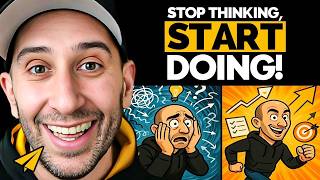
Evan Carmichael breaks down why perfectionism kills momentum and shares ten rules to start anyway. The core move: do the tiniest version first, like filming a YouTube video on your phone. Jealousy points you toward what you actually want. Small daily actions rewire your identity from planner to doer.
Chapters
One of the reasons why people don't take action is because they're worried about creating the perfect plan. It's like planning to 100%. You're never going to be able to plan to 100% because you don't have all the information. And so let's model it out as an example. I'm going to start a YouTube channel. Okay, great. So what are you going to do? Well, I'm going to make videos, talk about entrepreneurship. Awesome, cool, great. At that point, start. Just start making your first video. You don't know what to say? Don't worry about it. Turn on the camera. You don't have a camera? Load your phone, turn it sideways, make your first video. Tell me why you're doing this channel. Where most people get stuck is then, okay, okay, that's great, that's my first video, but what microphone am I going to use? Oh, I wonder what microphone Evan uses? And what camera am I going to use? And what, what about the lighting? What about my background? Oh, what am I going to wear? I'll have a pimple on my face today. And you just get overwhelmed with all of the stuff, like what's the title going to be and the thumbnail, and do tags matter, and how am I going to open the video, and how long should it be, and how frequently should I— and we're just stuck in this loop of overthinking, overthinking, overthinking, overthinking. Then like nothing happens, nothing gets done. We don't ever do anything because we want to have the perfect plan. Need motivation? Watch the top 10 with Believe Nation. Hey, it's Evan Carmichael, and I watch these videos every day because I need them for motivation. Being around successful entrepreneurs every morning helps me believe that I can do great things too. It's like your morning coffee, but for your goals, kickstarting your day with a blast of positivity. So here is a challenge for you. Try watching one video every morning for the next 30 days, and let's find out together if they help you do great things too. If you're in, leave a hashtag #believe in the comments below so I can celebrate with you. There is no perfect plan, and the key thing is to just get started on what I call the first 2%. The 2% difference is the first 2% to accomplish your goal. Do that and just take action. It's going to be imperfect. Awesome. But just start on it. Think about a weight loss plan. If you're trying to lose weight, you're trying to get in shape. Cool. You might have your goal. Here's my weight goal. Here's what I want to get to by the end of the year or whatever time frame. Cool. People then overthink it. It's like, well, okay, so it starts with diet, right? So we got to start with diet. So what, you know, I'm going to start on the keto diet. Okay, keto diet. But maybe I should do, huh, I heard about the Mediterranean diet and the carnivore diet and, and, you know, maybe I'm allergic to something. Maybe I should go get all of my allergies. Maybe I should like do Viome or something and check to see if there's any food allergies that I have or doesn't, you know, agree with my metabolism. And I guess I need to— do I need to fast? Do I need to limit, time-restrict my eating? Is it intermittent fasting? Is it everyday fast or is it only weekends that I'll fast and it's like a water fast or a coffee fast or do I have electrolytes or not? Does lemon count if I fast? What about pickles? And what about working out? I probably should work out too, right? And what workout should I do? Should I do HIIT workout? Should I do strength training? Should I run? I heard running is bad for your knees. Maybe I should rollerblade or pick up some sports. Sports would be good because I get to work out with somebody so it's not just me. All on my own figuring all this stuff out, right? It'd be more fun if I worked out with somebody. Or maybe I should hire a trainer. Should I hire a trainer? Because a trainer will show me what to do, and so I don't need to struggle trying to figure it out all myself. It's like, you're not doing anything. What are you doing? Nothing. Thinking about it, planning about it does not count as taking action. That does not count. It does not count. You have to do something. Rule number 2: Learn from your jealousy. One of the best pieces of advice that Mel Robbins gave me was that jealousy is a directional signal. That whatever you're jealous of, there's something in that person that you actually like and that you want more yourself. You may not be the exact way that they did it. You know, like Steve Jobs is on my wall because I love how he built his business. He's a visionary, but he's not a father like my father. So I want to be a visionary like Steve and a father like my father, not the other way around. But if you're struggling to figure out what do you want out of life, where do you want to go, you know you don't like your life right now, but you don't know what you want, you have a hard time making a list of goals, look at who you're jealous of and try to pinpoint, well, what is the thing that you're actually jealous of? Because that's a directional signal towards creating a better life for yourself. Rule number 3, believe. What do you think is one thing that the people who are more successful do better than just regular people? Like one subtle thing. One is belief. So the most common thing, and I mean, it's also what I look for the most. So I'm a little biased if I pick belief, but I find that that's true. The people who go off and have more success believe in themselves more, where they often come from backgrounds that don't make sense, right? Like a lot of people did not grow up doing the thing that they're doing. Their parents did not do the thing that they're doing. There's no reason for them to have success doing it. And so, but they just had belief in themselves that they could do it and they could figure it out. Number 2 would be that they just started, you know, like kudos to you for just starting. You got this idea for a podcast and a week later, boom, here he is starting a podcast. Most people, again, wait years or decades before even doing anything. And so successful people start And then if I pick a third thing, it's like just the willingness to keep going. That don't watch your first podcast and look back on it and say, oh my God, I suck. That was terrible. And then quit. Well, anything you start, you're going to suck. You know, like if you're going to start barbecuing or making cakes or snowboarding or whatever, it's like your first meal is going to suck. Your first snowboarding trip is going to suck. It doesn't mean you suck as a human. You just don't have the skills yet. And so just keep going. Like, don't give up after your first try. You get up and you keep going. Now, if you, if you do 100 episodes, like how many episodes have you done of this show? About 45. 45. Okay, great. So you're already way better than your first one. Yeah, for sure. Right. Like if, if your first one sucks, that's fine. That's normal. That's what you're supposed to do. But if your 100th episode is just as bad as your first one, okay, then you suck. Then don't do this. Like, this is not for you. Go do something else. Right. But chances are you're going to learn. I've never seen somebody's 100th version of anything suck just as bad as their first. Yeah. And so it's the— what separates successful people from everybody else. It's the self-belief, it's the willingness to get started, and then it's pushing through the suck and just keeping going until you develop the skill set. Rule number 4, expect to suck. We expect not to be great. I think if you ask people, you don't expect to be great. But the problem is we don't expect to suck. So, you know, if you're starting— back to the YouTube channel— you're going to start a podcast. You're going to start interviewing people. The problem is you know what good looks like, right? You know Joe Rogan, Tim Ferriss, whatever, whoever your hero is, Lex Fridman, whatever. You have your heroes of the podcasting world. You know what great looks like. And you don't expect to be great. So if Joe Rogan's an A+, you think, "Okay, I mean, I'm good at talking to people, so I think I could come in at a solid—" B or B-, maybe C+. I'm kind of in that range. If Joe Rogan's A+, I'm probably a B-, C+ area. Okay, cool. Then you go and you make your first episode and you blank out. You're the deer in the headlights. You completely suck. And then you realize, oh my gosh, I didn't expect to be A+, but I thought I was going to be at least a C+. I'm an F. Like, that sucked. That was brutal. And because we struggle the first time out, we quit. Most people quit. It's like you don't do not great, but you don't even do good the first time out. And so you quit. And so flip it, just expect to suck at the beginning of anything. Expect to suck. Expect to fall over. Expect to not get anywhere close. You're going to go speak on stage, expect to vomit all over the stage, right? It's like any worst-case scenario, like that might happen. That's okay. That's cool. We're not tying our value as a human to us doing well at the thing. The fact that you can't make a great YouTube video yet or can't close on the phone yet doesn't mean that you suck as a human. It's just a skill deficiency. And how do you get better at any skill? You have to practice. You got to put in the work, put in the reps, model success. All the things that we know will improve with consistent action. And so if you can lower the barrier to get started And this is not necessarily even a financial barrier. It's just a mental barrier. Lower your own mental barrier to get started. That if you're going to go work out, okay, do 2 push-ups. Can you do 2 push-ups? You can do 2 push-ups. They're probably going to suck at form. Cool. Do 2 push-ups. It doesn't feel like we're doing enough. This is the problem. But the fact is those 2 push-ups aren't going to do anything for you long-term. But what they have done is set you up for the next one and the next one. And we're starting to build the muscle that we are the kind of person who follows through and does the work. Because if you kept getting up and doing 2 push-ups every day, those 2 become 3, become 4, become 5, become 20, become 30, become 100. And now you're getting really strong. And so same thing, just expect to suck. Your first video is gonna suck. Your first time on ice skates, you're gonna suck. Your first time doing anything, you're gonna suck. Just expect to suck. Why do you think you're gonna be good, let alone great? Why do you think you're gonna be good? Just because you know what good looks like doesn't mean that you can do it. So just expect to suck. Also, to make sure you're actually taking action after watching this video, I've designed a special free worksheet just for this video. The worksheet will highlight our favorite lessons from the video that will inspire you to remember what you learned today and actually apply them. The worksheet will also give you space to write down what your key takeaways are and your specific plan of action to make sure you're getting results. If you want the worksheet designed specifically for this video, absolutely for free, There's a link in the description below. Go click on it and start building the momentum in your life and your business. I'll see you there. Rule number 5, do the hard thing. I want to do hard things. So I have 3 trigger words, scary, difficult, and hard. If I say it, if I think it, if I feel it, I have to do it just because. Like even if it's completely unrelated, if I say, oh, that's too hard, now I have to do it because I want to be the person who does hard things, not for anybody, for me. Like, what I might find hard, you might think, dude, that you find hard? That's ridiculous. But it's hard for me. So I don't want to accept hard as a good enough reason for me not to do something, because all of our greatest ambitions and goals are on the other side of scary, difficult, and hard. So the fact that if I say one of those three things, I have to go off and do that thing. And so that's a push. That is a push forward to say, I must go do this. I want to grow and learn and be better. Rule number 6: Trust your intuition. Do you guys ever have that feeling, like that anxiousness that you lean into? Yeah, I think you need to listen to it when you're, when you're in a positive, ambitious mode and not when you're feeling down. Because this is it, we trust, we trust, we follow our intuition when we feel like crap, right? Like somebody cuts you off in traffic, I'm going to go chase that guy down and give him the look, right? It's like, we just, we trust our instincts in the worst moments. And then when you get a great idea, and you're feeling bold, and we're getting there, then we don't listen to our instincts then. And so like, flip it. As long as you're like, what's the intention? Is it to serve? Is it to create, to better your life or somebody else's? Cool, then give it a shot. Then the anxiety you're feeling needs to be conquered. You have to go through, you have to ask the person, you gotta do the thing, send the message, whatever. And just in those little moments when you don't feel the best, like, okay, maybe that's the time to pause and breathe, right? Like, somebody cuts you off in traffic, pause, breathe. Somebody sends you a nasty email, a client fires you, your boss tells you you're ugly, I don't know, whatever. A girl rejects you, like, pause, and maybe pause, pause and come back to it tomorrow. The other things, that pause actually, because the pause dilutes the power that it has. When you're feeling bold, you don't want to dilute the power. If you pause and said, I'll talk to Evan tomorrow, maybe I say yes on a DM, but it's better to talk to me when I'm right there, right? So there's a moment that's created. And you wanna follow that. So as long as you're feeling, you know, in service and bold and creation mode, then the ideas that come to you, trust them and go do something about it. The anxiety is a great tool to say, I'm just scared because something big's about to happen. Rule number 7, choose who you listen to. What advice do you have to people who are kind of going down that path? Their friends, their family, they want the best for them, yet they're not living the life that person wants to live. And they're stepping out of that, that norm, they're stepping out of that tradition. What advice do you have to those people to stay on the path and, and, and stay strong knowing that they're doing the right thing? Well, one, two things. The first is, has the person who you're talking to done the thing that you want to do? And quite often it's no, you know, like the person who you're asking for advice, and you may not even be asking for advice, you may just be receiving unsolicited advice, you know, the thing that you want to do. You go and tell your, your family, I'm going to get into multi-family investing. They say you are crazy, right? And, and all of a sudden their opinion for some reason means something to us. Like, have they done it? Have your parents done this? Have your family done this? Have your friends done this? And because they haven't, they're naturally going to say that's a crazy idea. Who do you think you are? You you're going to go invest in multifamily, you know, it's like, that's stupid. People like us don't do those things. And they bring you back down. And so the starting point is, has the person who's given you advice done the thing that you want to do or not? And if not, then you probably want to do the opposite of the advice that they're giving you. Yeah. You know, because they don't have the life that you want. And then the second thing is, for every for every person that you're kind of pulling out, you know, it's okay, we're going to stop listening to that person because they don't know anything about the thing that I want to get into. You start to inject in somebody who actually knows what they're talking about. Rule number 8: Set big goals. Ted Turner, you know, billionaire, created CNN, Atlanta Braves, etc. Uh, he inspired me with this whole like big why thing where I was reading his biography and at the beginning of the biography talks about his dad and his dad's goal was to be a millionaire. Like that was his dad's whole goal. Like I'm going to I'm gonna be a millionaire. And he worked and he worked and he worked and he worked. And eventually he became like, he hit his goal, he became a millionaire and then he killed himself because he realized like he was the same person. He was still empty, was still like that goal was not actually, he thought something would've magically changed if he became a millionaire. And so Ted's goal then after seeing that his dad died when he was like 20 or 22 or something like that, he said, I'm gonna set a goal for myself so big that I'm never gonna accomplish it. Yes. And so that the same, like you will never save capitalism. No. I will never make everybody, there's always something else that can be done, right? I will never make everybody believe in themselves completely. I don't believe in myself completely yet, right? It's like, it's just, it never happens. And so it's setting a goal so big for yourself that you never accomplish it. And then you wake up every day trying to accomplish it. And again, some days that's super exciting and amazing. And some days it's counterproductive. So you need the, the counterbalance of, well, I help one person and that means something. Rule number 9, educate yourself. I think the best teachers now are on YouTube. Like you'll learn more on YouTube for the thing you want to learn about than you'll learn in school. And so do that, put that in your environment. Like if you have 200 episodes plus and somebody then decided, okay, I'm going to watch an episode a day for the next 200 plus days. They're going to start to think differently. Yeah, it's just going to happen based off of the way that you think, the way that you treat people, the questions that you ask, and the guests that come on your show and the stories that they share. Somebody's going to watch that and be inspired to say, huh, maybe, maybe I don't have to stay stuck. Maybe there's another way to look at it. Maybe the things that my parents did, I don't have to fall into the same trap. I don't have to stay where I'm at, right? It's a conscious choice to surround yourself with content that can lift you up, whether it's YouTube videos, whether people love books or podcasts. Most of what people are consuming keeps them stuck where they are. Most news is negative. A lot of social media content, you can use it to educate yourself or to entertain yourself and get lost in just funny things or stupid things or negative things. But you can choose to use that time to educate yourself and get better. And rule number 10, the last one before some special bonus clips: have clarity. If someone was on a mission like you, like me, on a mission to make an impact in the world, to help people really change their beliefs about money, to step into that investor mindset, what advice would you give them to focusing on really making a huge impact on the world on their mission? The first is understanding what is the mission that you're on and do you have clarity over that? So, I'm a big believer that your purpose comes from your pain. Whatever you struggled the most with is what you want to help other people through. And so, getting pretty clear on what was the biggest struggle of your life that now you want to make easier for other people so that they don't have to suffer and struggle as much as you. Mine was believing in myself as a young entrepreneur, 19 years old, wanting to quit on my company. I'm still making content for a 19-year-old Evan, cuz there's millions of 19-year-old Evans out there who need the help and support and guidance and motivation. And so getting clear on that, I think it often, we're just looking to chase an opportunity. It's like, oh, everybody cares about passive income, so let's make a passive income show. Like if that's why you're doing it, you're gonna lose. You have to like deeply care about this. And so that comes from usually a, a painful place. Where growing up, maybe you didn't have a lot of money or maybe your parents didn't have a lot of money or whatever it is, tapping back into that. And so, for everybody listening, watching, figuring out what is that painful moment in your past that you can get up on your couch and lie down and talk to Steven virtually and just go through that same exercise of what's the most painful thing that you went through that now you want to make sure that people don't have to suffer through. That, that's your purpose, and that will never get old. Like, that— I'll love believing in people until the day I die. Okay, we just finished. We recorded all these videos. Ray is in a sweatshirt, and I don't know how hot it is. It is insanely hot right now here in Manila. It is. What— do you have a final message that you want to share with, uh, Believe Nation before we wrap up? Yeah, sure. So the things that you want to try, try it. It's better, uh, it's It's better to fail than not trying at all. You gotta try it. Let's go, Ray! Yes, believe! Most entrepreneurs never win on social media because you're not focused. You post everywhere, every now and then, with content that is below what you're capable of making. Chances are you wouldn't even subscribe to you on your own channels if you weren't you. If you wouldn't subscribe to you, you can't expect others to subscribe to you either. We're going to fix that in this video. So I make all my content for me. I want to spread more belief in myself, and in doing that, I then share it with the world. And thankfully, you guys watch it, you guys enjoy it, and I can build a business off of it. But even if nobody else liked it, I'd be making it just for myself so that I had the content, because this is my own personal development, professional growth. Series. And so I love learning from Gary. I love being around Gary. I love being around Steve. And while we don't have a lot of content on AP Giannini, but I love, I love being around, you know, while my parents don't have a YouTube channel either, Howard Schultz, Kanye West. I love, I love being around more successful people, mission-driven entrepreneurs who are trying to make a change in the world. When I'm around it, it pulls me up and makes me want to do bigger things. And so I'm inspired by my own content. When I'm, when I'm going to Instagram and I'm posting a story, part of my morning routine every morning is I post a story. If you see the black and white pictures, that's the current iteration right now. I'll take a picture of myself and I'll have a message on top of it. It'll say the day and then a message. That's a message for me. It's a message that I need to remind myself of. So just before doing the picture, I'll think, what do I need to do? It's not even about sharing. It's about What do I want for myself? What do I need to remind myself of today? Right? What do I need to remind myself of today so that I show up, that I step up, that I don't coast, that I don't just take it easy, that I live to my potential today, today, today, today, today, right? Today matters. And so I'll make that message and share it. And then hopefully it touches and inspires other people as well. That's what's missing from so many people who are creating content. You're creating content that is one, way too self-promotional. You're creating content that it barely speaks to yourself and you're just posting it and you feel crushed under the weight of having to manage all these different social media accounts and none of them doing well. And then you ask, why am I not growing? And why am I not getting followers? And why am I not getting the results that I need? So I'm a big believer in being able to have the accounts everywhere, but not actually being consistently posting everywhere. Cause I'd actually rather have you focus on one platform at a time. Make it amazing, make it crush, start winning there before you expand and build a team and go to the other platforms. But at the core is you have to be posting content, whether it's videos, written, podcasts, right, audio, whatever the format is, you have to be posting content that you're proud of. You have to be posting content just like any other product or service. If you're selling a product or service, you want to be able to recommend it to your mom. If she had that problem, if she needed your product or service, you would recommend it to her because you believe in it so much. Much, right? You have to believe in what you're doing. You have to believe in what you're making, not just because my one word is believe, but because it's actually important. So would you follow you? Are you proud of the work that you're putting up even though you know you're capable of more? Yes, great. But are you proud of what you made? Is that the— was what you posted today the best, the best of what you could do right now given your current capabilities, resources, and skill set? Yes, awesome, keep going. No, Work it. Work harder today. Show up. You can choose at any moment positivity. You can choose at any moment gratitude. You can choose at any moment service. You can choose to change your mindset in, in an instant if you wanted to. The challenge is we're so living in our subconscious mode that we don't— we don't catch it soon enough. We don't take the action that we're proud of, and then we regret it. You know, we regret it later on. This morning I woke up really early. I'm very tired. I woke up at 3:45 AM for some reason, don't know why. Look at my watch, like, 3:45 AM, what? Oh man, okay, whew. Try to go back to sleep, toss turn for about an hour, and then I got up. I was like, okay, you know what, it's 4:45. It's almost 5, you know, let's, let's get up. And I got to work and started doing things, and then the crash hit me. The crash hit me. Just not enough sleep, and everything inside me wanted to shut down, you know. I wanted to just take a complete break, not do my walk in the morning, not, not take the dogs out. Well, the dogs have to go out, but not do my routine, not do any of my usual stuff, not record videos. Today's a Tuesday, we're gonna record. It's video recording day. And it's in these moments, those trying times, that you have to decide who you want to be. You have to decide if you want to choose to be positive, choose to live in gratitude, choose to live in productivity, choose to live in service, or not. What would the future you think of your actions right now? And I think 95% of the time, the answer is to push a little harder. Move the brake line forward, right? Where, where you would normally take a break, move that forward just a little bit. Move the brake line forward a touch. And 5% of the time, you have to be more gentle on yourself. When my family dog passed away, when I broke my neck, when, you know, all sorts of things have happened to me, just like they've happened to you, sometimes the answer is to give yourself a little more grace, to recognize how far you've come, everything that you've done with the limited amount of resources and time that you have. But I think if we default to that, then we default to staying stuck and staying small, because life is going to throw so many different challenges at you. So I think 95% of the time— that's the 5%, right? 5% of the time you give yourself more grace. You let yourself off the hook. You take the day off. You do whatever you need, especially if you're struggling with grief. If you're struggling with grief, I think you just have to work your way through it. You have to give yourself a lot of grace and a lot of time, and it will get better. And just please don't go through it alone. But almost everything else, usually the answer is to keep going because it'll make you more proud. Because you're teaching yourself that you stand up to obstacles and you overcome. So this morning I woke up, I got out of bed, I was instantly productive, like, okay, I'm wired for whatever reason, here we go, let's go. Answering my Discord messages. If you're not on Discord, evancarmichael.biz, I'm there every morning, it's super fun answering questions, it's such a great community. So I did my Discord, uh, looked at the— responded to my emails and Twitter, and, um, I got all my work done super early. Then the crash hits, and then Nina wakes up and it's time to make videos, and I don't want to make videos. You know, I'm tired. I feel like I'm gonna let myself down, and I feel like I'm gonna let you down, is the honest answer. Not that I don't want to make videos because I don't enjoy them. I feel like it won't be at my best, and then I won't, I won't I'm going to create something that I'm proud of and I'm going to let you guys down. That's really the internal narrative, you know. I'm going to create a subpar product and people who watch are going to be disappointed because I take it as a big responsibility that, you know, some of you start your day every day with one of my videos. That means a lot to me. It's not a burden but a responsibility that I take, and I want to make something that I'm proud of and that helps you improve your life today. At least gives you a little kickstart, you know, like, let's go, let's have a great day. I want to be able to bring that energy. And, and I, I was worried that this morning I wouldn't be able to do it. But you know what? That's not a good enough reason. It's not a good enough reason. Like, as long as you believe those reasons, you will never create anything great. Because if you wait to have the right energy, the perfect timing, the right amount of sleep, the, the perfect cell phone or video camera with the perfect microphone, and, you know, just— it will never happen. You will never create anything great. And so I had to remind myself of that, because you can choose positivity at any moment. You can choose service. You can choose gratitude. You can choose productivity at any moment. You can choose it if you want to. If you really want to, you can, instead of defaulting to the negative patterns. And so Nina got up, I told her I was tired, told her I had a rough night. She said she slept super well. It's like, oh, that's really, that's really bad, but I slept so well. Great, well, I'm very happy for you, but I'm very tired right now. And, um, right away then asked, okay, so when are, when are we going out? Because Nina's shopping at Costco. I mean, I'm in the Costco parking lot. I think you can't make content— like, I'm sitting here in the Costco parking lot filming videos for you guys. And I asked her, when are we going out? When are you gonna— when do you want to go shopping? Because I'm gonna get my phone ready and I'm gonna make some videos. And in that instant, I decided, and then committing to her made it happen. And here I am in the car making the videos happen, and hopefully there's, there's something good and I'm not disappointing you guys, but I'm making myself proud at the very least. When you show up when the world's against you, or when you've had a rough day, or when you don't feel like it, or when you got a nasty comment, or you're in a weird mood for whatever reason, you still show up. Like, when it's hard, when it's hard and you still show up, that's when you build the most self-love and self-belief self-confidence. That's where it comes from, doing difficult things. And what it does is it reinforces that as your identity, that this is who you become. So the next time something comes up, you can handle it, gain a little bit more, because they're moving the brake line forward. It's a really slippery slope to fall down if every time you come up against something difficult, you don't do it. Even if other people are telling you how great you are, that you can do it, if you tell yourself that you can't do it, then the next time it comes up, you reinforce that you can't do it and you can't do it and you can't do it. And what you've built is an automatic pattern of you don't follow through, that you can't do it, that when you set a goal, you're not going to follow through on it. You know, you're going to start and then you're going to stop, that when something gets hard, you know, you're going to give up on it or that you're going to quit in a couple of days. Because that's the pattern that you've built for yourself, and the pattern becomes the identity, right? If you want to switch your identity, it's totally possible. You could, you could be the person who always follows through. You could be the person who always steps up. You could be the person who always delivers. You could be the person who always brings their best. You could be that person. You may not believe that yet, but you can be that person. So how do you get there? How does that become your new identity? There are two things that really matter. First is to be around other people who are like that. One of the reasons why I was able to get up and do this today was because I watch John Assaraf and Steve Jobs and Oprah Winfrey and these people every day. Now, I happen to know John Assaraf. He's become a friend. Uh, I don't know Steve Jobs or Oprah Winfrey. Um, I don't know Oprah yet, so we'll see. Steve, I've missed my chance. But hanging around them, even if it's virtually, even if you, you don't know who John— you don't— you can't call him up and ask him a question, or you can't call up Oprah, great. You can still learn from them. You can still be around them. And the more that you see other people doing things, the more you want to go do it yourself. Have you ever been to a movie and you got inspired you see somebody win the race, like, yeah, the underdog. You like— I love the underdog stories. You ever see an underdog go off and win, and then it makes you want to go not run a race but do your thing? Like, you ever been inspired by somebody else's overcoming of obstacles story, right? So it's the same thing. If you're around successful people and you see how they're doing it and you see how they rise up against the obstacles in their, in their life, it gives you encouragement and hope and belief that you can too. Where most of the people that we're surrounded by are already giving up, they get— they're not even trying, they gave up years ago, right? And so when we're at our weakest moments, when we're around people or consuming content that reinforces our negative beliefs, the people say, okay, yeah, yeah, just take a break, yeah, don't do this, you weren't meant to to do this anyway. Like, why did you think you could ever do this? Just go and, and play a computer game, or just go and watch some, you know, trash TV, right? Just gonna get distracted for the day, pretend like you're doing stuff, but you know you're not doing anything that's gonna make you proud, right? Just scroll through Instagram all day like everybody else, right? When you're around that, then it's so easy for you to fall down that rabbit hole when you're not at your A-game. So you can, you can manufacture it by being around the people. Again, if you don't know them personally, then just in your environment, from the videos you watch. It's why I make this content, that I can introduce you to people and keep bringing you ideas and belief that hopefully inspires you daily to lift you up when, when you might be having a rough day. So that's step 1. Step 2 is you have to then do something. People say motivation doesn't last. Well, that's true, but the point of motivation isn't for it to last. The point of motivation is to give you the courage to go do the thing. So I'm, I'm waking up this morning early, right? Nina's still sleeping. She wakes up, but before she wakes up, while I'm doing my work, while I'm hanging out on Discord first— the Discord's super fun and connecting with entrepreneurs, and so it's, it's already getting me in, in a good mood— and then I started watching videos for my own top 10 channel. So as I'm working, I've got— who did I listen to today? Um, I had Bill Gates on, uh, I had Jeff Bezos on, uh, I had an old Richard Branson one on, and their voices are, are in my head as I'm working. And so then when Nina gets up, it's like, okay, let's go, let's go to work, because I had Richard Branson and Jeff Bezos and Bill Gates in my ear this morning, right? And I don't know any of them personally. And so you can do that too, right? But the whole point of that motivation is then to give you the courage to go act. So by listening to them in the morning— listen to them is not enough, right? That's not enough. You got all inspired and motivated to not do anything. Listen to them then gave me the boldness to say, Evan, You need to make videos today. You said you're gonna do it. Let's go do it. I know you're afraid of disappointing people. You're gonna make it the best you can. Let's go. Because I imagine, what would Bill Gates tell me? What would Jeff Bezos tell me? What would Richard Branson tell me? They tell me something like that, I think. I hope. I don't think they're gonna say, you know what, just quit. Probably not, right? And then that got me to go out, and now I'm here and I'm making the content. I'm doing the thing. So it's the motivation that you need to inject into yourself plus the action. And when you do that enough, you start to build the new habit. So instead of the pattern being, I don't follow through, I always quit, I always give up, you start to build a new pattern that says, I rise to the occasion, I overcome these obstacles, I defeat that little voice inside my head. I call it the little man. I beat the little man. When you do that consistently, then that becomes your new default pattern, that the next challenge that comes in, you say, okay, let's go, what's next? I'm ready, I want the next mountain, let's go climbing, right? So it's totally possible, but it starts with the belief that at any point you can choose positivity, at any point You can choose gratitude at any point. You can choose service no matter what's going on in your life right now. There are millions of people who have it way worse than you, and you can choose the light and you can choose to help and you can choose to inspire. And doing that will not only serve the world, but make you a lot more proud of yourself too. You've got a great idea. You know it can change the world. You know it could have a big impact. You know it could change the fortunes of yourself, your family, the people around you. You've got a great idea. You know it can work. You know it can work. The problem is you don't know if it can work for you. You believe in the idea, but you don't believe in yourself. And so here's what's happened. Why? Well, it's because you've tried and stopped and started and stopped and started and stopped, and you maybe saw a little bit tiny results, but then you lose the motivation and and you stop. You've never stayed with anything long enough to actually let it see results, and so you built up this pattern inside yourself that says, "I can't do it. The idea is great, but I can't do it." That's really at the core. If you really believe that you could do it and you really believed in the idea, you'd be doing it and crushing it. So that's the biggest difference. That's why lack of belief is the world's biggest problem. The only thing you're missing is actual sustained momentum against your ideas, because if you believe that you could do it, you'd be out there doing it. You believe in your idea and how it could change the world, but you don't believe in your own abilities to do it. Now this is where we have to start talking about making decisions with your head versus your heart. So your head only understands a world that exists. Your head is logical, it's practical, and so whatever has been done can be done again, right? It's logical. And so if you've got a job at some company, you know you you can make X thousands of dollars a year, that's, that's safe, that's logical, that's practical. You know it can be done, it exists, other people have done it too. You compound that with people telling you to do the safe thing, right? Go get a job, go take the safe path, go take the safe route. And so there's a lot of outside forces, especially fear-generated, that keep you on a small path, keep you on the safe path. And it's not necessarily wrong It's not malicious. They're not trying to hurt you. It's just fear-based, and so it's small. You never create amazing things when you're living in a fear-based state, and that's what you're doing when you make big decisions with your head, because your head only understands a practical world that currently exists. Now, your heart— your heart's a different story. Your heart can create something that's never existed before. Your heart is where all the artists live. All the, all the game changers live. All the people who end up making massive change in the world, that's where they live. They're creating something new. They say, I see something that other people don't see, and I can go create it. That's heart. You're creating something that hasn't existed before. That doesn't make sense. That's not logical. That's not practical. There's nothing to tell you that this could work, but you feel that it can work. That's where I know you guys are at. If you're watching this channel, you're watching this video, that's where I know you're at. The problem is living inside your head instead of living inside your heart. So what happens is you'll have some days where you're living in your heart. You'll have some days where you feel bold, motivated, excited, feeling like you're capable, like maybe you could actually do this. You'll have some days— I'm gonna switch my hand, my hand's getting tired of holding the video— you'll have some days where you'll actually feel that way, like maybe I can and I could be the person. I am bold. Maybe you watch a video, maybe just wake up and you get inspired, you had a great dream, something happens and you have this moment where you just feel bold, powerful, unstoppable, and say, today is my day, I'm gonna go off and do it and crush it, right? We've all had those moments. But then you wake up the next day and you're back to being in your head telling yourself, I can't do this, I didn't go to school for this, I don't have the money for this, I don't have the talent for this, I'm not good enough for this, I'm, I'm not brave enough or courageous enough for this, right? That's all your head talking to yourself. When you haven't fully decided on something big, what ends up happening is your head and your heart fight. So if you haven't fully decided that you want to start this business, that you want to hit your 10 million subscribers on YouTube, that you want to fill in the blank, your big, crazy, ambitious goal, when you haven't fully decided on it, your head and your heart are going to fight. They should fight. Because it's not logical, it's not safe, it's not practical. If it was, it wouldn't be a big idea. Your big, amazing, bold ideas are not logical, they're not practical, and they're not safe. And so your head is always going to say, whoa, whoa, whoa, slow down, this is scary. And most of the time you're going to listen to your head, and the people around you will tell you listen to your head. What you need to do is fully decide. What you need to do is decide that this is going to happen. That it's not an option anymore, that there's no maybe I'll do it, maybe I won't. Your heart has to decide the big decisions in your life. Should you go move to that other country or other city? Should you go marry that person or not? Should you go take that job or not? Should you go start that business or not? Big decisions with your heart, and then you use your head to help you figure out the how. I always find it so funny when people are thinking, well, should I do that business or not, or should I marry that person or not. And they make a, they make a list, you make a checklist, and you write down pros and cons, right? Never make a decision that's big in your life based off of objective pros and cons because you're making it using the wrong part of your body. Because you might really love somebody and you come up with all these lists and you got 80, 80 cons on that list and only 1 pro. Or maybe that 1 pro is all you need. Same thing with the business. There's a million reasons why your business is not going to work out. You sit there and make a list of pros and cons. There should be way more cons. There's a million reasons why you're not going to win and 8 why you will. And the people who go off and win only focus on the 8. Making a list of pros and cons to help you make big decisions in life is one of the stupidest things you can do. Straight up. Now, your head is very important. Your head helps you accomplish your goals, but only once your heart's decided. So your heart allows you to make the big decisions. I want this to happen in my life. No negotiation. This is going to happen. And then from there, you use your head to figure out how to do it, right? Once your head is not fighting your heart, once your head has understood, oh, he's serious, she's serious, okay, crap, How do we actually make this happen now? That's when you use your head because you're a smart person and you need your head aligned to help you accomplish your big goals. So if I want to go off and build my YouTube channel and get 10 million subscribers, that's happening. When I first started YouTube 11 years ago, there was no educational content. There were no 15-minute videos on YouTube. It was, it was all memes and stupid videos and cats and just not this, not this at all. And it took me too long to listen to my heart, quite frankly. You know, I loved it, and so I kept doing it. And, and, you know, pat on my own back for myself is that thankfully I kept going. I wasn't as consistent as I am now, but I kept going. I didn't give up even though there were no signs that I would have success, right? My first video got 3 comments in 1 year. And one was my mom, one was my sister, and one was some random dude. I wasn't getting traction. I was still looking back at some of my old videos yesterday, and a lot of them, no, no comments, right? Like one video, 35 views, zero comments. Man, I spent a lot of time making that video. And so I kept going because there was something inside me that said I need to keep doing this. I wish I kept going faster, and it's my wish for you too right now with your business, with your idea, with your crazy goals. I wish you keep going, but I wish you'd go faster on it, that you decide with your heart to say, I am making this happen. And you say, head, listen to me, we're making this happen. Now you're the smart one, help me figure out how to actually do it. So to get to my 10 million subscribers, how do I do it? And every day I'm using my brain to help me do it, and hopefully you are too. When your head and your heart are fighting, when your goals, your ambitions, your dreams are fighting every day what you think is practical, logical, possible, you're just going to be stuck. Very slow growth, very slow momentum, knowing you're capable of more but just stuck because you're fighting yourself. The biggest problem is you're just fighting yourself. But when you can let go, when you can say, my heart is going to help me make the big decisions in my life and my head's going to help me figure out how, magical things start to happen. And that's my wish for you. The key to enjoying your life is being present. The key to focusing is being present. The key to feeling like you're valuable and what you do matters is being present. Being present is at the core to a lot of great things, but a lot of people really struggle to stay present because what are you doing? Most people spend most of their time either thinking about the past or thinking about the future, and not even in a positive way. You spend time thinking about the past, living in regret of all the things that you could have done, you could have said, you should have done, you should have said. I wish I did that. I wish that video I made didn't suck. You know, I wish, I wish, I wish, I wish. Why didn't I? And we beat ourselves up. Does that sound familiar? Is that you? Maybe even a little, little bit. Or we spend our time being anxious about the future. I think as entrepreneurs, we get excited about the future, where we could go and what we could build. And that's, that's the fun daydreaming part. But a lot of thinking about the future is stress-inducing. It's anxiety. It's, it's worrying about what could go wrong, all the millions of things that could go wrong that may never go wrong, but we're still worried about them, right? Again, does that sound somewhat familiar? When you are stuck living in the past or living in the future, you're never obviously present, but you're not happy, you're not productive, you're not focused, you're not creating, you're not serving. None of it, and you're not fulfilled. I look at people who want to get started on YouTube, for example, or entrepreneurs are trying to launch their business, and people made maybe one video or two videos, and because it didn't work out, or you made a video and you felt embarrassed by yourself, or you launched a product and somebody had one bad piece of feedback, if we live in that same negativity over and over and over and over and over again. People ask me, well, what happens when you have a bad video? What happens when your video bombs? I was speaking at Brendan Burchard's Influencer Summit yesterday, and somebody asked me, well, what do you do when a video doesn't take off or do well? Like, well, lots of my videos don't take off and do well. I think— I don't know which ones are going to blow up. The ones that have blown up surprise me. Like, that's the one that blew up? I love I love this one so much more. How do I keep going? Because I'm looking to the next one. Like, I'm worried. I'm working on videos now. I don't know what I released yesterday or the day before or the day before because I'm making new content. Think about how you got over a relationship. Well, you, you, when you get into a new relationship, it's easy to forget about your last relationship. It's thinking about what you're doing now. And if you have nothing right now, what do you do? Nothing to do right now, you spend your time in regret about the past or worried about the future. It's not enough action happening right now. I don't care about videos that failed in the past because I'm going to be making tons more. Another one comes out today and another one tomorrow, another one tomorrow. And it's, it's a moment to reflect and say, hey, okay, I could have done better on that one, or why didn't this one do well? Okay, this moment here, that sucked. Perfect. I'm making one today, I'll make it better. At least that's the intent. Maybe I don't achieve it, but that's the intent. And if you show up with that intent every day, you will eventually make it better. Most people get too caught up on, on the mistakes that they made in the past. It's in the past. You did the best you could with what you've got. Remind yourself of that. You did the best you could with what you had. Great. Don't be so hard on yourself. Keep making, because the worst thing you can do is quit now. The worst thing you can do is stop now, because when you look back on your life when you're 120, that you'll regret that you, you stopped. You regret that you had a chance, you had a moment, you could have done something and you didn't. Like, that's the biggest regret of all— not taking any kind of action. Not the mistakes that you made. You— we don't regret really the things that we did. Most of the things that people regret are the things they did not do. Most people's biggest regrets are not taking enough action, letting that little man voice inside their head tell them all the reasons why they weren't going to win, convincing themselves that they weren't capable. And as a result, they stopped when they wished they had the courage, the strength, the tenacity to keep going, right? That could be you. You could, you could, you could get going. You keep going. You could stay present. You could make the next thing. And at the same time, a lot of people are then also worried about the future. Well, what if I make this and it doesn't work out? I was talking to people again yesterday about their YouTube channels, and the same person asked me, well, what if it doesn't work out? Like, what if I make videos and nobody sees them? So what if nobody sees my videos? And then the next question was, what if people see my videos and they don't like me? So this person at the same time is afraid of people not seeing their videos and people seeing their videos. So how does that make any sense, right? This is, this is the loop that we get stuck in. You're afraid of people not seeing you and you're afraid of people seeing you. Like, you can't win the mental dialogue we have with ourselves. We can't win. It's not possible. We need to start to flip that. We need to rewire ourselves. And that starts again with being present. Like, you can't control what the outcome is going to be in the future, but you can control what you're doing right now. If you can switch so that you are mostly present, not really thinking about the past unless it's gratitude, right? If you can flip the regret of the past to gratitude, right? And if you can switch the anxiety for the future to excitement or vision, that's when you really start to win. Somebody came to an event that I did in Toronto and asked me— these guys drove up from Boston to do a podcast with me and then stuck around for my event— and they asked me, how much of your time do you spend percentage-wise living in the past, present, future. And I said 0% past, 85% present, 15% future. And the 15% is, is vision, what I want to create. You know, as entrepreneurs, we have to be a little bit forward-thinking, but it's, it's 85% present. I don't even know what day it is. Like, it's present, not even present to today, but present to this moment. I don't know what day it is. I don't know what time it is. I know what I'm doing after this. All I know is I'm here right now with you guys, and that allows for focus, that allows for happiness, that allows for purpose, that allows for life to give you so many gifts when you're not stuck living in the past or the future. So how do you do it? How do you, how do you get there? I think the best thing you can do is every time you catch yourself drifting, daydreaming forward or back in a negative way, you catch it every time you can catch it. You won't catch it most of the time, so don't put this impossibly high burden on yourself that every time I'm, I'm thinking about the past and I'm living in regret, I'm gonna catch it and do something about it. You won't catch it. You won't catch it. This is, this is decades of unwiring our brain, right? It's fine. Don't, don't have When you're starting something new, don't have crazy expectations that you have to get it perfect or you're a failure. Right? This is the problem, not just with this one exercise, but with everything. Don't expect to be great out of the gate. You won't. You're just starting. You're at the beginning. Why do you think you're going to be fantastic? And because the first time it doesn't work out perfectly, then we quit. That is not how it works. Right? You, you need to expect to suck at the beginning. That's okay. That's how you learn something. Every time you can catch yourself drifting, you're living in the past and in regret, or future being stressed out, just try to bring it back to right now. Just bring it back to the present and focus on anything. Focus on a physical object. You can— I could focus on my coffee. Like, how can you get present right now? Focus on the coffee. Wow, look at this coffee cup. Cup. You know, it's tall, it's red. I'm grateful for the beverage inside here. I like that they have a sleeve. Oh, it's got a maple leaf on it, right? Like, this is all— I'm being present right now with the cup of coffee. It is warm. I can feel the sensation on my hands. I can taste it in my mouth, right? Where most of the time, even when you're eating something, most of the time when you're eating something, you're usually focused on something else, right? You're eating while you're on your phone, you're eating while you're watching a video, you're eating while you're doing something else and not ever actually enjoying the food because we're thinking about what's next. So every time you can catch it, you just try to bring it back to the moment, to right now. And then what's going to happen is the more you do that, the more you'll catch it. So right now, maybe you catch it 1% of the time. But the more you do that and practice that and just pick one thing to focus on that's in your environment or focus on your breath, right? It's why meditation works so well with a mantra or breathwork, because it gives you something to focus on. When you're first starting out with being present and focused, it's helpful to have somewhere to put your attention because focus on nothing doesn't feel like very practical advice to the beginner trying to figure this out. So you focus on your breath. And anytime your mind wanders, bring it back to the breath. Every time you get stressed or anxious or worried or what you're going to do next, bring it back to the breath. Every time you get bored, bring it back to the breath, right? The breath could be anything. The breath could be the cup of coffee. Look at the cup of coffee, feel the cup of coffee. Every time you get distracted, you're worrying about work or your life, back to the cup of coffee, back to your mantra, right? All of that can work. It's just picking something to, to ground you back in being in the present. And again, the more you catch it and the more you do it, the more you'll catch the next one, and the more you do it again the next time. It's a skill that you learn. You're retraining your brain how to work. And what you'll find is the more you can do that and the more you practice it, bit by bit, day by day, You'll find yourself having less stress, being more productive, staying more focused, caring less about what other people think about you, and overall being happier. And what that does is free you up to actually go and do the work that's inside you, the genius that you've got to put out to the world. And serve. Being present is the key to unlocking your happy life. Less time living in regret about the past, less time living in the stress of the future and anxiety for what may come, and more time focused on what can you do right now, today, in this moment to be proud of yourself and live your best life. If you think money is scarce, you hoard it because you believe that no more money will come to you. If you know money is abundant, more money will flow to you. This isn't about being wasteful. It doesn't mean you have to go and always empty your pockets and buy a lot of dumb stuff and throw away all your other stuff. It doesn't mean you have to waste your money, but it's switching the mindset of money is not just some scarce thing that you don't know how to make, that you will never have more of, and so you need to hoard every single dollar that you've got. This is honestly something that I am continuing to rewire myself on. I struggled a lot with money, especially in the early days of my business. Um, even growing up, I grew up in a middle-class family. My parents spent My parents are behind me on the wall. Hold on. There we go. This is me when I'm 8 or 9 and my parents here. They believed in education a lot and they didn't have a ton of money. We weren't poor, but they spent all of their money basically on putting the 3 of us kids— I have 2 sisters— through private school. So any money that they made basically poured into our education. And as a result, we didn't have, you know, money for other things and where my friends at these fancy schools were getting, you know, BMWs for their 16th birthday so they can go off and drive. You know, I didn't get any of that. And it's not woe is me, but it's more I just had a scarce mentality around money. In my first business, I was making $300 a month. I was eating the same bean salad lunch every day because it would fill me up and wasn't very expensive. When we celebrated a win, we'd go to McDonald's. If we got a new client, like, hey, we sold another piece of our software, we go to McDonald's and order large fries and share that between the three of us because it was cheap and we wanted just some little way to celebrate. And I just remember how painful it was to feel like you have no money and you can't buy stuff. And I couldn't hang out with my friends. And I couldn't do what I wanted to do. And I think that has a traumatic effect, you know. I mean, maybe that's you as well. You, you have a scarcity mindset around money that you don't know how to make it, and so anything you've got, you got to really hold on to it and protect it. And again, I'm not advocating for being reckless or stupid or just throwing money away. Be, be smart about how you're going to invest and use your money. The more important thing is developing the mindset that you can create money, that by bringing a lot of value to people, you can make more money, you can turn it into something. So one of the things that I've done recently that, that has helped both myself and Nina, my wife, is we create what we call a care fund. And every month when we're doing our numbers, Nina will put together how much we've made this month, how much cash flow has come in, etc. And then we allocate a certain percentage for a care fund that we have to go off and spend either for ourselves or for other people. And so my default is to invest, invest, invest, invest, invest, right? Like invest back into the business, invest into, into, into markets, invest in the assets, just invest, invest, invest, invest, invest, invest. The— and that's a, that's a good mindset. The downside of that is because you don't get to see the impact that it can create. And so said, you know what, we need to dedicate a percentage every month to go and help somebody else. And maybe it's help ourselves. You know, on the weekend, Nina bought a very expensive purse. We went shopping, she bought a very expensive purse, we bought a Chanel bag. Probably more expensive than she's ever bought a bag. And for me, it's like, oh my gosh, she can't be spending this amount of money on a bag. But it's worth celebrating yourself. So you know what, like, we earned that. We did so much work in our business, you can, you can go and afford that. We've also used the money to donate to charities. We've also used the money to support our family and things that they needed or wanted in their lives. And it's something that we have to spend every month. Nina asked, hey, can we just save it so we can invest more and then that leads to more in the future? Like, no, we're already saving other money to do that. Like, that has to be spent every month. And so where we have to sit— this might sound crazy— we have to sit down every month and figure out how are we going to spend this this money? Because my default is not to go and spend. The default is to invest or just to save. And so doing that, it doesn't have to be a big amount of money. It could, it could be $100 a month that you force yourself to spend on making somebody else's life better, or even your own. Like that thing that you would never buy for yourself, you know what, I've worked hard, I'm gonna buy it. Or you're gonna go buy somebody a meal, or you're gonna go and give a homeless person $100, right? Like, you're gonna, you're gonna do something with it. Because what it does is starts to change your mentality around it. It starts to make you feel like more will come, that I'm creating. And so whether it's $10, $100, $1,000, $10,000, like, you know, whatever it is, I'm not advocating you go drain your bank account and just go crazy and buy a Chanel bag, you know, but allocate a certain percentage every month so that you can start to rewire your beliefs around money, that it's not just super scarce. So that would be step number 1, right? Allocate some kind of budget to helping, especially others, because when you can— when you help others, it just makes you feel so good. And you can help others in a lot of ways. You can help them with your time, you can help them with your expertise. You can help them, you know, not just give a man a fish but teach them how to fish, right? But there's, there's the immediate gratification of helping somebody, buying the coffee for the person behind you in line, or seeing somebody that you know that that $25, $100 will make a big difference, and like you were able to afford to do that gives you the extra oomph to go off and want to do more of it. Like if you know that that $25 changed that person's life. Imagine if you can give them $2,500. But to do that, you'd have to go off and build a bigger business, right? So the, the core of your business needs to be serving and helping and contributing back. And you can't afford yet to give somebody $2,500, but you could if you kept building your business. And so it just gives that little extra bit of motivation incentive, right, to get out there and start to do it, to allocate a certain percentage. Second is to be around people who are, who are generous. Be around the people who have the mindset that you want to have. If there's a belief that you want to adopt, the fastest way to do it is to be around the people who constantly are screaming that belief, the people who are constantly living that belief. So if you love my view on something, great, hang around me more often. There's lots of videos. You love Grant Cardone's view, or Gary V's view, or Oprah's view on something, the more you hang around them and watch their content and read their books and listen to their speeches, the more you're going to start to adopt that same belief system. So if you want to believe that money is not scarce, then you need to be hanging around people who believe that money is not scarce, because probably the people in your life believe money is really scarce. And the people that I grew up with believe that money is really scarce, the closest people around me. And so it doesn't mean when you stop hanging out with them. But you need to inject new people in, even if it's just through YouTube videos, other people who believe the thing that you want to believe. Because otherwise you get pulled back down, because your environment has been created to keep you where you are. So if you want to change where you are, you have to change the environment. And it used to be that you had to— you have to really change it. You had to go somewhere else, you had to move out, you had to find a mentor to hang out with and have coffee with consistently. Now you can do it through, through YouTube. I've been inspired by tons of mentors who I've never met because of the content that I've learned from them on YouTube. But it takes the effort and intention to be consistently around it, that this is the belief system that you want to have. You need to create that habit for yourself, from the things that are on the wall to the clothes that you wear to the media that you're consuming every day. Being intentional with that, to say this is, this, this is the belief system that I want to have. I recognize I'm not there yet, but this is this belief system I want to have, and I want to be around the people who believe this to their core, because their belief in that thing is stronger than your belief against it. And whoever is more confident wins. And so when you're around the people who believe that thing so much, they will pull you towards them to start having that similar belief system, and then everything starts to change. I think having a scarcity mindset is extremely limiting. I've, I've lived through really intense versions of it. I still feel like I'm coming out of it. I've grown a lot compared to where I used to be, but still have a lot, a long ways to go. I probably still have things that I'm holding on to that I shouldn't. I probably still should be more generous than I am, and I'm working through it as well. I might just be a little bit further ahead on the curve, definitely compared to 19-year-old Evan who thought money was the most scarce thing in the world. When you can learn to make that rewiring happen, that's how you start to change your life. So if you look at the people around you, look at their beliefs, especially around money. And see what do they think, and then see where they're at in their life compared to the people who have different beliefs around money and where they're at. Who would you rather be? And you could be there. You could be that person if you start to change your beliefs, your environment, start to help more people with it, start to allow the money to flow. Because when you start to believe that you can create a lot more money for yourself, a lot of things start to change. For another top 10 videos with Evan, check the video right there next to me. I think you'll love it. Continue to believe, and I'll see you there. We tend to feel like the work we do doesn't matter. Oh, that video only got X number of views, I guess it doesn't matter. But then here you are telling me how much of an impact it had on you, and now we're here. There was one woman, she told me the story about herself.
More from Evan


How the Biggest Mistake in History Created A Trillion-Dollar Empire | Sergey Brin



9 Machiavelli Principles That Force People To Respect You | Machiavellian Philosophy



The First 10 Words That Instantly Ruin A Sales Conversation | Vanessa Van Edwards

The Top 1% Mindset Behind The First $5 Trillion Company | Jensen Huang (Nvidia)

