They Gave Him 2 Years To Live. He Changed The Universe. (The Stephen Hawking Story)
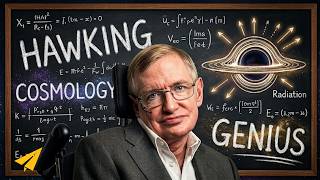
Stephen Hawking was given two years to live after his ALS diagnosis at 21, but spent decades doing groundbreaking physics on black holes and writing A Brief History of Time. The video pairs his story with Henry Ford's five business failures before the Model T and Soichiro Honda's rise from a failed piston-ring maker to building motorcycles and cars, arguing that constraint and failure fuel world-changing work.
Chapters
This man was told he might only have 2 years to live at 21.
My name is Stephen Hawking. Shortly after my 21st birthday, I went into hospital for tests. The doctors could offer no cure and gave me 2 and a half years to live.
Today, he's one of the greatest scientists in history with discoveries that changed the way we understand the universe.
For the past 50 years, I have traveled the world studying and lecturing about time and space and the laws that govern the universe.
Stephen Hawking is not only a brilliant scientist, but he himself has committed so much of his life, time, and effort to bringing the universe down to earth. Stephen Hawking was born in 1942 in Oxford, England.
I was born in 1942, exactly 300 years after the death of Galileo.
As a kid, he loved asking big questions, wanted to understand how the world worked.
As I developed into a teenager, my parents taught me to always question things and think At 17, he went to Oxford University to study physics.
He was naturally good at it, and by his second year, he even won the university physics prize. However, he soon found out the curriculum was too easy and got bored with it. We were asked to read chapter 10 in a book called Electricity and Magnetism, and at the end of that chapter, there are 13 questions, all of them final honors questions. I discovered very rapidly that I couldn't do any of them. Richard and I worked together for the week, and we managed to do 1.5 questions, which we felt very proud of. Stephen, as always, hadn't even started. But the next morning, he went up to his rooms at 9 o'clock, and we came back about 12, maybe 5 past 12, and down came Stephen, and we were in the college gateway, the lodge. Ah, Hawking, I said, how many have you managed to do then? Well, he said, I've only had time to do the first 10. I think at that point we realized that it's not just that we weren't in the same street, we weren't on the same planet. To challenge himself in a different way, Stephen joined the rowing club at Oxford.
At Oxford, I joined the rowing club and became a cox. I relished in the freedom, the speed, and of course, calling the shots.
The club was a place where students came together to compete in rowing races and stay active. It gave Stephen a chance to relax, have fun, and socialize outside of his studies. But just as things seemed to be going well, Stephen began noticing something strange. He started feeling clumsy, bumping into things, and having trouble walking.
During my final year at Oxford, I had noticed that I was getting rather clumsy in my movements. And I fell over once or twice for no apparent reason.
His speech also began to slur. After a series of tests, doctors told him at 21 he had ALS, a disease that would slowly take away his ability to move and speak. They said he might only have 2 years to live.
Eventually, I was diagnosed with amyotrophic lateral sclerosis, otherwise known as motor neuron disease or ALS. The prognosis was not good. I was given 2 to 3 years to live.
This news was devastating, and at first Stephen felt lost and uncertain about his future. But he didn't let that stop him. Instead of giving up, Stephen Hawking decided to keep working on his research.
After my expectations had been reduced to zero, every new day became a bonus, and I began to appreciate everything I did have. While there's life, there is hope.
Around this time, Stephen Hawking met Jane in 1963. As his illness worsened, daily life became harder. He struggled with walking, holding objects, writing by hand, and speaking clearly. Simple tasks like getting dressed, moving around campus, and taking notes were difficult. Jane helped Stephen with these daily tasks so he could focus on his studies. She supported him at home and encouraged him during difficult moments.
At first There did not seem much point in working at my research because I didn't expect to live long enough to finish my PhD. But what really made a difference was I got engaged to a girl called Jane Wilde. This gave me something to live for.
With Jane's help managing daily life, Stephen finished his research, completed his dissertation, and earned his PhD from the University of Cambridge. Stephen also met Roger Penrose, a mathematician who taught him about black holes. Using what he learned, Stephen made a major discovery. He found that black holes can give off radiation, changing how scientists understood them. Later, Stephen wrote A Brief History of Time, a book that explained complex science in simple language. The book became a bestseller, and his work became known around the world. Even after he lost his ability to speak, Stephen used a computer to communicate and continued sharing his ideas. Throughout his life, Stephen received many major awards, including the Copley Medal and the prestigious Medal of Freedom. Although doctors once said he might not live long, Stephen lived for more than 50 years and made lasting contributions to science. Today, he's remembered as one of the greatest scientists in history.
And however difficult life may seem, there is always something you can do and succeed at. It matters that you don't just give up.
When things feel impossible, remember, quitting is never the answer. Keep going. You've got this. If you've been here before, drop a hashtag #Believe in the comments below so I can feature you here in a future video. And if you're new, welcome to Believe Nation, the only channel that helps you believe in yourself daily, one video at a time. Believe. Imagine you're 21 years old. You're smart, young, and ready to take on the world. You have your whole life ahead of you. Then you start dropping things. You trip over your own feet. You slur your words when you talk. You go to the doctor expecting a simple fix. Instead, the doctor tells you that you have a rare a disease called ALS. The doctor says your muscles will slowly stop working. Then the doctor tells you that you only have 2 years to live. This is exactly what happened to Stephen Hawking in 1963. Most people, they just give up right then. Most people would go home, get into bed, and wait for the end. And Stephen Hawking did that at first. He felt completely lost. He listened to the music of Richard Wagner and felt sorry for himself. He thought his life was over before it even started. But then something changed. He realized that if he was gonna die soon, he wanted to actually do do something with the time he had left. He decided to get to work. He met a woman named Jane Wilde. She gave him hope. She gave him a reason to keep fighting. They got married, and Stephen realized he needed to provide for his new family. He needed a job. To get a job as a professor, he needed to finish his PhD at the University of Cambridge. So he stopped making excuses and started working harder than he has ever had in his life. He found his drive. Every successful person needs a moment when they decide to stop making excuses. Stephen Hawking found this moment in the darkest time of his life. The search for a purpose. Stephen Hawking needed to find a specific problem to solve. In the business world, you look for a gap in the market. In the science world, you look for a gap in human knowledge. Stephen looked up at the stars. He became fascinated by black holes. Back then, people didn't know much about black holes. They were a mystery. Stephen saw this mystery as his opportunity. He teamed up with a mathematician named Roger Penrose. Roger had an idea about how stars collapse. Stephen took that idea and applied it to the the entire universe. Stephen proposed the idea that the universe started as a single point called a singularity. He didn't present this as an absolute fact, but his math suggested it was a strong possibility. He started getting noticed. He was not just a sick young man anymore, he was becoming a respected mind in physics. But as his mind grew stronger, his body grew weaker. He started using a wheelchair. He needed help getting dressed. He needed help eating. Most people see physical limits as the reason to stop. Stephen saw them as a reason to focus. Because he couldn't write long equations on a chalkboard, he had to see math in his head. He developed a new way to think about shapes and geometry. He turned his weakness into a pretty unique strength for him. He solved problems in ways that other scientists couldn't even imagine. This was a massive lesson for anyone trying to build something great. You will face limits. You will face roadblocks. You will have to find ways to work around them. You have to invent new ways to win. Expanding the mind. Stephen Hawking kept pushing the boundaries. He looked at black holes again. Scientists thought that nothing could ever escape a black hole, not even light. But Stephen used his unique way of thinking to look deeper. He combined different areas of physics that no one had ever combined before. He proposed that black holes actually leak energy over time. The idea was later named Hawking radiation. It completely shocked the science world. This was his big breakthrough. It put his name on the map. He was building his reputation. He was becoming a leader in his field. But life threw another massive obstacle in his path. In 1985, he went to Switzerland. He caught a terrible case of pneumonia. He was in a coma. He was kept alive by a machine. The doctors asked his wife Jane if they should turn off the machine. Jane said no. The doctors had to perform a surgery called a tracheotomy to save his life. The surgery saved him, but it took away his ability to speak. He was completely silent. He was a man who made his living by sharing big ideas, and now he had no voice. The sound of silence. Think about how terrifying that must be. Your entire value to the world is locked inside your head and you have no way to get it out. At first, Stephen communicated by raising his eyebrows when someone pointed to letters on a card. It was painfully slow. It took him minutes just to spell a single word. But Stephen refused to be silenced. A computer programmer in California named Walt Woltows heard about Stephen's problem. Walt sent Stephen a computer program called Equalizer. This program lets Stephen choose words from a screen using a switch in his hand. Later, when he lost use of his hand, he used a sensor attached to his cheek. He could twitch his cheek muscle to stop the cursor on a word. A speech synthesizer would then read the words out loud. Stephen got his voice back. It sounded like a robot, but it became his trademark. It became part of his brand. He didn't let the loss of his natural voice stop him. He used technology to keep moving forward. He realized that his work was too important to keep locked inside his own mind. He had to share it with the world. Also, if you want to take real action after this video, I made a free worksheet just for you. It covers the top lessons from today, gives you space to write your biggest takeaways, and helps you build a simple action plan. It's 100% free. Just check the link in the description below to go grab it. I'll see you there. Writing a bestseller. Stephen Hawking had a new goal. He wanted to write a book about the universe. He did not want to write a textbook for other scientists. He wanted to write a book for regular people. He wanted to explain the hardest concepts in the simplest way. This is the ultimate goal, I think, of any great entrepreneur. You have to take something complex and make it easy for the customer to understand. He called the book A Brief History of Time. Now, writing it was not easy. He had to dictate the entire book using his cheek muscle, one word at a time. It took incredible patience. He also had to fight with his editors. The publisher told Stephen that for every math equation he put in the book, his sales would be cut in half. Stephen listened to this advice. He only kept one equation in the entire book. It was E mc². Stephen worked hard to make the language clear. He rewrote sections over and over again. He wanted the book to be sold in airports, not just in the university bookstores. He wanted massive reach. The book came out in 1988. It was a massive hit. It stayed on the Sunday Times bestseller list for a record-breaking 237 weeks. It sold over 25 million copies worldwide. Stephen Hawking was not just a scientist anymore. He He was a creator. He brought the universe to the masses. He proved that if you can explain a big idea simply, people will listen. He built a massive audience by focusing on clarity and value. Becoming a global icon. Stephen Hawking understood the power of visibility. He didn't hide in his laboratory. He went out into the world. He understood that to make a real impact, people needed to know his name. He embraced his unique image. He allowed his robotic voice and his wheelchair to become symbols of his human brilliance. He appeared on popular TV shows. He was on The Simpsons. He was on Star Trek. He was on The Big Bang Theory. He made science cool. He reached people who would never normally read a physics book. He used his fame to talk about important issues. He warned the world about the dangers of artificial intelligence. He talked about the need for humans to explore space. He used his platform to try and protect the future of humanity. He was always thinking bigger. He was always looking at the next challenge. He never settled for the success he already had. Zero excuses. Stephen Hawking lived for 55 years after doctors told him he only had 2 years left. He completely defied the odds. He changed how we see the stars. He wrote books that millions of people read. He did all of this while trapped in a body that could not move. When you look at his life, you lose the right to make excuses. If Stephen Hawking could unlock the secrets of black holes using only a cheek muscle, What can you do with the tools you have right now? He faced ultimate constraints and he still produced world-class work. He focused entirely on what he could do and he ignored what he could not do. He trained his mind to be free while his body was stuck and he built a global brand. He educated the world. He never stopped being curious. He never stopped asking the big questions. He once said, however difficult life may seem, There was always something you can do and succeed at. He proved that success is not about what happens to you. It is about how you respond to what happens to you. It's about taking the hardest moments and turning them into your motivation. It's about refusing to quit because you have greatness inside you. You just have to decide to let it out. You have to decide to keep pushing forward no matter what stands in your way. So keep asking questions, keep putting in the work, and congratulations, you're one video closer to who you're meant to be. Be, but leave. Now let's learn how Henry Ford turned failure into a $60 billion empire. Henry Ford failed 5 times before changing the world with the Model T car. Before the iconic Model T revolutionized transportation in 1908, Ford's journey was marked by flop after flop. Each failure could have been the end of the story, but instead, each became an opportunity for Ford to learn and push forward. This is the inspiring story of how Henry Ford turned repeated failure into world-changing success and what we can learn from his persistence. Try number 1: Detroit Automobile Company. First attempt falls flat. In 1899, with the backing of Detroit investors like William H. Murphy, Henry Ford launched his first car company, the Detroit Automobile Company. Ford was full of hope. He had quit his job with Edison Illuminating Company and was ready to build automobiles commercially. It didn't go as planned. The cars his team produced were expensive and low in quality, far from Ford's ideal of a simple, affordable car. Ford, inexperienced in mass production, also struggled to build vehicles quickly and cheaply. His backers grew impatient as their costs mounted and the prototype cars underwhelmed everybody. Within just a year and a half, the Detroit Automobile Company collapsed. By January 1901, it was dissolved, having built only a handful of poor quality cars that were too pricey to sell. Imagine Ford's disappointment. His first venture Ford, with so much fanfare, failed completely. He had resigned from a stable job and staked his reputation on this company. Now it was bust. To the outside world, this looked like the end. Ford was left with nothing to show but the hard lessons of failure. But those lessons actually became invaluable. As Ford himself later reflected, failure is simply the opportunity to begin again, this time more intelligently. And begin again he did. Try number 2: Henry Ford Company, ousted from his own company. Only a few months later, after his first company's collapse, Ford tried again. His racing victory in a 1901 car race where he drove a 26-horsepower car of his own design to beat famed driver Alexander Winton had impressed investors. Off the back of that win, Ford's former backers gave him a second chance. In November 1901, they formed the Henry Ford Company with Ford as chief engineer. This was essentially Ford's second startup, funded by Murphy and other Detroit businessmen hoping Ford's racing success would translate into a viable car business. But history almost repeated itself. Ford clashed with his financial backers from the start. The investors, eager to get a product to market, grew frustrated as Ford spent much of his time tinkering on a new racing car instead of a marketable passenger car. By early 1902, their patience ran out. The investors brought in an outside engineer, Henry M. Leland, a talented automotive expert, to oversee operations and assess the struggling company's value. To Ford, this was a huge vote of no confidence. He was angry at the idea of taking orders on his own project. After just a few months, Henry Ford quit his company that was named after him in disgust. It was a bitter pill. The Henry Ford Company had been named after him, Yet now he was gone. Ford left with only $900 and the rights to his name while his former investors kept the company's assets. Leyland, the consultant, took charge and soon reorganized Ford's second failed company under a new name: Cadillac Automobile Company. Yes, the luxury Cadillac brand was born from Henry Ford's second failure. Once again, Ford's dream of making his own car for the masses seemed to slip away. He was nearly 40 years old with two business failures behind him. Many people would have given up at this point. To the public, Ford looked like a man who just couldn't make a car company work. But Henry Ford did not give up. Ford knew that each setback taught him something. By 1902, he walked away with hard-earned knowledge. He'd learned he must retain more control over his vision, and that rushing an inferior product to market, as happened in his first company, was also a mistake. These insights would guide his next moves. Try number 3: early racing cars, speeding toward credibility. So after 2 pretty big failures in the car business, Ford chose a different strategy before trying a third. He turned back to building racing cars. If he couldn't yet mass-produce a great car, he could at least prove his engineering progress on the racetrack. Ford believed that success in racing would generate publicity, attract investors, and restore his reputation in the auto industry. Now, this was a pretty bold and somewhat indirect approach to achieving his ultimate dream. In 1901, Ford had already built a small race car nicknamed Sweepstakes, which he personally drove to victory in a 10-mile race against the country's top driver at the time. And that win did give him a burst of fame and helped lead the formation of the Henry Ford Company. That was his second company. Now, in 1902, after leaving that company, he doubled down on racing. So Ford partnered with famed cyclist-turned-promoter Tom Cooper to build an even more powerful race car in a rented workshop in Detroit. Detroit, they worked long hours on two sister cars, one red and one yellow, with massively oversized engines. Ford sunk his remaining resources and knowledge into these machines. The result was 999, the red car, and its twin Arrow, the yellow car— two huge 80+ horsepower racing monsters. There was just one problem: these cars were terrifying to drive. During testing, even Henry Ford found the 999 nearly uncontrollable, and he refused to drive it in competition. Instead, Ford hired a fearless young bicycle racer named Barney Oldfield to pilot 999. In October 1902, Oldfield entered 999 in a 5-mile race known as the Manufacturer's Challenge Cup and won in spectacular fashion, beating experienced drivers easily. The 999 car set a speed record on the Gross Point track and made headlines. Suddenly, Henry Ford's name was back in the news as the builder of one of the fastest cars in America. The racing strategy paid off in terms of publicity. Ford's 999 became famous, and so did Barney Oldfield. But importantly, Ford gained the credibility and investor interest he desperately needed for another business attempt. These racing victories did not directly make Ford a successful automaker. Race cars themselves weren't a mass market product that he could sell, but they accomplished something that was super crucial. They proved Henry Ford's engineering skill to the world. He built a reputation as an innovator who could push the limits of automotive technology, and this reputation attracted the attention of potential backers who were willing to gamble on Ford one more time. Still, in terms of business success, this was not it. Racing was a stepping stone, not the end goal. Ford had won trophies and fame, but he still hadn't built the affordable, reliable car for average people that he wanted to build. The racing chapter did, however, set the stage for his next and most most critical attempt at a car company. Try number 4: Another false start, partnership perils, and near collapse. Having all this racing fame, Henry Ford was ready to try launching a car manufacturing company again in late 1902. This time he found a new primary investor, Alexander Y. Malcolmson, a wealthy Detroit coal dealer who believed in Ford's ideas. And together they formed a partnership called Ford and Malcolmson Limited.
It.
Their plan was to build a lightweight, affordable automobile, essentially the car Ford has been dreaming up all along. And by early 1903, Ford and Malcolmson had set up shop in a small rented factory on Mack Avenue in Detroit, hired a few employees including the Dodge brothers to supply parts, and begun work on a new car model which eventually was called the Model A. It seemed like Henry Ford's third try at a company might might finally take off. But almost immediately, disaster loomed again. Ford and Malcolmson started building cars and ordering large quantities of parts on credit, only to discover that selling the cars was harder than expected. Sales were slow and cash was running out. By March 1903, the tiny firm was in a financial crisis. The Dodge brothers demanded payments for the first $160,000 worth of parts that they had delivered. Ford and Malcolmson simply didn't have the money. For a moment, it looked like Henry Ford's third attempt would collapse before a single car ever hit the market. Facing ruin, Malcolmson and Ford scrambled to keep the dream alive. Malcolmson reached out to additional investors, including his rich uncle John S. Gray, who was a bank president, to pull together more funding. And in exchange, these new bankers demanded a formal reorganization of the company. On June 16, 1903, Ford and Malcolmson was reincorporated as the Ford Motor Company with 12 stockholders and $28,000 in capital. This was notable because some investors still doubted Henry's business acumen. After all, he had already failed multiple times before. So they installed Malcolmson's uncle Gray as the first president of Ford Motor Company instead of Henry. Henry Ford was given the title of vice president and chief engineer. In essence, even in his own company, backers kept Ford on a short leash, reflecting the lack of full confidence due to his past failures. Now, for Henry, this must have been a pretty tense period. He finally had a company building cars under his name again, but he nearly lost control of it right at the start. The crisis was so bad that Ford Motor Company's bank account fell to only $223.65 by July 1903. It was literally on the brink of bankruptcy mere weeks after incorporation. And in a true do or die moment, salvation came from the very first customers orders. On July 15, 1903, the company's first 3 sales brought in much-needed cash. One buyer, a dentist, paid $850 for Model A and kept the Ford Motor Company alive. Those first few orders just barely saved Henry Ford's new business from collapsing like the last two. Talk about a nail-biting start. By 1903, Ford Motor Company had managed to produce and sell its first model, the 2-cylinder Model A Runabout, and even paid a small dividend to investors. Ford's third company had survived its first year, a milestone he hadn't achieved before. Still, Ford wasn't CEO of his own company yet, and there were serious disagreements on the horizon among him and his investors. They had kept the business afloat, but the struggle for the company's direction was just beginning. Henry Ford had his own vision: a car for the masses, while some of his partners wanted to chase quick profits or cater to the luxury market. And This back and forth tug of war would lead to Ford's fifth and final failure phase before his ultimate success. Try number 5: Early models before the Model T, struggling to find the breakthrough. Now we're in Ford's third company's early years. From 1903 to 1907, the Ford Motor Company produced a series of cars—models A, B, C, F, K, N, R, and S—in an effort to find a winning design and capture the market. It was a period period of constant experimentation. Some of those early models showed promise, but many missed the mark. Ford was still learning what customers wanted and how to manufacture cars efficiently. It was a trial and error process, and the company was constantly on the edge of failure more than once during these years. For example, Ford's Model B, which was 1904, was an upscale touring car with a 4-cylinder engine, the most expensive Ford yet at about $2,000, equivalent to tens of thousands of dollars today. It was nicely engineered, but with that high price tag, double the cost of many competitors' cars, the Model B sold poorly. It simply wasn't the affordable everyman's car Henry wanted to build, and it didn't gain mass appeal. On the other end, Ford introduced the Model N, 1906, a much simpler, lighter-priced car around $500. The Model N was a hit in relative terms. It became the best-selling car in America in 1906 because it offered a reliable 4-cylinder engine engine for a low price. This proved that mass market buyers were out there if the price was right. However, even the moderately successful Model N wasn't yet the car to change the world. It was, um, more like a stepping stone towards Ford's ultimate goal. Meanwhile, a battle of visions was happening inside the company. Henry Ford believed the future was in cheap, simple cars for everyday people, but many of his early investors, including his partner Alexander Malcolmson and even Ford's president John Gray, they disagreed with him. They thought Ford Motor Company should produce luxury vehicles for higher profit per car. And under their influence, Ford Motor Company rolled out the Model K in 1906, a large 6-cylinder luxury touring car. The Model K was powerful and impressive, but it cost a hefty $2,800, which was a fortune at the time, and quickly earned the reputation as a flop. It was too expensive and not particularly reliable, and it strayed from Henry's vision of affordability. Henry Ford famously grumbled that he had no use for a motor car that has more spark plugs than a cow has teats in response to the 6-cylinder Model K and the complexity that it represented. The poor reception of the Model K caused major friction within the company, and by 1907, Malcolmson, the champion of this luxury car strategy, left the business. He left selling his shares and clashing with Ford one too many times. Henry Ford was gaining more control and he was more convinced than ever that simplicity and low cost were the keys to the future. Through these years, Ford Motor Company had narrowly stayed afloat, but it was no runaway success yet. They were learning hard lessons from each model. Model A showed that a car could sell if priced accessibly. The Model A sold 1,708 units by 1904, which was a decent start. Model B and K taught Ford that chasing the high-end market was a mistake for his company. The Model N success taught that the masses would buy an inexpensive, no-frills car if it was well built. And these incremental lessons, they were all pointing Henry Ford towards the solution. He just hadn't fully achieved it yet. By early 1908, Ford Motor Company was doing okay, but competitors— there were lots of them— and Ford still hadn't produced his breakthrough vehicle. It would be easy for Ford or his backers to lose hope after years of tiny results. It had been been 9 tough years since Ford's first failed company, and even his successful company had come close to failing multiple times. But Henry Ford kept the faith in his idea. He once said, "If you think you can do a thing or think you can't do a thing, you're right." He thought he could despite all the failures, and he was about to be proven right. The breakthrough Model T finally changing the world. In October 1908, Henry Ford introduced the Model T, the car that would change the world. This was the culmination of everything he had learned from failures 1 through 5. The Model T was designed to be simple, sturdy, and extremely affordable. It had a 20-horsepower 4-cylinder engine, a standardized chassis, and was easy to operate and repair. Ford famously decided to paint all Model Ts black, at least for the first few years, because black paint dried fastest and helped speed up production. Every choice was about efficiency and reliability. Ford's focus on learning from past mistakes finally paid off. The Model T was exactly what the masses were waiting for. When the Model T hit the market at a base price of $850 and soon dropped even lower, it took off like nothing before. Ordinary middle-class Americans and even working-class folks could realistically aspire to own an automobile for the first time. Demand exploded. Ford had to get even more innovative to keep up. He introduced moving assembly line production in 1913, which was a revolutionary manufacturing method that dramatically lowered costs in production at the time. And with the assembly line, Ford was able to constantly lower the price of the Model T down to $600, then $500, eventually under $300 in the 1920s, which created even more demand for him. The car was not just cheap though, it was tough, it was dependable, built to handle the rough roads of the era. Farmers, factory workers, family families. Everyone was buying Model Ts. By 1914, Ford could barely keep up with the orders, and by 1918, half of all cars on American roads were Model T Fords. Ford Motor Company grew into one of the largest and most profitable companies in the world, and Henry Ford became one of the world's richest men. The Model T's impact on society was enormous. It revolutionized both transportation and American industry, as historians have said. Cars went from luxury curiosities to everyday necessities because of the Model T. It was the car that put the world on wheels. Ford's success also transformed manufacturing globally. The assembly line methods that he pioneered became the standard in countless of other industries. This was the moment Henry Ford had been striving for all along. After years of being laughed at as a failure, he finally changed the world. So was the Model T an overnight success? Hardly. It was built on 9 years of trial and errors. Each of Ford's 5 failures directly contributed to the making of the Model T. If Detroit Automobile Company had not failed, Ford might never have realized the importance of low price and high quality. If he hadn't left the Henry Ford Company, Cadillac might have kept him tied to a different vision. The racing proved his engineering and got him the investors he needed. The early models taught him what not to do and what to improve. The Model T was the product of all of that wisdom. Henry Ford himself saw this. One of his most famous quotes shows this lesson: "Failure is simply the opportunity to begin again, this time more intelligently." The Model T was just that— failure begun again more intelligently. It was the result of Ford beginning again and again, each time a bit smarter, until he finally achieved success. Turning failure into motivation. It took Henry Ford 9 years to finally get it right, from 1899 to 1908. But when he did, he got it spectacularly right. All of those apparent failures weren't really failures at all. They were just his stepping stones. To the outside world before 1908, Henry Ford might have looked like a man who would never make it. He had 5 ventures fall short, 2 companies went under, 2 racing projects didn't directly pan out into businesses, and even his early Ford Motor Company models failed. Failed, but Henry Ford kept going. He believed in his vision of a car for every person and used each setback as learning. And in the end, that learning-from-failure mindset changed him and changed history. If there's one big takeaway from Henry Ford's story, it's this: never let failure stop you if you're passionate about a big idea. Ford's story shows that as long as you learn and persevere, you might be one step away from your next breakthrough, the next attempt could be the one that changes the world. So the next time you face a setback, remember Henry Ford, the man who failed 5 times but kept innovating and improving until he succeeded on a world-changing scale. Remember Ford's own words: Failure is simply the opportunity to begin again, this time more intelligently. Use failure as motivation to drive you smarter towards your goals. Keep going and stay true to your vision and believe you could be one bold move away from changing the world. Now let's learn the incredible rags-to-riches story of Honda. Soichiro Honda, the founder of Honda Motors, was rejected by Toyota, lost his factory in World War II, and had an earthquake destroy everything he built. He was broke, humiliated, and at rock bottom. But instead of giving up, he turned failure into the fuel for his greatest success. Honda was was obsessed with engines. As a young man, he spent years designing a new piston, believing it would change the industry. He took his invention to Toyota, expecting them to buy it, but they rejected him, saying it wasn't good enough. Most people would have quit, but Honda went back, redesigned it, and tried again. Toyota rejected him a second time. He was crushed. He had put everything into this project, and now he had nothing to show for it. Still, he refused to quit. He borrowed money, built a factory, and started producing his own parts. Just when things were finally looking up, World War II hit. His factory was bombed twice. All his hard work gone. But he rebuilt. Then before he could recover, a massive earthquake struck and leveled everything he had left. Honda was left with nothing. No factory, no money, no hope. But instead of feeling sorry for himself, he found a new way forward. With Japan struggling after the war, people needed cheap transportation. He took a simple bicycle and attached a tiny motor to it. That small idea, it changed everything. People loved it. He started making more. Soon his little motorized bikes were selling all over Japan. That business became Honda Motors, which grew into the biggest motorcycle company in the world and later one of the most successful car manufacturers in history. Soichiro Honda was rejected, bankrupt, and lost everything, but he never stopped. If he had quit, there would be no Honda today. When life knocks you down, will you stay down, or will you rise up and build something even greater? You could say Soichiro Honda was born with grease under his nails. He entered the world in 1906 in a tiny Japanese village, the son of a blacksmith who also fixed bicycles. Cycles. As a child, Soichiro helped his father's bike repair shop, mesmerized by gears and spokes instead of school books. In fact, he wasn't much for traditional education. He once forged his family seal out of a rubber bicycle pedal to fake his report card approval. It worked for Honda since his name was symmetrical, but not for his friends with different names. That little mischief got him caught, but it shows you something: even as a kid, Soichiro was resourceful and bold. Unafraid to hack the system to get what he wanted. What he wanted most was machines. As a toddler, he saw his first automobile roll through his village, and he was spellbound. He said the oil smelled like perfume to him. He even borrowed his dad's bicycle to chase an airplane demonstration once. He was obsessed with anything mechanical. If you've ever felt that burning passion for something at a young age, you know how Suichiro felt. And if you haven't found your passion yet, Yet, take a cue from him: follow your curiosity relentlessly. At 15 years old, armed with nothing but that passion, Soichiro left his village and headed to Tokyo to find work as a mechanic. Imagine, a teenager, with no formal education, no money, just a dream to work with cars. He saw an ad for a job at an auto shop called Art Shokai and wrote them a letter asking for an apprenticeship, even though they weren't advertising for one. Who does that? Someone hungry to learn. And it worked. They took him on. So ask yourself, would you have the guts to cold call your way into an opportunity? Honda did. That bold move at 15 set the foundation for everything to come. At Art Shokai in the 1920s, Soichiro thrived. He swept floors and fetched tools at first, but he soaked up knowledge like a sponge. He became a skilled mechanic known for clever fixes and crazy work ethic. Ethic. His boss Yuzo Sakakibara was so impressed that he let young Honda help build a racing car from scratch. And get this, Soichiro built a race car with a salvaged engine that broke the speed record in Japan at the time, over 100 miles per hour. He even drove it in a race. That fearless need for speed was already in his blood. Unfortunately, in 1936, he crashed in a race and nearly died, injuring his eye. That crash ended his driving days, but not his racing spirit. We'll see how racing comes back into the story later on. By his early 30s, Soichiro Honda had learned all he could at the garage. He had a vision. He wanted to start his own company and make his own products. How many 30-year-olds do you know with a confidence to start a manufacturing business from scratch? This is where his real entrepreneurial journey kicks off, and trust me, it almost ended as soon as it In 1937, Soichiro Honda took the leap. He invested all of his savings, about $3,200, into a small factory to mass-produce piston rings, which were a critical engine part. He was betting everything on his ability to make a tiny piece of metal better than anyone else. His plan was to sell these piston rings to Toyota, the big car company. It did not go as planned. In fact, it was a disaster. After months of work, he delivered his first batch of piston rings to Toyota, and they rejected almost all of them. Imagine the moment you've poured your heart, your soul, your life savings into a product, and the customer says, "These are junk." Out of 50 rings, only 3 met Toyota's quality standard. Another account says he made thousands of rings and only a few dozen were usable. Either way, almost 90 to 99% of his work was a failure. Failure. Can you imagine how crushing that could be? Honda was heartbroken and humiliated. He literally lost a Toyota contract, and with it, his hopes for a successful business seemed to crumble. Now, most people at this point would quit. They'd say, "Well, I tried, I failed, time to find a stable job." And here's where Soichiro Honda shows the mindset that you as an entrepreneur need to have. He refused to give up. Instead of quitting, he decided to learn from the failure and come back stronger. Remember this the next time you fail. Success represents the 1% of your work, which results from the 99% that is called failure. Soichiro Honda said that and he lived it. He understood that each failure was telling him something. In this case, it told him he needed more knowledge. So he went back to school. Literally. Honda enrolled in a technical school to study metallurgy, the science of metals, so he could figure out why his piston rings were too brittle or too soft. By day, he ran his little factory. By night, he was hitting the books. For 2 years, he experimented, studied, and improved the manufacturing process, and it paid off. By 1939, he had mastered the process and his piston rings were finally good enough. Toyota gave him a contract, and his factory began supplying piston rings not only to Toyota but also to the Japanese military for aircraft. His business, Tokai Seiki, grew to employ over 2,000 workers at its peak. Think about that. He went from catastrophic failure to running a 2,000-employee company because he didn't quit. He treated failure as feedback, not finale. This is failing forward in action. What can you learn from here? Persistence. The science backs it up. Research from the University of Pennsylvania shows that grit, passion, and perseverance is a better predictor of success than talent or IQ. Soichiro Honda's grit pulled him through. He literally turned failure into fuel.. He once said, "Instead of being afraid of the challenge and failure, be afraid of avoiding the challenge and doing nothing." In other words, the only real failure is not trying. Soichiro's piston ring venture finally found success, but just as things were looking up, the world turned upside down. War broke out. Soichiro Honda's company was humming along, supplying Toyota and others, but then World War II escalated. Japan was drawn into war, and by 1944, Suichiro's factory became a target. Bombs rained down, and an American B-29 air raid leveled his main plant to rubble. If that wasn't enough, in 1945, a massive earthquake struck Japan and destroyed his second factory. In less than a year, everything he'd built— years of effort, all that persistence— was reduced to smoking ruins and twisted metal. Imagine standing in front of your your business, the place you poured your sweat and blood into, and seeing it literally collapse in a pile. How would you feel? Most of us would be devastated. Soichiro Honda certainly was in shock. He later said he had no interest in rebuilding the piston ring business for a third time. And can you blame him? He'd been through failure, recovery, success, then utter destruction. This was rock bottom. So what did he do? He didn't immediately jump back into entrepreneurship. In fact, Honda sold the salvageable remains of his factory to Toyota for ¥450,000 just to have something to start anew. Then he took a break, a really long break by his standards. He spent a year basically in reflection and recuperation. He even went back to college for a bit and studied engineering more, though he never did get a formal degree. Soichiro was now an engineer without a company, without a degree, and nearly without hope. But this wasn't where the story ends, because remember, the day you stop dreaming is the day you die. And Soichiro Honda was not done dreaming. His homeland Japan was also in ruins from the war, and in those ruins, new opportunities were emerging. Necessity is the mother of invention, and Japan needed inventions. The people needed basic transportation to rebuild their lives in a shattered economy. Soichiro saw this need, and once again then he had a crazy idea. It's 1946. Japan is in chaos. Fuel is scarce, money is tight. People are literally rebuilding buildings and lives. Soichiro Honda, now 40 years old, is back in his hometown figuring out his next move. One day he stumbles on a small two-stroke engine, a tiny surplus military generator motor left from the war, just lying around. Most folks would see a hunk of junk. Soichiro saw opportunity. He famously recalled that moment as a moment of destiny, the spark that would ignite Honda Motor Company. He thought, what if I attach this little engine to a bicycle? People had been tinkering with motorized bikes elsewhere, but in Japan it wasn't common. With gas in short supply, an efficient motorbike could be the perfect solution for easy transport. Soichiro got to work in his shack. He strapped the engine to a bicycle, used a hot water bottle as a makeshift fuel tank— seriously— and rigged a way to drive the wheel. The first prototype shook and rattled, but it worked. He gave it to his wife Sachi to test. She became the first test rider, putting up with oil splattering her clothes as she rode around town. People on the street must have thought they were seeing things— a woman cruising by without pedaling. And that was exactly Soichiro's plan. It got people talking. The little motorbike was loud, rough, and imperfect, but to war-weary citizens, it looked like freedom. Honda improved the design, and after his wife's feedback about the oil mess, and began building more. He had limited engines, about 500 of those surplus motors, so he refurbished every single one by hand before mounting it on a bicycle to sell. He refused to put out a shoddy product with his name on it, even in desperate times. Quality was king for him. That's a lesson: your reputation is built on the quality you deliver, even when resources are scarce. Soon word spread about these motorized bicycles. They were cheap to run and help people get around quickly. Buyers came from all over Japan to his hometown to get one. Suichiro Honda was back in business, not with piston rings this time, but with a whole new product born of necessity and imagination. By late 1946, Suichiro officially founded the Honda Technical Research Institute, working out of a little wooden shack with a team of about a dozen men and a dream. That institute title is pretty grand for what basically was a glorified garage lab with an oil-stained floor. They worked day and night on improving the motorized bicycle. When the supply of surplus engines ran out, Honda knew they had to make their own engines to keep going. So in 1947, they developed a new 50cc engine, their first original Honda engine, and mounted it on a bicycle. Frame. This evolved into a complete motorbike known as the Type A, nicknamed the Bada Bada for the sound it made. It wasn't long before Honda's bikes were in demand across Japan. In 1948, just 2 years after starting from zero, Soichiro took the next big step. He incorporated Honda Motor Corporation as an official company. He knew he needed help to really grow, so he partnered with Takeo Fujisawa, a savvy businessman who joined him in 1949. This was crucial. Fujisawa handled the financial and marketing side while Soichiro focused on engineering and production. Teamwork and knowing your strengths. This is another key entrepreneurial lesson. Honda was an engineering genius but admittedly hated dealing with accounting. His wife would poke him about unpaid bills. By bringing in a partner who excelled in business, he freed himself to do what he loved most: innovate. So ask yourself, do you need a Fujisawa in your venture to complement your skills? With a solid team and a growing reputation, Honda Motor Co. took off. Soichiro and his engineers kept innovating new models. In 1949, they released the Type D Dream, Honda's first true motorcycle, complete with a sleek frame and 98cc engine. The name Dream says it all. It was Soichiro's dream becoming reality. But it wasn't easy. Post-war Japan was crawling with competition. About 200 other small companies were also making motorized bikes, all scrambling for a piece of a very poor market. Honda was just one player in a crowded field, an underdog by any measure. So how did Honda break away from the pack? Two things: product quality and smart strategy. Soichiro's engineering prowess meant his bikes steadily improved. They were reliable and got better each year. But equally important, Takeo Fujisawa helped craft brilliant marketing and distribution. They didn't just build good motorcycles, they found better ways to sell them. For example, by the mid-1950s, Honda's bikes had such a good reputation that word-of-mouth demand was exploding. Fujisawa organized a novel distribution system where Honda salesmen literally drove trucks of bikes from town to town across Japan, personally demoing and delivering to local dealers. They went to the customers rather than waiting in Tokyo. This boots-on-the-ground approach built relationships and trust. It was unconventional, but it worked. By 1955, just 7 years after starting, Honda became the number one motorcycle manufacturer in Japan, leaving hundreds of rivals in the dust. Soichiro wasn't content with just domestic success. He had a bigger vision: to be a world-class manufacturer. He believed that to truly test your product, you should face the world's best on the racetrack. Remember that racing bug he had? It never went away. He famously said, "If Honda does not race, there is no Honda." Racing was a way to push the limits of technology and prove your mettle. So in 1959, Honda became the first Japanese motorcycle maker to enter the legendary Isle of Man TT race, the toughest, most dangerous motorcycle race in the world at the They didn't win that year. In fact, they faced several technical failures in early attempts, but Honda's team learned and improved. By 1961, they took home their first trophies in the World Grand Prix circuit, shocking the established European makers. This relentless drive to compete and improve quickly translated into superior bikes for customers. By the early 1960s, Honda had begun exporting worldwide, and riders from Asia to Europe to America loved the affordable, robust Hondas. The real breakthrough in the West came with one iconic model, the Honda Super Cub. Introduced in 1958 as a simple 50cc bike for everyone, it became a global phenomenon. You probably know it by the later US slogan, "You meet the nicest people on a Honda." The Super Cub was cheap, reliable, and ridiculously fuel-efficient, perfect for the post-war boom in affordable transport. It was so successful that it eventually became the most produced motor vehicle in history, with over 100 million Super Cubs built worldwide. Yes, 100 million. More than the Model T, more than the VW Beetle, any of them. That's the power of a great product combined with a great vision. Soichiro Honda wanted to empower ordinary people with mobility, and that vision drove the creation of a product that truly conquered the world. By 1959, Honda opened its first dealership in the United States, entering a market dominated by big bikes like Harley-Davidson Harley-Davidson. The American riders initially saw small Japanese bikes as a joke, but Honda's clever marketing, the Nicest People campaign in 1963, changed that image fast. Sales skyrocketed, and then an incredible thing happened. Honda motorcycles started outselling even the venerable Harley-Davidson in America and Triumph in England, beating the homegrown brands in their own backyards. Think about the magnitude of that. A little company from a war-torn country, a total underdog, Suzuki overtook established giants on their home turf. By the mid-1960s, Honda was the world's largest motorcycle manufacturer and a household name. Soichiro Honda had gone global. How? By never sacrificing quality, by innovating in products and marketing, and by daring to go where others hadn't. He didn't stop at small bikes or local markets. He kept pushing outward. And as his motorcycle business reached the pinnacle, he set his lights on an even bigger dream, one that many thought was downright crazy: cars. Most people would ride the high of being the world's top motorcycle maker and play it safe. Not Soichiro Honda. In the late 1950s, as his bikes were conquering roads worldwide, he had another vision. He loved cars. Remember, he'd built and raced them in his youth, and he wanted Honda to build cars But Japan's government wasn't keen on a small motorcycle company jumping into the car industry. In fact, the Ministry of International Trade and Industry in Japan tried to block Honda from making cars in the early 1960s. They had a plan to consolidate the auto industry and didn't want new entrants. They effectively told Honda, stick to what you're good at, don't pursue cars. Well, telling Soichiro Honda to not do something was the surest way to fire him up. Up. He once quipped, "If our team had to run a business analysis, we would never have ventured into the car business. I simply made a list of the weaknesses of the world's biggest car makers, and that list was quite long." In other words, he didn't care what the conventional wisdom was or what the government said. He saw an opportunity to do better than the existing car companies, and he went for it. The lesson is don't let naysayers or expert analysis "Kill your dream if you truly believe and have done your homework." Sometimes vision is greater than permission. Blocked from immediately entering the car market, Honda took a clever detour: racing. He decided to prove Honda's engineering prowess on the world stage by entering Formula 1 racing, the pinnacle of car racing. A bold move for a company that hadn't mass-produced a single car yet. They built a racing car, and by 1965, just a few years later, Honda won the Formula One Grand Prix in Mexico, beating the likes of Ferrari and Lotus. The racing success silenced a lot of doubters. It demonstrated that Honda's technology could compete with the best in the world. Over the next few years, they also dominated in Formula Two racing with 11 consecutive wins. Soichiro was showing the world, we know engines, we know cars, and we're coming. By the late 1960s, Honda got the green light to mass-produce cars. Soichiro's first production car models, like the tiny Honda N360 and the sporty S600, hit the market. They were different from the big American sedans or even the established Japanese models. They were small, efficient, and fun. But the real jackpot came in 1972 with the launch of the Honda Civic. Soichiro's team had developed an ingenious new engine technology called CVCC—Compound Vortex Controlled Combustion. Which made the Civic meet the strict U.S. emission standards of the 1970s without a catalytic converter. While Detroit's giants were struggling to make clean engines to comply with the Clean Air Act, little Honda had cracked the code. The Civic got great gas mileage just as the world faced the oil crisis, and it ran clean. It was the right car at the right time. The Civic became a massive hit globally. In America, its sales took off like a rocket. Even becoming the number one selling car in the US at one point in the small car category. Honda suddenly went from newcomer to a major player in automobiles. By 1973, just 25 years after its founding, Honda Motor Co. was so successful internationally that they decided to open a production plant in the United States, a nearly unthinkable move for a Japanese company back then. Think about the irony. The same country that bombed Soichiro's factory to smithereens in World War II was now welcoming his company to build cars on their soil because Americans loved his products. Soichiro Honda retired in 1973 as president of Honda on the 25th anniversary of the company. He stepped down at the top with Honda firmly established as a global automotive and motorcycle powerhouse. People magazine later called him the Japanese Henry Ford, but in truth, he was one of a kind. In his lifetime, he saw his company grow from a tiny shack to a multi-billion dollar multinational. More importantly for him, he saw ideas that once lived only in his head— the cheap motorbike, the small car that could beat the big guys— become reality for millions of customers. Even after retirement, Suichiro stayed on as a supreme advisor and kept tinkering in workshops until his final days. He pursued hobbies like hang gliding and painting, living life with the same zeal he brought to business. He never stopped moving, never stopped dreaming, right up until he passed away in 1991, leaving a legacy that's visible every time you see a Honda logo. So what can you take away from this incredible journey? Let's break down the key lessons from Soichiro Honda's life that you can apply to your own entrepreneurial path. Number 1: Persistence in the face of failure. Soichiro Honda failed hard and often. His first factory output was 90% unusable. His plants were bombed to rubble, yet he never saw failure as the end. He saw it as a lesson. Remember his words: Success is 99% failure. Every setback was just one step closer to getting it right. When you hit a wall, don't turn around. Climb over it or break through it. Most businesses face early failures. About 50% of startups fail within 5 years, but the ones that succeed are the ones that keep going after Failure. Take Honda's story to heart and let your failures refine you, not define you. Number 2: Embrace rejection and prove the doubters wrong. Honda was rejected time and time again by Toyota's inspectors, by bankers, even by government officials who told him to stay out of cars. Instead of internalizing rejection, he used it as fuel. You will face naysayers, investors who don't bite, customers who choose a competitor, friends or family who think you're crazy. Don't let their "no" stop you. Let it light a fire under you. As Honda said, "Instead of being afraid of the challenge and failure, be afraid of avoiding the challenge and doing nothing. The only sure way to fail is not to try." Soichiro Honda pawned his wife's jewelry to keep his dream alive during tough times. That's how all-in he was. Believe in yourself enough to stick with your vision even when others don't. Don't. Number 3: Innovate and play to your strengths. Honda was an inventor at heart, from forging stamps as a kid to creating new engine designs as an adult. He was obsessed with innovation and doing things differently. When he couldn't get good piston metal, he learned metallurgy. When fuel was scarce, he repurposed a radio engine for a bicycle. When big car companies were complacent, he out-engineered them with a CVCC engine. The lesson: be a problem solver and think Think outside the box. Innovation is your edge. Also know your strengths and lean into them. Honda knew he was great with engineering but not finance, so he partnered with Fujisawa to handle the business side. As a result, the company had the best of both worlds. Build a team that complements your skills. You don't have to do it all alone. Number 4: Quality and customer focus create luck. Honda had an unwavering commitment to quality and understanding the customers' needs. He personally rebuilt engines to ensure they wouldn't fail on his early customers. He listened to feedback, even from his wife's first test ride, and made improvements. He also understood the market. Post-war consumers needed affordable, efficient vehicles, so that's what he made. By meeting real needs and making truly great products, Honda got lucky in the market, but it wasn't luck. It was insight and dedication. Focus on delivering value and opportunities will find You, Honda's Super Cub didn't become the world's best-selling motorbike by accident. It earned that status by genuinely solving problems for millions of people. Number 5: Stay humble and keep learning. Despite his success, Soichiro Honda never became an aloof executive. He wore the same white work overalls as any factory worker because he believed in equality and keeping hands-on. He was known to walk the factory floor, getting his hands dirty, and kept kept learning new things even into old age. He learned to fly planes in his 70s. This attitude built loyalty in his team and kept him in touch with reality. The takeaway: never think any task is below you and never stop learning. Industries evolve, and the moment you think you know it all, you're done. Honda's lifelong learner mindset allowed him to pivot from bikes to cars to whatever came next. Be curious, be humble, and surround yourself with people who challenge you to grow. Each of these lessons come back to a core idea: success is a mindset before it's a reality. Soichiro Honda's story is extraordinary, but it's not just luck or genius. It's attitude, resilience, and vision. And those are things you can cultivate in your own journey. So now what's stopping you from achieving your dream? Maybe you've had failures. Maybe you're in the middle of one right now. Maybe people are telling you no, it'll never work, or stick to what you know. I want you to think about Soichiro Honda, a poor blacksmith's son with no degree who blew his first big chance spectacularly, saw his factories reduced to ashes, and still came back to create one of the most successful companies on the planet. He didn't let failure stop him. He let it sculpt him. Every time life said give up, he said, what's the next step? He kept his vision in focus, whether it was a piston ring, a motorbike for the masses, or a car that could change the world. And he did change the world. One invention, one race, one bike, one car at a time. Honda's journey teaches us that the only real limit is how much you are willing to endure and learn on the road to your goal. As an entrepreneur, your mindset is your greatest asset. Fall in love with a problem you're solving. Loving. Take pride in your work. Don't be afraid to get your hands dirty. And when things inevitably go wrong, remember Soichiro Honda standing in the rubble of his dreams, deciding that this was not the end but the beginning of something new. So now it's your turn. Take that leap. Embrace the challenges. When you fail, laugh, learn, and get back up. Dare to dream like Honda did and work like heck to make it real. Your journey will have bumps. That's okay. Every failure is just another step closer to success if you keep moving. Soichiro Honda believed in the power of dreams and persistence, and he proved that one person with a dream can impact millions. You have that power too. So go on, write your own story of persistence, innovation, and impact. And whenever you feel that doubt creeping in, remember this: the guy whose name is on millions of engines worldwide started with less than you have right now. If he could do it, why not you? Keep pushing forward, turn your failures into fuel, and never stop dreaming. Believe. To see the breakdown of Apple's success, check the video right there next to me. I think you'll love it. Continue to believe, and I'll see you there. Apple co-founder Steve Wozniak quietly gave away $10 million of his own stock to reward early Apple employees who had been left out of the company's riches.
More from Evan


How the Biggest Mistake in History Created A Trillion-Dollar Empire | Sergey Brin



9 Machiavelli Principles That Force People To Respect You | Machiavellian Philosophy



The First 10 Words That Instantly Ruin A Sales Conversation | Vanessa Van Edwards

The Top 1% Mindset Behind The First $5 Trillion Company | Jensen Huang (Nvidia)

