This Coaching Shift Set Her Free! (This One Belief Keeps Most People Stuck)
Evan Carmichael coaches Dr. Shawna on the belief that keeps leaders stuck: thinking constant work proves their value. His team batches content months ahead and handles operations so he takes multi-week vacations without disrupting output. They break down YouTube hooks, retention curves, and an 80/20 content split between proven series and experiments.
Chapters
Shauna is driven, dedicated, and determined to change lives, but sometimes even the strongest leaders hit a roadblock. Shauna has built a thriving business and helps others succeed every day, yet finding time for herself feels impossible. In this session, you'll see how we unpack the hidden beliefs that hold her back and discover practical steps she can take to find real freedom. If you've ever felt stuck between your passion and your peace of mind, this coaching session is exactly what you need. If you've been here before, drop a hashtag #believe in the comments below so I can feature you here in a future video. And if you're new, welcome to Believe Nation, the only channel that helps you believe in yourself daily, one video at a time. All right, here we are. We got Dr. Shawn in the house. Welcome back. Great to have you.
Great to be here.
Yeah. Round, uh, round 2 for mastermind.
Yes. So loving it.
Give us the update. How can I help? What's on your mind?
The update is things are going extremely well with the business. New level, new devil, sometimes they say. So as we're scaling, so I had a question I wanted to ask you. So I'm really happy with the success that our company, the Health Professional Academy, has, and we have a smaller team. You have a much larger team and you seem to be able to manage this extremely well. And what I see is you get to take these great vacations. You were just in Morocco. It looks fantastic. So my question is, how the heck do you get that kind of time off? Like, specifically, who books it? Who decides how often? How do you manage it and keep your amazingly successful company rolling?
Wow, OK. That's not where I thought we're going to go.
It's a skill set I have yet to cultivate. And so you seem to be doing that.
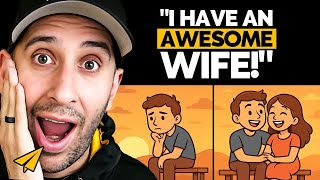
So I have an awesome wife.
I do have an awesome husband. So that's good. So I got that.
OK, so far so good. That is a great starting point. Yeah. Every day when I was in Morocco, I was posting like, everyone needs a Nina, like hashtag everyone needs a Nina. So a couple things. First off, I have an awesome team. I— so like, Nina is now part of the team. She manages a lot of the day-to-day. Um, and beyond Nina, we've got awesome managers and people who we've trained up. I think we grew. I don't think we— I don't think we had any major hiccups that I can think of, or if we did, they just never got to me. So I guess that's a good thing when I'm away. Process systems, and we can dive in on any area of the business if you like around that. Content-wise, I got way ahead. So I knew even, even for this, like, I came back from— it was 3 weeks in Morocco and Spain. I came back and then I'm coming into this, and it was supposed to be my big filming day. So once a month I have a big filming day, and I said I'm not going to do that because I need to get ready for Mastermind. And so I even got ahead for this week so that I can just be here with you guys instead of having to stress out about making other videos. So that was way in advance with team. So on the content side, if I'm making videos, I'll let my team know, hey, you know, my once a month, I'm not going to be here. So we need to get like 2, 3 months in advance, which meant I needed to film a lot more than I usually do. So I took less meetings. I, you know, my CEO day, which is Friday, I would turn into an extra content day to help me get ahead. So we haven't missed an upload in 10 years, 12 years, I don't know, like every day posting content. Yeah, that doesn't just like happen by accident, right? Just, you know, systems and process. And I don't only film when I feel like filming. And so getting ahead has always been a key part of the content side and then building team and trusting team and process. But that's kind of a not great answer. So where do you want to dive in deeper?
Yeah, so batching content, that makes sense. Having great team, which takes time to build and skill set and hiring. And I guess really looking at client fulfillment. So you still have clients mastermind in that. How do you manage the weekly day-to-day client fulfillment? I guess it's partly team, but what do you do when, you know, normally those Thursdays, do you, is your recommendation you have one of your team members teach and provide value to your clients so that people don't miss you and say, hey, wait a minute, I'm in this program and Evan's off traveling the world? Which we don't, we don't, but I think the way that you've structured the client fulfillment aspect is such that the value is there. It's not in the hour-to-hour, it's over the extended, and it's many hands making light work. And I think it's maybe in how you're structuring what you do. So we have weekly calls, um, and I'm on 3 hours weekly. So I do a sales clinic with our health coaches to help them with those on the Mondays, and then Wednesdays I do 2 hours with our clients and they ask questions. I provide some new teaching, and they really love it, and they, and they like it. And I do have success coaches who coach them one-on-one, but like, if I'm there, they do miss me. And yet, I mean, if you're not there, they miss you. Sorry. Yeah, yeah, sorry. If I'm not there, you're like, wait a minute, take all the time off you want.
What's the problem, Shawna? It sounds like you got to figure it out.
And it's probably It's probably a mindset issue of mine. Self-professed workaholic. My dad was a workaholic. It's the way he showed love by— was by working and providing for the family. I've continued that on both as a doctor and then now as a mentor to these health coaches. It's my natural default is just like pour all my passion in to work. And you're passionate about what you do and it is you know, who you are as well. But finding a way to have that time off. So does Nina book it? Do you guys decide once a year you're like, here's where we're going to do it? Like January, we know where we're going for the rest of the year or just spur of the moment. They got a seat sale. Like, how did— like, just how does that logistically happen? Because I block off some times and then something happens like there's some kind of thing that comes up that requires my attention.
Okay, that's great. Again, that's more clarity to hopefully help. The Morocco thing, there was a wedding. So someone on my team had a wedding in Spain, south of Spain. I got invited to the wedding. Okay. Going to Spain and coming back from Canada, like you're gonna go to Spain for 2 days and come back, feels like a waste of time. So you're gonna go to Spain, you might as well go for a little bit longer. But south of Spain didn't feel like there was a ton to do. Nina and I are not sit on the beach kind of people. And so we said, huh, it's just across from Morocco. Why don't we spend some time in Morocco. Then if you're going to Morocco, you can't just go to Morocco for a week, you know, you need to see things. So that's how it all— it's not as maybe structured or organized, but it started with, I'm going to this wedding, I have to go to like— I guess I don't have to go, but I want to go to this wedding, but logistically it doesn't make sense just to go for 2 days and come back. And so let's, let's go see these other cities. Nina and I have a list of every city in the world with a million-plus people, and we slowly check off the list. So Morocco has 5 cities with a million-plus people. So we did those 5 cities plus went to the Sahara Desert. So that's how we picked like where we go. I'm not too involved in actual client fulfillment, right? So the day-to-day is our growth strategist, our account managers, and I— most of my role is coaching them. And so I'm lucky we have a great team. There's very rarely like problems. I get the more weird cases of like, huh, you know, Dr. Sean has been really difficult because of my— what should I do? But most of the problems are the same problems. Like, most of the problems they already know how to handle. I don't have to— I'm not really super involved. But we have 4 people on fulfillment, plus Yelena, who does like admin stuff, plus Nina, plus Lipika. So like, we have 4 account managers plus like 3 support staff around that stuff. So most stuff doesn't get to me unless there's a weird situation, which I love anyway because those are my favorite. I also wasn't like completely off work, right? I checked in, right, every day. You know, we had one day at the beach with the, with the couple, and 15 minutes in at the beach and he was like, I'm bored. What am I like, what am I gonna do?
Yeah, yeah.
So I, I like, uh, checking in. I like work, but it wasn't like we mostly spent time in the city, um, checking out different things. My biggest part in client fulfillment is being live for Movie Makers and then Brandlytics. That one happened to be lucky because there were 5 Thursdays in the month, and yes, that fell over the 5th Thursday. So that was one thing that I didn't do. Like, on the 5th Thursday we don't have anything, so that we can sometimes plan around that. That's not always like the make or break, but if it's there, it works.
It works.
It's a nice, yeah, convenient time. Like, Movie Makers, we didn't miss anything, right? I left So that planning, I left on the Friday after Movie Makers, and I got back the Wednesday night before Movie Makers.
Yeah, that's kind of what inspired the question, because somehow you managed to seamlessly take this trip to Morocco.
I was gone for 3 weeks.
Yeah, but it didn't really miss a beat.
I was a little jet-lagged. But I guess to that point, Thursday is my— now, as we're talking, I realize, oh, we did plan a little better. You know, it's like, I don't know, we just did it. Thursday's my public-facing day. So that's— Movermakers are starting, and interviews and podcasts, and just nonstop all day long on Thursdays. That Thursday when I came back, the only thing I had to do was Movermakers. I told my assistant, no podcasts, no interviews, nothing. I'm only going to— I need to be on for 85 minutes, Movermakers, because I didn't know how jet-lagged I'd be, if I'd be sick, if whatever. And to show up for 85 minutes, we've all— done things where you show up for an hour and a half and you like put your best face on and go. Uh, I figured I could do that and then die if I needed to.
Yeah, yeah.
But the Thursday, Friday, I had nothing booked. Now it ended up being great, like I slept well, I had, oh, I have all this extra time, what am I going to do? But I had planned for that in advance, that any podcast requests or whatever were just put later out, or I just didn't do them, which is fine too. So we booked the travel around, we had Mover Makers, I left the next day The 5th Thursday was nothing. So then I came back the day before Movermakers and ideally would have had more time to sleep, but just cancel the rest of the day and I only have to show up for 80, 85 minutes.
Yeah.
And we did it as a Q&A session instead of a presentation. It's like we're moving into thought leadership. How can I bring the most value? Let's do it as a Q&A to set us up for thought leadership. What do you guys have? And then that ended up being the session.
Yeah, so batching, delegating, building a team, taking advantage of natural opportunities like, you know, the 50% things.
And if you need to have a sub, like—
Yeah, and then sub in.
That's happened, not very often, but what's a sub that makes the most sense? So, for example, when we do gear, I'm not the gear guy. I don't know anything about gear. What light should you use? I don't know. You know, like, I ask my team, what light should we have? What microphone is this? I have no idea. Like, I'm not paying attention. Is it valuable? Yes. I'm just not the person to lead the gear session. So I might have Justin. Hey, Justin, you want to lead the gear session? I would do that on a week where if I'm going to be away, I could have Justin come in. And it's better to hear from Justin than me anyway, because I don't even know how to answer your questions. So are there natural gaps that then make sense for somebody else to lead the session versus you? Because it's important to your clients, but it's not your area of expertise.
Perfect. Yeah, we've got that.
Nick's come in and done like some final stuff in the past. And so occasionally we have guests. If it's— as long as it's not every time, it's nice to have a little variety, you know. It's— we've never had— I can't— or it's not gotten any, but I don't think we've had complaints to say, hey, like, where is Evan?
Right.
But I'm also pretty present. Present for the sessions, right?
So I also had another question, just switching gears a little bit, about hooks.
Hooks?
Hooks.
Oh, hooks.
Hooks. This is it. This is it. Travel, fucking, where's Nina?
It's definitely Nina question.
So this is in your lane here now. So, you know, the hook is the most important thing. If you don't have a great hook, they don't watch your valuable content that you're putting out there. So that's really important. You teach a really great formula for that. So one of the things I know when I'm consuming content is when I'm quickly looking at it, I'm ascertaining with the limited time that everybody has available, they're like, why should I listen to this person? And so that's where the content matters. But also I always like to consider the source. You know, who's saying this? Have they actually done this? Do they know what they're talking about? So how— what is the best way to include— because I know generally we're not introducing ourselves, we're not doing a bio, like those kind of things. So what is the best way to create, uh, proof, social proof that you know what you're talking about? Because, you know, we, we do— we have taken many health coaches from zero income and zero impact and walk them all the way to six, multiple six. We even have a seven-figure health coach. But most people out there coming across my YouTube channel are like, who the heck is this person? They have no idea. So is there a great way to— now, when I'm sharing a case study, when I'm sharing a story to explain something in the video, then they'll know. But right up front, they're never going to get there unless I've hooked them right at the beginning as to why should they listen. And what's the best way to provide? Proof or credibility quickly in that first 60 seconds? Or how would you get around it when you're like, essentially most of us are unknown to— hopefully we're talking to people who aren't already our followers.
Yeah, yeah, yeah, yeah. If you're only talking to your followers, you're not growing.
Right.
On the channel setup, it's gonna be what's in your banner.
Okay.
So when I look at your banner, does it look authoritative? But most consumption will come from your channel homepage anyway. But it's a point where like, huh, They said something, who is this person? They go check out your channel homepage. Your visuals speak for you. So when I first press play, I'm judging what you're saying, but I'm also judging, you know, what I'm looking at. Not that you need to have the most professional studio, but if you're an author, having your book behind you, right? You have your two books, right? She's got—
I have my books here, actually. I just happen to have them right here.
Look at this, here's my book, right?
And they are— there is a— there are behind you on the background.
They're always there, right? So like now I know— Yes, that's true. I would assume that you're an author because you have your books there, right? So the visual of what it looks like when you're there, again, it doesn't have to be the most fancy or professional, but just does it speak to who you are? How you show up is going to be— how confidently you explain your powerful opinion at the start really, really matters. Like, oh, this person really knows what they're talking about versus just faking it, which is why it's so important to have energy and emotion in what you're saying. And then in the story, so powerful opinion, context, sentence, raise the stakes, story. Story, you talk about who you've helped. So one of our clients, we helped them go from, you know, living on welfare to now being a six-figure health coach, or like whatever, working at Walmart. I was gonna say Kmart. It's Kmart.
It used to be.
Is that a Canadian thing?
I don't think it's a thing anymore.
No, okay. Working at Walmart to now being a 6-figure health coach, right? Like, oh, she does that. So in your story, you can bring in some of the things that you're doing. Because if you lead a video, hi, I'm Dr. Shanna and I've won these awards and I've—
Nobody cares.
It doesn't matter.
Yeah. Right?
You got to tell me something first. It just hooks people in more with your powerful opinion. So it's more about— How you show up, the energy that you're bringing, and like, are you speaking confidently about the thing? Then combine it with whatever visual is behind you, and then layer on the stories that you're going to be sharing that supports your powerful opinion. That happens in the first minute. Like, powerful opinion, context, sentence, basis, takes is quick. Having your stories in next, right? So sharing a story of one of your clients who you're helping, who you're supportive. Now, that thought leadership template is not the only way to do it. You can experiment, you can play with it. It's just an easy replicatable way that can get results. If you want to play with something else, play with something different, cool. What I pay attention to is the retention curve. That's what we're optimizing for, right? Like, are people still watching? Yes, because most of the people who I've never seen it where you're— people who have that bumper at the beginning, it's like a channel trailer, like you're walking on stage and you're accepting your award and like people feel like you have to have this. In every single case, removing that bumper increased retention. And so people feel like, oh, but I need to show how successful I am and how good I am. People tune out when that happens. If you want to play with other formats, cool, you can, but like the retention curve is what will matter the most.
Right, data-driven, see what works.
And after a minute, it almost doesn't matter.
That's helpful for you to say that because I'm really good at following instructions, but almost to a fault. So the permission to explore, find my groove, find my languaging, that's helpful while still respecting the essence and the core core of what we're actually talking about.
It's figuring out though too, like, what's the biggest constraint? It's probably not the template for the video, right? Unless you're really struggling with it. Unless you're like, I don't have a powerful opinion, I don't know how to have energy on camera, I don't— and we— you, you're just some weird outlier and we have to figure out a different path. The, the template is probably not the biggest constraint. It might be, but probably not.
Probably not. But I was thinking what I could do is in the powerful opinion, I could tuck in, you know, one of the things that, or, you know, wouldn't say one of the things that would be more powerful in my opinion about that.
Yeah, exactly.
But somewhere having like having coached like the number one mistake client health coaches make as they're trying to build a successful practice. Is blank, and then, you know, having coached people through this, this is the thing that 90% of people stumble over, something like that. Like, tuck it in there so that it's that they know that I work with people, or gets too wordy?
I wouldn't default to it.
Okay.
I'm not a huge fan. Okay. If you want to play with it, you give it a shot.
Study line, like a one-liner, or not?
If you say like, the number one reason health coaches fail is because of blank, Yeah. And you're saying it with authority.
Yeah.
Well, okay, so you— I'm already assuming that you help health coaches.
Somehow I know that.
And then you only have 2 more sentences before we get to your story. And so you say, when you get to the story, it's like, so having helped 600 health coaches build, or whatever it is, build their practices up, here's what I found.
Yeah.
Sally, for example, whatever, right? And you share a story.
Okay, so putting that little bit in there having helped this many people with this is here's what I found. That kind of is essentially coming in around the 60-second mark as we get into the story.
Sooner. No, the story comes up before 60 seconds.
Yeah. Okay, okay, that sounds good. Yeah, okay. Yeah, I think that one line like that might be helpful to just say, because I know I look at that and somebody's showing you with this marketing that works or this sales thing, I'm like, have they actually done it or are they just regurgitating what they hear out there? And I filter that through because there's lots of people talking, but not everybody knows what they're talking about.
It's kind of because like a lot of the what people— there's a lot of fake proof too.
Yeah, exactly.
And even if they say they've done something, it doesn't mean that they've actually done it and that you actually believe them.
So that's when you really get into the meat of what you're saying. It'll be obvious whether you know or you don't know.
Right, so it's even how you're saying it and how confident you are expressing your opinions in it. I could fudge my way through a cooking answer, but you're gonna know, you know.
You don't know.
This guy doesn't know what he's talking about. I don't know, you didn't ask him for a cold-ass vacation either. Cilantro, and you put it here, like, oh my God, it's gonna be terrible. Even the perfect script, I wouldn't even know how to pronounce the word. It would be off. There's a lot of ways to fake credibility and stories, but if the The most important thing that people are usually paying attention to is not even logical. It's the, do I trust this person? Like, does it come off? Are they passing the sniff test, right? It's like, it doesn't— this person doesn't feel— there's something scammy about them. It doesn't feel right, which then might lead to a deeper dive. So you give the video a little bit more time, which then means just bring more value in the video, which then leads them to say, huh, do I click on their homepage? Do I click back on the channel page? So the most important thing is you showing up. You showing up. So if you feel like that's gonna help you be more confident, and again, you're great on camera, it's not, Shawna is not good on camera, but if you feel you're gonna be more authoritative because you said that, the impact is more because you felt that and so you will be, more than what you actually said on camera.
[Speaker] That makes sense, yeah, that makes sense. The line in how much personal stuff to share. And I suppose it depends whether we're talking YouTube or Instagram, for example. And so, on the one hand, you know, does it distract from the core message because this is what this is about and this is what this platform is all about and we've niched down, and so sharing some other stuff is a distraction? Or does it increase the likability, relatability factor? So how do you determine how much of— of course, when you're doing the videos, your personality shines through, especially in the longer videos. You really get to see who someone really is. But as far as how do you know what to post? We just had a live retreat for our clients and it was in Kelowna and we had boat cruises and we had people on stage and we did speaker training and it was really awesome. And so that I felt like, okay, I'm gonna also share that on my Instagram, but I'm not putting anything like that on my YouTube channel. Because the YouTube channel, it's— I really want it to be educational, and this other was not necessarily educational. So do we do that? But then—
I would just say 80/20 it.
80/20. So tell me more.
Like, most of the content should be your main strategy. And you play with the final 20. Like, posting one video of you at Kelowna with your team having fun and clients and dancing on the boat and whatever is not going to tank your YouTube channel. Okay. You know, I wouldn't share it out of strategy, like, you know what, if I post this, I'm going to be more relatable and I'm going to be more authentic, right? Yeah, because then it's like you're manufacturing something that isn't it. But having the freedom and flexibility, like, what you don't want to do is have your any content strategy, feel like you're super boxed in, and then it becomes a job when you start to not like it. So if you're like, oh, I can't ever post something like this to Instagram, to YouTube, to whatever, you start not liking content, and then it starts to detract from everything. Now, we don't want it to be, you're basically just a Dr. Shana vlog, and every morning you get out of your shower and you're like, hey guys, so, uh, you know, today I'm having my coffee, and I give you a different channel, right? Yeah, but if it's, you know, 10 to 20%, you're experimenting, you're having fun, you're playing with it, you're, you know, showing off clients, you're whatever, you never know. Maybe that works. Maybe like that video doesn't get the most views, but some of the people see it that then sign up, become clients, or somebody who's a past client wants to come back. Like, there's benefit to doing it for the personal connection, but I think the biggest benefit is just the you still liking it. Like, how do I still make content on YouTube 16 years later or whatever, because I'm not super rigid or boxed into like only has to be one way, right? So most of my content follows a structure and series that we know works, and then the final 10-20% can be whatever. Play— like, I just launched an AI music series that's on our channel, and I made an album of 20-something AI songs around Believe, right?
Okay.
And we're releasing those out.
Okay.
And so far they're doing pretty well, but it could have completely tanked too. But it's a fun project. I like injecting fun projects, otherwise you just won't continue.
Yeah, that makes sense. And because I didn't see, for example, like I'll see your Morocco videos on your Instagram, but it'll be on YouTube. It will.
Yeah, it'll just be— it's a long— I spent a ton of time. I spent the most time on this vlog YouTube video that I've ever spent on any Any video? It'll go up on the channel.
Okay, because I was like, okay, I can't put anything like that on my channel.
No, it'll go up. The Morocco one was a pretty, you know, fun trip, but in general my day-to-day life is pretty boring, you know. It's like I'm at my desk on my trampoline working, you know, that's most of my day. So I don't have a lot of activity happening every day that fits for a vlog kind of video, but it will. If you go back on our channel, you'll see a whole bunch of travel videos in the past. But it should be fun. But if you don't like traveling, if you don't like making videos while you travel—
That's why the first question.
If you don't like making content while you travel, then don't worry about it either.
Yeah.
Right?
Well, I know that there's lots of great potential opportunities that for almost a vlog opportunity, or I walk daily, so I used to back in the day—
Lean in and have fun on it. Bring my phone up and just start The top 10 series that I did on the channel, right? The top 10, like, rules from people. That was a one-off that I did just because of my friend Mark Drager, and he was, he was attacking somebody, so I just made a top 10 on that person. And then it became this iconic series that I've done for years as a one-off, right? So allow yourself the flexibility to play and have fun in the one-offs, and if it turns into something cool, that might be a regular series. Maybe Dr. Shana Walking in the Park, like, becomes this whole thing and is awesome. Maybe people like it, but you don't want to do it anymore, so you kill it. Cool. Or maybe this is this weekly thing that happens forever. Awesome. It might tank, and then you never do it again. So you have 80% kind of structured, and team can help identify topics and all that. But we know that this content's going out. That's the core. And then the permission to play with the final 10%, 20%. You want to do a park video? Do it. You want to do a travel video? Do it. You want to share your Kelowna fun? Do it. And if it works, awesome, that might be a whole series. If it tanks, awesome, it doesn't matter. It's not gonna kill your whole channel. And it was fun to put up that one video. Like, you, I think, should— for all content, because content's a lot of work— you should have fun in making the content too. And it's okay if it doesn't do as well.
Do you make your thumbnail very different for that type of a video that's like a one-off? Or do you keep them similar?
We mostly stick to the same style. We'll sometimes switch it up. Like the music ones are very different. But it's less, again, the reason to do that is more fun than strategy. It's a one-off. If it does well, cool. If it doesn't do well, it's fine.
But you'd still keep same branding, same look to the thumbnails. It's not like it's, even though it's not your regular type of content. —still keep the same kind of thumbnail? Mostly. Yeah. Yeah.
But again, like, if you want to do something completely different, you want to draw, you want to hand sketch the thumbnail, if it's part of the 20%, I don't care. Have fun, play with it. See, the same with the intro, like, have fun, play with it. If it works, cool, keep it. If it doesn't, then kill it. It's more like, what are we doing consistently? I'm less concerned about those one-off videos and more, is she getting most of her content up That's hidden in a demo.
Okay, one, one other question on that. As I'm growing this newer channel, I've been not putting anything else on as I've been cultivating this, really growing and fine-tuning our audience, and it's been working. Your strategy is working. It's working. We're growing faster. Same videos, more views with this particular audience. As I'm growing, it's a quality versus a quantity. I know it's both, But, you know, I remember, I actually remember watching Gary Vee get started with his Wine Library, and the thing that I noticed is he did a video a day for 3 years, and I saw someone else do that, and then just whoosh, so it's like 1,000 videos, and then they just took off. So daily, not all that, and one of the best ways to get great quality is to do quantity, but in the limited time as you're also growing a business and managing clients and so on, is it better to just hammer out the quantity or just focus on quality as long as it's at least— Right now we're consistently once a week, that's great, and I've got a stockpile because I know my business has some things, and I'm trying to get to 2 and then 3 and then 5 times a week. I mean, eventually we'll get there, but is it more important if I really want to grow this for client acquisition, the purpose of the channel is client acq— not just any old people watching, is it more important to go quicker to get the quantity or really perfect the quality?
Well, like, what is quality? Because in this space, it's like quality of thought. Okay. So can you share something valuable? How long does it take you to prep for a video and get a message out versus editing and B-roll and thumbnails and everything else, because that also can scale with team. But people are coming because of the information. If your information sucked, then it doesn't matter what kind of editing you have. It's more about how long does it take you to get ready to make a video, and how much time do you have available every week, month, to be able to do that. Yeah, because eventually, as you build systems and scale, you building the brand becomes the most important thing. More than taking sales calls, more than delivery, more than almost anything else. So a disproportionate time, percentage of time goes more and more to building the brand because that becomes the biggest. If YouTube was the number one way you were making money, you'd spend more time on YouTube. So it's then just quality. I think of more how much time do you have allocated to it and can you get better/faster? At making the content, which maybe there's a limit of obviously how much time you can spend each week doing it. Are there other things you're already doing that we can leverage? Like if you're already taking client calls or whatever and there's a way to incorporate some of that content? Or can you lower the threshold for what makes it in as a video because you're, you're good on the spot and can share a powerful opinion?
Most of my weekly content for my clients would be really great content for— I just did 2 hours with my clients just now, just before I came here. And it's really good stuff. I mean, it really is. And so I feed off of them. I do better when I'm responding to their questions. Their questions pull out the great answers versus on the spot thinking, I wonder what people want to know. It's hard— it's harder to do that. So that kind of dynamic Works really well.
That's what we're doing right now. Yeah, so set that up. Yeah, so when you do your events, you could have a day zero like this and you have your members come and you do content with them. You could do IG Lives like I've done, or riversides, whatever, with clients. If that's easy for you to make content, then do that. Set it up for you to have fun. Like, hopefully it's fun helping your clients too. Yeah, set it up for that. Um, if it's harder for you to come up with like the 8 ways of how to blank, then It can work as a strategy, but if you don't like it and it's not fun for you, you're less likely to stick to it, so then it's not gonna work.
Yeah, I think the bottleneck is making sure that it's consistent video editing quality. Like, I could just put some things out there, but—
I wouldn't care much about that.
Okay, so just go for more quantity rather than trying to make it all look—
You can ramp up your editing capabilities in team. Yeah. But the best reason to watch the video is because of the information that you're giving. They're not watching because of the editing. Yeah. Editing in thought leadership is not crazy. Right. If editing is a reason why they're watching videos, like, you need to get better.
Yeah. And it's not. No, it's just— but it's just as far as the logistics of just taking it from just a Q&A that might be great content but a little messy or raw, if you will. As long as the first minute—
maybe you throw a first minute on top, you set it up with something better. You'd have to have something super messy happen in the middle for people to drop off. Yeah, like the call would have to disconnect or the power goes out or whatever.
Yeah, yeah, yeah, that's really— that's a really great—
where can people find you?
People can find me at drshanna.com. D-R-S-H-A-U-N-N-A.com.
Let's go! And congratulations, you're one video closer to who you're meant to be. To watch me coach another entrepreneur, check the video right there next to me. I think you'll love it. Continue to believe, and I'll see you there. Dr. John is a highly skilled vascular surgeon who spent over 2 decades saving lives, but now he's stepping into a totally new arena, YouTube, to share his life-changing knowledge.
More from Evan


How the Biggest Mistake in History Created A Trillion-Dollar Empire | Sergey Brin



9 Machiavelli Principles That Force People To Respect You | Machiavellian Philosophy



The First 10 Words That Instantly Ruin A Sales Conversation | Vanessa Van Edwards

The Top 1% Mindset Behind The First $5 Trillion Company | Jensen Huang (Nvidia)

