This is HOW to Get Out of Poverty! | Viola Davis | Top 10 Rules
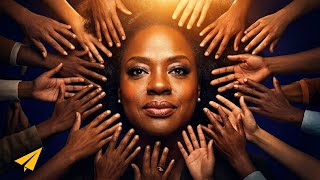
Viola Davis grew up in extreme poverty and racism, then built a career by refusing roles that compromised her dignity and treating acting as a craft. For Doubt, she wrote a 100-page character bible and studied for months. She ran barefoot in winter as a kid, a metaphor for competing with fewer resources.
Chapters
Because I didn't want to be like my, um, like my ancestors and everyone else. But I felt like my only two choices was to either make it or not. I didn't want to be a celebrity. I didn't want to be an entertainer. I wanted to be an artist. If it's gonna be too degrading and it's gonna be something that I can't live with, I can't do it.
She's an American producer and actress on stage, screen, and television. Her breakthrough film came in 2007 2008 with her role as a supporting actress in Doubt. In 2012, she was listed by Time as one of the 100 most influential people in the world. She's Viola Davis, and here's my take on her top 10 rules for success. Rule number 3 is my personal favorite, and make sure to stick around all the way to the end for some special bonus clips. Also, as Viola's talking, if she says something that's really meaningful to you, really resonates with you, please leave it in the comments below and put quotes around it so other people can be inspired. Inspired as well. Enjoy.
Because I was brought up in such challenging— such a challenging situation, I think that it required me to live a more examined life if I were to get out. I had to dream big. There was no room for failure. And so, therefore, I couldn't— I couldn't go the normal route. So I found myself, at a very young age, living that sort of life, because I didn't want to be like my— like my ancestors and everyone else who was like me. They were, you know, everyone was either alcoholics or they lived in poverty. They accepted their lot in life. And I just felt like I didn't want to live that way. And anybody who wants to kind of stray from the pack, I think, has to lead a more examined life. I did what I had to do in order to make the dream work. I made the commitment, knowing that it always wasn't going to be a smooth ride. But I felt like my only two choices was to either make it or not. Mm-hmm. And the not wasn't an option. So I paid whatever money I need to pay for the public transportation to get to acting school when I was 15. And I did whatever I had to do to get my undergraduate degree in theater. I did the work. And I knew that there was no skimping on the work. While in third grade, this kid was always teasing me. I won't mention his name, but he was always teasing me, calling me, "You nigger, you black nigger." It's just every single day. This is way, way back when. So one day I said, "I'm gonna get him." He was considered the fastest runner in Central Falls. And I said, "I'm gonna beat your butt. I'm gonna race you at recess. You're not the fastest runner in Central Falls. I'm the fastest runner in Central Falls." I probably flipped them the finger. You know, I was a vulgar kid too. You know, I could give it as much as I got it. So at recess, we decided to race and the whole school was involved. Everybody in the school heard about it and all the boys and some of the girls were on his side, just kind of, just screaming for him. And I had my 3 or 4 friends on my side. And we lived in such abject poverty. I remember that my, we wouldn't keep up to date with the shoes. So my shoes were maybe a size too small. And it was the dead of winter. And I could never, I couldn't walk in the shoes. I'd have to stop every 2 steps, take the shoes off, then put the shoes kind of back on and walk again. They hurt my feet so bad. And then my socks were so torn, the only top part of my socks were left. So I said, "How am I gonna race him at recess with these shoes?" So I said, "I'm gonna take my shoes off." take my socks off, I'm gonna take my shoes off in the dead of winter in the concrete. And I raced him. And I beat him. And I thought to myself, it's only been recently that I thought to myself that everybody was cheering and cheering and he was saying, "You didn't beat me, it was a tie. You didn't beat me." I said, "Yes I did, yes I did." And then I got in trouble with the teachers for having my shoes off. And, um, but nobody noticed that I didn't have any shoes on. And that's— it's a metaphor for life because nobody knows that when you come to the race, you don't come with the same set of tools as everyone else. That even when you come into the race with a deficit, you still have to run the same race. And that's the metaphor I use for my career. You know, that you can't be perceived even as the black actress who doesn't get the same kind of roles as the white actors. You gotta run the same race. You gotta give the same quality performances. You've gotta have the same standard of excellence. Even though people know that you're coming to the race in a deficit, that's just what life is about, you know? You know, that's all you have at the end of the day is your work and your integrity. At all costs. I don't care if it's 4 scenes in a movie, and I don't care what it is, that you have to infuse it with as much excellence as you can. So, when— absolutely, when I, you know, was able to work with Meryl Streep, it was a dream come true, and I knew that I had to step up my game. You know, you always get better when you work with people who are excellent. You almost never get better when you work with people who are not excellent. So when did that dream hit you? If it's hitting Genesis at 5, when did it hit you that you wanted to do this? Well, Cicely Tyson, "Autobiography of Miss Jane Pittman," when I was 7 years old. That was it. That was literally— I can absolutely mark it definitively in 128 Washington Street in a rat-infested— not mice-infested— rat-infested condemned apartment building with almost no plumbing. Every once in a while the plumbing would work. No phone. Lack of food. Most of the time no electricity. No hot water. Mm-hmm. But that one— it was summertime, I believe. And we had some electricity, because we ran the wires through the other apartment in an apartment. We had that one TV that you'd put the aluminum foil on the antenna. And I saw magic. I saw craft. And that's what I wanted to do. I want— I wanted to be an artist. Mm-hmm. I didn't want to be a celebrity. I didn't want to be an entertainer. I wanted to be an artist because that's what I saw. There's always— you always have to have a boundary. As an actor. For me, you are not gonna see me naked. I'm not gonna get naked. I've turned down a lot of money to get naked for this one television show that actually never made it, but, um, because I said, "I'm not gonna be able to live with this if this is kind of preserved in celluloid forever." But you always have to have a boundary of what you will or will not do. Now, your boundary is different from my boundary. Because it's like, you start, you weigh your choices, and for me, if it's gonna be too degrading, and it's gonna be something that I can't live with, I can't do it. I can't do it. And even, I can't even do a lot of roles where I cuss a lot. I had to do an audition where I had to really, really, I mean, but it was extraordinary amount of cussing. I just couldn't do it. And I don't feel like I'm that puritanical, but it's just too much for me. So if you don't have any boundaries, then you're gonna be a puppet. You know? And at the same time, you have to live with yourself at the end of the day. You know? That's something that actors— people, we do a lot because we want it so bad. So we're willing to do anything to get it. It's good to have boundaries. I think it's really good. I know that acting is not rocket science, but it is an art form. And what I find that as the time has gone on, that people have kind of forgotten that it's an art form. I had a guy who drove my husband and I somewhere, and he said that his brother was an acting coach, and more and more young people are coming to him and saying, "Just make me good enough to get the role." Yeah. And I didn't go in it for that. And I'm not trying to make myself look good either. But when I saw Cicely Tyson do Jane Pittman, I wanted to be a craftsperson. I really understood that it was a craft, that I wanted to transform in every role. I wanted to be brave. And now it's gotten harder to do that when— especially as your profile raises. It gets harder to do that. I mean, I don't mean to sound confusing. When you talk to most actors, they will tell you, "Oh, this is what I've always wanted to do. I love acting." And I do love acting, but it's like any commitment. You have periods where you fall out of love with it. And along your journey as an actor, there's so many moments you fall out of love with it. That you've— you wonder, you forget why you wanted to do it, and you wonder if this was really what you're meant to do. But basically it is a love, I guess. I think along the way I've questioned the commitment.
[Speaker:EVAN CARMICHAEL] So those moments of questioning come when you're doing work that's not as interesting, Or do they come even when you're doing particularly interesting stuff?
They come when I'm not doing things that are interesting. They come when I'm doing something interesting, I think, and it's not received well. They come when the business strangles my love of it. Those are the moments that it comes. And you forget why you love it. You do. And sometimes the memory lapse can last a long time, and then you think, okay, there's got to be something else that's gonna come in it that just comes in my life that's gonna wake me up in the morning. Um, that's the journey of an actor though. I, I guess that's what it is.
I think when anything you love becomes a job, mm-hmm, it hurts. It doesn't have that same— and, you know, when you— I mean, obviously, a lot of people just go through life working for the weekend, as the song says.
Yeah, exactly.
But if you have things that you're passionate about that you're working for, that, you know, reexamining it and finding it again is a challenge we all go through in whatever profession over and over and over again.
Yeah, and I guess that's what it is. I went through that long kind of diatribe, but really, it's—
No, it was a great diatribe.
But really, that's what it is. You question the passion. You know, it's like any commitment. You gotta work on the passion too. You gotta work to keep, bring the passion back.
With Doubt, which might be the first time that people in film necessarily really appreciated what you were doing. Your preparation for that was astronomical, amazing. So as the last pre-help question, if I can just ask you, just to show the kind of work that you're willing to do for even, I think it was 8 minutes of screen time, which was deservedly rewarded with an Oscar nomination. But I mean, that is not a ton to work with, and yet you made the most of it. How did you, what did you do to prepare for that one?
Well, it's based on a play, so I read the play. After I read the play, I said, "I don't even understand this woman. I don't know why this got all this attention. This woman wants to say, sacrifice her son and da da da da da. And I had all the kind of responses that you would have with character that you didn't understand. But it's being an actor, you have to do investigative work. You have to, you have to make sure that when people are in the audience, they understand you. And they ultimately feel something. And so I had to write a bio which ended up being over 100 pages. I talked to people who had seen the play because I was doing a play at the same time and never saw the play. I read the script probably, I don't know how many times. So I literally studied the script for 4 months before I finally got it. Like, I had the aha moment. And the aha moment is we always want to to feel that decisions are pretty. We always want to believe that decisions are easy, and sometimes they're a Sophie's Choice, you know? And sometimes a person's motivations are absolutely pure, but to the outside eye, they look very dysfunctional. And I probably, you know, had the aha moment 2 days before I even started filming. And I was really waiting for that aha moment, 'cause I said, "I'm gonna be opposite Meryl Streep, and she's gonna tear me a new a-hole, and I do not wanna look bad." So, but I had that aha moment. But I did my work with that. I can't emphasize that enough, you know? Because I never want anyone to dismiss my talent. Listen, I may get up on this screen, and there are times when I may stink. Because it's occupational hazard to not always be good. But I never want anyone to say that she's not an actress. I'm an artist. I consider myself to be an artist first and foremost. And when I was given Annalise Keating, I tell the story a lot that I saw the pilot and I was horrified because, you know, you got to look at yourself. With my lashes and my little chubby waist that I thought was very chubby waist. And I didn't look the way I thought I would look. I had an idea in my head when I thought of the adjectives, sexy, dynamic, mysterious. And I didn't see sexy, dynamic, mysterious. We did, but all right. But no, but no. No, but what I'm leading to is I said, "Why not?" And I think that that's where it all begins is that question of why not? Why can't I be sexy? I reject the notion in the past that dark-skinned women cannot be beautiful. I reject the fact that if I take my wig off and do a whole scene with my fro that somehow that that is taboo. I reject the fact that I have to be a size 2. I reject the fact that I have to be likable. I'd rather be interesting. Nobody asks, you know, Robert De Niro in Taxi Driver, James Gandolfini, or, you know, or Anthony Hopkins if they're, you know, were you concerned that you were likable in Silence of the Lambs? That somehow you— but somehow you have to reject all the things that people have told you you were. And I think it starts there. That's amazing. I don't think— you know, who can follow that? I don't think there's— on that note, I think—
Thank you guys so much for watching. I made this video because Sheryl Chapman asked me to. So if there's a famous entrepreneur that you want me to profile next, Leave it in the comments below and I'll see what I can do. I'd also love to know what was the most impactful part of this video for you. What lesson resonated the most with you and you're gonna carry that forward into your life and your business. Please leave it in the comments below. I'm gonna join in the discussion. I also wanna give a quick shout out to Davina Lyons. Thank you so much for picking up a copy of my book, Your One Word. It really, really, really means a lot to me. So thank you guys again for watching. I believe in you. I hope you continue to believe in yourself. And whatever your one word is. Much love.
I'll see you soon. In my mind, I see a line, and over that line I see green fields and lovely flowers and beautiful white women with their arms stretched out to me over that line. But I can't seem to get there no how. I can't seem to get over that line. That was Harriet Tubman in the 1800s. And let me tell you something. The only thing that separates women of color from anyone else is opportunity. You cannot win an Emmy for roles that are simply not there. So here's to all the writers, the awesome people that are Ben Sherwood, Paul Lee, Peter Nowak, Shonda Rhimes, people who have redefined what it means to be beautiful, to be sexy, to be a leading woman. To be Black. And to the Taraji P. Hensons, the Kerry Washingtons, the Halle Berrys, the Nicole Baharis, the Meagan Goods, to Gabrielle Union, thank you for taking us over that line. Thank you for the Television Academy. Thank you. What is there but a dream? You can't trade in your dream for another dream. I am so proud to be an actor, and I thank the Screen Actors Guild for this award. And I have a special, special note to the kids in Central Falls, Rhode Island, and Segway Institute of Learning in Central Falls, Rhode Island: to dream big and dream fierce. Thank you very much. So my question is, Senator Trucco, did you have Tricia Stanley murdered? Are you out of your mind? Your Honor, this has gone on long enough. Did you convince your tenant Linda Morelli to testify that Tricia Stanley was killed by her boyfriend David Allen? Way off base. I recommend you rein this in. Explain why your eviction suit against Miss Morelli was dropped despite her inability to pay rent. Is it because her lost rent money was nothing compared to the millions you made once Miss Stanley was out of your way? Answer the question, Senator. Why was Linda Morelli granted these concessions? Mr. Chief Justice, I have extended great deference to the court by showing up here today, but I am not going to put up with this any longer. I am sorry, Senator, if you do not have the time to answer for who bore the real cost of your development. Objection! Not just Tricia Stanley and her boyfriend David Allen, who served 21 years in prison. Your Honor, please! But the thousands who were displaced in the name of lining your pockets. The majority whom were poor, powerless, and didn't bear the color of skin desirable to your business interests. You tore a community apart You tore families apart. You destroyed lives, Senator. Admit it. Admit you killed Tricia Stanley and had my client David Allen set up for her murder. That is enough. You hear me? You say another word and I'll have no choice but to throw you in jail. We need a dozen more. Me and Abilene done asked everybody we know. 31 maids. They all too scared, think we crazy. Well, if we don't get more, we're not getting published. I gots plenty stories, Mosquito. Just write 'em down and invent the maid to say it. Y'all already making up the names, just make up the maids too. We're not gonna do that. That would be wrong. Don't give up on this, Miss Skeeter. It wouldn't be real. They killed my son. He fell carrying 2x4s at the mill. Truck run over him, crushed his lung. [SPEAKING CREOLE] That white foreman threw his body on back of a truck, drove to the colored hospital, dumped him there, and honked the horn. There was nothing they could do, so I brought my baby home. Laid him down on that sofa right there. He died right in front of me. He's just 24 years old, Miss Skeeter. Best part of a person's life. Anniversary of his death coming up every year, and I can't breathe. But to y'all, it's just another day at Bridge. You stop this. Everything I wrote, he wrote, everything he was gonna die with him.
More from Evan


How the Biggest Mistake in History Created A Trillion-Dollar Empire | Sergey Brin



9 Machiavelli Principles That Force People To Respect You | Machiavellian Philosophy



The First 10 Words That Instantly Ruin A Sales Conversation | Vanessa Van Edwards

The Top 1% Mindset Behind The First $5 Trillion Company | Jensen Huang (Nvidia)

