This is What Makes Jennifer Lawrence EXCEPTIONAL! | Jennifer Lawrence | Top 10 Rules
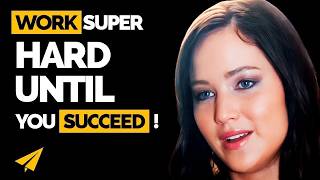
Jennifer Lawrence on picking scripts by instinct, working with directors like David Fincher, and rejecting Hollywood's body standards. She grew up on a Kentucky horse farm, started acting at 14, and moved to New York against her family's wishes to pursue the craft.
Chapters
'Cause I feel like everybody always treats actors like, as they probably should, emotional, like, landmines. Everybody's always like tiptoeing around 'cause you never know what's gonna set 'em off, and it's just a job like any other.
You look how you look and be comfortable. Like, what are you gonna do, be hungry every single day to make other people happy? That's just dumb. My childhood in my mind seems so lovely and just picturesque, and then I talk back about it, and I'm like, oh my God.
She's the highest-paid actress in the world, and her films have grossed over $5 billion. She had her breakthrough in 2008 2010 playing a poverty-stricken teenager in the independent film Winter's Bone. In 2013, she was listed in Time magazine's 100 Most Influential People in the World. She's Jennifer Lawrence, and here's my take on her top 10 rules for success. Rule number 1 is my personal favorite. Make sure to stick around all the way to the end for some special bonus clips. Also, as Jennifer's talking, if she says something that really resonates with you, please leave it in the comments below and put quotes around it so other people can be inspired. Inspired as well. Enjoy!
Hi, I'm Jennifer Lawrence. Have you been hiding under a rock? How would you not know that? I've always had this really gross, dangerous mentality of the— No consideration of failure. Just never even considering the thought of failing. Like, if I want something, I just go until I get it. And that doesn't always work, but—
The interesting thing for me to talk to you, and what makes you so fascinating, is just the talent that you see on the screen. But at the same time, there is a certain innocence. And yet a certain power, and it seems to me it's both artist and also business.
Oh, thank you.
But do you believe that? Am I right?
Yes, I've worked very hard to make that true, so thank you.
That it's both that.
Thank you, because without gaining some sort of control over the business, I lose some control over the creative. Which is most important. So I—
the more you control the business, the more you can give flower to the creative.
Exactly.
I'll give wings to the creative.
Yeah.
So I used to stay out of it. I don't care. I don't want to— I ain't an artist. I don't need it, you know. And but this is my business now, and it's my, you know, it is important. If my agent— that my agent always says I'm, I'm his only client that ever calls him back as soon as he— because it's my business and I respect my business.
Your agent says you're the only client that calls him back to say—
immediately. I mean, if I have a missed call, I call. I'm probably the only—
I return emails, I return phone calls because you want to know what the options there are.
Yes, I've worked really hard to build this and I want to continue building it, and it's my business, my personal business. So I don't understand how people do slack. I'm really annoying with, with how I choose things because it's really like a feeling, which just sounds stupid, but Sometimes I've read scripts before that have let— I just recently I read a script that I was sobbing. I've never been so moved by a story, and I thought it was the most beautiful, amazing story, and I just couldn't wait for this movie to get made so that the world could see it. But I just wasn't her. I wasn't the character, and I couldn't. And I also had an experience once where I read a script and I loved it, but I couldn't stop picturing Amanda Seyfried. And so I emailed the people and I was like, you gotta hire Amanda Seyfried for this. I couldn't stop picturing it. So a lot of it is the things that he said, you want to be a part of a good film and you want to make a good movie, but there's also a huge emotional component for me that I don't know how to describe it. It's just kind of sometimes something clicks and I feel like that person does in a weird way exist in me. And it sounds like stupid. Stupid thing to say, but, um, and sometimes it just doesn't. And sometimes I can read a character and absolutely love her, but I know that I could never— I'm not her or something. I don't know.
So how was the experience of being directed by David finally?
Oh, amazing.
Like a dream come true. Because when you're such a huge fan of somebody, you build it up so much in your head, you're always prepared to be let down. But he was just the nicest, warmest, sweetest, like, person in the entire world. Just has such a warm, good energy. And then he just directs in this— I've never worked that way. And that's such an incredible thing to do, is to kind of realize that there's no one or right way to make a movie or direct an actor.
So what did he do, something that you particularly liked that you haven't done?
Yeah, he would interrupt like any monologue, no matter what it was, no matter how serious.
He would go, "Oh, it's such bullshit. It's so bad. It's so bad." And I was just like, "All right, let's do it again." It's just like It's so funny to be able to like, because you can be honest like on this whole new level. That's why Bradley and I like don't want to stop working together because we can find, we can just be like, don't say that, don't wear that, what are you doing? Like just boss each other around. Yeah, I like him not wasting time and just like cutting the bullshit and just getting real. And because I feel like everybody always treats actors like, as they probably should, emotional like landmines. Everybody's always like tiptoeing around because you never know what's going to set them off. And it's just a job like any other. Like sometimes you're going to be good and sometimes you're going to be bad. Like just, I like when someone is like, "That was bad.
Do it again." So when he's saying that, he's not just saying it about— he's saying it mostly about you guys, not about his script or—
No, it's never about his script.
It's always about our performance.
You just missed the mark.
Yeah, I know. It'll just be like, "You were really bad." The scariest part of my job is the gamble of reading a script. Which one do you do? Who makes it? You never know. You can read an amazing script and hire a director who seems fantastic and an amazing co-star, and you can be on set and be completely out of control and watch it either fall apart or you can love it. And then audiences don't respond, you know, and then there's— and there are certain— there is planning of a year, you know, if you're going to have this movie come out, what follows that, and then what, you know, and that's the most stressful part of my job because it is a gamble. But it's important to me that I do make those decisions. I don't want an agent's career or a lawyer's career. I need advice. I have an amazing agent, and I really respect his opinion, but I would never do— it's all— my entire career is dictated by a feeling, and I've gone through great lengths to try to make sure that it stays that way. I've shed big parts of my team because I don't want more people to say no to.
Trust your gut.
I do, and sometimes I'm wrong.
And when you're wrong, what, what do you think happened?
Everything's fine. It happens in business. There's ups and downs. I would much rather blame myself though than go, I shouldn't have listened to that person. At least I go, well, you learned.
Yeah, you know why I made the choice, then it turned out to be the wrong choice.
Yeah, but when I just started and I had no idea what I was doing, I didn't know what else to do. I didn't know how to act. I just knew how to talk. And I think once I, I started understanding, I was like, well, I don't really want to learn how to act. I just want to keep learning how to talk. And I've always just been such a people studier that I think that for me, the best schooling I could have ever gotten was watching and listening the world— to the world. I mean, just watching people talk, watching people do different things. So many of the things that I do on screen are things that I've seen other people do that I thought were interesting. You know, like funny things with people's mouths, or when they're upset, the things they do with their hands. Like this one time, my friend was crying and she was so upset she put her hands up and she didn't know what to do with them, and they were just shaking. And I was comforting her, but at the same time I was like, that's kind of cool. So, yeah, I know, I was like, what did you do right there? So I had an emotional scene at the poker house, and almost every time I cried, I did that with my hands. And I don't know, I just pick up from people.
Having experienced the body image criticism in Hollywood, what is your advice to young girls dealing with the same treatment from their peers and response to those who judge others based on appearances?
Well, screw those people. No, I mean— oh, thanks. Yeah, I mean, it's something that everybody experiences. You know, I experienced it in school before I was famous. It's just the world has a certain idea of, you know, we see this airbrushed perfect model, and then if you don't look like that, you're— and it's just too easy for people, you know, and then I've got a million ideas coming at the same time, but You just have to look past it. You look how you look and be comfortable. Like, what are you gonna do, be hungry every single day to make other people happy? That's just dumb. And, you know, there's shows like The Fashion Police and things like that are just showing these generations of young people to judge people based on things that, you know, they put values and all the things that are wrong and that it's okay to just point at people and call them ugly and call them fat and And they call it fun and welcome to the real world. And it's like, that shouldn't be the real world. It's gonna keep being the real world if we keep it that way. It's not until we stop treating each other like that and just stop calling each other fat and stop calling, you know, with these unrealistic expectations for women. It's disappointing that the media keeps it alive and fuels that fire. It's something that really bothers me. Because I love to eat.
What does it take to be a great actress? Because that performance in your movie is a really great performance, I think, by any yardstick.
What does she have, Jennifer, that takes her to that kind of level?
There's— I think there's a soulfulness that is immediately there. It's— it's— you don't— you're not— it's right there in her eyes and in her face and in her— the way she talks. I don't know how to express it except to point to her performance. I mean, she has There's a soulfulness that comes from her that— and there's a— I'm going to want to embarrass her or sound— I just think she's— people, we were concerned she was too young for the role, and I said she almost has a timeless quality to her, which I do feel. I feel like sometimes she seems like she's 18, sometimes she seems like she's 40. And not only that, a realness. There's a lack of preciousness. There's not a frame around what she's doing. It's raw and it's real, and it comes from part of her soul. She just channels it right out there, and she's not, she's not afraid to jump in and do it any number of different ways. And she'll tell— she has very good instincts. She'll tell you when she feels something is false and when she'd like to find another way to do it. But it's a great gift to a director to, to have an actor who has so much emotion readily available on their face. That's authentic emotion. It's from, it's from her, and it's a part of her. And I hope I don't You know, I just don't know how— it's a blessing to have someone channel that.
And she's already created a kind of legacy to be bold in your life. There was a girl she met on the first Hunger Games, a burn survivor who had scars all over her body.
She said, "I love my body because I'm the girl on fire." And it made her feel strong and brave. And I just started crying because it was— she gave— me such a gift, and I'm just acting, but it made me feel like if a character or a story can make somebody change their perception on how they feel about themselves, then that is beautiful.
For a generation of tiny fans, one message: believe in yourself.
I grew up on a horse farm, so I rode a lot of horses. Which I hear you like horses.
Yeah, I do.
I like horses.
I hear you hate horses. What?
What?
No.
Hey, are you drunk?
No, I just— it would have been a very weird thing to hate horses.
No, I don't hate them. They're so likable. I like them. Yeah, but have you ever— you ride then, right?
Yeah, I do.
Have you ever fallen off or been thrown?
Yeah, because my parents were cheap, so they never bought trained horses. So it was just kind of— I have a deformed tailbone, actually, from being thrown off of a horse.
You know, I'd heard that. But now, no, wait a minute. You're telling me that your parents bought wild, unbroken stallions because they were cheaper and let the kids loose on them?
Yeah, they were busy. They had more things to worry about.
Of course. So then you had to break your own horse?
Yeah, or my own tailbone.
Now, in, uh, were you tossed? Is that— or kicked?
Everything. At one point, I horse was running into a barn, like an abandoned barn, so I had to just jump ship and drop and roll. That was the deformed elbow.
Now, do they— in Kentucky, is it— do they ride Western or English?
I sound like such a redneck. I didn't really ride with a saddle. If we did, we had English and Western saddles, but my mom said that that was for the people who like board their horses there, so I wasn't allowed to use any of that. So I just kind of hopped on and went for it.
Good idea.
Yeah.
Did anybody from the county ever come out to the house, talk to Mom and Dad about—
I'm getting—
I'm going to get my parents arrested. My childhood in my mind seems so lovely and just picturesque, and then I talk back about it, I'm like, oh my God, you kids stay away from them saddles now.
Get out there and break them broncs.
That's for the rich folk. Yeah, leather is for rich people. My goodness. Yeah.
Thank you guys so much for watching. I made this video because MrPlaythroughs101 asked me to. So if there's a famous entrepreneur that you want me to profile next, leave it down in the comments below and I'll see what I can do. I'd also love to know what did you take from this video? What did Jennifer say that had the biggest impact on you that you're going to make an immediate change to your business or your life? Leave it in the comments. I'm going to join in the conversation. I also want to give a quick shout out to Kemo Todaho. Thank you Thank you so much for picking up a copy of my book, Your One Word, and taking that awesome picture with the Eiffel Tower. I really, really, really appreciate it. So thank you guys again for watching. I believe in you. I hope you continue to believe in yourself and whatever your one word is. Much love. I'll see you soon.
Yeah, I mean, I was very fortunate. I started working— I started trying to work at 14, and I got on a sitcom when I was 16. I dealt with a lot of nos, mostly personal nos within my family. It's hard for a 14-year-old to say, I'm leaving Kentucky, I'm moving to New York. But I knew, I felt so strongly, it feels insane to be a teenager and know, I knew that it was the right thing to do. I knew that it was going to work out. Were they supportive? Well, no, I wouldn't be supportive of my teenager who's like, I'm moving to New York. They thought I was gonna get killed. I'm surprised I didn't get killed. But it was like this fire and also this, like, I just knew it. So I eventually saved up babysitting money and went and did it.
So what was the first time you felt really challenged to come up with something that was that much harder to do for you?
What do you mean?
Well, I mean, it seems like something like Burning Bed, for instance, it's a really tough role. That's not a, you know, I came off, I found my family in the street of New York and told me to be an actress and here I am.
Yeah.
Or was it?
I mean, was it just that natural to you or did—
It was. I think, I think it actually helped me because I didn't really go to any classes or theater schools or anything like that, so I didn't really know how to act. I just knew how to talk. And then I just knew, I don't know, I think I was able to build my instincts better and I learned from a lot of my mistakes. I can look back on things now and be like, well, at least you learned from that. I don't know. I think it was— it's so hard for me to answer because I haven't thought about it as much as you guys have. That's probably true.
More from Evan


How the Biggest Mistake in History Created A Trillion-Dollar Empire | Sergey Brin



9 Machiavelli Principles That Force People To Respect You | Machiavellian Philosophy



The First 10 Words That Instantly Ruin A Sales Conversation | Vanessa Van Edwards

The Top 1% Mindset Behind The First $5 Trillion Company | Jensen Huang (Nvidia)

