THIS is What Makes Michael Phelps EXTRAORDINARY | Top 10 Rules for Success
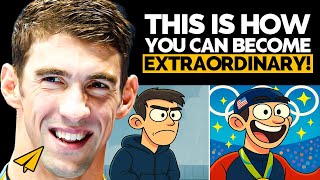
Michael Phelps trained seven days a week, adding 52 extra practices yearly to build his edge. Coach Bob Bowman pushed year-round pool work. Phelps credits mental strength, pushing through pain and fear, as what separates great athletes from the best. He returned to compete in a fifth Olympics after losing passion post-London.
Chapters
Whitney was on a national team with people I looked up to, and, you know, she would always come back with like autographs and stuff, and I was like, I want to do that.
I'm getting 52 more practices than everybody else is, and that's going to make that little or big difference in the end.
You know, if you want to do something and you want it that bad, you'll make sacrifices.
You know, the people before me set the bar so high, and I was a little kid that wasn't afraid to dream as big as I could.
He's an American competitive swimmer and the most decorated Olympian athlete of all time. He also holds the all-time record for Olympic gold medals. His international titles and record-breaking performances has earned him the title of World Swimmer of the Year 7 times. He's Michael Phelps, and here's my take on his top 10 rules for success. Rule number 3 is my personal favorite, and I'd love to know which one you guys like the best.
I had two older sisters that I kind of looked up to, and for them having the chance to travel nationally and internationally, you know, Whitney was on a national team with people I looked up to, and, you know, she would always come back with like autographs and stuff, and I was like, I want to do that. I want to be on those teams. I want to travel the world. And at that point I was just like, you know, I want to be an Olympic gold medalist. I want to break a world record, and I want to be a professional athlete. And those goals that I thought about every single day kept me coming week after week and year after year until I was able to accomplish them.
What struck us most about Michael when we met him all those years ago was his dedication to the long hours in the pool.
It's one reason why we train 7 days a week, why we train on Christmas, why we train on Thanksgiving, 365 days a year. There aren't many clubs that train 7 days a week, so that gives you one extra set training session every single week. Where you can pick something up. So, I mean, I'm getting 52 more practices than everybody else is, and that's kind of make that little or big difference in the end.
What do you feel separates good athletes from the best athletes?
I think it comes back to what I was saying earlier about— I mean, I think it's a lot of it is mental. You know, if you want to do something and you want it that bad, you'll make sacrifices. And, you know, growing up, for me as a kid, I made a lot of sacrifices that I didn't see that they were a big deal. And I don't see them— I don't think of them as being a big deal right now. You know, there were Saturdays or Fridays where, you know, I'd give up going to a dance or hanging out with my friends because I had workout the next day. But those things that I gave up you know, were things that I wanted to, to help me get to my goal. And there were times where I've been put in uncomfortable situations, but I've used my mental power, my mental strength to push through it. I think that's how you, you know, you can look at any of the athletes in the world. I mean, Tiger, the guy has a busted knee and still comes and destroys the rest of the field. You know, that's the thing. It's like people don't make excuses. Some of the best athletes, the greatest athletes in the world, do things when they're uncomfortable. You know, everybody can compete when they're feeling good, happy, excited, rested, but it's the best people who can overcome when they're tired, sore, not in the great mind, you know, not in the best mindset. And I think mental power that the greatest athletes have can push all the pain aside You know, Evan, I mean, like when I was doing that Navy SEALs thing, it was easy for me to do it? No. Was it easy for me to climb over a 45-foot wall and look down? Not at all. And I'm afraid of heights. But, you know, I said to myself, I'm going to do this and no one's going to stop me. I think that's the biggest thing, is how strong you can be mentally. I think that really shows who the person is. So I think that's one thing that separates the good from the greatest.
I think that just keep the, I guess, keep the ball rolling. I'd like to, I guess, have some more best times in other events, maybe get close to world records in those, I don't know. I think that, I guess, one of my long-term goals is to win the gold medal in Athens and go in more than one event. So, I mean, I have a lot of goals, but I think that I just want to take it day by day.
Michael Phelps was a force of nature who was preparing to take on the world and win his first Olympic medal at that year's Athens Games. He stood 6'4" with with a wingspan of 6 foot 7. The then 18-year-old had already established himself as the world's fastest ever all-round swimmer. And at this stage in his career, he held 3 world records and 3 world titles. But his big aim was to win Olympic gold in Athens, and not just one. He was looking to equal or even exceed Mark Spitzer's record haul of 7 gold medals from the 1972 Olympics. Many, including Australia's Ian Thorpe, thought Phelps' mission impossible.
I think if he said that, then it means that sort of he thinks he can't do it. I don't think it's impossible for anybody. I mean, I think if you really just have a wide open mind and use your imagination, I think a lot of things are possible.
I think of myself as the greatest person that I can be. That's it. I'm not going to go out on a limb and say I'm, the greatest this or that. I just, I was a kid with a dream, that's it. And, you know, the people before me set the bar so high and I was a little kid that wasn't afraid to dream as big as I could. And that's really it. I, you know, like you said, like we were talking before, I was dedicated, I was hardworking, and that put me in the shoes where I am now. You know, ever since I've moved to Arizona, it's, It's been so wild to me to see so many people that have come up and just been supportive. And I think that's something really special because it goes hand in— it goes back to what I wanted to do with the sport. And being able just to know that this person or that person is watching in a random bar down the street or a random restaurant down the street. I've changed things in the sport and I've done what I wanted to do. And there are people back home when we are overseas that are screaming their brains out. And there's nothing cooler, like, when I come home and hear just the stories from them. And those little times, you know, could change someone's life, could pick somebody up. It's just an honor for me.
This time, his retirement is for real, even though he claimed the same thing after London. I remember saying to you, are you done? You said, I'm done, I'm done. I said, the great ones never retire. Jordan, Sugar Ray, you said no, no, no. But you were, uh, you were bummed. You weren't, you weren't loving swimming at that time.
I hated it. I wanted nothing to do with the sport then, and that's why I came back, cuz I didn't, I, I didn't want to end my career like that. Um, but I had to find the passion myself again, and, and I found that again, and I had fun. And this was, this is how I wanted to finish. How I— what I did here is the best.
What happened in since London and Rio in those couple years that turned the lights back on?
I guess I just started being me and found who I was and was happy with who I am, and that's what everybody's gonna see, and that's what everyone has seen over the last 2 years. Me being me and being a kid and loving what I'm doing and being able to start a family. There were a lot of mixed feelings after that race. I wasn't happy with the time, but afterwards I saw the time and was like, man, that's really— I'm not happy with that. And then I realized that I had made my 5th Olympic team. And, you know, that was something that after London I didn't think was possible. Taking some time off, going through some ups and downs, and being able to get through the obstacles that I had to be able to have the chance to swim on my 5th Olympic team, it's just special to to not only be on the team again and represent my country, but also have the chance to have my son come and watch my last swims ever. He might not remember them, but I'll have the memories for life.
I don't really live the normal life as a teenager. I mean, I get a lot of things— or I give up a lot of things, but I mean, I'm getting tons of other things that normal 15-year-olds aren't getting. So I think that, I think this is a life that anyone could dream of and I'm definitely loving it.
Thank you guys so much for watching. I made this video because Sam229A asked me to. So if there's a famous entrepreneur that you want me to profile next, leave in the comments below and I'll see what I can do. I also love to know which of the top 10 rules from Michael Phelps had the biggest impact on you, meant the most to you and why. Leave it in the comments and I will join in the discussion. Finally, I have to give a quick shout out to Q Levan. Thank you so much for picking up a copy of my book. So you guys watching, if you want a chance at a shout out in a future video, make sure to grab the book, but also email in your receipt so we can keep track. Thank you guys so much for watching. Continue to believe, or whatever your one word is, and I'll see you soon.
More from Evan


How the Biggest Mistake in History Created A Trillion-Dollar Empire | Sergey Brin



9 Machiavelli Principles That Force People To Respect You | Machiavellian Philosophy



The First 10 Words That Instantly Ruin A Sales Conversation | Vanessa Van Edwards

The Top 1% Mindset Behind The First $5 Trillion Company | Jensen Huang (Nvidia)

