This is Why We Turn Up Just Like Our Parents! | Dr. Joe Dispenza
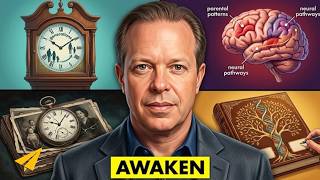
Dr. Joe Dispenza explains why we repeat our parents' patterns: the brain stays locked in old neural pathways unless we deliberately rewire it through repetition and novel experiences. He breaks down how prayer, mental rehearsal, and conscious habit change activate neuroplasticity to transform thoughts, feelings, and behavior into alignment.
Chapters
What turns certain genes on and turns other genes off has to do with our internal environment, and it's the redundancy of the same chemistry from the brain to the body and from the body to the brain, thinking and feeling and feeling and thinking in the same ways that keeps certain genes turned on and other genes turned off. And do you think that there are genes in your cells that have to do with perfect health that are just waiting to be activated and signaled? You think that's possible? You think there's genes in there for longevity? They've already found them. So if we think the same thoughts we make the same feelings. If we make the same feelings and we're feeling a certain way, then we tend to think equal to how we feel, which then makes the same chemicals. And this cycle of thinking and feeling, that redundancy keeps the same genes turned on, and we are headed for our genetic destiny, which means we turn out just like our parents.
Dr. Joe Dispenza is a leading expert in the world of neuroscience and epigenetics. His transformational journey began after a brutal cycling accident when doctors told him that he would never walk again. He has since gone on to write several New York Times bestselling books, become one of the highest paid speakers in the world, and inspire millions of people globally with his story. In this exclusive speech from the Celebrate Your Life stage, Joe Dispenza shares how to connect to the greater mind, create your own destiny, and fix your health. Special thanks to Liz Dawn for partnering with us to release this exclusive content on our YouTube channel. Enjoy.
I want you to understand more than anything else that there is a tremendous potential for human beings that we haven't even begun to discover yet. And my investigation into spontaneous remissions of disease and my investigation into human potential has led me on a wild journey where I've actually had to go back and get a degree in neuroscience to begin to understand some of the bigger ideas. And as we said yesterday, we should never wait for science to give us permission to do the uncommon. We should actually be ahead of science. We should be embracing unknown experiences and being able to reproduce those experiences so that science can then come and study us and upgrade their laws to begin to give people permission to do the uncommon, which is our given right. Would you agree? So can you guys give me your attention for the next hour, hour and a half or so, and give me your best? Can you do that? Because I want you to become inspired about your own brain, your own mind, and your own life. Now, neuroscience says that the brain is organized to reflect the environment, which means your brain is different than the person that's sitting next to you because you have different genetics and because you've experienced different things and learned different things throughout your life. And your brain is equal to everything that you know in your world. So if everything that you know in your world is already mapped in your brain, How could you create anything new? Have you thought about that? But the beautiful thing about the brain is that the brain, the sum of the parts is greater than the whole. And if we learn information, if we learn knowledge, if we learn new ideas, new concepts, every time we learn that new information, we're making new circuits and connections in the brain. That's what learning is. Remembering, of course, is maintaining and keeping those connections alive. Now, every time we learn something new, we make those new circuits, and of course now the brain begins to have information that's ahead of the environmental experience. And if we can focus on that knowledge and that information and wire it in our brain completely, then the experience should find us. Because the quantum law says that the environment is an extension of the mind. And if you were able to change your mind, wouldn't you agree that something should show up different in your world? How many people accept that as a possibility? I do. I live by that law. If I'm going to sit down and emulate the greater mind, be a creator, begin my day with intention, that if I'm going to do this and I make contact with that greater mind, I want a sign. I want to know, in fact, that I have bridged the gap between my altered ego and that divine mind. And I want the experience to reflect the new circuits and the new intentions that I've created in my mind. And I want that experience to come in a way that's so exciting and so uncommon and so unpredictable that it leaves no doubt in my altered ego's mind that it came from this greater mind. And I want to be surprised because the brain loves surprises. And I want a new feeling that's created from that experience so that it gives me the passion and the neurological hardware to want to do it again. And so then my life no longer becomes about routine, falling asleep at the wheel and going unconscious, then waking up and it's 7:30 at night and you don't remember what you did during the day because the brain was on automatic pilot. And in fact, when the brain is on automatic pilot, we use very little Circuitry. As a matter of fact, the brain can go to sleep, and so our life has become memorized. When we talk about the personality being a complete set of circuits, and that it's finite, and that our personality closes off by the time we're 35, what that really means is that we've memorized everything in our world, which means that nothing new can happen. But the quantum field says that there are innumerable potentials that exist for you and I. And if that's the case, why do we keep creating the same circumstances, the same jobs, the same relationships, the same outcomes? Because what makes the new model of understanding in quantum physics so appealing to every person is that nobody's left out. You don't have to be white, you don't have to be male, you don't have to be intelligent, you don't have to come from a specific culture. That if you're alive and your heart's beating, something is giving you life. And few ever take the time and the energy to even question what's giving them life. Now, you may call that a spiritual intelligence, you may call that innate intelligence, you may call that greater mind, you may call that the God within, universal mind, but the truth is, is that every human being has that life force moving through them. Do you know that in every single second you lose 10 million cells? Oh, you just made another $10 million. Were you thinking about that? Or was there a mind taking care of business for you? And that your heart pumps over 2 gallons of blood per minute, over 100 gallons of blood in 1 hour, over 100,000 times in 1 day through 60,000 miles of blood vessels. And yet your vascular system weighs 3% of your body weight. Are you checking in with your heart to make sure it's doing okay? Or is it just doing it for you? What is the mind that is orchestrating a will that is so consistent? And that in every single cell of your body, in one skin cell, in one skin cell, there's 100,000 chemical reactions that take place per second. Now multiply that by the 70 trillion or 100 trillion cells in your body. Are you trying to take care of all that, or is your checkbook enough? So there is a mind that is so much greater than our mind, that loves life so much more than our love for life. And it orchestrates and demonstrates a will that is so much greater than our will. And that if you were to take the DNA out of your skin cell and stretch it from end to end, it would be 6 feet long. If you took all the DNA of your body and stretched it from end to end, it would go to the sun and back 150 times. If you took everybody's DNA on the planet and you scrunched it all together and you packed it all together, it would fit in a grain of rice. And that's the blueprint, by the way, that we're expressing as human beings. And we express 1.5% of our genetic code. The other 98.5% is considered junk DNA. And out of that 98.5% that we express, we express the same exact genes as a chimpanzee 96%. We're 70% rat. And yet the blueprints of life, they're a library of potential. They're a library of potential, and that genes aren't stuck and static. They're actually on and off switches, and what turns certain genes on and turns other genes off has to do with our internal environment. And it's the redundancy of the same chemistry from the brain to the body and from the body to the brain, thinking and feeling and feeling and thinking in the same ways, that keeps certain genes turned on and other genes turned off. And do you think that there are genes in your cells that have to do with perfect health that are just latent, waiting to be activated and signaled? You think that's possible? You think there's genes in there for longevity? They've already found them. So if we think the same thoughts, we make the same feelings. If we make the same feelings and we're feeling a certain way, then we tend to think equal to how we feel. Which then makes the same chemicals. And this cycle of thinking and feeling, that redundancy keeps the same genes turned on, and we are headed for our genetic destiny, which means we turn out just like our parents. No, I'm kidding. But who's orchestrating the little enzymes that's zipping through your 70 trillion cells and maintaining order in there. Who's doing that? You think your free-willed identity is doing that? Or do we have the free will to embrace life and some greater mind is giving us life? And that, that mind, you see, is unconditional. And it's only waiting for you to introduce yourself to it. And the people that I studied that had serious illnesses and diseases—cancer and diabetes, high blood pressure, rare genetic disorders, endocrine problems—when their doctors told them that they had 6 months to live or a year to live and they changed their mind, the first thing that they did is they said, Who and what is keeping my heart beating? This intelligence knows so much more than I know. Maybe it's a good idea that I take time from my busy life and I develop a relationship with this mind. I begin to interact with it. And just because I can't see it, smell it, or taste it, or feel it, or hear it, it's alive because I am life. And if I could just give it some instructions, If I could give it a template, a message, and I can be unyielding with that message, if I could fall in love with the concept and then surrender this concept to the greater mind, that it would do the healing for me. You see, when their will matched its will, when their mind matched its mind, and when their love for life matched its love for life, it stepped in and did the healing for them. So how many people take the time in their busy day to wake up in the morning and give thanks to be alive? Do you know what a functional— on a functional brain scan, on a functional scan of a person who gives thanks and is in gratitude, on a functional scan, if you look at a person who is in a state of gratitude, their whole subconscious brain is turned on, which means their their mind and body are working together, and they're connected to their subconscious mind, they're connected to the greater mind. Gratitude opens the door to the greater mind. 5 minutes later, if you ask that person to rifle through all the reasons why they should not be happy with their life, do you know that that brain shuts off right away? They close the door to their subconscious mind. Now, you guys believe in the quantum law? That your mind has something to do with your destiny? How many people do? So, here's my question, geniuses. And I say that in sincerity. Can you give thanks for the things that you don't have yet? And if you can give thanks for the things that you don't have yet, but they exist in your mind, tell me what the signal is to the quantum field. If you're giving thanks for things that you haven't experienced yet, in the quantum field the signal is, "It already is." Would you agree? So, if you pray in desperation, if you pray in separation, if you pray in lack, prayers are never answered because the intention behind it is that you're separate. So, you have to reach for that state of mind and become it. So, I had this patient. That came into my office years ago. He had a tumor on his forehead the size of a lemon and a tumor under his neck. And it was in my practice at the time, and this is when I was traveling and finding people that had spontaneous remissions and interviewing them. And of course, my whole mind was immersed in this whole idea. And so I, I'm going from room to room in my office, and I glance over my shoulder and I see this little guy Sitting in the waiting room with these two tumors, and as I look at him, he kind of shoots me a wink and goes like that. I kind of look at him and I go— So I go from room to room. Finally I show up in the examining room. And so I sit down with him and I say to him, so I'm doing a history now. So what is that? Is that leukemia? He says, yes, I've had leukemia for 25 years. I said, really? What did you do for it? He said, nothing. Nothing at all? Never. I said, "Well, what did the doctors tell you 25 years ago?" He said, "My doctors told me I had 6 months to live, 25 years ago." And I said, "Well, what did you do?" He said, "I made a deal with myself that I was going to live long enough to see my youngest son graduate high school." And he said, "In 2 months, I'm going to see my youngest grandson graduate high school." Now, this guy is not a holy man. He's a farmer. He's a cattle farmer. And so he kind of takes off that day, and I can't get this guy out of my mind for the next 2 days. I'm thinking about him all the time. His name was Del. I'm like, "What did he do?" So he comes in 2 days later, I finished my treatment with him, and he's getting up to walk out of the room, and I go, "Hey, hey, hey, hey, come over here." I said, "So I got to ask you a question." He said, "Sure." I said, "So how'd you do it?" He said, "What do you mean?" I said, "Well, you should have been dead 25 years ago." He leans across the examining table, he puts his hand out like that to shake my hand, And as I grab his hand, he pulls me right up to his nose, and he says, you just gotta make up your mind. And he goes and he slaps me on the face. So then he starts to walk out of the room, and I'm like, hey, hey, hey, hey, hey, hey, hey. Come over here. And I put my arm around him and I stop him like that. And this guy looks me in the eye and he says, I can't believe People wake up in the morning and they don't give thanks to be alive. Now, we talked yesterday about mental rehearsal, thinking and changing your brain. If this guy every day has a mental rehearsal to give thanks and he changes his chemical state, would you agree then that he is affecting the quantum field And as long as he's giving thanks to be alive, what does the greater mind say? Give him another day. Give him another day. Give him another day. And he is wired now to live. Do you understand? So there is no healing that takes place that isn't a spiritual healing. It's all miraculous. And that we are works in progress. We're all works in progress. And with my study of disease. I've come to understand that so many people suffer from emotional states, that so many people have afflictive and destructive emotional states that they tend to run from, and that the events that happen in our life that are unnerving or that catch our attention, that we think about every day, we produce the same feelings as the event when it happened. And that same chemical signal that we keep triggering to the body, the thought, then the feeling, the thought, then the feeling, the thought, then the feeling. Ultimately, we forget about the thought and there's just the feeling. And that same feeling that we continuously live by every day, we've defined as the self. And we never move forward in all that life has to offer. And when we live in those afflictive emotional states, when we live in those states of mind that are repetitive and are based in the emotions of survival and based in the emotions of stress, there's always a gap between the way things appear and the way things really are. In other words, how you appear is different than who you really are. I want you to listen to this because I wanna help you understand a couple things about you finding value in yourself. When we live in emotional states, I know this from experience, who I am down here is not how I appear. And I am running from this feeling of emptiness or this feeling of unhappiness or this feeling of pain and this feeling of sorrow. That's who I really am. But what I do is I need my environment, some person or some place or some event or some experience or some thing to take away this pain down here. So we need the environment to help us to remember who we are, and that is the basis of our identity. So the people in our lives and the places that we go and the things that we own All are a reflection to help us to remember who we think we are. So we become addicted to the environment because without the environment, who are we? We're left with that emptiness. Now, somewhere in our life, right around the time we're in our late 30s and in our 40s, we pretty much can determine the outcome and the feeling of any experience. And no person or no thing or no place is gonna take away that feeling. That we have. You know what I call that? The midlife crisis. So what do most people do? You know what they do? You buy a new car, right? Get more things so that I can now have something to help me to remember who I really think I am, to take away this feeling. Join the new social club so you can meet new people. And now that you meet new people, now they can remind me of who I think I am so I don't have to feel this pain. Or buy the boat. Or go and shop. So now you have more things so that you can remember who you think you are. And that's the facade of how we live. Now, right around this time, by the way, when you're in the midst of this separation from who you really are, most people, what they do is they start relying on things external for them to take away that feeling. They turn on the television, they get on the cell phone, they get on the internet, because that disturbing feeling is so uncomfortable, it's so convenient to be distracted by the environment so you don't have to feel what that feeling is. But in the midlife crisis, most people go, "You know what? I can't live this lie anymore. I'm too uncomfortable. This feeling is now, you know, bubbling up in me." And I say that's the moment that the soul wakes up again and says, You got a chance here now. And that all those people and all those things and all those experiences that we've had are emotionally encoded in the brain and the body. And we tend to then keep those emotional agreements with everybody in our world because, listen, every person in your life that you have as a friend, the reason that you have a friendship with them is because you had similar experiences or you have similar things, or you know similar people, or you've been to similar places, and you can relate with each other. So then you meet a person for the first time and you say, "Hi, how you doing?" "Great. Well, where are you from?" "You're from Phoenix? I've been to Phoenix." "Place? You know those people?" "I know those people too." "And when did you know them?" Oh, time. I knew them at that time, too. And you've experienced those things. I've experienced those same things. Now, the end product of every experience is an emotion. So if we share the same experiences, would you agree we share the same emotional feelings? So then you and I can complain about the same things and get agreement. And as long as you don't change, we're gonna have a great relationship. So now all the people in your life that you have been keeping status quo emotional agreements with, you know, the person you golf with and complain about your job, or the girlfriend you go walking with and reef on your husbands, You know, all that stuff. You know, you do that so that you can relate. But according to the quantum law, nothing's changed now, is there? So now those people that you all have all your emotional agreements with see that you're no longer going along with the deal. They're saying, "Oh, I need to talk to you," and you say, "You know what? I don't really want to hear it today." 'You hurt my feelings.' 'I liked you better the other way.' Now, all those people that you have all those emotional connections with, of course, you know what they're going to do, right? They're going to send you to the doctor. They're going to give you Prozac, and you're going to return right back up here, and you're right back in the emotional game again. Now, all those things and all those places and all that stuff we need from our environment to remember who we are has to do with the altered ego. It has to do with our identity. And most people, they keep those things in place so they don't have to look at who they really are. Now, if the social club doesn't work and the boat doesn't work and the Porsche doesn't work, you know what happens next, right? What's the next level? Addictions, right? Drugs, alcohol, gambling, sh— shopping, eating, pornography, whatever it is to take away that feeling of emptiness. Now, the brain has this amazing ability to always connect some external thing with some change in its internal feeling, the body's internal feeling. So whatever was out there, the person, the event, the drug, the alcohol, the drink takes away this feeling, you're going to remember that that thing took away this feeling or changed your internal state, and you're going to like it. The problem is, is that there's a little toggle in the brain called the reward center or the pleasure center. And if you keep stimulating that pleasure center with drugs or with alcohol or with shopping Internet or media games or whatever people do, you start to hijack that pleasure center. And what happens is, is now the threshold goes up. So guess what happens? You need more. And as you keep needing more, it means now you become more connected to the environment. You're more dependent on something external from you. Are you with me? By the way, this is the direction that our children are headed. The deal in my house is if you're playing a video game and I call your name, you don't answer once, the game is off. It's over. Because they did an experiment where they took kids and they said, "Listen, we'll give you a dollar. We're gonna ring a bell, we can play a video game, we'll give you a dollar for every time you stop when we ring the bell, you'll be rewarded." And all the kids said, "Yeah, money, yeah, all right." They played the video game, the moment the video game started and they rang the bell, they were like, Wait, wait, wait, wait, wait, wait, wait. None of them could stop. And if you can't stop, that's called an addiction. So these kids, when they blow things up or they shoot someone or they bust through a wall or they do something, there's a release of dopamine and there's a release of epinephrine in the brain. It turns the brain on. So they start to equate learning with a feeling. Now, learning should be a reward in itself, right? So then they go to school and they're sitting there and they're listening to new information, and because there's no change in brain chemistry, you know what they do? They act out. They get in trouble just to turn on their brain. And so that's attention deficit disorder. Because the pleasure center now needs more stimulation. Now adults do that. They do it with excess. Now, certain people reach that threshold, and the ones that actually turn around and look at themselves, they reach the bottom where nothing in their environment's gonna bring them pleasure. Do you know why? 'Cause they wake up the next day and they still have that feeling. I know this from experience. And now when you begin to realize that no one has the answers but you, and you begin to say, "What is this feeling? I'm gonna turn the TV off." I'm going to turn off the internet. I'm not going to get on the phone. I'm going to just say, 'What is this feeling? What am I running from?' And as we begin to look at that, now we're doing the work. Because our job is to evolve. Our job is to do a better job in life. Our job is to learn from our mistakes, and we can do that in one lifetime. And so when we begin to realize that if we took away all the things and all the people and all of that, you know what that's called? That's called death. When this rolls up, what are you left with? Tell me. Who you really are. So the problem that I have at times with people who are intensely interested in the Law of Attraction and getting things and the new house and the new car. Those people, the Law of Attraction could never work for them because the Law of Attraction says if you're feeling this down here and you're trying to create all this to run away from this emptiness, it will never happen. And yet, when we begin to break through and get beyond our anger and our hatred and our unworthiness and our insecurity, when we begin to change our internal state, the body gets healthy. And when we begin to make the break and we overcome something about ourselves, the side effect of that is joy. That's true joy. Now you don't need anything out there to take away that feeling. The feeling is coming from your own personal self-love. And now that you've made the change internally, you can have those things or not have those things. And guess what? They're a side effect of who you are. So my interest is in personal change. They used to say that the brain was hardwired You're born with a certain amount of circuits and connections that are genetic, and you're going to turn out like your parents, have a great life. And now they say, "You know, whoops, we lied. That's actually not true." That the brain is completely plastic. That people who have been paralyzed for 20 years that are in their 70s, given the proper knowledge, the proper instruction, and the proper feedback, These people that had strokes could actually deparalyze a limb if they can reproduce the same state of mind. You think that's possible? It's being done. The old model of the brain is falling apart. You know that saying that you're born with a certain amount of brain cells and all that tequila you drank, you know, you killed all those brain cells and you'll never come back again? How many people have heard that one? Lie. It's a lie. It's a total lie. Thank God. Yeah. Woo! You know that, by the way, you know that str— Wow, you guys finally woke up. You know that you killed just as many brain cells from from a stress reaction than you do from a shot of tequila? Cortisone kills just as many brain cells. Happy hour's at 4:00. So the guy that did the experiment on that whole, you know, born with a certain amount of brain cells and you kill them and it's over. He's drinking tequila. Yeah, he's drinking tequila right now. You know, there's two ways that you upscale your brain. You upscale the hardwires. Learning new things and having new experiences. Okay? So when he did his study on those rodents and he was checking to see if their brains ever changed, you know what he was doing? He was checking the brains of rodents that were in the same environment. In the same environment means the same experience. Guess what happened? Nothing changed in their brain. 50 years later, these guys out of New Mexico, Altman and a couple other guys, they do the same experiment and they're putting these rodents and primates in an enriched environment, in a changing environment, and guess what happened? They're growing new neurons to reflect the new environment. They published their paper and the guy from New York who did the original study calls them up and said, you know, they may be happening in your lab but it's not happening in my lab. And these guys backed down, they rescinded. And just a few years after that, the guy came around and said, "You know, I think that actually there could be a possibility of growing new brain cells." Now, the research that's being done at Princeton University shows without a doubt that if the environment changes and you have new experiences, you grow new brain cells. You grow new brain cells. And the experiment that was initially done, it was done a few years back where they took a group of, volunteer rats, and they divided them into different categories, 3 different categories. One group of rats were in the typical rat environment, right? Food, water, wood chips, and the spinning wheel, right? The other rats were in what was called a deprived environment, food and water, nothing else. And then the other rats And the third group were in what was called the enriched environment. They had swings, they had tunnels, they had combs that could scratch their back, they had levers they could press on for food, they were in there with other siblings, there were bells and whistles and the whole bit. They were in a spa for rats, right? Now at the end of the experiment, they asked the rats if they wanted to donate their brains to science, and what did they say? The rats agreed and— I'm having too much fun now. So the rats that were in the enriched environment, guess what? 15% denser brains, more neurons, more gray matter, more connections. Remember, learning and experiencing makes new connections. They had more neurotransmitters throughout their brain. They had more of that Miracle-Gro, the glue that makes new circuits and connections. Their offspring lived longer and they had less body fat. So then, we are our experiences. Now, here's the question: How many new experiences have we had lately? I'm not talking about eating Ethiopian food. I'm talking about novel experiences that are even outside the frame of our understanding. And if we— we know according to biology and neuroscience that emotions and feelings are the end product of experience. When we are in the midst of a new experience, a brand new experience, all of our 5 senses are accumulating different sensory feedback through 5 different pathways, and it's sending a rush of information back to the brain, and gangs of neurons are stringing into place, and when they string into place, they release chemicals. And those chemicals are called feelings. So the end product of every experience is an emotion or a feeling. Now, you're geniuses, right? If you live by the same feelings every day, what does that mean? You're not having any new experiences. And those people who talk about the good old days, what are they doing? They're trying to remember what it felt like when they could remember when they felt the best. Means nothing new is going on. And so if you know that feelings and emotions are the end product of experience, and we live by the same feelings every single day, and feelings mean we're remembering the past, what are we creating more of? The same things. So experience is what enriches the brain and it evolves the brain. And the way that we begin to prepare ourselves for a new experience is we have to learn new information. And that as we learn new information, we wire that information in the brain, and now if we can use that information, if we can apply it, if we can personalize it, if we can demonstrate it, now we're gonna set ourselves up for that new experience. And that new experience is gonna have a new feeling that goes along with it. And that new feeling has nothing to do with survival, stress, It has to do with joy and excitement and inspiration, what I call the natural state of being. So my research in spontaneous remissions led me to this understanding that the most important thing that we have to do is change our mind. Because those people that had remissions from disease, as I began to study them, I realized that it wasn't so spontaneous after all. That the doctors gave them some pretty sad diagnoses, and there was a lot of sadness that went along with it. And they didn't have much of a prognosis. And so they didn't go to their social engagements anymore, and they didn't watch TV, and they didn't talk on the phone because they couldn't— that wasn't going to take away this thing that they were confronting. You know, the gap. So they wanted to know what feeling they were living by every day. What is the feeling that is so familiar to you that you identify yourself as. If you can recognize that feeling, you can look within and say, "It's pain. It's sadness. It's emptiness. It's insecurity. It's unworthiness. It's fear." Whatever it is, that, that is becoming familiar with yourself. That is the first step. Because that means then, for some reason, that that emotion is connected to some event in your life and you think that's who you are. And my understanding of these people that began to have personal change, they began to look and they said, "I have to break the habit of being myself. I gotta stop being the same person. I gotta become somebody different." And I can tell you what they didn't have in common. Some of the things that they didn't have in common is that they weren't all men. They weren't all rabbis or priests or or clergy or spiritual. Some of them didn't even have a religious connection. None of them were vegetarian. Some of them smoked and drank and cussed. None of them used crystals, by the way. Sorry. Not all of them were celibate. But what they did do is they changed their mind. And the first thing that they said was that, "I've distanced myself from that intelligence that's keeping my heart beating. I'm going to develop a relationship with it, just like a relationship with anything that I have in my life. I'm going to take time for it, and I'm going to give it my attention. I'm going to fall in love with it. I'm going to interact with it." I'm going to admit to it who I've been and ask for help.
My name is Liz Dawn, and I'm with Celebrate Your Life Events. And the presentation that you've been listening to was recorded live at one of our Celebrate Your Life conferences. And this program was created exclusively for Evan Carmichael's audience. And I'm super thrilled to share this information with you. So come check us out, take a look at all of our retreats and programs and conferences that we have to offer. Click the link below, and hopefully Hopefully I'll see you in person. All right, now let's get back to the presentation.
You see, this unconditional parent only waits, and it's us that has to reach for it. Now let me ask you a question. This intelligence is a great parent. Now if you had a kid that wanted freedom, right? I want freedom. I want my own car and my own keys, and I want to be able to come and go when I want, and I'm 16. Now, let's just suppose that you're the great parent, the all-wise parent, and you know that this kid is climbing down the drainpipe while you're asleep, going out drinking with his buddies, not doing his homework, getting poor grades. Are you going to give that son or daughter of yours any freedom? Are you gonna give them what they want? Come on. No. Because their actions aren't connected to their thoughts. Their thoughts and their actions aren't aligned. They're saying one thing but they're doing something else. Their intention isn't equal to their behavior. They have intentions of what they want but their behavior is completely opposite. Mind and body are not working together. So now, you would know then that as a great parent you would wait. And you would let them get themselves in trouble till finally they said what? Help. Now most of us wait till that point, right? Why wait? Why wait till the disease shows up? Why wait till fatality happens or close to fatality happens? Why wait? Because normally something has to be taken away from us or we have to suffer long enough that we can't even keep up that emotional agreement anymore because we're disturbed. Now we get serious. So if you took time and you admitted to the great parent, "Look, this is who I've been. This is how I've thought and felt and felt and thought. I've held this grudge for 20 years. I need help. I want to surrender this emotion to you, and I need your help." Do you think if your kid was honest and sincere, you would begin to work with them? And you would say, "Now show me." How are you gonna plan your thoughts and actions so that you could do a better job in life? But it's up to you, and I will support everything that you do well. I will endorse. The greater mind is just like that. We can't say that we want wealth, or we want joy, or we want enlightenment, or whatever people want, and at the same time we're sneaking down the drainpipe and our actions aren't consistent with our intentions. Our behavior doesn't match our thoughts. So yesterday we talked about the 3 brain systems in place that allow us to go from thinking to doing to being. That thinking is learning new information and repeating it, remembering it. And doing is applying that information, applying it, using it, learning from it, teaching the body what the mind intellectually understands. But it's not enough to, you know, know that the phone's gonna ring and you know it's gonna be your mother and you pick up the phone, it's your mother, and then you you put the shingle out on your house saying you're a psychic. Doesn't work that way. You have to be able to repeat the experience over and over again. You got to do it every time. And when you can repeat the experience at will, you've just gone from thinking to doing to being, and you have all 3 brain systems in place. You got mind, body, and soul working together. You got head, heart, and hands all in alignment. And when we do that, we have the power of the universe behind us. Now, when the movie The Bleep came out years ago, you know, I had all these fundamentalist religious people calling me, wanting to talk to me about the movie. And so they would call me up and, you know, at the end of my day, my staff comes in the back room with a yellow pad and they say, "You got to do this, you got to do that, you got to talk to this person about that," and they go through the list. So they said— I'll never forget, the lady's name was Mary. She said— my office manager said, "Mary called." from the local church and she wants to talk to you. So I said, okay. They said, we can call her back for you and tell you. I said, no, no, get her on the speakerphone. Let's talk to her. They said, really? I said, yeah, get her on the phone. So we got her on the phone and this lady says, the first thing she says is that I'm going to go to hell. And that I'm a sinner. And the movie was blasphemy and all that stuff. And I just said, well, first of all, where's hell? Who runs it? Is it far away? Hot or cold? You know, I've got— and so anyway, we got through that, you know. And then so then she said, well, you know, you're a sinner. So then I said, well, what is your definition of sin? And she said, you know, you don't please this person, you don't do these things, then you go to hell. So then I said, well, you know, the Aramaic translation For the word sin means to miss the mark, to miss the bullseye, to be off, to not have your attitude in alignment. You know, when Jesus said, "Sin no more," what He meant was, "Listen, I got a busy practice. I'm not coming back here to the well next year and having to do this again. If you don't change your attitude, you're going to have the same condition." Right? That's what He meant by that. And the word repent, of course, means— the Aramaic translation of repent means change your mind. Repent, rethink, change your mind. The kingdom of heaven is at hand. Think differently and your world will change. So then she told me that she was going to pray for me, which I was happy for. So then, of course, you know the next question, right? "Prayer?" "Well, what is your definition of prayer?" So then she went through this whole thing that you got to do this and then you got to do that and it's going to get you to this point. And I said to her, "You know what my definition of prayer is? Believing in thought more than believing in my environment. Believing in my intention more than I believe in the circumstances in my life." And do you know we all do that? Do you know we're wired that way? Because of the size of the frontal lobe, that when our circumstances in our world get really mucked up because of our thoughts and actions, you know what we do? We retreat from the environment, don't we? We close our eyes, and what do we begin to do? We begin to believe in a thought more than we believe in the conditions that we've created, and we keep single-mindedly focusing on that thought waiting for a greater mind to come in and reorganize the mess that we made. And we all do it. And faith is believing in thought more than believing in anything else. And because we're human beings, and because of the size of the hardware in the frontal lobe, 40% of our entire brain, chimpanzees and gibbons 14-17%, dogs 7%, you cat lovers 3.5%, that's it. Because the frontal lobe is 40% of the entire brain, check this out, we can make thought more real than anything else. And we do it all the time. And when we make thought more real than anything else, what we're saying is, is that this idea is my intention, and that I want this circumstance to be changed this way. And that is a natural thing that we all do. And when we can rejoice in our prayer, which means do it in a state of joy, then would you agree then that we're doing it in a state that it already happened? Hmm? And if we do it in a state that it's already happened, what does the greater mind say? That mind matches my mind. That will matches my will. That love for a concept matches my love for life? It's yours. And that is what we admire about greatness. My definition of greatness, by the way, is having your thoughts ahead of the environment, believing in thought more than you believe in your circumstances. Even though you can't see it or smell it or taste it or feel it or hear it, you've thought about it enough times that it's now mapped in your brain. And because of that, the brain is ahead of the environment. It's no longer a reflection of the environment. It already has the mind as a future potential, as a future outcome. So you think that's possible? So those people that had spontaneous remissions from disease, they closed the gap. They didn't have the redundancy of thinking and making a chemical for them to feel. And once they begin to feel, they begin to think how they feel, then feel the way they think, and create this state of being where feelings become the means of thinking. When we have feelings as the means of thinking, it means we can't change. Because if we rely on feelings as our choice to do something new, we'll talk ourselves out of greatness every single time. They went right into the feeling and they said, "I gotta close the gap." "Because all of this is some illusion that I've created so I don't have to face this right here." And they said, "I want to take away that emotional state. I want to break that habit so that who I am is how I appear. And all the energy that I've used to keep my life in order because of this separation is free energy now that I can use to heal my body." And so they developed what I call transparency. And when we're transparent, how we appear is who we really are. And the side effect of that is called joy, because we don't have to use all this energy to keep this illusion intact anymore. And the crumbling of the identity in the midlife, I always say it's such a great thing. I've had several of them. And you know why? Because When it collapses, you have to begin to think new. You got to begin to start thinking in new ways. You got to begin to take all that philosophy and stuff that you've learned throughout your whole life and see if it's going to actually make a difference now and begin to apply it. And so when the Buddhists talk about nirvana, when they talk about that state where they've completed their karma, What that means is that there's no longer any emotions that stand in the way between them and their own personal evolution. And if we just did a simple checklist every day of unlearning the old self, you know, breaking the habit of being yourself requires unlearning who you are. How do you think? How do you act? And how do you feel? And of course, is this loving to myself? Because if you know that the redundancy of those emotions are only hurting yourself, continuously pushing the same genetic buttons that turn on the same genes that make the same proteins, the redundancy of that same chemical bath over time is gonna cause those genes to wear out. And those genes, as they begin to wear out, start making cheaper proteins. And what happens when we age? What happens to your skin? Sags. Well, collagen and elastin are proteins. What happens to your muscles? They atrophy. Actin and myosin, those are proteins. What happens to your enzymes? You start making cheaper enzymes. And so all aging is a result of improper protein production. And because we can create The same gene turned on over time. Do you think that if you created a new feeling that potentially it could turn on a new gene? Come on. Do you think then that you can sit down and ask yourself, "Who do I want to be today? How do I no longer want to think? How do I no longer want to act? What is this feeling that bothers me? Can I overcome it by stopping it and making it conscious?" and begin to think about how you can do it in your life, do you think you would be preparing the brain ahead of the experience? And if you then said, "Come on now, what is the greatest ideal of myself? How do I want to think today? How would a great person think? How would they act? What would they do? Who in history do I admire that I want to be like? And what is the feeling that I want to train my body every single day to live as?" Do you think that if you could hold that for a couple weeks your world would change? Come on. Is it possible? Do you need anything outside of you to do that? Yesterday we said the word meditation means to become familiar with. Can you become familiar with your old self and make it so conscious that you don't think, act, and feel that way any longer? And if you stop the process The universal law says if you don't use it, you lose it. Those nerve cells break away, baby. And as they break away, it rolls up. And as you begin to relearn a new self, would you think you can make new sequences and patterns and combinations of new neurons that would become the stage of who you could become? Hmm? Do we have to wait another lifetime to do that, or can we do that right now? We have all the equipment to be able to do that. So look, this is the brain that we have. This big brain out here that looks like a walnut, that's the thinking brain right there. This brain under here, underneath, about the size of an apricot, is the emotional brain or the doing brain. And this is the being brain. We have 3 brains in 1, and most of the time when we embark on change, we declare we want something intellectually, but we've conditioned the body to be on a different agenda. 20 years of suffering has conditioned the body to live differently than the mind, and the mind and body are in opposition. So we're thinking one way and we're feeling another way, and of course nothing ever happens. We wind up doing the same things and expecting a different result. Now, the concept of neuroplasticity is this in science: it's our brain's ability to change its synaptic wiring by learning information and recording experiences and to be able to maintain a modified state of being, which means every time you learn something new or every time you have new experience, you evolve your brain. Plasticity allows us to evolve our actions and modify our behavior so that we can do a better job in life. So rigidity— this is a word I made up, I can't think of a better one— is using, you know, our brain's inherited encoded synaptic genetic connections without learning from our experiences. Rigidity is to process the same thoughts and perform the same actions and expect a different result. Not that any of us do that. And of course, that's the definition of insanity. And we talked yesterday, by the way, about the piano players who physically demonstrated a new set of scales and chords. They grew new circuits in their brain because they learned how to play them they repeated them, they paid attention, and they got some instruction. And that's how you grow new brain circuits. But you can take another group of people and you can have them close their eyes and mentally rehearse playing the scales and chords, and they'll grow the same amount of circuits as the people physically demonstrating it, as long as they can pay attention, repeat it, and, and do it over and over again. So the brain doesn't know the difference between what's happening out there and what's happening in here. So if we, if we have the same thoughts and perform the same actions without doing anything differently, The brain never changes, and if the brain doesn't change, the mind doesn't change. Neuroplasticity is learning new things, creating new experiences, making new memories. Rigidity is living life from past memories without learning new things and having new experiences. This is what happens when you get to be 35, by the way. So neuron, nerve cell, brain cell. We have 100 billion neurons in our brain. The possible number of connections of 100 billion neurons in your brain is greater than the number of atoms there are in the universe. It's the simplest functional unit of the nervous system. They possess the unique ability to store and communicate information between each other. So this is a neuron, right? The average neuron in your thinking brain has about 40,000 connections per neuron. About 100,000 neurons fit in a grain of sand. If you were to take a scoop of your brain the size of a pea and stretch the neurons out end to end, it would go 2 miles long. And they're three-dimensional, they communicate in all different directions, they kind of look like a tree, but they're not stiff like a tree, they're more like cooked spaghetti, they're more alive. So now learning is making new synaptic connections. If you learned anything new this weekend, this is what happened in your brain. I'm trying to pay attention, I'm thinking about lunch, but I'll try to pay attention. Oh, this sounds good. Oh, okay. I understand. I want to be happy. Oh, look. Your brain did that today if you paid attention. Oh my God. Now look, this is change. Unhooking from your old self. Making a new self. Look at this, I call this the aha phenomenon. One set of neurons connecting with a whole other set of neurons. Aha. Maybe it's time to change. Now this is a new experience, look. Ready? Wow. That's what new experiences look like. This is, by the way, real time. I actually slowed it down a little bit. That's how fast we can change. Now, remembering is maintaining or sustaining those connections. Once they've connected, now they're in a long-term relationship. Now they're connected. And of course, in any relationship, the more you communicate, the stronger the bond, right? That's how neurons hardwire. You keep communicating with them, they grow more enriched connections, denser trunks, stronger circuits. So there's two ways we make connections in the brain. One is learning information, philosophy, knowledge. The other way is having new experiences. It's called semantic memories or episodic memories. And every time we learn something new or we have a new experience, the brain reorganizes itself to reflect what we've learned from the environment. So now that concept of Hebbian learning says nerve cells that fire together wire together, which means the more you think the same thoughts, And the more you repeat the same actions, the more the brain is going to reflect the same thoughts and the same actions. And actually, it's going to grow new circuits and more enriched connections. So, law of repetition says if we repeat a thought, an action, or a skill over and over again, it begins to become easy, familiar, common, second nature, routine, effortless, subconscious, unconscious. We've done it so many times that we don't have to think about it anymore, right? Now, as neurons begin to fire over and over again, the repetition of that firing causes a chemical to be released, and that chemical is called neural growth factor. It's the Miracle-Gro, or it's the glue that causes neurons to become more enriched or more refined. For example, if you do an autopsy of a person who's read Braille their entire life and their whole mind is in this finger or these two fingers, because they fired the same neurons with attention over and over again, their brain has more real estate than that little compartment that was designed for one finger or two fingers. All the brain now begins to reflect that their mind is right here. So the brain, the real estate expands, and the circuits and connections are more refined and more intricate. That's why they can touch and feel bumps and read at a very quick rate, and you and I can't. That's why the piano tuner who's paid attention and refined his hearing can absolutely tune a whole piano without ever having to use anything but his ear because he has the circuitry in place. He hears it in his head, or she hears it in her head perfectly. And the brain has more enriched circuits and connections in place. So then, do you think you could learn a little bit about quantum physics and a little bit about the nature of reality And do you think that if you reviewed it and repeated it and thought about it, you would begin to see what was always there but you never had the machinery to process it? Just a thought. Okay, so these are neurons now that have neurogrowth factor sprinkled on them. Look at these guys. These are neurons, well, they're not doing anything. Can you see how fast they're making circuits and connections? There's only two ways we make neurogrowth factor in the brain. Learning and repeating it and having new experiences. Novel experiences causes the brain to make neural growth factor, and that then begins to reorganize how the brain works. So the law of association is how we learn. What I mean by the law of association, if I said the neuron looks like an oak tree, you know, you would begin to image an oak tree, right? And if I said, but they're really tiny and they're leafless and they reach three-dimensionally, And, but they're not stiff like an oak tree, they're more like cooked spaghetti. What I did was I used all the machinery in your brain for you to begin to understand what a neuron is. You got it? So you have to turn the brain on, and as you associate and turn it on, you can make something unknown known. That's how we learn. If I said receptor sites look like craters on the moon, but they're really not like craters, they're more like flowers, and when a chemical comes towards the flower, The very center of the flower looks like a kaleidoscope, and that chemical has to fit in that kaleidoscope picture like a key fitting into a lock. And then when it fits in like a key into a lock, it jiggles the cell, and then that lily pad that's sitting on top of the cell sends information to the DNA, and the DNA unzips like unzipping your pants. Huh? Wow. So I used all the machinery in your brain to begin to understand the concept receptor sites. Would you agree? That's how we learn. So if you wanted to become more compassionate, would it be a good idea to read a book on the Dalai Lama? Well, wouldn't you begin to use that information to begin to create a model or an understanding of who you'd like to become like? So we learn by association and we remember by repetition. We can't just do it once, we have to repeat it. Now, a neural network— you heard about that in the bleep, right? Those are just gangs of neurons that have fired and wired together to form a community of neurosynaptic connections that are related to a concept or an idea, a thought process, a memory, a skill, a behavior, or an action. And so neural nets are performed— are formed by combining what we learn, the law of association, along with what we remember by repeating them so that we can create a new mind. Neural networks reflect the mind. So they're the automatic hardwired programs that we unconsciously and automatically use every day. Brushing your teeth, driving your car, putting on your makeup, talking on the cell phone, drinking your coffee, reading the paper, all while you're driving your car and slapping your kids in the back seat. So look, this is a neural net. See how they look like cooked spaghetti? By the way, your brain, if you've ever had the opportunity to see what the brain really looks like, an alive brain, it's the consistency of a soft-boiled egg. It's very gooey and soft and watery. Now look at this. This is the electrical component of neurons. We're electrically charged beings. Want to see a thought? There you go. Ready again? There it is. Your brain generates 400 billion impulses per second. Wow. You generate more electrical impulses in your brain in one day than all the cell phones on the planet put together. We are dynamic beings. So plasticity then, to revisit it, is to fire many diverse neural nets in different combinations, different sequences, and different orders to produce a new level of mind and to be able to repeat that same frame of mind at will and make it look natural and easy. Become a new person. So the frontal lobe then is what we use for our free will or our invention. It helps us to speculate possibilities, to look at outcomes. It helps us to control our behavior. And it restrains our emotions as well. It's the brain's disciplinarian. It's the newest and most evolved part of the human brain and nervous system. It's the most neuroplastic part of the brain. If you said to yourself tomorrow morning, "What would I have to change about myself to be happy?" Guess what part of the brain would turn on? The frontal lobe, because it is going to now come up with a new idea. It's going to take everything in there that you've learned or experienced and kind of reorganize it to come up with a new way to be. So now this concept of mental rehearsal. Mental rehearsal is concepting ourselves practicing a new idea. Remembering how or what we want to demonstrate. To think about what we want to do. Learn and memorize a new idea until it becomes familiar. Plan or imagine a new skill or an action or a way of being. To cognitively experience what it would be like to physically do or be it. To continuously reproduce the same level of mind at will. It must be done every day. So, as an example, could you mentally rehearse how you would think in order to be a happy person? What would a happy person think? Would you begin to say, how would a happy person act, or a person who lived in joy? What would they not have to do? What would they not have to think in order to be happy? And as you began to think in that way, would you be mentally rehearsing? You would. You would become familiar with a new idea. So, Habian Learning says that nerve cells that no longer fire together no longer wire together. I call this the biology of change. Now, if you don't remember anything else today, which I wouldn't be too upset about, but if you didn't remember anything else today, if you could just remember this slide, I would be happy. Well, I'm going to be happy anyway. So I call this throwing out the mental trash, okay? Here you go. This is a neuron that runs through your body. And you want to focus on being happy. Or you want to focus on being healthy. So you have this new thought, "I'm going to have an intention." An intention is getting clear on what you want. Surrendering is knowing that it already happened. So here's this new thought called health or happiness. So you're going to fire a thought like, "I am a happy person. I want to think like a happy person." I got to begin to rehearse that. Eyes closed, you begin to get the brain ahead of the environment. But the problem is, you see all these other neural networks? You know what they're saying, right? You can never be happy. Your mother was never happy, and your father— And so, but you know, when you close your eyes, you know, you find out who you really are because there's no longer the environment to distract you, right? So you're trying to fire this new thought called happy, but All these other thoughts are saying, "Get up. You'll never change." You know, it's doing all that stuff, right? But we have this amazing thing as human beings called human will. And human will is the enacting or the inaction of spirit. So if we repeat it over and over again, over and over again with intention, with clarity, and we insist on it, this amazing thing happens. It becomes the strongest signal to the cell. And when it becomes the strongest signal to the cell, look what just happened. Now that insistence on that intentional thought begins to become the strongest signal to this cell, and as it becomes the strongest signal and overrides all this other chatter—I call it awfulizing—as it overrides all the awfulizing, what happens is this chemical called neural growth factor, this these green bubbles, are holding all these other circuits in place. But there's only a certain amount of neural growth factor to go around, so it starts to steal the glue from the other circuits. There goes your negative attitude, there goes your memory of your mother, there goes your insecurity. What's the only signal traveling to the body? Happiness. And that's called the biology of change. Now those The people who had spontaneous remissions of disease, it wasn't enough for them to just think positively. That's not the end. You have to unlearn the old self. How do I no longer want to feel? And if I can stop these feelings all day long and not go there— The lady that lives across the street from me, this little old lady who I see every now and then, I jump out of my car and I talk to her, Bonnie, cancer on the inside of her mouth. And she said, "You know, I went to the doctor and they told me that it went away." I backed the car up like, "Really?" I said, "Well, what did you do?" She said, "You know, it's really funny. Every time I started to worry and get afraid, I said, 'I'm not going to cross that bridge today.'" Nerve cells that no longer fire together no longer wire together. And if she acted out that fear, the chemistry of fear would cause her brain to think all those fearful thoughts equal to how she was feeling, which then would make more chemistry to signal the genes to propagate the disease even further. So the unlearning process is— when I do my workshops on the 10 steps to change, the first 6 steps is the unlearning process. You know why? Because if you keep conditioning the body with unhappy thoughts, And you do it enough times, the body's going to become the mind. That's what a habit is, right? When the body becomes the mind. And habits are unconscious. Would you agree? So you've got to make conscious what is unconscious. And that takes reviewing and closing your eyes and saying, "Okay, what thoughts do I no longer want to think? What thoughts get me in trouble? What reactions get me in trouble? How do I behave when I'm in that feeling? How can I change that? How can I then begin to feel in a new way? Can I keep my energy up the entire day?" Can I demonstrate my mental rehearsal? Can I live it now? And if you can do that, if the environment is an extension of the mind and you have your mind and body working together, something's gotta show up different in your world, gang. That's the law. So here's my question: Can you believe in a future that you can't see or experience with your senses but has already happened enough times in your mind that it is now patterned or mapped in your brain? When we successfully apply this new paradigm, our brain is no longer a record of the past but in fact a map to the future, because our past is our experience, right? So can the brain be ahead of the experience? Now the mind is controlling the environment instead of the environment controlling the mind. To live by this law is to live by the quantum law, and the quantum law says our environment is an extension of our mind. So the book's called "Evolve Your Brain: The Science of Changing Your Mind." The website is drjoedispenza.com. I want to just close with one statement here. I have a very strong belief in human potential. I have a very strong belief in the human spirit. I have a very scientific mind, which sometimes gets me in trouble. Because as I said yesterday, men need a lot of science to take the leap off the cliff. Women already jumped and they're waiting like, "What are you doing up there?" You'll get used to the water, just get in. Right? But, you know, I used to do this for all the— you know, I mean, I got very clear in the last year or two what my passion and what my purpose is about. And my purpose really is to see people change. For me, there is no greater joy in my life aside from being with my family than getting an email from someone who says, "I was hateful." and judgmental of everybody in my life because I hated my father. When I finally gave up that feeling and no longer revisited it, my acid reflux went away. And I suffered with it for 10 years. Or the person who says, "Hey, you know what? I've had these growths growing on my body out of control, and I no longer hated myself." and started loving myself, and they're falling off. It makes it all worth it for me. To me, my purpose is to see people change, and I travel around the world for all the right reasons now, that I'm the happiest when I'm learning, and I'm the happiest when I'm changing. I am tired of myself when I'm not doing either one of those things. And as long as I have time to work on myself and continuously learn and deliver a message to help people to begin to see that we're all special and that everybody has a uniqueness to them, that they can fall in love with themselves and that they can demonstrate greatness in their life. The demonstration of greatness means that you just don't say one thing and do something else, but you are training your body to do exactly what your mind wants. And then if we understand that we're a work in progress and we can see our life as a scientific experiment, I see my life as an experiment. If I don't like my life, I have to go back and begin to rehearse a new way of thinking and a new way of being. Because how I think and how I act, what I mentally rehearse like the piano players, or what I physically demonstrate like the piano players, is who I am on a neurological level. And if my brain isn't changing, no new experience or no opportunity could show up in my life. And I'm humbled more than anything else by seeing people change their lives and begin to see new and wonderful things happen to them. Human potential transcends religion, it transcends politics, it transcends culture, it transcends gender, it transcends our past. Potential says that we secretly believe in our own greatness. We all secretly believe that we can do a better job. I do. And when I stop secretly believing in that, my life is over. I have no hope. And so there's nothing mystical about meditation. There's nothing mystical about spirituality. If you took the time and began to interact with this mind that is keeping your heart beating and showed it by being in a state of joy and thinking those thoughts and allowing that new feeling to come up and maintain it so that nothing in the environment can bring you to your lowest denominator. If you could live that, that mind in the state of being endorses whoever we're being. And our life then, and our environment reorganizes itself to reflect that new state of mind. And that concept of hope for human beings, when we have no hope, we have nothing. And that as we begin to make our own changes and we can demonstrate things, you have to know that change is uncomfortable. Don't let anybody tell you that it isn't. Because as long as you stop the thinking and feeling and feeling and thinking that you've done for the last 10 years and you stop those chemicals signaling the body, the body's gonna go into chaos. 'Cause the body's gonna wanna be the mind and it's gonna do everything it can to help you to return back to going unconscious so that it can be the master instead of the servant. And if you know that change is uncomfortable, my definition of genius has always been being uncomfortable and being okay with it. Because if you can then believe in yourself, believe in ourselves means then that we're not gonna sell out to those subvocalizations in our head or that chatter, that awfulizing that says, Those thoughts are based on some past memory. But could you wire in new hardware so that when the reality finally unfolds equal to your mind, the experience is wonderful, but the real joy comes in knowing that you've loved yourself enough to change, and now you can go about demonstrating it in your world? And that, by the way, is what this world needs. We need the demonstration of it. And when we can begin to show compassion, and we can begin to love other people, and when we can begin to move from being selfish to selfless— you know, when you have everything in your life, when you finally have everything in your life, all the material things, you know what you want to do more than anything else? You want to make a difference. You want something bigger than you to believe in. You want to do something to help the planet. You want to do something to create a movement. You want to do something to get the minds of children to begin to think in new and unusual ways. Because when we forget about ourselves, that's when we're the greatest. And that's when the greater mind says, I love you.
To see another amazing Joe Dispenza talk, check out the video right there next to me. I think you'll love it. Continue to believe. I'll see you there.
Does your environment control your thinking, or does your thinking control your environment? If your environment is controlling your thinking, then all you're doing is responding to all the things in your world, and your reaction to your world
More from Evan


How the Biggest Mistake in History Created A Trillion-Dollar Empire | Sergey Brin



9 Machiavelli Principles That Force People To Respect You | Machiavellian Philosophy



The First 10 Words That Instantly Ruin A Sales Conversation | Vanessa Van Edwards

The Top 1% Mindset Behind The First $5 Trillion Company | Jensen Huang (Nvidia)

