This Oprah Insight Will Change Your Life
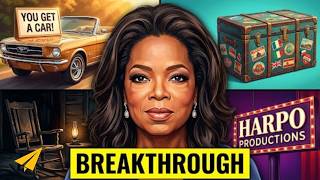
Oprah Winfrey traces her path from a farm in her grandmother's care to building OWN, crediting instinct and self-belief over mere desire. She describes sensing that news reporting felt wrong, finding her real home in talk shows, and how a scribbled note of the word "OWN" became her network. Her core lesson: thoughts shape reality, and believing in yourself matters more than wanting success.
Chapters
What's up, Believe Nation? It's Evan. My one word is believe, and I believe in you. I believe in your potential, and I want to see it be unleashed into the world to create something special for you, your family, and the world. And so to help you on your journey, I started the Mentor Me series to try to learn from people who've done a lot more than us, who've reached for the stars. And if we can learn about their mindset, their mentality, how they approach life, hopefully some of that seeps into us to help us become the best version of ourselves. So today we're gonna learn from Oprah Winfrey and her inspiring story. Mentor me, Oprah. And as always, guys, as you're watching, if you hear something that really resonates with you, please leave it down in the comments below and put it in quotes so other people can be inspired. And when you write it down, it's much more likely to stick with yourself as well. Enjoy.
I was raised on a farm with my grandmother for the first 6 years of my life. I knew somehow that my life would be different and it would be better. I never had a clear-cut vision of what it was I would be doing. I just always felt somehow— I remember absolutely physically feeling it at around 4 years old. I remember standing on the back porch— it was a screened-in porch— and my grandmother was boiling clothes because, you know, at that time we didn't have washing machines and so people would, you know, physically boil clothes in a great big iron pot and she was boiling clothes and poking them out. And I was watching her from the back porch and I was 4 years old and I remember thinking, my life won't be like this. My life won't be like this, it will be better. And it wasn't from a place of arrogance, it was just a place of knowing that things could be different for me somehow, I don't know. What made me think that?
I thought that I was going to be a teacher. I was in my sophomore class at Tennessee State University. I'd already been working in radio since I was 16. And my— I remember I was in Mr. Cox's drawing class for theater. And I was a terrible drawer. He said I couldn't draw a straight line with a ruler. And I got a call in that class from a guy at the local Station, CBS, and he'd been calling me several times when I was working in radio. So I started working in radio at 16. I won the Miss Fire Prevention contest, another long story. And so when I went back to the station to pick up my prize, some guy said, would you like to hear your voice on tape? I said, sure. And I started reading this copy on tape. They called everybody in the building, said, hear this kid read. I was 16. They hired me in radio. So I was in radio at 16. And so I started getting calls about my freshman year to come into television. I'd never thought about it. And still was living at home and couldn't figure out how I would manage those. I had biology at 1 o'clock. And so I couldn't figure out how I would be able to manage my schedule. And Mr. Cox said to me— the one same professor who said you can't draw a straight line with a ruler, he said, I came back from taking this phone call, and he said, who was that? I said, there's this guy at CBS, he keeps calling me, wants me to interview for a job. And Mr. Cox said, that is why you go to school, fool. So that CBS can call you. That is why you're in school. He said, you leave now and go call him back. And I did, and I was hired in television. Not knowing anything about it. Having in mind Barbara Walters, but thinking, oh, okay, I can do that. Not knowing how to write or film or anything. And I think it was because it was the times, and I literally had somebody who was willing to work with me. That I managed to find my way. But I had to find my way because the reporting never really fit me. And what did work for me— I'm this old, I'm so old that when I started that it was a year of live action cam. And so it was like video cameras live. And so the news stations would do a live shot. They would throw to somebody live. Even if nothing was going on, just so they could say, "Live action cam." And what I found is I wasn't so good at the writing part, but if I was just standing up and talking about what had just happened, it was really good. And then I started to feel— so I started in '19 working in television, became an anchor immediately afterwards. My father still had an 11 o'clock curfew. Can you believe such a thing? That I am the 10 o'clock anchor. In Nashville, Tennessee, I am the woman on the newscast reading the news. And my father would say, be home by 11. And I'd say, Dad, the news is on at 10. He goes, and it's off at 10:30, so be home by 11. So I had a very strict father. So anyway, I could feel inside myself that reporting was not the right thing for me. Even though I was happy to have the job. I got an offer to go to Atlanta. I was making $10,000 a year in 1971, but still in college, so I was thinking I was doing pretty good. I got an offer to go to Atlanta for $40,000, which I thought, it's over. I'm gonna make $40,000. And my boss at the time said to me, you do not know what you don't know. "and you need to stay here until you can learn to write better, until you can perfect your craft as a journalist." And so, he said, "We can't give you 40, but we can give you 12." So I stayed. And you know, the reason why I stayed is 'cause I could feel inside myself that even though the 40 was alluring at the time, that he was absolutely right. So to make a long story short, 'cause I'd be here all day just talking about how it all came about. I started listening to what felt like the truth for me. A couple of years later, I moved to Baltimore. I could feel that as a reporter, and by this time, 22, I'm making $22,000. I met my best friend Gail there who said, oh my God, can you imagine if you're 30 and you're making $30,000? And then you're 40 and then it's $40,000? We actually had that conversation in the bathroom. So this is, I started to feel that reporting wasn't for me. But I had my father, I had my friends, everybody was saying, oh my God, you're an anchorwoman, you're on TV, I mean, you can't give up that job. And when I was, by the time I was making $25,000, my father goes, well, you just hit the jackpot. You're not gonna make no more money than that. That's just it. So I was torn between what the world was saying to me and what I felt. What I felt to be the truth for myself. It felt like an unnatural act for me, reporting, although I knew that to a lot of people it was glamorous. And I started to just, inside myself, think, what do I really wanna do, what I really wanna do? And I will say this, knowing what you don't want to do is the best possible place to be if you don't know what to do. Because knowing what you don't want to do leads you to figure out what is it you really do wanna do. So you discovered talk then, right? Around that time. I didn't discover talk, I was being, I got demoted. They wanted to fire me, but I was under contract, and they didn't wanna give up the $25,000. So they were trying to keep me on to the end of the year. So they put me on this talk, this is the way life works. They put me on a talk show to try to avoid having to pay me the contract out. And the moment I sat on the talk show interviewing the Carvel ice cream man and his multiple flavors, I knew that I had found home for myself. Because when I was a news reporter, it was so unnatural for me, you know, to cover somebody's tragedies and difficulties and then to not to feel anything for it. And I would go back after a fire, and I would take them blankets. And then I would get a note from my boss saying, what the hell are you doing? You're just supposed to report. Can't be that empathetic. Cannot be that empathetic. And it felt unnatural for me. So if I were to put it in business terms, or to leave you with a message, the truth is I have, from the very beginning, listened to my instinct. All of my best decisions in life have come because I was attuned to what really felt like the next right move for me. And so it didn't feel right. I knew that I wouldn't be there forever. I never even learned the streets in Baltimore because I thought— I was there longer than I thought. I was there 8 years. I should have learned the streets. But I kept saying to myself, I'm not gonna be here long. I'm not gonna be here. I'm not gonna be here, so I'm not gonna learn the streets. So when I got the call to come to Chicago after, you know, starting with a co-anchor and working in talk for several years, I knew that it was the right thing to do. And I knew that if I— even if I didn't succeed, because at the time there was a guy named Phil Donahue who was the king of talk and was on in Chicago and every Not a single person except my best friend Gail said you're gonna fail. Every single person when I left, my bosses by this time thought I was terrific and said you're gonna, you're walking into a landmine, you're gonna fail, you're gonna fail. Chicago's a racist city, you're black, you're not gonna make it. Everything to keep me staying. They even offered me a car and an apartment and all this stuff. And I said no, if I fail, then I will find out what is the next thing for me, what is the next true thing for me. It felt right to you, so you went for it. Because it felt like this is now the move I need to make. And I was not one of those people, you know, all of my, the people who worked with me in news, they would have their tapes and they'd have their stories and they'd have resumes ready. I didn't have any of that, because I knew that the time would come where I would, where what I needed would show up for me. And when that showed up, I was ready because my definition of luck is preparation meeting the moment of opportunity. And I was prepared to be able to step into that world of talk in a way that I knew I could do it. People refer to me as a brand now, the Oprah brand. I never knew what a brand was when I first started out. I didn't even know what that was. I became a brand by making every decision flow from the truth of myself. Every choice I made for every show that was going to be on the air, I made based upon, does this feel right? Does this feel right? Does this feel right? Is this going to help somebody? Is this going to help somebody? That's not going to help somebody. And I learned my biggest teachers were, were were people like the Ku Klux Klan and skinheads, because I was sitting on television one day doing an interview with the KKK, and I realized in that moment that the energy that I was broadcasting throughout the world was energy that I did not want to be a part of. And so I literally, in the middle of a commercial break, I just thought, I will never do this again. I will only allow my platform to be used for, as a force for good. And that there are many forms of the KKK, even if it's not called that. So I really made a conscious decision to use myself and to use the platform for that which I thought was going to enhance, enlighten people in a way. So that's a difference in that moment I stopped being used by television and made a decision to use television.
Quincy Jones had— I would not even say an important role, I would say the role in my acting career. Quincy Jones discovered me, and it's so interesting to me because when I was working as a television newswoman in Baltimore, and really all I wanted to do was be an actress, but I was doing television and I felt At the time, well, I can't quit this job because this is what everybody else wants to do. And if I quit this job, what am I going to do? And I was going to a speech coach at the time that the station had sent me to. They, you know, they have the broadcasting school, they send everybody to the same woman. And I was telling her, you know, I really don't want to do this. What I really want to do is act. And she says, my dear, you don't want to act because if you wanted to act, you'd be doing it. What you want to be, my dear, is a star. Because if you wanted to act, you'd be waiting tables in New York.
You'd be—
and I thought, now, why am I going to wait tables if I'm already working in TV? So I said, well, what I think is going to happen is I will be discovered because I want it so badly. Somebody is going to have to discover me. And she said, you just dream.
You dream.
You're a dreamer. So when it happened, I called her up. I said, you will not believe this.
I got discovered.
And it really was a discovery. It's like one of those Lana Turner stories, only— wasn't a drugstore, he was in his hotel room, saw me on TV. It was unbelievable. The interesting thing about that is that I truly believe that thoughts are the greatest vehicle to change power and success in the world. Everything begins with thoughts. I mean, the chairs that we're sitting in, the room that we're in, all started because somebody thought it. So I thought up The Color Purple for myself. I know this is going to sound strange to you. I read the book. I got so many copies of that book. I passed the book around to everybody I knew. If I was on the bus, I'd pass it out to people. And when I heard that there was going to be a movie, I started talking it up for myself. I didn't know Quincy Jones or Steven Spielberg or how on earth I would get in this movie. I'd never acted in my life. But I felt it so intensely that I had to be a part of that movie. I just, I really do believe I created it for myself. I wanted it more than anything in the world and would have done anything to do it. Anything to do it.
First day I went to school, I was in a classroom. By the time I was, you know, 6 years old, didn't go to school till I was 6 years old because I was living with my grandmother at that time. But she had taught me how to read, read the Bible, Bible stories. So I went into the classroom knowing Nicodemus, Shadrach, Meshach, and Abednego. I could spell all of those words. I thought I was, you know, I was preaching to my kindergarten teacher. So she was like, who is this girl? So I was never placed in an environment where I was ever made to feel inferior. I always felt like I'm the smartest kid in this room. And because I was never placed in a— never put in a position where I was made to feel less than, I didn't grow up feeling less than, you know. And the rest, as they say, is history. And the rest, they say, is history. And it's all about what you believe. You know, I say this to— when I do something on my network now called Life Class, the fundamental key to success is what you believe you believe is true for yourself. Not what you want, not what you desire. It's what do you believe. You know, you can say, I want to be the most successful person in the world, but if you believe that there's a glass ceiling and you're going to have a hard time kicking through that glass ceiling, you will be defined by the glass ceiling. And the great beauty and gift of my life is that I was never defined by the box that other people tried to put me in. Reading Newton's law, third law of motion, which says for every action there's an equal and opposite reaction, was like a religious experience for me. I just understand, I mean, all my bells and whistles and lights and dancing emojis went off because I could see that. I'd experienced a little bit of that in "The Color Purple," that beautiful line where, Whoopi, as Miss Celie says, "Everything you try to do to me is already done to you." Hmm. That struck me in particular in the movie. And I understood that everybody's actually saying the same thing. Newton's saying the same thing as Miss Celie is saying the same thing as what we in this country and in the other countries call the Golden Rule, that really what you put out is coming back all the time. What really struck me is that it's not do unto others as you would have them do unto you. It really is when you do, it's already done because that's law. Stedman and I were in a hotel watching some bad television, and I was complaining about the state of television, talk shows in particular, and he said, why don't you change it? Why don't you just get your own network? And I thought, I thought that that was a ridiculous idea. And then he started to talk about it and he wrote some things down. And I saw the word OWN. I thought, OWN, O-W. Oh, that's my— those are my initials. And I said, wouldn't it be something if I could create a network that was really about mindful— and I underlined the word mindful— television? 15 years later, those scribblings came closer to reality when she was approached by David Zaslav, the president of the Discovery Network. My view was, if we want to do this, you have to be all in. She paused, and then she said to me, uh, "It's meant to be." And we shook hands, and that's how our journey began. At first I thought, "Great, a network. Oh, geez, this is the dream I had." And I actually showed him the piece of paper where I had written it down and said— And as that started to settle in with me, I thought, "Whoa, what is this?" I've gotten myself into. This is a lot more work than I ever imagined. Are you scared? Very scared. I was very scared, and I would wake up in the middle of the night literally, like, clutching my chest, like, what have I done? What have I done? What if you fail? Hmm. That's what I was afraid of. That's what I was afraid of. The reason why I made the decision to go forward is because I believe that people deserve to have value-centered, inspirational programming for themselves. I believe that television has become, in many ways, banal. It has become insipid, and not all of it, but I think that I have something to offer.
Thank you guys so much for watching. I hope you enjoyed. I'd love to know what did you take from this video? What are you going to immediately apply somehow to your life or to your business? Please leave your thoughts down in the comments below. I look forward to hearing what you have to say. I also want to give a quick shout out to Mel Carpenter. Mel, thank you so much for picking up a copy of my book, Your One Word, and doing the review on your YouTube channel. I really, really, really appreciate the support and I'm so glad you enjoyed the read.
So thanks again, Evan.
Thank you for sending me the book and I wish you great success with it.
So thank you guys so much for watching. I believe in you. I hope you continue to believe in yourself and whatever your one word is. Much love, guys.
I'll see you soon. So let me give you the one word secret to happiness. One word. This is all you need to be happy.
The most important word ever. If you had to think of one word that's most important to you or that sums you up or that would be kind of like a little beacon, Hey Believe Nation, if you want to know what the most important one word is for Tony Robbins, Gary Vaynerchuk, Oprah Winfrey, will.i.am, and Howard Schultz, I have a very special secret video for you. Check the description for details.
More from Evan


How the Biggest Mistake in History Created A Trillion-Dollar Empire | Sergey Brin



9 Machiavelli Principles That Force People To Respect You | Machiavellian Philosophy



The First 10 Words That Instantly Ruin A Sales Conversation | Vanessa Van Edwards

The Top 1% Mindset Behind The First $5 Trillion Company | Jensen Huang (Nvidia)

