THIS Principle Can ACTUALLY Change Your Life! | Steve Jobs Motivation
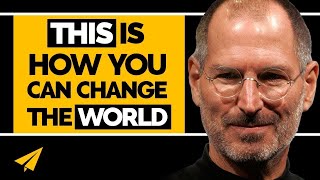
Steve Jobs explains how passion and perseverance shaped Apple, from early battles with IBM to the Think Different campaign. He argues the best managers are great individual contributors, that technology should serve customer experience, and that a small group of passionate experts keeps culture intact.
Chapters
Hello, Believe Nation!
I started the Mentor Me series with the goal to hang around people who've done a lot more than us, and hopefully by spending a little more time with them, some of their mindset, their values, their beliefs, their habits will rub off onto us to help us become the best version of ourselves. So today we're going to learn from Steve Jobs on motivation. Mentor me, Steve.
A lot of people come to me, they say, well, I want to be an entrepreneur. And I go, oh, that's great, what's your idea? And they go, well, I don't have one yet. And I say, well, I think you should go get a job as a busboy. Houseboy or something until you find something you're really passionate about because it's a lot of work. And I'm convinced that about half of what separates the successful entrepreneurs from the non-successful ones is pure perseverance. It is so hard. You pour so much of your life into this thing. There are such rough moments in time that most people give up. I don't blame them. I mean, it's really tough and it consumes your life. I mean, if you've got a family, and you're in the early days of a company, it's— I can't imagine how one could do it. I'm sure it's been done, but it's rough. I mean, because it's pretty much an 18-hour-a-day job, 7 days a week for a while. So unless you have a lot of passion about this, you're gonna not survive. You're gonna give it up. So you gotta have an idea or a problem or a wrong that you want to right that you're passionate about. Otherwise, you're not going to have the perseverance to stick it through, and I think that's half the battle right there. It's hard to remember how bad it was, you know, in the early '80s with IBM taking over the world with the PC, with DOS out there. It was far worse than the Apple II. They tried to copy the Apple II, and they'd done a pretty bad job, and you needed to know a lot. And so things were kind of slipping backwards, and Macintosh was You saw the 1984 commercial. I hope you have that in your archives. You know, Macintosh was basically this, this relatively small company, you know, in Cupertino, California, taking on the goliath IBM and saying, wait a minute, your way is wrong. This is not the way we want computers to go. This is not the legacy we want to leave. This is not what we want our kids to be learning. This is wrong, and we are going to show you the right way to do it. And here it is, it's called Macintosh, and this is so much better that it's going to beat you. And we are going to do it. And that's what Apple stood for.
Yes.
Mr. Jobs, you're a bright and influential man.
Here it comes.
It's sad and clear that on several counts you've discussed you don't know what you're talking about. I would like, for example, for you to express in clear terms how, say, Java in any of its incarnations addresses the ideas embodied in OpenDoc. And when you're finished with that, perhaps you could tell us what you personally have been doing for the last 7 years.
You know, you can please some of the people some of the time. But one of the hardest things when you're trying to affect change is that people like this gentleman are right in some areas. I'm sure that there are some things OpenDoc does, probably even more that I'm not familiar with, that nothing else out there does. And I'm sure that you can make some demos, maybe a small commercial app that demonstrates those things. The hardest thing is how does that fit into a cohesive larger vision that's going to allow you to sell $8 billion, $10 billion of product a year? And one of the things I've always found is that You've got to start with the customer experience and work backwards to the technology. You can't start with the technology and try to figure out where you're going to try to sell it. And I've made this mistake probably more than anybody else in this room. And I've got the scar tissue to prove it. And I know that it's the case. And as we have tried to come up with a strategy and a vision for Apple, it started with what incredible benefits can we give to the customer? Where can we take the customer? Not starting with let's sit down with the engineers and figure out what awesome technology we have and then how are we going to market that. And I think that's the right path to take. I remember with the LaserWriter, we built the world's first small laser printer, as you know. And there was awesome technology in that box. We had the first Canon laser printing, cheap laser printing engine in the world, in the United States here at Apple. We had a very wonderful printer controller that we designed. We had Adobe's PostScript software in there. We had AppleTalk in there. Just awesome technology in the box. And I remember seeing the first printout come out of it and just picking it up and looking at it and thinking, you know, we can sell this. Because you don't have to know anything about what's in that box. All we have to do is hold this up and go, do you want this? And if you can remember back to 1984 before laser printers, It was pretty startling to see that. People went, "Whoa, yes." And that's where Apple's got to get back to. And, you know, I'm sorry that OpenDoc's a casualty along the way, and I readily admit there are many things in life that I don't have the faintest idea what I'm talking about. So I apologize for that, too. But there's a whole lot of people working super, super hard right now at Apple. Avi, John, Garino, Fred, I mean the whole team is working, burning the midnight oil, trying to— and people, hundreds of people below them— to execute on some of these things. And they're doing their best. And I think that what we need to do— and some mistakes will be made, by the way. Some mistakes will be made along the way. That's good, because at least some decisions are being made along the way. And we'll find the mistakes, we'll fix them. And I think what we need to do is support that team going through this very important stage as they work their butts off. They're all getting calls, being offered 3 times as much money to go do this, do that, the valley's hot. None of them are leaving. And I think we need to support them and see them through this and write some damn good applications to support Apple out in the market. That's my own point of view. Mistakes we made, some people will be pissed off, some people will not know what they're talking about, but it's— I think it is so much better than where things were not very long ago, and I think we're gonna get there.
I think the Macintosh was created by a group of people who felt that there wasn't a strict division between sort of science and art. Or in other words, that mathematics is really a liberal art if you look at it from a slightly different point of view. And why can't we interject typography into computers? Why can't we have computers talking to us in English language? And looking back 5 years later, this seems like a trivial observation, but at the time it was cataclysmic in its consequences. And the battles that were fought to push this point of view out the door were very large. Woz focused mostly— Woz was the brilliant hardware engineer and focused on the core design of the computer. And I was worrying about which parts we ought to use and how we were going to build these things and how sort of somebody that wasn't a Woz was going to manage to buy all the extra parts you still needed to buy and plug this thing together, because you still needed to buy your own keyboard and your own display and your own power supply. And so you needed to be pretty much of a hardware hobbyist. Now, we made a very important decision, was to not offer our computers as a kit. Even though you needed to buy these extra parts, the main computer board itself came fully assembled. We were the first company in the world to do that. Everybody else was offering their little computers as a kit. And what that meant was, was there was maybe an order of magnitude more people who could actually buy our computer and use it than if they had to build it themselves. And the Apple II was actually the first computer to come fully assembled, where you didn't have to do anything. And the reason there was, it was our observation that for every hardware hobbyist, someone who could either build the kit themselves or at least find these 5 or 10 extra parts they needed, there were 1,000 potential software hobbyists. And if they didn't have to do anything with the hardware except use it, make— and at that time, that meant write their own programs. Still, there was a much larger group of people that could take advantage of this. So we wanted to reach them, and that was the real breakthrough in the Apple II. My entire life's been spent only in one industry, which is this one, and, uh, but I've been in it now for about 15 years, and I've seen a lot of people make a lot of things. I've seen a lot of people fail a lot of things. And my, my point of view on this, or my observation, is that the doers are the major thinkers. Uh, the people that really create the things that change this industry are both the thinker-doer in one person. And if we really go back and we examine, you know, did Leonardo have a guy off to the side that was thinking 5 years out in the future what he would paint or the technology he would use to paint it? Of course not. Leonardo was the artist, but he also mixed all his own paints. He also was a fairly good chemist, knew about pigments, knew about human anatomy, and combining all of those skills together The art and the science, the thinking and the doing was what resulted in the exceptional result. And there is no difference in our industry. The people that have really made the contributions have been the thinkers and the doers. And when you, when you, a lot of people, of course, it's very easy to take credit for the thinking. The doing is more concrete, but somebody, it's very easy for somebody to say, "Oh, I thought of this 3 years ago." But Usually when you dig a little deeper, you find that the people that really did it were also the people that really worked through the hard intellectual problems as well.
Our customers want to know who is Apple and what is it that we stand for. Where do we fit in this world? And what we're about isn't making boxes for people to get their jobs done, although we do that well. We do that better than almost anybody in some cases. But Apple's about something more than that. Apple, at the core, its core value is that we believe that people with passion can change the world for the better. That's what we believe. And we've had the opportunity to work with people like that. We've had an opportunity to work with people like you, with software developers, with customers, who have done it in some big and some small ways. And we believe that in this world, people can change it for the better, and that those people that are crazy enough to think they can change the world are the ones that actually do. And so what we're going to do in our first brand marketing campaign in several years is to, is to get back to that core value. A lot of things have changed. The market's a totally different place than it was a decade ago, and Apple's totally different, and Apple's place in it is totally different. And believe me, the products and the distribution strategy and manufacturing are totally different, and we understand that. But values and core values, those things shouldn't change. The things that Apple believed in at its core are the same things that Apple really stands for today. And so we wanted to find a way to communicate this, and what we have is something that I am very moved by. It honors those people who have changed the world. Some of them are living, some of them are not. But the ones that aren't, as you'll see, you know that if they ever used a computer, it would have been a Mac. The theme of the campaign is "Think Different." It's the people, honoring the people who think different and who move this world forward. And it is what we are about. It touches the soul of this company. So I'm gonna go ahead and roll it, and I hope that you feel the same way about it I do.
Here's to the crazy ones, the misfits, the rebels, troublemakers, the rebel tags in the school rules, ones who see things differently. They're not fond of rules and they have no respect for the status quo. You can quote them, disagree with them, glorify or vilify them. But the only thing you can't do is ignore them. Because they change things. They push the human race forward. And while some may see them as the crazy ones, we see genius. Because the people who are crazy enough to think they can change the world are the ones who do.
When this whole thing with Gizmodo happened, I got a lot of advice from people that said, you've got to just let it slide. You can't, uh, you You shouldn't, you shouldn't go after a journalist because they bought stolen property and they tried to extort you. You should let it slide. Apple's a big company now. You don't want the PR. You should let it slide. And I thought deeply about this, and I ended up concluding that the worst thing that could possibly happen as we get big and we get a little more influence in the world is if we change our core values and start letting it slide. I can't do that. I'd rather quit. You know, you go back 5 years ago, what would we have done if something like this happened? You go back 10 years ago, you know, what would you do if If, without going into that, we have the same values now as we had then. We're maybe a little more experienced, certainly more beat up, but, but the core values are the same. And we come into work wanting to do the same thing today as, as we did 5 or 10 years ago, which is build the best products for people. You know, there's nothing that makes my day more than getting an email from some random person in the universe who just bought an iPad over in the UK and tells me the story about how it's the coolest product they've ever brought home, you know, in their lives. That's what keeps me going, and it's what kept me going 5 years ago. It's what kept me me going 10 years ago when the doors were almost closed, and it's what will keep me going 5 years from now, whatever happens. So I don't see why you have to change if you get big.
We went through that stage in Apple where we went out and we thought, oh, we're going to be a big company, let's hire professional management. We went out and hired a bunch of professional management. It didn't work at all. Most of them were bozos. They, they knew how to manage, but they didn't know how to do anything. If you're a great person, why do you want to work for somebody you can't learn anything from? You know what's interesting? You know who the best managers are? They're the great individual contributors who never ever want to be a manager but decide they have to be a manager because no one else is going to be able to do as good a job as them. We wanted people that were insanely great at what they did but were not necessarily those seasoned professionals, but who had on at the tips of their fingers and in their passion the latest understanding of where technology was and what we could do with that technology, and who wanted to bring that to lots of people. So the neatest thing that happens is when you get a core group of, you know, 10 great people, it becomes self-policing as to who they let into that group. So I consider the most important job of someone like myself, is recruiting. The best way I came up with to affect change at Apple was by example, and that was probably more than anything else the key reason that I spent 2 and a half years of my life on Macintosh, was to try by example to say, hey, here's a better way to do things. And it turns out it's worked. I mean, most everything at Apple now has looked at the Macintosh experience and come in and said, hey, we can take a lot of these concepts and apply them, make them better in some ways, and model— you know, every other factory we're doing now is modeled after the Macintosh factory. Every other product team that's doing new product is being modeled after the Macintosh team.
The group of people that do not use quality in their marketing are the Japanese. You never see them using quality in their marketing. It's only the American companies that do. And yet, if you ask people on the street which products have the best reputation for quality, they will tell you the Japanese products. Now why is that? How could that be? The answer is because customers don't form their opinions on quality from marketing. They don't form their opinions on quality from who won the, the Deming Award or who won the Baldridge Award. They form their opinions on quality from their own experience with the products or the services. And so one can spend enormous amounts of money on quality, one can win every quality award there is, and yet if your products and you don't live up to it, customers will not keep that opinion for long in their minds. And so I think where we have to start is with our products and our services, not with our marketing department. And we need to get back to the basics and go improve our products and services. Now again, quality isn't just the product or the service, it's having the right product, you know, knowing where the market's going and having the most innovative products. Is just as much a part of quality as the quality of the construction of the product when you have it. And I think what we're seeing is the quality leaders of today have integrated that quality technology well beyond their manufacturing, now going well into their sales and marketing and out as far as they can to touch the customer, and trying to, to create super-efficient processes back from the customer all the way through to the delivery of the end product so they can have the most most innovative products, understand the customer needs fastest, etc., etc.
When Bill and I first met each other and worked together in the early days, generally we were both the youngest guys in the room, right? Individually or together. I'm about 6 months older than he is, but roughly the same age. And now when we're working at our respective companies, I don't know about you, but I'm the oldest guy in the room most of the time. And that's why I love being here. Happy to oblige.
Happy to oblige.
And, you know, I think of most things in life as either a Bob Dylan or Beatles song, but there's that one line in that one Beatles song, "You and I have memories longer than the road that stretches out ahead," and that's clearly True here.
Well, you know what, I think we should end it there.
Let's just end it there. I'm gonna have a little tear right here.
Thank you, thank you very much.
Thank you so much.
Thank you guys so much for watching. I'd love to know what you thought of the video. I'd love to know which clip resonated most with you and why, and what change or realization you're gonna make as a result of watching this video? Leave it in the comments below and I will join in the discussion. I also wanted to give a quick shout out to Kuldeep from QuickTimesApp.com. Kuldeep, thank you so much for buying a copy of my book. It means a lot to me. For your chance at a shout out in a future video, make sure to pick up a copy of the book and email in your receipt so we can keep track. Thank you so much for watching. Continue to believe, or whatever your one word is, and I'll see you soon.
More from Evan


How the Biggest Mistake in History Created A Trillion-Dollar Empire | Sergey Brin



9 Machiavelli Principles That Force People To Respect You | Machiavellian Philosophy



The First 10 Words That Instantly Ruin A Sales Conversation | Vanessa Van Edwards

The Top 1% Mindset Behind The First $5 Trillion Company | Jensen Huang (Nvidia)

