This Strategy Is Going To Be VERY Different for YouTube Creators…
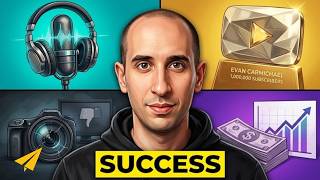
Evan Carmichael argues most niches aren't saturated and YouTube success comes from unique perspective, not subscriber counts. He built a 63-person team by outsourcing, monetizes through leads and equity deals rather than AdSense, and advises creators to shift from chasing numbers to building community that fuels business opportunities.
Chapters
YouTube isn't just about the numbers or even about content creation alone. It's about leverage. It's about strategically using your time and resources to maximize your impact, not just on your channel, but in every aspect of your business. Now, you might be thinking, but Evan, the space is so saturated. There's already someone doing what I want to do. And here's the deal. Most people get stuck there. They see the competition and they think it's game over before they've even started. But let me tell you, that is a limiting belief. The truth is most niches are far from saturated. And even if they were, it wouldn't matter. Why? Because it's not about being the first or even the best. It's about being you. Your unique perspective, your story, your experience. That's what people connect with. And when you bring that to YouTube, backed by smart strategic thinking, you're unstoppable. So when you're looking at those massive subscriber numbers and thinking, I could never get there, remember this. It's not about chasing numbers. It's about creating something that resonates. That builds a community that adds value. And when you do that, the numbers will follow. YouTube is where people go to learn, to be inspired, to grow. And if you can meet them where they're at with content that serves, that challenges them, that pushes them forward, you'll not only grow your channel, you'll grow your business, your impact, and your legacy. I'm thrilled to dive into this conversation today and showcase not just the tactical side of growing YouTube, but the mindset, the strategy, and the belief system that fuels real lasting change.
Let's get into it. Hey guys, welcome back. Look, I'm super excited today. We have a man who has been super important in my life. He's been a business mentor, he's been a YouTube mentor. More importantly, he has over 4 million subscribers on YouTube alone. One of the things that I'm hoping to showcase today for you guys is not just his YouTube savvy, we'll cover that as well, but his business savvy. He is a business genius and I'm hoping to showcase that for you guys today. So guys, help me welcome the one and only Evan Carmichael.
What a setup. Okay, I hope I deliver something here.
Well, the good news is I get, you know, you and I get to have all these great conversations behind the scenes, and I kind of wish the last couple days we'd had a camera on us the entire time. Like us brainstorming business initiatives and stuff like that. And I do want to touch on that. I absolutely want to get to the business savvy part because you are a one-of-a-kind mathematician of sorts in your brain of how you see things and piece things together. And you've really challenged me to think bigger.
Okay, well—
Right, and really like think strategically and use leverage properly as far as like time versus income and ROI and all this kind of stuff. We're gonna get there. But more importantly, I wanna touch base on YouTube, right? So, 'cause I know that's obviously one of the big feathers in your cap. It's one of the things that you've done really, really well with. Obviously you've bought and sold a business. You've done a lot of really amazing things. But in the YouTube genre specifically, there's been a mass growth spike in YouTube amongst media platforms. Why is YouTube YouTube such a viable platform and why should creators consider YouTube more than anything else?
It's just where everybody's going to learn. I've been on YouTube since 2009 and in the first 10 or so years of my career, I was focused on trying to get people, just trying to convince people to come on.
Yeah.
Like there's so many people here, like make content. If I met someone like you, like Stephen, you sold your business, you built an almost 9-figure business. It's like, you gotta get, making content on YouTube. And most of my conversations would just fly over people's heads. And a lot of people maybe had a channel and posted a video or two, but nobody was creating consistent content. And I felt like I was beating my head against, you know, the door and just nothing was happening. But it's caught up. Like, people are seeing others build their brands. Gary probably had a big role in that, at least in our world. Gary Vaynerchuk. In terms of building his brand and making content and being consistent at it. And people started seeing the results that they were getting, and then said, okay, I know more than that guy, or I could do this too, or I should be building. People go there to learn, and the demand's been there for a long time. The supply is just starting to catch up, 'cause whatever problem you're facing, you're probably going to YouTube to go and look for it. You're not going to the library, you're not asking your mom, you're searching on YouTube, how do I blank, and there's videos. And other people are showing up where, That could be you. And so people are now seeing it, so the past few years there's been more people coming to me, it's like, okay, this is important. How do I do this? What am I supposed to be working on? And so I don't have as many of the conversations like, you should be on YouTube. It's like, okay, I know I need to be on YouTube, how do I do it?
How do I do it right? Yeah, that's awesome. And the crazy part is, is your client list is pretty strong. Like, the YouTube channels you're involved in. I'm a big believer in a lot of the programs that you've got. I know you're helping a lot of creators at a high level. And I invite everyone seriously to check out Evan. His Mover Maker program is a prime example of a way to really get a firm understanding on what to do and how to do it and when to do it when related to YouTube. But one of the things I want to touch base on YouTube specifically is how has YouTube's strategy of success changed when, you know, if you were to do a Google or ChatGPT search, it's like, okay, you know, how many people are actively creating content on YouTube? And it's a lot of folks. right? So if I'm, if I'm a newbie and I'm coming into YouTube, I'm like, okay, well there's already somebody talking about my, my niche, my genre, my thing. How do I, how do I kind of open up my, my ability to perform or, you know, have an audience on YouTube if there's other people in my niche?
Well, it depends on the niche. Mm-hmm. Most niches are not saturated. Mm-hmm. So if you go to your construction business, yeah, that you just sold, Who's making killer construction content? Like, not that many people. Even now, not that many people. There's some, but who are making decently high-quality videos in construction? 5 people? I mean, I'm guessing. It's like you probably put it on one hand. And then if you are an expert, like I work with people who are experts at their thing.
Experts in the field, yeah.
Like, you're an expert at your thing. I'm not the Slime Channeler. Yeah. I work with thought leaders who are like the experts in their field, and they're trying to build their influence and make more money doing it. So construction, you could look at the 5 guys who are doing okay. It's like, I know more than these guys. These guys haven't built and sold a business before. I could do that. And so it's like, this is what I would do with people when they say, oh, my market's really saturated. Like, is it? Tell me. What would people search? And we do a search and there's not that many channels showing up. It's the same 2 or 3 channels popping up over and over and over again. It's like, okay, so there's 3 channels, cool. And then we look at the content. It's like, do you know more than this person?
Yeah.
It's like, yeah, okay, so what are you talking about? Right? So for most industries it's like that. Inside of speaking businesses, that's more competitive because speakers should be on camera making content. So a lot of the, personal development, speaking side of things, that's harder and more saturated and a lot more competition. And so if you're just talking about mindset stuff, you're up against Tony Robbins, and you're up against Mel Robbins, and you're up against Gary Vee. So that's gonna be harder to win at, and there's strategies around it. But for the most part, for most entrepreneurs, for most thought leaders, for most experts, it's still super wide open. In your industry.
Yeah, absolutely. You know, that's another thing I was thinking about too is content in general. Like one of the biggest struggles, and you've helped me a great deal with this, even with the repositioning of our brand recently. Content, they say content is king. What they don't necessarily tell you to do is what content to create that suits you, that kind of suits your— So how does someone, we'll do 3 different levels. We'll start with someone who's just getting started at YouTube. Somebody that's maybe at the 10,000 subscriber mark, and then somebody at the 100,000 subscriber mark. How do you know what adjustments to make to make your content more valuable to your audience to serve them in a better way?
So before getting to a subscriber count, I will look at how do we try to make money from this? Because if you're making money, you're gonna stay more consistent on it. If it's just this sinkhole that you're pouring money into, you're less likely to stay consistent on it, right? This is the problem. And even if you have a lot of money, achievers, they don't like just pouring money and losing money on something.
Yes, that's true.
So whether you have 0 subscribers, 1,000, 10,000, 100,000, whatever, or 1 million.
Yeah.
Well, 1 million, we're starting to get more opportunities, but even 100,000, the opportunities aren't giant. Yeah. And so it's like, how do we build a business model around your channel? I remember the first YouTube event I went to, I got invited and I was one of the smallest channels. I had like 300,000 subscribers. Only creators. And I was talking to the keynote speaker who had millions of subscribers at this point. Like, oh my God, this is my— I get to learn. He wasn't in thought leadership, but nobody in thought leadership had millions of subscribers at that point. And I was like, I'm excited to learn about his business, what he's doing. And he's like, yeah, I'm like, I'm working on hiring my first assistant for my company. It's like, what? You've got millions of subscribers already and you're just making enough money to hire an assistant at this point? And it's because it was his first business and he just didn't know how to turn subscribers into dollars. And I had already built and sold the business and venture capital and all that before coming into this. And so I was already, this is a business that I'm trying to impact the world, but the way to impact the world is to be able to have a team to help me do it, right? We just did a headcount. I'm presenting at my mastermind tomorrow, 63 people on the team. So I could do a lot more damage, a lot more impact, a lot more good, a lot more reach. With 63 people helping me versus me trying to do this on my— even here, being here, right? I mean, Alex helping set up, Danny behind the camera, Katherine on the audio. It's like, I don't know how to do any of this stuff. If it was me, it'd be like with my phone trying to figure out how to— on a trampoline. It would be terrible. It'd be the worst, right? I would not have impact or reach. And at the beginning, it was me doing everything. And I was making one piece of content a week. Because I was doing everything myself. And the first hire I had in this business was an editor, video editor, who allowed me to go to a video a day because he could edit better and way faster than me. And so I'm always thinking, how do we turn this YouTube thing into a business? And it's usually easiest when they already have a business. So I'm not mostly working with influencers who don't have a business and they're just trying to get famous. I'm working with people who have a business and they, they're trying to take their knowledge and bring it to the world and also grow their business. So usually, regardless of how many subscribers they have, uh, we're thinking, how do we take this business of yours and how do I generate more business for you? Because if we can bring in an extra set, 7 figures for you, for your business, yeah, at 10 subscribers, like, let's go and do that first. So that you can hire a team to then help you scale. Because to go get the million is going to be a lot of work and a lot of team, and that's going to cost money. So let's get you money first and prove that it works, and then we can worry about the other type of content. So that's how I'll usually approach it. If you're hitting a million, now we can start— now we're starting making money probably off of AdSense. Like, it starts to be a meaningful number. The channel itself is generating revenue, but $100,000 still, it's like you're not paying yourself very much, you're not really hiring a team for most people at 100,000 subscribers. So it's still the number one problem is like, how do I make money? And I'm a passion, purpose-driven first guy. But in order to realize your purpose, you need to have money to fund it.
[Speaker] Yeah, now I was thinking about that too. There's an old term called, there's no margin, there's no ministry. If you wanna scale an organization, it does require a team. Those people, turns out, like to get paid, at least to pay their bills anyway, you know? You know, so there's, you and I were talking about briefly about this, some of, I would say some of our friends, maybe a couple mutual friends, I know I struggled with this early on with selling without serving or serving when selling. You know, like, just like, how do I position, you know, kind of think through it? And one of the things you challenged me on uh, that was a monumental shift in my mindset is I don't have to go out of the— come out of the gate and make money on YouTube specifically, but YouTube drives lead sources towards avenues for me to make money and monetize to then reinvest and scale. When it comes to actually creating a monetization path, um, I want to dig in a little bit deeper because— and at least showcase it because I feel like that was a monumental shift for me. So you were able to help me understand that You don't necessarily have to monetize based on viewers and subscribers. That will come in time by being consistent. But thinking outside of the box a little bit on monetization's path, you know, we've brainstormed a few different things, and using YouTube as a conduit to bring in lead sources and to develop, you know, develop value for the audience, but then shaping up an outside, a B2B or B2C play in regards to monetization. What are you seeing right now that actually works for a lot of different thought leaders? I know it's gonna be a little bit different for each one, but what are maybe 3 lanes that you see that people aren't really thinking of?
So I would look at it as I'm trying to make a meal from the ingredients we have. Where if we're trying to make money from our views and subscribers, that's like we're trying to grow new crops.
Yeah.
And we got to get out there. We got to till the soil. We got to— it's going to take a while before that starts producing wheat to then be able to grow to make something with. Where we already have ingredients. Like, how do we eat off of the ingredients that we've got right now? That's usually the creative challenge at the beginning, to think, how can we take our ingredients and make money? So I'm always asking, what are you selling? What do we've got right now? If I look at your journey, I don't know how much the audience—
Oh, you can share as much as you want. My audience knows I'm very vulnerable with it, so.
So let me— if you go back, we've known each other for how many years?
About 3 and a half, 4 years.
Yeah, okay. So if we look at the early days, If we're having this conversation at the very beginning, which I think I had maybe 1,000 subs, maybe, maybe 1,000 subs, zero subs, 10 subs. I'm thinking of starting this channel, whatever, right? You had a lot of success in a real estate business. You still had your real estate company going, but you're now like, I want to serve, I want to help. I want to— I've learned all these mindset hacks and shifts and become a better person. I want to give back. And that's what we all want to do. We learn something we want to teach and we want to help, we want to serve. And you went down the path of, okay, we're gonna have a live event, I'm gonna have my funnel all set up, we're gonna have my course all set up and everything. And the challenge with that is you need big audience to make it work. And it's a hard industry to break into because you're up against a Tony Robbins and everyone else.
And they have crazy ad spends, they can outspend me.
They can outspend you. And brand. They have outbranded you already. Doesn't mean that you can't catch up, you can't close the gap. You'll get there. You're a worker, you're a grinder, you'll get there. But that's, I don't want to at the beginning, like that is the path of you're out like tilling the soil and planting seeds, right? It's like, I don't wanna do that at the beginning. 'Cause it just takes too long. To your credit, you didn't quit. This is what I told Tom Bilyeu in the early days. I was like, I hope you keep going. 'Cause I love, I loved his start, and I loved his energy, what he was trying to do. And I see so many people who are like him come from, I have a billion-dollar exit or whatever exit. Now I'm going to start a YouTube channel. I've seen it so many times. And then 3 months later, 6 months later, they fizzle and they quit because they're not actually committed enough to it. It takes too long to generate revenue. So I told him, I hope you don't quit. I need to keep doing this. Not that my words were the thing that made him. It's just like my own desire to see him win was so strong.
Let's be clear for a second. A lot of people listen to you when it comes to YouTube. Very successful people with big channels.
Sure.
Let's be clear. I know you're humble and all, but let's be clear.
We've helped Tom, but I'm sure it's not my words saying please don't quit that— but it's just my desire to see him win, right? So like, to your credit, you didn't quit where most people would in that situation. 'Cause it looks like you're doing everything the right way. It's like, this is what Tony's doing, this is what other people are doing, so I'm gonna model this path, is what I'm gonna do. So I'm gonna launch my event and I'm gonna have my course and I'm gonna have my, and then it's hard, it's like, that's all great, but there's no audience. And so you have to do the work to till the soil and all that, which I just don't wanna do at the beginning. So I would look at how do we leverage your, Like, what could we actually sell that's in service of the new vision that we're trying to create?
Yeah.
So if your background was in construction, that's where you're at. It's like, okay, how do we, how do we turn this construction thing into something? How do you— I would try to spin it as like, do you take equity in some construction companies that are starting up? Now you don't have to deal with the mess of construction, but you just have to mentor the people, and then you make content around that. And so The excuse to get to know them is to make content, but then you're also taking a percentage of their company. And so we're making money so that as these guys— not just equity, but hopefully some kind of royalty revenue percentage or something— so that you're making $100,000, $200,000, $500,000, whatever from that, that then can continue to fund the channel. That then gives you the funds to go and start hiring people to till the soil and do everything else, right? That's what you had to work with. Cool. Then you went and you opened an event center, right?
Yeah, I did okay with that one.
But it's great, right? I love it. Like, I wouldn't tell you to do it because it's, again, it's like we're starting a new business. Yeah. And that one worked out.
In fairness, I already owned the property, so that helped.
You owned the property, but you needed to learn a whole bunch of stuff that you knew nothing about. Yeah. Right? Coming from construction, sure, you could build it and all that, but the cameras and the gear and the setup and the— It was fun.
Expensive fun.
See, fun is great, and we want to have passion. Like, I love what I'm doing too.
Yeah.
But there's a difference for me of like, if you treat it like a business, I try to actually treat it like a business instead of a hobby. Right? So like, you can have fun, go play badminton or crochet or learn something else, right? Versus I need to make this, because if you came to me and say, I want to make this a business. Fun, yes, has to be part of the equation. I'm not gonna tell you to do something that you hate. But that's a risky long shot that most people don't hit on. Just like the courses. Not that the course thing couldn't work. You could have dropped $1 million in ad spend and maybe it works out. If I'm looking at you from the outside, I wouldn't bet on that working. I wouldn't bet on the event thing working either. And you proved me wrong, not that we even had that conversation. It's not what you come from and now you're tilling the soil and trying to figure out how to build something new that could have worked for somebody, sure. Would it work for you? Probably not, because you don't know anything about the production business, and you don't know anything about gaining the clients. You don't— you're not connected enough to the people who are. It's not like people are banging down your door, Stephen, we need to have an event center, we need to have an event center. And it's like, in North Carolina, right? Hey, right now you—
I mean, I did learn, I did learn that you moving to Utah, it's gonna be a whole lot different with that, with facility there. Just call me once.
Well, now you're much better set up too, right? Now it makes more sense. Then you willed it into existence. There's this great Bill Gates quote where he's— he was in the early days of the computer industry and software. The standards hadn't been set yet for what the computers would be, what the software was going to be, operating systems, all that. And Bill said his greatest compliment that he ever received was when One of the guys in the industry said, we think Bill is wrong, but he's just gonna make it happen. And then he made it happen, right? And so like, that's similar. Like, I would never tell you or someone like you open an event center because it's just too long to get a payoff and it's probably gonna fail, but you made it work, so that's great. But I'm— it's like that wasn't part of our ingredient list. Yeah, right. So you made that happen. But I'm always looking for what is the ingredients. So now that you have that and it's working, cool, let's expand on that. Do the events, you know. Now you're way better connected. You're gonna make fewer mistakes. You have contacts. Awesome. Go off and do it. Um, all the while we're, we're starting to build our thought leadership and our brand and our content, etc. But now that you've, you know, your whole serve, don't sell concept, you now help people with their launches and help them generate millions of dollars through their programs. Cool. You've seen that. That's now an ingredient we can work with. Leverage that to go do it for other people and do more. You didn't have that when you're coming out of the construction industry.
Sure.
So at the beginning, I'm always trying to find what's the thing that we can work with to start bringing you in 6, 7 figures? Because most people with the amount of money you've spent, to figure this out, right?
I spent a dollar or two.
Most people, even independently wealthy people, I'm fully invested. Right? Would not spend that much, would not invest that much. They would quit along the way. And it doesn't mean like you quit, you suck. They're just, okay, this isn't working, I'm gonna move on to the next thing. You hang in anything long enough and you're a fighter like you are, and your audience, like you'll figure it out. But most people just don't, I don't have the patience for it. So ultimately, all I want to teach people to do is how to get their message out to the world. I think people need to hear your Unstoppable Mindset and all of your methodologies. People need to hear that. The challenge that I found with people was that they just stop. They need to see a return faster. So I've had to adapt. And so when I'm talking to somebody, again, back to your original question of like, 10, 100, 1,000, whatever subscribers. Well, how do we, we need to start making you money first. Let's show that, 'cause people say, well, I don't have time for YouTube. Great, that's like the time is always the most, the higher up you are, the more successful you are, time is even harder to get access to. But if it was the number one driver of revenue for your business, you spend more time on it.
Yeah, that's true. We know it's, and again, I think the major shift for me recently has been I don't have to make money on YouTube through subscribers and AdSense and stuff right away. That can be a long-term play and it'll build and it'll be there, but I could actually use it as a source to generate interest in other things that we do that therefore make money.
Yeah.
Um, and I wasn't thinking like that at all, and I was looking at YouTube especially for the first 2 years, I was like, good Lord have mercy, this is a loss leader. Takes a lot of my time, a lot of my energy. I love the people and I love serving, I love helping, I love giving aha moments, but this is expensive, you know? And it wasn't until we started talking about how do we build a business model around the endeavor of content creation that kind of goes out to the next ring of businesses I already own or acclimate in or work around that it really made a lot of sense. Now you brought up a lot of insight into relationships and collaborations and things of that nature. I'm a firm believer, especially being around this industry now for several years, this quote unquote thought leadership world, personal development world, that relationships are literally, they're vital from my perspective. How do you determine nowadays who to collaborate with, who not to collaborate with, as, you know, to prevent from getting burned, but also increase the chance of a win-win success? How do you see that relationship? How do you see relationships?
There's a line, like when somebody says something great and they say, "Oh, I'm gonna steal that." Yeah. It's like, well, it's a gift, so you can't steal it. Yeah. I don't feel like I've ever been burned, but other people might look at the situation and say that I was burned. I work with people for as long as it's fun and I'm helping and it feels congruent.
Yeah.
And the second that it doesn't, I'm on to something else, right? I mean, there's been lots of people who we've helped and you didn't get paid at all, or you didn't get paid what you're supposed to get paid. Like, oh, I guess— I don't know, I guess I didn't. Okay. Yeah, I don't know. I don't, I don't care enough about The money, I guess. We make money. And I want to make more money. But there's no— like, I've never fought a lawsuit. We've never gone to court. We've never even had to. You don't like what we're doing? Cool. Like, we'll move on. I think I've been fortunate to be around people who keep wanting to come back. And we try to do good work and try to support them. I think that brings in the right kind of people. But I don't know. I don't even think about it. I don't go into anything thinking, what if this guy burns me? It's not ever part of my— maybe I'm too trusting. And maybe then I had been burned, and I just wash it away. I don't know. I just don't— it's not really part of my equation. I do a lot of work. So like I say, Friday afternoons, I help my friends. And friends of friends. Hey, Susanna, no barking. So Friday afternoons I spend with my friends and helping friends of friends. And it's just giving. And I'll have the whole afternoon and I'll just be on calls with people. And that I would give to the point where like I didn't have any control over my schedule anymore. So that's been my, like, can you help this person? Can you help this person? Yeah, happy to help.
Yeah.
But that became my solution. Like, I'm gonna save it for Friday afternoons. But I don't keep track of who it was or like what they owe me or, I don't know. And if we did a deal together and I delivered my part and then you screwed me over or burned me or whatever, like, okay, whatever.
Yeah, it's not gonna stop my career.
For me, like my mindset going in would be like, okay, whatever. I'll just replace Goggins with somebody else.
Man, I thought I was special till just right about now.
It's like, and that might sound egotistical, but I just think it's more, I guess, just an abundance.
It sounds more like an acceptance.
It's just abundance. It's just like there's so many opportunities that if we're fighting over something, I don't want negative energy. I will pay to get rid of something.
Well, one of the things you taught me is, and that we were doing, that you and I were going on a walk somewhere and, you know, when you step into the personal development space, there's all kinds of things to learn. From the people to nuances to tech to all kinds of stuff. And we were talking about specifically about relationships. And one of the things that one of our mutual friends told me before is some people are scuba diving people and some people are snorkelers.
Yeah, that's a Randy Garn quote right there.
That's right.
Yeah.
You know, and it got me thinking a little bit because, you know, you kind of said the same thing in a different way in that you said, hey, some relationships are transactional, that's okay, it's cool, it's like you're doing business and, you know, business is done, it's cool, you move on. And other relationships, you kind of have a lot more of a relational undertow or, you know, kind of front of mind and stuff like that. And it gave me a different perspective tool, you know, to, as someone who's been burned a lot in business over 25 years, I mean, I've just, you're in business long enough, you're gonna have things that don't meet your expectations.
Well, I've had lots of things that don't meet my expectations. I just don't interpret that as being burned. Yeah.
Well, that's what I'm getting at. That's one of the reasons I wanted to bring it up is because I think your approach to relationships is a little bit different than what you would see in natural human behavior.
Oh, okay.
Natural human behavior is like—
I'm not a natural human being.
You're unique, Evan, for sure.
Like if we did a business, we're gonna do it, I'm going to, Being an investor in your event space in Utah, right? Cool. And I don't like how it's being run. Things don't go well. I'd just be trying to find like, okay, Evan, this isn't working for me. How do we— I need to be out of this business. What's the best way? And any agreements, if I brought clients in, I'd have to let them know. Like, we just— how do we navigate it? And you say, well, but I still— Like, you still owe me $50,000. Here's your $50,000. Is that what's gonna— here's $50,000. Yeah. That I get burned? Like, and then I'm not even thinking about you or anything else. And I'm on to the— 'cause that thing takes 7 months of stress and calls and late nights and just that 7 months I want back. 'Cause I'm gonna create something awesome in those 7 months. Yeah. And so a $50,000 check or whatever is gonna get me out of it? I'm out of it. But I don't see that as being burned. It's like, I just— if you screwed a whole bunch of people over and I made the wrong call, I also just assume I can always make it up to somebody. So if you launch your event center, and then I say to Tom, Tom, you should go to this event center, and then you just crap the bed and you like—
God forbid.
You just give a completely terrible experience to Tom, and Tom's like, WTF, Evan, you told me Steven was the guy, and like, I lost all of this. Okay, I just, I would make it up to Tom to the point where he's okay, we're even now, or whatever. It's like, or more. Yeah. I don't want anybody ever being unhappy with me, so I would work hard to make sure that they're not. Yeah. And whatever we need to do to overdeliver, even if it was Not my fault. It's like, it's your fault, but I bet on you, so now it's my fault, right?
Yeah.
That's how I approach it. I can always make it up to somebody if I wanted to. And then when I'm working with somebody, I always start with some small project to see what we can do and see how we work together before going on some big thing.
Yeah.
I mean, Danny here who's filming us, we met how many years ago? 6 years? 7 years? Yeah. He was a former truck driver for UPS. I keep saying FedEx. I was going to screw it up. For UPS, like hated his life.
Yeah.
Quit, became a videographer. Only returns. The hot truck, unboxing packages, right?
Yeah.
And so I caught him like at the early part of his career. He had a different business partner at the time. I think I posted on Craigslist or something. I don't even remember how we got connected.
Yeah.
Instagram. Instagram. And, um, I said okay. Like, I was trying out a bunch of different guys because part of it is the vibe and how you get along. It's like, okay, well, I don't, I don't even know what I'm doing yet, so why don't you come over for a day and film and, uh, we'll just see what happens.
Yeah.
So he came over with his, with his business partner at the time, and, uh, they filmed me for the day and they, we turned something out. And, I mean, we used it. It wasn't ultimately, like, what we were gonna make.
Yeah.
But I just love Danny.
Yeah.
You know? And then when we did our tour in 2019, it was me, Nina, and Danny for 90 days. Just the 3 of us.
Did he have to hold your neck?
Like, when you were going through rehab? I mean, Danny was already doing a lot, but then when I broke my neck, he had to do, like, a lot more than he was even doing before, right? And Nina, too, 'cause I was— all I could do was talk. Ever since then, it's like, okay, we're doing an event, whatever. Hey Danny, are you free on whatever time? And he's mostly here. I think one time he couldn't, but he found somebody else to come and do it. So I always start with some small thing with somebody. And maybe that's, maybe, I mean, I'm not, I guess, strategic about it, but thinking backwards, you know, my Friday afternoons when I'm helping people, that also gives us a good sense of, do you wanna do something? You know, was it a good vibe with these people? Or not.
Yeah.
So we start with something small and just see, was it like you date before you get married?
Is there something there?
Yeah. Yeah.
I love it. It's interesting, you know, I was thinking about in the last 3.5, 4 years, you know, I was already really working hard to build, you know, it's referred to as a thought leadership organization. You know, just I'm sharing my ideas, my concepts, my strategies, my tips, my tools, what worked for me, right? And in doing so, you know, our mutual friend Tim Schmoyer is actually the one that referred me to you. I'll give him a shout out because that was a pretty important—
I love Tim.
Yeah, I love Tim. Pretty important thing. But when I first met you, one of the first things you told me was, you need a Beau. And I got to thinking about Beau as a huge part of our team, a huge part of your team, a huge part of his own entity and all that good stuff. Love the guy to death. He's got great ideas. He's always been relentlessly in my corner. And When I think about the kind of people that I've been introduced to, and it's taken time, like, you know, to the dating respect, you know, like you don't just dive in and say, okay, well, here's all my contacts, enjoy, kind of thing. But when that dynamic began to shift, everything about personal development, thought leadership, and things of that nature, other key folks that came into my life as a result of our connection, first of all, I wanna thank you for. It's been a huge, huge blessing in my life. I'm very grateful for it. You were the first, I'm gonna even get emotional a little bit. You were the first person to actually quote unquote believe in me. And I know belief is a huge part of what you stand for. Why is belief so important to you? And why is that like at the core of everything you do? I mean, it radiates through everything. How did that become your battle cry?
Well, thank you. I think everybody has a most important core value. I wrote 2 books on it. You bought a whole bunch of both of them.
I bought a whole bunch of both of them 'cause they're great books. Like they're legitimately great books.
And it's always something, your most important core value is always something positive and that's what you wanna spread to the world. So it's also something you're working on. So belief is mine. It's been a thread throughout my whole life. Whenever I couldn't do something, my parents would tell me, "You're Evan Carmichael. You can do anything you believe that you can." And my favorite movie is Seabiscuit, which is about a horse that's too small and a jockey that's too big and an owner that's broke, and they somehow all find each other and, like, win all these races. It's, like, the belief story. And so the best parts of my life is all— looking backwards, they all have this thread of belief. And it's still something that I'm working on, the belief to do the next thing. So even looking at my— I have a slide tomorrow for the mastermind where I did my head count. And there's 63 people on our team now. And then the slide is me with my head exploding because it's like, that's crazy. I didn't think it. I don't think I have 63 people on my team. But then saying that it's crazy also means, well, how are you going to get to 600? Or 6,000. 63 people is a small company, it's like nothing, tiny little. If I'm trying to solve the world's biggest problem, people don't believe in themselves enough, I'm gonna need— A lot of help. Way more than 63 people. But I don't know how to do that. I don't believe in myself to build a 6,000. I have no concept of what that even looks like. And so I still need it myself. And so whatever, your most important core value is, it's what you're trying to give to the world, and it's also what you need yourself. And then people ask, well, isn't that imposter syndrome? Like, how are you helping people with a thing that you haven't figured out yourself? And I think of it as a, we're this mountain that we're climbing, and you're never reaching the top, but you're taking steps. And I might be at step 200, and there's still 8,000 more steps to go. And now I can't get somebody to get, I can't help them get to step 8,000 'cause I'm only at 200, but I can help them get to 199.
Mm-hmm, yeah.
Right, so like I have a lot of belief in myself to do the things that I've already done where most people are still, most people are stuck at step 0.
Yeah.
So I can pour a lot of belief into people. I just don't believe myself to get to step 8,000. And so I'm working on it constantly trying to get better.
Yeah, dude, I always love, it's funny, anytime you and I sit down and chat, like whether it's, you know, in front of a camera or just in quiet time, I'm always inspired on how your brain operates, okay? You see things from a totally different perspective. I get around, we're around a lot of entrepreneurs at different, in fact, I would say that's, we love entrepreneurs in general. Both of us do. Like we love to see them win and help them get there. And I think, you know, for me it's always been, I don't want them to fail because they don't know any better. When we, there's insights and information they can get to get there. In the perspectives that you share, you always see things from a different angle that always spurs additional conversation, additional thought, additional wisdom, additional steps. You know, you and I have been talking about a couple business concepts and ideas, and my brain's already like, still, even now while we're talking, 'cause my ADHD, it's kicking in and computing. Like, all right, how does that work, right, kind of thing. I say all that to say, I know mentorship in general, you and I both believe in. We've both had mentors that have poured into us. There's been, I know a huge part of your early days, if not even more important now, is you're researching some of the most important people on the planet to figure out and reverse engineer how did they do what they did. The top 10 list came from a lot of those. What is it about mentorship that you feel like anchors in results for people? That they can't get anywhere else?
I think it's the one belief that it's possible. You know, to be able to see somebody who's done it. Yeah. And they probably came from a worse situation and had less resources than what you have right now. And they said that they made it. Like, huh, okay, so that's possible.
Yeah.
Because when you look at your immediate family, you don't think anything is possible. And then two is the actual strategies. Like, what did they do? How did they think? How did they get there? And that's what I call aspirational mentors. I've learned a lot from people from videos that I've never met and may never meet. I just finished— almost finished, 80% finished watching the podcast of Howard Schultz. It's like a 3-and-a-half-hour interview with Howard Schultz. Howard Schultz is one of my guys. Like, if you go into my basement, there's 5 people on the wall. My parents, and one of them is Howard Schultz. And unfortunately, he doesn't have a ton of content. So it's like, he did a 3.5-hour interview, I gotta watch the whole thing. And I like the way he thinks and the way he sees a lot of things. And seeing how he reacts to things makes me like, I don't know that I would react that way. It's like, that's an interesting way to do it. And I hope I have the courage to do that the next time I get faced with something like that. There's a great Elon Musk video where he's on some major news network, CNN or whatever. And this is maybe 10 years ago. We were talking about how AI is going to kill the world. Robots are taking over. Way before AI.
Meanwhile, they're building a robot.
But yeah, go ahead. Way before it ever hit. And then something that's like outlandish claim. And then they ask him, OK, well, how is it going to happen? He's like, I don't know. And then they ask some follow-up questions. He's like, he doesn't know. A lot of these guys are not great at distilling their own lessons. So you have to read between the lines and take the lesson that you want to take from it. So some people might look at that and say, well, Elon Musk is crazy, or he's a— he's just making outlandish claims or whatever. The way my weird brain, I guess, looks at that is like, wow, this guy believes this, goes on national news and says this bold claim, but then doesn't know how to answer the follow-up questions, so he just says, I don't know. Where I feel like if somebody asked me a question, I would try to stumble for an answer.
Stumble here into an answer.
Right? It's like, isn't that what you're— I just feel like that would be my default is that, especially if I said something and then you ask me how, and then I say, "I don't know," it feels like that's really bad. But he, I guess, for whatever reason, self-confidence, self-belief, he just says, "I don't know," when he doesn't know, where I feel like I would stumble through an answer. And so my— what I take from that is I hope that if I get in that situation, I say, "I don't know." And so it's the willingness to, like, if you watch how somebody operates, you learn through osmosis. And so I'm trying to, even in a virtual world, hang out with people who I'm trying to learn something from. It doesn't mean you, you take everything. I don't want to be Elon Musk, but I also don't want to be my dad. And I don't want to be like, I want to be me. I want to be my best me. And I can take one thing from Elon Musk to make me a better me. And so I've learned a lot through aspirational mentors. Maybe because I'm introverted or shy or whatever, and I'm a visual learner, so I can see it.
I'm the same way, yeah.
But a lot of it is whether it's reading between the lines or taking your own interpretation of it. Maybe for Elon, it's like, oh, that's no big deal. Oh, yeah, well, for me, that's a big deal.
Turns out it's a billion-dollar idea, Elon, but it's fine.
Yeah. So I've learned a lot of super important lessons from those videos that when other people see it, they don't— they don't see the same thing. And maybe it's just the decision to look. You know? It's like the choice, especially somebody that you don't like. I often find my best learnings from people that I don't like. Because the people who are exactly like you have less to teach you than the ones who aren't.
So true.
But it's hard. It's hard to watch a video of somebody that you don't like.
You know?
Yeah. You look at— I remember back to like when Trump was running against Hillary. And we're Canadian, so, you know, it's always some different perspective than you guys.
A lens, you know.
Politics is blood sport for you guys. I mean, it's a thing for us, but you guys take it to a whole new level.
It hasn't always been that way.
But you look at— if you think back to like Trump-Clinton, what was Trump standing for? Like, well, we're going to build the wall. And Mexico's gonna pay for it, right? It's like it kept coming up. Okay, what did Hillary stand for? I don't know. And obviously she had some kind of platform, but I just don't know. It didn't hit mainstream. So whether you agreed with the wall or not, whether you thought Mexico was gonna pay for it or not, the ability for somebody in a completely different country to know what your message was is worth modeling.
Yeah.
Right? It's like, that's pretty cool.
Yeah.
I don't know that I could name any other campaign from any of the other presidents. I don't pay super close attention either, right? I'm not— I don't know what you guys are doing with your politics. But he, whether you agree with him or not, he did a great job of getting his campaign message out. Mm-hmm. He did a lot of nicknames. Which I don't agree with how he did it, right? Like, he gives people nicknames in a really negative, disparaging way, which I just wouldn't do. Um, Lying Ted and Crooked Hillary. It's like, how many years ago? So I still remember Crooked Hillary from a decade ago or whatever it was. Um, I don't agree with the methodology, but like, that's cool. Like, what if you gave people nicknames? So that's how I'll look at it. It's like, okay, you may not Like, he's doing something that is working. And if you love him, cool, learn from it. But if you don't love him, cool, like, still go learn from him and just make it your own.
Yeah.
And so that's what I love doing. It's like anybody who's had more success than me has something to teach me.
Yeah.
And if I am not willing to learn from them because they're not— they've done these bad things or whatever, then I'm limiting— I'm hurting myself. Yeah. Right? Like, one of the events that I held here, I used to hold events here, and we had, I don't know, we had like 60, 70 people just kind of standing around while I was speaking, and like we ran out of seats for people to come and hang out. And the first question, like, okay, so who's got a question? The first question, this guy was like—
He's on it.
Ready. He came ready to fight, which is weird for me. I don't get people ready to fight. Yeah. Right? It's like, I'm trying to spread belief and positivity. If anything, people are too nice, but like, This guy came, he's getting his question answered, and he's ready to fight. He's like, "I can't believe that you would profile a criminal on your channel." I was like, "Okay." Okay?
Where's this going?
Talk to me. What are we doing? He's like, "You featured Jordan Belfort on your channel, and I lost all respect for you." And I'm now paraphrasing what he said. But he was angry and livid, and in his mind, you know, if you're a criminal, then you, um, you should have no platform, and, like, I don't want to learn from you. Okay, well, so did you watch the video that I did on Jordan Belfort? Like, no, because it's Jordan Belfort. Like, I refuse to watch anything Jordan. Okay, well, if you watch the video, like, the video is not about how to commit a crime and how to screw people out of their money and how to, you know, I mean, if that— if I did that, then let me know. But the video is about persuasion and confidence, right? And he did it at an extremely high level. He's teaching a very powerful tool that you can use for good. Yeah, like you learning how to be more persuasive would probably help you in a lot of situations in your life and in your business. And he's one of the guys who's actually broken it down the most. And I learned something from his content. So I don't want to go to jail, and I don't want to rip people off either. But you can use that tool for good. And that's just how I— that's how I see the world.
Yeah.
And it calmed him down a little bit. He still wasn't happy that I profiled him.
He said— I guarantee he went back and actually watched the video.
Maybe. Maybe. And I don't think I heard from him again. But it's just— I'm OK to learn from other people. I enjoy the challenge. If there's something in here that I can learn to make me better, They're using a tool, and they're using it— they might be using a tool for something that I think of as bad, but I could learn to use a tool for something that I would think of as good. Yeah. Right? So we'll profile almost anybody. The only one that we haven't is Putin. And that's because my editor, long— my— Christina's been with us for over a decade.
Mm-hmm.
And, uh, she got— kicked out of her home. And she's like, and to her credit, said, hey, if you, this is before, this was like years ago, not just the recent war, that if you do him, it's okay, but please don't ask me to edit that video. So I was like, you know what, I don't, I don't like love the man so much that whether, you know, it's like, out of respect for the team. Cool, but I think I, I'm open to learning from anybody who's had more success than me.
Something's jumping out at me that, um, you know, I had one of your really close friends, someone I got to meet the last couple days, uh, who just now that I've met him, I'm like, this guy's awesome. That's Joe Polish.
Okay.
And we were talking about, um, briefly, uh, in the kitchen area about the difference, the subtle difference between influence and manipulation. And this Jordan Belfort's what kind of bringing me up. Like, there's Sometimes the skills, the same skill set that's required to build influence, in the wrong hands can be used for manipulation. And I think it comes from selflessness versus selfishness. When you were looking at how content is positioned, how do you choose to position, like how are you deciding to position content yourself to make sure it's of the influence caliber And never in a manip— like, I've never— there's nothing about you that's manipulative. I've never experienced that from you whatsoever. But I'm just curious, you know, because there are people in the industry that I would say are used— don't necessarily put selflessness in front of their service. Uh, and this is an ad hoc question, just—
no, no, I think it's usually the question in a one-on-one scenario. And so I'll do that and then If we can maybe break it up to something bigger. When I'm helping somebody, I have a concept I called wearing, I'm trying to wear their skin. So not just walk in their shoes, I'm like trying to be them.
Sounds like a horror movie.
Yeah, yeah, kind of like wear their skin. So it's like basically be them. This is one of them in our Movement Makers modules we have on coaching people, and that's one of them is because I think that what you would do in their scenario is actually almost always not the right advice. Yeah, because I'm not you.
Yeah.
What I'm trying to help you do is, you're you, but you know what I know. Now what should you do? What should you do knowing what I know? Not what would I do knowing what I know. And so that's where whenever I'm coaching or trying to help somebody, it's okay, what Again, what are the ingredients we're working with? And knowing what I know about you, so at the beginning I'm always probing and asking questions, trying to get to know the person. It's like, I have a willingness to give advice that I would never follow. Like, this is, I would die in this business. I hate this, but it's right for you, right? 'Cause it's like, and I think that's the best form of mentorship is like, you're telling people what they should do knowing what you know, not what you would do. And a lot of people, I think, struggle with that, It's like, well, if I were you, that's not how you should approach. You're not me.
Yeah.
Right? And so if you are approaching it, then a less effective mentor would say, well, if I were you, I would do this. Then you leave it up to the student to then figure out, OK, how do I take what they told me and make it my own? Because you can't just copy what somebody else did. It's just not going to work as well for you as it did for them. You have to customize it. And so a better mentor would help you customize it. And then there's a willingness to give advice that you yourself wouldn't follow. 'Cause it's right for that person. So that's where my brain went when you asked the question.
Well, I think that's a great lens because I think through our best, even as someone who's trying to mentor well and trying to teach others well, right? What you just explained about, You know, using what you know, but also being in their skin to do what— that was a— that's a shift, at least for me, and I'm sure it'll be a shift for the audience, because I think through our best intentions, like, we know that they need this outcome, we know that these road— it appears like these roadblocks are in their way, but oftentimes we pursue the content that we're sharing with them as if we know what we know and we would do it differently, right? So that's a huge shift, and I think that's a very valuable piece of information in 'Cause you think about parents, you think about employers, all these different folks are like, you know, from their perspective, the expectation or the outcome should be X, Y, Z. And in many cases, the person's saying, well, I wanna achieve the same X, Y, Z outcome or expectation, you know? And then you're like, but a lot of times when we deliver, when we think we're delivering value, we're actually delivering a roadblock because of kind of how the lens in which we're using to communicate it.
Intention is a great starting point, 'cause without intention, you don't wanna listen to anybody who doesn't have an intent to help. But that alone, that's not enough. We get tons of well-intentioned advice that is counterproductive. Your mom loves you, probably. There's a good chance your mom loves you.
Probably. There's a great chance.
Assume it's like a 99.99% chance your mom loves you. There's some that are crazy and don't, right? But like, for the most part, your mom loves you. But is she giving you the best career advice? You know, when she said, "Don't start a business." Well, because her lens is different than yours. She likes security. She values other— she wants you to be successful and be safe, but she sees it through the world of get a job, whatever, the world that she grew up in. Or your dad or your grandparents, whatever. So the intention is there, but they're telling you what they would do. And so people really struggle with that, 'cause they don't know how to make the leap to then figure it out for themselves. Like what she's saying is, I want you to be successful, I want you to be happy. She doesn't know how to do it, because she hasn't done the thing that you wanna go off and do.
[Speaker] Yeah, that's the part, you know, it has me thinking, like, you know, I went and built that construction business from literally nothing, trash piles on a construction site. And I remember my father coming to me in the moment, acting like I was crazy, but it was something I knew I had to do. And I remember him saying, "Scoggins don't get ahead, they get by." And that was clearly a lifeline that he was believing. So the lens in which he was trying to, he was trying in his mind to love me well and teach me well, was actually casting a roadblock directly in front of me. And I think that's an important distinction because I find that a lot of the people closest to us when we're trying to shift gears and become something more, if the people around us haven't done something more, it's impossible for them to understand the vision or even the attempt at creating a strategy to get there, you know? And that's another reason why I love the masterminds and community groups so much. And I want to talk about Market Movers for just a minute. What was the passion behind creating the program And, you know, and having like tomorrow we're gonna have an amazing mastermind with several of your members. And, you know, I've been around you long enough to know that value's gonna just fall, like it's just gonna be there. You know, why is it, why do you see it as such an important tool to have a mastermind environment or a community of believers, so to speak?
Yeah, I mean, so we have our big community, I guess, is just anybody who watches the videos. And that still I see as a responsibility, like some people, leave comments like, you're the only one who believes in, in me. Yeah, it's like, I don't even know you. Like, I've never even seen— right? And so like, that's how— so I take his responsibility that, hey, somebody needs a video today, so we're making a video today. Yeah, we haven't missed an upload in over a decade. Yeah, every day making content. Movement Makers is our thought leadership community. We're training people to build their movements. And then the Mastermind is like the upgraded version of that, and We meet 4 times a year, that's what we're doing here. The intent behind it was, what could I do with somebody if I got my hooks in them and help them along? Where we've helped a lot of the biggest names do their thing, but the people who are like the next wave, who's helping them, and they can't do it alone. And basically what I wish I had when I was building my journey and my career, I wish somebody who, I wish somebody had a group that I could have joined where they had done it and they believed in me and it was positive and encouraging and like gave me what I needed. And we have some awesome people, so it's fun vibes. It's like when you're making content and trying to do, when you're trying to do anything different in your local circle, there's two things. There's one, like the actual skill of learning the thing, like you're making video, you're, how old are you, Steven? You're making YouTube content? What are you doing again? It's like, it's just weird. But then also you're probably the most ambitious person in your circle. Like most people watching, if you're watching my channel, Steven's channel, you're probably the most ambitious person and you're pouring into other people. Where do you go where you feel one, like accepted, like, oh, these people are also like talking about YouTube and videos and thumbnails and content. It's like, this is great. Yeah. But then also that you get pushed, that you're not, you're not the best and you're just pouring in other people, but like you almost suck and there's other people kicking you forward. It's like, come on, Scoggins, what are you doing here, man? Let's push, let's go, right? It's like, it's, uh, yeah, bigger, think bigger, right? It's like in a loving push forward. So I've gotten some great experiences being part of some groups where I'm on the plane ride home, like, man, I'm just thinking too small. Because when you're in your cocoon, you're thinking the biggest of everybody, and you're trying to help them build up and grow. But that will often stagnate your own growth. When you're around other people who are doing more, better, it just lights the fire again. I was like, how long are we gonna wait to do this? Come on, let's get this thing going. So to be able to gift that to other people, and I just like it. I like seeing momentum and I like seeing progress and I like seeing people make shifts. And it's always been a multiple day thing. And I used to do it as, when we were setting up, like we used to hold them here. But it was only like a 2-day thing. It wasn't a full year experience. And when we were setting up, I'd always even invite people to like, hey, we're setting up the night before. If you want to come help set up, come on out. And we'd always have some people come on out and set up tables and chairs, even though they're paying to be here. But it's just the vibe. It's the fun. It's like, we're going to— I'm meeting people here today. We're going to go for dinner. It's going to be great. Because it happens— the 2 days fly so quick. And then I miss everybody. So it's like, I'm already sending DMs in advance. We were at the mall. I was sending some DMs to people. While you're in the stores, just like, it's coming, this is happening. I miss you already and you haven't even come here yet. I love that vibe because it energizes me to see people connect. And I think together you can do a lot more. So if anything, I wish I had it sooner. I don't know that I would have even joined the group necessarily because I'm too shy and introverted and it would have taken me a long time to get be comfortable even joining the group. So I'm trying to create a group that I would have joined and found valuable.
Yeah, no, I love it. And I think you're doing that. Like, I've met a handful of folks that are part of your program, they're all phenomenal human beings doing all fantastic stuff in all kinds of genres. And it's interesting because they're— you are the nucleus, but they're also collaborating amongst themselves based on content that everybody's discussing. So it's— it is a family-like environment. It's a really cool experience. It's funny to be kind of watching and just kind of seeing how it all plays out and kind of you interact.
Yeah, from the masterminds I've been a part of, one of the things that I enjoyed the most was the actual masterminding. And I found that they didn't do enough of that. It'd be like one segment on two days where you're actually talking.
Discussing, yeah.
Yeah, it's like you could talk over lunch or whatever, but when we're actually trying to help somebody and when you're in a room full of givers who are trying to pour into each other, it's really cool. Like, it's sometimes hard to ask for help. It's like you're so used to helping that it's like, I don't even— oh, you want to help me? Wow, what do I need help with? Right? And so I love that part so much that we have it on both days. So, well, I mean, you'll see it tomorrow. We'll put you in a group and there'll be 3 people and usually 3 people and like a helper. And everybody gets 20 minutes. They're like, okay, here's what I need help with. And you just pour into that person, then you switch. And we do it again on the next day, but your groups will switch, so you're with different people. And you get advice, you get connection, friendships get built, businesses get built. I never wanted to be the almighty whatever coming in and like—
Just come and watch a keynote for 16 days straight.
I hate that. But obviously I have information to share, so yeah, we're gonna do that. But that was my favorite part is the, I think if you get connected to other people who are also doing their thing, regardless of me, I could form a connection to people, but that's really limited. If you then get connected to 10 other people who are also trying to do cool things, that allows you to go and do more cool things, which is great.
I'm gonna pivot just slightly, just for a hot second.
This is a hot second.
A hot second. It might be like closer to 2 minutes, but we'll see. One of my greatest memories that we've had in our friendship and relationship mentorship as a mentee actually came at one of my more challenging moments. So I've talked about it openly before, so that's not a big deal. But right before one of my events, my now ex-wife basically left me like the week before. And I sent out a, you know, I had a lot of money invested in the event. I had a lot of people like yourself that were speaking in the event. And, you know, I chose to go out and make a video for everybody. I was like, hey guys, this is what's going on. I'm just letting you know what's going on in my life. I think it was not even 15 minutes and you'd already responded, hey dude, let's get on a call. And that meant a ton to me. I wasn't expecting that. I was, you know, I was actually expecting to get hate mail from a lot of the the thought leaders, which I got absolutely none of. They all were amazing human beings. And I remember one of our mutual friends in Malaga saying, one or none, I'm coming, like kind of concept. And it just, it filled my cup. But one of the things I didn't appreciate then that you taught me in that moment that I appreciate now is the importance of surrounding yourself with a good partner. Like you had made a comment about, you know, some of your early days and you even gave me like a screenshot of your YouTube channel. It's like, here's my YouTube channel. Here's where Nina got interjected in my life. And now, boom. That kind of thing. And I remember last night I was trying to help Nina put together a bed frame. And who's, by the way, she's amazing. Like when you say you surround yourself with great people, you absolutely do.
And I was— I sound like the collected people.
Well, collected people, yeah, which you have a whole army of. But I say all that to say that in that moment of duress in my mind and my heart, like I was working really hard to try to impact lives. At the end of the day, like, I don't need to do this from a monetary perspective. I do it 'cause I wanna do what you do, which is like, I wanna help people, right? And in that moment, I had never forgot that moment where you're like, hey, it actually makes a big difference in having a supportive partner in building out an endeavor. Like, to have them actually on board, meaning not only are they cheering for you, but they're actively trying to create ways to help. And kind of be part of that. Just for a minute, if you don't mind, maybe share a little bit of your heart of why that was so important and how you learned that lesson yourself that you shared with me that changed my life.
So I stumbled into it. I've been in 3 long-term relationships, right? Like 5 years, 5 years, now like 11, 12 years. And I always saw what I was doing as my thing. So you're doing your thing, I'm doing my thing. And I think there's different phases of like somebody is like actively against what you're doing. They're tolerant of what you're doing, but kind of passive-aggressive to what you're doing. Like they're not happy about it, but it's okay. They're supportive of what you're doing. Or they're your cheerleader. It's like people fall into these, 4 categories. And my other relationships were, they're supportive of what I was doing. I didn't have passive-aggressive partners or like actively against. But it's like even knowing the categories is like, huh, it's like interesting. Where does my partner line up? Because I think the ultimate test is like if you can't support your partner's dreams, there's a problem with that. Both ways, them you and you them.
Yeah, 100%.
But supportive is I think the bare minimum for our relationship. Yeah. And there's some things that you might support them on that, you know, may not be that big a deal for them, right? So it's like, Nina is at her acupuncture right now. Cool, I support that. It doesn't mean I have to like go cheer her on. Yeah. But for their dream, for their thing, like if it's really important to them, I think you should be actively helping them. And the help might even just be a word of encouragement, right? Just be asking questions. Like you may not be able to actually lend a hand. But in my previous relationships, it was just supportive, which is always— I just thought that's what it was. Yeah, I'm crazy, you know. You say I have a weird brain. I'm weird. I didn't say—
I did not say weird. I actually used the word genius at one point, just for the record.
Whatever, cool. I like weird. If my son says somebody called me weird, it's like, good, that's awesome. I think weird's a good word.
All right, well, we'll use weird since you like the word weird.
But, um, I just thought that's what a normal thing was. So I would go do my thing and then I'd come back home. I was like, cool. And then I was doing an event just after I started dating Nina and she's like, can I come? Like, yeah, but it's like gonna be super boring. You don't wanna come. We're just gonna talk business and entrepreneurship stuff. Like you don't. No, I just wanna. I wanna come and see what you're doing. But like, why? I mean, you can come, but I'm more worried for her. She's gonna be super bored. Like, I just wanna see. It's like, yeah, okay, come, cool. No, come on out. And she sat in the front row. It's like, man, this is really cool that Nina's here watching this stuff. This is fun. This is a whole new world I didn't even know existed. And then she became more and more and more involved. In the first 5 years of us being together, She had a job. She had a— she worked in HR at a 9-to-5 company. And I had no interest in her being an entrepreneur. She didn't want to be one either. And then she just became more and more involved. And when we did our tour in 2019, we did 23 cities in 90 days. And I wasn't going to do it without her. I'm not going 90 days on the road by myself. Me and Danny for 90 days, that'd be—
Especially after the accident.
He's got to drive as well too. It'd be awesome. After the 90 days, she never, like, she took a leave of absence from work and then never went back. It's like, wow, we work really well together too.
Yeah.
And Nina compliments, like, I don't think you necessarily have to work with your partner. I think it's the best. When people say don't work with your spouse or your friends, I love working with friends. Yeah. And my spouse, like, as long as you can communicate, I think it's the best.
Yeah, it is.
I love it. I mean, I guess it just, maybe how I interpret things, and I've never been burned and whatever, right? I don't get caught up on those things. But I think it's great. Nina happens to complement what I do in business super well as well.
Indeed.
All the details and organization and—
That's a Nina question.
Yeah, yeah. That's a famous line now. People ask me something, like, well, that's a Nina question. I have no idea.
Nina.
And to know that's kind of been taken care of, I don't have to worry about it. But even if she wasn't ever involved in the business, just having somebody be supportive of what I was doing, but then be a cheerleader and actively like, can I help? Or you're gonna do great. Or, you know, like Nina's not a speaker. She's, you know, but just cheering me on or wanting to come to things and being curious about what I'm doing and why was a shift for me. I had to get used to sharing. 'Cause I wasn't, I just didn't think that was normal. You know, it's what I was used to for the past 10 years of being in relationships. So yeah, I mean, and I made that graph for you. I gotta find it now again. 5 years or so of YouTube and not seen anything.
Yeah, it was the YouTube analytic version.
Yeah, exactly. Not the actual. Yeah, yeah. And then from the date, like, we got married, you know, it started to take off. And, you know, it wasn't all Nina, of course, but, but, uh, man, you can do a lot more when you're, when you're in a cheerleader kind of relationship. And it's easy to, like, people watching, you put, uh, that lens on your partner. So, well, does my partner Which category do they fall into? Are they actively, like, working against me? Are they passive-aggressive tolerant? Are they supportive, or are they a cheerleader? You can already kind of bucket. And for me, if they're anything less than supportive, like, why are you with this person? But I would also put it on myself to say, well, where am I for them?
And I don't think many people do that. I guarantee people are watching right now. Yeah, they're like, yeah, well, that person's bad.
I'm out.
I'm out of the relationship.
And if you are not a cheerleader for their biggest things, for their dreams, what they want to go and accomplish, well, what are you doing? And can you get there? And if you can't get there, then maybe you shouldn't be in that relationship either. It's a filter. I created that model mostly talking to Alex, who runs this place, through past relationships. I haven't released it, or I guess we just did.
Yeah, we just did. This is Evan Carmichael content.
Yeah, we'll write the book someday on that. That's right. But I haven't really done a lot of research or homework or relationships is not really what I would think of as my expertise. It's just life experience. So that's where I came up with the model that served me and helped Alex, and maybe can help some other people too.
Yeah, dude, I love it. Again, I just, I want to publicly thank you for that moment. And it has been a life-changing perspective. You and Nina know that I'm now in a pretty solid relationship. And Chas is incredibly supportive. Like, she's scheduling stuff for me. She's moving things around. She's got her own thing, her own brand we're building out, and all this kind of exciting stuff. But I was telling Nina last night, as I was kind of helping her with that thing, that, like, I can see now how powerful it can be if your partner or spouse is actually not just supportive, but actually wants to see you win. And it's been life-changing powerful.
Just a distinction then when you said surround yourself with good people, I said, no, I collect good people. That's the difference for me of, okay, Stephen, I like Stephen. He's going through a tough time right now, like we all will or have been. Let's hop on a call. Not just being around, but like, I want to see if I can help.
Yeah.
And so I'll go out of my way to do things for people, uh, because I just— just something about them. It's like, I like, I like their energy. I want, I want them in my life. I'll like fight to find a way to do something. I see it as a much more active role in trying to collect good people.
Yeah.
Um, and maybe it goes back to the who do you surround yourself with, and like, a year—
yeah, show me your 5 friends, I'll show you your future.
But you were asking about like burning and, and Parting with the right people.
Yeah, just, yeah.
So scuba diving versus snorkeling, all that stuff. It's more of a heart question and less of a brain. I don't have a checklist that I'm, okay, this person is this and this and this is like, I don't know, I like this person.
The crazy part is I think most of us, until we learn a different behavior, think more of a checklist. Well, they did this thing wrong or they did this thing right. And they don't think that they take the time. I mean, I think human nature is, A lot of times when you're looking at the lens of your relationships, you have your positive check, your pros and your cons, and you very seldom look at yourself and say, okay, what are my pros and cons for them? So I think that's a very important distinction, even like even just the conversation of, you know, have a supportive partner.
Yeah.
Like, I think it's incredible.
If you're not a cheerleader for them, that's a gut check.
Yeah.
Like, well, either you need to get your act together. Yeah. Or you're in the wrong relationship. Yeah.
With the limited time we got left, I wanna touch on entrepreneurs. We've actually been talking about this the entire time at different levels at different times. What do you think is standing in most entrepreneurs' way? And now that you've worked with countless entrepreneurs, what do you think that they struggle with the most?
Lack of belief. Yeah. I mean, that's the lens through which I operate. So it's always lack of belief, I think. I think the greatest gift you can give somebody is your belief in them.
That's very true.
More than like a tactic of, we're here doing YouTube videos, whatever, more than just use this thumbnail or call your video this. Those are great, but like, you've given people the perfect strategies and they've not done anything with it because of a lack of belief that it's possible. And just having one person believe in you can make all the difference. And what I learned from Jordan Belfort—
I'll be expecting Jordan.
Even though he went to jail and the guy's not happy with me— is people don't need to believe that they can do it. All they need is for them to believe that you believe they can do it. And the fact that Stephen believes that I can do it, like actually believes I can do it, makes me think, huh, maybe I can do it. That's all they need.
Yeah.
Yeah, I love that.
It's funny, you think you have a signature quote or signature line that like, and then it just gets used in different ways by all kinds of people. But my version of the story is, My belief is that the greatest purpose in life you'll ever have is serving the person you used to be, which we've talked all about during our time together today. If you could put your hands on 3 things that, or 3 reasons that you love entrepreneurship so, like, as much as you, 'cause you put a lot of time and energy into developing entrepreneurs. I mean, these are people that create something from nothing. So what is it about entrepreneurs that you appreciate or love so much?
So my version of that quote is your purpose comes from your pain. You know, whatever you struggle with the most is what you want to help other people through. So I love entrepreneurs. There's a, there's a head part of it, but the heart is that it was me. Yeah, I'm an entrepreneur and I struggled and I was making no money and I quit on my business partner and then went back the next day. Um, and luckily he let me back in, you know, like, it sucks. And I just wanted to make life easier for other entrepreneurs. Like, at the end of the day, that's the emotional reason. You could say, like, I think entrepreneurs are gonna solve all the world's major problems. I don't pay attention much to politics and government and, like—
It's never really hurt or helped me, honestly.
It's just, obviously, like, if we're gonna go to war with another country, that's our leaders who are making the, you know, so— That's a big decision. So, sure. I just don't work through that lens. I think whatever problem we face is gonna be entrepreneurs that solve the problem. And even if I'm wrong, the entrepreneurs will be part of the solution, and it's just a framework through which I see the world and operate. So that's more the head, like, okay, well, if I help more entrepreneurs, we can do more good. You know, I want people to learn more about Steven Skoggs and his message. I think about if he had 100 million people watching his stuff, like, the ripple effect that that has out to the world. But really, it's like I struggled so much with it, I just want to make the road easier for the next generation.
Yeah, dude, man, you're awesome. All right, final question with the limited time we got left. So we'll try to make it a doozy.
Uh-huh.
If there was one question on the planet that you've always wanted to be asked that's never been asked, what would it be and what's the answer?
I don't know. I don't think that way. Oh, dang. Yeah, unfortunately, because this would have been the banger. I just want to be of service. And that is different for whoever I have. Like, my hope is that you ask the question that you really wanted to ask. And, you know, before, I used to get upset at podcasts because I do a lot of podcasts with people. And then once the camera stops, you know, I really want to know like this. Like, God, dude, like—
Why didn't you ask that question?
This is the— first off, this should be recorded. And second, lead with that question next time, because we just went through 30 minutes of whatever, thinking that your audience would care about, but we didn't actually get the question that you wanted answered. And so I made a video that my assistant sends to people in advance of them doing an interview with me that lays out basically—
Yeah, I got the first one the first time we did an interview a few years ago.
Okay, so it's probably shifted a little bit, but it's basically 5 things, whatever, to keep in mind before you do an interview with Evan. So it's like, don't do an intro of him while you're on the call. Ask the question that you want answered.
Yeah.
So, and there's a few other things I don't remember. But I just wanna be as helpful as possible to the person who's in front of me. I'm not even thinking like, how many views is it gonna get and whose channel is it gonna be? It's like, how do I be as valuable as possible in this time to the person in front of me? And for that to happen, you need to ask the question that you care the most about. Then like, whatever my answer is to the question that I wish people— I get lucky, I get to ask a bunch. But that actually, it's been like a shift over the years of helping, of being on podcasts. It's like giving people the confidence or belief to ask the question that they personally want answered. And knowing that by asking that question, people think, well, it's too selfish. Like, I want to help the audience. Yeah, but like, through your question, you're going to help the audience the most. Instead of asking me like, what would you tell your 18-year-old self? Or like the same thing. I'm asking the same questions everybody else asks, right? And so as a lesson to myself too, is trying to figure out, okay, if I'm asking a question, what's the question that I really want to have answered if I'm meeting this person?
Yeah, yeah. I love it, man. Well, in wrapping this up, I'll say that here's what I've learned in the last 48 hours. Not only the importance of thinking a little bigger in terms of leverage, meaning I'm gonna invest this amount of time and energy into doing this thing, let's make sure it has a viable return for the amount of energy and leverage. Make sure it's, you know, positive on the, on the upside. But more importantly, I think a byproduct of that is not only dreaming a little bigger, but also believing a little bigger. Because in order to dream bigger, you gotta believe that that dream's possible. And you challenged me in the last 48 hours to think and dream bigger. And for that and all the thousands of other things you've done, connecting all the different amazing people you've connected me with, I give you my extreme gratitude. I love you, brother. And there's anything I can ever do to serve you, I'm in it to win it. Uh, ladies and gentlemen, Evan Carmichael.
Amen. Let's go, Evan.
It's a pleasure to be here. Thank you for having me, man.
Cool, man. I've been looking forward to it.
Yeah, truly happy to be here. So today I just want to go over just a little bit of your story, man. Just hear your journey. I don't know if every— if anyone's really dove into that with you, so, okay, I want to explore some, some of your journey with you.
Let's do it.
Cool. So as a kid, we're gonna rewind back a little bit.
Oh, we're going way back.
We're gonna start at the beginning. I'm curious, did you find yourself having any sort of draw, like were you drawn to anything? Did you have an intuition speak to you of like, I'm not really finding my flow in school, but I am drawn to these certain things?
Wow, okay. How, give me a timeframe.
For sure, like—
We're going like high school or we're going—
15 plus.
15 plus.
Yeah.
Is that high school?
Yeah-ish. Start of. Like the developmental stages of life, did you ever have like an intuitive thought or calling? Anything that you were drawn to?
I was always a weird kid.
Yeah.
And I'll go younger and then you can pull me into wherever you want to go. For sure. I had undiagnosed hearing issue. So I couldn't hear properly. Right. And my teachers all thought I was stupid. And I would hide under my desk, like in class, I'd sit under my desk. Right. Because I couldn't hear the teacher. But I couldn't also explain. I was too young to even explain like what was going on. Right. And then they found out that I had a hearing issue. They had a bunch of fluid in my ears that they gave me tubes to like drain it out. Like, oh my God, I can hear again. Wow. But I was super introverted, super shy, always thought differently than most people. Yeah. Um, and my parents gave me cover, which I was appreciative of. Totally. So I remember being in— I forget what grade it was, I'm going earlier in high school, but that's all good. Uh, I was asked to do a painting. Yeah. And it was like, uh, the instructions were like, paint the window, like you're in a living room with a window and curtains and a boat. And so I did it, but the teacher wasn't happy with how I did it, and I got a bad mark on it. And then my mom went to go meet with the teacher and me and said, well, what were the instructions? And she's like, well, he did, he did what you told him, basically blaming the teacher instead of blaming me for the— I followed the instructions even though I didn't do it the same way that all the other kids do it. And that, I mean, honestly, that could have crushed me. That could have made me feel like a super outcast, and I was, for sure. But at least within my own family structure, I was encouraged and supported. And my parents always leaned into the things that I was curious about and supported it, even when, um, like, it didn't make any sense. So, you know, I wanted to be a baseball player in the season and a police officer, like, in the offseason. Like, nobody does that, right?
Right.
They would take me to baseball games. They would— I was selling baseball cards. Like, my first business was baseball cards.
Nice. You're flipping them?
Flipping baseball cards.
Nice.
'92, '93, I was 12, 13 years old. We're in Toronto. The Blue Jays, our baseball team, won the World Series back to back. So it was like the height of baseball card season, but also here in Toronto, baseball was everything because our teams were winning the World Series. And so they supported me. Like, we would drive a couple hours every weekend to this big baseball card convention that I would sell baseball cards with. And I would be 12 years old and selling and negotiating with people who are like 40 years old.
Just making deals over cards.
Just making deals over like nothing, right? Like— Our dollar is a coin in Canada. And I remember the guy saying, okay, I'll give you a dollar for that card, but it's got gum on it. Like, okay, I'll clean the gum, man. It's a dollar. Like, I'll still do that. And so that was my early journey into entrepreneurship, I guess. Or even before, my first thing was I was 5 years old and I made little pictures with my 3-year-old sister. And we went to our neighbor and sold it to them for 10 cents.
I feel you, man. I did door-to-door watercolors as well.
Yeah.
$5, knock on the door.
Hey, just painted this. $5, that's insane. Yeah, I got 10 cents. But I had this weird streak in me, I guess. For sure. I didn't know anybody who was an entrepreneur. It was not in my family. It wasn't something that we did. Right. But my parents encouraged and supported it. And so I ended up doing all sorts of different weird things as a result. And I think a good chunk was they, they gave me the air cover for it. And they'd always tell me that I'm Evan Carmichael, you know, you can do anything you believe that you can.
Yeah.
And, um, even now you go home, go to my place, you know, I've got 5 pictures on the wall and the one in the middle is me with my parents. I love that. Just a reminder of, uh, the message they gave me.
Yeah, man, that's incredible, that foundation. So I'm curious Moving from that, you're now 19 years old. There's the university route, the investment banker title and job, and you decided to not go down that path and take the leap into the unknown on the software company, that startup. I'm curious what that was like to make that decision, and in that moment, did you have a belief in the outcome, or was it just like, let's see how this goes?
That was the hardest decision I ever had to make.
Yeah.
And because I would— I thought I wanted to be an investment banker. In my high school yearbook, it's like, where are you gonna be? They ask you, we're gonna be 10 years or whatever. I was like, VP at a bank. Like, that's what I like. I like money. I like making money. Mm-hmm. I like, like playing Monopoly and all that stuff. But the only way I thought I would make money was like, go be a banker. Yeah. So I'm gonna be a banker. So I was on my path to go and do that. Entrepreneurship wasn't a thing when I was in university. You had to be unemployable or crazy to be an entrepreneur. It wasn't a thing. So I had this opportunity to either go get this investment banking job and make six figures out of school. This job was in Asia, so like, wow, new country, it's going to be awesome.
Or you go live over there. Yeah.
And they recruited me out of university. They flew me to the Waldorf Astoria. Which is a famous hotel in New York City, and show you the life, and like, they put on like the full— this is it, right? And then say, I'm gonna not do that, and I'm gonna instead take 30% of a company and make $300 a month at the start was, uh, was hard. Yeah. Uh, the thing that I wish I could say, like, I knew it was gonna work out for sure and I was bold and like take the jump— I don't, I don't I didn't feel like that was particularly risky or bold, although it might be for some people. I thought, you know what, I could always go back in a year. I may not get this job, but I thought I could get a job. Like, I could get a job in banking, I thought. So the risk wasn't that big of a drop, and some people are giving themselves a year to do whatever, so I'm gonna give myself a year to do this. And Jeff Bezos, from Amazon had a line called the regret minimization framework, which is basically like, don't live with regrets. So when you're 100 years old, whatever, in your rocking chair looking back on life, like, would you, what would you regret less? I thought, I'm gonna regret not knowing about this startup business. Even if it fails, I'd rather know and fail than not know. So I'm gonna go and do this. And I gave myself a year.
You leaped into it and then you didn't see results.
Yeah.
Things weren't seemingly working out as high octane as you thought they would be.
Yeah, it was not working out. I remember the first deal I closed that was sizable was like $13,500 and I felt like I was rich. Yeah. Like rich, oh my God, I closed a $13,500 deal. When you're making $300 a month and you close a $13,500 deal, That was a huge shift for me. And more important than just that money is like, I could do it again and again and again. But the first year was, yeah, we like, we were not making much money at all.
I'm just curious what your inner dialogue was like through that time where it's like, I just pushed all my chips in, I'm moving on this.
I didn't feel the burden of that, like I just pushed all my chips in. I didn't feel like I took some big risk in doing this, because again, I thought I could go back and I gave myself a year, right? So I was minimizing my risk, but I felt like a failure. And the hardest thing emotionally was more that my friends had all taken all these jobs and they were making tons of money, right? What I thought was tons of money at the time. I guess it was. Um, and I was— they're making $120K a year and I'm making $300 a month. It's like, it's a big discrepancy. And I isolated myself in that they would want to go out and I couldn't afford to go out. So it's like pizza and beers, that $20 was my monthly expense. So I had to pick one thing per month to go to. And I would tell them I'm hustling, I'm living the entrepreneur life, I'm grinding away, like all the good things that we, but really it's like, I'm broke and I'm too embarrassed to say that. So I'm not going to come. So then it made it just insular. It's just me and my business partners and I guess my family. And I'm sure if I told them, hey, like, I'm not making money yet, somebody could have sponsored me, or we could have done something cheaper. Like, I'm sure I was just too embarrassed and too ashamed of my lack of success. But it wasn't because I I regretted— like, I still gave myself a year to often do this. So I was like, okay, well, we're just going to keep going and see what happens.
Can you speak to the essence of progress over perfection, linking to selling the software company and not landing that larger deal at first?
Yeah, I'm trying to remember where that, where that even started. Like, when I first— a lot of the things that I've learned have been in evolution. So like, what, what moment That I start valuing progress over perfection. It's a good question, Evan.
You guys were looking at being acquired by a larger software company, and you were making sure all the backend was seamless and perfect before you went to go pitch, and then they ended up acquiring someone else, and so the core lesson was progress over perfection. It doesn't have to be perfect, just get it done.
Yeah, yeah, I started valuing— I started getting rid of my perfectionist. I'm a perfectionist by default, and a big chunk of that isn't from a good place, it's from a negative place. It's like, I don't want to disappoint people, so I'll just keep working on something to make it perfect before I'll present them. Yeah, but then, yeah, I lost a $40 million deal when I was 20 or 21, 21, um, because we were having too perfect a plan. You want me to tell the story?
I do. I'm ready for it, man.
Okay, so there was a lot of acquisitions happening in our space. We had a window to potentially sell our company or wait another 8 years for the next cycle to come through. They go, who's most likely to buy our software? It was a biotech software company. We identified a couple of key industries and players that we thought might buy our company. We then spent— I spent the whole summer working on the pitch, the plan, how we would integrate, why it makes so much sense for us to be bought by them. And we got the industry right, but the company wrong. So we went after the number one company in the industry. It was like multi, multi-billion dollar company. And we actually got a hold of them and they said, well, not interested. Like, what do you— it's like, it's perfect. How are you not interested? Like, this doesn't— like, I was shocked because it was perfect. But by the time we went out, it was perfect. I thought it was perfect. I spent the whole summer working on this thing, and now we're finally going, and it's perfect. And they said no. And I couldn't believe that they said no. I said, OK, well, now what do we do? And so what I missed— and it's also me not just knowing enough— was the number 4 company in the industry had just raised $800 million to go out and buy companies. When you're looking to get acquired, it's usually not the number one player who does the acquisitions because they're already number one. It's the smaller guys who want to become number one and they want the growth by acquisition. I know that now, but I learned it as a painful lesson at the beginning. And so the number four company raised all this money, was doing acquisitions. We tried to pivot to go talk to those guys and we did and we got a meeting and they really liked what we had to sell. And they'd end up coming between us and our biggest competitor in the industry. And they had already been talking to our biggest competitor for a couple of months doing the due diligence to buy them. While you were prepping everything. While I was prepping for the other company. And at the end of the day, they said, there's pros and cons. We love you guys. We love your software. We love how easy it is to use. And we love these things. It's not that we love these other guys for different reasons. But the biggest thing is we've already been doing the due diligence with them. And we need to move fast, so we're gonna buy them and not you. And they bought them for $40 million. Wow. If I had been there 3 months earlier, it doesn't guarantee us the deal either. It doesn't mean that they would have gone with us, right? But again, like, it was a 50% chance. 50% chance of $40 million. Now, I wouldn't— like, that's— those are some good odds. I'd like that because we were the— it was just us and the other company. I was the last 2 in the deal. So we ended up selling to a different company for less than $40 million. Still did well, but wasn't $40 million. And that was just a lesson, a hard lesson learned that, OK, don't be perfect. And it would have been better to get out there and at least know if we were out sooner. And so I'm a recovering perfectionist and still trying to learn how to release things. Sooner, even though it's not perfect.
I feel you, man.
Yeah.
I'm curious, transitioning from— you did have success in the software world then. You, you built a company and you successfully sold it. Yeah. Transitioning into the VC arena, the next stage of life after that company build, I'm curious what skills transferred over, because you did have a successful run in the VC arena.
From the software company to the VC, what skills transferred over? Well, definitely the hard work. So when I— I mean, I was working sunup to sundown every day trying to just grind out a living in my business, right? Beans for lunch every day, not seeing my friends, just like no relationships, just work.
The focus, yeah.
So when I sold my business, I then had nothing to do. Right. The people who bought the business didn't need me in the company. And I mean, I didn't want to go either, but they didn't need me. Where my two business partners were the techie people, and they also had a personal desire to get to the United States. And so they moved with the company to the new— to the company that bought us. Okay. I'm now by myself with having some money, which is nice, But like, I wake up the next day and like, I don't— I have nothing to do. My whole identity is gone in terms of work identity. So I didn't just jump into VC. I was saying yes to a whole bunch of stuff and just exploring. And one of the guys that I met with said, hey, I've got this firm. Do you want to come meet them and potentially work together? I was like, yeah. But I didn't have this plan. I was saying yes to almost anything because the alternative is just stay home and be bored.
And what was your age at this point?
Like 22.
Okay, yeah, got you.
So I was getting some opportunities, like, um, I got asked to do my first speaking gig. Um, I represented Canada at this, uh, at the Apex Summit. So they had Apex Summit and they were bringing the theme of the year or whatever was entrepreneurship, and so they asked me to represent Canada as the young entrepreneur delegate to this event.
That's amazing.
And like, okay, I'm not a speaker. But because I had sold the business, got some media attention, whatever, young entrepreneur success story, yada, yada, yada. So they invited me to go to this thing, which is cool. It's my first time ever speaking.
Yeah, how many people were you speaking to?
How many people were there? A couple hundred. It's not giant, but not like a tiny room.
For sure.
And I'm nervous out of my mind, and like, yeah, but it was a great experience. So I was starting to get some interest, but I also didn't— I didn't even think of that as a career path, right? I had no idea. And so I started making some website content. I started saying yes to opportunities. The VC thing came along, and then I ended up sticking with them for 2 years or so and just learning about— I never had to raise money for my business. We got acquired before we needed to raise raise money. Okay. So in the path is usually, okay, you can grow slowly or you can scale through capital or you get acquired. And so we never needed to raise capital. We got bought before we needed. So I was curious about it. So, okay, yeah, I'll learn about the VC industry. So I think being curious about it helped. Mm-hmm. Was just working my face off and just being used to it. It was actually like lighter hours working at the VC, which was like a heavy work week. Was lighter than what I was used to working for my own business. Because we were just like, every waking hour just working on the business. So this is, this is relax mode. Well, in my extra time, I worked on my website and in my speaking or whatever. I'll just see opportunities, you know, like I'm curious. And so inside of the curiosity, you start seeing patterns and seeing things other people don't see. I only knew one industry, which was my business at the time. But the more I get exposed to different industries and different businesses, the more pattern recognition starts to kick in, right? I just studied and learned, and it led to a lot of creative ideas. Um, mostly for that business, I was a sponge. So the, the 3 founders were all in their 60s or 70s.
Okay, and you were like 23, 24?
I was 22. It was— that was 22 to 24.
Okay. Um, and these are OGs in the game.
Yeah, yeah, they knew the street. It was, it was kind of a retirement job for them. They didn't want to just retire. They wanted to be at home doing nothing, so they still did the work. But their massive connections, they knew the street. They knew all the investors. What they didn't know were the entrepreneurs. They didn't— they weren't speaking, they weren't grinding, they weren't meeting the new Entrepreneurs coming up. OK, I'll do that. So I went and I met a bunch of entrepreneurs. I'll funnel deals to you. And I helped bring in deals for them. And then when I brought in the deal, I helped see how they broke down the business and what they look for. And so I was only used to working with my single business. And now I got exposure to all these different industries. They would touch— except mining. They wouldn't do mining. So I don't know anything about mining. That's the only one. But every other industry, like, we could have deal flows coming in, just seeing how quickly they dissected the business plan, picked up on the pattern recognition. And because I was young and a sponge, they— and they also had the kind of extra free time— they would pour into me and, like, teach me.
That's amazing.
All these things. So it ended up being a great scenario for everybody. But I don't know that I brought a ton in apart from just being a hard worker and being curious. And then they poured into me and taught me a bunch.
And you had that insight from being a founder to be able to relate to these other entrepreneurs.
That helped a bit, yeah, for sure. I mean, I don't think I taught my VC people much. Like, they were more teaching me.
But like, in the acquiring of the deals, like, you could—
Yeah, I could say I sold my business and here's my story. What they were more curious about was, Okay, we need to raise $20 million. How do we do it? Like, okay, I can— I didn't have the answer, but I could get them the answer, right? Like, I work with this company. Here's what we do. We raise money. And I've never raised $20 million, so I couldn't, I couldn't tell you how to do it. But these guys have done it. So do you want to meet them?
The connection is made.
Yeah, we want to meet them. And it's a pretty easy sale. I mean, at least to get the meeting is not that difficult. And then I got to see how they operate and how they deconstructed the business and how the founders explained what they were doing and then how the VCs kind of tore it apart and what they look for. And VCs and founders don't necessarily look for the same thing. That's fine. But even understanding that dynamic and sitting in, I got to sit in all the meetings and just be a sponge and learn. So yeah, I think just grinding it out. And I think being an entrepreneur, helped me a little bit in making those connections, but not that much.
Right.
You know, like I told my story a little bit.
Yeah.
But it's more, okay, you need to raise $5 million. These guys have done it. Do you want to meet them? And if it had to be at least half a million, they don't want half. They wanted like $50,000. It's not worth the time for VCs to even look at. So as long as they wanted at least half a million and they had a business, it's not just an idea on paper. That was most of the problems that I had to filter through. I had to bring them good deals where most people just have an idea and they want $5 million for their idea. Like, okay, you're not going to get that funded. You have to have an actual business. But assuming you met the criteria, you had over half a million, you need over half a million, you had an existing business, they may not want funding or they may not need it right now, but they're still open to learning about it.
Right.
And so, I don't think me being a founder had that much of it. Maybe, I could pump myself up a little bit and make the case, but I don't think me being a founder did much. I don't know. I got you.
Transitioning into your start with YouTube. So you had done the webpage content, you did a ton of posts on there, and then getting on YouTube, posting videos for 1 year, and doing that consistently, consistently and only receiving 3 comments. I'm curious what the core driver was to continue and stay consistent with that even before the external result was showing itself.
One, YouTube was a different game at the time, so nobody had a million followers. There were no influencers.
What year was this?
2009.
Okay, that's what I thought.
Yep. Nobody— I mean, some people had some videos up, but it was really just a place to you put your videos. Like, if you're a speaker or whatever, you would have— if you look at the OG speakers, they all have YouTube channels, and some of them older than mine, but it was just a place that you put your content. It was never discovery, and education was a weird thing on YouTube. YouTube was more kind of what Instagram is. It's like inspirational videos or stupid videos. Like, the first video is a guy at a zoo, and just, this, this is stupid, why am I here as an entrepreneur? People are like, how did you know it was going to work out? I didn't. I didn't know it was going to work out. But one of the things that's always helped me is, how do you keep going after 1 year and like 3 comments? And the first comment was my mom, the second was my sister, and then the third was some random guy. So it's really just like 1 comment on my first video in a year of it being up. Now that video has more comments, but it's because people want to go back to the first video and see. It's not real, right? It's just curiosity at this point. But I always just focus on who I am serving instead of who I'm not. So, you know, 50 people watched the video. This is a prescriptive strategy people can use, but I don't know why I just defaulted to this. Like, 50 people saw my video? Oh my God, that's 50 people, dude. That's crazy. Yeah. 50 people saw my video? Like, if you were gonna speak in front of 50 people at a library or something, you'd be You'd be jacked up, you'd be nervous. You'd be like, okay, I got to deliver for these 50 people, right? We got mastermind tomorrow, we got 20-something people. I'm nervous to go speak to 20 people, right? It's gonna be great. So I always saw that people see 50 people and then they say, oh, it's not working. But what if you assume that for 2 of those people it's like a life-changing video? So that helped me. Maybe that came from my parents, or maybe I need to lie on a couch and figure out how to pull that out. I don't know, I'm just like, why I defaulted to that? Because I never thought like I was a failure. In looking at the numbers, I never felt like a failure. So I didn't have this moment of crisis, like maybe I should quit YouTube. I think part of it's because nobody else is having massive success either, so there's no comparison to say, well, he's here and I'm here, therefore I suck. Not in the early days. Um, but then also just, I just valued who I was serving and didn't focus on— obviously I want to grow and improve for sure, um, but who are we serving? And if 50 people watch it, that's cool.
Like, let's keep going, coming from a place of how I can help, how I can serve people. I haven't watched your initial content, I'll be super honest, but I'm curious, what was the transformation like? Did you feel like as you got in the flow with it, over the first— I looked at the stats— is over the first 5 years, it didn't seem to really like go exponential.
It's pretty rough.
And you just—
and you kept going, and I respect that consistency.
And yeah, so why?
Or I'm just curious, like, was that the core ethos of like, who can I serve, that kept you going for that, that initial 5 years of consistently putting out?
I just felt like not even who can I serve, but that it was serving. You know, like 2,000 people. I had 2,000 subscribers after 5 years, I think. I don't look back, so I had to put that number up there, 'cause people keep asking me, like, what was your growth? Most of my, I live more in the present. I'm like 85% present, 15% future, and like 0% past. I don't remember these things looking backwards. So I think it was like 2,000-ish after 5 years. But I didn't feel like a failure for the subscriber number. I didn't like my own videos. So it was 350 public videos before I didn't absolutely hate my videos. I couldn't watch my own videos back.
Right.
Too critical. Look at the video, oh my God, you suck, this sucks, this is all terrible. But people still were watching it. So okay, I just won't watch it, but they can. So it'll help them, but I'm not gonna watch myself back. Yeah. And it was 700 videos until I inspired myself. And then like I made a video. And I remember I was at an event, a mastermind that I was hosting, and I got so upset leaving because I felt like I was giving people exactly what the right answer was, but nobody was listening. And I just got too frustrated. So I came home and I just made a video about it. And I'm like sitting on the floor and I just put the laptop like on the bed and I'm just ranting. For 15 minutes or whatever. I gotta find that one. And that was the first video I looked back, I was like, man, like, hey, I can make videos, this is great. 700 videos later, 700 public videos, right? So like, why keep going? Well, I just— it was helping people. So I never thought about quitting the channel. I felt like I was failing myself with the skills, but I never felt like the whole thing was failing. But I also didn't know it was going to work out, so it was never like, okay, if I just keep doing this, man, come 2024, I'm going to be crushing it, right? No idea.
You weren't setting like that blueprint up.
Yeah, I, I like, I, I, I'm way more, uh, thoughtful and strategic now, obviously. But at the beginning, it was just, I just want to serve. Yeah, I just want to help. Like, it was helping people. And every one comment that came in was gold. Like, oh my God, it's helping people. I made a PowerPoint that I would watch every morning. And it had the background of Michael Bolton, I Will Go the Distance, that played. I don't know if you know that song. And I would bring up some of the comments on my channel. Because I wasn't getting enough, I wasn't getting a lot of comments. Right now we get, like, you can't keep up with all the comments. But at the beginning, I wasn't getting any comments. So anytime I got a comment that was good, I would put it in my PowerPoint file and I would watch it every morning as a reminder, like, yeah, see, like, people need this. People like what I'm doing, even though I'm not very good and don't think I'm making good content yet. But the only thing that kept me going was I felt like it was serving and helping people, and I just wanted to serve and help people.
I think that's a really important method right there, showing yourself the evidence and then having self-acknowledgment along the way of like, hey, I am serving people, I am making progress, and I like— I'm happy with myself for being this consistent in something. 700 videos is impressive.
I didn't value my consistency though. I didn't look at it like as a badge of honor, right? I was just used to working hard. My first business, I worked hard. VC business, I worked hard. So YouTube, I'm going to work hard. My website, I worked— I was just Now I can look back and say, okay, yeah, my identity, like, I would like to work hard on things that I care about. But in the moment, I wasn't like, okay, but at least I got 700 videos up, I'm working hard, right? It wasn't in my mental model at the time. It was just, this is— this, this video might help another 70 people.
So it was like full process focus and, and coming from a place of who can I impact positively.
Yeah, I hope it helps. I hope it helps somebody. It's helping people. We're getting a couple hundred views. It's helping people. Keep going.
I love your quote of this inner mantra of, I do difficult things.
Yeah.
Leaning into— hey, leaning into the discomfort of things consistently to then build up that muscle of immediately doing the tough thing first. I'm curious, like, it sounds like that was forged very early and just kept going.
Man, where did that start from? Probably, I think a lot of these things were kind of forged early and only got vocalized. When you look back, the dots can connect and align, but it wasn't a game plan that I was trying to follow. Like, I do difficult things now is, okay, it allows me to be more strategic going forward. But it definitely took time to develop. Where did I do difficult things come from? I mean, probably my parents and just all the— still all the hard work of making the first company happen and struggling and it not working and just keep going at it. But I can't pinpoint the moment where I started to say I do difficult things. It's like, this is what I want to I teach people. This is like my own mantra to myself.
Like getting over the hurdle of being nervous about making your first video, let alone the first 700, and consistently doing that, and overcoming that internal dialogue of, oh, I feel butterflies, or you know.
For the first video, I didn't tell myself I do difficult things, for sure.
It was literally just do it.
Yeah, it definitely came later than that, for sure. The first video, I did all the same mistakes that most people do. Like I thought I wanted to be perfect. I wanted it to look good. So I had my friend Mark Drager, who had a video production company, come and spend the day with me to film one video where we ended up doing mostly B-roll anyway because I was stressed out about memorizing the lines. If you go back and watch my first video— I will— I mean, I'm in a suit, okay? I'm sitting down, tie all the way to the top. Stressed out of my mind to try to memorize like some key— it's not a long video and I'm only on camera total time for like a couple minutes, but I'm trying to memorize the lines and I suck at memorizing in general. And so we ended up doing mostly B-roll of me reading a script and then like some inserts of me on camera. And then I realized I can't have Mark— I can't spend a day to make a video each time. I can't have Mark come out each time and do this. It's not gonna work. So at least I have my entrepreneurial mind going. So then I borrowed a video camera from my friend and made the next couple videos, making all the mistakes, like window behind me super backlit, no light on my face, right? It's like, it's so bad, right? No microphone, all the mistakes, right? And then I watched it back in the edit, it's like, oh right, wow, wow, I can't even see 'You can't see my face, but there's so much light in here. Why can't you see my face?' 'Yeah, you need the sun on your face, not behind you.' Like all this, all the things you don't know.
Production things.
Yeah. And then I got a little flip camera. I don't know if you remember those. These little cameras that I remember, I would put on a bookcase.
Yeah.
And, and film me. And what I didn't notice was like, I would film it, but then there's still a little wobble as it's like adjusting. Yeah. Because you touched it and then it's got to settle. But I would touch it and then just— I couldn't notice the wobble.
Right.
I would just touch it and then film. Yeah. But then the whole intro is like, it's like you're seasick watching me. So I was like, oh wow, okay, don't do that next. It's all these little— on top of me sucking on camera, right? All the production stuff I'm trying to figure out, right? I have so much more respect for the people who do all of this stuff. I don't know how to do any of this setup. 3 cameras and lights and audio and the whole 9, all that stuff. I didn't say I do difficult things. I was just mostly— so at that point, when I was doing my YouTube channel, I already had— I was doing the VC business. We're having some success there, way faster success than my software company, right? There's like, if I brought them a good deal, we could start— I'm learning right away. We're closing deals ASAP. Yeah, I started my website. And started building up. We had 100,000 pages of content on the website. Wow. And YouTube was this little fun thing I was doing on the side.
While at the VC?
While at the VC and while doing my website. Okay. So the website was— the website started to become a business. So I was doing all— I did everything on the website myself to generate leads for the VC business. So I was writing articles about raising capital, right? People would SEO, find it through Google, then they contact and I set them up. Okay, then people said, hey, can, can I write for your website? And we had marketing consultants, business coaches, whatever, want to write for the website. Then, so yeah, okay, you have content, cool, let's put it up. It helps build the brand, I guess, helps more people. There's no real business model behind it. Then AdSense came out and you can make money from advertising from traffic. So the first day I earned like 30 cents or something, but like, oh, okay, but I could optimize this. The entrepreneur brain starts going to work. And then, you know, then I'm making $10 a day, and then $100 a day, then $300 a day, then whatever. And so I start building up a team where now we're recruiting people to come write for the website. Hey, give us your content, put on our website. We have these people. And so we got to 100,000 pages of content. Wow. While I was still doing the VC stuff. This was my little side hustle inside of the VC business. Then YouTube, I learned about YouTube because some of our authors, you know, were making YouTube videos. I learned about it, and so I was just curious about it. It was just a pure curious, right, fun little— like, it didn't have to work out for sure. And, uh, I just liked that 50 people saw a video and serving people in that, in that way, sharing. So we just kept going, and then Then it got to the point where YouTube became a business. I just shut my website down, like overnight. I just decided, done. Yeah, yeah, 100,000 pages, my whole business, that business was gone. And I just, I told, I brought my team over, I told my team, like, for me, when I, when I lose interest in something, I'm out.
Yeah, yeah.
And, and sometimes you can make I always want to be able to make a fast pivot. Sometimes that involves other people, so it's ethically not right to just leave, but we'll figure out the transition path.
Totally.
Because I want out. So I was loving YouTube, and I was not loving the website and just being a content machine there. And so I moved. We had 8 people, I think, at the time. Gave them all roles in my new YouTube business and shut down the website. The website became— it was like all about SEO and optimizing for keywords and everything, driving tons of Google traffic. And then the next day was a picture and it just said like, new website coming soon or something. Killed everything.
Just done.
Done.
That was the next touch point, is the power of bringing on a mentor, because you brought on Steve, I'm not sure his last name, but then you did 10,000 videos together, or he coached you. I just wanted to jump into that a little bit, the power of having a high-quality mentor and what that did for you and the YouTube channel brand.
Yeah, so Steve's my agent. He's in New York. Okay. And when I first learned about him through one of the authors on my website, and he said, well, my agent wants me to do this. Like, what do you mean your agent? Like, I heard of a sports agent or a music agent, but like, you're a business guy. Why do you have an agent? This is— what does he do? And so, can I meet him? And so he introduced me, and then I started working with Steve. And Steve gave me a lot of, a lot of love and a lot of push. He, he'd worked with a lot of big-name people. He worked with Mel Robbins and Grant Cardone and some of these guys, helping them build their brand. And he said, I like your message, but you suck on camera. Great, man. 5 years in, like, I thought I was getting better, and like, I suck, right? And most of the new people who was bringing on— he was bringing on people from CNN and CNBC, the people who are like camera ready. But most of you I bring on are great on camera but have no message. They don't know what they're gonna talk about because they're being used to giving a script. Script. And like, you're the opposite. You have a great message, but you suck on camera. So I'm going to take a flyer on you. The first homework he said was, we got to tell your foundation story. So like, in a 20 to 40 minute video, you got to tell your story. And, and we'll see, we'll see if we like keep you or not. Like, he was just— I think he just liked me and saw the spark. Yeah. And like, hopefully, like, maybe something works out. I don't know about this guy, because they didn't fit the mold of what I what they typically look for. And then I did it 3 times a day. So I'd make the video in the morning, I'd send it to him, he'd give me feedback. It's your foundation story, why you do what you do. I'd do it again over lunch, he'd send it back with feedback. I'd do it again at dinner, he'd send me feedback overnight. The next morning I did it again. I did it like 40 times, this version of these videos. And I started getting better, 'cause he'd give me feedback. And these were not like a 20-second video or a 2-minute video. It's like you gotta do the whole thing. 20 to 40 minutes each time. He'd pick one thing apart, do it again, do it again, do it again. You're like, okay, I'm putting in the rep. And so it took 40 takes or so to finally get my story out. And still not anywhere close to perfect, but just way ahead of, at least I'm saying the things that he wants me to say. But then I just kept putting in the work. And within a couple months, I became, I went from being the worst at the agency to being the one where people— he was using my channel as an example, like, look what Evan's doing, you should be doing what he's doing. Only because I was, I was doing the work and I was listening to his advice, right? I mean, everybody else was— they might have started off being more talented, but they were making a video a month and I'm doing 3 videos a day. So I just passed them and became the, the best case scenario there. I remember when, when I first joined, I said, who's the biggest one here in your agency? You on YouTube? He said Grant. Okay, I'm gonna pass Grant. And we did. Not that Grant cares, you know, Grant's done amazing things, but that just became like, okay, we're gonna get, we're gonna get a bigger channel than Grant. And now we've helped him grow his channel, and like, you know, he's a friend of the channel, been on a bunch of times. But Steve was the right person at the right time and still, still helps with a bunch of things in the company. Money, but he pushed me to think bigger of what was possible and then also gave me the guidance of like, here's what you actually need to do. Um, and he was responsive to like, I asked for help and he gave it to me an hour later, right? So it ended up being pretty quick. Like, meeting Steve and then marrying my wife Nina both happened in the same year. And then that's when we started to go from 2,000 subscribers to— I forget what the next one was— 7,000 to 20,000 to whatever. Expansion. Yeah. So when people say, well, when did it all take off? I don't know. They're the numbers. What's taking off to you? Is it from 2,000 to 10,000 or 10,000 to 30,000 or whatever the numbers are? But both having a mentor to kind of guide and give feedback, as well as having a partner who was cheering me on. Those two things made a huge difference and, uh, start to see major growth in the channel.
That's amazing, man.
Yeah, I'm curious, but it's like I wasn't working any harder, right? I was just— I was working like Steve gave me smarter things to work on, and Nina gave me just more confidence and belief, but I was still grinding in making content.
Same work ethic. Yeah, just applied to this.
Different strategies and different mindset, and it just did so much better.
The right people, the right strategies, and then the work ethic applied outpaced any talent. It was just—
I had no talent. Yeah, I mean, go back and look at the videos. It's objectively zero talent. Like, any, anybody in the space would look at that and say, that's going to be a star right there with this wobbly phone and like can't talk properly to the camera. Yeah, for sure.
Time invested in doing the work, man. I'm curious if you had any wisdom for anyone that's looking to go from zero to one, meaning that they're about to embark into the unknown and maybe they're afraid to take that leap, you know, to not go the standard route and to take the bet on themselves. What, you know, core wisdom could you share there?
Well, that being afraid isn't a good enough reason. Like, you just start there with the question. Like, what advice would you give to somebody 0 to 1, but they're afraid to take the leap? Well, I don't accept that fear is a good enough reason. So, and if you just thought about it, like, okay, well, like, what's the life that you're trying to build? And the fact that you're afraid, it's the only thing holding you back, really. At the end of the day, it's mostly fear. You can come up with all these, I don't know what camera to buy, I don't know what the, you could figure out almost anyhow. If you dig deep enough, they're just afraid. And so you've accepted that fear is a good enough reason for you not to do this thing. And I wanna constantly challenge that, at least for myself.
Yeah, leading by example with belief, deep inner belief. I'm curious, like someone that, maybe they're at 1, they're looking to go to 100, or they've reached a plateau. How can they turn it up a notch and, like, maybe they've found a good flow, but they want to take it to the next level. What can people do to hit that exponential curve? Maybe— so I'm just going to say there's the 10-year growth on YouTube for you, right? Maybe someone's at that year 5 and they're not seeing the results. And we are in a comparison age, whether we like it or not.
Yeah, it's usually then better information, mentors, and then thinking bigger. Because when you have started to do well, this is something we talk about on the sales team, it's like, okay, whatever number they come up with, like, hey, we have 35,000 subscribers, subscribers. We have a million subscribers. Cool, it's a good start.
It's a good start.
It's always a good start because that's what they think. Like, somebody who's coming to us and they're going to join Movement Makers and they have 50,000 subscribers on their channel, other people might be saying, wow, you already have— you have 100,000 subscribers, you already got the silver play button, like, you're crushing it, man. Yeah, he or she is not telling themselves that they're crushing it because they want to be greater. They want to be at a million, they want to be at whatever they or revenue, whatever the company goals are. Entrepreneurs and people, we love progress. We don't want to stay stuck. So no matter what we've done, it's great to look back and say, okay, I've gone this far, I'm grateful. But he's like, I want to do more. So we'll always say, okay, that's a good start. And so what's going to change? Because doing more of the same probably won't get you much better results. So even me, and my— I don't know how many videos I made in the first 5 years. Like, if we can go back and look, I guess they're there. But I was making a lot of videos in the first 5 years. Yeah, I was working hard, but I wasn't getting the results. So what, what changed was I got, I got mentorship, and I was able to start thinking bigger. It's the same thing if you're going from 1 to 100 or whatever our metrics are looking at. You want to, you want to escape a plateau. It's being around people who think bigger and then getting better ideas for actually how to do it. Right, it's like whatever you're stuck at, like if you're, I'm stuck at 100,000 subscribers, I can't break through, it's like I don't know what, I've tried everything, I'm just stuck. And if you're hanging out with people who have millions, it's like this is a nothing, this is not a plateau, this is a fake plateau for the group that you're in. This is like getting around those people who've done a lot more. And just being around them is already inspiring. That collective energy. How they operate, the energy. But then also their ideas for what to do. It's always that combination. It's like the energy, the motivation, the bigger thinking, plus the actual tactics of what to do.
That's very valuable and wise. I'm curious, last closing remarks, fostering a deeper sense of inner belief when the world doubts you. Do you have, or maybe your own internal dialogue is you're coming up with self-doubt on the journey. Any steadfast foundational inner mantras, quotes, principles for people to foster more belief?
Yeah, I think it's more inner than outer. For sure. You know, like I think we are our own worst critic. Me hating my own videos for the first 350, instead of saying, okay, this is cool, like I'm going, I'm learning, I got better. I didn't have that lens at the time. The biggest thing that's helped me is my own channel, like watching videos, being around successful entrepreneurs. So if I'm— part of my daily routine is I'm watching a video of somebody who's doing something way bigger than me and then just seeing how they operate, it pulls me to want to do more and be bigger and get better. Zig Ziglar was saying, you know, motivation is like brushing your teeth. Like, doing it once is not enough. You got to do it daily. And so no matter how great today is— is awesome, doing an interview— tomorrow you wake up and you're starting over again, right? So I need that injection. And so whatever problem I'm facing, if I then watch Elon Musk or Steve Jobs or whoever, like, man, I'm— this is not a problem. This is, this is a baby issue. Not in a negative way, in a way that, that pushes me forward. But I think you need the push. Most people will push themselves down. And people say, don't compare yourself to other people. I think that can be true if you push yourself down. I like to use it as a push forward. Say, well, that's possible. I may not get that far, but I could do a lot more than I'm doing right now. So that push forward is possible. But I think you need the push. Because without the push, you stay still. So don't push yourself down, push yourself forward. But push. Believe. Believe. To watch me coach another entrepreneur, check it out right there next to me. I think you'll love it. Continue to believe, and I'll see you there. The biggest shift that's happened over the past 5 years with YouTube is it's become a place for education. People are going to learn. I want to learn how to get blank. I want to learn how to improve my marriage.
More from Evan


How the Biggest Mistake in History Created A Trillion-Dollar Empire | Sergey Brin



9 Machiavelli Principles That Force People To Respect You | Machiavellian Philosophy



The First 10 Words That Instantly Ruin A Sales Conversation | Vanessa Van Edwards

The Top 1% Mindset Behind The First $5 Trillion Company | Jensen Huang (Nvidia)

