Tom Bilyeu: How to INSTANTLY Improve Entrepreneurial Mindset!
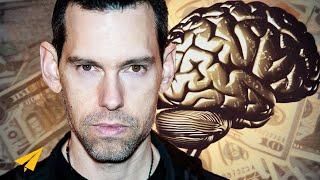
Tom Bilyeu, founder of Quest Nutrition, explains how mindset beats background for success. He uses extreme ownership—taking 100% responsibility for everything—to build personal power, and relies on bright line rules like getting out of bed within 10 minutes to stay consistent. His studio embeds empowering narratives into movies, comics, and games to rewire limiting beliefs.
Chapters
What's up everybody? Welcome to another YouTube Hangout. I'm excited to be here with a new friend. His name is Tom Bilyeu. You may have seen a top 10 that we did on him not too long ago. This guy built a billion-dollar business called Quest Nutrition. If you haven't seen that before, I highly recommend checking out their Cookies and Cream energy bar or protein bar. I love that one. And more recently, he stepped away from that to create content to help entrepreneurs. He's got an awesome YouTube channel just off his name, Tom Bilyeu. We'll put it up in the description. You guys can check it out. Tom, welcome aboard, man.
Thank you for having me, dude. Very happy to be here.
So I'm curious about the journey, you know, for me personally as well, because I love mashing together content from different entrepreneurs, and I think we're both aligned and we're trying to help entrepreneurs change the planet. And I think I first stumbled across your interviews when you had the other channel and you were doing interviews with other people. And then maybe about a year ago or so, I could have the timing off, but you started sharing more of your own stuff, your own thoughts, your own comments. And I'm just curious, like, where do you want to take this? Like, what's the big vision for this next stage in your career? You built this business, you sold it, now you're all in on helping entrepreneurs. What's the next thing for you? Like, where do you want to take this?
So I'm trying to build a studio. So our goal is to build a studio that rivals Disney. So the reason that we want to do that, and the reason that it's so tied to entrepreneurs for me, is that I believe the thing that stops people from really achieving something great in their life has very little to do with anything other than mindset. So, it doesn't matter if you grew up wealthy. It doesn't matter if you grew up poor. What matters is if you grew up with a mindset that sets you up for growth, which ultimately is the thing that leads to success. And I've worked in the inner cities a lot in my career. And you come across these just really amazing people that you know have a chance to go and do something incredible. But because their mindset doesn't allow them to see themselves like that, they have a fixed mindset. They don't believe that they can acquire new skills. They don't think that they can do something without funding. So it's like this world where the very way that they frame life is so limiting that they don't go on to do something because of that. So to me, the way that people really assimilate a new belief system is through media. And I'm talking traditional narrative content. So whether that's a book, a TV show, a movie, a video game, whatever, like those narratives going back to Joseph Campbell and the power of myth and the hero's journey and all that. And just that humans are meaning-making machines that convey that meaning through story. So that's why we're there. But you know, it's a really cool time right now where you can do content like this, which is really explanatory. And marry that to narrative and really show people how to extract the meaning.
I love that. I love the idea of having a studio that rivals Disney. What is the content you're gonna make? Is it gonna be entrepreneurial? Is it gonna be movies? Like, what, where do you, tell me more about the studio. I'm excited.
Yeah, so if you think of Disney as having done something back in the 1930s, by the way, that's never been replicated, which is they, every piece of content that Disney makes feeds into the brand ethos. So if I say to you, I'm gonna go see a Warner Brothers movie or a Sony movie or a Paramount movie, you don't know anything about it. But if I say I'm gonna go see a Disney movie, I don't have to say anything else and you already know something about it. And having the discipline to tell one kind of story that speaks exactly to your worldview then gives the brand the credibility and the mindshare, quite frankly, to launch a film or a TV show or whatever just on the back of the brand. So, that's what we want to do also. And so, if you think of Disney as the most magical place on earth, we want to be the most empowering place on earth. So, we want to give people the belief system, the mindset to go on and do whatever they want, whether that's start a company, be the best parents ever, to be entrepreneurially minded. Not everybody is going to want to start their own company, but this stuff to me applies no matter what it is you're trying to do. If you want to be great, there are just certain principles that apply, and I think that we can bake that into every story that we tell and give it to people in an emotional way that they can really resonate with and take on board.
I love it. You know, I think, I think you are what you consistently do, and I think people get a high off of going to one event or one seminar, reading one book, and then they put that book down and they come back from the seminar and then it's gone and they're back to their old life. And yes, it's a decision to make a change, but also the positive and consistent reinforcement, whether it's watching videos or reading a book. And I mean, it's something that I try to do on my channel too with daily content. And you're, are you at daily or you're almost daily? Like how often are you pumping out videos?
Yeah, I think we put out content 5 or 6 days a week. We're about to double the amount of content that we're putting out. We've started a new channel now that's all media focused. So if you go to my YouTube channel, /tombilyou, you're gonna get, it's all mindset all the time. I may occasionally reference something that has to do with the studio, but it's all hardcore mindset. If you go to /impacttheorystudios, we just launched it, you're gonna get stuff that is entirely like mindset and movies. So the, and movies is a stand-in for, you know, it could be a comic book, it could be a TV show, but it's media properties that really have those nuggets of wisdom buried within them. And so The Matrix to me is, is the perfect example of this. So we're going to be doing a lot of content that's around things like that. Um, so between those two entities, the pure mindset play and then the media-infused mindset stuff, uh, will definitely be 7 days a week.
I love it. I love it, guys. We got Tom Bilyeu on. If you have questions, leave it in the live chat and we'll get to them. There's already a whole bunch coming in.
First up, Lily is asking, "Question for Tom: What's your view on taking 100% responsibility for your life?" Yeah, I'm a psychopath for this, and this is really the thing that has become most controversial, and it's one of those— I'm actually a little surprised this is controversial.
Okay.
But here's the story that I tell. So my wife is British. Let's say that she was at home in London. Sleeping in the bedroom that she grew up in. Her mom is there. The doors are locked. The alarm is on. She is safe and sound. And right at that moment, a meteorite comes screaming through the atmosphere, crashes into her bedroom, and kills her. Whose fault is that? Now, if you don't know me and you're not trying to guess at what I think the answer is, most people are going to say it's dumb luck. Uh, it's nobody's fault. Divine providence, force majeure, like whatever you want to think of it as. It just is what it is. Now, that's not how I view the world. I believe that that's entirely my fault. Now, the reason that I think that is I know right now there's an organization that track what are called near-Earth objects. They are trying to find some way to knock things off course if they're on a collision course with Earth. So whether that ends up being a laser or a planted nuclear explosion, like whatever it is, they're actually trying to do this. Now, I know that they exist. I've never called them to give them encouraging words. I've never sent them an email with ideas. I've never sent a dime of my money. Now I think that's a wise choice because I think the likelihood of my wife being killed by a meteorite is vanishingly slim, but if it ends up happening, I'm not going to fool myself and say there was nothing I could have done. Now the reason that I think that is not— I'm not saying it's my fault so I can feel bad. It's not about guilt or shame. I don't think people should waste time with guilt and shame. I'm just saying it to remind myself that I'm in control. Now I love that example because it's so extreme and so many people are going to say, I'm like, that's crazy. What's this guy doing? But my responsibility for my life all the way out to a meteorite. You can imagine how I feel about anything in your day-to-day life, business, whatever. You've got to own it because it keeps you in a position of power. You have to understand the fundamental truth of this life. You can always make a different decision, which will lead to a different outcome.
That's interesting. I mean, I agree with you, 100% ownership, extreme ownership, super important. I wonder if they're trying to get people to agree with you or change their mindset and they have years of conditioning around, you know, all the opposite beliefs. There's going to be a good chunk of people who will say, Tom, that's crazy.
Yep.
That's, that's too extreme. Like, your wife getting hit by a meteor is not your fault. And then I wonder, I wonder, like, do they hear the message? Because I know you're going to extreme to cause the controversy on purpose, and like, that's the craziest thing that we can maybe come up with. But I wonder, I wonder, how do we get people— like, for those people who just automatically will disregard the message, how can we bring those people along? Because I mean, I know it's part of your mission now, it's to empower millions and billions of people. What do you think about the people who may think that's too extreme and then they discount the entire thing?
I, I— the honest answer to that is you don't attack it. You can't go on a full frontal assault with that. I'm not trying to convince people. I'm not an apostle. I'm a filtering mechanism. So I tell people those stories to find who gets it, who resonates with that. Awesome. I'm not going to spend my time trying to convince. Now, the studio, on the other hand, the, the only way that I know truthfully to get people to assimilate disruptive information, something that forces them to radically overhaul their worldview. A is, for most people, it's a generational question. So you make some progress with the parent, the parent teaches their kid a different lesson, their kid then gets their own, not only a better starting point, but then assimilates more information, teaches their kid better. And so this goes on and on and on, and it has a tremendous knock-on effect. And I I don't think anybody argues that culture changes over time. So the question is, can we steer the direction that it goes? So the only way for the person who rejects this, the only way to get them to really internalize that is to tell a story about somebody that they care about, that they have an emotional connection to, and that person in the story has to learn the truth of that lesson, and they have to see that by learning it, they're able to make their life better. So the— I'll give a quick example from The Matrix. It's just a story. I get that. I don't actually think we're living in the Matrix. I just think it's a perfect metaphor for limiting beliefs and the way that when— if you— I mean, it's— was it Henry Ford? Like, if you— whether you think you can or you can't, you're right. Like, that, that is the truth of the human condition. If you don't think you can, you're never going to take the first step to gain the skills to actually be able to do it. So in the movie The Matrix, he does the jump, right? And everybody's like, oh my gosh, is he going to make it? And they're like, nobody makes it the first time. And of course He tries to do this impossible jump and he falls because he doesn't believe that he can do it. Then later in the movie, he gets to the point where he just decides he's going to believe that it can happen. Then once he decides to believe that it can happen, he can do it. Now, that's the movie version. The real-life version is you walk into any situation, you don't need to believe that you're capable. For instance, with Quest, I didn't have to believe I was capable of being a protein bar manufacturer. Patently wasn't, but what I had to believe was that I could learn it. And because I did, I, dude, I believed that to the core of my being that I could figure it out. And so I didn't hesitate. I took every step. I just kept saying, yes, do we buy the equipment? Yes, we do. Even though that was terrifying, even though that was an all-in moment, it, you just keep doing these all-in moments, believing about yourself, having chosen to believe that I can figure it out. Now, once people adopt that mentality, then they'll understand why I say, figure out how to stop a meteorite from crashing into earth. So I'm not gonna like, that's so empowering to me. And they hear a crazy story because they think, oh my God, I would feel so bad. Like I can't take on the ownership of all those things because it would crush my self-esteem. But my self-esteem is built around being a learner. It's not built around being smart or knowing something right now. Like to be fully candid, I'm not that impressed with who I am today, but I'm really excited by who I could become, and I'm very proud of my willingness to take the steps when it matches my goal.
I love it. I love believe, you know, it's on the back of—
Nice.
—the clothing, it's my one word. Yeah, it's just, it's really interesting. This is a struggle that I face too, you know, I want entrepreneurs to believe in themselves, I want them to do the big thing, I want them even just to take like the next tiny step to get that thing out of their head and put it into action. You know, my approach has been more just by consistently repeating the message, I'm going to, I'm going to handhold you across the street as opposed to going to the extreme of saying like, you need to believe that you can build the billion-dollar company where a lot of people will say, well, that's impossible. Like, let's start by believing you can do you know, you get your first client. And by like consistent exposure to a positive message, which I think comes out in Disney too, right? Like, it's always, there's always a lesson, there's always a moral to the story. You're always learning something that's kind of family friendly. And I think a lot of your stuff comes out, the positive vibes, like just hanging around you by watching your snaps or by watching your videos can help boost somebody's confidence. And so I'm just playing with that idea as you talk about like that extreme example I think that works for some, and I think what else— the other stuff you're doing really helps just build up the daily pattern as well.
Yeah, look, some of this I think is you're the average of the 5 people you spend the most time with, not go spend time with one person, right? So there are people that are going to respond to my way of thinking, there's people that are going to respond to the way that you think, and a myriad of other people. And what's cool about the social age is You're so consistent in your content. Like, I really feel like I know who you are and I feel like if I met you, um, and we just hung out and had dinner that I'd be like, yeah, you're exactly the dude that I see on camera. Right? So the truth of what I've had to do to my mentality to stop being lazy, to stop being afraid, to stop being paralyzed by anxiety, like a lot of what I've done is force myself so far in the other direction and it has been so incredibly empowering. Right? So that's my experience. Anything else out of my mouth just wouldn't be true to what I did. I think it is incredibly awesome that people take different paths, that you're so emotionally prepared to walk people from here to here to here. A, that doesn't excite me, the thought of handholding people and really doing baby steps and stuff. In fact, one of the things that I burn into my nervous system is I don't do baby steps. I want to think like I'll back into the incremental things that I need to do, but from day one, like when we launched Impact Theory, from day one, this was meant to be a studio bigger than Disney. Now for most people, that's just like, it's so big, like why start with that, right? Just start with get the first comic book out or sell the first screenplay. And those are steps, those are things that we have to do, but for me, I need the excitement of the grand vision. I love it.
Guys, keep the questions coming. Next up we have Kevin. Question for Tom, how do you inspire others to want to change, i.e., or follow you to change?
Yeah, it's interesting. I don't. So I am a filtering mechanism. I put myself out. I'm aggressively myself. This is the way that I think. And then there are some people that love it, and there are some people that hate it. And the great news about social is most people, for the most part, this has really been my experience and I didn't expect it to be, but for the most part, people that don't resonate, they don't waste time trying to heckle me or tell me that I'm stupid. They just move on and they go find somebody that sees the world the way that they do. And then the people that resonate, they stick around and they help each other out, which is the thing that I love so that the community becomes people that have self-selected to be a part of this community. So like, I'm big on energy, I'm big on enthusiasm, I'm a very excitable guy. Some people, like, that's so fatiguing to them to even watch me that they're not gonna stick around. Other people are like, holy hell, like, this guy makes me wanna jump out of bed. And so it becomes like a really neat community. So to put a fine point on it, I'm not thinking, oh, I wanna go out and inspire people to want something. That's the one part where I'm like, If you don't want it, I'm probably not your guy, because I'm going to seem crazy.
Yeah, and I think it's not just what you say, it's the actions. It's the consistency. It's what you do. By hanging around, like if this person wants to go and change somebody's life, it doesn't just mean one conversation, that person's life has changed. By them hanging around you, they're going to get better. They're going to grow. They'll see your positivity and energy, and it bleeds in. I think walking into any room feeling like this room is better because I'm here, like my city is better because I'm here and that I radiate force for good for wherever I am. I think it's really important. So I think what, you know, people may be turned off by your message the first time, but they may hear it again and then let me hear it again and they see another interview or another video or another snap. And then it's like, huh, like Tom, you know, it kind of bugged me at first, but it's, it's kind of sick. It wasn't for me, right? Like, I, I love your stuff. All the way through, but like for people who may not like you at the start, by consistently hearing you and like you say one thing that happens to hit them, it's like, "Huh, I wrote that guy off, but that really stuck with me. Let me give him a second chance." And because you're creating so much consistent content, right, it doesn't have to only happen in one moment where you're trying to inspire people. They're on their journey, and if you're consistently exposing them to ideas and energy, it can help make the impact that you're looking for. No question.
Monica's writing in, "Hey guys, Tom, what's your opinion on positive thinking versus being realistic?" Yeah, I am a huge believer in positive thinking, and the reason is that I don't believe we're very good at being objective. So you're whatever, 5 times more likely to believe negative feedback than you are to believe positive feedback. Like when I heard that stat, I was like, okay, I really cannot trust what my mind obsessively thinks about because it is not necessarily the most advantageous thing to think about. And also using again the Matrix as a metaphor, like think about this for a second. Your brain is encased in total darkness. It never encounters light, at least not if all goes well, never encounters light, hearing, sense of touch. All of it is— it gets turned into electrochemical impulses that your brain then interprets and creates this construct that you see around you. It is your brain's best guess at what is there, but it isn't objectively real. Like for instance, there's a blind spot in each of your eyes about the size of a dime, and we don't experience it. It's where the optic nerve actually connects to the eyeball, and the brain just fills in like, bah, this is what I think is there. And it creates this seamless experience. But while your brain has the best of intentions, it is lying to you. And so once I realized my brain is making half of this stuff up, So now if that's true, I'm going to choose what to believe. So I'm going to use positive thinking. I'm going to believe positive things. I'm going to believe in my potential. I'm not going to focus on limitations. Are they there? Sure. But like, it doesn't do me any good to focus on that. So one of my mantras is you can do anything you set your mind to without limitation. That's a lie, but it's an empowering lie. And we do and believe that which moves us towards our goals. So like, I get it. Saying that I don't have limitations is total BS, but it's effective at getting me to take action, to believe that I can learn. And that has served me just incredibly well.
So for somebody who's facing those blocks, because I mean, we both have them in our audiences, I think it's most people who want to crush their limiting beliefs. Is the answer then just consume content on a regular basis that makes you feel inspired and alive, like what you're doing with the studio and your channel? Like, what advice you have for somebody who battling their limiting beliefs and they haven't consistently been able to break through them.
Yeah. There's only one thing that you have to internalize, and you don't even need to believe it about yourself. Just believe it about the species. Humans are the ultimate adaptation machine. That is what allowed us to become the apex predator. If you look at our— when they decoded the human genome, they thought, "We're going to figure everything out now." They realized we only have 20,000 genes. How's that possible? There are certain types of onions that have 40,000. Are we really to believe that an onion is more complicated than a human? Like, it just didn't make sense. And then what they've been discarding for years is quote unquote junk DNA. They realize it's really epigenetic signaling. So based on your environment, based on the stressors that you put yourself under, the human animal will adapt tremendously. And I'm talking physiologically as well as mentally and emotionally. So there was a woman that swam the Bering Strait which is, if I'm not mistaken, the bit that is between Russia and Alaska. So this is like the coldest water you can imagine. She swam in just a wetsuit and for a year she exposed herself to the cold, which allowed her body to adapt so that she could actually survive the kind of cold that would normally send people into hypothermia and then they would just die. So I mean, it's absolutely incredible the lengths to which we will go physiologically to change. We have that same level of adaptive ability mentally. Think about getting good at dancing. Think about getting good at writing, getting good at anything, right? We can just get good at marketing. Like any skill that you apply yourself to with enough discipline, time, energy, you're going to be able to get great at that thing. And so now if you just believe that that is the thing that makes the human species great, then the only thing you need to do beyond that, it is not watch content. And I'm saying that as a content creator, the only thing you need to do is act because it's in engagement. It's through the actions, it's through trying something that you're going to learn so rapidly that it'll be ridiculous. So once you can embrace that, okay, I'm going to try something, it might not work and it might not be an utter failure. It may just be like a little clunky. You're going to refine, you're going to get better. If it's a catastrophic failure, it's still going to teach you something. If you can keep your mind in a positive place where you can say not like I'm an idiot for letting this fail, but rather go, okay, I'm a learning machine. What am I going to learn from this? If people can keep their mindset there in a solution-oriented place, they'll learn, and on a long enough timeline, they're gonna get great.
And so that's like the next part of the question, like how do you keep that mindset consistent? Because they're watching this, like, man, Tom, he's dropping some knowledge, this is crazy, you know, and they're off and they're gonna act, like today I'm gonna act, and then they wake up tomorrow and they're not gonna act anymore, or the next week, or their friend tells them that's a stupid idea, and so they shut down. How do you get that consistency so that, like, this is important, you're gonna suck at the beginning, eventually you keep at it, you'll be great, It's the story of every successful person ever, but the discipline to create the consistency, they get— people get their mind blown in an interview or seminar, and this isn't something just we deal with, like Tony Robbins. People go to a Tony Robbins event and their mind's blown, and some people fall off the wagon the next day or the next week or the next month. I don't know that we have the perfect answer, but I appreciate the dialogue. I'm trying to figure out I love the message, I feel that, like people watching, they feel that, then how do I make that a daily thing so that I keep that mindset fresh? If it's not watching content, then like what's the solution until it becomes so ingrained that I don't need anything else?
So there's really two parts to this. Part one is you've got to construct your identity to drive the behaviors that you want. Now, building a new identity is actually ridiculously simple. It's not easy because it's going to require that you really be consistent but there are traps, if you will, that you can put yourself into that are going to force you to be congruent with that. So I use a very simple technique to change my identity where I go, I'm the type of person that— so I'm the type of person that is always in shape. Okay, well, if I'm the type of person that's always in shape, I better get my ass to the gym every day. And then it's, I'm the type of person that goes to the gym every day. And I tell anyone who will listen, like I'm doing right now on the show, and I tell I tell my community all the time, I use you guys as leverage to better my behavior because I just tell you who I am, what I'm doing, what at that moment, what's a priority, what's important. Then it's super embarrassing because if I'm not being congruent with that, I feel like an asshole. I'll tell, even before social media existed, I would literally at a dinner party be like, "Hey, I remember this when I was—" I've done it twice, when I was really scrawny and was trying to put on muscle and when I was really heavy and trying to lose fat. I would just tell people, I'm going to get Hugh Jackman's physique. People were looking at me like, "Yeah, right." Then for years, I just went to the gym every day, worked out, worked out, worked out, kept telling people what I was trying to do to my physique. Then over time, you actually improve your physique. Now, this was back in X-Men 1 before he looked like a total fucking beast like he does now. That was really transformative because I was telling myself, "I'm the type of person that's always in shape. I'm the type of person that goes to the gym every day." I was telling everyone else. So, that's identity. Now, identity drives behavior, so really wanting to be that was super critical. The second thing is you have to have a future, and you talked about Tony Robbins. Tony Robbins has this idea of a compelling future. This is so important, and this one, Evan, people miss all the time. You've got to have something that you're striving to become, to do, to accomplish that you're actually excited about. No one has to tell you to be excited about it. You're just amped up. And by the way, where people really get themselves in trouble here is I think oftentimes the thing that most excites them, they judge themselves for. So let's take video games. It's just an easy example. Let's say what you really like to do with your time is play video games. And on a Saturday morning, you spring out of bed and you play all night and you're up till like 4 in the morning on a Saturday. And you know, then Sunday your sleeping schedule is messed up and Monday you're still in like a fog because you loved it so much. Don't judge yourself for that. Say, "Okay, this is the thing that I love." Now the question becomes that thing is giving you enough enthusiasm to pull you through hard times, so how do you put that at the center of your life? How do you make that something that you can monetize and make it self-sustaining? I'm not saying that's easy, but there are two ways. One, direct. Go play video games, win contests, get so good that you outperform other people and you can make a living as a professional video game player. That's super direct. Then there's universe of. Game designer, writer, coder, producer, accountant for a game studio. At least then you're around that world all the time. The imagery, the iconography, all the things you're surrounded by are something that give you energy. And so that's— people really just have to look at, does this thing that I'm doing give me more energy than it takes? If you have that, you have identity and you're excited about what you're doing. The excitement's going to pull you through the hard times where your identity is making demands of you to do something that is very difficult. Like me, I hate the gym. I hate it, but I'm excited by two things. One, I legitimately want to live forever. That's not going to be easy. Uh, and then two, I want to look good naked. So let's just be real about that. So those, those things are exciting. So even though the gym takes energy away from me, like mentally who I'm trying to become and the excitement around that pull me through.
So do you think people have, poor habits in that they're not reminding themselves daily that I am becoming this person, or not challenging, you know, by putting out in the public, on social, or to their friends, like, I'm gonna get ripped like Hugh Jackman, like the daily habit of doing that? Or do you think that they just don't have a goal that they care enough about to actually make change, or both?
Well, both, yeah. And now you're getting into the advanced class stuff. So this is where people have to learn— oh God, your audience is gonna have a seizure. Seizure over this one, but this is true. So I'm going to say it. People have to know when to love themselves and when to punish themselves. That's just true. And if you say, I'm the type of person that goes to the gym every day, and then you don't go to the gym, like you can't not punish yourself emotionally for that. So now what happens is people think I'm saying to get into a self-abuse cycle where now you're declining your performance because you have self-loathing. That's not what I'm saying. So, I believe that beauty and rage need to exist within you. I believe they exist in a— 80% of your time you should be thinking beautiful things, gratitude, what you're doing well. Like the vast, vast, vast majority of your time should be focused on all the things you're doing right even when it's hard to find the things that you feel like you're doing right. Find them and focus on those. Spend 80% of your time there so that you're uplifted by your internal dialogue. But 20% of the time when you didn't go to the gym and you said you were going to, first of all, you're always watching yourself. So when you don't show up, maybe the rest of the world doesn't know, you just lost credibility with yourself, which is incredibly dangerous. So people don't understand how to leverage reward and punishment in their own lives. And then yes, they have terrible habits. And I am literally, I'm like a loose collection of habits. That's it by nature, dude. I have zero entrepreneurial instincts. Zero. I'm super lazy. There was a period in my life in my 20s, and I wish this wasn't true, but there was a time in my 20s where I would lay in bed for 3 hours every morning because I was too lazy and unexcited about my life to get out of bed because it was cold. And I didn't even think like, if that's really a problem, put a sweatshirt next to the bed. Like this is not even a hard problem to solve. So, so many years of my life to just being terrifyingly lazy, but then at one point it got so emotionally distressing. I was flirting with depression. I was laying on the floor of my apartment and just thinking like, where's my life going? And that hurt so much. I needed something else. And so what I began to do was force myself to use routines and habits to get out of that rut. So, I'll give you one example. To this day, I have a Bright Line that I have 10 minutes to get out of bed. So, once I realize I'm awake, whether I've had 5 hours or 10 hours, I have 5— or sorry, I have 10 minutes to get out of bed. And I reward myself every day that I do it. Like today was particularly difficult. I don't know why, for whatever reason. When I woke up, I just didn't want to get out of bed. I have what I call a bright line where there is no not getting out of bed in 10 minutes. There's no excuse. There's no rationale, nothing. You either get out of bed and you did what you said you were going to do or you don't get out of bed and it's a fail. So, that wanting to be congruent with the person that I say that I am forces me to get out of bed. Again, identity drives behavior, but I needed that bright line of I get out of bed. Then my routines kick in, which is I go to the gym immediately. Followed by meditation and so on and so forth. All of those routines keep me really tight to what I'm trying to accomplish.
I love it. The first part of that routine is so important. You do the first thing, you're more likely to follow on. You don't do the first thing, it's easy to throw away the rest of the routine. No question. People are asking, "What's your one word?" A single most important core value, one word for Tom Bilyeu. What do you got? Belief. Belief. Wow. I believe your belief. We're pretty close. Tom, it's crazy how quickly half an hour flies by on us.
There's still so much coming in.
Final message, like, what do you want to share? You know, you got people watching, entrepreneurs afraid to take action, paralyzed by fear. What's the one last message you want to kind of tie this all up in a bow and deliver to them?
Yeah, humans lead with belief, and that's it. And you have to start with really believing in yourself that you can learn. So that brings me to why people don't do that. And the reason is what you build your self-esteem around really, really matters. And most people build their self-esteem around being good, being smart, being right. And that is a very fragile way to view yourself because routinely you're going to be wrong. In fact, you're going to be wrong more often than you're right. So If that hits your pride every time that you're wrong, you've got a problem. And that's why people begin to shelter themselves. If you think of yourself as being smart, then if you start that business and it fails, you have to accept, "I'm not as smart as I thought I was." And that's a damage to the self-esteem. Now, people are very self-esteem protective. But what I realized, because I was the worst of the people like that, putting myself into smaller and smaller rooms, taking smaller and smaller risks, because I believed I was smart, I prided myself on being right. And I just realized that doesn't take me to my goals. So I need to switch my self-esteem to something that is antifragile, as Nassim Taleb defines it. Because he said, basically, things that are resilient, things that are tough, are still defined by their breaking point. The breaking point's far away, but it still breaks. Antifragile is something that the more it's attacked, the stronger it gets. And the only way I could think of to do that with my self-esteem, my sense of pride, was to Pride myself on being a learner, to pride myself on being willing to admit that I was wrong faster than anyone else, to identify the right answer and accept it as being right based on whether or not it takes me towards my goals, no matter whose idea it was. So even if it was somebody else's idea, that I would get behind that, that I would say, oh my gosh, even though 30 seconds ago I was arguing voraciously for my idea, I actually now recognize that idea is better. It's more likely to lead us to our goals. If you can switch your self-esteem to that, then truly it's antifragile. The more it's attacked, the stronger it gets. The more people tell you you're stupid, the more times you fail, all you want to know is, "Why did I fail? Where am I being stupid? Because now I can learn. I can get better." You have so much pride around being willing to do that. I love it.
Tom, dude, thank you so much for spending the time today, for all the work too that you do to help the entrepreneur community. I'm so pumped to hear the big vision and know that There's more Tom coming, more greatness, more awesomeness to help entrepreneurs. There were tons of questions, guys. Thank you for watching in. Go check out Tom's channel, Tom Bilyeu. We've linked it up below and impacttheory.com as well.
Thank you for the love, man. Dude, thanks for having me on, man. Really, really grateful to you. And one last shout out to you and your community. I use you all the time in researching my guests. So I'm legitimately grateful, man. Thank you. Put out awesome content. Awesome.
Continue to believe, guys, and we'll see you soon.
More from Evan


How the Biggest Mistake in History Created A Trillion-Dollar Empire | Sergey Brin



9 Machiavelli Principles That Force People To Respect You | Machiavellian Philosophy



The First 10 Words That Instantly Ruin A Sales Conversation | Vanessa Van Edwards

The Top 1% Mindset Behind The First $5 Trillion Company | Jensen Huang (Nvidia)

