Top 10 Rules for Success From World's Richest People
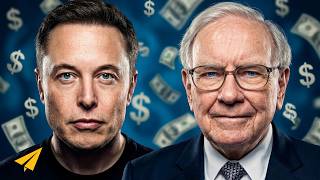
Evan Carmichael breaks down ten success rules from billionaires including Bill Gates, Jeff Bezos, Elon Musk, and Warren Buffett. The principles: ideas matter, love your work, take bold bets, act despite fear, prepare for the long run, discover your limits, don't sleepwalk through life, set big goals, make mistakes fast, and appreciate struggle.
Chapters
Some of the richest people on the planet didn't just get lucky. They built ideas that changed industries.
Ideas matter.
Took risks most people were afraid to take.
The risk for me was if it didn't work, I go back to college.
And stayed focused for years.
If you want to start a business, don't think you will be successful next month or next year. Think about at least 5 years.
From billionaires who bet everything on bold ideas.
If you're going to take bold bets, they're going to be experiments. And if If they're experiments, you don't know ahead of time that they're going to work.
To leaders who turn mistakes into massive success. Today we're breaking down the top 10 rules of success from the world's richest people, featuring powerful lessons from some of the most successful entrepreneurs in the world on ideas, courage, goals, and perseverance. If you want to think bigger, act bolder, and build something that lasts, this video is for you. Need motivation?
Watch a top 10 with Believe Nation.
If you've been here before, drop a hashtag leave in the comments below so I can feature you here in a future video. And if you're new, welcome to Believe Nation, the only channel that helps you believe in yourself daily, one video at a time. All right, let's kick it off with rule number 1. Steve Ballmer: Ideas matter.
Number 1 for me, life lesson, is that ideas matter. Now people say, of course ideas matter. What kind of stupid life lesson is it that ideas matter? The truth of the matter is, this is both under- and overappreciated. Most people think every idea is a good idea, as long as they had it. The truth of the matter is, not every idea is a good idea, not every idea matters, and not every idea should be pursued. And if you're in a field like I am, or was, of innovation, not every idea is a good idea, even if it strikes you that way on first blush. In fact, most people are lucky to have one idea that really matters in their whole life. That's not a criticism, but earth-shattering, life-changing ideas are very few and far between. Research insights, investment insights, innovations— a good idea needs to be cherished and nurtured.
Number 2, Bill Gates: Love the work you do.
I think for Microsoft to be successful, even though we were the first, we— and we had a broader concept of software than the other companies— we needed to be what I would call hardcore. And, you know, in that case, the work is what I want to do. It's, it's not like, oh God, you know, I've got to earn a little bit more money. It's, you know, this is the thing that throughout my childhood I was so lucky, you know, because of my parents and some early friends, school I went to, I had these exposures to computers that were very rare. And so I had, you know, all these thousands of hours of programming experience and great feedback on, okay, how do you do it better from the very best adults? I got to see what was coming. And the idea of being part of making that real, you know, I woke up and said, okay, I'd love to get to work. My younger self could stay in, you know, days at a time. I don't do that now, but then it was just in no way a hardship, you know, because I, you know, felt we were part of something that would be very empowering. And, you know, competitively, I wanted us to be the ones to make it happen.
Rule number 3, Jeff Bezos, take bold bets.
My job, one of my jobs as the leader of Amazon is to encourage people to be bold. And people love to focus on things that aren't yet working, and that's good. It's human nature. That kind of divine discontent can be very helpful. But you really, you know, it's incredibly hard to get people to take bold bets, and you need to encourage that. And if you're going to take bold bets, they're going to be experiments. And if they're experiments, you don't know ahead of time whether they're going to work. Experiments are by their very nature prone to failure. But big successes, a few big successes compensate for dozens and dozens of things that didn't work. So, you know, bold bets, AWS, Kindle, Amazon Prime, our third-party seller business, all of those things are examples of bold bets that did work, and they pay for a lot of experiments. I've made billions of dollars of failures. At Amazon.com. Literally billions of dollars of failures. And, you know, you might remember Pets.com or Cosmo or, you know, give myself a root canal with no anesthesia very easily. None of those things are fun, but they also, they don't matter. What really matters is companies that don't continue to experiment, companies that don't embrace failure, they eventually get in a desperate position where the only thing they can do is make a kind of Hail Mary bet at the very end of their corporate existence. Whereas companies that are making bets all along, even big bets, but not bet-the-company bets. I don't believe in bet-the-company bets. That's when you're desperate. That's the last thing you can do.
Number 4, Elon Musk, act despite fear.
You are unusually fearless and willing to go in the face of other people telling you something is crazy. And I know a lot of pretty crazy people, you still stand out. Where does that come from, or how do you think about making a decision when everyone tells you this is a crazy idea? Or where do you get the internal strength to do that?
Well, first of all, I'd say I actually think I feel fear quite strongly. So it's not as though I just have the absence of fear. I feel it quite strongly. But there are just times when something is important enough, you believe in it enough, that you do it in spite of fear.
So speaking of important things—
Like, people shouldn't think, I, I, I should— people shouldn't think, well, I feel fear about this and therefore I shouldn't do it. It's normal to feel fear. Like, you'd have to definitely do something mentally wrong if you didn't feel fear.
So you just feel it and let the importance of it drive you to do it anyway?
Yeah. You know, actually, something that can be helpful is fatalism to some degree. If you just accept the probabilities, then that diminishes fear. So when starting SpaceX, I thought the odds of success were less than 10%, and I just accepted that actually, probably, I would just lose lose everything, but that maybe we would make some progress if we could just move the ball forward. Even if we died, maybe some other company could pick up the baton and move and keep moving it forward. So that would still do some good. Yeah, same with Tesla. I thought the odds of a car company succeeding were extremely low.
Also, if you want to take real action after this video, I made a free worksheet just for you. It covers the top lessons from today, gives you space to write your biggest takeaways, and helps you build a simple action plan. It's 100% free. Just click the link in the description to go grab it. I'll see you there. Rule number 5: Jack Ma, prepare for the long run.
And also, I encourage all the entrepreneurs, if you want to start a business, don't think you will be successful next month or next year. Think about at least 5 years. Because if something can be successful next month, why you? You have a rich father, you don't have to be a startup, right? And by the way, don't be discouraged because you have a poor diploma or, you know, graduate from a poor university or low education. Don't worry about that. If you graduate from MIT, Harvard, you will never be entrepreneur, right? They can only be the white-collar guys. So as an entrepreneur, you should have the— what is the strategy for entrepreneurs? Strategy is time, 10 years. You compete with the other people, the vision. The world will be there, will be there. What kind of customers they need, how we can build it up. If you prepare for 5 years and 10 years, if you have a good team, and always do before the government do. If you're waiting for government, you have no chance. Right? When government say there is opportunity there, go that direction because it will be too crowded there.
Well, number 6, Larry Ellison. Discover your limits.
Oracle is a very competitive company, and I think there are a lot of competitive people at Oracle, and I enjoy competition. I think life is, is kind of a series, a series of acts of discovery. And I think we're all interested in our limits, what we can accomplish in life, and discovering our own limits. And we might find that in sport, we might find that in business. I think we're always, you know, looking to discover new things and new things about each other and new things about ourselves.
Rule number 7, Warren Buffett: Don't sleepwalk through life.
I advise students, as much as possible, look for the job that you would take if you didn't need a job. I mean, don't Don't sleepwalk through life and don't say it's all going to be great, you know, I'll do this and I'll do that and, you know, I'm just marking time to get to be older. I've told people that's like saving up sex for your old age. I mean, it just is not a good idea. Yeah, yeah.
What are you urging them to do?
I'll explain. Here's what I'm talking about. Now, it just— yeah, you really want to be doing what you love doing, and you can't necessarily find it on your first job, right? But don't give up before you find it.
Well, number 8, Larry Page: set big goals.
A lot of times my issue is people are not setting goals that will be something that somebody who becomes rich or could do anything You got to be excited about working on that for 10 years. So you got to have a big enough goal that, you know, you attract the best people and you retain them and you keep them focused. And then my experience, you don't go wrong. You know, maybe you don't hit it next year, or maybe you fail entirely and you discover something more exciting to work on with the same set of people.
Number 9, Mark Zuckerberg: Make mistakes.
So many things go wrong when you're starting a company. And often I think people ask, you know, what mistakes should you avoid making? And, you know, my answer to that question is don't even bother trying to avoid mistakes because you're going to make tons of mistakes, right? And the, the, the important thing is actually learning quickly from whatever mistakes you make and not giving up, right? And I mean, there are things every single year of Facebook's existence that could have killed us or made it so that it just seemed like moving forward and making a lot of progress just seemed intractable. But you just kind of bounce back and you learn and nothing is impossible. You just have to kind of keep running through the walls.
And number 10, the last one before a very special bonus clip: Does Jensen Huang appreciate the struggle?
When you want to build something, something great, it's not easy to do. And when you're doing something that's not easy to do, you're not always enjoying it. I don't love every day of my job. I don't think every day brings me joy, nor does joy have to be the definition of a good day. And every day I'm not happy, every year I'm not happy about the company, but I love the company every single second. And so I think that what people misunderstand is somehow the best jobs are the one that brings you happiness all the time. I don't think that that's right. You have to suffer, you have to struggle, you have to endeavor, you have to do those hard things and work through it in order to really appreciate what you've done. And there are no such things that are great that was easy to do. And so by definition, I would say, therefore, I wish upon you greatness, which by my way of saying it, I wish upon you plenty of pain and suffering.
Why do you think there are more entrepreneurs in America than elsewhere?
I think there's something in the culture that is accepting risk, even embracing risk in a good way, right? That says, well, okay, if you try something and it doesn't quite work and you fail, it's okay, try something else, right? And maybe that is not as accepted everywhere, I think there's a combination of factors, right? It's this risk acceptance. It's capital that will invest behind that. There's a history of other entrepreneurs that you can look to, that I look to and others look to and say, well, yeah, they did it. So maybe I could do it.
Did you think it was risky at the time? Did you ever have fear? No.
So if you have nothing, nothing to lose, right? So it didn't seem like a big risk. I mean, the risk for me was If it didn't work, I'd go back to college. So not that big of a risk. Now, obviously, you know, as the business grows, you're like, wow, now I've got, you know, hundreds of people working for me. I'm responsible for them. You know, some of them have families and they have kids. And so every night when you sort of put your head down on the pillow, you're thinking, I've got a big responsibility now. I better not screw this up, right? All these people are depending on me. But I think there's also a lot of opportunity that is unrealized because people aren't maybe as willing to take risks. But I never really thought about it as, oh, I'm taking this massive risk, you know.
And congratulations, you're one video closer to who you're meant to be.
Believe.
For the 6 best lessons from Elon Musk, Warren Buffett, and other billionaires, check the video right there next to me.
I think you'll love it.
Continue to believe, and I'll see you there.
The number one thing that has made us successful by far—
One of the interesting things about being an inventor is you don't go to school for it. There isn't an inventor class.
You can't major in inventing.
More from Evan


How the Biggest Mistake in History Created A Trillion-Dollar Empire | Sergey Brin



9 Machiavelli Principles That Force People To Respect You | Machiavellian Philosophy



The First 10 Words That Instantly Ruin A Sales Conversation | Vanessa Van Edwards

The Top 1% Mindset Behind The First $5 Trillion Company | Jensen Huang (Nvidia)

