Top 10 Rules for Success From World's Richest Investors Vol 2
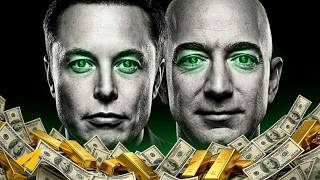
Evan Carmichael counts down ten wealth rules from Elon Musk, Warren Buffett, Jeff Bezos, and others. The core ideas: think long-term, invest in what you understand, diversify, master asset allocation, and protect capital with gold, silver, or Bitcoin.
Chapters
Some of the richest investors on the planet don't chase trends. They build the future.
You want to really buy stock in companies where you think the product that that company makes will be better in the future.
They stay careful while others get reckless.
There's two kinds of, of items that people buy and think they're investing. One really is investing and the other isn't.
And think long term when everyone else wants quick money.
In the short run, The stock market is a voting machine. In the long run, it's a weighing machine.
They invest in what they truly understand.
All of the companies I think I have added a lot of value to are the ones that I sort of like think about in my free time on a hike or whatever.
Spread risk instead of gambling everything.
You just don't know. So you need diversification in how you spread your bets out there.
And master how money actually moves through assets.
Tony, to increase your return, There's only a few things you can do. He said you can make better selections of stocks. He said you can have better timing. He said, and you can have better asset allocation. He said the first two will never happen.
They think at a higher level.
You have to think better and at a higher level.
And keep buying assets that pay them back.
You should get money, take the money, invest in assets.
They even protect themselves with real stores of value.
They think saving this stuff is smart. This is toilet paper. I save this here because this is real silver.
And start building wealth long before they felt This right here, do you see it?
Yeah.
So that's Facebook, Twitter, and Tumblr stock. Those were the first 3 companies I invested in.
Today you're gonna learn the top 10 rules for success from the world's richest investors. If you want to build real wealth, think long-term, and start making smarter moves with your money, this video is for you. Need motivation?
Watch Top 10 with Believe Nation.
If you've been here before, drop a hashtag #believe in the comments below so I can feature you here in a future video. And if you're new, welcome to Believe Nation, the only channel that helps you believe in yourself daily, one video at a time. A time. Okay, let's kick it off with rule number 1: Invest in the future with Elon Musk. What advice would you give a young person like, um, getting into the stock market?
Like, oh, stock advice.
Wow.
Yes, sir. Yes, sir. As, as I, as I, I think people can, can perhaps tell, um, who are watching this, these, these, these questions are not prepared in advance. This is literally random questions from the crowd. Which is cool, actually I'm fine with that. And I think that it's gonna sound very straightforward, but you wanna really buy stock in companies where you think the product that that company makes will be better in the future. Like, is that company gonna make more and better products? Or like, do you love the products that that company makes and are they gonna keep doing that And like, I think Tesla, as I've just gone through, Tesla is going to— has made— has a track record of having made many great products. And we're going to make many more future great products. And we're going to scale up production. And I think we've demonstrated a level of innovation that is extremely rare. I mean, certainly by far the most innovative company in the car industry like not even close type of thing. So, you know, I do think Tesla stock actually long— I think long term with Optimus and self-driving, Tesla will probably be the most valuable company in the world. But there are also other companies out there that make great products and services. So I think that's the way you want to look at it. Say, like, do you think this product— because that's the reason why companies exist, is to make great products and services. So, if you think that the company is going to improve over time, then buy the stock, and if you don't, then don't. And then the stock market is— it's a very strange thing. It's kind of like, you know, I think it's Warren Buffett's sort of metaphor or analogy is, you know, stock market is like having someone stand at the edge of your property or your house and yell, prices to buy or sell your house every day. And like sometimes they take their meds and sometimes they don't. You know, so sometimes the person yelling out the price of your house is having a good day, and sometimes they're having a bad day. But it's still the same house. You're like, I'm like, it's literally still the same house. Like, you know, so Tesla stock goes up and it goes down, but actually it's still the same company. It's just people's perception of the future. I don't know. I guess it's just very emotional, you know? So, but for me, like, while it's difficult to predict how things will be from, you know, in the next 6 to 12 months, if you say like, where will things be in 3 years or 5 years? The future of Tesla is incredibly bright.
Rule number 2: Be mindful with your investments with Warren Buffett.
There's two kinds of items that people buy and think they're investing. One really is investing and the other isn't. If you buy something, a farm, an apartment house, or an interest in a business, and look to the asset itself to determine whether you've done something, what the farm produces, what the business earns and so on, you don't really care whether the stock market's open. You can do that on a private basis. In fact, you do it on a private basis if you buy a farm or apartment house generally. And it's a perfectly satisfactory investment. You look at the investment itself to deliver the return to you. Now if you buy something like Bitcoin or some cryptocurrency, you don't really, you don't have anything that's producing, you're just hoping the next guy pays more. And the next, and you only feel you'll find the next guy to pay more if he thinks he's gonna find somebody that's gonna pay more. Now if you ban trading in farms, you could still buy farms and have a perfectly decent investment. If you ban trading in apartment houses or even in equities. If you ban trading in Berkshire Hathaway for the next 5 years, our investors would do fine, you know, over time. But if you ban trading in tulip bulbs, you know, or if you ban trading in some Bitcoin, which nobody knows exactly what it is, people would say, well, why in the world would I buy it? And you aren't investing when you do that. You're speculating. There's nothing wrong with it. If you want to gamble, somebody else will come along and pay you more money tomorrow. That's one kind of game. That is not investing.
Rule number 3 is think long term with Jeff Bezos.
When the stock is up 30% in a month, don't feel 30% smarter, because when the stock is down 30% in a month, it's not going to feel so good to be— feel 30% dumber. And that's what happens. You know, the great quote that Warren Buffett brings up all the time, but Benjamin Graham said, which is, you know, in the short run, the stock market is a voting machine. In the long run, it's a weighing machine. And what you need to do is operate your company in such a way knowing that it will be weighed one day and just let it be weighed. Never spend any time thinking about the daily stock price.
I don't.
Rule number 4 is invest in what you love with Sam Altman.
How many investments do you have?
Large, you know, like altogether active? I'm trying to get a sense for— I mean, counting all the YC ones, like a few thousand. Personal ones, I would guess 400.
Wow, really?
Something. Well, I've been doing this for a long time.
Yeah, no, absolutely.
I mean, and every once in a while I see, like, a really gigantic deal.
What makes a Sam Altman deal?
I try to just do things that I'm interested in at this point. One of the things I have realized is all of the companies I think I have added a lot of value to are the ones that I sort of think about in my free time on a hike or whatever, and then text the founder and say, hey, I have this idea for you. And I have learned kind of what those are, and the ones that are not, I think every founder deserves an investor who is gonna think about them while they're hiking. And so I've tried to hold myself to the stuff that I really love, which tends to be the hard tech, years of R&D, capital intensive, or like sort of like risky, like risky research. And then, but if it works, it really works.
Also, if you want to take real action after this video, I made a free worksheet just for you. It covers the top lessons from today, gives you space to write your biggest takeaways, and helps you build a simple action plan. It's 100% free. Just click the link in the description below to go grab it. I'll see you there. Rule number 5 is diversify your investments with Kevin O'Leary.
Overall, would you say you're in total investments, are you up Are you down?
Do you have any idea?
Yeah, no, I— believe me, I track it. So, you know, we've— we have a whole team that manages this portfolio of over 57 private companies. And here's the thing we've all learned on Shark Tank. Okay, we're in the middle of season 14 right now. I'm going to be shooting next week back in LA. I don't know what I'm going to see, but it's going to be amazing because each year the deal size gets bigger because people really want to tap into that massive social media platform, 100 million-plus eyeballs when you go through syndication. 8 minutes of primetime television to a third of the country, that's pretty powerful in terms of getting a product out there, and it reduces customer acquisition costs a lot. But whatever I think is the hot deal of the season, whatever I think is the number one winner that I bought and I put $300,000, $400,000 into whatever, that's never the one that makes me back my money. I wait 2 or 3 years later, and it's some crazy piece of crap product that I thought was just a joke that ends up being a monster. And, and I'll give you an example. Just this year, there was a deal a few years ago called BasePaws, cat DNA.
I remember this.
Yes, you stick a swab up your cat's ass and you send it in, and it, and it, and it tells you, you know, what to feed it so you can extend its life by 30%. What a stupid idea. You can buy a new cat for $5. Why would you pay $29 for a DNA test? So I bought into it because it was so crazy, so dumb, so stupid, I thought. The company just sold for over $50 million cash last month.
Jesus.
Because who knew that pet DNA is smoking hot? There's 110 million cats in America. And the entrepreneur, the woman, was spectacular in building up this business. She got bought out by a biotech company that wanted to have her database of DNA. And it turns out that millions of people pay $29 to extend their cat's life. I'm not one of them, but who cares? It was a fantastic investment. My point is you just don't know. So you need diversification and how you spread your bets out there.
Rule number 6 is get better at asset allocation with Tony Robbins.
I met with David Swensen. He took $1 billion, turned it into $24 billion in 2 decades, in 20 years. Mind-boggling. A billion a year, right? Just think about that level of doubling. It's just mind-boggling. And I asked him, I said, what, what are the dials? What are the only dials we can touch? And he said, Tony, to increase your return, He said, "There's only 2 things you can do." He said, "You can make better selections of stocks." He said, "You can have better timing." He said, "And you can have better asset allocation." He said, "The first 2 will never happen, 'cause the first 2 cost you money." Gotta hire somebody, everybody's wrong on the timing. He said, "Asset allocation, which simply means dividing your money into different buckets. Some of those buckets are secure, so that even though you think you're gonna be a genius, you're gonna make money no matter what, that money grows slower." but it'll always be there and it'll give you freedom for the rest of your life. There's a growth bucket, which is also a risk bucket. We forget that. Because one of the things Ray Dalio taught me, he said, Tony, everybody invests in what they think they know. You grew up with real estate. You're not a genius, but you made money in real estate 'cause anybody can when real estate's going up. You think you're a genius. You think you know stocks. Oh, you're a genius, you know, in 1999, right? You're a genius in 2010, as things started to grow. But he said, whatever you invest in, in your lifetime, that area is gonna drop 50 to 70%. There is zero exception. He can show you mathematically, and he can show you historically. So he said, you have to diversify, even though you don't want to, and you have to divide these monies up. So every one of them taught me different asset allocations, but one, the one that I think is the most valuable for anybody to really take advantage of is Ray Dalio's, because Ray Dalio's figured out why is it in 2008, if your stockbroker, your financial planner said, we're gonna protect you, We're gonna put you half in stocks and half in bonds. Why did they both go down? You weren't protected at all. Same thing happened in 2000. And he figured something out. When you think you're in a balanced portfolio, you're not balanced. And the reason is stocks are 3 times more volatile than you'll find in bonds. What does that mean? It means when you think you're 50/50, you're 50/50 with your money, but you're not 50/50 with your risk. You're 95% at risk and 5% on the good side. That's why everybody loses. So he figured a formula, 'cause he said, look, someday I'm gonna be gone. I want my kids to have the money long-term. I want, you know, all the philanthropic things I'm doing to be taken care of. So he spent 15 years studying the markets and figured out how do I design a portfolio that'll make money every time? Like, if it loses money, it lost in 75 years, it's lost 1.6% when it's lost, but it's been right 85% of the time. If you went to Vegas and you had a plan that worked for 75 years, and made money 85% of the time. And when you lost, you lost 1.6%. And when you gained, you gained more than 10%. The biggest loss in 75 years, it's 3.95%, less than 4.
Wow.
So why do people not make it in the stock market? 'Cause when you take a 50% hit, they all say stay in. Nobody, the average person never stays in.
Sure.
If you look at the last 20 years, the average person, the stock market over 20 years, from 1993 to 2013, has averaged 9.2%. Pretty cool compounding. You double your money pretty damn quick doing that.
Right.
But the average mutual fund investor has made 2.5%. Oof. Why? 'Cause they freak out, they sell when it goes down, they buy when it's looking good, which is the wrong time to buy it. They don't know what to do. So what Ray Dalio's strategy does, and by the way, he's never shared this strategy ever publicly.
He gives it in here.
He gives it in here, which is mind-boggling. I pushed him, I teased him, I controlled him. In the end, I said, look, you're not taking any more money. Help the average guy out. He lays it out. You can do it yourself or you have someone else do it for you, but it takes 15 minutes a year and 85% success over 75 years. And I can take any time period, last 30 years, he lost money 4 times. One of those was 0.003%. So it's really breaking even. And again, the most he ever lost, less than 4%, average 1.9%. So if you're looking for a plan, I'd put some money there. Then the other money that I would do is I'd take some of that money and I'd look at what are the biggest trends. I have a lot of my money also in senior housing, and the reason is twofold. It's a demographic inevitability. There's this giant wave of baby boomers, and there isn't enough senior housing to take care of them. And I also, I like it. I like to create a quality place for someone to be able to be lived and taken care of and so forth. But there's huge income from it, and there's the growth in the asset itself.
Rule number 7 is think at the higher level with Howard Marks.
Lots of people will tell you how easy it is to invest and how you should go about it. What I'd like you to know is that it's not easy, that the future is unknowable. It throws you a lot of curveballs. You can't know which event will occur. There'll be a distribution of possibilities, and you have to allow for many of them, not just one.
Well, in the book, you talk about second-level thinking. What is it, and how does it apply to investing?
It follows from my first answer. Simplistic, it can't be. Most people are simplistic. Most people say, oh, if you like the company, buy the stock. Everybody thinks that way. That opinion is embodied in the stock price. You have to think better and at a higher level.
Rule number 8 is keep investing in assets with Grant Cardone.
People have good internships over to someone that might pay $15, even $20, $25 an hour, which is good money for 2 or 3 months if you're a sophomore, junior.
Yeah.
What advice would you have for them to do if they come away with $5,000 gross? What should they do with the money?
Dude, they should invest the money. You should get rid of the 5 grand. You started broke, you should always be broke, okay? You should get money, take the money, invest in assets. You should be broke in cash and rich in assets. Start building assets now. Also, for you guys that are interning, you're interning in the field that you're in, but you really need to intern— you need to learn those skills that you don't want to learn, okay? Like, you need to learn sales, marketing, scaling, Like, why would you work for $25 an hour when what you really want is $25 million? So, so like right now you guys should be leaning into how do I become an Elon? How do I become a, uh, you know, somebody has tremendous amounts of financial independence so that you can literally mold an industry, not just work in an industry. And if you're going to do that, you need sales, you need marketing, you need scaling, big think, you need, you need wealth creation formulas. You need to know, how do I create wealth? How do I, you know, sustain myself and an organization so I can, I can scale something big enough? Look, man, Mark Zuckerberg was what, he was 23 years old and he was a billionaire. He wasn't interning on the weekends for $25 an hour, bro. He wasn't hunting 5 grand and he wasn't hunting the poontang. He was looking for the big score. And this is what I would tell all the kids, man. Your world is— you have so many more opportunities than I had when I was 25 years old. The whole world— you had more— you have more opportunities. You have availability to this, just this right here, okay? The fact that you and I can do this, it costs us literally nothing to do it, and we can reach tens of thousands or millions of kids and say, look, you don't have to do it the way we did it. You don't have to go the old slow way. You can literally hack into the experience of— I'm 66 years old. You know how many losses I've had in, in 46 years of being in business? You don't need to have those losses. You need to learn from mine and avoid that. I spent 5 years in college. I shouldn't have done that, okay? If I was going to go to college, I should have done that in 2 years, not 5 years. But I was fucking around all the time. I had no focus. I had no real initiative. I didn't understand why I was there. I was just doing something. Then when I went and interned or got a job on the weekends, it was just to pay bills and party. Dude, it was all this vicious cycle of stupidity. So I ended up with more debt after college than I had. I shouldn't have had debt. Okay, I shouldn't have ended up with debt. I should have been working the entire time. I should have done my, my entire 5 years should have been under 2 years, and I should have been working when I wasn't studying. And I'd be, I'd be worth $4 or $5 billion today if I had taken the advice I just gave you.
Number 9 is make smart investments with Ray Dalio.
Wouldn't that be really risky, um, to have exposure to China, like whether you are like a Wall Street firm, um, an investment firm, or even a business, um, that operates over there? Wouldn't that be a major risk to think about if you are on the brink of, um, a war?
Yes, and it's having implications, but there's, um, it's, it's kind of a, you know, a two-sided sword. The question is, well, what is the magnitude of the exposure? Because you know, let's say the more probable thing is you don't have a war and then, and you have these differences in their technologies and so on. But you're definitely seeing just like there's a perceived risk in bonds now, US bonds in the world, there's a perceived risk of being in China. And you're seeing the, neutral countries, um, that are doing well, like India, and countries, um, in, um, let's call it the ASEAN countries, which are, you know, Singapore and Indonesia there, and different countries. You're seeing them benefit as there's movement, um, um, for businesses, um, in various ways, um, to those countries, uh, that are not involved in this war. As a generalization, you know, if I was to make a big sweeping generalization, I would say one wants to invest in countries that have good finances, you know, good income statement, balance sheet, earning more than they spend, that have good— 'cause they can withstand disruptions better financially and then be more productive. That don't have big internal conflicts and are not in the risk of being in the, in the war situation. So you see generally money going to those types of places.
And rule number 10, the last one before a very special bonus clip, is invest in gold and silver with Robert Kiyosaki.
When I wrote Rich Dad Poor Dad, there were some basic rules my rich dad gave me. My rich dad said, savers are losers. And when I wrote that, I got attacked. Because most of these idiots out there who know nothing about money, they think saving this stuff is smart. This is toilet paper. If you understand your history, in 1971, President Nixon took this off the gold standard, so the dollar became debt. Today, the US dollar is debt. It's not money, it's credit. This here is a 1964 Kennedy half dollar. This is pure silver. This is silver. This is real money. 1965, it became fake money. So when you look at a coin today, you can see the copper tinge on it. That's fake silver. And again, in 1971, Nixon took the dollar off the gold standard and this became fake money. So the reason I say savers are losers, 'cause our banking system was designed to steal our wealth. The biggest criminals in the world are banksters, bankers, and they steal your wealth via your money. That's the Federal Reserve Bank, the Treasury, and all this stuff. So I'm not saying don't work for money and all this stuff. I'm just saying be smarter. Don't save save this trash. Now you can see this here, I say this here 'cause this is real silver. Back in 1964, this was 50 cents. Today in February 2025, it's important to know the date, this is worth about $12 because the price of silver is going up because this toilet paper is coming down. So that's why I say savers are losers. Don't be stupid. And the reason I recommend Bitcoin, now Bitcoin has its own challenges, But at least Bitcoin by design was designed to go up. It got scarcer. This thing gets more plentiful. One more thing about silver and gold. As the price of gold and silver goes up, does this get more scarce or less scarce? It gets less scarce. 'Cause when the price of gold goes up and the price of silver goes up, and I know 'cause I own gold and silver mines, when the price of silver or gold goes up, we produce more gold and silver. So the reason I like Bitcoin is it always stays scarce. Now, I don't recommend you invest in Bitcoin because most people can't take the ups and downs. And could Bitcoin go to zero like some people say? It's possible.
Do you believe in like saving money at all, or do you think that it's better to have all your money invested at all times?
So the only reason I was able to What was your name, brother?
Jacob.
Jacob, so check this out. This right here, do you see it? Yeah. So that's Facebook, Twitter, and Tumblr stock. Those were the first 3 companies I invested in. So I got much worse at investing after I started. What's crazy about this, brother, was from 22 to 34, I worked for my dad's liquor store, and he never really paid me a lot of money, 'cause it was like immigrant family business. Business life, so I never got paid a lot of money, but I was saving money like crazy. Like, I was making $50,000 a year, and I was saving $10,000 a year 'cause I didn't buy shit. I was just working and saving. And all those savings is what let me invest into this. So I think it's a mix. I invest a lot. Smart people realize, that are financially savvy, realize investing's a good way to go versus just savings, but I always have a nest egg. I think you gotta find your own balance. You have to have a rainy day fund just in case things go poorly, and I think one of the biggest issues in the world right now for 20 to 30-year-olds is they don't save. They buy a lot of dumb shit. You know, and so everyone's buying dumb shit to look cool on social media, and then when a rainy day happens, they're panicking, and so I think you gotta find your balance, bro.
And congratulations, you're one video closer to who you're meant to be.
Believe.
For 10 more amazing rules from the world's richest investors, check the video right there next to me. I think you'll love it. Continue to believe, and I'll see you there.
You made your first investment when you were 11 years old?
In 1942, 80 years ago, I took $114.75, every penny I'd saved, and I bought 3 shares
More from Evan


How the Biggest Mistake in History Created A Trillion-Dollar Empire | Sergey Brin



9 Machiavelli Principles That Force People To Respect You | Machiavellian Philosophy



The First 10 Words That Instantly Ruin A Sales Conversation | Vanessa Van Edwards

The Top 1% Mindset Behind The First $5 Trillion Company | Jensen Huang (Nvidia)

