Top 10 Rules for Success From World's Richest Investors
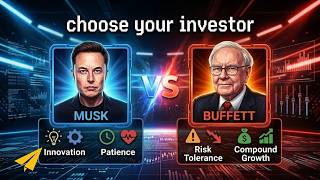
Evan Carmichael breaks down ten investment rules from billionaires like Buffett, Musk, and Dalio. Elon Musk says risk your own money. Warren Buffett buys undervalued assets. Kevin O'Leary limits positions to 5% per stock and 20% per sector.
Chapters
The world's richest investors didn't follow the crowd. They followed principles that built billion-dollar fortunes. For Elon Musk, success meant betting on himself.
If you're not willing to put your own assets at stake, then you shouldn't ask other people to do that.
For Warren Buffett, it came down to understanding value.
I think equities are cheaper than fixed dollar investments.
Kevin O'Leary learned the importance of spreading risk.
If I look at my stock portfolio, which is a huge part of my net worth, no more than 5% of anyone's stock, no more than 20% in any one sector.
Charlie Munger built his fortune by staying within his expertise.
I'm looking for things where I think I can predict what's going to happen with a high degree of accuracy.
Bill Ackman draws a clear line between investing and speculation.
Speculation is just, it's a bit like short-term trading crypto, and investing, uh, is, you know, doing your homework, digging down, understanding a business.
And Howard Marks reminds us that every investment begins with understanding risk.
Every investor, everybody in the audience should have a sense for what their normal risk posture should be.
And today we're breaking down the top 10 rules of success from the world's richest investors. If you wanna become a smarter investor, make better financial decisions, and build lasting wealth, this video is for you. Need motivation? Watch the top 10 with Believe Nation. If you've been here before, drop a hashtag #believe in the comments below so I can feature you here in a future video. And if you're new, welcome to Believe Nation, the only channel that helps you believe in yourself daily, one video at a time. Okay, let's kick it off with rule number 1, use your own money with Elon Musk.
Zip2 happened, you sold it, and it— And bought the McLaren, yeah. And if I'm not mistaken, you invested most of that money into your next venture, X.com. That's right. So, yeah, most of the funds went into X.com, which was later renamed PayPal. That worked out pretty well. It worked out pretty well, but looking back on it, would— because you put a lot of your eggs in that basket. Would you advise entrepreneurs to roll the bones quite the way you did? Yeah, absolutely. I think so. I think it's worth investing your own capital in what you do. I don't believe in the— sort of other people's money thing. You know, I think if you're not willing to put your own assets at stake, then you shouldn't ask other people to do that.
Rule number 2, invest in real value with Warren Buffett.
You've gotta crank in interest rates because everything in valuation gets back to interest rates. And if you take the US Treasury bill now, which is, we'll call it 80 basis points, means what, maturity? That means the US Treasury bill is selling at 125 times earnings. Now, if your alternative is to buy something at 125 times earnings or a good business whose earnings will probably increase at 15 or 18 times earnings, you've got to measure it against the risk. It isn't really a risk-free instrument, but the standard rate. And, you know, in 1982, you know, the rates got up 15% or thereabouts. Mm-hmm. That makes a lot of difference. I mean, you've got a choice with money. What do you do with it? In Europe, if you put it in the bank, you know, you will be charged for having it there. I mean, it's better to keep it under your mattress. So, you've got a choice every day of what you do, and I think equities are cheaper than fixed dollar investments.
Rule number 3 is diversify with Kevin O'Leary.
What happens when you have $5 million?
You have set yourself free for the rest of your life. You have to understand that when you, put that money into a watch, it has no yield other than capital appreciation. So if you're, you have to decide what your lifestyle is going to be and what you need on an after-tax basis and buy, you know, dividend-paying stocks and bonds to provide for that. But you can also buy long-term assets. And I recommend watches would be one of those, just like gold. Some people like Bitcoin. I mean, there's all kinds of alternative asset classes. And when you think about the context of a portfolio, and I say the same thing, my mother taught me this. If I look at my stock portfolio, which is a huge part of my net worth, no more than No more than 5% in any one stock, no more than 20% in any one sector. So I don't own more than 20% tech stocks. In my real estate portfolio, real estate's unique in the sense that some people let it become up to a third of their net worth, but that's also a heavy maintenance cost for all those buildings and condos you own. So you have to have balance and you need diversity, no different in the watch collection side of your business.
Rule number 4 is invest in what you know with Charlie Munger.
So you're not interested in Uber or companies like that necessarily?
Well, I have to be interested when they're that important and sweep the world and change practice. But I don't have to invest in everything I'm interested in. I'm looking for things where I think I can predict what's gonna happen with a high degree of accuracy. And I have no feeling that I have the ability to do that with Uber.
Also, if you wanna take real action after this video, I made a free worksheet just for you. It covers the top lessons from today, gives you space to write your biggest takeaways, and helps you build a simple action plan It's 100% free. Just click the link in the description below to go grab it, and I will see you there. Rule number 5, invest in real estate with Donald Trump.
How important do you think it is for this audience to have real estate as part of their portfolio?
I think real estate, Grant, is gotta be part of a portfolio. It's been, first of all, there are tax advantages, depreciation. A lot of people, you'll look at a project and you'll have a loss. Now, not good for your ego, but it made money, but you don't pay tax. And it shows after depreciation, you have a loss. A lot of times they'll analyze myself. They'll say, well, you lost money. I say, yeah, I lost money, but you're not losing money. You're— in fact, that loss, you can carry it over to other jobs where you're making a profit. So real estate, from the standpoint of tax benefits, has been great. But I love the real estate business. I love the creativity of real estate. And I think I always will. Even as president, I'd say, boy, that's a great site for a building.
Right?
You still see sites and like, that's a good location.
Everything I do, I mean, I see so much. I'll look at something and that's what I— it was in my blood from the time I'm very young. I loved the creative process of building. Inflation has always been very good for real estate, but unfortunately at the end, the whole thing pops. Okay, that's the bad part, you know, and you haven't seen that yet and hopefully you won't. Hopefully changes will be made, substantial changes. And you won't see that.
But inflation is a good thing for real estate, not a bad thing for real estate.
Very good.
Okay?
Number 6, Build Financial Security with Ray Dalio.
When we think about safety, we have to think about that as purchasing power. Because a lot of people think, if I put my money into a Treasury bill, I get safety. Well, look at whether that's giving you a return that's compensating for inflation. You as an individual should think about the total safety, including maybe that terrible scenario doesn't happen. Okay? Okay. That's what I'd like you to do. That's what I'd like you to do. And if you do that, you will come to a better balanced, better balanced position. I want you to get balance. Okay? I want you to do certain things. I want you to have enough savings, whatever, you know, that, okay, to have security, to build the first level of, I think investing, which is the same as savings, comes in tiers. Tier 1, tier 2, tier 3 on risk. And the first tier, is if everything goes wrong, I'm okay. And everything could be inflation, defla— depression, anything, whatever it is. I lose my job. I, you know, whatever it is, I got that thing covered. Then your next level is, okay, what am I gonna get the highest returns? What is my best bet? Okay, but start at that level. And then you said the other thing too, that it's not just the investment, it's where am I? Am I in the middle of a fight? Like, I don't wanna be in the middle of a fight.
Okay.
What's it gonna be like? So it does have geographic implications. You know, I don't know, maybe it's the state or the, the state you go to or the city you go to or the country you go to or whatever it is, you know, like, and there are certain things you can do to say this one's gonna be better than that one.
Rule number 7, invest in silver and gold with Robert Kiyosaki.
This is the best investment in the world today. It's called silver.
Okay.
And the reason I say that is because I study history a lot. This here is fake money. I would never work for this stuff. It's good as toilet paper. So the biggest investment today is this. This is $35 US.
Hmm.
And I think everybody in the world can afford this today. And I tell people every day, you should buy this. No, I'll save this. You see, they don't know the difference between this is fake money, this is real money. And this here is gold. Real money, fake money. So the yen, the rupee, the dollar, the peso, all fake.
Rule number 8, differentiate speculation and investing with Bill Ackman.
In your lecture on the basics of finance and investing, you mentioned a book, "Intelligent Investor" by Benjamin Graham, as being formative in your life.
What key lesson do you take away from that book that informs your own? Investing.
Sure.
Actually, it was the first investment book I read, and as such, it was kind of the inspiration for my career and a lot of my life. So important book. Bear in mind, this is sort of after the Great Depression. People lost confidence investing in markets. World War II. And then he writes this book, and it's for like the average man. And basically he says that you have to understand the difference between price and value. Price is what you pay, value is what you get. And he said the stock market is here to serve you, right? And it's a bit like the neighbor that comes by every day and makes you an offer for your house. Makes you a stupid offer, you ignore it. Makes you a great offer, you can take it. And that's the stock market. And the key is to figure out what something's worth and you have to kind of weigh it. He talked about the difference between— he said the stock market in the short term is a voting machine. It represents speculative interests, supply and demand of people in the short term. But in the long term, the stock market's a weighing machine, much more accurate. It's going to tell you what something's worth. And so if you can divine what something's worth, then you can really take advantage of the market because it's really here to help you. And that's kind of the message of the book. In that same way, there's a kind of difference between speculation and investing. Yeah. Speculation is just, it's a bit like buying, trading, crypto, right?
You're—
Strong words. Well, short-term trading crypto. Maybe in the long run there's intrinsic value, but many investors in a bubble going into the crash were really just pure speculators. They didn't know what things were worth. They just knew they were going up, right? That's speculation. And investing is doing your homework, digging down, understanding a business, understanding the competitive dynamics of an industry, understanding what management's going to do, understanding what price you're going to pay. The value of anything, I would say, other than love, let's say, is the present value of the cash you can take out of it over its life. Now, some people think about love that way, but it's not the right way to think about love. Yeah. So investing is about basically building a model of what this business is going to produce over its lifetime.
Rule number 9, understand your risk posture with Howard Marks.
What's the right way to create a market framework to invest in this environment?
When I go on TV, which I do half a dozen times a year, they always want me to say buy or sell, in or out, risk on, risk off. And I think this is too simplistic, too black and white.
Superficial, right?
I think so. The way I think of it is this. You mentioned thousands of people in the audience. Every investor, everybody in the audience should have a sense for what their normal risk posture should be. It depends on their age, their assets, their income, the relationship between their income and their needs, the number of dependents they have, what their aspirations are. How much they can tolerate risk, what is their intestinal fortitude? There are a lot of things that go into it. But I mean, from 0, which is no risk, to 100, which is complete risk, I think that everybody should have a sense for what's right for them. And that would help them define their normal stance in terms of aggressiveness and defensiveness. And what is the right balance for you? I always say to people— People come to me for financial advice. I say, "Which is more important to you, keeping what you have or making more?" And they say both. You can't do both with equal emphasis. Every attempt to make more introduces the possibility of not having any more of what you have today.
And rule number 10, the last one before a very special bonus clip, is keep investing in assets with Grant Cardone.
People have good internships over to someone that might pay $15, even $20, $25 an hour. Which is good money for 2 or 3 months if you're a sophomore, junior.
Yeah.
What advice would you have for them to do if they come away with $5,000 gross? What should they do with the money?
Well, dude, they should invest the money. You should get rid of the $5,000. You started broke, you should always be broke. Okay, you should get money, take the money, invest in assets. You should be broke in cash and rich in assets. Start building assets now. Also, for you guys that are interning, You're interning in the field that you're in, but you really need to intern, you need to learn those skills that you don't wanna learn, okay? Like you need to learn sales, marketing, scaling. Like why would you work for $25 an hour when what you really want is $25 million? So like right now, you guys should be leaning into how do I become an Elon? How do I become a, you know, somebody has tremendous amounts of financial independence so that you can literally, mold an industry, not just work in an industry. And if you're going to do that, you need sales, you need marketing, you need scaling, big think. You need, you need wealth creation formulas. You need to know, how do I create wealth? How do I, you know, sustain myself and an organization so I can, I can scale something big enough? Look, man, Mark Zuckerberg was what, he was 23 years old and he was a billionaire. He wasn't interning on the weekends for $25 an hour, bro. He wasn't hunting 5 grand and he wasn't hunting the punta. He was looking for the big score. And this is what I would tell all the kids, man. Your world is, you have so many more opportunities than I had when I was 25 years old. The whole world. That's for sure. You had more, you have more opportunities. You have availability to this, just this right here, okay? The fact that you and I can do this, it costs us literally nothing to do it and we can reach tens of thousands or millions of kids and say, look, you don't have to do it the way we did it. You don't have to go the old slow way. You can literally hack into the experience of— I'm 66 years old. You know how many losses I've had in 46 years of being in business? You don't need to have those losses. You need to learn from mine and avoid that.
I love that.
I spent 5 years in college, I shouldn't have done that. Okay, if I was gonna go to college, I should have done that in 2 years, not 5 years. But I was fucking around all the time. I had no focus, I had no real initiative, I didn't understand why I was there, I was just doing something. Then when I went and interned or got a job on the weekends, it was just to pay bills and party. Dude, it was all this vicious cycle of stupidity. So I ended up with more debt after college than I had. I shouldn't have had debt, okay? I shouldn't have ended up with debt. I should have been working the entire time. I should have done my, my entire 5 years should have been under 2 years, and I should have been working when I wasn't studying. And I'd be, I'd be worth $4 or $5 billion today if I'd have taken the advice I just gave you.
Many people used to invest in AI through one stock. That was NVIDIA. That was the check the box. I own the GPU, the chip manufacturer, which is the most important chip manufacturer in the AI age. And its valuation, meaning its price relative to earnings, really got up there. To very heady levels. And we were saying at the time, well, if NVIDIA's valuation is correct, there are going to be a lot of other winners. Who are they? Well, our largest position in the flagship strategy, ARKK, is Tesla. And as we were trying to help people understand why we were swapping away from NVIDIA to stocks like Tesla and Palantir, which is a software provider, We were trying to explain that this new world around AI is going to happen very quickly. And Tesla is the largest AI project on Earth. I posted that on X and Elon liked it, so it must be true. But it is true if our research is correct. We believe that the entire ecosystem associated with autonomous taxi networks is going to be worth $8 to $10 trillion in terms of revenue generation in the next 5 to 10 years. And if you wanna put that in context, the entire GDP of the world today is about $130 trillion. So $10 trillion is going to move the needle.
And congratulations, you're one video closer to who you're meant to be. I analyzed 10 billionaire investors and here is what they have in common. Go check out that video. I'll see you there.
If you're going to have and run a business, if you don't understand accounting, you're already behind the eight ball.
They understood inflation when others fell behind.
Inflation isn't a problem until it's a problem.
Made smart decisions with their money.
More from Evan


How the Biggest Mistake in History Created A Trillion-Dollar Empire | Sergey Brin



9 Machiavelli Principles That Force People To Respect You | Machiavellian Philosophy



The First 10 Words That Instantly Ruin A Sales Conversation | Vanessa Van Edwards

The Top 1% Mindset Behind The First $5 Trillion Company | Jensen Huang (Nvidia)

