Top 10 Rules for Success From World's Richest People
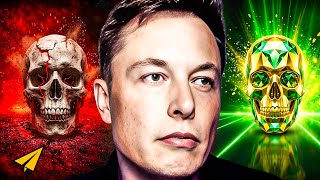
Evan Carmichael breaks down ten success rules from billionaires like Elon Musk, Bill Gates, and Warren Buffett. Musk emphasizes persistence, Gates says love your work, Buffett defines your circle of competence, and Zuckerberg stresses getting started. Each rule comes with direct quotes showing how these principles shaped their journeys.
Chapters
Some of the richest people on the planet didn't just get lucky. They followed rules most people ignore.
Let me tell you a secret.
And they started before they felt ready.
You just have to get started.
They stayed curious when others got comfortable.
I was just the most curious person you could ever imagine.
Paid attention to opportunities most people miss.
You have to pay attention to your life because it is speaking to you all the time.
And kept going long after everyone else quit. Quit.
It was cheaper than an apartment, so we actually just slept in the office and then, and then showered at the YMCA at Pajamal El Camino.
From billionaires who stayed inside their circle of competence.
Tom Watson Sr., who built IBM, said, I'm no genius, but I'm smart in spots and I stay around those spots. Well, he was talking about a circle of competence.
To leaders who failed, learned, and came back stronger.
Tilman Fertitta has made so many mistakes I couldn't even start to name them, but, uh, You learn from your mistakes.
Today you're about to learn the top 10 rules for success from the world's richest people. If you want to think smarter, move faster, and build real wealth, this video is for you. Need motivation?
Watch a top 10 with Believe Nation.
If you've been here before, drop a hashtag #believe in the comments below so I can feature you here in a future video. And if you're new, welcome to Believe Nation, the only channel that helps you believe in yourself daily, one video at a time. Okay, let's kick it off with rule number 1: be persistent with Elon Musk.
When I started the first internet company, Zip2, with my brother and another person, Greg Curry, it wasn't really with the thought of being wealthy. You know, I've got nothing against being wealthy, but we'll get back to that later too. But it's just, it was just from the standpoint of wanting to be part of the internet and I figured if we could make enough money to just get by, that would be okay. And when we started off, we literally only had like one computer, and so it would be our web server during the day and I'd code at night. And we just got a small office in Palo Alto back when rent was not insane, and it cost us like $450 a month. It was cheaper than an apartment, so we actually just slept in the office and then showered at the YMCA on Page Mill and El Camino. So we'd walk over there and shower. And that was— actually, I think that was when I first met you, by the way. And so I don't know how many people— probably not many people know this, but we actually pitched Steve in like January '96. On the Zip2 business plan. And actually, Steve was actually one of the most up to speed on what actually was in our business plan. Most of the people we met did not actually read our business plan. In fact, a lot of people, a lot of venture capitalists we met at the time didn't even know what the internet was. They'd never used it. They didn't think the amount of money—
I'm sure there's a bunch of folks who still do.
Yeah, right. Yeah, I'm talking like, you know, sort of well-known people on Sand Hill, I was like, "Wow, okay." But at the time, nobody had made any money on the internet, so I guess that's, you know, there wasn't really clear evidence that there was a business.
Rule number 2: Love the work you do with Bill Gates.
I think for Microsoft to be successful, even though we were the first, and we had a broader concept of software than the other companies, we needed to be what I would call hardcore and You know, in that case, the work is what I want to do. It's, it's not like, oh God, you know, I've got to earn a little bit more money. It's, you know, this is the thing that throughout my childhood I was so lucky, you know, because of my parents and some early friends, school I went to, I had these exposures to computers that were very rare. And so I had, you know, all these thousands of hours of programming experience and great feedback on, okay, how do you do it better from from the very best adults, I got to see what was coming. And the idea of being part of making that real, you know, I woke up and said, okay, I'd love to get to work. My younger self could stay in, you know, days at a time. I don't do that now, but then it was just in no way a hardship, you know, because I felt we were part of something that would be very empowering. And, you know, competitively, I wanted us to be the ones to make it happen.
Rule number 3, define your circle of competence with Warren Buffett.
Circle of competence is the area in which certain kinds of industries, for example, I can understand the future economics of. Other kinds of industries I can't. And I have to know where the perimeter of that circle is. Now, over the years, I may be able to enlarge the circle somewhat, but the circle never gets to be all-encompassing. And Tom Watson Sr., who built IBM, said, "I'm no genius, but I'm smart in spots, and I stay around those spots." Well, he was talking about a circle of competence, and I see all of— you know, my partner Charlie says, you know, it's wonderful to have an IQ of 180 as long as you don't think it's 200. And I have seen all kinds of very, very smart people self-destruct one way or another in business or particularly in the stock market. And they stray outside of their circle of competence just because they know they're very, very smart. But that doesn't mean they know everything. And defining what your game is, where you're going to have an edge, is enormously important. And I think both my partner Charlie and I have gotten reasonably good at that over the years.
Rule number 4 is get started with Mark Zuckerberg.
Let me tell you a secret. Ideas don't come out fully formed. They only become clear as you work on them. You just have to get started. If I had to know everything about connecting people before I got started, I never would have built Facebook. I remember that night I launched Facebook from that little dorm in Kirkland House. I went to NOX with my friend KX, and I remember telling him clearly that I was excited to help connect the Harvard community, but one day someone would connect the whole world. The thing is, it never even occurred to me that that someone might be us. This idea was so clear to us that all people want to connect. So we just kept working on it day after day after day. And I know that a lot of you are going to have your own stories just like this.
Also, if you want to take real action after this video, I made a free worksheet just for you. It covers the top lessons from today, gives you space to write your biggest takeaways, and helps you build a simple action plan. It's 100% free. Just click the link in the description below to go grab it. I'll see you there. Rule number 5: Be curious with Mark Cuban.
What do you think it was inside you? Did you get it from your parents? Did you get it from your community? What was it that helped Mark realize that there were gaps in every market? Because you were selling stuff when you were a kid.
How do you see those gaps?
I mean, I mean, I was just the most curious person you could ever imagine. I mean, I just loved to learn. I was that kid that was just reading everything I could get my hands on about business. And if you read enough, you're gonna learn something to your advantage.
Wait, wait, wait, go back, go back, go back. You said you were reading about business as a kid?
Oh yeah, like I was 10, 11, 12, you know, you name it. I was reading.
You see, this is the difference.
Yeah, business books all the time. You know, there was this kid, Barry Minkow, and he started this, this carpet cleaning company, ZZZ Best Carpet Cleaning. Right. And he took a company public when he was 21 years old and there was a book written about him. But the thing about it was it was completely a fraud. And so he made all these tens of millions, if not $100 million, as a 21-year-old kid running this company, just fooling everybody and anybody he talked to. And I read that book as a kid and I was thinking, you know, if this kid can fool all these adults, put aside the fraud, That just means there's lots of opportunity there to do something and build a business. And how old you are doesn't mean anything, right? If you can figure it out. And so I just always just took that and said, you know, I just keep on learning from what other people do and learn from their mistakes and learn what they do right.
Yeah.
Get a job, learn from, you know, I would tell myself, you know, you pay to go to college, but then after you get a job, you get paid to learn. And I always, that's the way I looked at the jobs that I got, the way I looked at the jobs I got fired from, you know, everything was a learning experience. Experience, and sooner or later add it up to something of value.
Rule number 6: Pay attention to life with Oprah Winfrey.
You have to pay attention to your life because it is speaking to you all the time. And the bumps in the road and the failures that pointed me in a new direction and led me to a path made clear— that is what I'm wishing for you today, your own path made clear. And I know that there is a lot of anxiety a lot about what the future holds and how much money you're gonna make. But your anxiety does not contribute one iota to your progress, I'm here to tell you. It does the opposite. Look at how many times you worried and you were upset and you didn't think you were gonna make it through the block. I got that text a couple months ago. And here you are today. You made it. And I'm here to tell you that you're going to be more than okay. So take a deep breath with me right now and repeat this: Everything is always working out for me. I want to hear it. Everything is always working out for me. That's my mantra. Make it yours. Everything is always working out for me because it is and it has and it will continue to be as you forge and discover your own path.
Rule number 7 is follow your passion with Jeff Bezos.
You don't choose your passions, your passions choose you. And I fell in love with space and rockets when I was a 5-year-old boy and watched Neil Armstrong step onto the surface of the moon. And I have been passionate about it ever since. And, you know, there's a very real sense in which Amazon, which is an amazing, fun, interesting company to, to have started and lead, is, you know, a lottery winning for me. And so I'm taking those lottery winnings and investing them in Blue Origin. And I've been working on that for 15 years. Our motto is gradatim ferociter, which means step by step ferociously. I like to do these things very incrementally. We have, there's a military phrase that I especially love, and it says slow is smooth and smooth is fast. And I have seen that in every endeavor I've ever been in, That's the kind of thing that really allows you to make progress. If you do everything in the right sequence, never skip any steps, um, and so we have been, uh, working in that vein for a long time, and, uh, stuff is coming out the pipeline, and I can tell you it's incredibly gratifying. We have, uh, now, uh, more than a 1,000-person team, uh, at Blue Origin, and that team is incredibly talented, and they're doing a great job. My vision for Blue Origin, the long-term vision, is millions of people living and working in space. We need a spacefaring civilization for a whole bunch of reasons, and that's the vision.
Rule number 8: Learn from your mistakes with Tilman Fertitta.
Tilman Fertitta has made so many mistakes, I couldn't even start to name them.
Give me one.
Well, I mean, I've over-negotiated deals and lost them.
What does that mean, over-negotiate?
You know, you try to cut too good of a deal and somebody gets up and walks away, and you can't get them back in the room. Or, you know, you just made a bad deal. You know, you just made a bad deal. And I've made plenty of bad deals. I've just always made sure I've made a lot more good deals. But you learn from your mistakes. And I tell people every day, the day you say that there's not a paddle for everybody's behind is the day you're going to be in trouble. And every day I come to work knowing that I better protect myself from that paddle coming down the aisle.
You refer to the paddle in the book.
What's the worst paddling you've gotten in business? Can you talk about it?
Yeah, absolutely. In the crisis of '08 and '09, I happened to have around $1 billion in debt coming due. And that is when they were talking about the banks shutting down. And it was a wild time. And we got it done, but it was not easy. We were the only person even on a road show right then raising debt. It was so tough. And then I go back to the early '80s or the mid-'80s when you had the crisis in Texas where every S&L went under and every bank went under, and it's really when I was starting my career. And I lasted before all the banks and got a reprieve from them. I talk about that in the book.
For several years.
For several years.
With no interest.
With no interest, and you just, you didn't have to make a payment or anything. How about that luck that I outlasted the banks?
I read that and I said, this guy's got a lucky charm. Number 9: Follow your own path with Larry Ellison.
My parents and my teachers had all planned for me to be good at medical school, so, um, for a long time I had been preparing to go to medical school, uh, and, um, was on the brink of doing just that when, uh I let my parents know, in fact, I wasn't going to do that. I was going to take this car trip out to Silicon Valley and try my hand at engineering rather than medicine. It's interesting. It was actually the subject of a commencement speech I gave, and where my parents were so upset, my family was so upset, my teachers were so upset. That they didn't talk to me for a few years, but eventually, they forgave me. But lo and behold, I wish they were still here today to see I've come full circle, as we're now using technology, the technology that I worked on for most of my life, to make the health quality of healthcare dramatically improve the quality of healthcare.
And rule number 10, the last one before a very special bonus clip, is think outside the box with Jensen Huang.
I heard from someone that there were pro— that you could—
there was never a problem you couldn't fix. Do you think that's true, or was there a problem that you couldn't fix? There's some problems you can't fix. I don't recall one. And the reason for that is because either you find a solution for it or you change the problem so that you can find a solution for it. And I think in a lot of ways, some people call that thinking out of the box. If you can't solve something, either sometimes it's not meant to be solved, or you can change the problem in a way that is solvable. Now there are some problems that if you try to solve it in the most literal sense, it would take a long time to solve. To solve. It might take a lot of money to solve. It might take an enormous amount of cost in time or resource or whatever it is, or materials. But if you change the problem and you truly understand what is the person really trying to ask, what is at the core of that problem, maybe you can express that problem in a slightly different way. And as a result, it becomes solvable. And a solution can be found. Maybe you can simplify the problem. Maybe you can break the problem down into 10 pieces and that you would solve it over time. There's a lot of different ways to look at the problem. Smart thinking about a problem is really at the beginning of engineering. It's asking the question, what is this problem really about? What is this problem really about? Oftentimes, by asking that question, what is this problem really about? What are they really asking? What are we really looking for? How can I express this problem in different ways? When you think about it that way, all of a sudden, the number of solutions really, really expand.
Who are a few of the people that you study, you feel you learn from, or that influence your thinking about how you built your business?
You know, when I was a kid, you would read about entrepreneurs, you know, that were starting companies. Charles Schwab or Fred Smith, certainly Sam Walton, some of the early telecom pioneers, people that were doing it right then, like in the '70s. And those stories were also, were just super interesting to me. I grew up in Houston, which was kind of a boomtown. You'd see these new companies being created and parents were talking about that. And so those stories were always just interesting and compelling and you want to understand, well, how did they do that and why did they do that? And, you know, what happened? And, you know, I never imagined myself doing anything else other than starting a business. Yeah, the idea just was in my consciousness from a very early age.
There's this great line that Jeff Bezos says, where he's like, "We don't choose our passions, our passions choose us." I think there's multiple, like my notes to myself in the margins, like, "Oh, he's compelled." He's like, "This is coming through him." Like, he's just like, "He has no choice. This is going to happen." But is there anybody in particular that you like, really like honed in on and admired and tried to emulate in some way?
I always think you can learn from just about anybody, whether they succeeded or failed. And so I tried to just understand, you know, as many people as I could that were entrepreneurs that were starting businesses. How did they struggle? What worked, what didn't work? And those were always the compelling and interesting stories.
And congratulations, you're one video closer to who you're meant to be. Believe. For 10 more rules for success from the world's richest people, check the video right there next to me. I think you'll love it. Continue to believe, and I'll see you there. Some of the richest people on the planet didn't just get lucky. They built ideas that changed industries.
Ideas matter.
Took risks most people were afraid to take.
The risk for me was if it didn't work,
More from Evan


How the Biggest Mistake in History Created A Trillion-Dollar Empire | Sergey Brin



9 Machiavelli Principles That Force People To Respect You | Machiavellian Philosophy



The First 10 Words That Instantly Ruin A Sales Conversation | Vanessa Van Edwards

The Top 1% Mindset Behind The First $5 Trillion Company | Jensen Huang (Nvidia)

