TOP Rules: Boost Your Videos with SUGGESTED Traffic
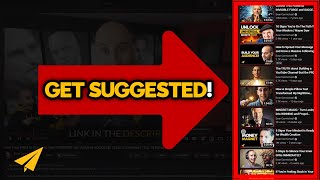
Evan Carmichael breaks down how suggested traffic drives 22% of his views, far outpacing search at 9%. He walks through five core tactics: consistent thumbnails, single end-cards, playlist embedding, TubeBuddy automation (which can lift click-through rates 70-80%), and revisiting older videos with winning designs. Long-form videos of 10-30 minutes sustain suggested traffic better than shorts.
Chapters
Keys to getting suggested. Suggested is the number one way to grow your channel. In thought leadership, suggested is where you want to go because just setting the framework, because you want your content to live forever. Search is only 30% of entire YouTube, and browse is way too hit or miss, way too trendy to be able to win consistently on. So inside of thought leadership, suggested is where you want to play. Your content lives forever, but before that happens, you have to rank against yourself. So step 1 is how do I get suggested against myself? And this is where at the beginning stages of a channel can feel slow growth because you're not getting picked up against big channels. Ultimately, your big growth comes from being suggested against big channels, against huge videos. You want to be suggested against my videos, against Tony Robbins videos, against Brendon Burchard videos, or inside your niche. That's where your big growth comes. But that doesn't happen until you get suggested against your own videos first. And just think about it in YouTube's perspective. Why would they show you against some big video if you're not even showing up against yourself? If you're not even for your own audience converting people over to want to watch, they're not going to show you against the big videos. What ends up happening is you see the slow growth, slow growth, slow growth, and then once suggested becomes your number one traffic source, oftentimes you see an explosion of growth for the channels because it means you're suggested against your own, then you get suggested against others. So let's show you how to do it. And this, for this video, I'm going to, uh, break down my own channel, my top 10 channel, and kind of take you guys a little behind the scenes of what we're doing and the advice I would give myself that then I can go give my team as well to go execute. So if I look at the breakdown for my top 10 channels, suggested is number 1, so 22%. Channel pages is number 2 because we promoted off my main page, then browse and search and everything else, right? So search is 9%. It's not huge and it shouldn't be huge. And if your goal is to get people to subscribe to your channel, right? If you have some utility channel where you don't care about subscriptions, then search can be great. But if we care about people coming back and watching content consistently, suggested is where you need to be. So this is where we get massive growth. So how do you show up against your own videos? How do you get suggested against your own channel? Here's what you need to do. A couple things. One, consistent design. So if you look at my channel, you look at my videos, there's always that consistent design. You know what an Evan Carmichael thumbnail looks like. Right, and on this channel, we use white, whatever blue we want to call that, and then still the logo, right? And so whether these are the new videos that just came out, these are the videos that are the most popular. So some of these are a year ago, whether it's, you know, something that came out yesterday or something came out a year ago, it's still the same kind of style. The only one that's different is this one, which isn't that different. This is where we were testing having the text all being in a block. So it's just one big square where everything else, we found this actually performs better where it's not all chunked, right? So you have different lengths of the lines, it's easier to read. But besides that, that's a pretty minor change. I look at that, it's like, oh, that one's really different. But for most people looking at it, they're like, okay, this is, this is Evan Carmichael thumbnail. So I need to know what does your thumbnail style look like? Because to show up suggested against our own— and I know we've talked about this in the past— when they've clicked on— if I click on this Brendan Burchard video here and I like it, like, I like this channel, I'm going to look down the side and see what else is there. And if I can't recognize your thumbnail because it's a totally different style, then I'm not going to click on it. So you're losing views on your own videos. So it doesn't have to be exactly the same. That is a mistake. So not exactly the same, not the exact same LinkedIn profile picture. It's what a lot of people do, exact same picture. They have one good picture of them and then that's the picture on every single thumbnail. Don't do that, right? You'll see none of these are actually the fancy pictures. They're screenshots from within the video. Every single one of these is a screenshot within the video. Similar text, similar font, similar logo placement. It's okay to test and to tweak and to play, but then the best thing you can do is go back on your older videos when you found the winning design and go test those and improve them. So that if I, if you go look at this channel content, as far as a year ago is all going to be similar. So it encourages people to want to click. If they like it, they want to click. Second, end card strategy. I've tweaked this up in the past. When did we do this? 3 months ago, 2 months ago. One big end card at the end, linking to the most relevant video, not a playlist. So if you looked at my stuff 6 months ago, you would have seen an end card with playlist, playlist, uh, subscribe, and a link to my website to get a lead magnet. And we looked at all the numbers, uh, and this is actually outperforming all of those combined. So this one end card at the end, click into a single video, is outperforming the 4 elements I used to have combined. So this is now what I'm doing on all my channels, is what I'm telling all the big guys to do as well. At the end of every video, you have 20 seconds to put on the end card. You, you point to the video. So first you have to pick the video, right? So this is a video on Kevin O'Leary, we're linking to another Kevin O'Leary video, the most relevant related video to the one that you just made that's already on your channel. And you could pitch it for 20 seconds, or you could talk about it for 10 seconds, have highlights from that video for 10 seconds. You look to it, you point to it, even at the end now I'm saying, and I'll see you there, like that's at the end, both fingers, the video right there next to me, I think you'll love it, continue to believe, and I'll see you there. Go watch that video. Yeah, Mark's got it. There's arrows that fly in, you know, big video right here in the middle, hand-selected, that we think is going to be the best one for them. Not YouTube's most relevant or best review or not YouTube's most recent. You pick it. And again, what we're doing is we're training people that once they watch one video, they're watching another, they're watching another, they're watching another, YouTube's going to recommend your videos a lot more to people. So this has had a big impact on getting more sessions, more views in on the session, which then leads to more suggested views as well. And then playlists in the newsletter. If any of you guys have newsletters, even if it's 500 people or you're sharing to social media, you have to put the playlist in the newsletter. So I've talked about this before. I can dive in again if you guys want of how to do this. But basically if I look at this video here, so this is, I don't think I've shared this before where I share with the newsletter. This is the newsletter. Drew is saying, this is a must all cast. It's a huge deal. So this is the actual newsletter. It's super short. There's, there's basically nothing here, right? This is the video that I'm trying to promote. And it's, it's a picture of Jamie. This is the video. You know, why did Jamie get fired for talking too much? How did she, how did she, I even made a typo. How did she got from waitress to billionaire? Find out my recent video on her, right? This is a link. This is a link. This is a link and the picture at the bottom is a link. So there's 4 different links to the video in here. I experiment with a whole bunch of different versions of this where I'd have a lot more details. I'd show what the rules are. I'd share the highlights from it, give a lot more explanation. It didn't lead to as many clicks. This leads to the most number of clicks. So super basic, simple, easy for people to land on the video. Drew says, I 3X'd a channel revenue with this one strategy. It's a big deal. So then when they click on the video, they get to the video. but the key to that strategy is it shows in the side my playlist. So there's 445 videos here on this channel that are public. So after this one, they'll watch another one and another one and another one. If they, if they leave it open, some people may close it, that's fine, but it auto-leads them to watch the next video on the channel. And you can do a custom playlist if you want. Most people find that too much work. I just do the uploads playlist, and if you guys need help in how to actually find that link, I can, uh, we can do that at the end as well during Q&A time, but it's a big deal. So this is a little hard to see. If I zoom in on it, you can see that there's, there's the video link, and then at the end it says &list=, so this adds that playlist at the end. So you still get the same video, the experience from the user is the same, they're watching the video. I click for a video, I get the video. But what happens after the video ends is it's going to send me down this rabbit hole of all my other videos. Almost nobody's doing it. And if you have a newsletter list or you're sharing to social, again, if you're sharing to one person, it doesn't make a difference. But if you're sharing to a group of people that has the potential for lots of people to click on it, that can make a big impact for you. Playlists can be scary for people. Playlists can be scary. They don't want to sign up and commit to watching 40 minutes or whatever. Playlists can be scary. So it's one video, and when I click it again, I get to the video. So from a user experience perspective, I'm actually still just getting that one video. It's just what happens at the end. What happens at the end is they'll go to the next video automatically instead of just the video ending. And what some people will do is they will just have it open in a tab. They'll mute the video and have it open in a tab, and then it just runs. And they forgot that they had this open in the tab. And 8 hours later, your videos are still playing. That counts for a lot of watch time. And then you get a lot more suggested. How to win the click. It's great to show up in suggested. One of the things that YouTube really cares about is, are people then clicking, right? Are they clicking on your video? When they see yours down the side or on the homepage, are they actually clicking on it or not? It could have the best information possible, but one of the biggest things that I end up doing with some of the biggest channels as well as my own is continue to tweak and test to improve the click-through rate on those videos. Because you could be showing up, but if nobody's clicking on it, YouTube's going to stop showing you. So win the click. So my favorite tool right now is TubeBuddy to do this. We've done a ton of different split tests on TubeBuddy. You can, you can test the title. You can also test the thumbnail. If you are here on as a part of somebody's team, which I know some of you are, this is huge because to get that person to then make new videos is really complicated. To go back and update and tweak and test an old video is super easy. And if you are here representing yourself, great, same thing. You know how long and how much effort it takes to make a new video versus, hey, if we just throw a thumbnail tweak or title change on this and it doubles the views of the video, that's a pretty good thing to do, right? So it's a good investment of time. So TubeBuddy is the only tool right now that, that exists that I would recommend. I help them build the A/B testing. I'm not an investor or owner of the company, just I needed the tool for myself and we use it. So if you're looking at the tools, most of what the tools do, I'm not a huge fan of. TubeBuddy is actually great for automation. So if you want to update the cards on all your videos, TubeBuddy can help you do it. You want to update, you want to put a line at the top of your description to say new book out, Or, you know, Jeff Walker is doing his new launch, so Casey can update the description and say, "Join Product Launch Formula today," right? "Special offer for the next 3 days," right? You could update the first line of description across all your videos automatically with the tool like TubeBuddy. To do it manually, you would just never do it. It's just insane to go back on all the content. Now, if you have 40 videos, okay, it's not the end of the world. If you have 400, or in my case, 12,000 or whatever right now, it's just not possible. It's just not a good use of time. So automation is what I really love TubeBuddy for. And then the split testing and vidIQ, I love that in the search results you can see how many subscribers each channel has. Everything else I'm not a fan of. So helping you pick keywords for your videos is all junk. Tags is completely useless. A lot of these tools have built their brand off of tags. Like, tags is zero. YouTube's come out and said tags count for nothing. So don't worry about the tags that you're stuffing into the video and trying to get the right, you know, there is no best practice anymore. It doesn't matter. Um, so that's where the tools, I think, let you down. But used properly, it can really help you, uh, grow your channel. So TubeBuddy, my favorite tool, is the split testing. TubeBuddy costs $49 a month. At the highest level to do split testing is $49 a month. So it's not, it's not going to break the bank. It's not like some crazy enterprise tool that's $20,000 a year to be able to get in on. And one of the things you can do with the split testing is say, okay, I'm going to test one video against another, one title against another. So you take a video that you want to improve and say, okay, the original title. So here's one that I did. The original title was 10 Ways to Stop Making Excuses. And then the series name. And my team said, okay, what if we try the 10 morning routines you need to start using right now? It's like, okay, I don't know. I like both of them. You know, which one do you guys like better? But you can pop it in the chat. A or B, which one do you think is gonna do better? Terry says B. Casey says B. Dan says A. Peter says A. Anna says B. Drew says hands down B. Isaac says B. Right. So, but here's the thing, like we have a mix of opinions. I like both of them. You know, I like both of them. Greg says B. I like both of them. I picked the first one. My team picked the second one, you know, but the thing is, this is where you can really get slowed down on your YouTube creation because you don't know what the right answer is. And if you have a team, you could have different opinions and say, well, I like this and I like this. And like, okay, what do we actually do? Well, you do both and then you let the data play out. It's like data-driven decisions to help you grow your channel. So I ran this as an experiment and the answer was B. So I was wrong. Great. Hey, but I'm winning, right? And so the way that TubeBuddy basically works is one day it's A/B, but on the same video. So one day it has Title A, the next day it updates to Title B, the third day back to Title A, the fourth day back to Title B, and it'll just keep swapping until you get enough data to say that it does better. So this is the same video. I didn't change this video, right? It's the exact same video. All I did was update the title and we got a 73% improvement in the number of people clicking through on the video. It's a pretty big deal, right? We spend so much time making that video. How long did you spend thinking about the title? Probably not that much. And then once it's up, most people focus on the next video that they're gonna record and, and create where often the, the biggest room for leverage is in your catalog to redo all those videos and constantly test. So great, this one won. We've probably tested this another 20 times. Okay, it won. Perfect. Next, what's another title test we can do? Okay, it lost. Perfect. Next, what's another test that we can do? So you're always testing and trying to get the best ones to win. And so this is, it's not that complicated a tool to use. And again, for whatever reason, we, and not just you guys, like everybody focuses on the next release, where if you look at where your views are coming from on your channel, it's likely from the library. You have some video that's 3 years old, that's still your number 1 video. And that's the beauty of YouTube, your content lives forever. So hey, how can we make that 3-year-old video pop even harder by tweaking the thumbnail and title? So right now we're just focused on titles. So that one little change, now 73% more people coming on the channel. And what YouTube does is if they see that people are clicking through on your videos more, they're going to start recommending it even more. So now you're going to start showing up even more because we picked a better title. Now it's not so much off of like, what keywords am I going to rank in search for? Because again, search isn't the game. You know, if we can get 73% more views on a video, you don't really care where it's coming from. It's coming from search, coming from suggested, coming from browse. As long as they're real people watching your video that could be subscribers, leads, you know, customers for your business, that's the main goal. So a couple of examples of things that we've done, you know, Donald Glover, Childish Gambino, top 10 rules of success. One of the big things we were doing was leading with the name versus leading with a message. And when we change it to never settle for anything, perfect. Another 26% increase. Same video, didn't make any tweaks or changes, just tested the title. Win. Another one, another top 10 was success versus the main theme, 41% improvement. And so what we'll usually do is when we have a new idea, like these past two was lead with a message instead of just leading with the You know, top 10 rules, lead with the message first. We'll test it on 10 videos. Not every video will win, but if we can get 70% of the videos to win, then we go back and update everything, keep testing everything, and it becomes our new best practice going forward that every new video we come up with is going to follow this new best practice. There'll be some that you just can't beat. So don't stress out about being 10 out of 10. Every single one has to win. But if it's 70% plus each time, then, then yeah, that becomes our new best practice. Another one, you know, Eric Thomas Motivation 2016. Here's what you should do from 22 to 30. You're gonna love this advice. 67% improvement. And sometimes it looks obvious afterwards, like, yeah, yeah, of course that one would win. But when you're doing it, you don't know. Just like when I— that's why I showed you, hey, A/B, and we had a split room. At the beginning, that's why, because when you think it might work, you never know. So I'm not really obsessed about me being right. I'm obsessed about getting it right. So if someone on the team came and said, "Hey Evan, I think this title sucks. How about we try this?" It's like, "Okay, go for it." At this point, they don't even have to ask me. As long as it's on brand, we're not anti-believe, we're not doing something violent or You know, as long as we're on brand, but the team knows that, then just go do it because we're gonna get results pretty quickly. And, and a lot of channels just take way too long to make decisions off of this. And when people ask me, well, which title do you like better? I get that a lot from people with big channels. Some of my friends like, hey Evan, which title do you like better? I don't know. Who cares what I like better? Launch it. And then a week later, try the second title and then see which one does better. Data-driven decisions. I always recommend to not do a test until at least 1 week after the video's launched, because in that first week, the data's kind of skewed. The first week is going to your subscribers and notifications. So don't do a test on day 2, cuz the data's gonna be messed up. Or if you know you're gonna put it to your email list or something, right? Then don't do a test while you're sending it out to your email list, cuz you're gonna mess up your data, right? Look at how many clicks we got on this video. Yeah, but you sent that to your newsletter, right? Like we're not, you're not gonna do that every day. What we care about is trying to get it from suggested and browse and people being— having the video be recommended by YouTube. So yeah, so wait at least a week, but all your videos in your archive, I'd go back and start updating. The only ones I wouldn't is if it's super short, it was like a 2-minute video or something, and it's just a product promo. That's going to be really hard to get ranked. So that would be last on my list to go off and do. But I've got 3 and a half people on my team who are— this is their job, updating titles and thumbnails across 10,000+ videos. I say half because the half person, they're doing something else half time. Not that I hired half a person. Now we talk about titles, but even more important than titles is thumbnail. People are visual. The picture really, really, really makes a difference. So if you want to amp up your archive content, the picture becomes more important. I'd say 70% is from the thumbnail. 30% is from the actual title. So if you're going to be split testing, split test thumbnail first, and then you split test the title. Um, for every video we launch, we have 2 thumbnail versions ready to go. We launch it. And then a week later we test the other one. And then we just have them compete against each other and whichever one wins, that one wins. And sometimes it's this one that wins, you know, 50 rules, but more often than not, it's something like this where there's a message. I played this one song for 17 hours, right? It's like, ooh, what was that song that you played for 17 hours? I wanna know what that is. Right. But yeah, variation won by 21%. So again, 21% more views on the video just by tweaking the thumbnail. So the theme was how to build an audience when most of your keywords have heavy competition. I'd love to jam with you guys, um, and help you come up with the next videos to make, because I think a lot of people struggle with what do I make next, and I'm making videos and nobody's seeing them, and I don't know what topics to work on. I actually use Zen in the presentation, uh, in Vegas, uh, in front of everybody, and I'll show you quickly what I did. And then hopefully we can workshop with you guys too. So if you think about what are some of the videos that you want to make, uh, so for Zane, what did I use? Zane, do you remember what was, what I put in? How to have confidence? Yes. This is one of the techniques that I often teach and we've, we've gone through it before, but I'd like to, to customize it and get some examples from you guys to make it, um, more personal. So, you know, Zane's a confidence coach, so he's going to come here and look at How to have confidence. Like that's maybe a video title that he would come up with. And so we use the vidIQ plugin. We've mentioned this, but it allows you to see how many subscribers each channel has. And so this one, you know, 8 million views. That's cool, but it has 16 million subscribers on the channel. So it's an underperforming video. Uh, so we looked at this one, you know, how to be confident in any situation. And I think Charlie just, he must be split testing this video because yesterday was something else saying, wasn't this like how to radiate confidence? So he, Charlie, looks like he's split testing this video, but it's got 13 million views and 5 million subscribers. So this, this is one of the most popular videos on his channel. It's helping him grow the channel. And anytime we have a higher sub count compared to the views, most, most videos will underperform their sub count. So most videos will get, if he's got 5 million subs, will get less than 5 million views. Whenever one does really well, that means it's a really good video. So we want to be taking on this video. So then I asked Zane in the office, hey Zane, can you make this video, how to be confident? And he's like, yes, perfect, go make that video. And what, what we'll often find is the title that we, we think of is not the title that we end up going with, right? We started with how to have confidence and we end up with how to be confident in any situation, right? And then part 2 of this is to go look at their channel and then see what their other videos are. And if we sort by their most popular ones You can see, you know, the How to Have Confidence one. Oh, it's here. Oh, or did he do it twice? No, it's here. It's weird. It's How to Radiate Confidence Under Pressure. It's weird that it's showing up in search as something different than on his channel. He must be doing a split test. Anyway, this is the video and this is number 3 video. So then you can look at what other videos have gotten more than 5 million views. And there's not that many, you know, he's got 5.3 million subs. And this is what, 6, 12, you know, 15, 16 videos have more than 5.3 million views out of all the videos that he's done on his channel, right? Like this will just keep scrolling and these are still decent videos, right? But they're not the ones that are really growing his channel. So then you just look at all these and I, you know, 5 common habits that make people instantly dislike you. Can Zane do that video? Maybe, maybe not. You know, liking you, is it tied to confidence? Sure, but it may not be in his wheelhouse. How to avoid embarrassing yourself in an argument? Maybe, you know, does Zan talk about arguments and negotiation embarrassment? You know, it's on the verge. But then something like this, how to turn awkwardness into confidence, right? And then I asked, "Zan, can you make that video?" He's like, "Yes." Like, cool, right? And so you're just basically looking for the videos that are helping. These videos are helping grow Charisma on Command's channel. And even though it's, you know, it's Charisma on Command, not Confidence on Command, but there's a lot of confidence-related videos. So the, one of the biggest shifts I was trying to get people to make at the conference was the game is not search. The game is suggested because so many of the experts teach search, but most of the views don't happen in search. Most of the views happen what YouTube recommends you. So the goal is to rank after other people's videos. So the SEO game is how do I show up after other people's videos, not how do I show up for that search term. And so to the topic of how to build an audience when your keywords have heavy competition, it's not so much about the keywords having heavy competition. It's any videos that are doing really well, awesome. We want to be trying to rank after them. So for, for you guys are here, are there any topics, themes, that you want to either pop in the chat or, you know, since it's an intimate group, you can unmute and just— we can workshop it. Because I'd love to be able to get you leaving here with specific videos that you can go home and make.
Leadership skills.
Cool. So leadership skills is a really broad topic, right? Cool. So that's a good starting point. So for here, we're on leadership skills. What do we got? 4 Tips to Improve Leadership Skills with Brian Tracy. Decent, you know, 649 versus 1.3. It's okay. 10 Leadership Skills Every Leader Should Have. It's okay. 1.6 versus 34. It's okay. Here's something, but Tony Robbins on the Psychology and Skills of Exceptional Leaders, probably not one that you're gonna make unless you're gonna dissect Tony Robbins, but not as good. This is actually, this is actually rough. A lot of these are rough so far. Here's one though. How to be a great leader. The 7 great leadership traits, 1.3 million views off of 70 subscribers or 70,000 subscribers. Could you come up with 7 great leadership traits, Terry?
Absolutely.
Yeah. So this is a good one to make, but overall this is, it also shows you how difficult it might be or how good a topic is, right? So these people all have a lot of subscribers. Actually, this one This one doesn't with the 1,000, but a lot of these videos, they're getting a lot fewer views and subscribers. So it could also lead us to think, what else could we call it instead of calling it leadership skills? What else could we call it? And by changing up one of those words, we might find a better topic. So this is a little bit below average as a term, but there are still some gems in here. Like this one, How to Be a Great Leader, 7 Great Leadership Traits. This is the best one on here. All of these are underperforming unless it's specific, right? So Seth Godin, even here, Gary Vee talking leadership skills, 46,000 views, but he's got 3 million subscribers. 5 Crucial Tips on Leadership for First-Time Managers. Is that in the wheelhouse, Terry, or is that— are we talking—
That's a good one. I mean, because 5 Crucial Tips on Leadership for First-Time managers, I mean, the number one thing would be developmental counseling. So I mean, I have ideas in which I can talk about on that.
It's more— does this— so I mean, 5— if it was just 5 crucial leadership— 5 crucial tips on leadership, cool. But for first-time managers, does that fit into who you're trying to reach? It could.
I mean, once again, it's, it's a matter of, of who I want to reach. And, and if I'm wanting to reach first-time managers, Yeah, it'd be a good one.
Cool. So this video really performed well for him. 18,000 subs, 238,000 views. And especially if you're a smaller channel, looking at smaller channels, right, can really help. So 18,000 is not, is not a, it's not a tiny channel, but it's not a giant channel either. If we're looking at Charisma on Command, it's got 5 million subscribers. Um, so that's interesting. Body language of leaders. Is interesting. I don't know if you go that route or not, Terry, but I have—
I've talked about things like, for example, how the eyebrows is the most expressive body part. So I do talk about some elements of body language.
So this is where it could get really cool. It's like, hey, you look at Vanessa Van Andrews. This is the— she's shown up a couple times now, right? There's this video, but then there was this video underneath. So this got 2.1, this got 360,000. I believe she was up higher somewhere here, here, 338,000. So when she's just talking about leadership skills, it's really underperforming compared to talking about the body language of leaders. Yeah, her book is about that. Yeah. And so it's what she's known for, but it's also, you know, it's what people are searching for, what they're connecting with, which is getting a lot of traction on. So could you provide your perspective on the body language of leaders? And the goal becomes, let's try to show up after Vanessa Van Edwards. Oh yeah.
I probably have about 7 to 10 things of body language I could talk about for sure.
Cool. And so that's, that's a starting point, right? So we've, we've, we've got one video here, second video here, and there was a third video on this one, right? So these are, so we've got 3 video ideas that you can make. Cool. Next is to look at all their channels and see what other videos they've got and if, if there's any fit. Before even moving away. So like already leadership skills may not be the best, the best, uh, term because a lot of these are underperforming. So we can try on another term that might give us a lot more fruit, but we've already got 3 videos that we can use, right? Uh, okay. So next we go and look at those channels, you know, learning redefined was one. What was the other 2? This one. Burned, burned, Jirob. Wow. I probably butchered that name. Uh, and then Vanessa Van Edwards. Okay. And then same thing. And the more they're related to you, the more options it will be. And there may not be anything that you can pull from, but you just sort each one. And this gives us a starting point for ideas. 6 signs she wants you. Okay, Terry, are we making— all right, that was a good laugh though. I like that one. We're probably not making that video, but you never know. So, 10 tricks to get her to like you. Okay, you know, and a lot of these look like book reviews, uh, so this could be, you know, where Pablo comes in, you know, with his book reviews and the videos that he likes. He likes doing it. Um, but yeah, so there may not be a lot here that we can pull from, but a lot of these videos have done well. But could Terry take that 6 Signs She Wants You and, and as soon as they come in it says, um, women, women loves a man who's a leader, and then transition on his, his 3 or 4 ways to become the leader and What should— you follow me? Yeah, yeah. So there's two things to that. The first is how ethical does— like, how connected does Terry feel to the message? So it's still got to be heart first and then you wrap your brain around it, right? So if it's just a strategy, then if it's too much of a stretch outside what you do, don't do it just because it's a good topic. Okay. Otherwise you're going to end up hating your channel and hating the work that you're doing because you're stretching. Like, could you apply leadership to anything? Yes. Can you apply confidence to anything? Yes, of course. Right. But is that what you— if Terry then just goes and makes all of these kinds of videos, is he losing his soul? You know, because it's just not fun to make. And the second part of that is, are you bringing in the right people? So ultimately, what does Terry want to sell? You know, if he wants to sell leadership training and coaching services, for example, Making a video, 6 Signs She Wants You, is, is probably targeting, you know, 13, 14, 16, 18, 22-year-old guys. And, uh, they're probably not going to be anywhere close to buying. So unless he's playing a really long game and this is like a 15-year play for Terry and just really thinking ahead of the curve, then it's probably not the best fit and just move on to other topics. Welcome everybody. So this month we're doing a topic breakdown and the theme was importance of editing/high quality video and B-roll, etc. That was posted by Andrew. So that's what we're gonna have a quick discussion on here. And I thought I'd pull up some channels and talk about it too. The key thing that we wanna think about here, all that matters in terms of editing and B-roll is attention. Are you keeping people's attention? So the two things that we need to focus on is can we get people to click on our video? And clicking on the video is a function of what are we calling it? What's the title? What's the thumbnail so that we're showing up and then people, it's an attractive thing that I wanna click on and go see. Once they're on the video, then it's about retention. Are you keeping people? How much are people sticking around and watching the video? And this is where editing slash B-roll slash whatever else goes into production of the video matters. What I found over and over and over again is inside education, The B-roll, especially if we address that first, like B-roll almost doesn't matter. You can, and we have some on ours, but it's not a, it's not a big deal. Like, why are people coming to watch your video? They're coming to learn. You know, if, uh, I mean Andrew specifically, if Andrew who's doing fitness videos or recipe videos, if you're gonna be showing off B-roll of the food or your biceps or, you know, whatever the thing is, cool. But if it's B-roll of somebody else, like just some guy working out in the gym, then it's probably not gonna have a big impact. And for the most part, it takes a lot of time to do unless you're hiring an editor, which you could, but I'm here for education. So what are people here to watch? They're here to watch education. Just like when you're gonna watch a movie, you're gonna go watch it for different reasons. You're gonna watch it for a laugh, you're gonna watch it for the special effects. Like there are some movies that you don't really care that much about the plot or the drama 'cause the special effects are just so epic and you're going for, that's why you're going, you have to go watch it on the IMAX to see the crazy special effects. So inside thought leadership, why are people coming? They're coming for the education, they're coming for the learning, right? So that's my quick thoughts on B-roll and we can dive in deeper if you want to. Maybe B-roll of yourself doing something, but for me it's always cost benefit. You know, if that has a tiny, tiny, like if it's a 1% improvement versus you spending more time on the education or you making an extra long-form video, it's, it's not even close. Like go make the video. I was talking to somebody who's in Movermakers and she spends, you know, a couple hours in her, in her videos, she spends a couple hours planning and filming the videos, and then 4 hours editing the videos. It's like, it's just not a good use of time unless you, unless you love editing and you wanna learn how to be an editor, spending 4 hours editing a video is just not a good use of time. What's better is to train yourself to be a better speaker. And that first minute really, really, really matters. Most of you are probably good once you're in the video at holding attention. So if you're doing an interview, you know, if Lydia's doing an interview with somebody or Andrew's going through his workout routine or sharing something on your iPad or whatever, like once you're into the content, you're probably pretty good at doing it. It's the first minute that really, really matters. And we default to thinking about like B-roll and such. In thought leadership, it has almost no impact. Uh, Dan says, what about a splashy intro video? As long as it contributes. So the intro really matters. Think about somebody's experience. So they're trying to learn how to write a book, right? In Dan's case, I wanna, I wanna learn how to write a book. I wanna write my book in a flash. I've got a message in me. I wanna get it out there. The scroll mindset is definitely there at the beginning cuz I'm trying to justify why should I spend time on this video instead of somebody else's video. And I'm making a judgment call in the first 30 seconds as to, do I want to keep watching this video or not? We've tested so many different things and we still test. And it's probably one of the most frustrating things that I go over with my team. Um, especially Ivan, who's been with me for so many years, is like, okay, but we've tried that before. We've tried that. There's like, there's not stuff that we're struggling to find new things to try. And whether it's our own ideas or, you know, we're modeling a Mr. Beast video or something else. We've tried theatrical intros with crazy music and motivation. We've tried showing words on the screen and flashing it in. We've tried, like, massive super cuts like boom, boom, boom, boom, boom, boom, boom, boom. And the thing that still has the biggest impact that we cannot beat is just going right in with a powerful opinion In education? Because I am watching your video. Why? I'm not watching your video for, uh, entertainment. I mean, maybe you guys are really funny. I'm not. You're not coming and watching me for my jokes. You're coming to learn. Yeah, you're coming to learn. You're coming to learn. You're coming to get to get better. So if somebody's in that education mindset you have to lead with, with teaching me something that I don't believe. So what do you believe that I don't believe? And you could add some visuals. I think if anybody here, you know, Andrew's probably the most visual person, right? Because if he's talking about how to get killer biceps, I want to— if I'm coming on the video, say, here's how to get killer biceps, and I'm not showing off killer biceps, it's like Who's this guy who's telling me about a workout routine? Where everybody else here, I think, is more just about like what's in your mind, right? If Dan's going to teach me about how to write a book, I can't make a judgment call. Like, what's the set going to be? Maybe there's a ton of books behind him. It doesn't really matter though. Like, I'm trying to get the sense of what's in his brain. For all of you, like, how do I know if Phil's a good lawyer or not? Is there a Lawyer of the Year award that he can hang on his wall? You know, like, I don't know. I can't make a judgment call until I hear you speak for most of you. So then the most important thing to hook attention is to hear you speak. So what are you gonna share with me that's gonna make me stop the scroll? So if I wanna write a book, I'm going through videos, I see Dan's, okay. I'm giving people like 10 seconds, 15 seconds, 4 seconds, 30 seconds. I'm scrolling through videos before I decide to go and watch that 20-minute video. And so you've got to capture my attention in that first 30 seconds to a minute. And if you can and keep them, then they're much more likely to stick for the whole video. And then having B-roll and stuff in the middle of that video has little to no impact because it's education. Evan? Yeah. Hey Pablo. Sorry, I got ham in the car, but one time you mentioned that, um, One of the things that it can be good is when we use two cameras and you show one of your videos. You can— this is like incremental improvements. So if you have a second camera or a higher quality camera, it's incremental improvements. Um, but I would always default to making more videos than production quality of videos. Quality of thought really, really, really matters. Quality of thought is the most important thing, cuz you're a thought leader. This is a thought leadership kind of video. So quality of thought really matters. Production quality is not what they're coming to your channel for. So if you're already at max capacity in terms of making vid— if you're making daily videos already, then we can start worrying about production quality. Otherwise, like, I'm, I'm here, I'm, I'm selling my place. I bought a new home. I'm selling my place. So it's being staged right now. Lydia says, I like the colors, but this is not my usual kind of vibe and environment. Um, but whatever, I can make videos from here. It's not going to make a big difference. You know, it would not impact my retention. Um, as long as it doesn't impact how I show up, because if I show up and I'm insecure and I feel like, oh my gosh, why am I— this is not my usual microphone. You know, it's not my usual anything. That, you know, does it matter for you guys? You know, no, it was like, that's it. I'm dropping out of Brandlytics. Evan changed his background. He's not on this fancy microphone. I'm out. Screw this guy, right? No, because you're not here because of my background or the microphone I use. You're here because hopefully I've got something that I can teach you from all the stuff that I've learned and tested. So that's all like minor, minor, minor improvements. If I'm learning, if you're going to teach me, Pablo, how to negotiate, then all I care is that I'm gonna learn how to negotiate. And having a second camera, again, go prove it, go prove it wrong. You know, it's not that you can't do it. They're just usual. It's usually minimal improvements for most thought leaders. And the amount of effort goes through the roof, the amount of effort to then, especially if you're doing it yourself, right? If you had a team or somebody coming in and filming you, Cool. Then let them do their thing. If it's you now having to set up two cameras and then go find B-roll and then edit that all together, then that usually, that equation doesn't work out. And the better solution is spend all that time you're researching cameras and setting it up and adding B-roll, spend that time to make a third video or second video or fourth video, or spend the time being a better speaker, training yourself to not need editing. So that the first minute is punchy. Because if you spend— for my movie maker's friend who spent 4 hours editing the video, if she spent 4 hours practicing the speech or practicing what she was gonna say so that she doesn't need editing, that's a better skill that will serve her forever. Because you guys will have to— whether YouTube is still around in 30 years or not, the skillset of communicating to a camera is never going to go away. When we're all holograms and beaming into Michael's living room, having this session, it's still talking to a bunch of cameras, right? And so that's a skill set that's worth learning instead of— if you're interested and you're passionate about it, cool. Yes, go for it. But if it's just a strategic move, like, hey, I think this is really going to help my channel, then I would default to making you better instead of making the production quality better. Quality of thought, definitely, definitely, definitely. Yeah, you can go prove it wrong, like go, go try a second camera and see and show if the retention's better. But every time I've seen production quality go up, you hope like, this is it, now I'm big time, you know, now I'm ready to go. And then like, oh, it's the same. We talked about going longer, and this is a relatively new thing. Uh, if you go back 2 years on YouTube, even a year on YouTube, it wasn't as big a deal as it is now inside of thought leadership. And it's super weird because almost everybody else is going shorter. YouTube Shorts, YouTube Stories, Instagram Reels, TikTok, everybody's going shorter. In thought leadership, It's like, don't even worry about shorts. I haven't seen anybody win with shorts. We have two shorts channels. I haven't proven that, that, that it is worth your time or investment. I'm telling everybody to go long, go long, long, longer, longer, 10-minute minimum, but go half an hour, go an hour, go 3 hours. If you're good, like if you know what you're talking about, if you can give a masterclass, it has a much better chance of helping you build the channel and build the business that you want, as opposed to the really short videos. Uh, so just to refresh your back to the top, hashtag YouTube belongs, says Drew. Uh, Eddie posted this video. This was his challenge that we had after the last month, post a 3-hour video. And he did. And because he posted to the group and guys, share your stuff in the group, share your wins, share what you need help with. Cause you might get featured on a future Brandlytics session. You never know. Let's look at this video. So I, I was on, I, as soon as Eddie posted this and like, ooh, let's see how it's doing. Let's see how we're doing, Eddie. I want this video to win. Is Evan Carmichael right or not? Does it work? Because Eddie's also kind of on the fringe of thought leadership, right? It's not just a talking head or coaching videos. It's on the motivation side. So, views are down, right? This is, this is days. So this video is 9 days old and views are down. And this is where people freak out. You know, they look at their 1, their 2 days, like, oh my God, this video sucks. Like it's half of what my usual— the gray line represents the usual. This is what an average video would do. And the blue line represents this specific video. So it's down, but look, hey, it's catching up. It's catching up to our average already. This is actually pretty fast. I would, I would say even within a month suggested to get suggested to grow is fast. I would be expecting typically in like the 30 to 90 days where it starts to take off and then over 90 days for sure. But if you're getting it to start to catch up inside of the first 2 weeks, you're doing a really good job. So overall views are down. Okay. Watch time. Ooh, that's some nice watch time. Look at that watch time. That is a delicious looking curve, right? That's this video and this is his average. So he's already double his average watch time in the first 9 days. All right. So amazing, amazing start. Let's look at why. So these two curves represent suggested is the blue line. And browse is the green line. And I looked at it yesterday and browse was still at the top, just barely. But today, got to check back in this morning to get the most recent data. Suggested is at the top. So you see browse is going, it's good, it's decent, and it's still climbing. But it's— this is what happens with browse, like it takes off at the beginning and then it just slowly keeps going. Hopefully, and maybe you'll get a pop every now and then because you hit the home page. But suggested this curve can keep going forever. So already inside of 9 days, suggested has passed his browse, which is great. You look at the average view duration, and these numbers may be a little hard to see, but, uh, I'll just read it out loud. Suggested, 33 minutes. Browse, 16 minutes. That's how long people are watching. So in browse, you're only watching for 16 minutes, which is still great. That's still a good number. But they're watching for 33 minutes when they come from suggested. It's double, and that's why it's starting to take off. And you'll see that people on the home page will have a much shorter attention span. This, this should go— this should be repeated. If you look at your own, everybody here, you look at your own channel stats, look at the average view duration browse versus suggested. It would shock me if browse was higher. Suggested is always number one, so that's where we're gonna go because YouTube cares about watch time. So we're giving them lots and lots and lots of watch time here. So even though the views are half, like the views are 1,500 versus 3,000, the watch time is already more. We're getting more watch hours from suggested with half the views. This is a great video. I took a screenshot yesterday, last night. This is this one. And I took a screenshot again this morning. This is this one. You can see it's already, it's picking up. It's already doing better. And look at the number one traffic source. Last night suggested was 42%. This morning suggested is 48%. Suggested is number one. This video has an amazing future shelf life ahead of it. What's Drew saying? Oh, you have more data from Ben's channel? Yeah. I mean, getting data is not an issue. There is tons. I have tons of data on this. I wanted to share, um, not Ben's. I wanted to share, uh, this one because hey, Eddie's in the group. Now the other thing that Eddie was really concerned about was, well, what if I go and upset my community? What if I upset the people who are here who are used to my 4-minute, 7-minute, 10-minute videos. They don't want a 3-hour long video. If you look at the comments, I haven't seen a nasty, Eddie, this sucks, stop posting long videos, right? You're awesome, brother. Keep up the great work. You surely are shining your light in the darkness of others. So freaking good. Thank you. Thank you so much, bro. This compilation is absolutely amazing. Thank you, Eddie, for inspiring, right? So the comments, the data is showing us that it works. but the qualitative data with the comments is also, uh, really helping us. Now, just as a quick comparison, the next video he launched was 2 days later and was 4 minutes something. So 3 hours, the one we just looked at, the next video was 4, almost 5 minutes. I hate 4 or 5 minute videos inside thought leadership. Uh, but let's look at a quick comparison to see, right? So, so far this one has more views. The shorter one has more views even though it came out 2 days later. The views are actually decent. This is a good video for him, right? The gray line is average. This, this are views, and he's at the upper end of his average for views, which is great. The watch time though is way below his average, and that may or may not catch up. The difference is here. We look at his real-time. I pulled this I don't know, 30 minutes ago. There's no suggested on this page. Browse, notifications, channel, YouTube search, other features. So if suggested here, it's less than 5%. This is a big problem. So this, these kinds of videos put you on the, the, the rat wheel. Is that a thing? Hamster wheel? The hamster wheel puts you on a hamster wheel. It's like a rat race and hamster wheel combined becomes rat wheel. This video puts you on the rat wheel where you basically have to keep making video, video, video, video, video just to get the short-term views, but there's no long-term sustainability on most of these because you can't rely on browse. Notifications is going to go away because notifications, you know, it's only at the very, very, very beginning of a video and with no suggested, it's going to go down. And it says, I'm on the rat wheel. We've just coined a new term. And also without, you know, diving deep and sharing all revenue numbers for Eddie, this video is getting less than half of the CPM. So even though it has more views right now, short-term out of the gate, it looks better. This video is, is going to be a lot harder for him to get views, get subscribers, and is making less than half of the CPM on the video compared to that 3-hour one that he just did. Cool. Let me just share a couple examples and we'll, from, from my top 10 channels. So this is what we did here. Now, this is a newer thing, right? This is an old video. This is 500 days old. So the views— this is an hour-long video where normally I'd be making, you know, 15 to 20-minute videos. So it's hour 20, massively underperformed on the views, but now it's picking up on the views. Now it's in the average of our views. The watch time was, you know, average, but now, you know, it's popping a lot harder. This one, same thing, 400 days old. Like, this is a relatively new thing where YouTube is really showcasing, promoting longer videos. I wouldn't have recommended the strategy back here 400 days ago, but past 6 months, heck yeah. So views massively underperformed, and then Boom, took off. Watch hours, you can't even see the average line. It's, you know, it's tiny there. This one took off. And if you just look at the traffic sources, you can see why, right? The blue line is suggested, the green line is browse. So as you get more suggested, it'll be recommended and browse more too. You'll see these often. Browse can trail suggested, but it's 69% coming from suggested. So going long makes that huge, huge, huge difference. If you want to see this full video as well as train live with me twice a month to blow up your brand, join the Brandlytics training program. There's a link to join right there next to me. Continue to believe. I'll see you there.
More from Evan


How the Biggest Mistake in History Created A Trillion-Dollar Empire | Sergey Brin



9 Machiavelli Principles That Force People To Respect You | Machiavellian Philosophy



The First 10 Words That Instantly Ruin A Sales Conversation | Vanessa Van Edwards

The Top 1% Mindset Behind The First $5 Trillion Company | Jensen Huang (Nvidia)

