Transform Your Mindset | Discover 17 Minutes of Brendon Burchard Insights
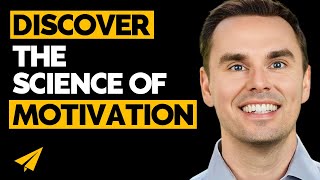
Brendon Burchard explains that motivation is energy you generate, not a fixed trait. He recommends three daily practices: pick three concrete actions, ask five positive questions three times a day, and choose three words that describe your ideal self, using phone reminders to reinforce them.
Chapters
Hello, Believe Nation. I'm Evan Carmichael. My one word is believe, and I believe that entrepreneurs are going to solve all of the world's major problems. I started the Mentor Me series with the goal to try to learn from people who've done a lot more than us, people who have done amazing things, that by spending a little bit more time with them, hopefully some of their values, their belief systems, their way of thinking seeps into us to help us become the best version of ourselves. So to help you on your journey today, we're gonna learn from Brendon Burchard and some of his best advice on motivation. Mentor me, Brendon. Rule number 1 is my personal favorite, and I'd love to know which one you guys like the best. And as always, guys, as you're watching, if you hear something that really resonates with you, please leave it down in the comments below and put quotes around it so other people can be inspired as well. And when you write it down, it's much more likely to stick with yourself too. Enjoy.
Why is it sometimes you're so motivated and driven, you're excited to go and do something, and other days you can't tear yourself off the couch away from the 5th season of Netflix? What's the difference? Why is it some people are so much more successful because they have that, that drive, that hunger, that ambition, that clarity, and others struggle over and over and over to get ahead? The whole thing comes down to, as you know, motivation. But most people don't we don't know where motivation really comes from, and we think, hopefully one day, we'll just have motivation. You know, we'll wake up and be motivated. But my favorite metaphor to teach people is this one. The power plant doesn't have energy, it generates energy. In the same way, we don't have motivation, we generate motivation. And once you understand the science of motivation, when you understand where motivation actually comes from, now you know how to cultivate it and grow it. And that's what I spent the last 20 years years of my life researching and studying. The first thing that sparks motivation is ambition. Ambition is that desire for something more. I know that's so simple, but hold on a second because most people's ambition is set too low for themselves. They've settled down on their ambition because one time they were disappointed, one time somebody made fun of them. Maybe their spouse, their partner, their girlfriend, their boyfriend, somebody around them doesn't support them and cheer them on when they have ideas. And so now their ambitions in the major areas of their life are actually pretty low. And if I can tell anybody anything to get more motivation, first get more ambition. Dream again, my friend. Be okay that your dreams and your vision for yourself, for your emotional reality, for your health, for your finances, for how much money you have, for what you contribute to the world, you have to dream of that again. You have to lay awake in bed and think about what you desire and want. And not just on New Year's once a year, every single day think, What do I really desire? What do I really want? Your ambitions must stay in front of you to keep that flame of motivation going. Never lose hope. That you have a single breath within your body right now and that you are alive in this moment is hope. That you can see all these people walking on the streets smiling is hope. That all these entrepreneurs are posting their art online every single day now, there is hope there. That there is a single person out in this world whose soul is still burning alive with love is hope. You know, it's so easy during these days when sometimes there's darkness, when you see all this negative media coverage, or maybe you have a series of bad days or a series of bad weeks, or your lucky break just isn't coming, or you've been fighting for that dream, you just don't sense any of that progress that you just so need to feel still enlivened and engaged and enthusiastic about something. Or somebody breaks up with you, or you lose your job, or something happens with your health. Look, that's part of life is there's gonna be so many struggles, struggles and disappointments, challenges, setbacks, dark days. And part of sustaining and making through all of that is maintaining hope. And that hope isn't something that just, you know, some airy-fairy concept. It is a psychological need to believe that we can endure, a psychological need to believe that we can not only endure, but we can succeed and we can thrive and we can have our way in the world so that we can accomplish our dreams, so that we can make influence, make our own difference. To have hope, we have to stay persistent. Persistent. You know, to keep at it no matter what. You know, if we've got our perspective in mind, we've got our plan, we've got to be persistent to keep working towards it. You know, there were so many times that I almost stopped doing these videos. There are so many times that I thought, "Well, I'm not going to write another book." There's so many times I thought, "No one cares about my blog post. No one cares about my Facebook posts. No one cares about my YouTube show. No one cares about me." Woe is me. Look, we can all sit on the couch, eat a bunch of potato chips, watch stupid television, and feel sorry for ourselves. That does not contribute to our liveness. It does not contribute to our connection with those we love and care for, and it does not contribute to the things that we create and ultimately give to the world. So we've got to say, you know what, this is not what— what are we gonna persist at sitting and eating potato chips and watching TV? That's not gonna be good. What we have to do is persist towards our dreams. What are the 3 things you could accomplish if this day, this very day, and tomorrow, and start moving towards your dreams? Every day, wake up with an intention. I'm gonna do at least 3 things to move myself forward to something that matters. At least 3 things. Everybody can do that. Just pick, what are the 3 things I'm gonna do to move my life forward this day? Who would I need to reach out to, to be able to move forward? What could I read or study online to move forward? What could I do? Just one simple request, one simple movement, one simple step to move forward and persist at that over and over and over again. And that's how things change. What is it that's going to actually change somebody's life? It's not removing their limiting beliefs. And I know that sounds silly, but it's like just if you just put less pressure on the brake in your car It doesn't mean you're gonna speed up, right? Your foot's still on the brake. If you're always focusing on these things that are limiting you, you're always going to be limited just because your relative weight of importance and duration of your focus and your attention is on these limiting things. And it's time in our culture, just like in our psychology, in our study of psychology, we gotta move from mental illness to mental health. We've gotta get you to move from your limiting beliefs into something bigger and greater and grand about yourself. We've got to stop you focusing on all the reasons that you're a mouse in life and start focusing on why you're a lion, why you have something within you that's more bold and powerful and profound than you ever even knew. So what we have to do is change what I call your dominant frame of attention and focus. Most people's dominant frame, they're giving that relative weight of importance to those things that limit them. And I say, you know what, this year, this next year has to be the year for you that you're limitless, that you're gonna go, "Okay, enough." I mean, how far have you gotten in your life now where you're just constantly beating yourself and berating yourself and worrying about your limits and worrying about all these things of all the reasons that you have to be worried, to be weak, to be less than you are? You know, it's like Marianne Williamson said so long ago, "You're not serving the world by playing small." And you're not serving the world by constantly focusing on your limiting beliefs and trying to remove them. You will always have insecurity. I know that's really motivating, but you're always gonna have it. I work with some of the top professionals in every given field, some of the best athletes in the world, some of the best well-known celebrities, and many of the people who are the best performers in any given industry, and I can tell you, they still have their doubts and their fears. They still have times when they wake up and they're just like, "I don't know what to do with myself." That doesn't ever go away, and that's great because Because it's part of the human condition that also makes us humble, makes us real, makes us check ourselves. And I'm not saying that, you know, we all have to go around being happy optimists all the time, but I will share with you, if you didn't know, optimists are much more capable of changing the world than pessimists are. It's not a guess, it's proven by science. And what do we mean by that? Optimism is one of the most studied things in the psychology literature, period. It's one of the most studied traits. Are more likely to face a problem than pessimists, because pessimists go, "Oh, I can't change it. I can't do anything about it. It's gonna be that way forever. It's pervasive problem and I don't have a control of it." An optimist says, "Well, I could probably handle that. We can change that too." In other words, pessimists tend to avoid problems that need to be changed, and optimists tend to confront them and move forward and do something about it. That's pretty profound and that's It's pretty proven now. So yeah, I'm saying, you know, while not all of us can go around being happy-go-lucky and avoiding all of our limits, I'm also saying, you know what, maybe it is time that we focus on those things that we can change. Focus on something that's bigger than ourselves and our own little insecurities and worries. And I think that's the challenge right now with so many people saying, "Limiting beliefs, limiting beliefs." Look, they're there. You're going to have them. The question is, are they going to win the day? Your peers have a lot to do with the setting long-term of your health, of your drive, of your success, of your socioeconomic status. The people that you hang out with impact your life tremendously. So your environment, do you have the right people? If you don't have great people around you, I always tell people, go to a seminar, get in personal development, go volunteer, go to do things with your church group, but just Get out there with people who are like-minded, who wanna grow and wanna give. 'Cause if you're around people who wanna grow and give all day long, you become stronger and you contribute more too. And suddenly you find more motivation and fulfillment. Here's a very simple thing you can do to reprogram your mind. Create a sheet of two simple things, very simple things. I want you to write five questions down that you're gonna ask yourself 3 or 4 times a day. 5 questions that are positive for yourself that you're gonna— every day you're gonna wake up in the morning, you're gonna read these questions to yourself, you're gonna answer them. You're gonna read them, you're gonna answer them every morning. Then at lunch, read the questions, answer them. At night, read the questions, answer them. These can be questions like, what can I feel incredibly grateful for right now? How could I surprise or flirt with somebody right now? How could I have fun right now? Positive things like that, right? How could I demonstrate love or excellence right now? Ask these questions in the morning, ask them in the afternoon, ask them at night. By asking these positive questions over and over, I mean, you just do this for 30 days, you're gonna recognize a total shift in your life. Just simple questions, but you're giving them weight by focusing on them 3 times during the day. You're having duration by focusing on it 3 times during the day over 30 days. Your mind starts to reshift its gears to give automatic ease to answering those questions and living in that mindset versus an undirected unconscious mindset. Second thing on that sheet, or those things you can do, 5 questions first. Second thing I want you to do is come up with 3 words that describe your ideal self. Just 3 words. You know, mine are, for example, present, excited, and bold. So I'm gonna focus on those questions 3 times a day as well. What I do is I put them on my iPhone and they come up as an alarm 3 different times during the day. Just my phone buzzes and those words are there. I'm like, oh right, I'm that guy. I got to focus on being that guy versus whatever. I might be in a bad mood. I'm like, ah, you know, completely detached. And then I look, I'm like, dude, no, I'm an excited person. Break that thought. Get back into this. Got it. This is who I am. And now that might sound so simpy, simple. Simpy?
Simpy.
It sounds so simple, but guess what? People won't do the discipline. They are so frustrated with their mind because they haven't done the conscious discipline to reprogram it. The first idea is to emotionally engage with that dream each morning of your life. See, a lot of people don't actually struggle with the discipline part in terms of the doing. The thing, it's that they're not getting revved up to do the thing. In other words, we got a problem with motivation, not necessarily just discipline. We have a problem with that once in a while you hit it, you do it, you do the work, but a lot of times you fall off because you're not emotionally engaged in it. It's like if you want a lot of discipline, you need a high level of emotional connection and focus on that thing that you want to work towards. So every morning what I want you to do is just start a new visualization practice. When you wake up in the morning, close your eyes, think about the dream, the aspiration, the thing that you're really after in life, and just visualize it and really get yourself emotionally attached, emotionally engaged with it. Think about how great it will feel for you to have that thing or be that thing or contribute that thing, to make that difference. Just think about it, allow it to well up in your heart a little bit, get excited about it, remember the dream. That's why we get away from discipline, because we're so busy with the chaos of the world that we emotionally are no longer attached in a way that our brain says, "Hey man, focus on this. It's important to you. Remember?" So if your heart is disengaged, it's difficult to stay disciplined. So every morning, make it a practice to actually just imagine the payoff, the benefit, the contribution, the art, the thing that you do and are doing and do contribute. If you can do that more often, you'll be more fired up and you'll stay back on track. You have to actually show up every day and inch yourself forward toward these dreams. And not only show up every day and once in a while inch yourself. I mean, every day. You have to actually take an action that moves you forward. Not just research, not just thinking. Look, the power of intention is great, but without any initiative, it's dead, right? A dream is great, but without any movement, it's dead. You have to be moving towards it every day. You can send an email every day, you can make a call every day, you can write something every day, you can create something every day, you can contribute something every day, but it has to be daily, otherwise it will never become actualized. The highest performers in the world didn't get there because they were lucky. They worked at it longer than everyone else. They had a better work ethic, and it's not that they necessarily always worked harder. They worked smarter because they were doing the research. They were taking the time to visualize how they would be distinct, different, how they would survive the tough times. They really kept at it. Keep every single day momentum going. And if you don't do that, there's no chance. In the psychology literature, expectancy means it's, it's a belief that not only is it possible for you, but that you can do it, that you have the personal control, the self-reliance, the autonomy, the thing that says, you know what, I believe in my ability to figure this out, and I know I can move the needle of progress forward in going this. In other words, you expect your dreams to happen and you expect that you have the strength and the confidence to make it happen. The challenge is, I know so many people in the world who, they sometimes they have the dream but the ambition goes away 'cause of other people around them. Sometimes they have the ambition and the dream but they don't really believe in themselves deep down inside.
Thank you guys so much for watching. I hope you enjoyed. I'd love to know what did you take from this video that you're going to immediately apply somehow to your life or to your business? Leave it down in the comments below. I'm super curious to find out. I also wanted to give a quick shout out to Oscar and Dermo. Oscar, thank you so much for picking up a copy of my book, Your One Word, and doing the review on your YouTube channel. I really, really appreciate it, man, and I'm so glad that you enjoyed the book.
Today's book report is The One Word by Evan Carmichael.
So thank you guys again for watching. I believe in you. I hope you continue to believe in yourself and whatever your one word is. Much love. I'll see you soon.
More from Evan


How the Biggest Mistake in History Created A Trillion-Dollar Empire | Sergey Brin



9 Machiavelli Principles That Force People To Respect You | Machiavellian Philosophy



The First 10 Words That Instantly Ruin A Sales Conversation | Vanessa Van Edwards

The Top 1% Mindset Behind The First $5 Trillion Company | Jensen Huang (Nvidia)

