Unleashing Your Inner Entrepreneur: Turning Challenges Into Opportunities
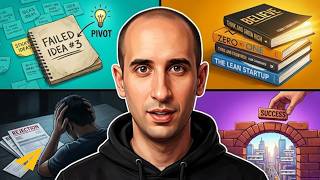
Evan Carmichael answers audience questions on hiring, staying motivated while writing a book, launching products without manufacturing expertise, and building a business around what you're passionate about. He emphasizes surrounding yourself with high-performing people and finding your personal "why" to push through low points.
Chapters
Stop hiring the wrong people. Hey everybody, welcome to another book update video. It's a gloomy day here in Toronto. The weather is giving me a big headache, and so I apologize if I'm not 100% on my game today, but the show must go on. Must give you guys an update and answer your questions. And today I want to talk about hiring the wrong people. I had a call earlier this morning with an entrepreneur who has 3 people on his team and he feels like all 3 of them are the wrong people. He feels like they don't do work unless he's on top of them and micromanaging. He feels like they just do the bare minimum, sometimes not even that. And he's frustrated because he feels like he's given up opportunities for growth and he wants to do something big and he can't do it alone and he just feels like he has the wrong people around him. It's a super common issue and I think One, you know, it may be on you. You may be the problem that you want to make sure you're giving people opportunities, you're treating them like human beings, like people. You have growth for them, you know, you care about their development. It's not just do these 5 things, get that done by tomorrow, and treat them like a piece of meat. But I think a lot of us also settle for the wrong people. You know, you're just looking for somebody to help you program a website, so you find someone who has the skills who you're maybe not compatible with, who you don't share the same values with, who, you know, you don't have the ability to grow something big with them. And if you hire the wrong people— there's an expression that good is the enemy of great. If you hire people who are just good, you're never going to fire them because they're just good. They're doing their job. They're okay, but they're not great. And that's what you need. You need the great. And how this relates to my book, I'm really fortunate to have an amazing team helping me with my book. And I'm excited today to go in and write and edit because, well, one of the reasons is one of the guys on my team, Jay Rise, has a surprise for me. He did something to Chapter 6 that is a big surprise. I don't know what he did. Jen saw it, she's all excited about it, and so I'm gonna be able to go in today and check out what happened. And that's good, right? That's what you want. You want people on your team who are gonna give you surprises, who are gonna go above and beyond, who are gonna do things that, that help you beyond the tasks that you specifically gave them, right? And I think even about this YouTube channel you guys are watching, Ivan does a lot of the research for it, is involved in the comments. My wife Nina is involved in the comments. Christina does a lot of the video editing, her and her husband do it together, and they're always throwing in little surprises, right? They add sound effects and B-roll and cuts and a lot of things that I may not have thought of, and I really appreciate that. And you need those kinds of people to help you grow your team. So stop hiring the wrong people, stop settling for good, and bring on a team of people that you can actually grow something special with. So that's the message of the day. Now let's get to your questions. All right, first up, Tamara Weeks, long-time loyal viewer, has a question for me. You get to go first, Tamara. Your motivation works faster than a bullet. Love it. Thank you, I appreciate that. Great video. Are there any copyright laws with book titles that would prevent you from getting too close to the same book title as the one you mentioned? So this is an interesting question. Number one, you cannot copyright a book title. You can't copyright a book title, you can't copyright a movie name, you can't copyright a song name. Copyrights are there to protect longer works, and so no, there's no worry for me about having somebody else's name from a copyright perspective. You can though trademark a name, but usually trademarks Trademarks are only applicable to series. It's very rare to have a trademark for one book. It's more for a series. So as an example, Lord of the Rings is a series, or the 4-Hour series from Tim Ferriss. 4-Hour Body, 4-Hour Workweek, 4-Hour— what's the other one— Chef. He could trademark that 4-Hour, but otherwise, if it's just a single title, you don't really have protection over a name. Pete4725: Question: I'm experiencing a dead computer issue. I have a Plan B, so I'm still putting out content until I get a new one? What is the time you experienced this issue and how did you handle it? Did you have a plan B? I think as entrepreneurs, we constantly, especially at the beginning, are under-resourced. Like, a computer is one resource. You constantly don't have enough resources to do what you need to do, and that's part of being an entrepreneur because you're limited in your resources but unlimited in your resourcefulness. And so I've never had that issue in terms of a computer. Actually, that's not true. I did. I think back to when I really needed a laptop when I was starting my business, and I didn't want to go out and buy a laptop because I don't believe in I'm not spending money until I'm making money. And I ended up connecting with an organization that was helping young people around the world. And I said, hey, let me help you with entrepreneurs. And so I helped them with their young entrepreneurship program. And while I was doing that, they gave me a laptop. And so I had a laptop to use. And I've done that constantly throughout my career. I remember when I needed office space, I had sold my business and I was looking at, you know, what I'm going to do next. And I wanted an office to work from. I ended up connecting with a venture capital firm when I joined them to help them build their business and bring in new leads. And in exchange for my services and helping them, I also got a free office space. And then I started building my next company through that, and I had 4 of us working from that office in a really prestigious location in Toronto, one of the best addresses you can have. And I got that for free because I was helping them with their business. And so you always have to find creative ways to get what you want. I think too many people just think of things as black and white and there's only one way to get to your desired outcome, and it's never the case. It's never just about— sure, if you had the money, go out and buy it, but there are always, there are always other ways to get what you're after. You just have to be creative, you gotta think outside the box, you gotta be resourceful, and the good news is that's what entrepreneurs do best, so get on it. Next up, Devon: Great video as usual. Thanks, Devon. I always find daily motivation on your channel. My question is, throughout the highs and lows of putting out a book, how do you stay focused during those "Low points? What keeps you from compromising certain things just to get the book out quicker? #BTA49 #TeamMotivation." So it's a great question, and I think in my case it was extended, right? Initially I was supposed to have it in before the end of the year, and now they want it in January. And so I think a couple things that help me stay motivated, because the book is a crazy long, difficult, challenging process, and the rewards of it are seeing the, the feedback, right? Seeing you guys enjoying, consuming, and have your lives changed from it. That's what I'm I'm really excited by, but it can be hard to remember that sometimes when you're in the grind here in gloomy Toronto weather with a big headache having to go write the book. So a couple things that helped me: 1, always keeping in mind the greater vision, what I'm trying to do, why I'm doing this, what's the purpose, what's my why, right? I want to be able to help a billion entrepreneurs. I think the book is an avenue to help me get there. This is classic because if this was something I was doing just for the money, I would have given up. Like, this is too hard. This is just too hard, too much work to do to justify it, right? And I think a lot of entrepreneurs, they give up at that point. You're doing something, you're starting a business, and it just gets too hard and you quit because you never really had a strong why, because you're never really passionate about it. And so I'm passionate about helping entrepreneurs. I want to reach a billion of you, and this is one way to get there. And so I keep that in mind. Number 2 is I think it helps to have a schedule. I think it helps to plan things in. So once a week I have a set schedule where here I am, on my book writing day, walking to Whole Foods, and it's part of, just part of my routine, and I plan everything around it. And other, you know, meetings and tasks and priorities and things that I have to get done in my company go on other days so I can free up this time. And so you have to make it important, and you got to schedule it out in your calendar. I prefer a whole day, especially for writing a book, because it takes so long to get into the writing part that I can't— me, I don't know, maybe you're different, but I can't do it in half an hour chunks. It's actually half an hour just to remember what I was writing about. Out before I can get into actually writing new stuff. And so the early part of my book writing day is pretty low productivity and then builds up. And so I need to have a huge chunk of time, and I find that for anything creative, I need to have a big open spot to be able to really work. And so that's what I do. My one day a week is book writing day. And then the last thing I think really helps is having a team. I think when— with any big goal, If you are only committing to yourself, it's easy to lose sight of the goal, right? It's easy to drop it. We let ourselves down constantly. But if somebody else is involved, right? I'm fortunate to have so many great people involved. You know, Jen and J-Ry is helping me with the book itself and all the great people that I've interviewed to be featured. And then both of my agents and the publisher. There's a lot of people counting on me. Making this video series, right? All you guys counting on me too. I find that having that external pressure, having to please other people, people, having to— maybe not please, but having to get something to other people, committing to them. I like following through on my commitments, and so I find that helps too. So have a strong why, block it off in your schedule, and commit to others. That helps. Next. Peter: I have a question about a question you answered. You said you don't have to know about anything, but how do I create a product? I've got this idea, but I don't know how to manufacture it. I tried it once before with watches and found the cheapest manufacturing was charging €200. Please help. Okay, so I don't remember saying that you don't have to know about anything, but I'll take you at your word there. If I was starting a business and I didn't know how to manufacture, you want to start watches and I don't know anything about watches, couple options. One, learn everything there is to know about watches. Are you going to be able to be the guy who can be the technician, who can make it, who can be the expert at watches, who will take the apprenticeships, learn the techniques, learn the processes to build one of the world's greatest watches, right? And that applies to any business. Are you the guy who can actually create the product and build it and and market it and be the person in the business. If that's not you, if you don't know how to manufacture, if you don't— more importantly, no interest in learning how to manufacture it, then you need to partner up. I would look at who can I align myself with who already has access to my target market and find some kind of way to do a joint venture with them. Maybe it's only on your first watch line. Maybe you've got ideas for 100 watches and you partner up on the first one with them and their manufacturing capabilities, and you're going to go out there and hustle and market it. And you may lose a little bit of that deal, right? You give up a certain But what you gain is the expertise and you massively reduce your risk. Because otherwise, like you said, it's €200 per watch to create, and you may not have that kind of access to capital to be able to put out. And it's also a massive risk. And so I hate risk at the start. I find a way to defer it by partnering up. Next up, Alec. Hey man, you should do a video on the art of creating a short but valuable value proposition. Thanks. That's interesting that he said short but valuable, because to me, short is valuable. I guess in the The wording there makes it feel like if you had more words, then it would be more valuable. And that is almost never the case, at least I find. I think people have ADD and they want to get the message quickly, and just using more words won't help you. In terms of creating a value proposition, for me it really depends on the audience and understanding: 1, what they're interested in, how you can help them, what their pain points and problems are. And then 2, also thinking about what it is that you stand for. And having something that is a magnet, that attracts people to you. So as an example, you look at my social media bios, all it says is, "I #believeinentrepreneurs." And people might see that and think, "Oh, that's a terrible value proposition because it doesn't say exactly what I do." It goes against the tradition of most companies who will say specifically what they do. And I think this is the evolution of growing a business, it's the evolution of marketing. Where when you first start selling a product, typically you're talking about the features, right? That's how most people start out. You talk about what you can do, and then somewhere along the lines you learn about the benefits. You learn about selling the benefits. You're not selling the features anymore. You know, if you're, if you're selling nails, you're not selling the nail anymore, you're selling the hole. You're selling the hole in the wall. You're selling the ability to hang pictures up on the wall. You're selling the benefits. And that's how 99% of the world sells. But if you look at the biggest companies, you look at the most successful companies, they understand that what you need to do is sell sell a core value. You need to sell a feeling. You need to sell some emotion. And that's what finding your one word is all about. And I've talked about it a lot on this channel in these videos. You got to find the one thing that you stand for that really makes you different, that no matter what product or service you are selling, that would be who you are. So for example, you know, I believe in entrepreneurs. I believe in people. It just says it as a general rule. If you are around me, then you are going to start doing greater things. It's just part of what I am I'm naturally good at and love and enjoy doing. And I can apply that best to entrepreneurs because I actually have some background experience in being able to build businesses. But if it wasn't entrepreneurship, I'd find a way to believe in others. I'd help people be great snowboarders or be great piano players or build great chairs, you know, whatever it is, because that's who I am. And that attracts certain people, right? That attracted you guys to my channel. If you don't love the believe message, you're not watching these videos anymore. And so I think finding your one word in articulating that and articulate in a way that makes sense for your target audience. That's really the secret behind creating an amazing value proposition. Okay, next up, Aurelia. Hello there, I absolutely love your videos, the first videos I watch when I come on YouTube. Hey, thanks Aurelia, I really appreciate that. It would be great if you could do a video or a series of short videos on how one can work out the preliminary stages of a business. How do you do your own market research on a particular business one is planning to venture into? How to handle the competition out there and trying to fill your goodie bag as well? So a lot of different ways to go. So my favorite way to build a business is around scratching my own itch. My market research is me. I make something because I want to make something because I feel that it's missing and that's why I go out and do it. And I've talked about it before on the channel, but why did I make the Enespresso series? You talk about coming to the channel every day and starting your day with the videos, you're watching the Enespresso. Why did I make that series? I didn't want to make that series. I made it because I needed it in my life because I wanted something that I could go to every single day and get some motivation to help me think bigger, to think bigger, to think next level, to surround myself with people who may not be in my environment right now but who are doing next level kind of stuff, right? That pushed me outside my comfort zone. That's what I wanted, and I was desperately searching on YouTube and I didn't find anything. You think about how many, how many videos are uploaded every single day on YouTube, and there was nothing that solved this need. And so I made it, and it's taken off, and a lot of you guys watch N-Spresso every I wake up every day and sing the, uh, wake up every morning song, right? And I love it. And so my market research is me. If I like it and I use it and I'm proud of it, then I'm going to share it. And there's a good chance that a lot of people are going to like it as well. And so if you could build around your own niche, build around something that you love and you want, there's a good chance other people will want it as well. And then in terms of handling the competition, you know, my view on that is you look at my channel as an example, there really is no direct competition. The reason for creating the product that I've created was because it didn't exist. And there's other people who have motivational videos, but it wasn't what I was needing in my life, in my business. And so I'm not super worried about it. But if you're creating a product or service that does exist and that there's lots of people else that are doing it, two things that come to mind. One is you have to stand out again through a value, through what you stand for. Figure out your one word and put that into all your marketing. And because that's going to be something something that will help attract target customers to you who believe in the same thing and ideal customers who will pay more money and spend a lot more time with you and refer a lot more customers to you. And then I'd think about how else can I differentiate myself? Because if you are an average company with an average product with an average price, guess what you're going to get? Average results, right? Mediocre results and probably worse because you're new, because you have no brand built up where your competitors have some kind of credibility already. They have a track record and a history and a name. So you need to have some way to differentiate yourself beyond just having the value in your one word. What else? What unique component of your product or your service can you offer that is so different? And sometimes that's just bringing yourself into it. So as an example, I love salsa dancing, and say I loved photography. I could be the photographer for the salsa dancing world, and I would have a way better chance of being able to stand out and get great clients because I'm part of that community, because I speak the language, because I know what salsa dancers do, and I know what they like in a great picture, right? And so I would beat out every other photographer because I'm the guy that specializes. And so I'd be looking at how can you combine your passions to bring more of yourself to your company and give yourself a better chance of standing out. Next up, Fedor: Great video. I came here not to learn something anymore, even though I always do, but more for energy and motivation for a day. It makes me do amazing things because I see people around me doing the same thing. Thank you for the compliment, I think, on that, Fedor. You don't come to learn stuff, but you do, so that's good. This speaks to the comment and the video that I had last week about having an environment. Most people have an environment that sucks. It's just true, you know, your friends in your life aren't doing great things, the parents in your life haven't done great things. It's not that they're not wonderful and supportive people, which they usually are, they just don't get it. They just don't understand the bigger vision and your desire to want to do something that nobody has done before. That's the entrepreneur dreamer. And so yeah, you need to surround yourself with people, ideas, resources, and I love that this channel can be a home home for you guys. I love that this channel can be a home for the dreamers, for the people who want to do something big. You know, I wish I had this when I was starting my first company because I really struggled and I didn't have people around me that could help. And so I really appreciate that comment. It means a lot to me. And I encourage all of you to take a really good hard look at your environment. Look at your physical environment. Look at your office. Look at where you're working. Is it inspiring? Does it make you want to do great big things? Look at the YouTube channels and media that you're consuming. Look at the YouTube channels and media you're consuming. Does it help you want to be something bigger, right? And if not, then change it. Quite often a lot of the habits that you have, you've just formed and you don't even realize hold you where you are, where you need to change those if you want to do something greater. All right, last question. Kira: Evan, thank you so much for what you do. I've been feeling a little overwhelmed that I've started setting up the ads for my book. It's a children's book, and listening to you always brings me my energy level up. I know you do a lot, but you make it look easy. Just want to say thanks. Well, thank you for that comment, Kira. I really appreciate it. I do a lot. I don't know that I make it look easy. That's certainly not my intention. I don't want to get people's hopes up and say that this is an easy thing that anybody can do it. I think it requires a lot of hard work. You know, I'm making this video even though I feel like crap. The weather sucks. I'm out of breath. I'm tired. It's easy for me to just stay home, stay in bed. I think if I was an employee at a company, anybody would have— would be able to understand that I'm not feeling well today. And just let me cash it in for the day. And I think, I think that's life as an entrepreneur. I think that's the life of somebody who wants to build something special, who wants to build something beyond themselves. Like, it's an insane amount of hard work, and I'm super happy that I'm able to motivate you and that the videos are a source of inspiration for you. But I hope I don't make it just look easy, because man, it's an insane amount of work. And it doesn't always feel like work because I'm doing something I love, and you should too. But it's a grind, and I love it, and And I wouldn't want it any other way, really, but it certainly is not easy. So thank you guys for watching. I'm out of breath. My arm is tired. I'm excited to go write my book, though. And I love all the feedback and questions. So I'd love to know what you guys think of this video. Back to the question about hiring the wrong people, let me know your thoughts in the comments. And if you have a question about my book or your book or the book writing process, leave it in the comments below and I'll do my best to answer it in next week's video. Thank you guys for watching. Continue to believe. And I'll see you soon.
More from Evan


How the Biggest Mistake in History Created A Trillion-Dollar Empire | Sergey Brin



9 Machiavelli Principles That Force People To Respect You | Machiavellian Philosophy



The First 10 Words That Instantly Ruin A Sales Conversation | Vanessa Van Edwards

The Top 1% Mindset Behind The First $5 Trillion Company | Jensen Huang (Nvidia)

