Unlock Confidence | Will Smith Motivation That Destroys Fear in Just 15 Minutes
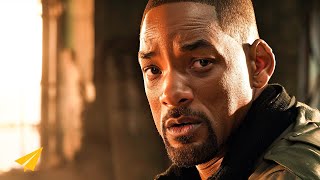
Will Smith talks about building success brick by brick, focusing on perfecting small tasks rather than chasing huge goals. He learned this as a kid building a wall with his brother. Skill beats talent because skill comes from relentless work, and fear is just a mental choice you make.
Chapters
Hello, Believe Nation! I started the Mentor Me series with the goal to spend a little more time with people who've done a lot more than us, and hopefully some of their magic pixie dust rubs off onto us so we can absorb their wisdom, learn how to change our mindset, and go for greatness. So today we're going to learn from Will Smith on how to stay motivated.
I believe, and I learned very young—
from parents—
from my parents, absolutely. That you don't try to build a wall. You don't set out to build a wall. You don't say, "I'm going to build the biggest, baddest, greatest wall that's ever been built." You don't start there. You say, "I'm going to lay this brick as perfectly as a brick can be laid. There will not be one brick on the face of the earth that's going to be laid better than this brick that I'm going to lay in this next 10 minutes." And you do that every single day, and soon you have a wall. And I think psychologically, the advantage that that gives me over a lot of people that I have been in competition with in different situations is it's difficult to take the first step when you look how big the task is. The task is never huge to me. It's always one brick.
Me too. I mean, it is amazing how, you know, people are paralyzed from doing anything.
Absolutely.
Because they can't take the first step. Whereas you just say, look, all I'm doing is laying this one brick. I am not building the Great Wall of China here.
Absolutely.
Putting a brick here, and I'm gonna have the best brick I can. Your father, I think I read, absolutely, had you and your brother work on a wall.
Oh yeah, yeah. We had that. We're talking about our figurative wall that comes from work on a literal wall. Yeah, right. My father owned, uh, It actually was an old bakery. When I was growing up, my father was an electrician and a refrigeration man. We would install supermarkets. You see the long freezer cases in supermarkets? We would install those long freezer cases and all the lights. That's what we would do every summer. So this one year, my father had his shop, and he decided for whatever reason that He wanted a new wall on the front of his shop. So he tore down probably about, you know, 16 feet high and probably about 30 feet long. He just completely tore the wall down. And my brother and I had to dig a 6-foot hole. For the foundation. For the foundation. We were mixing the concrete by hand. A year and a half. We were building this wall. For a year and a half. Every day after school, we would come and mix in concrete, put it in the hole, doing it. And it was just myself and my little brother. And I remember standing back looking at that wall saying, there's going to be a hole here forever. There will never be anything but a hole here. And a year and a half later— I don't like that many days. I know. A year and a half later, we laid the, the final brick. And my father stood back with my brother and I, and I know he planned this. He says he didn't, but I know he had been planning this and writing this for the past 2 years. But we stood back, we looked at the wall, and he looked at me and my brother and said, "Now don't y'all never tell me that you can't do something," and walked into the shop. As a child, my parents always told me, "You could be whatever you want to be. You could do whatever you want to do." And, you know, that office, that position, the highest office on the face of the earth, it was something I heard my parents saying it, but I didn't totally believe it. Yet I went out in the world and I carried myself and I held my head high and I stood there and I looked people in their eyes and I talked to people as if I was deserving of everything that this planet has to offer. So I just, I really want to say To children out there and to people who are watching, Confucius said one time, "He who says he can and he who says he can't are both usually right." So I want to stand here before you, and as I hold this award, I want to give love to my wife, and I want you to keep in your heart, just know that you can. Know that you can. The separation of talent and skill is one of the greatest misunderstood concepts for people who are trying to excel, who have dreams, that want to do things. Talent you have naturally. Skill is only developed by hours and hours and hours of beating on your craft. I've never really viewed myself as particularly talented. Where I excel is ridiculous, sickening work ethic. You know, while the other guy's sleeping, I'm working. While the other guy's eating, I'm working. There's no easy way around it. No matter how talented you are, your talent is going to fail you if you're not skilled. You know, if you don't study, if you don't work really hard and dedicate yourself to being better every single day, you'll never be able to communicate with, with people, with your artistry the way that you want. The only thing that I see that is distinctly different about me is I'm not afraid to die on a treadmill. You might have more talent than me, you might be smarter than me, but if we get on the treadmill together, right, there's two things: you're getting off first, or I'm gonna die. It's really that simple. Everybody who became an actor became an actor because They got something to say. That's very interesting. I never intellectualized it that way, but that is very true. For me, it has been the— to be that guy that does what people say can't be done, you know? And I think it started with trying to please my mother and trying to please my grandmother, and they always wanted higher for me. They always wanted more for me. And it got to the point that I wanted to be something. I wanted to be somebody. And it made me choose certain roles. It made me turn down certain roles. There is more than an image that I want to project I want to be the person that is the first person there and the last person to leave. That's who I want to be, because I think that the, the road to success is through commitment and through the strength to drive through that commitment when it gets hard. And it is going to get hard, and you're going to want to quit sometimes, but it'll be colored by who you are. And more who you want to be. I definitely found that, uh, wanting to be an actor stems from wanting to be somebody and wanting to say something to people. There's a certain delusional quality that all successful people have to have. You have to believe that something different than what has happened for the last 50 million years of history, you have to believe that something different can happen.
It's almost a kind of innocence.
Absolutely.
In other words, if you knew how difficult it was, right, you would have never gone down that path.
Absolutely.
You know, if somebody said to Ali, no one can beat this guy, he's this much stronger, this much bigger, he's got that much bigger punch than you do, and he believed that, he would have said Never, never have an innocence that somehow—
Absolutely. And I think that that's a huge part of me because— and I say to my friends all the time, and we laugh about it— I truly, honestly, as I sit here before you right now, as honestly as I can say it to you, I truly believe that I could be the president if I wanted to. And as bizarre as that may sound to people that have traveled the path before me and to people who actually know how difficult it is, foolish Will Smith honestly believes it's in there. Anytime you inject extremes into the universe, you can expect extremes to come back. I think that, you know, one of the best pieces of advice I ever got was don't let your successes go to your head and don't let your failures go to your heart. Do you follow that? I try. No, it is, it's absolutely a difficult, even more so now with my wife and my children expanding into it, the scope of it is actually becoming more difficult to manage. The things that, almost in a spiritual sense, the things that you attract to yourself. And also, if you think about it in terms of altitude, the higher you go, the harder it is to breathe. There's less oxygen. And I think in that phrase, what I get from that with Marlon Brando. What, what happens is, if you think about it in terms of mountain climbing, mountain climbing, the higher and the higher you get, the less oxygen there is, the harder it is to breathe as you get to this successful space. And the first thing people want to do is get down. And what you do by getting down is self-destructive. And I'm just working hard to make sure that I don't allow the lack of oxygen to dull my appreciation for the gifts I've been given. One of my favorite books is The Alchemist, Paulo Coelho. And that's just, I just believe that. I believe that I can create whatever I wanna create. If I can put my head on it right, study it, learn the patterns, and You know, I just— it's hard to put into words. It's real metaphysical, esoteric nonsense. But I feel very strongly that we are who we choose to be. I consider myself an alchemist. An alchemist is basically a mystical chemist, right? And one of the great feats that alchemists used to do is they would take lead, just take a chunk of lead, and they could turn lead into gold. Right? So the symbolism— Sounds like a good hustle. I know, right? When I leave here, give me some lead. Give me some lead. Exactly. You know, but I'm so connected to symbolically being able to turn lead into gold. You know, my grandmother used to say, you know, life give you a lemon, you go ahead and make lemonade.
Absolutely.
To me, that's alchemy. That's the same concept. Behind the Alchemist. For me, I never did anything for money, right? So it was never about money. My experience has been when people do things for money, you make bad choices. Find what you love, and then you'll learn how to make money doing what you love. When I changed careers, I was never changing to something for money. I was changing to something I loved more, right? And that, to me, that's really the only way keep the passion. If you have two choices, one is playing the piano and another one is, you know, bowling, and you can make more money bowling, but you love playing the piano more, you got to play the piano. It's like you'll tear yourself apart if you're not doing the thing that you love most in life. And you know what it is right now. Right now there's something that you love more than everything. Whatever it is that you love crazy has to be the thing that you dedicate your life. It's unrealistic to walk in a room and flip a switch and lights come on. That's unrealistic. Fortunately, Edison didn't think so. Is it unrealistic to think you're going to bend a piece of metal and fly people over an ocean in that metal? That's unrealistic. But fortunately, the Wright brothers and others didn't, didn't believe that. And it just seems, it just seems like such a ridiculous idea to me to embrace the idea that it's not gonna happen, that's not real, for that to happen. As soon as you say it, now you just made that real. Fear is not real. The only place that fear can exist is in our thoughts of the future. It is a product of our imagination, causing us to fear things that do not at present and may not ever exist. That is near insanity, Katar. Now, do not misunderstand me. Danger is very real, but fear is a choice. We are all telling ourselves a story.
Thank you guys so much for watching. I'd love to know what you thought of the clip. I'd love to know which one resonated the most with you and why. Leave it down in the comments. Really appreciate you guys watching. Continue to believe, and I'll see you soon.
Greatness is not this wonderful, esoteric, elusive, godlike feature that only the special among us will ever taste. You know, it's something that truly exists in all of us. It's very simple. This is what I believe, and I'm willing to die for it. Yeah, period. It's that simple.
I know who I am and I know what I believe.
I know who I am, I know who—
what I believe. I need to know.
That's all I need to know. So from there, you do what you need to do. Yeah, you know, and I think what happens is we make the situation more complex than it has to be because we're looking for complexity.
There's got to be something complex to understand, right?
It can't be that easy. Be able to be vulnerable in front of anybody. You know, you have to be comfortable looking silly, you have to be comfortable making mistakes, and you have to break the thing inside of you that doesn't want people to see, right? Because as soon as you allow people to see, all of a sudden you get access to things that you didn't realize you had access to, right? Um, for example, like, the thing I used to do is when I was I was probably 18 or 19 years old. I got in touch with those blocks. The camera hates emotional blocks. Like, you put a camera in somebody's face, and they're uncomfortable about delivering emotion, it looks fake, and you feel it. You immediately know it's not real, right? Especially look at the size of this screen. And in a shot, that whole screen could be just your eyes, right? So it's like you can't hide discomfort, uncertainty. So you have to be able to get comfortable, you know, just being anything, anything that you have to be for the role. You have to be comfortable being it.
More from Evan


How the Biggest Mistake in History Created A Trillion-Dollar Empire | Sergey Brin



9 Machiavelli Principles That Force People To Respect You | Machiavellian Philosophy



The First 10 Words That Instantly Ruin A Sales Conversation | Vanessa Van Edwards

The Top 1% Mindset Behind The First $5 Trillion Company | Jensen Huang (Nvidia)

