Unlock Netflix's Secrets | Reed Hastings' Mindset for Your Business Success | 9 Minutes
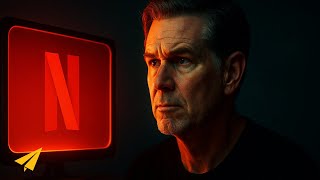
Reed Hastings built Netflix by replacing late fees with flat-rate subscriptions, a move that undercut Blockbuster. He learned early on not to underestimate competitors after his premature IPO exposed Netflix's financials. Long-term thinking and relentless work scaled Netflix to over 23 million subscribers.
Chapters
Mollying the Masters. Hi, I'm Evan Carmichael. Welcome to another edition of Mollying the Masters. I believe that the fastest and most effective way to grow your business is to model the strategies of people who've already done what you're trying to do. So today we're going to look at how a Peace Corps volunteer and teacher quit his job and at the age of 48 started his own business in the movie rental business and went on to build a company to have over 23 million customers. This is the story of Netflix founder Reed Hastings and the top 3 lessons you can learn from his success. Reed Hastings is an American entrepreneur and the founder of Netflix. He used to teach mathematics in Swaziland as an American Peace Corps volunteer. So when the 48-year-old Reed Hastings decided to found his own software company, some eyebrows were raised. But Hastings would prove the disbelievers wrong with the subsequent founding of Netflix, the largest movie rental service via mail in the US. With over 23 million subscribers and sales in the billions, Hastings proved he was able to go from living in Africa to living in affluence. Hastings' father was a prominent lawyer who once worked in the US Department of Health and Education and Welfare in the Nixon administration. After graduating with his bachelor's degree and winning awards for his mathematics abilities, Hastings felt the urge to join the Marine Corps. He signed up for their platoon leader class and spent 2 years in their boot camp in Virginia. In 1983, Hastings found himself in Swaziland working as a mathematics professor for the Peace Corps. He stayed there for 2 years before deciding to return home. Back in the US, Hastings was accepted into graduate school at Stanford. His first, first choice had been MIT, but he didn't get accepted. Hastings graduated from Stanford with a master's degree in computer science in 1988 and was subsequently hired by Adaptive Technology, where he worked on developing a debugging software tool. But Hastings wanted more of a challenge, and he wanted to work for himself. Hastings decided the only option was to set off on his own business, and in 1991, Hastings quit his job, launched Pure Software, a company dedicated to developing troubleshooting products for software. But as the company grew, Hastings found that his mathematics and computer background were not enough of a match for running the business. He asked his company's board of directors to replace him for, for the good of the company. After finally selling the business, he would wait 2 years before trying again. In 1998, Hastings founded Netflix as a movie rental-by-mail service that offered a flat-rate subscription fee. Within 5 years, the business was booming. Action Item #1: Change the model. One of the best ways to disrupt traditional industries is to change the business model. Many markets have established companies who rely on their name and their history to stay at the top. They don't innovate or launch new products or services. They do things because "that's the way we always do it." Often these industries are perfect targets for tech-savvy entrepreneurs who have a new approach and want to shake up the market by changing the model. Hastings was embarrassed when he had to pay a large video late fee and was afraid to tell his wife he had made the mistake. He was going to the gym, he was frustrated and thinking that he could not believe that he was threatening the integrity of his marriage over something so trivial. That's when he came up with a different model. Netflix was born as a way people could pay a fat— a flat fee each month and keep the video for as long as they wanted without having to pay a late fee. Uncertain this idea would work, he decided he had nothing to lose. Hastings dared to change his company's business model, not knowing what the results would be. Once he realized he had hit the nail on the head, however, Hastings shifted all his attention to promoting this new model. He knew there could be no going back and forth. If it was going to make the subscriptions work, it had to be the only service he offered. According to Hastings, "On my way to the gym, I realized they had a much better business model. You could pay $30 or $40 a month and work out as little or as much as you wanted. Early on, the first concept we launched was rental-by-mail, but it wasn't subscription-based, so it worked more like Blockbuster." We said, "Let's try the more radical subscription idea." We knew it wouldn't be terrible, but we didn't know if it would be great. Action Item #2: Don't underestimate the competition. When I was in the venture capital business, one of the biggest mistakes many of the entrepreneurs made in their pitch to us was saying that there wasn't any competition, or assuming that the competition wouldn't react to what they were proposing. You always have competition, and if you're hurting their business, they will react. Acknowledge this and plan for it. It'll increase the chances of people finding your company and also make you a better business person. Netflix has grown to become the largest movie rental by mail service in the US, but its path to success has not been without hiccups. Indeed, Hastings admits that one of the biggest mistakes came in underestimating the capacity and strategy of its competition. Hastings first learned that lesson in 2002 when he admits that if he could do one thing over again, it would be going public later than he did. Blockbuster got a chance to see their financial reports and would go after their business 2 years later. If Hastings would have waited, Netflix would be a lot bigger than it is. According to Hastings, "We went public in 2002, and by publishing our financials, we let Blockbuster see that this was a profitable business. We thought, Well, they won't put much money behind it. Over the past 4 years, they've invested more than $500 million against us. The most difficult thing is anticipating the threats ahead of time. Fear, because we're fighting Walmart, which is the world's largest company, and Blockbuster, which is bigger than us. Action Item #3: Work hard. Modeling success is a great way to quickly propel your company forward. But you still have to work hard. Any successful entrepreneur will tell you that they poured their heart and soul into their business. They worked days, nights, weekends, and holidays to get their companies off the ground. It helps to work smart by modeling what other successful people have done, but you still have to work hard. Hastings may be enjoying his success now, but it's only a result of years of hard work, trial and error, and lots of mistakes made and lessons learned. But he was able to keep going because he knew that growing a successful business meant adopting a long-term perspective. With every move that he took, Hastings was looking at least a few years ahead. He was able to make some of the riskier decisions precisely because he was not looking for immediate payoffs. He was confident that his business would be around in the long term. This confidence grew from Hastings knowing that he had a winning business model on his hands. He had the convenience of a mail-order video rental system, and he knew he could supply more selection and value to people than his competitors. According to Hastings, occasionally great wealth is created in a short amount of time, but it's through a lot of luck in those situations. You just have to think of building an organization as a lot of work. It may or may not turn into great wealth. Most good management isn't day-to-day. It's a lot of investment in things. Say over the next 2 years. Investments in relationship, in management. Think of a great business model as a triad of convenience, selection, and value relative to what people are used to. You nail all 3, then you take off. Even though Hastings grew up in a well-to-do family and attended private school, he spent a few years working for the Peace Corps and teaching in Swaziland. After returning to the United States, he would eventually move to California. Unknown to most people, Hastings became very active in educational philanthropy. He would advocate stronger math and science curricula as well as advocate increasing the number of charter schools, which he believed were better than public schools. In an effort to change the way public schools did business, Hastings would organize a drive to get a new proposal on the California ballot during the 2000 election. Proposition 39 would go on the ballot, but to show his support for education, Hastings would go back to school to get his graduate degree in education. This showed all the residents that he was serious about education, and Proposition 39 would eventually be passed by a large majority of residents. Thank you for joining me for another dish of Molina Masters. If you like the video and you want to see more, please give it a thumbs up below. I'd also love to hear what you have to think if you want to leave a comment under the video. And stay tuned for the next episode.
More from Evan


How the Biggest Mistake in History Created A Trillion-Dollar Empire | Sergey Brin



9 Machiavelli Principles That Force People To Respect You | Machiavellian Philosophy



The First 10 Words That Instantly Ruin A Sales Conversation | Vanessa Van Edwards

The Top 1% Mindset Behind The First $5 Trillion Company | Jensen Huang (Nvidia)

