Unlock SMALL BUSINESS Wealth in 44 Minutes | The TRUTH About Taxes
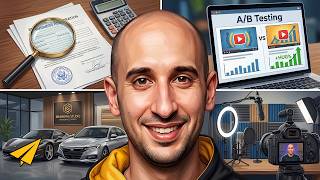
Shannon, a former pastor and enrolled agent running a 25-person tax firm, wants to build a personal brand on YouTube to reach small-business owners while preparing to sell her practice in 12-24 months. Evan walks her through using short-form video and her CPAs as content sources, targeting middle-America businesses instead of high-end clients, and posting consistently to raise the firm's value before exit.
Chapters
Shannon is a gun-toting tax strategist who isn't afraid to tell you the truth you need to hear. She went from being kicked out of the church for not fitting the mold to building a thriving tax and CPA practice serving entrepreneurs nationwide. Now she's ready to build her personal brand and empower entrepreneurs all across America to keep more of their hard-earned money. In this coaching session, we're tackling exactly how Shannon can scale her message, dominate YouTube, and become the trusted voice entrepreneurs turn to first. If you've been here before, drop a hashtag #believe in the comments below so I can feature you here in a future video. And if you're new, welcome to Believe Nation, the only channel that helps you believe in yourself daily, one video at a time.
Believe.
All right, we're here. We got Shannon in the house, Mastermind member, new member. This is great. First, first meeting, first, first time connecting.
Starting from zero.
That's awesome.
Yeah.
So where are you at? Tell us a story and how can I help?
So I am a serial entrepreneur, but my main business is a full-service tax and CPA practice. I'm not a CPA. I have CPAs who work for me, but I am a tax strategist. So that's a little bit different than a conservative CPA. So I am something called an enrolled agent. That's the only, in the United States, it's the only federally licensed tax professional. And we're a little bit more entrepreneurial. So I tell people that I think like an entrepreneur, I just happen to be in the business of tax. And so I work with business owners to mitigate tax, reduce their tax, and then if they come to me and they're already in trouble, I do representation work, meaning I'll fight the IRS for them.
Okay, great.
So we've been in business since 1996. And I'm a little bit eclectic, I'm a little bit different. Like I said, I'm from Detroit. You know, I'm a little bit rough around the edges. When people come to me, they get a dose of truth. I'm a truth teller. I'm a disruptor. And so oftentimes when they come to me and like, let's say they have an IRS problem, it's because they have a heart issue. There's something else going on that we need to fix. You know, I kind of jump in with both feet when I work with my clients. And so we are very holistic in that. My background is I used to be a pastor. I have a master's of divinity. I— and the story goes that the church basically kicked me out because I didn't fit the mold. And so when people come to work with me, they get that kind of that truth-teller model. You know, I really want to build a personal brand because it's one thing to do taxes, and especially with everything that's happening in the United States and all of the tax law changes that happen every year. You know, I read like, I geek out on that stuff, right? I love to read tax code. Like, I know that sounds like they're like, oh, no wonder you're single, right? Yeah, you know, I— but I love the nuts and bolts. I love the fact of finding a way to outwit the system.
It's problem solving. Yeah, you love the puzzle.
Yeah, right. Like, there is a way to outwit the system. Yeah, legally. Yeah, yeah, yeah, we don't have to do it illegally. That's what lands us, you know, I don't look good in stripes. And so, um, I want to build this personal brand, and I've had an opportunity to do, uh, I've written a personal book. I'm doing something with Chris Voss. So I have all of these things that are happening. And I'm also getting to the point in my career where I can actually have the freedom to choose what I do now. When you're first in business, you take anyone who can fog a mirror. And now I can actually be like, yeah, you're not a good fit, or you're a good fit. These are the people that I work with. And so I'm starting from zero. I had an agency a few years ago actually help me get a YouTube started, and it's horrendous.
Okay.
And in full transparency, I was praying. Like, I have like a morning ritual, right? I have my Renaissance time in the morning. I was in my morning ritual, and I was just like, okay, God, I want to do this YouTube thing, and it just feels like it's all uphill. And so I've always been the type of person where I'm a big idea person, but I need an implementer. I need a doer. Because I have like, like I can go, I can get behind a cause, I can rally the troops, but to actually go out and actually fundamentally do it. And so I was actually like, God, what do I do? And I literally was done with my Renaissance time, went out, picked up my phone off of the counter, and I looked, I don't know, I don't usually get on social media, but I went on social media and there you were. And I was like, wow, answer to prayer.
So, wow. Okay, what a setup. I can't let God down now. Wow. What a Shannon. You're killing me. That's, wow, that's some pressure. Good. Okay. Good. If I explode from a lightning bolt, we'll know why. Are we trying to build a brand, like, to get more clients? To change America? Like, who are we trying to serve?
So here's one of the things that my dilemma is, you know, I'm at a point in my career where I turn more people away than I take. Okay, now we are growing. We have a team of 25, like, so we're a bigger firm. And so we're always looking for the right client from that standpoint. But what I found is that the price point price points that we charge, they want me. And that's not a good use of my time. I'm not willing any longer to trade hours for dollars, right? There's a certain price point where people are willing to work with other team members. So I'm looking more to build a brand. Like there's a Mark Kohler in our— who is a tax lawyer. So basically he has the, you know, the educational channel. And then people come to him and he refers it out to other accounting firms. And I think that's the model I'm moving towards, especially as I look at now at the end of my career or pivoting into something different, you know, after being in business for 30 years. So, are we looking for clients? Yes, but I'm looking more to build referral relationships where I can actually refer people that are coming to me. But I want to talk about tax. I want to talk about business strategy.
And you want to refer new people coming in outside of your organization to other—
I would think so, because one of the things that I'm looking at is the fact that, you know, like margins, right? So I'm a numbers person, and so when I look at the margins, you know, I, I have about a 40% margin, which is perfect, that's great, but I have all the other infrastructure around it, like taking care of my team. And so it has come to me that perhaps I I actually sell the business and then just become the person that is the marketer because oftentimes CPAs are not good marketers.
Yeah, tell me, yeah.
You know, and so that's one thing I have no problem getting up on a stage. I do a lot of public speaking. I do a lot of podcasting. And so utilizing that to actually build a referral network where people are going to come to me because, well, I also own a holster company and I do some other things. So I'm known as like the gun-toting Tax strategist. And so like, this is great. Yeah, yeah, I'm eclectic. Like, you want to know, I love it, it's great. I also own a Lego store. I do all this stuff, right?
All of it can work. What do you want to do from a strategy perspective? Don't worry about YouTube. Like, what do you want to build? And then we can build a content.
Yeah, I want to build a personal brand, right? And so that personal brand is, you know, I love to, I love to get up and talk to people. I love to educate them. I love to outwit the system. And so, I think the personal brand is going to be around tax and business strategy from that standpoint, but, you know, I don't want to like brand it underneath my current firm because I actually see an exit.
How long?
Within the next 12 to 24 months. So, that's my dilemma.
No, no, it's opportunity. It's great. There's like lots that you can do with now narrowing the focus. Let's— we'll come back to the exit and the team. For the personal brand stuff, okay, so you sell your business, however timeline, you get your good valuation. What are you doing then? Do you— we're talking tax strategy, you know, personal brand stuff, awesome. Is it then you just have a business with you being a known quantity in your field and you're passing business off to a network?
That's what I was thinking. That's, yeah, that's kind of what I was thinking from that standpoint. You know, continuing to write, like I love to write, so continue and not use AI.
Like, Right, right, right.
Yeah. So, creating that thought leadership brand, but because like there's so many referrals coming in currently, I think even when I exit that they'll continue, especially if I have a presence on like social media and YouTube.
Sure. And they'll, you know, you might need to be involved for 12 months, 24 months, whether you still own 10% of the company, whatever. Like you can, I mean, you know the deal structure even better than me probably with all the clients you've helped. But after you exit, there's the amount of work you'll do with that company will be minimal. So, you have a lot of time open, which will be some fun stuff and exploration and books and everything else. Cool. The business model attached to it afterwards. So, building a brand, are we trying to do it for like America that now we're solving tax problems?
Right. So, it is America. I mean, because I you know, just based on my expertise from that standpoint.
Not from a country perspective, from a number of people perspective, because you're targeting the high end of the market right now and there's only so many people willing to pay. You're turning business away because it's just not at the level that you would need to be for billable hours. To teach tax strategies, there's a lot of sophisticated things that only a few people can do, and then those— that's like the fun problems to solve for people. But there's still like millions of people just making massive mistakes, losing tons of money just because they don't know.
So I think it would be business owners, okay? And normally I work more like in the marketing and e-commerce, like those are the verticals that I'm more— or in fintech. And so, those are kind of where my expertise has been when we're talking about solving specific problems for those industries, especially on ramping and then actually exiting or IPOing.
Right. So, the number of companies that end up IPOing and exiting are tiny compared to the number of businesses in America, right? Who needs help with tax? Every— every—
yeah, it's a huge— yeah, I mean, there's everyone.
So it's like, who do we want to help with this new— in your current business, it's the first group of the people who are in fintech, e-commerce, they're going to exit, they have bigger budgets. When we then sell that business and now you're, you're, you know, Shane and the personal brand, are we still trying to target those businesses because they become referral sources, or do we want to be for all of small business America?
I'm almost thinking that it's almost a small businesses fast because all businesses have the same problem.
Both work, it's just what do you want to do. If you're talking advanced strategies, it's only going to be a certain section of the market, but there'll be higher referral sources for you to pass on. If it's America, you have to go a lot more small business, really basic stuff that the advanced people are like, "We figured that out years ago." Here's one of the things that when I think of this, and if this is head trash, like stop me, right?
When I think about solving business problems for like middle America, right? Those are things that I can speak to and then refer to the average CPA and they're going to do a good job. The advanced things that I do, there's very few people that I would actually refer someone to, to actually do that. So I think that demographically, It's middle America where I can confidently say, you know, move it to someone who can confidently do that. And the thing that, another kind of caveat to this is a lot of CPAs don't charge the right fees. They're undercharging. And so, that's when I'm thinking about building this referral network, I would be like, this is a, you know, a $9,000 client, this is a $12,000 client, right? And my fee is based on, the fact that you should be charging them $12,000. And if you need to work on the head trash around your pricing, you and I can have a separate conversation.
You could even just sell it yourself and then collect the payments and then you pay them whatever their fee is.
That's true.
It's just more do we want to be Ferrari or we want to be Honda?
Right.
They're both successful car companies. Most people can't afford a Ferrari. So if you're making content around advanced tax strategy stuff, sure it goes to you or like a handful of people that you can refer off to, but you're known as that advanced person and you'll have a much smaller audience, but there'll be people who can afford a lot more. Or if we're going to be Honda, then we're selling the mass market product, which is going to be very intro-level tax information. And then the people who want a Ferrari won't come to you because they see you as like the beginner person.
Right.
Both work. Ferrari is a successful company. Honda is a successful company. Like, it all— it can all work. But it's hard for Ferrari to be Honda and Honda to be Ferrari.
Yeah, right.
It's just like, who do you want to be? And so that's what I'm just trying to figure out. Where do you have more fun? Who do you want to be? It's like my mission is I want middle America to know they have tax opportunities that most people don't know.
And so I think that's where it is. So my heart is, you know, someone will come to me and one simple tweak will save them, you know, $20,000, $30,000, which is huge for a small business.
Yeah.
Right? So that's the thing that kills me is when people come to me and they're like not properly structured and just by like making, like changing their structure, we've just saved them 20%. And that, that's life-changing to them, you know. I mean, the big boys, they can go out and pay for the, for the hype strategies, right? But it's that middle America that's getting squeezed. So I think I'm leaning that way.
Yeah, again, there's no right or wrong. It's just, right, it changes how you get known. So you, you would be known as the person who's helping small business owners figure out their tax problems, saving a lot of money. Versus the high end. It doesn't mean that you can't do the high end stuff, it's just you may not be known for that because you're doing—
Yeah, and you know, I think I'm okay with that because here's the thing too, the high end stuff requires a lot of my time from an educational standpoint and so forth, where a lot of the stuff that middle America can do is kind of, it doesn't change. It's always kind of the same. Right? You know.
So in terms of content then, that narrowing down really helps. Really helps you figure out, and the team obviously working with you to figure out, okay, what topics should China be talking about now? And some might be more evergreen stuff that happens like every year and some might be more current.
Right.
Like tariffs might have a different impact now compared to 6 months ago, right? But having that clarity, like who do you want to be a hero to is a Dan Sullivan quote. You want to be a hero to, you know, small businesses across America. And you'll end up saving businesses. Like that $50,000 tax bill, that might be the difference between them continuing another year or going out of business.
Right.
Just because they're not doing like very basic things. Like I'm sure if you walked into a lot of small businesses, like, what are you doing? If they even have their numbers organized at all.
Exactly.
Right?
Shoebox. If they even know their numbers or if they have a bookkeeper or, yeah, I do great books myself.
And I'm like, And a lot of even bookkeepers and CPAs, you know, barely know, right? So there's definitely a huge opportunity. Combine the fact that you actually can speak, that you, you know, used to be a pastor, that you're not just boring, fade, because you're in an industry where most people are not.
They're boring.
They're boring.
I'm interviewing CPAs right now and I just want to be like, yeah, are you alive? Like, I mean, I know you're on Zoom and you're breathing, but can I get something from you? Right? I mean, normally when I show up and say, you know, I'm a gun-toting tax strategist, I get something from somebody, right? And like, they just blink at me.
Yeah.
I'm like, oh yeah, you're not— we're probably not going to resonate.
Well, and who is the person for America doing that with content? Like, nobody. And so you're in a field where you have a set of advantages and a background and skill set that most people, on top of just being smart at tax, but just the ability to communicate and be in front of a camera and share a message is going to be way ahead of most people who are in your space compared to if you were trying to do something, you're trying to be a motivational speaker. By default, everybody is a speaker, so it's going to be a lot harder. I think that's a great angle for you personally to take. Is there enough? So think about time commitment now. You're building this brand in addition to building the company valuation up to sell in the next 12 to 24 months. The angle that we've helped people with that maybe there's a spot or not is You know, you mentioned, hey, people are coming to me for the high prices in our current firm because they want me, because you're the known quantity and the team isn't. What can help is building up the brand of the team. And so the company has its own presence outside of you, and we're spotlighting the accountants or the CPAs on the team and helping build their brand, which does two things. They may not be fantastic communicators, but also like the bar is pretty low for people to expect anyway. True. But even starting with what we call buyer breakthrough videos, like what are the most common questions? What's one of the most common questions that one of your clients on the more advanced side would be asking?
On the advanced side?
Something that you wouldn't answer, but like your team would take care of.
So like reasonable compensation based on IRS guidelines, like Perfect.
So if we give the accountant, one of your CPAs, that question, chances are they've been asked that question 100 times already in the past by previous clients. And so they're more capable of giving an answer because they've already been asked that question. As opposed to saying, hey, what are the 8 things that every entrepreneur needs to do to save on their taxes? You could probably come up with that list pretty quickly and be great on camera, like even off the cuff and share it. They might have a really hard time doing it. It's like 8 things? Oh my God. But if you ask them a question that they've already answered 100 times for their clients, it's easier for them to do that. And then that becomes content to build their brand as well as build the enterprise value of your organization. So if you take some of those questions and then assign it to— how many CPAs? 25?
Yeah, we have 25.
So it's like if we can help build up the— it's just one channel for the organization and the CPAs have a chance to answer some of the questions and you You film it professionally. It's not gonna be great, but again, their communication won't be great, but again, the standards are so low that it doesn't have to be amazing. It does two things. One, raises the enterprise value of the organization that now you're selling an asset that has marketing behind as opposed to just what you've done, which is still great, but if you said I'm selling in 3 months, it's not worth it. If it's I'm selling in 12 to 24, we have an opportunity to still raise enterprise value, so you get a much bigger ticket on if you're thinking private equity, if it's that big or not, but—
Yeah.
Yeah. So that's awesome to have a marketing machine built up and it's great that you're turning away more clients, but if you had a marketing machine to bring in ideal clients that then your accountants could take over and people want to go for them and they may not even know who you are because they've seen the video of them talking about whatever subject. That's great. It also becomes a retention/recruitment tool for CPAs because now you're helping them build their brand. And market themselves in addition to being a great place to work. So, we've done it for both. One, in terms of building the business and getting a company ready to sell beyond the owner, because you're bringing so much magic sauce that we don't want you to then have to have a 5-year agreement to have to stay in the company, right? So, like, too much star power can hurt the resale value, or you just have to stay in the company for so long that then that's like, "I want out, guys." So, building up the team. And also then for recruitment/retention, everybody wants to build a personal brand, but nobody's helping do it. So if you get known as the place that CPAs can come to, to then also build brand on top of building a book, I would just layer that on top of your own personal ambitions because what you do is great and that's going to serve you for the rest of your life and take it wherever you want to take it. I think starting point is with the most common questions at entry-level small business, you know, America, under 7 figures, struggles that they have is great. But somebody making $120,000 a year will never be a client of, you know, your services, right? You want to be billing $120,000 a year. Exactly. So, building up the team's presence so you can raise enterprise value. While building up your presence on the much smaller side to give you the springboard to do whatever you want afterwards.
Yeah, I like that. That's a great idea.
Great.
See, there we solved it. You know, it's funny because with CPAs, they tend to be very meek, right? They, like, when we were before, we're 100% virtual now. Before they were virtual, like, you couldn't get them, like, they would like, peek around the corner, right? They were like mouses, like, you know, if someone yelled boo, they would jump. And so getting them comfortable being on camera is probably going to be the biggest hurdle I have from that standpoint.
So a couple things, you start with the buyer breakthrough videos. So they're only answering questions they know how to answer, they've been asked. How long is somebody, your typical CPA, how long have they been a CPA for?
Oh, 12 to 15 years.
Okay, so you're not like just getting fresh people out of— so the questions that they're gonna answer are ones that they've been answering for 12 to 15 years. So you're a lot more comfortable answering questions that you've already answered compared to, what's your take on the Trump tariffs? They're probably gonna crumble and like have no idea or just need so much coaching and training. It's not that it's not a good idea, it's just so difficult to get anything decent out of it versus that question that you asked already, they already have a rehearsed answer because they've said it so many times. They're not going to answer that question 20 different times. They're going to say it's the same thing that they've said for the past 12 years. So like, I just need you to say that. So are they still going to be nervous? Yes, but way less nervous because they're already— they know the question in advance and they already have their answers because they've been doing it for 12 to 15 years. The second thing would be to have somebody asking them the question. So it's more like a conversation, even like this, where we're having a conversation as opposed to them by themselves. Okay, so look into that camera and share, right? It's a lot more stressful. But if you have them do 3 to 5 videos each on questions that have already been pre-approved and they know how to do with some extra coaching, building the brand and answering those questions, I I mean, built a YouTube channel, but also for people who are— you have your email list, like for the company, you have prospects, you've been— people who you haven't been in touch with. I don't know how good your email marketing is. For a lot of CPA companies, like not the greatest.
No, it's not. I mean, in full transparency, we haven't had to do a lot of marketing. I do podcasting and then there's a couple internet marketers that I get on their stage at their masterminds and things of that nature and and talk tax, right?
But not making the marketing engine based off of you.
Right, exactly. That's, that's the problem. So you're kind of starting from scratch in that regard.
Well, kind of. You, you're starting from scratch from the marketing, but you have, you have people, you have past clients, you have some people on your email list. You don't necessarily have a million people on your email list, but you have people who you've had past clients that they just forgot about you. If some people on your team could make a few videos around the most common questions, and then you start emailing those out to Even just the past clients. You'll get more people coming on and say, "Oh, I didn't even think about that. We should go back to these guys," or "We should solve that problem." It'll create more opportunities, and then it's Sally on your team instead of you. And so you can then raise enterprise value because we're bringing in more revenue in addition to it not having to be around you being the dancing bear at the front, like getting everybody to come in.
Right, right. No, I love it.
Yeah, even if you start with one person, whoever the most extroverted of the introverts, is, you know, and make it easy and make it fun. And like, it's only these, you know, 4 questions. You've already answered these, and it's just going to be an interview where you sit down and talk with somebody. That, that starts to get the ball rolling. Because if that's where my mind went immediately when you said, hey, I want to— I need to exit 12 to 24 months. This is not me for the, like, next 15 years. So how do we raise enterprise value? And it's got to be not you, but it's hard when you're the dynamo and like you are bringing in all the business.
Right?
So that's an easy way to do it. It's easy, but like it still requires obviously team to do some videos. So that's usually the way to get through it. And then your own content is around whatever the most common small business— I don't know if there's any ideas that you have or if you need help coming up with the ideas.
I mean, we are in a flux in the United States with— I mean, we're on the cusp of some major tax law changes. That we're looking at happening. I mean, in full transparency, I mean, if Trump actually changes the tax code where he wants to change it, where anyone who's over or under $200,000 doesn't have a filing requirement, 93% of all of our clients dry up. So that's huge.
Yeah.
You know, there's opportunity there, you know, from that standpoint. So I mean, I don't think that there's, I'm gonna hurt for any content. Simply because there's new content every single day in the media, in the news, and you've taught a lot of great ways to find out what's hot, what's trending, that kind of thing. So I don't think it's more about the content. It's more, in my mind, about the mechanics of it, right? Again, the doers. It's one thing for me to film something, right? But then all the other stuff that has to happen behind the scenes. It's almost there's a mental block for me there. And I know, and my coach has been wonderful, like, this is what you do. But there's like this mental block for some reason with the actual, okay, you recorded the video and then everything else that has to happen behind the scenes, which is huge. And you've overcome that. I mean, you have the system.
Yeah. Yeah. I'm introverted, so I'm not, I was not great on camera and it took me a long time to get comfortable making content and everything else. For thought leadership stuff, especially for what you're covering, it's education. So it's not about how fancy the video is, about the B-roll, music, the editing. It's more like, are you teaching me something that I don't know? Are you going to help me save money? They're not coming— now maybe if you really want to lean in and you're, you know, well, I probably wouldn't pull out a gun and shoot it at them.
No, I don't think so. We'd get banned.
We've helped people in very sensitive content. So the strategy is around that. But, you know, I probably wouldn't do that as a default for you. They're coming because you're gonna teach them something. I'm gonna learn something by watching this video. So it's really more about do you know what you're talking about? Like if you get up and you're promising to talk to me about the new tariffs or how does— 5 ways to save money on my taxes and you don't know what you're saying, well that's a problem, right? I can't help you with that. Like I'm not the CPA who's gonna tell you what to— But everything around it, the editing, the posting, the thumbnail, there's mechanics to it. It's not super complicated and also is not anywhere close to be as important as you saying something valuable on camera for people to watch. So have you recorded your first video yet?
I have.
Okay, what was the topic?
Actually, tariffs.
Okay, great. And then Okay, so then the camera—
So you knew that, all right. See, you're intuitive. You knew I was talking about tariffs all along.
I mean, it makes sense given where the climate that we're in, but that's amazing. Great. So you filmed it. You have a camera at your office, at home?
Oh yeah. So I mean, basically I just took your recommendations of everything you said to have and I just, you know, replicated it.
So it's not posted on YouTube yet?
It's not posted on YouTube. So I have a young man that does marketing for some other companies I own. And so he put it on, like hidden on YouTube. I don't know how— what the—
Unlisted.
Unlisted.
Thank you. There you go.
And so it's just there. I mean, I'm not happy with it. So that's the problem.
Okay. What are we not happy with?
Oh yeah. Perfectionism.
Okay. But what are we not happy with? Because it can always be better, obviously, right? But what are we not happy with specifically?
I think like the lighting. I think that I had some filler words in there. You know, that kind of thing.
Probably doesn't matter that much. I haven't seen it. Probably still worth putting up anyway and just making it better every time you go. The most important part is what do you say at the beginning. What we train is lead with a powerful opinion. It's like, what do you believe about tariffs that other people don't believe?
I think they're wonderful.
Great. So like, you start that video with saying, I think Donald Trump's tariffs are wonderful, right? Already he's like, wait, what did she just say?
Well, you said that I like Donald Trump too. That was like, you know, that's what people are gonna hear and that's gonna galvanize people.
So yeah, having a powerful opinion is great. And then you know how to back that up. You're not just gonna say a bunch of fluff. Like, you're gonna tell me why the tariffs make a lot of sense. It doesn't mean that you agree with everything Donald Trump has ever done and he's your favorite human alive, but in this case you love this and here's why, right? You're gonna teach me. So the powerful opinion is the most important part. If you mess up somewhere in the middle, you have— like, it doesn't matter. And you can see it, you know, on your videos you'll have a retention curve and you'll see if you ever watch those, like, the political debates, you'll see the live polling of like how this person, are they red or blue, and second by second based on what they're saying, right? You get that data for each YouTube video. And you'll see where people are leaving. At what point in the video do they stop watching? And it's almost always right at the beginning. So in the first 30 seconds of the video, people are leaving. The gold standard is 70% at 1 minute, meaning 70% of people who started the video are still there 1 minute later. That's really hard to hit, especially consistently. So in your first video, you might be like 40% at 1 minute. So we lost 60% of people in the first minute. Usually after the first drop, it's a pretty just slow decline.
Okay.
So a lot of the stuff that happens in the video, people aren't going to care. It doesn't matter. Like, yeah, they're not leaving a video because you said, um, okay, or filler word. Because if they've watched past the first minute, they think you have something to say that's a different— like, that's your advantage. You, you have powerful opinions and you're not afraid to say them. Versus most people who are just hedge and um and ah, like I have no clue and are afraid to stand for something. And just, it's a bunch of nothing. Well, like, why don't they just spend 10 minutes watching this video? It all depends. Like, tell me something, right? You're leading with a powerful opinion. So that's the most important part. And if you have filler words, or I mean, I guess if you, you know, fall out of your chair while filming, okay, like cut that. Although Markham, who's in our mastermind group, um, just crossed 100,000 subscribers on his channel, talks about retirement. He fell out of his chair in one of the videos. And I said, "Keep that in, man, keep it." And he did. And, you know, people— it shows the human side. So could you always get better? Yes, especially if you've had a background in speaking and being a pastor, etc. And those little details are probably not the reason why people are not watching the video. Could the lighting get better? Probably, right? Is your setup like this? Probably not. Cool. They're not like— the expectations of a tax expert is not to have the best setup out of the gate. If you were, you know, Justin here, he's our videographer. If Justin's videos sucked, that's kind of a problem.
Yeah.
Like, that's your business. You're in the business of being a tax advisor, a small business advisor now. So it's not— the standards are different. And usually the best advice is just keep going forward. So first video, as long as you're proud of the content that you said, as long as the microphone didn't go out, you know, as long as you didn't fall out of your chair or you said something that you don't believe or whatever, post. And then how do we make the next one better? It might involve leveling up the team, it might involve leveling up the setup, but I wouldn't let things get in the way of putting up the content. Okay. Filler words and lighting. Not a good enough reason not to post.
I can get on and talk about anything. Like, I'm that kind, like, yeah, yeah, you know, I have no problem, right?
But if you don't release it, nobody knows.
I know, and that's the scary part. I think that there's like, I have this, but you do scary things. I do scary things all the time, and so I have like this terror barrier, right? And so I just need to probably just, just post.
Yeah, you should post it tonight.
Okay, well, we'll talk about that. I'll think about that. I'll think about that.
Well, like, what's the— let's again, if you said something you're not proud of, you said something you don't believe in—
Yeah, no, I'm very like, I really like what I said.
It's a new channel or it's an existing channel?
Well, so it's an old channel, so the stuff that's on there is like 6 years old.
Okay, how many subscribers do you have?
Oh, probably 15. I have no idea.
Okay, so nobody's watching anyway.
Okay.
Post.
If you fail, no one's gonna see it.
Yeah, it's like, what are we afraid of? People watching it? And we're afraid of people not watching it? Right? I just post and keep going. And again, unless there's a strong ethical reason why you can't post it, post and just make another one and just keep going. If anything, it shows the journey.
Right.
Because if you fast forward and now you've sold your business and now you're a speaker and now you're helping entrepreneurs across America, you've leveled up your team, you have 20 people just working on your personal brand. It's what we've helped a bunch of people do. People will look back and say, here's my first video. You know, I just filmed it out of my office. Yeah. And I wasn't happy with it and I had a few filler words and the lighting wasn't perfect, but I got it up and we get to see your, your journey as you build your brand.
Okay.
So we posting tonight?
I, I, well, I'm thinking. I'm not committing to anything. I'm usually like 2 feet in or 2 feet out.
Yeah, so let's get in. You flew to Toronto. We're in. Let's go. We're in. Okay, over the next 2 days we've got to apply some pressure to, uh, to post. Also, what's really helped me is that if you keep making content, you recognize that that one video doesn't matter. Like, every video, just try to get better. What did I— what did I release yesterday on my YouTube channel? I have no idea. Next. Just next. If you're making a— I don't know what you're thinking in terms of cadence, right? It all depends on how— like, if you can just go on a topic, or if you need a lot of No, I just usually can go.
I think it's about making a commitment though, like just scheduling it with myself. I mean, I think it's getting, it's at that point where, I mean, I've just basically been putting it off, you know, and I just need to like, again.
It's an important decision to make 'cause you could, I mean, you're here, we're spending a couple days together, we haven't even started, right? Right. But you could decide that we're gonna take baby steps or you can decide that we're going to go fast.
I'm not a baby steps person. I'm like either all in or all out, and that's why I'm here. That's why I came, because that's why I want to get the immersion and get around people who are doing it and knocking it out of the park so that I can catch that enthusiasm, right? And the power of a mastermind is being around people who have done it and done it right and done it wrong. Yeah, yeah, so that I can get the traction and I don't have to learn the hard way.
Yeah, that's why you post a video. And in all— in all, you say, I agree.
My hands are sweating. Like, I don't know why.
I mean, like, seriously, you know why? Because the only reason I say that, because we're prepping for the next 2 days, is going to be— it's going to go quick. It, like, it always goes so quick, it's crazy. We could either spend that time focused on, okay, so did you post a video? When are you gonna post a video?
I'll— I will afterwards. I'll text Mark, who's my marketing guy, and say Let's go, Mark. Live. Just make it live. So we'll do it.
Yeah, I'm excited. And again, then think about, okay, so how often can we make videos? What's the cadence? What topics do you care about? Whether it's a news cycle thing or more evergreen stuff, because a lot of tax stuff is still evergreen as well that you can make. And we can help you come up with topics and ideas and suggestions for what to make content around. But especially if you're capable of just going, then if anything, the off-the-cuff authenticity is what people will love about you. That you're just talking it to the camera. You could be the super professional person or you could be— you look at Mel Robbins. I don't know how much Mel stuff you follow. She'll have super high-end production podcasts, interviews, spends a ton of money on it. And she'll also just pick up the phone and talk to the phone. Both work incredibly well for her. So if there's something— like, the most important part is the connecting to you and the message that you're sharing more than if you have the perfect microphone. As long as I can hear you, you know, the perfect lighting setup. And so if something is you're passionate about, like, oh my God, America needs to know this. So you just saw this business owner and like they just paid the IRS $30,000 that shouldn't have gone there just because they didn't know how to blank. Even if you take out your phone and you make a video talking about it, it's your passion and excitement for it with the information that you're sharing that carries a lot more than how well it's edited or anything else. Again, provided like I can hear you, you know. So figuring out, especially if you can go off the cuff, figuring out what the topics are going to be, the evergreen stuff, but also if there's something in the news that you see. I don't know how much a news I don't know how junkie you are or news buff, but you're like, you love reading the tax code. You struggle with the tax code at night.
The bills come out and I'm like devouring them.
Let's go, forget about the Academy Awards, I gotta see the new tax code, right? But that's great, right? Someone has to do it. 1000%. But seeing your energy and excitement for that, I want to work with you, right? Like, that's awesome. I want to listen to your advice. The fact that you're so excited that I can save $5,000 off of this new deduction that came out, and seeing how, like, genuinely happy you are about that, I want to take her advice versus somebody else who's saying something else. In order to do that, you have to give yourself permission to capture the authenticity when it comes out. 'Cause if you see that but then you have to wait a month for your studio time and the perfect whatever, you kind of like lost the energy behind it. And then it might look better but your emotions won't be there as much and so it won't connect to people as much. So if you're great, you know, off the cuff and you see something that you want to talk about, as long as I can hear you and I can see you, share it. And it can be planned videos that can be more evergreen stuff. but having a series that is more raw, right? Because your raw is still going to be way better than most, like, CPAs sharing anything, and that's what people will love about you.
So talk to me about building the team, because that's one of the things that I've always done in all of my organizations. I have a team. Talk to me about building a team. How, how would I go about building that team?
You have Mark.
I have Mark, but Mark is, is is on the Lego company and some other things that I do. So he is really stretched thin. So I need, I need just to have a whole vertical for the branding and for the, for the accounting firm.
So, so to start, it's a part-time person to be able to edit and post the videos.
Okay.
And that could be spread across if you're going to do the personal brand and you're going to do the CPAs because they're not going to be content machines.
No.
They're gonna do like 3, 4 videos each, right? And that'll be spaced out. So that's not a ton of work, but it's still— that same person can do both jobs. That's one person, okay, for now, who has some okay video editing skills. We're not trying to hire the next cinematographer who's going to make whatever movie. And then you've got your growth strategist with us who's helping guide strategy and come up with topics and ideas. That's That's all you need as a starting point.
Okay.
As you build out, there'll be more opportunities. You know, we've got 60-something people on the team. I have a person dedicated to just figuring out what our first minute of the video is gonna be. I've got 3 people dedicated to thumbnails and experiments on our— but that's like crazy. You don't—
right, you're A/B testing and doing things.
We have 8,000 A/B tests happening right now on the channel. 8,000. That's crazy. Like, that's where you could build to, but doesn't make sense. You don't even have that data. Like, it's not— yeah, you're like, come on, Mark, let's go, Mark. So we can give you an aspirational thing to work towards, but it's also like, it's just way too much overload to even worry about at this point. It's one person part-time to do it, and if you can spread it across your other companies, that's cool too. And then if you're going to do the in-person with the, with the CPAs, then you'll need a local videographer like Justin here to come in for a day and, and shoot content with some direction.
Okay.
So you have a couple of shoots for the different CPAs. For you, if you're happy with your setup, cool. If you feel like you need to have a Justin in person to film you, for some, you know, cool. But I think most of it should just be you, especially if it's more current stuff. So you can, you can flip videos out that are more timely. And then one, one person to edit, do thumbnails, and post. We have 4 editors on our team, but the amount of content we're making is a lot, right? Like, you're not making daily content or multiple times a day content, so you just need one person to do those jobs. So edit the video, thumbnail for the video, title, and post. Title we're going to help you with anyway. Thumbnail, we have a design and we'll talk about it tomorrow, but give you a template. Like, they don't need to be doing a lot of innovative stuff. Just like, just do it. Copy what works before you worry about trying to break the mold, right?
Right.
Like, we're doing 8,000 split tests a day. You can learn. Here's what we've learned. Do that.
Again, power of a mastermind. Yeah, exactly.
Uh, if you want to try your own thing, you can do that too, but like Start with this before you try to break the mold, right? So someone who can follow some guidance and direction, usually— like, we've trained a lot of the teams for a lot of the biggest people in at least thought leadership, education, entrepreneurship. As long as they can take some feedback and direction, usually they're craving it because they don't know what to do. And like, you don't know what to tell them of how to fix it. You just mean you may not like it, but you don't know how to— You don't know what to say to fix it. It's like, okay, just follow this. And then basic editing, you know, it's not— especially if you're, you know, half decent in front of the camera, you're not trying to like read a script and, you know, memorize and have to have a million cuts. But even that is just basic, it's basic editing. You don't need super fancy editing. Where we might be in a year or 2 years, 5 years, Yeah, you will be beyond one part-time person in 5 years as you keep building this out. But for where you are right now, you don't need to overcomplicate it. Yeah.
Okay.
Yeah. Let's go. So Mark's going to get the text. We're going to post a video.
Yeah.
Great things are coming.
Yeah.
Welcome to Mastermind. I just hit my microphone. We're keeping that in, Justin. I love it.
Cut.
And congratulations. You're one video closer to who you're meant to be. To be. To watch me coach another entrepreneur, check the video right there next to me. I think you'll love it. Continue to believe, and I'll see you there. Jen came to me with one big question. How do you create videos that not only teach but truly inspire people to invest? She's built a successful business guiding busy professionals and entrepreneurs to grow their wealth.
More from Evan


How the Biggest Mistake in History Created A Trillion-Dollar Empire | Sergey Brin



9 Machiavelli Principles That Force People To Respect You | Machiavellian Philosophy



The First 10 Words That Instantly Ruin A Sales Conversation | Vanessa Van Edwards

The Top 1% Mindset Behind The First $5 Trillion Company | Jensen Huang (Nvidia)

