Unlock the Secrets Behind Nike’s Global Domination | Phil Knight
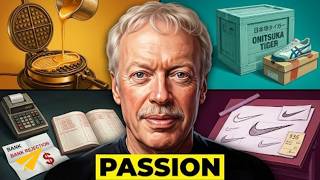
Phil Knight, Nike's co-founder, explains how he and Bill Bowerman imported lightweight Japanese running shoes to challenge Adidas and Puma. He credits hiring the right people and relentless product innovation as key to Nike's rise, and recalls selling shoes at a convention to make payroll during the startup's darkest days.
Chapters
Even today, as big as Nike is with over 60,000 employees, the key thing is people.
I think in many ways the success that Nike has today really came out of the soul-searching that was done in the mid-1980s when Reebok went past us.
I know they asked me in one of the rare TV interviews from 25 years ago if I wanted to meet the president of Reebok, and I said no. I said I don't know him, I don't like him, and I don't want to like him.
It's more than just a business. It's more than just sports. It is a mission.
He's an American business magnate and philanthropist. He's the co-founder and chairman emeritus of Nike. He has an estimated net worth of $25.5 billion. He's Phil Knight, and here's my take on his top 10 rules for success. Rule number 8 is my personal favorite, and make sure to stick around all the way to the end for some special bonus clips. Also, as Phil is talking, if he says something that is meaningful to you that you want to remember, make sure to write it down in the comments below and put quotes around it so other people can be inspired as well.
You're a runner with a track coach that you're very fond of, an accountant, and a Stanford Business School grad. All of that produced a crazy idea. How did it come to you?
Well, it was a combination of two things. It came off the running track at Oregon and out of the classroom at Stanford Business School. And that Bowerman was always tinkering with shoes, and he began to have some of his good runners, not just his hacks like me, you know, wear the shoes. And they were wearing them quite successfully, and he was very sincere in believing the weight of the shoe was very important to a runner, and so that registered. Then all the best shoes were being made in Germany, and it made no sense that you would make shoes— Adidas and Puma— make no sense that they'd be made in Germany. So I wrote the paper about they should make them in Japan, and the idea built and built and built, and it became a crazy idea to everybody but me and my college professor. And then my old track coach.
If you were talking to a young entrepreneur today, what would you What would you say about how a great team gets put together, about the role of a CEO in supporting, shaping, interacting with that team?
Yeah, I mean, it's life and death. I think even today, as big as Nike is with over 60,000 employees, the key thing is people. So when you're starting out, obviously, getting the right people, that's life and death. And then, not only the right people, but getting them to work together and work for a common purpose. I've always said, two 9s working together will beat two 10s working apart any day.
And how do you do that?
Well, pick the right people, number one, and then giving them the environment and, and maybe a little bit of leadership that allows them to keep doing that.
And the environment for good, uh, for the ability to get different people to work together— I'm looking for sort of how you would articulate what is that, what is that thing you put in the environment.
Well, now you're getting into, into management, and there's all kinds of different management styles that, uh, And you have to kind of recognize that each person is an individual. But I always liked Sparky Anderson, the manager of the Cincinnati Reds. He says, "Do you treat all players the same? Hell no." He says, "Johnny Bench wants a day off, he gets it off. A rookie wants a day off, I said, 'Get your ass out on the field.'" And I think that's a good management principle by itself.
The key thing for us was the product. And our whole focus for the first 10 years of the company was building a better mousetrap, having a better running shoe, having a better basketball shoe, having more cushioning in different shoes. And innovating like every 6 months and spending a lot of money on research and development, spending a lot of money on a lab, and the product process really was developed far in advance of anything else that we did.
Most important thing is you have to— there's two sides, it's really sort of the intellectual or mental side. You have to pick a business that has a niche. You have to have a reason to succeed. You have to be something like we were doing, say Japan can beat Germany in manufacturing of this type of a product. That was the niche really. And then on that you just have to have a total and complete complete passion because there's going to be so many dark moments. You know, I think the dark moments are true for any entrepreneur or any startup company. I'm sure that you talk to Steve Jobs and Apple, you'd see many, many dark, dark moments. Ours happened to last a little longer than most of them, but you really emotionally have to be prepared for those dark moments.
I think every entrepreneur I've ever spoken to would echo that. Yeah, that there are dark moments. Everything's on the line.
That's the life of an entrepreneur. And so you're going into it, you better be prepared for that. Before there was success, there was defeat. We were kicked out of two banks. We borrowed money once from a shoebox manufacturer to meet the payroll. On another time, we had to sell $2,500 at a national PE convention in Seattle, Washington on a Friday so we could meet payroll on Monday. In all those cases, the lessons from the fields and the courts, the lessons of competitive response, were the most valuable of all.
I think, yeah, in many ways the success that Nike has today really came out of the soul-searching that was done in the mid-1980s when Reebok went past us. That essentially we had to decide who we were and what we were and try and build off of that and, and really defend those values that we really determined that dictated what our persona was as a company.
Knight refocused the brand on pure sport and reorganized the company. 10 Commandments emerged: break the rules, fight the law. This isn't much about battle as about business. It won't be pretty. And lastly, if we do the right things, we'll make money damn near automatic.
I have in my travels occasionally met promising young people who insist they are not going to ask for help along the way. They want to figure it out themselves. Mine was the opposite approach. It is hard enough out there. Get all the help you can. Getting help, really, is just a part of a lifelong search for wisdom.
Brands are, you know, one of the most interesting parts of business. But I mean, basically, a brand stands for something. It creates an emotion in a person's mind, either positive or negative, that brings out all kinds of reactions to that brand. And when we got to start our own brand and have our own name, we were very ambitious in some of the things that we wanted it to stand for. But I mean, as you stop and think about brands around the world, Sony and Coca-Cola and Rolls-Royce, why they all stand for very different things, but they all create an emotional response and something that's really strong and powerful.
I was developing an unhealthy contempt for Adidas, you say, or maybe it was healthy. I despised them.
Yeah.
I'm curious what you make of the competition right now. Adidas is coming back from a soft patch and there are upstarts like Under Armour that are making headway. On athletes and on sales?
Well, I think I'm sort of a warrior by nature.
And so everybody is a concern, but I'm still the same as I was before. I know they asked me in one of the rare TV interviews from 25 years ago if I wanted to meet the president of Reebok. And I said, no, I says, I don't know him, I don't like him, and I don't want to like him. And I still feel that way about the competition.
What about Under Armour in the U.S. market?
Is there one of them free?
They're one of them. There are lots of them that we compete with, but believe me, we will compete.
Phil Knight built Nike's corporate headquarters in Portland, Oregon, as a shrine to sporting excellence. It's part cathedral, part university campus. Each building has its own patron saint. Icons adorn every wall. As they walk down the cloisters, Disciples are encouraged to contemplate the deeds of Nike heroes, past and present.
Heritage is the glue that holds great companies together, because you have to love what you're doing, because this is the way people have chosen to work in the world. And if you're gonna work for a company, you might as well love what you do. And for us, it's understanding the roots that gives people the energy and the fire and the appreciation for competition in sport and that passion, you can only get it if you're hooked into why you exist. I mean, our employees understand, what are we doing here? Why do we exist? And if they understand that, everybody excels.
To approach the main door, workers walk along the Rocky Road, which symbolizes man's journey from an uncertain past to a more promising Nike future.
It's more than just a business. It's more than just sport. Sports, it is a mission. I mean, this is what we've committed our lives to doing, so let's make it something worthwhile.
Thank you guys so much for watching. I made this video because Mr. Old Fashioned Lover asked me to. So if there's a famous entrepreneur that you want me to profile next, leave it down in the comments below and I'll see what I can do. I'd also love to know which of Phil's top 10 rules had the biggest impact on you and why. What change you're going to make in your life or business as a result of watching this video, leave in the comments. I will join in the discussion. Finally, I want to give a quick shout out to Orquídea Gutiérrez. I hope I pronounced that okay. Thank you so much for buying my book. It really means a lot to me. For those of you watching, you want a chance at a shout out in a future video, make sure to pick up a copy of the book and email in your receipt so we can keep track. Thank you guys so much for watching. Continue to believe, or whatever your one word is, and I'll see you soon.
The swoosh, the very famous Nike swoosh.
How much did you pay for that design?
There was a graphic arts student at Portland State that had done some work for us, and she charged $2 an hour. And we said, how about coming up with a logo for the shoe? And she spent 17.5 hours on it, so it cost us $35. But, and as I said, it was easily worth it. It's turned out to be fairly iconic. But when we went public in 1980, we gave her 500 shares of stock, which she still owns. She's never sold a share, and that's worth $1 million now, too.
So good for her.
Yeah, so good. So it came out— the story had a happy ending.
More from Evan


How the Biggest Mistake in History Created A Trillion-Dollar Empire | Sergey Brin



9 Machiavelli Principles That Force People To Respect You | Machiavellian Philosophy



The First 10 Words That Instantly Ruin A Sales Conversation | Vanessa Van Edwards

The Top 1% Mindset Behind The First $5 Trillion Company | Jensen Huang (Nvidia)

