Unlock the Secrets to Building Your Authority and Influence!
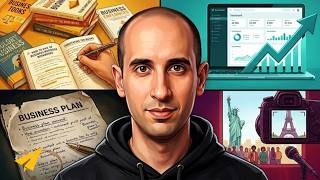
David Jennings shares a three-step system for busy entrepreneurs to build authority: Present your expertise, turn it into Products like videos and guides, then Promote across platforms. He uses examples from a salsa studio to a pool manufacturer, showing how to batch-create content in one-day workshops and repurpose it with transcriptions and virtual assistants.
Chapters
Hello everyone, welcome to another YouTube Hangout. Super excited to be here with a new friend, David Jennings, who is an author, he's an entrepreneur, and we're here to talk about how to build authority and influence, and he's got a book all about it, so he's going to tell us about it and do a quick intro for us. David, welcome aboard.
Fantastic, thanks for having me on the call. It's an early start coming here from the other side of the world, Australia, so good to be able to connect, and yeah, just Excited to see what direction we go in.
Now it's 4:15 on the East Coast of North America here. What time is it there?
It's 6:00 AM. Okay.
I thought, I actually thought it was, I thought it was a little worse. I thought it was like 4:15 or something. So that's, that's a start, but it's not that bad, I guess. That's pretty good. Well, thank you for waking up early with us to share some wisdom for the entrepreneur community.
My pleasure.
So for people who aren't too familiar with you and what you're all about, maybe just like, In 30 seconds, who's Dave? And then let's get into what your book is all about.
Yeah, I'm a serial entrepreneur who started lots of different businesses. Like all good entrepreneurs, probably the last thing I need is another good idea. Um, it's all about the focus. And probably over the last couple of years, I've gotten better at really narrowing in where my strengths are. And I found, you know, you look for the overlapping circles in your life, um, to areas of mastery to figure out where you should focus. And I'm really strong in marketing, really strong in systems, and really strong in business. So I've kind of looked for that sweet spot. And we've set up a couple of companies based here in Australia that kind of help me operate in those spaces.
I love it. And so today we're talking about the simple system for building your brand, your sales, your credibility. You've got a new book out.
Yeah, that's right. Yep, Authority Content just came out. And went live on Amazon a couple of weeks ago and pretty excited actually. We got Amazon bestseller in quite a few different categories, both in Australia and in the US. So really well received, good reviews and yeah, just happy to get it done. Writing a book is tough work.
I know, man. I just finished that process now too. So I feel you, I feel the pain, but also the joy in birthing this creation. So tell us the context, tell us the thesis of the book. What can we learn from it? What's the message for entrepreneurs?
Yeah, so this is really for business owners or really businessmen or ladies who have ideas that they want to get out to the world. Like they might have a good product or service and they need help spreading the word about what it is that they've got. And doing, using online as a vehicle to do that is fantastic, but a lot of business owners, they just get caught up in the day-to-day runnings of their business. They don't have time to create some great content to share out on the web or on social media. So the book is a system and a process that's drawing on one of my areas of expertise, a process for batching the content creation, taking as much out of the brain of the business owner and the business owner's team, capturing it in one day, and then having that live on the website and also sharing it out across the web, and creating really great quality content that captures attention, Engages an audience and builds their trust. That's ultimately what we're looking at doing and makes it a simple process for them.
So the idea is an entrepreneur is an authority, or at least should be an authority at what you're doing. If you're getting results, you know, you should be an authority in your subject matter. And what you're trying to do is help them quickly create content to show off that authority but not have it take up so much of their time that they're just stuck living on social media instead of actually running their business. Is that right?
Yeah, there's a whole lot of criteria that people look for when they look at a business owner or a business to determine whether or not they are actually an authority. And the different criteria that people have to look at, it varies from one person to the next. It can be things like how well is the website designed, what sort of body of work does that business have, what sort of case studies do they have. How easy is it to find their different contact information? How much does it look like they have great products and services and they understand their target audience? So there are all of these different factors that people look for when they are trying to determine if someone is an authority or an expert in their space. So this is very much not a fake it till you make it exercise, it's— authority content is a way to try and tick as many of those boxes as we can in the least possible time, because we know there are certain elements that people look for to go, "Oh yes, I have that feeling now that I can trust this business," or, "Hey, I know that this business can deliver on their promises," because when someone makes a purchase online, that's the biggest hurdle they have to overcome. They fear, you know, if I'm going to spend my money to buy this business's product or service, am I going to actually get what I paid for, the result?
Right.
And yeah, this is about trying to set that up.
So I mean, it's a model that I believe in. I built my business, you know, around me sharing my opinions and thoughts. Although I had a hard time at the beginning where I would just share other people's ideas. It started with my website sharing other people's content, whether it's Steve Jobs or, you know, whoever it is. And people started asking about me, like, who was I and what are my views and opinions? Like, well, who am I compared to Steve Jobs? What do I have to say that would be relevant when you're learning from these masters. But there's also that personal element too, where with the business, if they feel like they know and trust the owner, who, you know, the face behind it, then it really builds a personal connection where now people feel like they know me and they come up to me and they stop me and they want to talk to me and they know about my wife and my son and all this stuff that I've shared. And they're like, oh great, you know, like, I have no idea who you are, but it's great to meet you. This is fantastic. So it definitely builds a personal connection too with the people consuming the content so that they do like you, trust you, know you, and they feel much more comfortable buying whatever it is from you. Okay, so— Yeah, yeah, go ahead.
Well, it's one of those things. I think particularly with video, and one of the reasons we like to lead with video as content, is that connection. Video is one of the best ways, in fact, yeah, the best way that I know to duplicate yourself as a business owner. We all know we've got We've got limited time in the day and video is a great way to capture your ideas and things and then let someone experience who you are in a very leveraged way. And yeah, they can watch a couple of episodes of your Hangouts and stuff like that and they'll get that feeling like they know you even before they ever get to meet you in person. So that's definitely part of the process is having that type of content that people can consume So by the time they do pick up the phone and chat with you or you meet with them in person, the question isn't, "Hey, sell me on the idea on whether or not I should do business with you," but rather, "Okay, are we the right fit and how do we get started?" So it kind of moves people further along that cycle, that buying cycle, and I'm talking in terms of business, but depending on how you're meeting someone and in what context, it can also pre-frame just that relationship. It changes the dynamic a little bit if someone feels like they already know you and they've got that trust and they recognize you as an authority. Authority is a funny word. You have to be a little bit sort of careful because sometimes people think authority can have good connotations or bad connotations, you know, respect my authority type thing, but really for me authority is about becoming a trusted advisor, just like a doctor almost, where you look towards a doctor and oftentimes you'll trust what it is that they have to say because of all of the background stuff that they've done to get to a position where they can call themselves a doctor. They have to go through a lot of study, they have to do a lot of different things, they don't just hand out doctorates to anybody, and because they've gone through that process, there's a certain amount of trust that usually you'll have before you ever step foot inside the door of a surgery.
Right. So how about going through an example? I'm probably a bad case because I'm already doing it a lot and I'm in the business of kind of being an authority, but I'm thinking about one of the businesses I own is a dance school. So we'll teach salsa, you know, local business. I'm not the day-to-day guy, so there's, you know, there's an operator who's the head of the school. I'm much more behind the scenes. So we've got this local business, you know, it sells dance instruction classes. You've got somebody leading it who is an authority on the dance and is very personable. And maybe let's say, you know, wants to be an authority and be more recognized, wants to bring more awareness to the business, but is also very much involved in the day-to-day running of the business, right? Like being an authority is my business. You know, for him, being an authority isn't his business, but could be a good part of the marketing plan. And I think for a lot of people watching, they're kind of in the same boat where they have their business and they recognize the value of it. So walk me through— so the guy who runs it, his name is Alex. You know, walk me through what Alex has to do, or in your opinion, what you would do with Alex to help him, you know, build the brand, to help his authority grow and help the company grow as well.
Yeah, for sure. So the book goes through this 3-step process, and it's present, product, and promote. So stage 1, present, is all about batching that content creation, because as you kind of rightly identified, most business owners are busy. They're stuck in the day-to-day operations. They— when you talk them through this idea and marketing online, they intuitively know that yes, it's a good idea to be putting out content, but who's got the time to be sitting down writing a blog post, pumping out a podcast and making a video? It's very hard to make that space and they might just do that, even the proactive ones might do it once a month or something like that. So the first stage really is about how can we batch that content creation. I think it does need to come from the business owner or at the very least some staff within that business because the whole point is we're trying to elevate the authority of that that particular business. And I think the further that the content creation gets from the source, the business, more often than not it loses the message. And we see this all the time where people go to a content writer, you know, a ghostwriter or something, you know, someone who doesn't fully understand the business. They write about the business but they don't really get the essence of the business. And if you think about what content is, content is that first point of contact that someone will have with your brand and your business when they are looking for you online. So you want to make sure that you step with your best foot forward. So for that first phase, you need to really think about your target audience and you need to think about what questions and problems do they have, what are they thinking about just prior to them making a decision that they want to go learn to do salsa. So when we think about your target audience and they're online and they're searching on Google and I think YouTube would probably be a really good fit for this because I can imagine people looking for dance steps and stuff like that, they might just start to look at some of the different types of dance and they might go on to YouTube to try and find what's the difference between swing dancing and rock and roll dancing and salsa and those sorts of things. But you're probably going to have a little bit of a better idea than me, what types of things would someone interested in dance be going on to Google or YouTube or whatever and running some different searches. And normally, you know, just prior to them making a purchasing decision or maybe even a little bit earlier, maybe they're just still in that research mode.
Yeah, and so kind of along those lines too, I'm thinking the natural tendency when I first started work with entrepreneurs on their content is everything becomes a sales pitch. So their first content is, "Here's why you need to join our company and here's the biggest reason why we're the best." If you sign up now, you get 50% off and it's just like constantly in pitch mode as opposed to actually creating authority content. So yes, it can be a little bit about the school and what you're doing, but more to your point about the questions, you got your, you're pulling up the book.
I want to read the definition of authority content as I've got it in the book. So the definition is authority content. Now this is a bit of a mouthful, so unpack it, but it's authority content is the act of consistently creating and distributing helpful information and stories to gain the attention, engagement, and trust for a clearly defined audience with the objective of identifying those who will benefit from your products and services. So to unpack that, it's about consistently creating helpful information, basically to capture someone's attention, and doing it over a sustained period in time so you start to get their engagement and build their trust. Now, it is of a clearly defined audience and we know that someone who engages in this type of content, it's almost like they self-select themselves as someone who would be interested in your products and services by the very nature of them wanting to listen to the content. So while there is benefit in, yes, having those frequently asked questions where it might be very sales-driven type content, that's at some point in the cycle, but even before that, let's not lead with, "Hi, my name is David, my products cost $600 per month to work with me." Let's lead with, "What problem What problems do you have? How can I help solve them? So I thought I'd jump in there. So sorry to step in there, but yeah, I think you were talking about how it would relate to the dance studio.
Yeah, I was just saying the same point. I love the message. I think also, especially if you can get the entrepreneur themselves to tell their story, why they started it, why it's important, that's how you stand out versus the big corporate people, right? Like if somebody's looking at your website, versus a big company, why would they go with you or a big player? The big player may have already the brand and the reputation and, you know, I'm not gonna get, I'm not, you know, I'm gonna get a consistent experience going with this big company or I'm gonna take a risk on you. Well, it's the passion, it's the story, it's the excitement, right? You make me feel something, a personal connection I don't feel to XYZ Corp.
Yeah, and understanding what those differences are and understanding that, hey, people do business with people. So if you can, get your personal story out there, what will end up happening is someone will listen to that story who might be looking at your products and services, and they may or may not find that connection where they go, "Oh, he's just like me. He got interested in salsa dancing the same way. He started dabbling with it at school but never really followed it through. He didn't become professional but has loved it his entire life. That's just like me. Hey, he's just like me, you know, maybe that's someone that I want to find out more." And for the person who there is a direct match, you will bond so closely to them. For other people, that might not resonate, you know, and whether or not they're not your target audience or they'll still appreciate the story and wow, this is real and authentic, because that's another big thing about becoming an authority, being real and authentic and presenting yourself for what you actually are. I think there's something that draws anybody in when you're real and authentic. It's especially online where a lot of people hide behind their websites and you don't see that brand and that personality, so it can be quite refreshing.
I remember having somebody call in on our radio show talking about he was a gardener and he cut people's grasses too, and he was having a hard time competing because the kid down the street would do it for $15 and he was trying to charge a lot more, and he said, I asked him like, why? What makes it different for you? And he said he grew up always around outside the garden with his mom, and he treats every lawn that he goes to like it's his mother's lawn. And so, like, I didn't have that experience with my mom. You know, I'm not the person who goes outside, and I hate cutting the grass, and I don't want to plant flowers or vegetables. You know, my wife likes that, but I'm not going to spend any time doing that. So I don't connect with the story that it's me, but I want that guy cutting my grass. Like, I want him taking the pride because I'm not getting that from the kid down the street. And so I wouldn't have known that unless he shares his story.
It's funny, there's little things like that. Like, when I think about two of the people that work, you know, in my world, when we were looking for a cleaner for our house and we got a few cleaners that came by, the person we ended up hiring, she got to the front door and she took her shoes off. She was the only person who did that, and I thought, wow, you take enough pride in thinking about cleaning that you get to the door and your shoes are dirty, so you leave them at the front door. Wow, you're the type of person that I want to hire. And same with, we were looking for a childcare centre, and my wife went around to all of these different childcares, and the one that we ended up going with, she walked into the childcare place and she was holding our son Nate on like one of those little carry things, and his leg was kind of a little bit stuck. And she came over, before she said hello or anything, she said, "Oh, you might want to unhook his leg. He looks a little bit uncomfortable there." And that was kind of like, wow, you're really focusing in on what's important here. And those elements, when you're sort of in your area of mastery, those things can't help but present themselves. So I think that's— we can unintentionally capture that type of information, or we can also intentionally capture it. But I think the key is to really act authentically and you'll find those types of things come out in the content you create.
I love it. So that's step 1, is make the content.
Yeah, and batch it is really key. The business owner is busy, so the way that I like to do it is I run these mini workshops.
I call them—
before, when you say workshops, people imagine, hey, I'm sitting down at tables and I've got workbooks and things like that. Sometimes that makes sense, sometimes it doesn't. It could be, it's really just a way to batch the content. For example, we worked with this Cosmetic Institute where we actually went into their surgery, they had a doctor sit down on one of the chairs and they had about 3 or 4 clients and patients that came in and this doctor sat on the edge of the chair and talked about some of the things, questions that people have about cosmetic procedures. So it doesn't have to be workshop, workshop. It's really about having one day where you batch this content creation and you know you're going to have— it's got to be in front of an audience that gives a little bit of a different energy. It also stops the business owner retaking over and over and over. I see this all the time because we have this video studio and people sometimes book it out and they come in and they might spend half a day or a whole day in the studio and they walk out the other side with one or two videos. Because it's just them in a room, they're retaking it, getting it just right, whereas if you do it in front of an audience, bang, you got to do it first take, you keep rolling. So you do all the pre-thinking upfront about the type of content you're going to create, you get some staff in there, you get you in there, you might even get a guest expert in there. It doesn't have to be a big fancy production, but it's that positive constraint, it's a line in the sand, you know you've got to be ready on this one particular day. I used to have this friend, he just started being an entrepreneur and he used to always sleep in. He would never get out of bed on time. So he thought, I've got to figure out how I can do something. So he ended up parking his car out the front of his house in a clearway zone because he knew if he didn't get up on time, they would tow his car. And it was a positive constraint that caused him to act. Same with the idea of picking a date and presenting and in one day, you know, You will show up if you know that those people are going to be there and you'll probably get 30 or 40 different videos that can be chopped up into little segments. So that's that stage 1 is all about presenting. Then we kind of shift to stage 2 and that's about turning this into some sort of product. Now you have to at this point, because the listeners listening to this and applying it to their own business, they have to think what type of business have I got. Sometimes you could take that content and turn it into a digital product. It could be something that lives on your website, you know, and you sell it for a couple hundred bucks and it can make a fantastic downsell. Someone calls you up about your service and you say, "Yep, this is what I do, here's how much I charge." They say, "Look, I don't have the money," and you say, "No worries, we've got a home study version that you can grab up on the website and it's a do-it-yourself." It can make a great cross-sell or upsell. Added value. If someone buys your service, you say, "Hey, you also get this course here," and it explains what it is that we're actually doing. Now that works for some businesses but not all businesses. I'll give you another example. We worked with a swimming pool manufacturer here in Australia, and it wouldn't make sense for them to have the "How to Build Your Own Swimming Pool" home study course. So for them we did it a little bit differently. We made it almost like a buyer's guide. On that first day we captured a whole bunch of content around what are the questions that people ask just prior to making a swimming pool or buying a swimming pool, and it's things like, should I go fibreglass or concrete? How close can I build a swimming pool to my house? What do I need to do to maintain a swimming pool? How long does it take to build a swimming pool? And we actually took all of this content that we captured in that once first stage, the present stage, and we turned it into this open resource guide that we called a buyer's guide that lives on their website. And it had this central post with the chronological order in which people ask these questions and then links through to specific pages that had a little video and the transcript underneath that answered that very specific question. So at this stage 2, point 2, someone needs to think about their business. Does it make more sense to sell a digital product or digital product or is it becoming an open resource. But that's that kind of stage 2. Does that kind of make sense?
Right, and then some of it could be used for social media as well, your YouTube channel, Instagram or Facebook.
Perfect, and that flows into the final stage which is the promote stage. Now you're sitting on this mountain of content and as I said right at the start, most business owners they struggle to create any form of content. But now you're probably sitting on a mountain of content and you don't even know it. You don't need to drop all of this content in one go and start sharing it. This could be your content strategy for the next 3 or 6 months because we can take the videos and we chop them up into those little segments. We then split out the audios and those audios could get uploaded to SoundCloud or iTunes. We can then take the audios and give them to someone who can transcribe it. They now take the transcriptions, we can pair the transcriptions and the blog posts together transcriptions can get paired with the videos and become optimized blog posts on your website. You can monitor which bits of content are performing well and create derivative works. You might— you put up a whole bunch of content and you go, hey, for some strange reason this video gets 5x the number of views or engagement than anything else, and you go, okay, well I've hit a little hot pocket here, how can I create more content around this? You take the transcript, then you give that to a ghostwriter and say I want you to polish this up to a nice article. You try and extract the ideas and you turn it into an infographic. If you want to get fancy, you can start to pay to amplify that content, boosting that content across social media and yeah, sharing it across social media and emailing your database. It's all about thinking where is your target audience and how can we use this content, tailor it to the platform and then deploy it on that platform. And the good thing is Everything after stage 1, stage 1 the business owner must be involved in. Beyond that though, this is stuff that can processes, procedures can step in, you can get outsourcers, VAs, I mean this is fantastic work for, you know, if you've got offshore talent that takes content and repurposes it and one day's worth of content you might get 200 pieces of content and you can drip out one or two of these pieces every week or two and constantly giving you something fresh and useful and engaging that can go for your audience. And this is how you can have a content strategy that lasts for a whole year and you stop becoming that guy who posts one good post every 3 months. Sure, it's a great post, but you only do it, you know, once every 3 months. These days, because the marketplace is so crowded, so noisy, you have to be creating good quality authoritative content consistently over a long period of time and there's a lot of benefits that shake loose from this, from traffic to conversion to building up your authority positioning but I mean that's kind of ran through a lot there but that kind of gives you an overview of the strategy.
Right, so for the solo entrepreneur or even the part-time entrepreneur who wants to play a bigger game listening to this, they say this sounds awesome, but also sounds like a ton of work.
Yeah, it is.
What do you recommend? Well, are you saying this is only a strategy for companies that have like— No, no, no. So for that person, what do they do?
Well, it definitely works at different stages in a business cycle depending on how it's built. So if you're a startup entrepreneur and you're just getting going, the way that I'd use this authority content process would be to document the way that you do what you do, because over time the business owner wants to bring in more staff. Surely they want to get more people to help them out, so you could use authority content as a way to explain the way that you deliver your products or services. So one of the very first things I did in a video production business that we run is I I ran a workshop that explained how we create great quality videos because now I get multiple different things. Not only does that help demonstrate my value when working with someone because they can see the actual process, but it also works really well as staff training as well because now when someone starts with me, I say, "Hey, watch this course first. It will teach you everything that you need to know about the way that we do business," and then That also forms the foundation for us to start to create some of the documents and processes around how we systemize business. So for the startup entrepreneur, it will also help clarify their thought. Nothing forces you more to think about logically what it is that you're doing than knowing you're going to have to present it. So it's, it's a great way to really get it out of your head what it is that you're trying to do. So it can very much work for the startup entrepreneur, it can work for more established businesses. It is a lot of work, but it's a case of we're building work that has lifetime value, like we're creating digital assets. When you create some of this content, video content— I have a stock market education background, that's kind of where I came from, and I operated in that space and developed this methodology in that space. And some of the content that I created in there 15 years ago, or actually probably closer to 10 years ago, is still to this day driving me traffic, making me sales, but I have not operated in that space for years. So business is a marathon, not a sprint, and you need to be in this for the long game, and you need to focus on work that pays for a lifetime. The work I'm talking about here, you know, you're working for a client and you're getting paid for a service, you're swapping time for money, and all entrepreneurs Most entrepreneurs have to do that while you are getting started, up and running. I mean, that happens, but as you need to still carve out and devote a little bit of time into building assets, things that work where you do it once and it will continue to pay. And over time, the objective is to find more and more time to spend focusing on building up these digital assets and working on that part of the business. And authority content is a great way to do that. It's just a bit more of a structured process. That keeps someone focused, because you know you're online, as I said right at the start, the last thing you need is another good idea. You need to focus in on one thing that makes sense, follow it all the way through, turn off a lot of the other noise so you can start to get that result. So for some people this will really resonate, but there are other people that are just looking for that magic button that they can press that's really easy. The one last point I'll make on that is We are finding now, particularly if we think in terms of Google, the opportunities for exploiting loopholes now are shrinking. So if you do find a little loophole in the system where, hey, I can do this strategy and it games the system and I will get a little bit of traffic, we are finding those last for shorter and shorter periods of time. Google is getting smarter, algorithm is updating a lot quicker, your buyers are getting a lot more savvy. So you're much better off focusing on things that have a real long lifetime to pay off rather than something that gets you a real quick win right now, because then usually those quick wins you just have to keep reinventing yourself and then doing the same thing over and over trying to look for that loophole. So again, probably packed a bit in there, but yeah, a few points.
I love it. Lots of great knowledge there, David. Thank you for sharing. I would say it also starts with And I would encourage people watching to have the mindset that the authority marketing is really important. You have to make time for it, you have to make it important. You know, when I hired Alex to take over Toronto Dance Salsa, I gave him a list of 10 different ways that he can market the business, whether it's using the media, whether it's creating a marketable product, whether it's doing SEO, whether we're doing advertising. And I said, one of them has to be, you're going to be the face of the company. You're going to be the face. We're going to do storytelling. We're going to do YouTube videos. You're going to be on Snapchat. You are going to be an authority. That's, that's given. And then pick one of the other 9, and that's the other thing you're going to focus on because it's such a great way to build a business. And so for those of you guys watching, if you're not sure about the vibe of authority marketing, I'd encourage you to really test it out, try it for yourself, because it pays just crazy dividends compared to a lot of the other ways to grow business. So.
And it's one of those things where intuitively, if as a business owner, if you think it through, it just makes sense. Content becomes— it's the first contact point, the first engagement that a prospect or a client will have with you. So we— when they're searching online and they're coming across different platforms, or even if someone makes a referral, they're going to end up at some point back at your website. and when they are there, they are going to look at— and what things are they going to look at to determine whether or not they are going to do business with you? It's content. That's how they are going to get to know you, so you want to make sure that you come up with a way to be creating this content that is engaging. And we all know that not everybody is going to want to do business with you right now either, and if you are not focusing on still helping those people who aren't quite ready to make a buying decision now, You're leaving so much money on the table. You want to— when someone comes to your website and if they're not quite ready, you still want to give them helpful information and see what you can do hopefully to trigger their interest enough that they might give you their name and email, or at the very least, you know, you might be able to remarket to them because they've hit your website. Now you can drop a cookie and you can run ads specific to them, driving them back to content. Demonstrating your authority, trying to capture their attention, doing it, you know, getting their engagement, and then hopefully you do it over that long enough period that someone goes, this business isn't a fly-by-night, this business, they are excellent at salsa dancing, they care about salsa dancing, they— I'm assuming that you guys do salsa, I didn't even ask right at the start, I've said it a few times now. So yeah, but they care enough where Yep, I can see that passion coming through, and if I ever want to be in a situation where I want to learn salsa dancing, these guys look pretty good because they really love what it is that they do. And that's ultimately what we're trying to create. And if you spend your time focusing on that, and I mentioned video, video is one piece of the puzzle because it starts with video, and I love video because we can repurpose that video in so many different ways. But just think of it that you are focusing on an activity that helps you duplicate yourself. We're all time poor, but if you can make a video that answers a question or a point, what a fantastic way to make more time in the day for you. Now you don't have to answer that question again. Someone calls you up on the phone and you say, "Ah, fantastic, yep, here's the quick answer to your question, but by the way, I've made a video that helps to answer that in much more detail. Can I just grab your name and email and I'll send you a link to that video? What a fantastic way to save yourself some time, get them into your marketing funnel and be really helpful to them as well. So it's like this type of content gets involved all the way through your buying cycle. I'm clearly passionate about it. Yeah, I love it, I love it. I know it makes a big difference. I really do. Cool.
Well, thank you guys so much. David, thank you so much for all the value. For those of you watching, go check out Authority Content, the book. Authority Content—
On Amazon.
On Amazon, Authority Content. Also authoritycontent.com too, right?
Yeah.
Right. Not dot com, whatever the Australia thing is at the end. AU?
AU, yeah.
Just authoritycontent.com. David, appreciate the time, man. So much value. Good luck with the book. I really appreciate the knowledge today. For everybody watching, go check out his book, Continue to Believe, and we'll see you soon.
Thanks for that.
More from Evan


How the Biggest Mistake in History Created A Trillion-Dollar Empire | Sergey Brin



9 Machiavelli Principles That Force People To Respect You | Machiavellian Philosophy



The First 10 Words That Instantly Ruin A Sales Conversation | Vanessa Van Edwards

The Top 1% Mindset Behind The First $5 Trillion Company | Jensen Huang (Nvidia)

