Unlocking Self-Awareness with Dr. Yeager | Mindset Magic
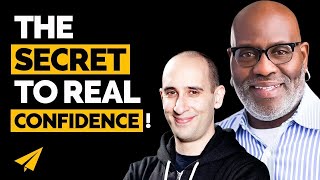
Dr. Corey Yeager, the Detroit Pistons' psychotherapist, says self-awareness matters more than change. He teaches people to recognize childhood trauma creates coping masks, most anxieties never happen, and micro-habits like free-throw routines build real growth. He ditches the word "try" and uses mantras like "I'm built for this."
Chapters
You have to learn in life when are the moments that you must put the mask of assertiveness. If you're shy, you don't have to necessarily become an unshy person. You have to find out the ability and the moments that you can put the mask of assertiveness on. I don't have to be unshy and assertive all the time, but I have to figure out the moments that assertiveness will serve me, and I can put that mask on and take on that persona for that moment. 90+ percent of the things that we're worried and anxious about never ever occur. Never. Trust the fact that there is a lesson in that loss or that negativity or whatever that is, that we first have to trust that the lesson is there. And then if I could find that lesson and hold it and grab it and, and utilize it for now, then I don't have to stay back there. I think we stay back there because we don't trust the lesson that we're supposed to get from it.
Oh, we're doing some live coaching here. Okay, here we go. All right, all right, I'm ready.
And there he is, man. My man, what's up, baby?
All good, man. We got Dr. Corey Yeager in the house. He is the psychotherapist for the Detroit Pistons of the NBA, and he's got a new book out called How Am I Doing? 40 Conversations to Have with Yourself. Welcome aboard, man.
Thanks, man. Thanks, man. Appreciate it. It's good to see you.
There it is. So, I mean, I'm so excited about this. In researching your story and everything you're all about, one of my favorite things that you said was that in the work that you do, that your job isn't to change anything in somebody else, but it's to make them deeply aware, and then it's up to them to make the shift.
100%.
What are the things that people are struggling to have awareness of in themselves?
Well, I think there's a multiplicity of things, and I think a lot of the things that we're struggling with are very unique, right? So for instance, one thing that you could struggle— be struggling with that I see or hear people talk a lot about is coping mechanisms that were developed on the heels of trauma when you were younger, right? So you had a traumatic event, something happened when you were 9 years old, And then what that 9-year-old version of yourself would do is develop some type of mechanism to deal with it, protective mechanism. So for instance, if there was a trauma and you no longer want to be touched by people, you don't want people to get close to you, so you become very shy. All right, I'm going to be really shy, and I don't want people— I won't talk to people. So your 9-year-old version of yourself sets that up, and you use that. It helped you when you were 9. And it protected you. But now you're 49 and you're still shy, and you have to ask yourself, does that help me? Is that really what I need anymore? It helped the— it helped protect the 9-year-old version of myself, but I'm— I don't think I need that anymore. But you can't really tune into that unless you become aware of self. Be curious with yourself. Ask yourself questions. What did— why do I do that? What is— where does that— what is the root of that? Where'd that come from? And that's really what the book is about, is getting tuned into yourself.
Can people become unshy?
Yeah, because you can become shy. So you didn't have to be shy all the time. You built that up as a mechanism. Wasn't shy from the beginning. Now I built that in so I can all of a sudden not do that. But then I could say, you know what, I don't want to do that as much. One thing I would say that people could do in terms of like if you're trying to be shy or not shy, You have to learn in life, when are the moments that you must put the mask of assertiveness? If you're shy, you don't have to necessarily become an unshy person. You have to find out the ability and the moments that you can put the mask of assertiveness on. I don't have to be unshy and assertive all the time, but I have to figure out the moments that assertiveness will serve me. And I can put that mask on and take on that persona for that moment. And I can take it off and go back to that shyness if that's what I choose. But it has to be, again, what I choose, not just what I end up being. That makes sense?
Oh, I love it. So when people discover these things, you know, the idea of someone who's shy becoming unshy. Me, you know, I've identified as being introverted and shy. So your example off the bat, like, it hits home, Dr. Yaker.
It hits home.
You know, I was like, OK, he's talking to me already.
How'd you know? That's good. That's good.
And so, you know, maybe that's some deep childhood trauma that I haven't kind of figured out yet. But the process to then change often can feel overwhelming and giant and just an impossible task, especially if you are— I mean, I'm 42, your example is 49, but you like to say, how do you eat an elephant? Well, it's one bite at a time. So what are the first bites that people need to take once they realize that, you know, oh my gosh, I don't want to be this person anymore?
Well, if I don't want to be this person, I think there's a difference in not wanting to be this person and not wanting this little thing that I do to take over. So figuring out what that, that answer is first and foremost, what it is that you're trying to do. All right, I just want to change some aspects. I love who I am, but I want to change this aspect of it. Um, I think that's— you got— you have to be aware of that first and foremost, but then you have to go about Moving in a way that says, all right, I want to change my shyness. I don't want this shyness. All right, so you don't want this shyness. Any ideas where it came from? Yeah, not really. I just kind of always been shy. All right, so you've always been shy. There's not necessarily a root that you, you're grabbing a hold of that produced it. So then how do I take a bite of that today? Tomorrow I'm going to say, all right, in that meeting next Tuesday, I have to present. 'And I usually am struggling with shyness, and I just kind of get through the parts of the meeting, and I sit down and I don't say anything. I'm not going to do that. So I'm going to take a bite out of this. I'm going to try something a little different. When I go into this meeting, I'm going to talk to 2 or 3 people that I normally wouldn't talk to, and people are going to be thrown off. Like, he doesn't really use— what is he doing? He doesn't normally talk to people.' So now you've got people off rhythm, and I believe Sometimes it's good to have people off rhythm. I don't want people on rhythm with me. I don't want you saying, well, what does he do? Or yeah, you don't know what's coming next and you shouldn't. So finding ways in which to address those issues little by little, you said, how do you eat an elephant? One bite at a time. So you don't try to do it all and fix it all in the first moment, in the first minute or the first day. You try to take small pieces of it, work on it, see how that feels, adjust it, Try it again, take another bite of it. So I think it's that approach that will aid us in that process.
How important is it to actually get to the root? So if I'm shy and I don't know what my childhood trauma was that led me to being shy, does it even matter if I want to change it and I'm going to take these bites and become more assertive? Like, does it even— is it worth doing the work? Does it matter going back to figure out the root?
So I think that that's why I was saying earlier that you want to differentiate. So it doesn't necessarily matter in every situation to get to the root, but in that overarching aspect of who I am as a person, who I am, how I feel about the world, my value systems— those things have deep roots to them. And I believe that we don't do a great job of digging into the root system of who we are, right? You just have value systems. Your parents told you this is how we vote. Your parents told you this is what we think and do and all those things, and you just took it. You talk about this, though. We just take all this information people tell us how we should do, move, and what we should be, and we just take it. We don't really know how to push back on it. And then we look around and say, how did I get to be where I'm at and who I am? And I don't even know if I like this person. I don't even know if I like this version of myself. So now that's when it's going to call for that digging into the root system. Right now I'm looking around, I don't necessarily know if I'm down with it. Now I dig. So that's my thought on it.
So if you ask me, why am I shy? Like, I don't know, off the top of my head, I don't know. Do I, do you have a process? Are there questions I'm supposed to ask myself? Do I go lock myself in a cabin for a week and meditate on it? Like, how do you pull these things out of people to help them?
Let me ask you this. Let me ask you this.
Oh, we're doing some live coaching here. Okay, here we go. All right, all right. I'm ready.
So looky, how would you define shy? So you said you're shy. How would you define that?
Uh, I, I, uh, historically don't go up and talk to people. So if I'm on an airplane, I'm not talking to the person next to me. Um, I'll— I won't go and introduce myself, uh, you know, at events. Um, I hate networking events, or historically have hated networking events where like I don't know anybody and I get invited to go to dinners all the time, and it has historically given me anxiety. It's like, okay, like, who's going to be there? And is there an easy way home for me if I need to, if I don't want to be there anymore? Um, planning my exit, you know, like if it's a cruise, you know, I said no to a San Diego cruise that was like a 3-hour cruise with some, you know, big people in my industry just because like I don't know. If I don't like it, I don't want to be stuck on this boat for 3 hours.
But hold on, E. So let me—
that's—
but I'm wondering. That's why I asked you to define it.
Yeah.
Because I'm not shy at all, and I do those exact same things. OK. Like, hey, I'm not trying to hang out with those people. I don't want to do that. And I said it's zero to do with shy. I just don't— I choose not to. And I don't want to be around. I got to be on. It's that thing of being on. Like, oh my God, I got to be on. I don't want to do that. This really has zero to do with shy for me. Now I'm not saying it doesn't have anything to do with it for you, but again, so you now, all of a sudden you started kind of explaining what your version of shy means. When you are dealing with those moments of, oh, I gotta do this, I don't wanna go up and talk to people, I'm on a plane, I don't wanna talk to this person beside me, I'm sure you have mechanisms. You put your headphones in then, right? So they don't talk to you, right?
Probably, yeah, I mean, I just won't engage. I think when I catch it, then I can make a more strategic decision as to do I want to do this or not? My concern is I'm probably not even catching it most of the time because that's the default operating system.
Yes, and I think that's, and that's to some degree the key. So you're not catching it, you're not necessarily aware of it because that's what you've always done. And you don't necessarily, most people don't even remember moments before you were shy. Like, I don't ever remember not being shy. Like, I don't ever remember not being assertive. I've always been assertive. I have no idea— there's not been a moment in my life that I could think back like, well, you were pretty low-key then. No, I'm pretty assertive, putting it all on the table. No, no, um, no variance in that. It is my default, um, and I like that default. But sometimes people, like you were saying, I don't— you don't So you don't necessarily know if that's what you want. I'm just doing it because it's what I'm used to. If we're curious with ourselves and said, all right, I don't know that this is what I want anymore, I wanna change this, there are ways in which to continuously engage, saying when I get on the plane, as soon as I get on the plane, I'm gonna say, hey, how you doing, to the person beside me. That is absolutely not who Evan is.
You're making my heart beat now here, Dr. Yager.
Even as I say it, you could feel that, Evan? You could feel that?
Yeah, yeah. I'm gonna tell him Dr. Yeager said to say hi to you.
That's it. Hey, hold on. Hey, but Evan, this is my question. If you said hi to them, what would happen?
Probably nothing. You know, like if I logically thought about it, yeah, then nothing.
Nothing would happen. So there's research that says 90+% of the things that we're worried and anxious about never ever occur. Never. So we worry and use all kinds of energy in the space, and they never happen. So I'm— I get anxious about, oh my God, if I talk to this person, and I don't know, and then I do it, and I say, well, it wasn't actually— didn't end up being a big deal. Yeah, I did it, and it was no big deal.
Yeah.
Um, so I think that's an important thing for us to know, especially that anxious— because anxiousness, Evan, is something that a lot of people are dealing with these days. Coming off of COVID it's happened. But anxiousness seeks to isolate. It breeds itself. It's— if you get— it isolates. It wants you to isolate so it can breed itself. Same thing with depression. It wants us to isolate ourselves so it can breed itself. So recognizing that, I think, is a really important thing, because sometimes we shouldn't be isolating because we don't want that anxiety to breed itself and get bigger. And then now it spins us into overthinking about things that probably won't ever come to fruition, right? So I've talked too much.
No, no, it's great. No, I'm listening. I'd rather you talk than me. I don't learn from me talking.
That's not true. That's what the book is about. You learn from talking. Well, that's, that's actually true.
There you go. Nice call out. I appreciate it. Uh, yeah, honestly, like, if this happened 10 years ago, I would, I would have said no, you know, because I would have been too worried or nervous or like, I don't know what questions to ask or what you're going to say. And, and I had to— I mean, we've had Tony Robbins on and Matthew McConaughey on, Deepak Chopra on, like some big name people on the show and Dr. Corey Yeager, let's go. And I, that's a mental exercise for me to say, okay, yes, I'm going to be in the yes business because it's not just good for my business and what I'm doing, but hopefully, you know, getting your message out here, it serves even more people. And that's really what I want to do. So that's been a mental exercise that I've gotten better at, but 10 years ago would have been an impossible battle at that point.
Yeah, I like that. I mean, and that's growth, right? I mean, that's evolution. Yeah. It's personal evolution. And if we're not evolving and getting better and moving in certain directions, then we are stagnant. I say it all the time, that in life we must be rivers, not ponds. Ponds are stagnant, right? Rivers are ever moving and ever evolving and ever regenerating themselves. We gotta keep moving. And that doesn't mean it's easy, but I wanna keep moving. I want that movement in my life all the time.
Another key message or theme that I love about your work is you talk about your dad passing away when you were 15 and that you believe that he gave you everything that you needed to grow. Like, you know, he gave you what he needed. You weren't like missing out, like, oh, I wish I had him for another 30 years and like he had so many more lessons to teach me. You just believe that, hey, I'm trusting it's going to unfold for me as it's supposed to be, as opposed to living kind of in the past. How do you develop that mindset? What are the values that you've seen coming from it? It's a weird way of thinking, and so, like, I love— I want to just pick on that thread a little bit.
Yeah, I think that the development of that mindset was almost to free me from holding on to, dang, my pops ain't here. Man, this moment, he would have been cool if he was here in this moment. And as my kids were born, man, my dad being around— and I'm not saying I don't think about any of those things, I do. Um, but I don't linger on them because I've kind of, from that, the death of my father, developed a process that kind of says, I think that he gave me everything that he was supposed to give me. I had him for 15 years. It was— that, that's better than 14. Um, so I had him for the time I had him, and everything that he needed to dump into me, he did. And I have given that off to my children. And the people around me that I love and care about. So I believe that life unfolds in a way that it should, and I trust that each moment, even the negative moments, are what we're supposed to endure. It's— we're supposed to have them. It's adversity. We're supposed to learn from them. Nelson Mandela said— it's a quote I use all the time— in life we never lose. We either win or we learn. The Right, so that the loss of my dad, I learned after a long stretch of time, I looked back saying, man, my dad ain't here. I wonder why they took him away. He was a good dude. And then I ended up doing great work with kids that were 14, 15, 16 years old, who looked like me that didn't have their dad in their home. So I could relate to them. That became parts of cornerstone of my life's work. So the information, the process I went through of losing my dad and growing up without him at 15, helped me be a better version of support for those young men that didn't have their dads in their home. So when I started working with them, all of a sudden I said, man, now I understand that even that negative moment helped me be better for young men that I support. So just learning from it, I think it was— I think I'm an optimist by nature. I don't know if my wife would agree with that or not, but hell, I'm gonna sell it as that. I think I'm an optimist. I see the world. I see the world as positive, and I see the world as beneficial. So if we choose that, that's what'll come to us. I believe that, right? That the vibration you put out, the energy you put out, people will tune into it. You'll either say, hey, the energy that Doc is giving out, I like, I like that dude, or I don't really like him. If they asked me to talk to him another time, I would say no, 'cause I didn't like his energy, right? That's kind of how it works. I hope to be good enough in terms of the energy that people will vibe with me and it'll be positive. That's my hope.
So my version of that is, one of my mantras that I'm trying to work through is great things happen to me. It's like a daily reminder. Great things happen to me, great things happen, great things happen to me, great. So this morning I was actually tested because we woke up, we wake up, my wife's going to the bank account, to our business bank accounts and sees $0 in both accounts. That's a big problem. You know, like, there should be money there because I got payroll, we got 42 people on the team, like, we gotta— there should be money there. I was like, okay, you know, great things happen to me. And whatever, we called them, we called the bank, it's just a glitch and like on the reporting system and the money's there. So like, phew. But like, Evan from 10 years ago would have had like a full-on panic attack, like, oh my God, what's going on? This is crazy. So I mean, it seems to be working, at least for me in the growth. How can we get there faster? Like, how do you get people to adopt that mindset, whether it's great things happen to me or for you, it's like learning to trust it's going to unfold as it needs to. How do we start to get there? Because I don't think most people live there.
So I would say I'm not in the business of getting there faster. I'm in the business of getting there when I'm supposed to and when we're supposed to get. Evan, you weren't supposed to get there so soon. You were supposed to be who you were Evan Carmichael 10 years ago. So now the contrast in that, right, the contrasting growth allows you to better understand how important it is who you are today because you can contrast it to the Evan of 10 years ago. So get— we get there when we choose to get there, when the moment occurs for us, is what I believe. So I don't think it's a race, I really don't. I think that where I'm at today is exactly where I'm supposed to be, and if I, if I seek to move or change the things in me That means it starts when I began that change process. I love that this great things are gonna happen to me mantra. It's one thing I do in my work in the NBA with players. I tell them, create mantras, multiple mantras. When you're going to the free throw line, you should have a mantra that settles and soothes you. Something that you say to yourself over and over as you walk to the free throw line, right? Or when moments are negative in the game, you should have another mantra that you repeat to yourself. I love this, great things happen to me. That's a, that's calling in positivity, right? I'm gonna steal that.
You can use it.
Yeah, yes, I'm using that. But another thing though, I heard you say this word and I think this is a word that we should delete from the lexicon. And the word is try. Okay, we don't try anything. Either we do or we don't. Either we get things done or we do not. There is no— I don't believe that there's any try. I'm gonna try to call you at 2 o'clock, Evan. No, either I'm gonna call you at 2 or I'm not gonna call you. And I know when I tell you that I'm gonna try at 2, I know if I'm gonna call you or not. Now, probably not when I say I'm gonna try. I know, right? So engaging in with the language that we use I think matters. It moves us in certain ways. The positivity, negativity that we have, I think it moves us in certain ways. And we got to— we have to tune into that.
You're a modern-day Yoda. That's what you are. Do or do not, there is no try is one of these.
There is no try.
That's it. I love it. I love it. You talk about the free-throw line. And one of my favorite stories was when you started working with NBA athletes. You asked them, hey, what happens between the time somebody fouls you and you step up to the free-throw line? You got 20 seconds. Like, what's going on in your minds? I don't know, I'm just waiting for the ball. And like, okay, so let's use that. I love how you can find in micro moments to inject intentionality into somebody's routine. So in the case of maybe that example, what do you— what should an NBA player do in that 20 seconds before they get to the free throw line?
So one thing I talk to them about is slowing things down. I think we can hear that in life. Than the normal person that's moving around the world doing the day-to-day job that they do, is find moments that we can slow things down. I think that we were in such a hustle and bustle all day, every day, and sometimes it's good, but sometimes it's not. We need moments of stillness to settle ourselves, because as an NBA athlete, when you go to the free throw line, did a little research, if you can bring that heart rate down from 140 to 128, the chances of your free throws going in increase. It may only be a 4 to 7, 4 to 5% increase, but I'll take that. I would always take a 4 to 5% increase in business, in free throws, in anything. So if we can find those micro moments to manage in such a way that we gain benefit, we should be doing that, right? It's small, but incremental, but important.
So if we turn it to the entrepreneur world, or use me as an example, before I get on stage, I'm usually super nervous. Before I do an interview like this, I'm like, okay, we've got to get ready. What are the questions going to ask? Doing research, you know, my heart's probably not slowing down. What should my process be? You know, I'm about to go on an airplane and talk to my neighbor now because Dr. Jaeger told me to, and I'm panicking. What should my ritual be as I'm stepping onto the airplane, you know, so that my palms aren't sweaty?
I think there's a quick and dirty thing that you can do that could be helpful, is to focus on your breathing. I know people say that all the time, but if we focus on our breathing in the moment, it brings you into the current moment. It does not allow you to focus on the past. It does not allow you to be pondering what's gonna happen in the future when you get on that plane, but it brings you into the current moment. And let's be clear about this, Evan, The only thing we truly have in this whole world is this moment that we're in. It's only true thing. Everything else is made up in the mind. Everything else is made up in the mind. That what happened is you're drawing from memories that are made up in the mind, and what's going to happen is made up. I think this is going to happen to that. That's all made up. The only thing you have is this moment. Remind yourself, bring yourself to this moment. Focus on your breathing. Breathe deep. Bring yourself back in there as you are getting on the plane, as you're going on stage, bring yourself into the moment and say, hey, but my mantra is that I use all the time is, I'm built for this. I'm built for this. I say it all the time, I'm built for this. So whatever comes my way, I'm built for it. So that moment, I'm built for this moment. I don't know about 10 minutes, but I know I'm built for this moment. So stay in that moment. That's a little trick I think that we should use that's helpful.
I love that. I might steal that one from you.
There you go.
Great things happen to me, and I'm built for this.
It's reciprocity, baby. Come on, man.
I love it, man. Can you take us through like 20 seconds of breathing like you would, like if the NBA All-Star comes up and says, hey, Dr. Yager, like how do I breathe? Well, like what would you actually—
I would say, hey, so hold on. We're going to do— let's take a second or two here.
Yeah.
Tune in. Just pay attention. Just breathe regular for the next 5 seconds. And just pay attention to what that feels like, how deep that goes, how long that lasts. Count that, count that breath as it goes in and count it as it goes out, just your normal breath. Now you have a frame of understanding of what your normal breath feels and how long it goes. So now let's take a deeper breath. How long was that breath that you took? Well, it was 3 seconds in. So let's go 5 seconds in. Let's get a really deep, deep breath. And let's hold that for a second once we get it. And then let's blow it out for 3. 'Ah, now let's do that again. Let's repeat that,' right? That 3— that 5 seconds in, holding it for a second, blowing it out. See, so if you focus on that, Ev, you think you couldn't— if you were really focused on it, you couldn't focus on the past or the future. You had to force yourself in this moment, right? It's— I think it's an easy trick that we should use.
I love it. You got the voice for it too, man. I think, I think the, uh, The Dr. Jaeger meditation apps are coming out soon. Deep Breathe with Me. I think you got it. I think that'll be a hit. That's a hit.
I don't know if that's gonna be a seller, baby. I don't know if that's gonna sell, Evan. I don't know about that.
You can tell your wife that I thought it was a good idea. See what she says.
Yeah. She doesn't listen to me, but I'm used to it.
In looking back, which you kind of mentioned, but living in the past, you use a great example of, hey, Even professional athletes will go to the locker room and they watch the tape of yesterday's game and like where they made mistakes, but they don't live there. They're not like for the next 12 hours thinking about that one mistake or the next, you know, months like we will. Like we made a mistake and we're stuck in the past. How do we learn from our mistakes and the things that we've done? And, you know, we screwed up in the past, cool, but not live there and go to a new place. Be the river.
We have to trust the fact that there is a lesson in that loss or that negativity or whatever that is, that we first have to trust that the lesson is there. And then if I can find that lesson and hold it and grab it and utilize it for now, then I don't have to stay back there. I think we stay back there 'cause we don't trust the lesson that we're supposed to get from it. So now we keep going back in that and keep lingering back and lingering back. As an athlete, if you watch film, I don't need to watch that clip 700 times of someone dunking on me. I need to know that when he comes in the lane, I need to move my feet because if not, he'll dunk on my ass. So I can learn from that moment. I don't have to live in that moment. So I think this is the reason that we don't— we get stuck in those negative moments because we don't learn. So if we can apply that info and learn, we can move on and leave that there. Leave it behind, but we must gain the learning.
This is great. Do you have a YouTube channel?
No, I am an old man, Evan. I am old. All I have is a book. This is what I got. This is what I got, Evan. I got a book.
We need to delete the word old from the lexicon.
All right, let's go. We're taking try and old out. Perfect. I love it.
Yeah, honestly, because I think you've got— and listen, for everybody, YouTube, we'll link that up. Uh, the book is called How Am I Doing? Dr. Corey Yager. Go check it out. It'll be the first part in the description. Um, but yeah, man, like, you've got such a great message, and some of the best content now is just—
is this—
this is like coaching where somebody comes on and says, hey, I'm Dr. Yager, I'm struggling with blank, and then you just help them.
Yeah.
And that's a great video that, like, a lot of people can— it doesn't just help you sell books and speaking gigs, everything else, but like, it's a great service to people that others who are struggling with the same thing, they can learn. Anyway, I'll plant a little seed.
Evan, you gotta help me. Evan, you gotta help me. I'll help you, I'll help you. Evan, baby.
We'll talk afterwards. I'm planting a seed. We need to see Dr. Yager on YouTube. I think it's great.
That's my dog. That's my new dog right there.
We're visualizing the success of the YouTube channel already and changing the world. Let's go.
Make it happen, Captain.
Yeah, Oprah had her Oprah Winfrey Show, and now Dr. Yager's going on to YouTube. He's gonna dominate there. Let's go.
Put it out there, baby. Put it out there. Let's go.
I love it. One last thing that I want your opinion on. I've got a bag of Doritos behind me. And this is like a big bag of Doritos. This is like, if I hold it up, it's like the half human size. Now people always ask me like, hey, is Doritos sponsoring your videos? That's so unhealthy, like you shouldn't do that. Here's why I have it. And I'd love to see your take, whether you think I'm just a masochist or it's a good strategy. When people are on a diet, the common advice is get all the junk food out of your house, which I normally, what I was doing before. But then I realized in my own head, that's a decision that's making me feel weaker, feel weaker, because I'm telling myself, at least for me, that I can't be in a room with the junk food. And I don't like that feeling. So then I decided, no, I'm going to have, I love Doritos. That's like my favorite. That's my go-to if I needed something. So I want to be in front of it. All day long, just as a reminder of who I want to be.
I love that.
You like that?
I think that's smart as hell. Okay, yeah, but, but that means you gotta— but you move through the world with the sharpness. You can— I can already tell you guys have sharpness. I read a little bit about you, ended up figuring out how to go from poor grades to good grades and all. So you have a sharpness. Everyone can't— doesn't have that willpower to be able to have that bag behind them because they're just going to short out. 'Cause they're gonna get on a call and it don't go well and the call ends and they're opening that damn bag 'cause I'm struggling. But you have something that says, no, I have the willpower. And not only do I have the willpower, but I'm gonna leave it right there and remind myself that I do have the willpower and prove to myself every day, let it sit right there, I'm good. See, so I think some people can do that, E. Some people, they haven't built that skin, that tough skin. That edge, that sharpness to be able to do that. But that's a journey, right? That's part of that journey, Roy. You got to walk that journey. Maybe you grow into a space where you can do that. But everyone can't. I like that, though. I would eat it. If I was there, I'm opening the bag. Let's be real about that, Evan Carmichael.
So I call it Dame the Doritos. It's like, damn the Doritos. They're not stronger than me. Dame the Doritos. Dame the Doritos. But listen, I see it as like, if you break your leg, then you need crutches and a cast, right? Like you broke your leg, so cool. But the ultimate goal is to not be on crutches for your whole life. The ultimate goal is to walk again and to run again. So if in the short term you need to get the stuff out of your house because you broke your leg, cool. But the goal becomes like, 'cause then what happens? You go on a cruise ship, you go on vacation or whatever, you just destroying all the food 'cause you taught yourself that. Yeah, anyway, so cool. It's Dr. Jaeger approved. I like it, thank you. The man is Dr. Corey Hager. The book is "How Am I Doing? 40 Conversations to Have with Yourself." We'll link it up there below. Go pick up that book. Go check out his upcoming YouTube channel. Appreciate you, man. Thanks for the time.
My man, be good. Evan Carmichael, I had a blast with you.
Much love. Take care. Thank you, man. If you wanna see the one-on-one I recently did with Les Brown, check it out right there next to me. I think you'll love it.
Continue to believe, and I'll see you Whatever you see yourself doing now, you're marching toward purpose, meaning, and impact.
More from Evan


How the Biggest Mistake in History Created A Trillion-Dollar Empire | Sergey Brin



9 Machiavelli Principles That Force People To Respect You | Machiavellian Philosophy



The First 10 Words That Instantly Ruin A Sales Conversation | Vanessa Van Edwards

The Top 1% Mindset Behind The First $5 Trillion Company | Jensen Huang (Nvidia)

