Want ULTIMATE FREEDOM? These Simple Steps Will Change Your Life Forever
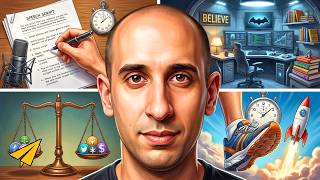
Evan Carmichael lays out five rules for ultimate freedom: practice relentlessly, balance work and life, design your environment, focus daily, and take action. He uses his own speaking evolution and stories from Tony Robbins and Jeff Bezos to show how customizing your approach to your audience and building a morning routine and "Power Hour" habit create real results.
Chapters
Practice gives you ultimate freedom. The more you practice, the better you get at something, the more skilled you are at it, the more information you have, the more it actually allows you to play more, have more fun, be more flexible, and have ultimately more freedom. This is something I struggled with a lot in the early days of my speaking career. I was asked to speak at a bunch of events, and I used to be so worried about disappointing people that I would memorize my entire speech and just memorize my speech to the point where word for word it would be the exact same thing every time. And I thought that was good. I thought that's what you're supposed to do. Obviously, yes, practice makes perfect. Keep going, keep practicing, keep doing it. What ended up happening was, yes, I delivered the same speech each time, but I think the worst thing you can do as a speaker is just give the exact same speech every time. Your job, if you're a speaker, is to give your audience a fantastic experience. And so it's knowing who's in the audience. Don't assume it's the same people every single time. So you have to be able to know so much about your subject that then you can have your framework that you operate in, but then give a lot more value to people by making it custom to them.
Wanna soar? Get a mentor. Hey, it's Nina Carmichael, and we made these videos. It's probably because you're the most ambitious person in your circle, but you know you're capable of more and you need that push by surrounding yourself with the best. So today let's learn from one of the best, my husband Evan Carmichael, and learn the simple steps to achieve ultimate freedom. Enjoy.
We did a session at Movement Makers around signature talk. It was one of the most voted topics, was how do I give my signature talk? And I think having one signature talk is actually not great. I think you should be able to, be able to speak to the audience every time. Your job, if you're a speaker, is to give your audience a fantastic experience. And so it's knowing who's in the audience. Don't assume it's the same people. Every single time, right? So you have to be able to know so much about your subject that then you can have your framework that you operate in, but then give a lot more value to people by making it custom to them. So now whenever I'm doing a speaking gig, I'm always asking, okay, tell me about the audience. Tell me who's here. Tell me why people are signing up. What are people here for? Both in terms of the information they're hoping to get as well as their background and their interests and their concerns and what they struggle with. And of course there's genuine human struggles that everybody goes through, but why are people here at this conference? And so here's my process right now when I'm doing a speech or talk. They're going to have me come in and they're going to talk about Believe or entrepreneurship or YouTube. There's going to be some set themes. You're not having me come to talk about my apple strudel recipe because I don't have one, right? I'm coming in and talking about things that are inside my domain. Perfect. And I can easily just get up on stage and talk, but I want to know who's in the audience. So before going, I'll ask them, tell me about the people who are going to be here. And then I'll frame my speech around a couple of key ideas that I think would be valuable to that audience. Still sitting within kind of my usual domain. Perfect. I'll practice it. I'll practice giving a speech. I'll practice the points. At home, I'll practice. I'll practice talking to my dog. I'll practice on the airplane on the way over. I'll practice to kind of get a sense of the stories that I want to tell that I think will be the right fit. But then the day before and the day of, I like to be there a little early to talk to people. One, makes me feel a little more comfortable, being able to connect to people in the audience. So it's not just people I don't know, but I've had a few conversations with people. But two, in feeling the vibe out of the event, I'll often end up switching up part of my talk again to make it as customizable as possible to the people I'm talking to. And this isn't just a speaking thing, guys. This is any interaction you're doing. You're trying to sell your product, trying to sell your service. You're on a call with somebody who could use your product or service, hire you as a coach, etc. You have to customize your pitch, customize your talk for them, not just give the same thing every single time you're talking to somebody. You have to know what makes them tick, know why they're talking to you, what their deep desires and fears are, and address those things so that you can close the sale. Right? It's the same thing. I'm just giving an example through speaking. So it's being willing to deviate from your talk to actually give more value. And I think again, the worst thing you can do as a speaker is just get on stage and give the same talk every single time. That's what I used to think was the way to go, but this is actually a lot more valuable because you can inspire people. But one, it becomes boring for you to get up and just do the same thing over and over and over again. And two, if you can customize it to actually address the thing that they're specifically concerned about, you're going to have a bigger impact. Why are you there? You're there to touch people. You're there to move people to a positive direction, right? Again, whether you're, whether you're speaking or you're just talking to somebody on the phone, a potential client, why are you working with them? Yes, they're going to pay you, but why? You want them to get a result. You want them to move. You want them to make a change. You want to solve a problem for them. And so the more you can actually connect to what they're struggling with, the easier it is for you to, to close the sale and have the impact that you're trying to have. So it's a lot more fun. It's a lot more impactful, a lot more meaningful. And so that's my usual process now. Why are people here? I'll prepare a version of my speech to address those people. And then it always changes up the day of because I met somebody in the lobby who inspired me, or I met somebody on the airplane the day before who shifted my thinking a little bit and gives me an extra story to tell. And when you're so prepared and you know your stuff so much, it's easy to add those things in. When you don't really know, you're kind of all over the place. So it's being overly prepared and then the day of being willing to be flexible. It's that like rigidity of practice and practice and practice and knowing what you're doing so much that allows you to play when you show up. It's the, you know, going to sports, you practice your free throws so much, you practice your penalty shots so much, you practice, you practice so much that allows you to be a lot more flexible and play. When it comes to game time. Let me share another quick example from the opposite side where I was interviewing somebody. So instead of being the person on stage speaking, I'm interviewing somebody. And I recently had Tony Robbins on the channel, and it's the third time he came on the channel. The first two interviews we did had 3 million views on them combined, which is amazing. And he's coming back for the third time to talk about his new book. And I'm always nervous before a big interview, and this is probably the least nervous I've been because it's the third time on, but I was still nervous going in. And so I'm preparing. I'm preparing and preparing and preparing. I'm trying to find a thread that I care about. I don't want to just ask the same questions everybody else has asked. I don't want to just use the questions that his PR agency sent over because he's going to answer those questions on every other show. I want it to be different and unique and fun and special. And so I prepared. I know I've got half an hour with him. I know he likes to go long in his stories. You don't get that many questions in, so I need to I need to really be careful of what I'm going to say and make this time count. It'd be easy just to show up and ask, okay, why did you write this book? What does it mean to you? What do you hope people get from it? What was your favorite part about it? And then half an hour is done and you haven't really asked anything super meaningful. So I'm preparing and I wrote down on a notepad file that I had open when I was talking to him, you know, 4 questions, 5 questions that I wanted to ask. And I practiced how I would ask him. I practiced, you know, what I was going to say. And then I practiced it so much that come game time, come showtime, here we go. Tony's coming on. Let's do our one-on-one. I was able to actually be present and listen to what he was saying and play ball with him, right? To throw and catch with him instead of just going to the questions. When you haven't prepared, and you're really insecure, you just go to the questions. You just go, okay, here's what I said. Okay, here. And just ask the questions. Where the best interviews are when you can throw and catch, right? Where they say something and you take that a little bit deeper as opposed to just moving on to the next question. Because I've watched a lot of interviews in the work that I do. And one of the things that I find most frustrating is the person says something amazing and you want them to— it's like, okay, ask a follow-up question. And instead of asking a follow-up question, They just go to the next question because the interviewer was never even listening to what the interviewee was saying. They're just so worried about getting the next question in that that's all they're thinking about. And so like, uh-huh, uh-huh, okay, great. And then tell me about this next question without going deeper into the conversation. So I didn't want to be that kind of interviewer. I get it because you're nervous, you're not fully prepared, you're worried about the questions. So one example with Tony, he was talking about a recent health scare that he had and that his career would be over. The doctor said, your career is over. And in my head, I was thinking about some of the other stuff I knew about Tony Robbins. And so I asked him, how many times have you been told that your career is over? It was off script, right? It wasn't something his team prepared. It wasn't something Tony's maybe been asked. And I asked him, how many times have you been told that your career has been over? Because I remember, you know, he had this tumor that made him grow crazy quickly, and people said his life would be over. I remember he burned out his voice box, and his doctors told him he'd never speak on stage again. And now this injury that happened to him, he wasn't gonna be able to go and do his events. So he's been told consistently that his career would be over. And yet he still gets up and he finds a way and he does it, right? And one of the things that we love about his ability to follow through and stay consistent. And so in the overpreparation and knowing his story and also knowing that I had questions to fall back on in case there was a lull in the conversation, it allows the play, it allows the freedom, it allows you to adjust to the situation, which then creates a much better experience. Experience. So whether you're speaking, whether you're interviewing, whether you're coaching, whether you're mentoring, whether you're on a sales call, you need to know your script. You need to know what you're going to say. You need to understand your customer and who you're talking to. You need to know all that and over-prepare. But then understand that the greatest asset that you have is not in rehearsing again the script. It's that you have the ability to be free now that you can play because you've done all the drills. And now you need to have the back and forth. It's throwing and catching. I'm going to throw the ball to you. You're going to catch it. You're going to throw the ball back to me. It's not just throwing where a lot of times the biggest mistake is that you're just throwing. You're just throwing another one and another one. And here's my other line. Here's my next question. Here's my next pitch. Throw, throw, throw, throw, throw. And the person might be saying, uh-huh, uh-huh, uh-huh. But there's no receiving and them throwing the ball back to you. That's the best part in any interaction. If you have a goal to get them to move forward, to make a change in their life, to sign you up, to hire you, to work with you so you can make that impact that you're trying to make, there has to be that back and forth. And the more prepared you are, the easier it is to then have the freedom to play.
Rule number 2: Find your own balance.
Most people suck at creating work-life balance or harmony because you're constantly comparing what you're doing to other people's schedules. Of all the things that you need to figure out in life, what balance means to you is among the most important. Jeff Bezos jokes about optimizing his toothbrushing routine because he's trying to maximize his efficiency, while Warren Buffett reads for 5 to 6 hours every day. You can't do both, and you need to stop comparing yourself to someone who you're not. It's crazy how much balance and scheduling comes up I think most people are lost. I think, again, the biggest problem is you're just comparing yourself to other people and then you don't know where to stand. You don't know what rock to stand on and so you feel like you're pulled in 1,000 different directions. When I went on my tour this year, and I'm sure it's gonna come up on the next one again, people kept asking, "What does balance mean to you? How do I find balance in my life?" And I used to joke, one of the funniest jokes that I told, and I'm not that funny, so this is one of the funny moments. Was when I was talking about The Rock, and The Rock has his routine where he's working out for 4 hours a day. He has to work out for 4 hours a day. And so when he's doing his movies, he wakes up 5 hours before he has to be on set, and he'll work out for his 4 hours, and he'll do 2 times cardio and 2 times weights, and then go to the, you know, go to his trailer, shower, and then head out to the movies. And he's only sleeping 4 to 5 hours a night when he's on set. I think that's crazy, but I don't look like The Rock. And that's when people would laugh because I don't look like The Rock. But it's true, people will try to take on The Rock's schedule, but you have other priorities. What The Rock values isn't the same thing as you value. There may be some overlap and some similarities, and there's nothing wrong with trying on the hat. There's nothing wrong with attempting to do it. There's nothing wrong with seeing how it fits, right? To get pieces to say, hey, I'm going to try meditating, I'm going to try I'm going to try making a video. I'm going to try morning pages. I'm going to— awesome, great, yes. But then to judge yourself to say, well, I'm not able to stay consistent on that, it's not what you should be doing because you want to work out 4 hours a day and you want to read 5 hours a day like Warren Buffett and you want to optimize your toothbrush routine like Jeff Bezos and you want to do all these different things, but it's too many hours in a day. What you have to figure out is how does balance look like for you? And then not be ashamed to go off and live it when everybody else thinks you're nuts. So how do you do it? I'm gonna give you a 3-step process that I think will help. Step number 1 is start to figure out what does balance, harmony look like for you, whatever you want to call it. Sit down, take some time, book off half the day. This is worth it. This is worth it. If it's a Saturday afternoon or Sunday morning, whenever you are the most free and creative, find a space that you love, whether it's walking out in nature or, or, you know, your desk at home or a coffee shop, library, something where you can just be by yourself, not have distractions, and really just ask yourself, what does a balanced life look like for you? What does harmony look like for you? Because you don't want to spend all day at work. You don't. And you don't want to spend all day with your family either. You don't. You don't want to spend all day doing anything. But what's that ratio look like? You don't want to spend all day sleeping. What's that ratio between how much time sleeping, how much time with your family, how much time on your hobbies, how much time with your friends, how much time at work? What does that ratio look like for you? And you may get a weird duck answer, like it may not fit into society's norms. That's okay, right? It starts with you understanding this is what I need for my life, having clarity and having certainty around it so that when other people judge you for your crazy schedule, say, this is what I need. This is what I need. Remember, the people who are judging you are all insecure about their own life and their own schedule too. So don't worry about it. Go live your life. Spend the half day, maybe do it right now if you have some ideas already. What does balance or harmony look like for you? Number 2 is map your actions to your ambitions. Okay, great. Now that you've set out what a, what a perfectly balanced life looks like for you, what you got to do it. You show me in your calendar where you're actually doing it. I live my life by different days. So Monday's my mentoring day, Tuesday's my YouTube day, Wednesday's my project day, Thursday's my public-facing day, Friday's my CEO day, Saturday is fun day with the family, and Sunday is family at midday, Costco and shopping and groceries and laundry and all that stuff, right? And that's how most of the time I live my life. When I'm on tour, when I'm doing trips or something, speaking, then it gets a little bit more chaotic, but then it returns back to normal because that's what balance, harmony looks like for me. That may be crazy for you. That may be crazy for you. If you look at my Thursdays, it's back to back to back meetings. I might have I might have 10 or 15 meetings back to back to back to back to back with like 2, 3, 4 minute breaks in between. That's it all day long from 9 in the morning until sometimes 11 at night. I love it. It's great. And then on Wednesday, look at my calendar, it's open, nothing, white space to work on whatever I want to work on. Because if I'm doing my book or I'm working on my course or I'm doing some creative work, I like having the entire day wide open. Important for me to do it. So I don't book meetings on a Wednesday. I don't talk to my team on a Wednesday. I don't make videos on a Wednesday. I do my project work on a Wednesday, right? That's what I love doing. And so that works for me. That may be the worst thing of all time for you. Awesome. But my actions map to my ambitions. If I set out what does balance look like for me, this is it. I'm living it. Just like Saturday is fun day. Don't message me on a Saturday. You're not going to get a response. I'm spending the day with my wife. I'm planning surprises for her. I'm taking her to a new restaurant. We're planning some kind of activities to do together. So we do on Saturdays, right? That's my version of balance. But at the same time, during the week, my wife and I, we work together, so I see her a lot, but we don't start hanging out at night until 8 o'clock, right? That may seem crazy for you, but then we have all of Saturday completely shut down to work on things together, fun things. And then Sunday, the whole day to do what is actually family work, right? That works for us. It works for me, it works for her, it works for us. It may be the worst thing of all time for you. Maybe you do want to spend 3 hours a day cuddling with your husband or wife. Awesome, put it in. I'm not judging you. Put it in, go do it. If that's what leads you to be happy, balanced, and you bring the best of you everywhere you go, then you do it. You created your version of balance. Now you need to map your actions to your ambitions and put it in your calendar and stick to to it. And then step number 3 is follow the Quincy Jones rule. Quincy Jones, legendary music producer, once said, "Not one ounce of my self-worth comes from your opinion of me." And I really love that because I think so often we play small based off of other people's opinions and expectations of you. All these other people with low standards who hate their lives are judging you, and you now live your life by their low standards. Somebody who hates their life They're just on the edge of depression, or maybe they're already there, and they're judging you. And these are the people whose opinions you care so much about. Not one ounce of my self-worth comes from your opinion of me. That doesn't have to be something you say out loud to them. That might cause some problems. But in your own head, in your own head, right? Their opinion doesn't mean anything to you. If somebody looks at your calendar and you're cuddling your husband and wife for 3 hours a day, And that's what you need. Awesome. Embrace it. This is who I am. I'm crushing it. What are you doing? Are you happy with your life? Right? Follow the Quincy Jones rule. Also, to make sure you're actually taking action after watching this video, I've designed a special free worksheet just for this video. The worksheet will highlight all of the lessons learned in this video, as well as pull out our 3 favorite learnings and quotes that will inspire you to to actually do something, the worksheet will also give you space to write down what your key takeaways are and your specific plan of action to make sure you're getting results. If you want the worksheet designed specifically for this video, absolutely for free, there's a link in the description below. Go click on it and start building the momentum in your life and your business. I'll see you there.
Rule number 3, raise your environment.
Your environment has been perfectly created to keep you exactly where you are. Everything around you, your friends, your family, the media you consume, all keeps you exactly where you are. If you want to raise your standards and raise the quality of your life, it starts with raising your environment. So here's a story I haven't told in a while. When I was building up my YouTube channel and I closed my first multi-year deal with a big brand, it was with a CEO, high-powered CEO, one of the largest companies in the world, especially in the entrepreneur space. And it was going to be me and him on my channel every month answering questions from you guys, from the audience. We did a live stream every month. And it wasn't me interviewing him or him interviewing me. It was both of us talking about a certain topic and then taking questions. And I remember driving with my dad. He was getting a new car and we had this long drive out. For whatever reason, the place that we wanted to buy the car was super far away. And so it gave us this chance to talk. Talk in the car, and I just told him about this new deal that I had signed. I remember him asking me, Evan, what gives you the confidence to feel like you're on the same level as this guy? And he didn't mean it in a, in a negative way. It was, it was in a more awestruck way. It's like, man, look at where you've come from. Because my family is very humble. Like, you have to be very humble. You have to appreciate what you've got. And so how am I now? How do I see myself on the same stage as his high-powered CEO, being his equal, answering questions. And the question took me aback, and I thought, you know what, he's right. I mean, if this was Evan of 5 years prior, I would have felt not worthy. I would have felt like I couldn't do it. I would have felt like this is too big an opportunity for me, like I couldn't be the guy to do it. So what changed 5 years ago to where I was at that point? It was my content. It was my channel. It was all the videos that I'm, I'm putting up because because in my head it was a big deal in that this is the largest deal I had signed for 3 years, but more that I'm around Oprah every day and, and Dan Peña every day and Kanye West every day and all these people every day. And so I feel like I'm with them. And, and so this CEO deal wasn't that huge a deal because I changed my environment. Right? I'd raise the stakes in my environment and that raises your standards. And so I realized, man, this is crazy how important my channel is to myself, at least to my own growth. If it's not to you, at least to my own growth. Because you often can't see it on a daily basis. I could not pinpoint the one video I uploaded or the one day that I felt, this is it, it's happened. But if I look back over a 5-year period, a 1-year period, a 6-month period, even a 3-month period, Think about who you were 3 months ago. If you're invested in yourself by watching these videos or reading books or anything else, if you're investing in yourself, even just look 3 months back and think, have I grown? How much have you grown in the past 3 months? You may not see it on a daily basis, but with months and then more months and then more months and then years, if you keep on the path, you'll see some tremendous results. May not even recognize the person who you used to be. And that's why it's so important that you raise your environment. I'm going to give you 3 ways that you can actually do it. Step number 1 is chart your start. And this is the importance of having a morning routine. This is what most people don't get. Everybody wakes up the same. I wake up the same, Dan Peña wakes up the same, Bill Gates wakes up the same, Oprah, everybody wakes up the same. The difference is in the habits that set them up for success. The difference is that most of America wakes up like an accident and you pull out your phone and you're just responding to the emergencies, other people's emergencies. Other people's demands for your time. That's what most people do. You wake up like an accident. More important is to chart your start, having a morning routine that sets you up for success. What is the thing that makes you soar? What is the thing that makes you feel bold, confident, alive? And then put that into your morning routine every single day. If you woke up and did the thing with intention that made you feel bold, confident, unstoppable, alive, you did it every day, I guarantee you a year from now you're gonna look back and be a totally different person. Chart your start with your morning routine. Step number 2 is build your Batcave. I'm a big believer in that the physical environment matters too. So it's not just about the habits and routines, it's the physical environment. It's, it's what you wear. I feel like Batman putting this on. It's the expression that you have. It's the physical environment that you have. It's what's on the background of your cell phone and your screen, right? All of these things make me feel like a superstar. It's been designed with intention. Do it for yourself. This office might not be for you. You might walk in here and say, "That sucks. I hate all of it." Great, it's not your office. People often write to me though and say, "Hey, can we— can I buy the pictures that are behind you?" Well, they're not for sale, but like, this is me when I'm 8 or 9 with my parents. You want that picture hanging on your wall? You know, like, build the thing that gets you feeling bold, confident, unstoppable, alive. These people all mean something to me. The Doritos bag means something to to me. The awards here mean something to me. Even standing up on a standing desk, all of it's been designed. I built my Batcave. You're a superhero too. Build your Batcave so that when you walk into your office, when you go into the environment that you can control, it's inspiring, it's uplifting, reminds you of who you want to be. And step number 3 is to use the words, "Tell me I suck." This is one of the greatest lessons that I learned in my life is whenever I'm going to I talk to somebody who I think can teach me, to somebody who I, I'm gonna meet face to face or on the phone or email that I think can help me in some way, I'll start by saying, tell me why I suck. Tell me why I suck. Tell me why I'm the worst. And the answer that always comes back is, well, you don't suck, but if you did these 3 things, you'll get better. So why lead with the tell me I suck? It's not because I'm, I'm, I like pain. It's because it gives permission to that person to be honest. Because most people can't handle the truth. And so when there's advice coming to you, most people will hedge it. They'll hedge the truth. They'll tell you a really soft version of it because they don't want to hurt you. They don't want to offend you. They don't want your feelings to be bruised. And so when you lead with, "Tell me I suck," what it does is gives them permission to be honest because the only way you grow is through the honest feedback. And so the next time you meet someone, to somebody who can help you with something, whether it's your YouTube channel, your speaking career, your next book, you're giving them your manuscript, your painting, whatever idea you have next, tell them, tell me why I suck, tell me why this is the worst thing of all time, let me know, be honest. And that permission for them to be honest will give you the truth that you need to get better.
Rule number 4, get focused.
If you are not focused on your goals, you either don't want them or you are afraid of them. You might just not want to do them, you might be in the wrong thing. You might have picked the wrong goals for the wrong reasons. Or you're afraid of your goals. You're afraid of failing. You're afraid of it not working out and what that means. Either way, the answer is action. If you don't love it, move on immediately. And if you're afraid of it, move into it immediately. Focused action is always the answer. So one of the entrepreneurs that I've invested into, his name is Alex. He helps me run Dance Salsa, which is the largest salsa dance school in Canada, maybe North America. And we're sitting down reviewing his goals and reviewing his habits and making sure that, you know, what he said he was going to do matches to him accomplishing his goals. And there were a couple things that were big things on the list that he had to get done, and he was afraid of making a mistake. So for example, we're trying to create the interior of the studio and make a wall that speaks to the purpose of the company, speaks to the, the the mission, the vision, what we're trying to accomplish, and we want to have something beautiful that people want to take their pictures on. And he's so afraid of getting it right. He's so afraid of doing the wrong thing that he does nothing. And every time he opens up the file to look at what he wants to do and different ideas, he's afraid he's going to make a mistake. He's afraid he's going to invest time, energy, dollars, my money into something that then when people show up, say, "Huh?" and it doesn't work out. He's so afraid to fail that he doesn't take action, which becomes the biggest failure of all. So here was our solution: procrastination power hour. I said every day, PPH, put it into your calendar for 1 hour. This is your PPH time. The thing that you have been procrastinated on, right? The thing that serves the business. If you've been procrastinating on it and you don't like it and it doesn't serve the business, great, get rid of it. That's not what we're talking about. It's the things that you're afraid of. The things that you don't want to make a mistake on that you're just pushing aside because there's all this busy work that comes in. Because yes, we have to respond to customers, and yes, we've got to do all the work that goes into the day-to-day of running the company. But if you're so focused on just the day-to-day and never focus on the things that will actually help you grow, the bigger picture stuff, then guess what happens? You never do the bigger picture stuff, especially if it's because you're afraid. Then you have to take action. So we planned a daily procrastination power hour that if puts into his calendar and he looks at it. When he gets there, he thinks, what am I procrastinating the most on? And he's got this list and he starts attacking it. And having that in his calendar is the thing that actually started building momentum for those big projects. So I've got a 3-step process you can use to stay more focused and get your work done. Let's do it. Step number 1 is plan your procrastination power hour. You have to put in your calendar. If it's not in your calendar, it's not going to get done. If you're just hoping that one day you, you magically get get yourself, it's not gonna happen. The things that you've been procrastinated on, the things that you're afraid to do, the things that will actually move the company forward that you've been sitting on, you have to put in your calendar. You've been procrastinating, it's not acceptable anymore, it's time to move on. 1 hour every day dedicated, put it in procrastination power hour and then make a list of all the things you've been procrastinated on and that's the only thing you're allowed to work on in that hour. Don't check Facebook, don't check your Instagram, Don't be answering phone calls, no interviews. Maybe you take a couple losses for your business. That's okay because you focus on something big that will catapult the company forward. Plan your procrastination power hour. Step number 2 is map your actions to your ambitions. So your actions have to map to your ambitions. What, what you say you want to do, what you say you want to accomplish, these goals, this vision, this great big thing that you have that I know you have because you're purpose-driven. That's why you're watching this channel. You You want to accomplish big things and have a big impact on the world. Great. What you say you want— are you doing the steps? Look at your calendar, pull it up, load it up. Take out your phone, pause this video and load it up and see what are you doing the next week. How are you going to spend the next 7 days? Look at the tasks that you've assigned to yourself, the meetings you're going to have, where you're going to be blocking your time, what you're spending that valuable time you have on. Do your actions map to your ambitions? If you did the things that you say are in your calendar for the next week? Will that help you move closer to your goals? Success is habits. Success is what you consistently do. You are what you consistently do. Now, what happens in these one-off moments? You could watch a video, get all amped up and motivated and be on fire and work, but then you fall back to regular life. That's not going to move the needle for your business. It's what you do consistently. So every week it's looking at that calendar and saying, if I did this stuff, if I did these tasks, if I accomplished these I will move closer to achieving the life that I want and accomplishing the goals that I've set for myself. Your actions have to map to your ambitions. And step number 3 is chart your start. This is having a powerful morning routine that sets you up for success. I go through 5 S's every morning. The most important one is the third one, which is sore, where I want to do the thing every day that makes me sore, that makes me feel like the work I do matters, that the thing that I do has meaning and value. Because I could have the greatest day of all time and Maybe I'm meeting an entrepreneur and it's just, it fills me up knowing that I helped them, but then I wake up tomorrow and it's like I'm starting over. Every day it feels like I'm starting over. And so you need that injection daily and ideally first thing in the morning. So whatever the thing is for you, whether it's watching these videos, amazing, I have one for you every morning. If it's the 254 series that I have around confidence or self-love or motivational speakers, all of that, great, go sign up, it's free, you get it to your inbox at 5 AM Eastern I think every morning. If it's reading a book or listening to a podcast or doing an act of service and, and buy the coffee for the person behind you in line every day, whatever the thing is that makes you soar, soar like you're bold, confident, alive, capable of doing great things. When you believe in yourself that you can do something amazing, that's what I'm talking about. Making that consistent and putting into your morning routine. Because if you woke up every morning and did the thing that made you feel unstoppable, bold, confident, man, I guarantee your life is going to look dramatically different 6 months, 12 months, 18 months down the line. You won't even recognize the person who you used to be, but you have to demand it from yourself by putting it into your morning routine. Chart your start.
Rule number 5, the last one before our very special bonus clip: take action.
The law of attraction definitely works. Most people just get it wrong. Most people only focus on the thinking part and not the most important part, which is the action, right? Law of attraction— it's the last 5 letters that matter. A-C-T-I-O. A-C-T-I-O-N. 6. The last 6 letters that matter. Action, action, action. Thinking about it alone is not enough. So it's the 2 parts. You get an idea, you want something into your life, you want to manifest something amazing, you want success in your business, you want a happy relationship, awesome, you want to speak on giant stages, whatever the thing is that you want in life. Awesome. You have a vision board. Amazing. Just the fact that you're thinking about it and believing in it is already a big step ahead of where most people are. Most people live in a negative zone. Most people feel like their life is hopeless, that they can't make a change, that they're stuck where they are. And guess what happens? They stay exactly stuck where they are, right? What you focus on ends up becoming your reality. So yes, you're gonna focus on your new goal, your new habit, the new thing that you want into your life. Amazing. You believe that it's possible. Amazing. You're putting up a vision board with it on your wall. Amazing. You're researching and watching videos like this every day. Amazing. That's great. That's the first starting point, but nothing happens until you take action. Nothing happens until you take action. Thinking alone is not enough. Again, it puts you ahead of most of the, most of the world, puts you way ahead of them, but you're still just gonna be this super smart, super ambitious person sitting at home not achieving your goals. You have to do something. I look at my YouTube channel as an example. My main channel, I want to get to 10 million subscribers. That's my next goal, right? We hit 1, we hit 2, I gotta hit 10. At the rate that we're growing, it's not fast enough. Like, it's gonna take me way too many years to make it happen, so I need to apply more pressure against it. So part of what I look at every day now in my morning routine is I want to hit my goal. I want to get 10 10 million subscribers on my YouTube channel, right? I want to be, you know, one of the first thought leaders, experts, business person to have 10 million subscribers on a YouTube channel. It's my next goal. Great. Writing that down every day doesn't make sure that it's going to happen. What am I doing, right? Writing it down can lead to thoughts that then lead to action, but what am I actually doing? Well, I'll tell you what I'm doing now. One of the biggest things I'm working on now, big new initiative for my team is I've got 6,000 public videos on my main channel, and I told my team this week I want to go back and update all of the thumbnails and all of the titles across all my videos. That's a lot of videos, right? That's 6,000 videos. Imagine doing split tests on all of those videos. I asked for 10 a day, and so 2 key people on my team are working together to come up with what the title is going to be, and then the other one's doing the graphic design design to create the thumbnails. Maybe it works the first time, maybe it doesn't. And it's a big ambitious project if you think about it. We got 6,000 videos, 10 videos a day. You know, in a year, if we did it for 10 videos every day, we're just over half of those videos, assuming that they all work out, which they won't. So this is our test, and if it works, awesome. I might have that become somebody's full-time job so that we can do 20 split tests a day, 40 split tests a day, 100 best guess would be today. I don't know, but it's happening through action, right? So it starts with the idea. If you have the idea but you're not taking action, you won't get results. If you just have the action but you have no idea, you're running around like a chicken with your head cut off. You're going in circles without any clear direction. Most people think too much and don't do enough. That's most people. Some people do too much and don't think enough. Some people need more planning. But in general, most people are over-planners. And so watching this video alone is not enough. It's a great start. It might boost your motivation. It might give you an idea to go off and try. Watching my content, watching Dan Lok's content alone is not enough. It's the essential first piece of the ingredient. It's, it's essential. Surround yourself with people who build you up, who make you believe, who give you ideas you can act on that allow you to feel like your goals are, are possible, that your dreams are within reach, is super important. I do it every day. It's why I create all these channels. I think you should too. You'll notice a difference in how you think every single day if you are creating content and consuming content that builds you up. But then you still have to go take the second step. It's why after every video I have a question of the day, or I have a 3-point landing question, because I want you to take action. You need to teach yourself that after every video you watch, after every podcast you listen to, after every book that you read, that that's not enough. You have to do something about it. I'd rather you watch fewer videos, read fewer books, listen to fewer podcasts, consume less if you're taking action on the ideas that come to you. Because most people are just professional consumers, and it's great that you're consuming educational content because most people are just consuming stupid content, right? You hate your life, so you go watch Netflix all day when you get home for 5 hours and then go to sleep, right? You're a professional consumer, but you're consuming, uh, wasteful content, just entertaining content. So you've already taken a step above, right? You're consuming educational content. That's the next step. You're consuming educational content. Amazing. But still, that alone is not enough. What separates the people go off and achieve their dreams from the ones who just have things on a vision board is that last step of taking action. So you're not allowed anymore— your new standards, you're raising your standards for yourself— you are not allowed anymore to watch a video, to read a book, to listen to a podcast, to consume anything without taking some kind of immediate action towards it. Immediate action. Immediate action. It may not be the big thing. If you want to hit a million subscribers on your YouTube I want to grow my YouTube channel. Great. What's the immediate action? Film a video today. Make an improvement to your thumbnail today. Reach out for an interview for someone today, right? Immediate action. Teach yourself that as soon as you get an idea, you do something about it because that's the only thing that you're missing. The only thing that you're missing is momentum. If you're watching this channel, you believe in your talent. You know you're capable of more. You've got big goals, big ambitions, big dreams for yourself. The only thing you're missing is momentum. So to activate the law of attraction, pay attention to the last 6 letters: action. And start doing something about it. When did you decide that your dreams shouldn't be big? When did you decide that you shouldn't tell anyone else about your dreams? Until you own your dreams and stop making yourself feel small, those dreams will never happen. Never. Now this is something everybody struggles with. Everybody, myself, Mel, everybody. We're worried about playing a bigger game. We're worried about thinking bigger for ourselves, and we're worried about telling other people because what if it doesn't work out? What if we don't make it? What's that judgment gonna come? How are they gonna think about us? And so I think about my own story when I'm trying to create. The biggest fight that I used to get into with my agent Steve was he says, Evan, you need to be a household name. You need to be famous. Like, Steve, I don't want to be famous. I equated famous to ego. If you're famous, then you're this big egomaniac. I don't want to be an egomaniac. It's not about me. It's about spreading belief. I'm nervous getting in front of the camera. Even before filming this video, I'm nervous. Like, I want it to do well. The lights come on. I don't crave it. I don't crave attention. I'm an introvert. I like just doing my thing. Evan, you need to get famous. Why, Steve? Why do I need to get famous? And for maybe 2 years we fought over this because I kept equating fame with ego. And I looked at the people who were famous and like, I don't want to be like them. And there's a lot that they did that, that bothered me, and I wanted to do it a different way. And that's the key. It's finding the different way to do it. How does an introvert on a mission become famous? I don't know. We're gonna go on this journey together and hopefully find out. What finally clicked for me was him saying, when you get famous, your mission will spread. If you start tying actions to mission, that's how you get me to move. For other people, it might be, hey, I'll give you all this money if you do this, or you'll have the fame or credibility or have statues built. I don't need statues built of me. But as soon as you tie it to mission and service, That gets me going. So he said, if you actually want to fulfill your mission, if you say you want to spread belief, then you need to get famous, because the more people know about you, the more people will hear your message. And it finally, it finally stuck. Like, okay, I gotta do it. I don't know how to do it. I've never, I've never tried to do it. I've always wanted to be behind the spotlight, and so now Now this is part of my mission. I need to become a household name and get famous so that more people can believe in themselves. If I actually want to solve the world's biggest problem, then I need to be out there doing it. I need to believe in myself more. If I'm trying to spread belief, I need to believe in myself more too. And so I think that's a human condition. That's part of what we want to do. You want to step outside your comfort zone. You want to serve. Humans are built to serve. We are. We are built to serve. But service requires helping other people, and because we're afraid of judgment, you don't want to do it. So you've got your foot on the gas and the brake at the same time. You want to help people, but you're worried about their judgment, so you don't do anything. You know you're capable of more. You know you're capable of more, but you don't do it because you're afraid. And so I'm going to give you a 3-step process that really helped me, that's worked for me, that I hope can work for you too, because I want to see that genius that you've got inside you explode. Out into the world. Step number 1 is believing that you have Michael Jordan-level talent. This is something that I say a lot, and it's something that I believe in myself as well. I need to remind myself of it, that I have Michael Jordan-level talent at something. You have Michael Jordan-level talent at something. You are worthy. You are talented. You're a genius. You're amazing. Remember that. And just because you don't see it and where you're at right now doesn't mean that you can't become great. There's a famous quote that I'm probably gonna botch by Albert Einstein who's basically saying that if you try to judge a fish by its ability to climb a tree, you'd think it's an idiot. And that's what most people are doing. They're fish trying to be forced to climb a tree where you should swim. You can swim, right? You know inside you that you have amazing talent and it's just believing in that a little bit more. but you can be Michael Jordan at something. Step number 2 is I remind myself of the Quincy Jones rule. And the Quincy Jones rule is one of my favorite clips of all time on my channel, is where he said, not one drop of my self-worth depends on your acceptance of me. And whenever I'm worried, whenever I'm thinking about how people see this or judge me, I remind myself of that, the Quincy Jones rule. Not one ounce of My self-worth, not one drop, comes from your acceptance of me. And just having that as a reminder when you're afraid, when you're about to make a video, when you're about to write your book, when you're about to get on stage, when you're about to tell somebody about your idea, when you're at a networking event and somebody asks you what you do and you feel small and you want to play small, just use it in that moment. Remind yourself of the Quincy Jones rule. I'm going to speak my truth. And not one ounce of my self-worth comes from your acceptance of me. And then step number 3 is the boom boom boom test, and that's where when your heart's going boom boom boom, right? Your heart's going boom boom boom, you're scared, you're nervous, you're afraid, you have to do it. It's a sign that you're actually on the right path 98% of the time, right? That 2% is when you're about to jump out of an airplane and you don't have a parachute. Okay, great, don't do that. That's crazy, right? Don't be stupid. But most of the things you're afraid of is not actually physical harm. We don't live in a society where you're constantly in danger, right? If it's physical harm and danger, okay, maybe you want to take the safer route. But most of the things we're afraid of are judgment, are people's opinions, are expectations. That's what you're really afraid of. And so when you're about to do something and your heart's going like this, or when you're thinking of something or someone suggests something to you, "Hey, what do you think about this?" and your heart's heart's going like this, that's a sign to go. That's not a sign to think. That's not a sign to think. When your heart is going boom boom boom, the boom boom boom test is not a time to think because you're gonna think your way down from the big idea. Your brain is designed to protect you. It understands the world that currently exists, so it's going to use logic as to why you should take the safer path. You have to step into it even if you fail. Even if it doesn't work out, because you want to teach yourself that you do difficult things. And so the next time your heart's going boom, boom, boom, boom, boom, when an idea comes from your own head or from somebody pitching you something, if your heart's going boom, boom, boom, you do it. It's a sign to go. Because you made it this far in the video, I want to celebrate you. Most people start and don't finish. Most people never actually follow through. Most people say they want something, but they don't ever do the work to actually get it. But you are different. You are special. Believe Nation, you made it here all the way to the end, and I love you. So as a special celebration, if you put a hashtag #believe down in the comments below on this video, I will showcase you and celebrate you somewhere on the screen in a few future video because you are awesome.
And if you want to watch Evan's top 10 rules for success, check out the video next to me. I think you can enjoy. Continue to believe. I will see you there.
There's a lot of talk in the creator community now about burnout. You know, people one year in on their career and they're burning out. It's like, well, I've been doing this for 14 years and haven't burnt out yet. I still love the process of doing the thing. So what is work?
More from Evan


How the Biggest Mistake in History Created A Trillion-Dollar Empire | Sergey Brin



9 Machiavelli Principles That Force People To Respect You | Machiavellian Philosophy



The First 10 Words That Instantly Ruin A Sales Conversation | Vanessa Van Edwards

The Top 1% Mindset Behind The First $5 Trillion Company | Jensen Huang (Nvidia)

