Wayne Dyer's 10 Rules for Living a Life of Meaning and Fulfillment
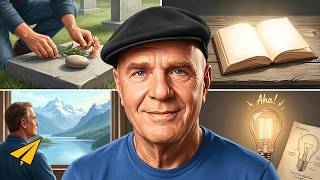
Wayne Dyer's ten rules for meaningful living, from creative visualization and forgiveness to releasing your past and shifting from ego toward service. He argues imagination outweighs knowledge, pain teaches, and thinking small leads to greatness.
Chapters
He was a philosopher, self-help author, and motivational speaker. His first book, Your Erroneous Zones, is one of the best-selling books of all time. His message resonated with many in the New Thought movement and beyond. He's Wayne Dyer, and here's my take on his Top 10 Rules for Success, Volume 2. Rule number 3 is my personal favorite, and I'd love to know which one you guys like the best. And as always, as you're watching, if you hear something that really resonates with you, please leave it in the comments below. Put quotes around it so other people can be inspired as well. And when you write it down, it's much more likely to stick stick with you as well.
Enjoy.
Creative visualization is what we're talking about here.
You—
the imagery, or the image that you have of anything in your life, is really like mental behavior. It's like going out and practicing. If you go out and practice with a basketball, shooting, uh, free throws over and over again, that's physical practice. Imagery is mental practice. It's mental behavior. When you have an image that you can succeed at some— at something, when you have an image that you can do it rather than that you can't do it, when you get into your car and you have an image that you're going to find a parking place rather than that there'll be no place to park, so you're not looking for no place to park, you will start acting on the image that you have very much like you will start acting on the practice that you have when you're shooting baskets or when you're hitting a forehand or, or working on your soup or anything else that you're doing.
The telling moment of my life occurred on the 30th of August, 1974, when I went to my father's grave after finding out he had been dead for 10 years. And I went there with a different intention on what I was gonna do on his grave. I was so filled with rage and anger and hatred toward this man. But rather than do what I had gone there to do, something, some invisible divine organizing intelligence that moves the planets and grows your fingernails and beats your heart, that commander in the command center to which you are always connected, your I Am Presence, if you will, called me back to his grave after I cursed him for 2 hours on that Friday afternoon. And I stood there and I said, "From this moment on, I send you love. Who am I? Who am I to judge you? You did what you knew how to do, given the conditions of your life." And when I left that gravesite, I was a completely changed man. Alcohol hasn't touched my lips since that day. I walked away from it. I got myself into the best shape of my life. I began running and relationships began to change. The right people, the right woman came into my life. My children began to appear. Because when you advance confidently in the direction of your own dreams, and endeavor to live the life which you have imagined, you will meet with a success unexpected in common hours. Everything about my life changed. My writing took on a whole different flavor.
Before, I was stuck.
I checked into a motel room, the Spindrift Motel on A1A in Fort Lauderdale, Florida, and I wrote a book that today has over 100 million copies in print in 47 languages. Called your erroneous zones. It came because the rage was gone. Mark Twain once said that forgiveness is the fragrance that the violet sheds on the heel that has crushed it. That's divine love.
My friend Byron Katie says that To believe that you need what you don't have is the definition of insanity. To believe that you need what you don't have because you're already here. So you've already proven that you don't need it. So to go around believing that I can't be happy, fulfilled, you know, whatever it is, unless I get the stuff that I don't already have, it's a complete and total illusion. It's a thought that isn't even true. There's no truth to it whatsoever. You don't need anything. And when you get that, the irony is you're no longer attached. Your total life is about— it's just about living those virtues. How can I serve? How can I be sincere? How can I be gentle? How can I be supportive? And thinking like that— and that's how I think now— and because of that, I'm in meaning. And being in meaning, the times that I was in Ambition, you know, is delivering more and more and more and more of what I wanted so much then. And now that I'm not attached to it, it's like I can just be like the cat. I can just go about my business and just let it follow after me wherever I go. So what I say to people who really want to access the transition from, you know, from ambition to meaning, if they really want to access it, is to get your thoughts off of yourself. I do it on the radio every, every Monday. I mean, it's like all, all my questions, you know, all the questions are about why can't I manifest this? Why can't I have that? This isn't working. And so on. And my response back to them all the time over and over again is, uh, take what it is that you would really like to attract into your life, whatever it is, whether it's wealth, a job, you know, money, a nice watch, a new car, whatever it is, and want it more for somebody else than you want it for yourself. Just want it more. Just think about that and think about how much joy it would give you to be able to put your attention on that. And just keep your thoughts on that. You know, take your thoughts off of yourself and start living the 4 virtues. Start being sincere. Start being supportive. You know, start having this reverence for their life and so on. And just shift off of what's in it for me, you know, and how much am I going to get, and why isn't it here fast enough, and how much— why is there shinier than mine, and, you know, and so on. Off of that, and begin to project that and do that. I don't care whether you're a schoolteacher, it doesn't— I don't care if you're a dental hygienist or if you're a carpenter or, you know, whatever it is out there that you are doing. If you can take your attention, if you want the door to open, If you want the door to open to meaning, then the only way that door is going to open is if you understand that you have to leave your attachment to this grossly world of the material things and what's in it for me and how much am I getting and shift your energy, your thoughts onto how may I offer, how may I serve.
And I just had to do, I just did a public television special, another public television special. And when I got an hour and a half before the show to start, I was in like one of these attacks again in the neck, and I was just like, you know, how am I gonna get through this thing and so on. And I said a prayer. My wife was there, two of my girls were there, we were in the room, I had my arms around them, and I said, if I'm supposed to endure this pain, you know, for whatever reason that I don't even understand yet, I'm willing to do it, but could I please just have the next couple of hours so that I could at least get through this experience. And it just dissolved. And I was able— you were there, you were in the audience— and I was able to go out there and do it. And then the pain returned the next day, and I went right back to that state. And I still do it now, and I can feel it even now as we're talking about it a little bit here. And instead of cursing it, instead of being angry at it, I accept it as my dharma. This is, you know, and whatever it is that I have to learn from it, generally speaking, Every difficulty I've had in my life, getting divorced, literally being someone who is addicted to substances including alcohol, letting go of those kinds of beliefs that those are terrible things that I should be ashamed of, they've been amongst my greatest teachers. And this pain is just another one of those things. And generally speaking, I now can go out and help people who live in chronic pain. And you do a lot of this with your tapping. I've seen you do it on stage with people. In fact, when we were out in Australia, that one woman, what was it, she couldn't even—
Well, there's one lady with a frozen shoulder who couldn't move her arm.
Who hadn't been able to move her arm in years.
In 20 minutes she got it up like that.
And that comes from just accepting yourself and actually instead of cursing the pain, because when you curse the pain and get angry at it, you just get angry. Every cell of your being goes through that same anger, and what you want to do is Just get to that peaceful place within yourself where you say, you know, when you trust in yourself, when you trust in yourself, you're really trusting in the wisdom that created you, you know. And the wisdom that created you is infinite and it's formless. And so, so your thoughts are in that same category. Have thoughts that are aligned with that divine, that divine presence. Yeah, you'll see it going away.
The obscure outlasts the obvious.
Try to become a little more obscure, a little less interfering, a little less notice me, a little less, you know, one of the specific kinds of things that you can do is just as you're about, when somebody else is talking, just as you're about to interject what you've been thinking about for the whole time, waiting for them to stop talking, just as you to just stop and to bite your tongue and say, tell me more. Or that's very interesting.
I have never heard that point of view before.
Even if they totally completely disagree with everything that you stand for, to be willing to listen, to be able to stop. Practice it. I practiced it when I did these verses of the Tao. I practiced it every single day while I was working on that, just staying obscure. And for me, that's not always so easy because of just being recognized wherever I go. And if I saw someone was about to recognize me, I would just put my head down.
I would just walk a little bit past them like something.
Right now, I just want to be anonymous.
Right now, I want to be obscure.
All things are possible. And I always ask an audience, "What does that leave out?" You know, that all things are possible literally means all things are possible. So whatever it is you'd like to attract into your life, whatever you'd like to accomplish, whatever you'd like to do in your life, if you start from a spiritual place, a place of all things are possible, if I return, you know, and get to that place, and then I begin to visualize it, and I begin to use my imagination, because Everything that we see around us, everything in this world was once imagined. Everything. You know, that camera that is there, the clothes that you're wearing, the chairs that we're sitting on, everything once had to be imagined. If you get that, I mean, Einstein's famous observation was that, you know, imagination is more important than knowledge. If you can learn how important your imagination is, and that's where your spirit is, in that place. And then once you go to that place in what it is you'd like to attract into your life, you're coming from a spiritual place. Place, absolutely nothing is impossible.
It was Thomas Troward, I don't know, he did some lectures on mental science way back in the, uh, 1907, 1908. He was from Scotland. And one of the things that he said is that the law of flotation was not discovered by the contemplation of the sinking of things. Um, so that, you know, like before the 15th and 16th centuries, all of the ships were made out of wood. Uh, not because iron wasn't available and steel wasn't available, but because there was a belief that wood floated. So therefore you had to make ships out of things that floated. That's literally how the— and then someone came along and said that it has absolutely nothing to do with what things are made out of. It has to do with the amount of water that is being dispersed. That's, that's what determines whether something will float or not. And I think about that all the time because it's, it's in the contemplation of what you desire that you create what it is that you want to have for yourself. It's in your willingness to contemplate it and nothing more according to Troward and mental science. So that I think about the Wright brothers, you know, 100 or so years ago, you know, it's like, and I said the law of flying was not discovered by the contemplation of the staying on the ground of things. So that these were two people Like for me to figure out how to get an airplane to fly, in my limited knowledge of all of that, I would probably have contemplated the staying on the ground of things. You know, like this is what hap— but there's somebody came along and contemplated the idea that if you get enough speed going and you have the right design and you get pressure underneath something like this and you get— that this thing is going to lift off of the earth. Somebody had to contemplate that idea. And everybody who contemplated that it wasn't possible, that it couldn't work, was a part of why flying didn't take place because there was no new law discovered in the in the early part of the 20th century, any more than electricity was discovered by, you know, Thomas Edison or anyone like that. I mean, the ability to have electricity has always been there. Somebody has to contemplate. So it's like in your own personal life, your willingness to contemplate yourself as a person who is capable of attracting into your life what you want, having the kind of relationships that you want, being able to have abundance where, you know, scarcity always exists. All you have to do is begin the process by having, by being willing to contemplate the presence of that in your life. And I've always been a person that I can remember throughout my life as someone who could contemplate myself being able to do things that most people couldn't. I can give you a good example. When I was— when my mother got us all back together and we were living in Detroit on the east side of Detroit and we got a new television set. It was a black and white. It was a screen about this big. It was an Admiral. And, uh, we had it in our home and it was like, oh my God, black and white television. You know, uh, you remember Uncle Milty and all and so on. And, um, There was a guy that was on TV, his name was Steve Allen, and he was on The Tonight Show. And I was 11, 12, 13 years old. I was born in 1940, so I was 51 or 52. And I used to stay up every night and watch The Tonight Show, even though I had to go to school the next day. It was just something about that show and, you know, all of the characters and smock smock and all the things that Steve Allen would do on it. And I would come down when I would be talking the next day, and I would be telling my mother and my two brothers that, um, uh, when I do The Tonight Show, um, this is what I would say. I wouldn't have said the— what, what Louis and I say, the way reacted, how he reacted, that I would have said this. And I used to do this, and my brothers and my mother would say, that's just Wayne, he's just got— he's just nutty, he, he thinks he's on The Tonight Show, he thinks he's going to do The Tonight Show. And I would go up into my room at, uh, you know, on this little tiny house that we lived in, you know, a little two-bedroom house that that 5 of us lived in because my mother remarried. And I would just, I would see myself doing The Tonight Show. I would just practice it, and Steve Allen became someone that I was really enamored of. Well, you know, fast forward, I don't know, 30 years or whatever, so, and that's, and I've written a book, Your Roniason's, and The Tonight Show calls and they ask me if I would like to come on and do it. So I do my first stint on The Tonight Show. I did the show like 37 times over a period of 3 or 4 years. 4 years with all these different hosts, but Johnny Carson was on, and the first guest on the very first show when I did the show was Steve Allen. And it was like something clicked in me that I had contemplated that as a child. I had always had a knowing, and I can remember sitting there talking to Johnny about this thing that, you know, and Steve Allen was sitting there right next to me, and we were talking about that kind of thing. So that by putting my attention on somebody, it wasn't some deliberate thing that I was doing, you know, when I was 11 or 12 years old that was designated meditating that I was going to be a person who was going to be appearing on talk shows 30 years from now. It was just an awareness to, a willingness to contemplate, to contemplate myself in that kind of a place. And I think the power of contemplation is the thing that most people haven't harnessed yet. And when we do, when you harness it in your life, there's absolutely no limit to what you can attract into your life. If you absolutely stay focused on what it is that you know you are going to manifest and attract, you're not gonna do it in, in your time. You know, Jackson Browne sings a song, he says, and creation reveals its secrets by and by. I mean, you can't push the river, you can't. It's all done in divine time, but it will show, it will show, it, it, it will manifest, it will attract itself. And I'm never surprised any longer about anything that I put my thoughts on that I can attract it into my life. I just absolutely know that law of attraction and the, and that it absolutely works.
Giving up your personal history. And I learned it from a man named Carlos Castaneda, who once said that one day, he said, I finally realized that I no longer needed a personal history. And just like drinking, he said, I gave it up. And that, and only that, has made all the difference in the world. You know the nice thing about giving up your personal history? Is that if you don't have a story, you don't have to live up to it. All of us have these bags of manure that we carry around with us called our past and the people who have done things to us and the events and the circumstances, all of this stuff that we use and we bond to, and we bond ourself to these wounds of our past and we identify ourself on the basis of these wounds. And every once in a while we set it down and we reach in there and we smear it all over ourselves. And then we wonder, why does my life smell so bad? I don't understand this. When in fact, the now, this moment, merging yourself into the now means that you may have been in a relationship.
I had a woman from Holland who came over to see me whose husband had left her after 25 years. She had 4 children.
And she just had been on the verge of suicide, and she was losing weight, and she was depressed, and she was taking all kinds of drugs for it, and she was getting sicker and sicker because she just couldn't get over it. And she came to a book signing that I was doing at a bookstore down in Florida, and she said, "You've got to say something to me. You've got to say something to me that will help me to get over this." And I told her this line, I said, give up your personal history, merge yourself here now into this moment. And those 25 years are something.
If you want to understand how to do it, think of your past as, oh, this hat.
And this is your past. Now you can't just set this thing down over here and walk away from it. And give up your personal history because you'll always have it there to look back at. What you do is you pick up your past and you embrace it. You understand it, you accept it as I had to go through these things that I had to go through in order for me to get to this place today. And the evidence for that is that I did. You don't need any more evidence. You did. And then you toss it. You toss it. You embrace it and you toss it, and you merge into the now by giving up your attachment. And some of you have heard me use the metaphor of the wake. Alan Watts talked about the wake is not what drives the boat.
The wake is just a trail that is left behind.
That's all it is. And so is the wake of your life. And the wake doesn't make the boat go, and neither does the wake of your life, the reason why your life is going in the direction that it is. The wake is a trail that is left behind, and it's an illusion to believe that it is the cause of your suffering or your struggles or your difficulty. Give it up. Let it go.
Embrace it.
Understand it. Get help doing that if you must, and then move into the now.
Thinking small is what gets great things done. Verse 63: Achieve greatness in little things. Take on difficulties while they are still easy. Do great things while they are still small.
The sage—
the sage, one of my daughter's names— the sage does not attempt anything very big and thus achieves greatness. Greatness comes from being in moment, here, present, in the now. The sage confronts difficulties but never experiences them. This is the idea of thinking small. And finally, I'd like to see you change from this thought, change from seeing yourself as separate to seeing yourself as connected to everyone and everything in the universe.
I sat and read an essay called The Whole Man by Abraham Maslow, and Maslow was the first person that I'd ever seen in the field of psychology who spoke about we should not be assessing who human beings are and what they're capable of doing based upon what's missing or what's wrong or what they can't do or their weaknesses. We shouldn't study neurology, uh, neurological disorders. We shouldn't study how psychotic people are or how neurotic they are. We should look at the greatest achievers who've ever walked among us, know that they all came from the same intelligence, and recognize and help people to find that within themselves. And as I read this essay, I was so taken by it. And he talked about the qualities or the characteristics of what he called self-actualizing people. And he said the number one quality and characteristic of these people who live at the apex of what he called self-actualization, who are way beyond just taking care of their biological needs, who are way beyond their social needs, who are way beyond needing to be loved and so on. These are people who came here with a purpose. These are people who have a dharma. These are people who won't let anyone else determine what it is they're going to be. He said the number one quality of these people is that they are independent of the good opinion of other people. They listen to an inner voice. Yes, our physical body is what it is, but we can make choices about it. Yes, our spiritual body, our purpose, our dharma, what we're here for, it's also doomed, but we make choices. What are the choices? You came here to be a great artist. I did a whole film on this.
It's called The Shift.
And this whole idea is that you You came here to be a great artist. Do you pick up a paintbrush? Do you do what Van Gogh did? You just go out there and paint because it's in your soul? Because the second characteristic of self-actualizing people, according to Maslow, is that they are detached from outcome. They don't do what they do because of what result is going to come to them, because of how much money they're gonna make, how much prestige they're gonna get, how big their business is going to grow. That is not what motivates self-actualized people. What motivates self-actualizing people is, this is my calling. I found myself reading the Bhagavad Gita for the third time in the last three months. I just keep reading it over and over, just like when I did the Tao 8 years ago when I turned 65 and couldn't stop it. And the teachers showed up. The Buddhist proverb is that when the student is ready, the teachers will appear. It's not whether there's teachers there. There's teachers everywhere. Everything is a teaching. The question isn't whether the teachers are there. The question is, how willing are you to pay attention? How willing are you to listen to that inner voice that no one else can hear? That little scurvy elephant in there that says, "You're not the boss of me. You can't tell me what I'm here for." You have to— it takes a kind of fearlessness, because fear is such an omnipresent force in our lives. I do what I do because of the passion I feel. I am not here because of what you paid me to be here for. I am not here because of any need that I have to sell another book. I am not here for anything external to myself. I am here because I have a passion within me.
Thank you guys so much for watching. I made this video because Ibi Hadid asked me to. Also, if you want to nominate someone for the next top 10 video, please check the description for a link to a video where you can vote for people and put in your suggestions as well. I'd love to know what did you take from this video? What was the most important lesson that you learned that blew your mind that you're going to immediately apply to your life or your business somehow? Please leave it down in the comments below. I'm super curious to find out. I also want to give a quick shout out to Dave Gardner from thedavidgardner.com. Dave, thank you so much for picking up a copy of my book, Your One Word, taking that picture, sending it in. I really, really appreciate you support, man, and I hope you're enjoying the read. So thank you guys again for watching. I believe in you. I hope you continue to believe in yourself and whatever your one word is. Much love. I'll see you soon.
The ego is not worth defending, and we all spend a lot of our time defending this thing that says, well, you know, I am what I do have and I have to get more things.
And if I don't have as much as they do, then they're gonna—
and we go through our lives doing all of this stuff. And what it does is it brings us to a point where we no longer have something, or our reputation is gone or taken away from us, or somebody steals it. And what happens to us? Or when we retire, or, you know, any— I no longer can do things. So now people get over a certain age and they just feel like, you know, I've declined and so on. There's nothing in the DNA that says you have to decline ever in your life. You don't have to decline. And your DNA is over 600,000. Then why do we have it though?
Why do we have it?
We have it because it works. It works at getting our ourselves believing that we're better than other people instead of just allowing ourselves to be free. And that's— it's like, it's like Taoism. The Tao teaches us to like unpeel the onion, unpeel layers to get to the essence of the Tao is emptiness. Getting to that place of emptiness, that's like the supreme place to get to where you just empty of all of that and then you're free. And then guess what? All of the things that you wanted so desperately when you were so ego-dominated before begin to show up in your life in larger and larger and larger amounts.
More from Evan


How the Biggest Mistake in History Created A Trillion-Dollar Empire | Sergey Brin



9 Machiavelli Principles That Force People To Respect You | Machiavellian Philosophy



The First 10 Words That Instantly Ruin A Sales Conversation | Vanessa Van Edwards

The Top 1% Mindset Behind The First $5 Trillion Company | Jensen Huang (Nvidia)

