Wayne Dyer's Secret to Breaking the Prison of Your Mind!
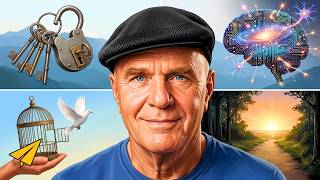
Wayne Dyer takes calls from people stuck in fear and limiting beliefs, offering a spiritual approach to breaking free. He emphasizes willingness to leave your comfort zone and using imagination to feel the wish fulfilled before it happens. Replace fear-based thoughts with concrete feeling states, he tells callers facing unemployment, creative blocks, and loneliness.
Chapters
We live our entire lives stuck in the same loop. We repeat the same thoughts, the same fears, and the same excuses that quietly shape who we become. Dr. Wayne Dyer believed that the only real prison is the one we build in our minds. And once you recognize those patterns, you have the power to break them forever. Watch this video all the way through and you'll finally get freedom, clarity, and step into the life you've always known you were meant to live. And a special thanks to Hay House for partnering with us to release this video exclusively here on my YouTube channel. If you've been here before, drop a hashtag #Believe in the comments below so I can feature you here in a future video. And if you're new, welcome to Believe Nation, the only channel that helps you believe in yourself daily, one video at a time.
Dr. Dyer, good morning, good afternoon. How are you?
Good morning. I'm fine. Just came out of the ocean and I got thrown around. That ocean is a big, big place. The waves were really, really big, like 8-10 foot faces this morning, and boy, it's amazing.
That's humbling.
Yes, it really is. But I'm here at— I'm in Maui and the whales are here, so this is the time of year when they're just at their peak, so they're jumping everywhere. It's really— and you put your head under the water and you can hear them singing all over the bay, so it's really beautiful.
Oh, that does sound incredible. And we've got some people lined up here to talk to you as always, so let's jump to the phones. And let's start off with Kevin calling from Atlanta. And Kevin, you're on line 1 with Dr. Wayne Dyer.
Hi, Dr. Dyer. Boy, it's a great pleasure to hear you.
Thank you, Kevin. How you doing, my friend?
I'm, I'm going through one of my challenges, I guess.
Oh, good. Are you saying thank you for that every day?
I am trying to. Yeah, that's the one thing I have to keep remembering because I—
that's true, we don't always appreciate these challenges when they show up, do we? We kind of wish they would just go away, but, uh, we need them. No, I guess that's going on.
Well, I've, uh, besides being out of work and, you know, those type of financial challenges, I even as a kid, I was a filmmaker. So I think that was something that was, uh, I don't know, kind of a driving force that just through high school I won many, many awards and was kind of on that road to doing it and then just kind of just quit, gave it all up and I think now it haunts me more than ever, having done that. And trying to get back into it, I realize I don't know anybody. I don't. And I think with the fact that you have just gotten this movie done on the independent level, it's kind of an inspiring thing to me.
Yeah, it really is. It's like, you know what, I always call it holding the vision. What happens is that I go through some principles in this Excuses Be Gone, and one of them is called willingness. You know, it's like, uh, how willing willing are you to do what it takes in order to create, you know, make your future dream a present fact? You know, to make the thing that you want to do a fact today. What do you have on your unwillingness list? What are you unwilling to do? Like if it required you leaving— you're where, in Atlanta? Is that where you're living?
Yes, sir.
So if you, I mean, if you knew that it required you to leave Atlanta and to go to Los Angeles and to uproot yourself and your family and so on, I mean, would you be willing to do that? Yeah, I see what you're I know what you mean, exactly, yeah. Yeah, so there's— and we usually have a long list of these, and I always tell people, when I did Erroneous Zones, and when I did this film that I'm just done now, I didn't have any— I didn't have anything on my unwilling list. I was willing to leave a job that was a guaranteed tenure position at a major university for the rest of my life. I was willing to walk away from that. I was willing to get in my car and to pay my own expenses and to drive across this entire country for 2 years doing nothing but just talking on radio shows and really being committed to that. I was willing to sleep in my car and sneak into hotels and take showers because I didn't have the money to do that. It's like, you know, if you have whatever you have on your unwilling list, it turns out ultimately to become an excuse and a rationale for, well, I can't do that because it would be, you know, I'm too old or I've got, you know, any number of those excuses that we talk about. And it's interesting, you want to be a filmmaker, but have you seen the movie Ambition?
Been really excited to want to see it.
I mean, but it's a story about a filmmaker.
Well, that's what I heard. That's why I was, uh, kind of excited to kind of see it.
And the idea— so, so tell me, what is it that's keeping you from acting on this? I mean, I already heard a couple of excuses, you know.
Well, I had plenty of them. Well, I moved when I was 23. I think I, uh, I had just won like an— it was a Student Academy Award for my last film, and I moved to LA and kind of was writing and doing a lot of things and then took a job as a production company back here as a director. So I moved back here and the— it was run by a, um, a New York producer and he gotten some— he wasn't really the best person to be around at the time and he was involved in shady things and eventually the whole company suffered because of it, fell. And I, at that point then, it just became finding a you know, a stable job, raising family, and all those things you— I think I've done successfully now. But it's kind of like now suddenly I don't have all those other distractions.
Yeah.
Or a job.
So, so, like, so the job going away and the distractions all disappearing, you know, do you view those as like, um, signs from, uh, the source, signs from God, signs from spirit, signs from the universe, whatever you want to call it? That you now have an opportunity here. Your life has been set up in such a way that there's nothing to really hold you back other than— and the big thing that's holding you back, I think, is fear.
I mean, I agree with you completely.
You know what, fear of success, fear of failure, fear that it's not going to work out, fear that I don't have enough talent, fear that the right people won't be there. I mean, it's all of this stuff. And if you start examining each one of them and ask yourself, is it true? You know, is it really, and can you be 100% certain that it's true that you don't have the financing or that you don't have the right people or that, you know, you'll begin to, you begin to examine that and see that you can't be 100% certain about any of that stuff. So stop believing all of those thoughts that you have that, that are keeping you from, you know, acting on this. And I would recommend that you take some time in the next day, you know, maybe even after this phone call and just do one thing that would be moving you in the direction of getting back, you know, as a filmmaker. You know, whatever it might be, whether it would be picking up the telephone and calling somebody. Do you have a script? Do you have an idea? If you have— if you have— if you haven't, then maybe that's something to start on. If you do have a script or, or an idea of what kind of a film that you would like to make, then doing one thing today that puts you in the direction of actualizing that, you know, whatever that might be, whether it's a letter, you know, whether it's going out and dusting off your equipment, or I don't know, but anything at all that you do, and then you hold on to that vision. And as you hold that vision, you'll take the next step and the next step, and before you know it, you'll be back doing it. And you won't be doing it because of how much money you're going to make. You'll be doing it because your heart tells you that this is who you are. This is your dharma. Because if you've been doing this since you were a little kid and you got awards for it as a young man, this means that this is something that you came into this world to do. This isn't something that, you know, like a fly-by-night would be nice. This is probably something that you have had. I wouldn't be surprised, Kevin, if every time you go to a movie you see how you would have set it up and what you would like to have done and what they could have done this way. Is that right?
Or—
yeah, well, that— yeah, that's— I mean, I dream it like this though at night. I mean, it's— even my dreams tend to be set up in the way of, uh, dramatically. And it's just, uh, it is— and there is a sense of fear of that. You've hit on a lot of very Yeah, you know, I think here's—
I— and this is what I've been doing for the last month or so, and because I'm going to be writing about this and, uh, and I'm doing a lot of speaking about it, it's some of the, uh, the, the teachings of Neville. What I want you to do is, in your mind, in your imagination, imagine yourself having your— if you want to have your future dream become a present fact, then you have to assume the feeling, assume the feeling of the wish fulfilled. So in your mind, you create for yourself in your imagination, which is yours. Nobody can't take that away from you. You create the, uh, image of yourself doing, completing a successful film, and then you go to the feeling state of that. So how does that feel in your body? So let me ask you that question. If you were able to be on a film set doing what it is that you really believe in your heart, you, is your dharma and what you came to do, and you could see yourself doing that successfully, how would you feel?
Yeah, just that's just a kind of a swelling right in the center of your chest and stuff.
Yeah. So you'd feel really, really great in your chest, right?
Great.
Okay. So now what you do, Kevin, is you stay with that feeling state. And the last 5 minutes before you go to sleep at night, you let your subconscious mind, which believes anything that you feel, your subconscious mind believes is true. So you go to the truth of that and you hold on to that feeling. And by holding on to that feeling, you'll begin to activate that. Every time you think about filmmaking, think about that swelling in your chest, and then stay with that feeling, and you're on your way. God bless you.
Thank you very much.
Thank you, sir. God bless you, my friend.
And Dr. Dyer, I have a call here. I think this is going to really resonate for a lot of people right now, so I'd love for you to be able to talk to her. So let's go to Debbie, and she's calling from Boynton Beach, Florida, on line 7. And Debbie, welcome to the show. You're on with Dr. Wayne Dyer today.
Hi, Dr. Dyer. Thank you for taking my call.
You're very welcome. How are you?
Um, I am very blessed that I got to talk to you. I called—
me too—
I called. I kind of knew I was going to get through. I don't know how.
Good.
My question to you is, I'm out of work and I am, you know, seeking work, and I'm trying to stay in the moment, like not to get overwhelmed, but just constantly— how do you stay without getting overwhelmed when you're out of work and looking for work?
Good question. I've been thinking a lot about that because there are so many people out of work these days, which by the way is really an opportunity. And sometimes you just need to clear your plate and just give yourself a time to just do some examination and so on. Meantime, I know there are bills to be paid and I know there's a realistic side to all that as well. If it were me and I were— were you laid off from a job or did you, did you get fired?
No, it was— I was laid off and then because of the extension I was able to— because I was out of work, I was able to get an extension on a previous claim. So I'm blessed in that regard, that at least I have something coming in. But I've been doing a lot of volunteering, like at the beach down here, like I'm I'm trying to follow my heart and my spirit. I took a painting class last week and I was amazed at what I painted. I don't know if I'm just shifting totally into a different area of my life. I don't really know which way to go, but I'm trying to let my spirit and my heart guide me.
Well, you're doing the right thing. That's exactly the right thing. This is what I was going to say. I want to say it to a lot of people because a lot of people are in the same boat that you're in. And that boat is going to change, and the winds are going to change, and the tide is going to change. I mean, it's like, first of all, you know, it's like everybody out there just understand we have a 250-year history in this country. We have had ups and we have had downs, and every time there's been a down, we have come out of it and come up, and we are going to. In fact, we're in the process of doing that right now. We're bottoming out, we're cleaning it out, and there's going to be, you know, people looking for, you know, people to hire for jobs all over the place. But if I were in this, in your place at this time, in my life, what I would do, I wouldn't be out looking for a job. And for, you know, I just read a story in the paper the other day about this, a job for just, I don't know, some kind of janitorial services or whatever, and 400 people had put in applications for it and they had to shut it off and so on. So that right now, the way to go about taking care of your financial concerns is not by filling out resumes and doing the same old traditional thing that everybody else is doing. It would be looking within myself to say, how can I create prosperity? How can I create money coming into my life? What kinds of skills do I have? What kind of vision do I have? Whatever it might be, that there's an opportunity to earn money in many, many ways other than having a job. And that's what I would be looking at right now at this time in our culture. I'd be looking at either creating a business or creating a way that I can offer something, do something, create something, you know, do something that's missing over here. Look at any number of circumstances and say, What is it that is possible for me to be able to generate some funds into my life so that I don't just sit around and just worry and get myself sick over it? And I think that there's an opportunity to make money in virtually every step that you take in life, and that there's prosperity out there for it. Now, what you have suggested is like, I mean, you, you take a painting class and you find out that you're really talented in that and so on. Does that translate in some way to you you know, working and generating income. Most people get really stuck in their habituated way of being, and that habituated way of being is that the only thing that you ever do is you work. Now I know because I lived this way myself. I lived by a paycheck until I was in my 30s, and then for the next 30 years I decided that I didn't want to be working for a paycheck and for benefits that were going to be paid by an employer and so on. That it was much more important for me to take whatever skills I had and to become my own boss. Because I've always really believed in my heart that you're never 100% free if you're working for somebody else. You know, there's still always that element of you have to do it the way I want you to do it, you have to dress the way I want you to dress, you have to follow these hours, you have to be in this office, you have to be there at this time. Which is the way most people can deal with this, uh, you know, this whole financial business, uh, and this working business. But there are other ways. And there are other ways that, uh, I would go around and cut grass. I would go around, I mean, you know, it wouldn't make any difference to me. I would be out there doing, figuring out something that would be a way of making a living just by becoming more observant and looking around and saying, this is needed here and that is needed there, and I can do this, and I don't really need to have that much money coming in right now. And, um, you know, does that make sense what I'm saying?
Yes, it does, because like I've kind of been I'm geared to, I want to volunteer and I want to help people. Like, I don't know if maybe, like, when you, you know, if that's something I can, you know, do for the community.
The interesting thing is that, like, if you decide to go volunteer someplace, now you're in an organization, you're in wherever it is, if it's an old age home or if it's in a hospital or if it's in a school or, you know, some kind of community organization or something, and you look around and you say, boy, these What's needed here is this, and if this were done that way, and this is a way that we could improve this, and we could— I always say if I had nothing, no money whatsoever, and I had to go out and get a job, and I went over to McDonald's, and I decided that I was going to just make french fries or whatever it was that I was going to do for $8 an hour or whatever that is, that my vision wouldn't be that I'm only here to just make french fries and I'm only going to make $8 an hour. I would think about owning the place. And I'd always have that vision in my head, and I would never let it go. And I would even get the feeling of what does it feel like to be the owner of this place and to have this franchise and to, uh, whatever it might be, even though I was still doing the french fries. And then I'd move from the french fries over to, uh, you know, another section of making the salads or whatever it is. And I'd always be on the alert for how I can bring prosperity to myself and still offer something great here. Instead of just saying, oh my God, I'm stuck in this no, you know, no exit kind of job. There's nothing I can do about it. And that's the way I've always worked in my life. Always, you know, from every job that I've ever had, I've always expanded wherever I was and figured out another way. When I was a school counselor, I set up a driver education business and I was driving after school and, you know, making more money doing that after a year or so. When I was teaching at the university, I set up lecture series on a Monday night at a community a center in Port Washington, New York. And after 2 years, I had 1,200 people coming there to the high school to hear me speak on Monday nights. And then I would set up a practice or whatever it might be. It was like— because it was always— there's opportunities in everything, but we get so stuck in our rigid kind of thinking that I got laid off and oh my gosh, there's nothing that else I can do, and here I am. And there's opportunities everywhere, you know, everywhere. That's the best I can do with that. I wouldn't worry too much about the, you know, you know you're not going to starve to death.
Right, right.
You know, you know that. And you know that you're not going to be homeless. I mean, you know you have the skills to keep yourself from getting to that much of an extreme. Then, you know, start going within and seeing opportunities everywhere. And I think the idea, you sounded like you got really excited about that painting thing.
Oh, yes. It's the art instructor. It was acrylic. It was abstract acrylic. And I didn't know it was my first attempt at painting, and it basically looks like a tropical paradise. I have birds of paradise in there, and I didn't even— it was just like I didn't know what I was doing, but it came out beautiful.
Oh, see, so that's what you said is so profound. I didn't know what I was doing, but it came out beautiful. The translation of that is that this is something that when I do this, there is a divine source that I am connected to that is allowing me to be the, you know, just the vehicle for producing this beautiful art. You know, that's almost like, you know, God talking to you inside. That's what enthusiasm means, the God within you. And you feel a sense of passion about that. Stay with that. Don't be afraid of that. And see it as an opportunity. There's somebody out there that wants to see what you've done. There's somebody that will put that in their home. And, you know, it's like it's endless. Have you seen the movie Ambition to Meaning?
No, I have not.
One of the characters in there is going through exactly— do you remember Diane, the woman who has the two children who wants to be an artist?
I was just thinking that when you were talking to Debbie too. She's making the shift and is kind of surprised that it's happening.
Yeah.
I just watched Louise Hay's movie and I've watched it and it's just amazing and I can't wait to see your movie. Thank you so much, Dr. Paul.
Okay, God bless you. Thank you for your call.
God bless you as well.
Thanks.
Well, we've got about 4 minutes, but I wanted you to grab this call real quick because it kind of just dovetails nicely with what Debbie was saying. And let's go to Sue in Colorado. She's calling on line 9.
Hi, Sue.
Hi, Wayne.
How are you?
I, you know, this is like a dream come true to me.
Oh, good, good.
It is.
That's what we're about here, making dreams come true.
Uh-huh. Several years ago, I've read a lot of your books and I've listened to all your tapes and your CDs and all this kind of stuff, and I was stepping out away from the profession that I'm in now, and I stepped out there and I think I got a little scared and things didn't work out the way I thought they were going to, and so I just kind of I retraced my steps and went back to a known world and all this kind of stuff. Well, I'm feeling that again, and after seeing the movie, your movie, The Shift, I need to know how to get past the fear and how do you know when that shift, when it really hits, if that makes sense.
Yeah, it does make sense, but there's no answer to that. I mean, the only answer to that is going on within you. I hear a lot of fear coming out of you. You're staying in your comfort zone. Is that correct?
Yes, sir.
I mean, it's like— and so you're used to it, and you know that you can always make a living at this, or you know you can be successful at it, and— but it doesn't float your boat, as they say. It doesn't resonate with your dharma, with a sense of something that you know that you're here to do. Sue, what are the callings of your soul? What are the callings of your soul? What does your soul tell you? And why are you ignoring it? Why are you going to the, you know, the thing that you're familiar with, to the fear, instead of taking the risk, you know, that is involved? And the only risk that's really there, because it's, you know, if you go through the— I can't wait for you to read Excuses Be Gone. It'll be out in another 2 months or so. It's, you know, because I go through a very specific way of getting past that, you know, by going through these series of questions that you ask yourself. But tell me, you tell me, what is your soul calling you to be? What is that thing inside of you that you know you're here for, that you've always been afraid of since you were a little girl? What is it?
Just exactly what you do. I love talking to people, and I do some writing, but my writing has been more of a— it's just an escape. It's all done in fiction, and it's just an escape. When I stepped out a few years ago, I was doing some motivational seminars here in town where I work. And I guess everybody, when I said I was going to leave—
I want you to hold on, Sue. We're going to go to a break, okay? But I don't want you to go away because I really— because I know, I know there's something really grand coming for you around right around the corner. Stick around, okay? So you were talking about the cut, like there's something in you. Like, go back when you were like a little girl. I mean, what was it that just really just turned you on or just made you feel like when you were doing it that you were on purpose? Can you remember?
Well, one of the things when I was a child was my ice skating, but I think that was a whole lot of therapy. But I used, well, I've always been a very social creature. I like to work. Go ahead.
Go ahead. Well, when you would watch people like myself or people who do these kind of things or see a movie about that, would it just like sort of just trigger something inside of you that said, oh, that's what I do? 'Cause I can remember when I was a kid, I can remember watching, we had a little Admiral television set, okay? And it was a little black and white and it was about 12 inches across. And I used to watch the Steve Allen Show. And I used to think, I used to hear him give talks and get up there and joke with people and all that. And I would stay up and my two brothers would be asleep and everybody, you know, this was after I got out of the orphanage and we were back at home. And I would stay up till 1 o'clock in the morning and watch that show virtually every single night. Even when they would talk, I would say, I would ask the question differently, and I would actually see myself doing that. And the interesting thing is, the very first time I ever did The Tonight Show, the very first guest was Steve Allen. That was like 30 years later, 20 years later. That's what I mean. Was there something, you know, when you would— like, you talk about being a motivational speaker and getting up there and talking, but I mean, when you saw those kinds of things? Did it really hit you when you were younger?
The thing I think— well, I grew up in a real small town and my father owned a movie theater, so we were like the last people in town to ever get TV, um, for obvious reasons. But, um, I remember some of the shows like Red Skelton. I loved him because he made people laugh, and I just thought that that was wonderful. And it wasn't until I hit what I refer to as my first midlife crisis when I was 40, that I started veering away from the traditional, you know, I am my son's mother, I am my parents' daughter, and started stepping outside of the traditional line of thinking. And I started going more into taking responsibility for my life, saying that I guess I kind of moved away from the victim mindset and I moved into, yes, I can make a change, I can make a difference. And it was when I was 41 that I moved to the town that I'm in now, and that's— I met a whole lot of people up here when I first came, and they were the ones that actually started introducing me to your books. And you know that whole thought process.
And you see, can you see yourself in front of an audience and entertaining people and writing and all of those kind of things?
Yes, I can.
Yeah. You live where? You live in Colorado?
Yes, I do.
Where?
I live in Cripple Creek, Colorado.
How close is that to Denver?
We're about 2 hours from Denver.
Oh, because there's a— in Lakewood, there's a wonderful, uh, church. It's called the Mile High Church of Religious Science.
Are you familiar with it?
Well, I go to the Center for Spiritual Living in Colorado Springs. That's where I saw your movie, which they're an affiliate of Mile High.
Yeah, yeah, I would really be around that place a lot, those kinds of places, a lot around those kind of people. I would be seeing those kind of events. I would be volunteering at them. I would be getting the— I would go again what I told the caller at the beginning of the show. I would go in my imagination to having, you know, if you want that future dream to become a present fact, you know, you assume the feeling, assume the feeling in your body of the wish fulfilled. What does it feel like to have that? Because in your imagination, you know, that's where you go into your subconscious mind, and it can't distinguish between what is real in your physical world and what you are imagining. So you stay with that feeling state, and by staying in that feeling state, you'll be acting on a way to manifest it for yourself. I would surround myself with those kinds of people, those kinds of experiences. I'd be listening to as much of that as I can. And then I would start volunteering and, you know, doing some talking and, you know, and living your dream. Does that make sense?
Yes, sir, it does.
Thank you very much. God bless you, beautiful lady.
Thank you, sir.
Namaste.
Thank you.
You're very welcome.
Bye-bye.
Much love to you.
Let's go see if we can get a few more people. We have about 9 minutes left of our segment here. So let's go to Laura. She's been hanging on in Iowa, in Dubuque, on line 2. And thanks for holding, Laura. You're on with Dr. Dyer today.
Hi, Dr. Dyer. I'm a big fan of yours.
Oh, thank you. Do you know what Mark Twain said about Dubuque?
What?
He said— this is a true line. I've been waiting for this for years. He said the Mississippi River runs right by it, and I don't blame it. It's a great place. That was, that's what Mark, that was his observation. So I said, yes, I've been to your town. I have.
Yeah, I have.
Cool.
And I just want to tell you too, if I'm ever stressed or in a bad mood, I pick up your Power of Intention book and it makes me feel better. I don't know why, it just calms me down. And I've given it away to people, so many gifts.
I love it.
Uh, well, thank you very much. It's interesting you say that about that book because that particular book was really a turning point for me in my life. I was writing books about spirituality and higher consciousness and so on, but the idea that intention wasn't something that we do with our egos, it's something that we connect to with our spirit, was the whole basis behind that book. And it was an awakening for me when Carlos Castaneda— I read in Carlos Castaneda's book about intention as a field from which all things are intended rather than as something that we do individually. And just that one line just hearing that one line. I wrote that line down and I carried it in my pocket with a little thing of money that I carry in my pocket, and I had it inside there for about a year until I decided to write a whole book about it, which is interesting. Yeah, it's interesting that one little idea— this is what I've been talking about here all day— one little thing, and if you just hang on to it and don't let it go, that it can turn into— and that's the most successful book I've done since Your Erroneous Sounds.
Oh, awesome. I, I guess what I want to talk to you too— I have empty nest this year. I'm a young widow and I've never lived alone before, and I don't like it. And people tell me I get used to it. Yeah, I'll get used to it. What do you think about that?
I think that why should you get used to something that you don't like? Why would you even want to practice that? You know, well, it's like, if you don't like it, why should you— why should you get used to it? You don't have to live alone.
I know I'm waiting for my forever partner again, but if I could quote you from Power of Intention, infinite patience brings immediate results.
Yeah, and the infinite patience, that's from the Course in Miracles. And what it means, I mean, because it sounds contradictory, doesn't it? If you have infinite patience, then you don't get immediate results. That means you have to wait till infinity. But what the statement really means is that infinite patience means that you have a knowing that what you are putting your attention on what you're intending into the world is going to happen. And so what it does is it brings you peace of mind.
Yeah, so I have that, but I— yeah, it's that living alone.
I keep busy.
I'm—
how long have you been a widow?
Um, it'll be 12 years this summer.
Hmm. So you've lived alone that long?
Yeah, I've had 2 relationships, but both long distance. And yeah, so Oh, I've had kids. This is the first year I don't have kids at home to care for. That's why I'm kind of goofy.
Yeah, but I mean, why live alone anyway? Why not, um, you know, why not advertise for something? There's so many people who are becoming homeless and having difficulties and so on. Why not have, you know, someone coming in, even if it's just, you know, a friend, you know, um, whatever, opening up your heart and your life and your home? There's somebody in Dubuque who is probably looking for a place who would love to be in your surroundings, you know, and with you, with all the wisdom that you have and the wisdom that they have. Open yourself up to that and just remind yourself you don't have to live alone. You know, that we're all alone in a sense, but you don't have to be lonely. And that's what, you know, that's something that doesn't have to be. I would open my home up right away to something like that. Or I would travel. You probably haven't done too much of that, have you?
Yeah, I'm about to start. I'm thinking of going on your cruise this summer.
I— oh my goodness, you would love that.
Acre too, and I've been taking care of my ill mother all winter, so maybe that's why I'm just going a little nutty because I haven't been able to travel.
Yeah, your whole life has been about serving, hasn't it?
Yeah, how did you know?
Yeah, reaching out to— it just comes through in, in what you say, you know, about your empty nest and the children. You don't— now you don't have children there, and you, and you lost your husband and and I'm sure you had to care for him as well. Yeah, so it's like, it's, uh, and, and that's all wonderful, and those are great, great gifts that you were given, the opportunity to do that. But I wonder how much of it you're doing for yourself.
Thank you so much.
Thank you. God bless you. Namaste. Let's take one more call if we can, Diane.
Yeah, we've got about 3 minutes, so let's go, uh, way around the globe to the Netherlands and talk to Roger. He's on line 1. Thanks for holding, Roger.
Hi, Roger.
Hello, Dr. Dyer. Hello.
How are you?
I can't believe I made it through. You did. Yeah, I've been holding on for a while, but I was like, I'm gonna hold on, I'm gonna get through, and it happened.
You did. You did. We just have a couple minutes, so what's on your mind, my friend?
Yeah, I know, I heard. Um, my make— well, it's funny, it already passed with the other callers with work, and it's really, uh, that I'm really I want to follow my heart, work with children, and I'm just figuring out how to find a way to do it. And there's a little bit of scariness still, but I know it's the right way for me.
Yeah, see, that's the whole thing. That's the whole theme of the show almost. It's like trusting your heart instead of your head. It's because if I were to ask you right now to just take your finger here and just point to yourself, you know, and you just point to yourself, you would point right to your heart. 99 out of 100 people point right to their heart, right? They don't point to their head, you know. They don't point— they don't say, oh, this is me, and this is their head. And yet we let our head, you know, the intellect and the fears and all of the things that we're supposed to do and all the training that we've had, and we forget that it's, it's in our heart where our life space is, where that beating continuously, you know, is, is the proof that we're alive. And we ignore that. We ignore that part start. You know, you said you would like to work with children and, uh, and all that. That's— it's like, that's so easy to get started on, you know. And by volunteering or by whatever it is that you do, all of a sudden something opens up and you're offered something. I mean, this just happened to my daughter who, um, was running a purse business, but, uh, you know, somebody came up to her and asked her if she could do a little volunteer work for them, and now they're offering her a full-time job. And so It's like it's— these kinds of opportunities come when you listen to your heart. We're getting ready to go away, but God bless you, my friend. Thanks for calling in all the way from Holland.
Thank you very much.
Thank you, sir. God bless you.
Great show, Dr. Dyer. Interesting how problems are global, right?
We're all—
we all are one.
We're absolutely—
and we'll talk next week.
Great.
Thanks, Diane, and congratulations. You're one video closer to who you're meant to be. For another amazing Wayne Dyer video, check it out right there next to me. I think you'll love it. Continue to believe, and I'll see you there.
Well, today we're talking about some of the physical things that you do because we talk so much about spirituality and your mental processes.
And I know you're always sort of putting in there how you do Bikram yoga and how you run.
More from Evan


How the Biggest Mistake in History Created A Trillion-Dollar Empire | Sergey Brin



9 Machiavelli Principles That Force People To Respect You | Machiavellian Philosophy



The First 10 Words That Instantly Ruin A Sales Conversation | Vanessa Van Edwards

The Top 1% Mindset Behind The First $5 Trillion Company | Jensen Huang (Nvidia)

