Wealth Expert on Protecting Your Money, Financial Collapses, Government Overreach & Diversification!
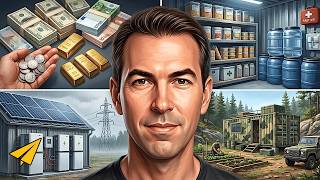
Lee Richter explains how to buy NFTs on OpenSea and use them for business utility and charity, while Jon Najarian, a former NFL player turned crypto trader, shares his strategy of holding Bitcoin and Ethereum long-term while day-trading with options. Najarian forecasts Bitcoin could reach $100k to $400k and warns that crypto volatility can be six times higher than the S&P 500.
Chapters
Jason Hance's interview is a wake-up call. Most people focus on building wealth but ignore protecting it. He's not talking about conspiracy theories. He's talking about real-world preparedness. Wealth isn't just what's in your bank account. It's about having portable assets you can rely on when things go wrong. Here's the truth. The world can change fast, whether it's a blackout, financial collapse, or government overreach. Waiting until disaster strikes is too late. Jason's message: be ready, have a plan, diversify not just your investments but your security. You insure your car, your home, your life. Why wouldn't you insure your future? Don't leave it to chance. The smartest move you can make is to prepare for the unexpected before it's too late. Special thanks to our partner Jeff Hayes for allowing us to release this special presentation exclusively on our YouTube channel. Enjoy the video and the lead.
So when I had the opportunity to talk to a former CIA officer, I wanted to take it. So I get to talk to now Jason Hanson because there are some things to consider when it comes to how do I protect what I got, how do I plan for what might be potential catastrophic consequences that are happening in the world. And let me tell you, I walked away from this interview saying there's a couple of things I need to do that I haven't been thinking about, and I hope that you get as much out of it as I did. So let's jump in. Jason, thanks so much for coming in for this interview.
Yeah, absolutely.
So let's get into your background a little bit. You know, people, people hear, uh, you know, CIA, you know, CIA officer, you know, what does that mean? So let's get maybe before CIA. How did you even end up at the CIA?
So I was born and raised in Northern Virginia, just a few miles outside of Washington, DC. So every government agency is in your backyard. And I ended up applying to several of them, and it just so happened that the Secret Service and the CIA offered me a job. I thought the agency would be a little more exciting, and so I went with the agency.
Was it what you expected?
It was. I mean, it's wonderful. I had some amazing mentors. It's great people. Of course, you have amazing training and learn all these, you know, quote-unquote secrets the average person doesn't know. So it was a wonderful place to work. I loved it, but it's a single man's game. It's tough if you want to have kids, you know, get married and all that.
Yeah, I have to imagine because you can't really talk about what you do, right?
And going back to my mentors, these guys were amazing, but they were all divorced or they hated their family life and they never actually wanted to go home. And I said, you know, I don't think I— I don't want to end up like those guys 30 years down the road.
So how long were you there?
7 years.
Wow. Okay. And, uh, what did you do after the CIA?
You know, I started my own private security company, taking the stuff I learned from the agency, obviously not sharing any classified information, right? I started doing executive protection, bodyguard work, started teaching a escape and evasion, evasive driving to high net worth individuals. So it's a fun ride.
Yeah. So you are privy and have been privy to, I guess, secrets, lack of a better term, things that the general public doesn't know and isn't aware of. And I imagine you still keep in touch with some of your buddies from the CIA and you have conversations, all that kind of stuff, right? And the world right now is a pretty strange place. We're here in this particular documentary series talking about money and wealth development and investments and all those types of things. But you can't have a thought around those things without understanding the world, its predicament, and what the vulnerabilities are to our economy and to the stability of the world. So now that you kind of have the perch that you have, and I know that probably there's certain things you can't talk about, but maybe in general, how are you seeing our predicament in the world right now? And how does that relate to our economy?
I mean, the beauty about being with the agency is you get to see everything going on overseas. Meaning everybody thinks the things that happen in America, oh, you know, this only happening to us. So we see what happens in other countries and we think, oh my gosh, it could happen here. So we see what happens if you don't prepare, if you don't have food storage, if you don't have gold, silver, things like that when those economies collapse. And it's not like the US is going to be immune to that. So we get to see what's going on everywhere and say, hey, I want to personally prepare just like, you know, what I saw overseas so it doesn't happen to me. And of course, we know with inflation, we know with the dollar just imploding like crazy, with everything going on, is you've got to know how to protect your money. You've got— I mean, I'll talk about some things later on about making sure it's transportable. You got to have portable wealth and all that. So, I mean, it's more important than ever to make sure you're prepared financially.
So what are some of the things that you're doing? You know, let's say, well, this is kind of the weird thing. I would have said, you know, what are you doing pre-COVID? Well, there was, you know, so COVID, you know, was an impact that's changing things, I think, in ways that maybe people don't fully comprehend. And then suddenly Russia invades Ukraine. That's destabilizing things, I think, in an unprecedented way, at least in my lifetime. So maybe let's look at iterations. What were you doing as far as financial thoughts and preparation prior to COVID? Then COVID hits, what changed? And now with Russia, Ukraine happening, Has that changed anything?
So I'm— remember, I got my CIA background, so everybody thought I was crazy until COVID happened. And then I started getting all the phone calls like, hey, tell me what to do with my money, tell me to do my food stores. You know, I'm everybody's best friend after COVID hit. So I've always been slow and steady, you know, like the tortoise and the hare. Obviously, I'm the tortoise, making sure I'm always doing the right thing, making sure I'm financially prepared.
Right.
So, you know, stuff I do personally is obviously have gold and silver. I have a large fireproof safe that has a significant amount of cash in it.
Okay.
But I also have cash in other locations.
So. And so why do you have those things? Just because you might have to bail out from your home or what's the— Yeah, yeah, yeah.
No, I mean, that's great because you never know what's going to happen. Again, things seen overseas, everybody thinks it's going to be, you know, some crazy grid-down apocalypse scenario, which it certainly could. But maybe I've got a forest fire coming to my house and I need to quickly evacuate in 30 minutes or less.
Right.
So one of the things I mentioned earlier is you have to have portable wealth.
Yeah.
So some guy that has a safe full of, you know, gold bricks, you know, if you have to leave your house, you ain't going to grab many of those, you know, especially if you're going on foot.
Right.
So that's one of the things we, you know, I'm always teaching people is like, how portable is it? Same thing when we do water storage. Like if you have a 55-gallon barrel, those weigh hundreds of pounds. You ain't picking that up and walking around, right? You've got to have portable bottles of water, etc. So that's the first thing is make sure wealth is portable, make sure you've got cash, make sure you've got gold, make sure you got silver. And that you can carry it with you. That's not going to weigh down. Next is, of course, diversification. So I've got cash stored everywhere. And, you know, I'm obviously not going to tell you exactly what I do, but I'll give you what the FBI calls a clue so you can bury it. Meaning if you have a safe place you're comfortable with, put in a Mylar bag, you put it in an oxygen absorber, you seal that Mylar bag closed, and you put in an ammo can, you can bury it on property. It's gonna be good forever. Storage units are wonderful. So you can rent a cheap storage unit all over this wonderful country of ours, you know, only a couple bucks a month, 'cause to store some cash there in a small fireproof safe, you don't need a gigantic one, have the one that's the size of a closet, and you can rent 'em in another name, you don't have to rent 'em in your personal name, and you can pay cash every month for it so your credit card isn't dinged. So those are things, you know, some of the things I may or may not do.
[Speaker] Let's break those down for a second. Because this is fascinating, the idea of portable wealth, I think a lot of people keep something at home. I'll tell you what shook me, and I don't know if this got your attention. I suspect it did, like with the Canadian trucker situation. Suddenly, the government, to try to defuse them, started seizing their accounts. That was something I never would have believed possible, at least not in a—
democracy.
Yeah.
But now, say, okay, maybe it's, you know, having portable wealth available for any number of reasons, you know, is a good idea. But then the idea of saying bury it, spread it out, have it in multiple locations, that's really interesting. How far apart are some of these locations that you like? You have varying states, or do you keep them kind of within striking distance of where your home is?
So what I tell people is, if you're just living in one place— I mean, I travel all the time, so I have mine all over because I have certain locations, certain states I'm I'm going to, right? You know, maybe going to Texas all the time, maybe we're going to Florida all the time. But for somebody who's not traveling that much, just within a 2-hour drive of your house, okay? You know, I wouldn't have it any closer than 30 minutes. So if you live here and there, you know, there's a storage unit right next door, you don't want it right there. Just that's the first place they're gonna look kind of thing. So have it in another city, have it a safe distance. So that's, that's definitely one of the things. But also having a fireproof safe. I know a gentleman who lost $20,000 when a fire hit in one location, right? Did not have another fireproof safe. And you can get the small portable ones where you can store a lot of cash. So that's, you know, definitely something that I recommend too.
Interesting. And somebody might be saying, well, how much should I be storing? Like, I imagine it's kind of scaled toward your life. And, you know, like if you're a single guy by yourself versus, you know, I've got, you know, 4 kids, you know, you know, do you have sort of parameters around that?
So I like at least 3 months worth of cash, the majority of $20 bills, just because $20 bills will take anywhere. Do have some hundreds because hundreds will get you out of a jam. I can't tell you how many times that I may or may not have used a $100 bill to bribe my way to somebody to give me a ride, right? Or somebody, you know, let me in the restaurant out the back door type of thing. Because if you take a $100 bill and shove it in somebody's face, they're gonna take it. It doesn't matter where you are in the world, even here, you know, here in the US. So have a few $100 bills, but have most of it in $20s or smaller denominations. And if you have 3 months, you should be able to survive a lot because I have many, many clients. One client I had had a problem with the IRS. It was actually not his fault, meaning the IRS screwed up. They froze his bank account. He couldn't get access to money. And of course, they made him send in 1,000 forms. They took forever to process. And there was a couple of weeks he couldn't access his bank accounts. But luckily, he had plenty of cash stored up, so he was able to operate as normal.
So this is interesting. As you said, sometimes circumstances are such that it's not even that you're a criminal, you did something wrong. Right. Yeah. Very fallible, you know, when it comes to these types of situations. And so what you're saying is they seized his accounts and they didn't even let him take minimal money out just to live on while they were sorting things out. So it's you're guilty till proven innocent type of situation.
Correct. And of course, when you try and get a hold of the IRS, you're on the phone for 45 minutes before they actually answer or they make you fax in or send everything in. And I mean, it was a long process. You had to hire a lawyer. So that's, again, that's not an end of the world scenario. That's just the government screwed up, and now he has to pay the price.
Now, gold and silver in this context, I mean, obviously, we could talk about it as a hedge against the dollar being devalued, you know, and inflation, that kind of stuff. So you just have a store of gold and silver. But you're kind of talking about portability with it. So why gold and silver as compared to just cash?
Just a variety. You know, some people, when you shove an American Eagle in their face, they may like it better than if you're giving them cash. I mean, one of the most important things I can tell you, and then, you know, everybody watching this, is if there is some kind of big economic collapse, if there is the quote-unquote end of the world scenario, you want to get rid of your cash quickly. You want to get rid of your gold and silver quickly, because as human beings, we think that, hey, there's this crisis, it's going to be done in 2 weeks. Same thing we thought with COVID right? Hey, in 2 weeks it's gonna be done, we're fine. So in those 2 weeks, you want to go buy all the supplies you need with your cash, with all your gold, all your silver, 'Cause 6 months into a crisis, that cash, that gold, that silver is going to be worthless, 'cause nobody's going to want it. But that's the beauty of it, is everybody else is going to be in the mindset— and again, this is all studied from foreign countries, CIA operations, et cetera— everybody's going to be hoarding that cash and thinking, hey, this is done in 14 days, we're going to be good to go. But you're going to be able to buy anything and everything you want. You're going to have all the supplies when 6 months, 8 months, whatever it is, they're going to be burning that paper. You know, they're going to be— it's going to be a worthless hunk of metal.
That's interesting, because it makes sense. I wouldn't have thought of it till you just said it. But the reality is, what has value are the things you can live on, the things you can eat, or shelter, what have you, as compared to a piece of gold or a piece of paper. And most people think that short term, this will be over, I just need a temporary solution. And I think COVID taught us that lesson significantly. Continued to escalate after we're supposed to just flatten the curve for 2 weeks. Yeah, so that's, that's a pretty fascinating thing, you know, to consider.
Let me share a quick story with you. Just proves this. Again, I have a ton of cash saved up. I have gold, I have silver, because you got to have that for everyday life by the crisis. But quick intelligence operative story. There was this team, they were going to take care of a very bad man. They could not be airdropped in the country where they were going to do their operation. They had to be airdropped another country. They're gonna hike in. However, an airlift was going to airlift some goods and drop some goods. So when they were hiking in this country, they were going to pick up everything they needed. Well, some of the items were very important electronics. And so in every intelligence operation and every government agency, there's a logistics guy, right? So you basically put in your order with the logistics guy. You say, hey, I need— and I'm just making this up, obviously, you know, I need 2 cameras, I need 17 bottles of water full, I need this food, all this and that, right? Well, the logistics guy says, hey, I'm looking at this list and these guys want— you want me to drop all this water. I mean, they're hiking through a desert, they're going to need it. And he says, well, shoot, we got all these electronics. If these water bags pop, it's going to ruin the electronics. So I'm going to give them gold and then they can buy water. Well, they get in this desert, they find their drop, they're going through and they're like, holy crap, where is our water? You know, there's no water there. They find the gold, so they end up hiking. Luckily, they come across some locals who could care less about the gold. They're like, you know what? But they were kind enough to give the gentleman some water so they were able to complete the operation. So just goes to the point, you know, you should have gold. I love gold. But there comes a point when you need to get rid of it. It's going to be worthless to certain people.
Wow.
That's—
so the moral of the story is you can't drink gold.
Yeah.
Or eat it.
Yeah. And that's— that is You know, this sounds like the stuff of movies, but I guess this stuff really goes on. And I guess the logistics person had a little talking to.
A lot. Yes, a lot talking to because that could have really been costly.
Yes. They'd not gotten lucky, you know. So, wow. And I think, you know, there's another moral of the story. Yeah. Don't plan on getting lucky, right? You know, that's right. You were like, oh, you know, that they happened to get lucky because they came across locals that said, we don't care about the gold, but here's some water. If they didn't get lucky. So I think that happens a lot of people too. They think somehow they're going to figure it out. I think one of the big concerns, you know, is population centers, right? If stuff goes down. So what is your advice of somebody who's in, you know, a city like, say, Manhattan versus, you know, out kind of even rural Virginia or something?
Yeah. I mean, I live in a small town. You know, I was born and raised in the Washington, D.C. area, got out of there as soon as I was done with the agency, never going back to a big place again. So something happens in my town, you know, everybody's got guns, everybody's got their food storage, we're gonna be fine. So I'm not worried about looting, rioting, or any craziness. Now if I live in New York City, is I'm gonna watch what everybody else does and do the opposite. Meaning if everybody's going down, you know, that turnpike or whatever, you know, you want to go the exact way. You make— you gotta make sure not follow the crowd, and you want to sit and watch what everybody does, right? So a lot of people think, okay, I see everybody running that way, I'm gonna run that way now. Take some time and gather and say, okay, maybe I should wait and see. Okay, they're going that way, I want to go this way. Or hey, maybe I should just hunker down in my house for a while, right? So it really— it's almost counterintuitive where you immediately want to flee, you're freaked out, you want to race where everybody else is racing. But stop and watch everybody do the opposite, vast majority of the time. But really pause and take some time to think so you don't panic.
Yeah, and I guess to your point earlier, from a money planning standpoint, You'd want to store some money in a more rural area that you're going to escape to if you're in a kind of an urban area. You know, I'd say that, you know, I keep my safe— well, not safe deposit box, but, you know, maybe a storage facility, you know, box, something like that.
That's a great point. So here in the United States, we're incredibly blessed. We don't go through checkpoints like a lot of other countries do, right? But let's just, again, crazy, crazy scenario, maybe you have to get out of New York City and you're going through checkpoints and they're searching your bag. Do you really want $5,000 worth of cash in that bag. No, maybe you want $500 worth of cash, and then the other $4,500 is in that storage unit in that rural town, right? So you got to think about that stuff too. You clearly don't want to walk around announcing to the world, hey, I got $10,000 in my backpack, which is why you spread it out. Never keep all your eggs in one basket.
So when you use the term financial bug-out bag, this is what you're referring to, or, you know, these scenarios where you've got a, you know, a store of cash and things to get out with?
Everything. I mean, I'll tell you, like, so in my— I'll pull out my pocket here. I carry around $300 cash wherever I go. And that's actually my agency money clip. But clearly, when I go overseas, I don't carry this. They have a— they have a store inside CIA headquarters. And when you leave the agency, of course, you buy all this crap. It costs a ton of money. And money clip was one of them. But anyway, so I always carry at least $300 worth of cash, right? And that's— I mean, I use my credit cards most of the time, but you just never know what you're going to run into.
To do, right?
I mean, I'll tell you a quick story of how to bribe the police overseas if they're corrupt. Okay, um, so if you're going overseas, sometimes you run into corrupt police, right? We all know that. Um, one time me and a— somebody did something stupid, so several police are surrounding us, right? And clearly when you're overseas, you do not want to end up in some foreign prison, right? So I could tell that these police were trying to shake us down, which is what happens in a lot of countries, right?
How could you tell?
Because we didn't do anything that stupid and they were making it a big, big deal and they were overexaggerating like, hey, you're going to go to prison for this. You're going to spend several days in jail. Oh my gosh. You know, it's like, it's like, give me a break, buddy, kind of thing. So anyways, so I could tell most likely they were corrupt, right? And you don't just whip out your wallet and say, all right, how much is going to cost me to buy my way out of this? Even though they're corrupt, they don't like it thrown in their face, right? So in this situation, what I did and what you want to do in these situations is play the stupid American. So you're like, oh my gosh, I'm so, so sorry. I apologize. I didn't. I didn't mean to upset you, or, you know, just that kind of stuff. And then the magic phrase is you say, I bet there is a fine to pay. How do I pay this fine? So you don't say, how much is it going to take me to bribe my way out of this? You say, how much is the fine? In my case, the police officer said, it's $50 and you pay me. Now, in my mind, I'm thinking, you idiot, you got to get a lot more out of me. But I was like, oh my gosh, $50, that's so much money. Okay, officer. Handed the guy, he let us go. We were good to go. So the beauty of this is even if it's not a corrupt police officer, when I say, hey, I bet there's a fine to pay, how do I pay it? If he was legit, he's just going to say, you pay to the courthouse Monday morning or, you know, pay it here. So I'm not coming off of bribing the police.
Right, right.
And I mean, this— I've had so many clients do this in Mexico. So if you go to Mexico—
about Mexico—
oh my goodness, I could tell you like stories until the cows come home about people having to bribe their way with the Mexican police. So always carry cash, even if you're using credit cards all the time.
And it's kind of interesting that that whole gameplay happens because especially if you're in Mexico and you're on some street and the cops are there, they could just take it from you if they wanted in a sense. Right. But they, they still kind of play that game so that it doesn't cross a certain line. Right.
Right.
Right.
They still want to act like they're honest, even though they're not. Same thing anywhere in the world. They still don't want to act, you know, totally corrupt. So you just have to pay the fine. And luckily, most places of the world, it's going to be $100 max.
Yeah.
Which is why you have the $100 bill so you can hand it to them. And they're, you know, that could be a month's worth of wages in many places.
I used to travel a lot internationally, not as much anymore. I used to keep varying currencies. Yes. You know, but I guess if you're not really thinking about international travel, if you're thinking about just what's going to happen here, then probably just US dollars is fine.
Yeah, US dollars is fine because again, most people are going to think it's going to end quickly. So if I go to someone and I give them that $100 bill, They're going to say, hey, this is going to be done in 14 days, I'm going to be rich, where I know, hey, this is going to be worthless in 14 days, I'm getting some critical supply that I need now.
Are there threats we should be worried about that aren't on most people's minds right now?
Oh, that is a great question. I mean, the US government is always a threat. And what I mean by that is the IRS freezing this gentleman's bank account, or the government, for whatever reason, saying, hey, I don't like the way you looked at me today, I'm going to screw you somehow. You know, I'm going to go off on a quick tangent here, but a lot of people say, hey, I'm going to put my money in the safe deposit box. Not really, because you don't have access to it 24/7. Plus, you've always heard those stories of people getting their safe deposit box confiscated or states claiming they were abandoned. Now we can go in and take them. So I wouldn't do that. Again, the government way to screw you. Blackout. That is a big threat that people don't pay enough. I mean, I know we hear about it, but it's not on most people's mind. So If most people knew how fragile the US energy grid is, they wouldn't sleep at night.
I was wondering about it, because for one of our series, I had interviewed a PhD. He was in Texas, and he was on their board or whatever for the power companies. He said they were, I think, 15 minutes or less away from losing the grid for all of Texas for 3 months. What would have happened if that grid went down for 3 months? Geez.
We know most people aren't prepared. I mean, it would be chaos beyond chaos. Now, me, I'd be fat and happy with my food storage. I'd be going out and just spending my money and getting stuff. But I mean, I can tell you firsthand that our adversaries, Iran, China, Russia, they are trying to nuke this grid all the time. And thankfully, there's amazing intelligence officers out there stopping it. But what happens a lot of days is they're probing, meaning you hear a story like, hey, we hacked a Florida utility, right?
Right.
And they discovered it and all this and that. We patched up what's called probing, meaning they hacked it, they left a trail so they could see how you're going to patch it up. That when they go to all the utilities in the country, they know what the patch is, they know how to do it. So we're probed all the time. And it's just like an economic collapse with the dollar. It's not a matter of if, it's a matter of when. You know, maybe I'll be long and dead. I don't know. But it's the grid and the dollar. It's going to happen sometime. And you got to be prepared for it all.
Yeah. And I guess what most people don't recognize is how serious that can get. I mean, I guess maybe you've got some reference points from things that have happened overseas. But if power goes out, how long is it before it's a serious, serious problem? Like, you know, we're talking about maybe roving gangs or, you know, real threats to your well-being?
It doesn't take long, 72 hours.
That's it?
Yeah, yeah, 3 days. I mean, it's just because most people think, okay, you know, I've got enough batteries here, I'm gonna get through it. But after 3 days, they start to panic. When panic sets in, they go find their friends, and that's when the mobs— it becomes the mob mentality and all that. So most people are so underprepared, we're so spoiled. I mean, this current life we live in, we can, you know, push a button on our phone and do everything. So we're not used to have to prepare and survive on our own. We're not resilient. So after 72 hours, it's going to be chaos. People are going to be freaking out. They're going to be looting. I mean, look at the looting we've had, and it wasn't any kind of, you know, natural catastrophe, right? That kind of stuff.
Yeah. You know, I was, uh, I'm old enough, uh, that I was, uh, when the, the big blackout happened in New York. I guess it was in the '70s, right? Uh, and I can remember because I lived, you know, across, uh, the river, you know, across the Hudson River. But I can remember seeing the city go dark, and then I can remember, you know, the looting and all. You know, there was craziness, like almost incomprehensible how quickly it devolved into just complete chaos and madness, you know, in just a short time when the lights go down, you know, and the power goes away. And that was in the summer, so it wasn't like anybody was going to freeze to death or anything like that. You know, I think that your words, your caution here is warranted because it can happen very unexpectedly. It's not like you get to see it coming.
Oh, yeah. I mean, we're not going to know the majority of the time. I mean, I can— I can tell you there have been, like you said, the— you talked to the gentleman in Texas who said we're 15 minutes away. Well, I know of instances where other countries are trying to bring down our power grid and it was that close and at the last minute we were able to save it. So those are things you're not going to know coming. I mean, that's why I prepare. It gives me peace of mind. You know, I hope we don't have a blackout. I hope, you know, the dollar doesn't collapse. But I've got the money spread around just in case, which, you know, allows me to sleep at night.
Yeah, and I guess if we're thinking about investments, which, you know, is a big part of what we're doing, say, okay, number one, invest in your security. So this is like, you know, people spend money on insurance policies for life insurance, etc. Yes. This is, you know, storing money, and except that, you know, if you don't use it, it's not like the insurance companies where they keep your money. In this case, you don't use it, you still have the money. But, but I look at this kind of as a very important investment in an insurance policy. And then secondly, if you have enough, if somebody has enough wealth, having a place to go that's not by a population center, investing in real estate, you know, it's because too often I think, you know, in many of our interviews, it's a very, for lack of a better term, mercenary type of thing saying, okay, you know, invest in, you know, either where there's trailer parks or, you know, single-family homes that you rent or, you know, duplexes or fourplexes, whatever they might be, collect rent, get cash flowing real estate, there's tax advantage, you know, all those considerations that people have when they're trying to make money or invest and create wealth for themselves. Probably not a bad idea to invest in maybe some real estate that is a safe place for you and your family. And somehow maybe it's a good investment anyway that you can make money on the investment, but it's also a place to go. And I'll tell you, I just acquired 43 acres in a very remote place. you know, that's a driving distance from where I live, not a plane ride, you know, for that, with that very thing in mind, you know, it's, I think it's a good investment anyway. But, you know, more than a good investment as far as from a financial return standpoint, it's also saying, you know, peace of mind of a place to go should the things that you're talking about happen.
100% agree with you. So I do the same thing. I've got places within driving distance my house and, you know, great land. The kids like to go out there and play. But what we do is put a shipping container on there.
Container.
So, you know, it looks like a shipping container on the outside, but inside, you know, it's what— it looks like you're walking into a house. So a lot of people say to me, oh, you know, Jason, I can't go afford a bug-out location or whatever. Um, shipping containers are still pretty darn cheap. Yeah. And if you're a handyman, go in and panel yourself, put up the lights, do all that. If you're not, just hire somebody. But that's what I've done. And, you know, it's wife-approved because it doesn't look like a shipping container inside. And that's a simple place. It's basically a getaway cabin where you can still go and have fun, but also an emergency location for your family.
Yeah, I think shipping containers of like $4,000 or $5,000, something like that. They've gone up.
They've gone up.
If you all—
if you want a 40-foot high cube, you want the high cube because it's over 9 feet, they're $8,500 these days. And then you can get the 20-footers for about $6,000, give or take.
Are there people that outfit them too?
Oh yeah, yeah, yeah.
Oh really?
The whole thing. I am actually not a handyman. Man whatsoever. So I have a crew that'll go in and make everything nice for me, put in windows if you want windows, you know, make it so you can hook up your generator so you got lights in there and all that stuff.
No kidding. So yeah, generator, then water, I guess you had water supply.
And yeah, so I've got a well where you can dig a well, but also, you know, people who go there more often, you know, if you don't want to dig a well, bring in those 500-gallon containers kind of thing, or put some 55-gallon drums out there. Yeah, so there's plenty to, you know, you can have a lot of water stored. Board, which is easier these days.
That makes a lot of sense. I would imagine, and I don't, you know, tell me if this is true or not, you know, since we're talking in terms of investment, if you look at your investment in the shipping container, the land, etc., if you for whatever reason wanted to go ahead and sell today, would you have made money on it?
Oh yeah, yeah, yeah. I know enough people who, if I said, hey, I've got a done-for-you place, they would snap it up in a heartbeat. Yeah, they don't have to go buy the shipping container, they don't have to worry about, you know, dealing with the contractor and all that, right? So it would be very easy for me to flip these days.
Yes, it is. The demand is there. And so now, and I guess this is the point I'm trying to make, you've taken care of your own security, your family's security, um, and it's something— it's an asset that is, you know, actually going up in value right now while you're doing it. So it's kind of that win-win scenario. It's not an expense costing you, uh, like, you know, insurance. If you don't use insurance, it's cost you every month you're paying for it. Here, it's insurance and it's paying you every month because it's going up in value.
Plus, it's great for the family. You have a place to get away. My kids love running four-wheelers out there and having fun. So, it's like a cabin where you go make memories while providing security for yourself at the same time.
That's really great. So, any other things that maybe that you're allowed to speak about that we're not aware of in this country that, you know, that we're basically, you we're in such a stark ignorance around a certain threat that we maybe should know about?
Well, I'd say food shortages and food crises are very important.
And you see, because, you know, are you— were you able to observe fragility in the supply chain, you know, as it relates?
Yes. I mean, going back to how spoiled we are as citizens in this country now, we expect to go to Walmart or Kroger or whatever and get bottled water, get whatever. But you got to realize when stuff starts going down overseas in many of those countries, They raid the supermarkets, everything is gone, and it's gonna disappear within that— you know, it's not gonna be 72 hours. So that's the same thing we run into here, is we've got to realize, okay, what if I can't go to the supermarket for 30 days? Do I have at least 30 days food storage? And if not, start using some of that cash to buy that food storage. I mean, you're not gonna believe this, but I have 2 years worth of food storage in my house. I've got 6 kids, so I've got 2 years worth of food storage for 8 people. Now it's 25-year light food storage, so I'm happy to just let it sit there, and occasionally we eat it when I'm lazy and it's It's my turn to feed the kids. But it gives me a tremendous peace of mind. Plus, do I really think there's going to be a 2-year collapse? No. I think it's going to last about 6 months to a year, personally. But that gives me more to give to my neighbors, my friends, help others, which is why I've got so much of it.
That's interesting. First of all, just the way you say it, when a collapse happens, as you said, it's a matter of when, right?
I mean, Venezuela, name any— Zimbabwe, name any country in the world where it's happened. Is, yes, we're incredibly blessed here, but look at what we have done to our dollar. You know, look how— there's no better way to say how disrespected we've done it. So it's going to happen, which is why you got to prepare for it.
So this is kind of interesting, you know, because you have the perspective of somebody working in a government agency and in the CIA, the intelligence agency of the government. And, you know, we're looking at our Treasury, our Fed, you know, and what they're doing to the dollar. And do you— is there conversation amongst intelligence officers around the fact that the government is, you know, accumulated, you know, $20+ trillion in debt in a very short period of time and what that means to the dollar? And because you have the reference points, I imagine part of your training is history lessons, right? Here's what happened in these other countries and this is what destabilized and this is what caused the crash. And, you know, do you observe in that training what you saw, you know, historically and what you've been taught with the inside information? And do you look at what our own government's doing, saying, how are we making the same mistakes they made?
History repeats itself. You know that. I mean, we're just— yeah, we think the exact same thing. Like, hey, we're doing the exact same thing Venezuela did. We're doing, you know, all these countries were devaluing our dollar, printing cash, funny money. I mean, I'll tell you, one of the— the agency, like every government agency, has a coup plan. Continuity of operations. Okay. And in one of the offices I worked, I had a— I was able to see this plan, you know, and go through it and look at everything. And obviously it's, hey, if the world ends, here's how to keep the CIA running. Here's how to keep America protected. Right. And so I remember looking at this and obviously I can't tell you what it is, but that's when— and many of us were like, hey, we need to have our own coup plan for ourselves. And so kind of everything we're discussing today, you should be building your own continuity of operations plan. If everything goes black, if the dollar crashes, if you can't go to Walmart tomorrow and you've got to hold down in your house or go to your bug-out location with a shipping container, make sure you can survive so that 6 months. That's your own coup plan, right? Because, you know, we all look at it, and even today, as I, you know, I've got buddies who are still with the agency, we talk about, we're just like, this is nonsense. Which is why we're preparing so much, because we've seen it happen, you know, over and over and over again, and we're next in line.
Wow.
And I think that's maybe a part of the fallacy or the spell that we're under is, well, that happens in other places, not in America. But what I'm recognizing is the interdependence between America and other parts of the world. Even if it wasn't— the first domino doesn't fall here, they talk about Russia and they talk about wheat in Russia and the way that they supply it. And you start to see the interdependencies between these varying countries, how much they're dependent upon that wheat. How, you know, this war that's going on, you know, could interrupt this whole supply chain and create tensions. It's not like we can suddenly just say, well, we're fine on our own. We're really not.
That is correct. We're not.
Yeah, we're—
I mean, Russia has said, hey, unless you're friendly to us, we're not going to start supplying you with our exports.
Right.
And we obviously saw stuff happen during COVID I had plenty of friends that are very successful business owners. They get a lot of crap from China. And they couldn't sell because China wasn't delivering. So we're very, very intertwined, which is why I always think, how do I make sure that I'm not relying on anybody? So of course, the biggest fallacy is when the US government says, hey, I'm going to take care of you. Trust me, they don't give a crap about that. Unless you're in the little bubble, the presidential bubble and the higher-ups where you get to go to the bunker where you're taken care of. But for you and me and the average American, nobody's going to care about you. You've got to take care of yourself.
You've got to fend for yourself. Yeah, they're about preserving the continuity of the government, and that's about it, I guess.
Right.
Saving their own asses and saying, you know, with the idea, well, we have to be in power, you know, we have to have a government installed for the citizenry, but the citizenry is all going to kill each other.
Right.
Yeah.
And they're not our problem. We're making sure we can survive. Yeah. And, you know, they're all on their own.
Well, it's— I'm laughing, but it's really not funny. But it's true. It's the truth. Exactly. So I think, you know, kind of summarizing, there's so much conversation, you know, at least that we're having in this documentary series around money, potential collapse of dollar, how to hedge against it, you know, wealth development, wealth preservation, all that kind of stuff. But I have to say, I think an investment that most people aren't making, it's probably the most important investment, is protecting, you know, against the downside. You know, I might say, you know, I think people walk around and say, well, you know, I have life insurance, my family, that kind of a thing. But you don't have insurance like, you know, like you have saying, I got 2 years here and not only can I take care of my family, but I could take care of friends and neighbors if I need to, too. And I've got, you know, all these plans. And a lot of people say, well, you know, they're so focused on how they're making money, but they're not really focused on preserving them, you know, their life should something, you know, threaten this fragile system. And I have to say, I think there's so many dynamics going on right now with COVID and COVID's not— the tyranny that's attached to it, the financial, the trillions of dollars, like, oh, we have a new bailout package, trillion here, trillion there.
Let's give away another trillion dollars.
That's a free roll of money. Exactly. And so I just am really glad that you were willing to sit down and have a conversation around saying, we're going to talk about different kind of investment here. And that's— talk— in that investment is preserving yourself and your family should things go bad. And there's a high probability that things are gonna go bad. We don't know when, right? But they're gonna— it's gonna happen. So be prepared.
So there's something in the government called— the intelligence world called red teaming, right?
Red teaming.
Red teaming. And a red team is a group of people who are saying, what is the craziest scenarios we can come up with that may happen? We need to And they're supposed to go way out in left field. So, hey, if aliens invaded— I mean, they're really supposed to get out of the box and say, how do we prepare for this? So I always encourage people, red team your own life. Like, what are the craziest things gonna happen? I mean, simple things are, again, the wildfire, the dollar collapses, you know, you have a medical incident, you go through a divorce, you go whatever. And how can you red team it? Find all those crazy scenarios that might happen and then start preparing against them. That's the best thing you can do, right?
And, and we're seeing, you know, if a little over 2 years ago, if I said to someone, oh, the whole world's going to go into a lockdown and, you know, if I started to describe COVID.
Yes.
They would have said that's no way that could happen. If just a short while ago I said Canadian government doesn't like some of their protesters and they're going to start seizing their bank accounts just because they're protesting. And not only that, people who supported them, you know, through a GoFundMe account, they're going to track those accounts too and threaten to lock down their money. People would say that could never happen. In a, you know, a first-world modern democracy, you know, and we're seeing it happen now. So I'm actually asking myself the question now, what else could happen that I thought would never happen? Because these old could-never-happen things are happening as I speak to you at this moment. So, so I think your expertise and your ability to communicate it is something, a very valuable asset for a lot of people right now. Thank you.
I mean, one of the beauties of being at the agency is now nothing surprises me. When I hear these stories, I'm like, oh yeah, or it reminds me of, hey, that happened in XYZ country. So anything is possible.
Yeah, well, I think we need to learn from you to say, okay, you know, whatever we thought was our own little Pollyanna reality, it's not anything close to that. And here we are now having this conversation. So I really appreciate you taking the time.
Yeah, absolutely. It was my pleasure.
Well, that completes my interview with Jason Hanson. You could tell the guy's been around the block, has seen some things, and is worth paying attention to. I really got some great things out of this interview, and I trust that you did too. Thanks for being here with me. My next interview is with Joe Brown, and I wasn't sure exactly where this interview might go. I certainly looked at his background, understood the types of things that he spoke about. I have to tell you, I wasn't ready for what kind of a wealth of information it was going to be. And the way that Joe presents is very sharp, very unique, very effective. He really sees the big picture. He has studied history and he brings this all into context to give a view of things as they exist right now and then ideas about what we need to do. So Joe is sharp, he's skilled, he's a great communicator, and I'm really excited that you're going to get to listen to him right now. Joe, thanks so much for coming in and having this conversation.
Yeah, absolutely. Thank you for having me. I'm really excited.
What got you interested in the financial industry?
Oh man, so that's a good story. Back in probably— it was about 8 or 9 years ago now. My wife and I, we got married. We were heavily in debt. Most of that was my fault. And so we were, you know, at the time it doesn't sound like a lot right now, but $30,000 student loans. I was actually making less than minimum wage at the time. So For us, it was a big burden. And so, you know, I realized I had to kind of get things in order. And so I just started diving in and studying things and got a bug for, you know, investing. And at the time, you know, a lot of personal money management, things like that. And that kind of led me on this journey, became a stockbroker. And now for the last couple of years, I've been just on this mission to kind of educate the world about how money really works. If you don't know how the game— the rules of the game, you're not going to be able to play to win. You're gonna be playing with the wrong set of rules. And so that's kind of my mission. My passion is to kind of educate as many people as possible about how the game of money really works and investing and how the markets really work so that people can, you know, prepare for some big financial storms that are, that are on their way and brewing right now.
What was life like as a stockbroker?
You know, at first it was really great because, you know, as I was dipping my toes in, I is really you're able to help out, you know, I kind of— there's 3 classes if you say, you know, poor, middle class, and wealthy. It was, you know, there's a lot of really helpful tools to help people get from poor to middle class, but those tools getting from poor to middle class are not helpful to becoming wealthy. Actually, a lot of them can hold you back. And so the more I started to realize that, the more I had kind of a clash, an internal clash of what I was learning and studying and finding out to be true versus the stuff that I was having to sell people. And it got to the point where I was just like, I can't do this anymore. I need to go out and kind of spread the good news, spread the truth about how this really works because the traditional tools that people have been taught to use for the past probably 40 years or so are going to become hindrances going forward.
So what are, since you brought them up, the tools to go from, say, you know, poor, or, you know, the poor side of things to middle class?
Yeah, so it goes back to kind of a whole history of money and monetary systems. But the traditional tools that people are taught today are get out of debt, save, invest in your IRA and your 401k, work really hard, and someday then you'll be able to retire. With Social Security, of course, and you might be able to make ends meet. Now that is kind of shattering as people are realizing, especially with the inflation numbers that are printing every single month now, people are realizing, hey, if I'm not, if I'm not getting a 10% raise and, you know, 11, 12, 13% gains in my portfolio every single year, I'm not even breaking even, let alone making up ground. And A lot of that comes from the fact that when we're— when we go through life, a lot of the things that we believe are true, whether it's about money or relationships or anything in life, it's because the first couple of years of our life, we're trained that way by our parents. That's the first 5 years of your life, your brain is just in programming mode and they're, you know, they're programming things into you. So everything that the average person knows about money came from their parents. But your parents knew everything about money that came from their parents and so on. And so in a very real sense, most people are living life through the lens of money from a monetary system that doesn't exist anymore, right? Because we used to have commodity monetary systems where a commodity like gold or silver was money, and then we transitioned to a new monetary system where it was a gold or commodity-backed monetary system. And then from there, we transitioned into a purely fiat monetary system where we're at today. And so people are living and playing by this game that we— that hasn't existed for a few generations of monetary systems. And so that's why the tools that were taught— number one, why they're taught is because of how, how long it takes things to kind of unfold. But number two, it's why people are failing at the game of money today, because they're playing by the wrong set of rules.
How have the changing rules affected perspectives on things like debt, for example?
Yeah, so the, the reason why the old wisdom exists about not going into debt and saving is because debt should get harder to pay off over time. It should be a burden because if you borrow something from somebody, then at some point you're going to have to give that back. And so that's leverage versus deleveraging. The only way I can spend more in the present than what I've earned in the present is by borrowing that future purchasing power from the future. And that means at some point in the future I'm going to have to pay that back. And so I'm going to have to deal with less purchasing power in the future. The problem is in a fiat monetary system, the incentives for the people in control are to grow the money supply. Because they're the ones that have the most debt. And when the monetary supply grows, you're not creating more wealth. I always use an example of a pizza. If you've got a pizza with 8 slices in it, you don't get any more pizza by cutting 8 extra slices into it. You've got 16 slices now, but you got the same amount of pizza, right? So the slices will measure how much pizza there are, but it doesn't increase the amount of actual pizza. And so money is the same way. Money isn't wealth. Money just measures wealth. When you increase the amount of money in the system, all you're doing is changing the size of the unit used to measure that wealth.
And isn't this the game that, you know, the Fed is playing, right?
Yeah.
As far as saying, you know, we're going to borrow a bunch of money, right? We're in trillions of dollars at this point, many trillions of dollars. And then the way that we are going to be able to pay this back is by devaluing the dollar and paying it back. So these future dollars, you know, are worth less than the money that we're borrowing today. So we're making out on the deal, right? So is it your suggestion that we should be playing that same game, or how do you see that?
Yeah, well, that's exactly it. So they're— by expanding the money supply, they're able to siphon purchasing power away from people. Who hold the currency, uh, currently, and then use that to pay off their debt. And so when you have debt, you owe a specific number of dollars back on that debt. And so when you have— when you're able to increase the amount of dollars, you're essentially paying that debt back with less purchasing power than you originally borrowed. You're giving back something of less value than what you originally got. And so that's the way the incentives are aligned, because it benefits the the people who are in control. And so when we look at, okay, how should we structure our financial lives to be able to get ahead, if we're playing the opposite game, we're the ones that are voluntarily transferring our purchasing power to the borrowers. We're becoming the lenders. And in an inflationary system, the lenders get screwed, the borrowers are the ones who benefit. And so that's, that's the first thing, is that fixed-rate debt is a way to short something that by nature will go down in value.
It's just a matter of time. It's a really interesting context. You know, I don't think most people look at it that way or understand it the way that you said, because really, the suckers, you know, the people who are getting suckered into the deal, are being taught, you know, have no debt, et cetera, but they're really turning into the lenders that are going to end up lending at an interest rate that's below inflation. It's basically what you're saying, right?
Yeah, exactly.
The consequence of which is they're getting back something worth less than what they lent out, while the people who are acquiring the debt, which is of course the opposite of what most people are taught as conventional wisdom, you know, they're the ones who get ahead because they can use that. What— just to be clear, we're not talking about, you know, consumer debt where you're, you know, you're paying for like, you know, your meals and whatever on a credit card we're talking about. If you're borrowing money and buying real estate or, you know, assets that are a hedge against inflation, you know, that you're, you're actually making out pretty good doing it that way. So how does the average person do that though? What's the process to take advantage of the inflationary system as compared to being a victim of it?
Yeah, absolutely. So very, very basically, when investing, you want to own the things that are going to go up in value. And you want to short the things that are going down in value. So when you short something, the definition of shorting something is borrowing that item and then exchanging it for something else.
Right.
When you borrow something, you owe that thing back. So if you borrow dollars, you owe dollars back. If you borrow stock shares, you owe stock shares back. So when you short a stock, you're borrowing shares of a stock and you're exchanging them for dollars.
Right.
When you borrow dollars and then exchange them for real estate, we call that you bought a house with a mortgage. What you're actually doing is shorting the dollar and buying a piece of real estate. So you own something that will increase in value and you're shorting something that will decrease in value. And when you do those together, you get— you participate in an arbitrage scenario where you don't have to fund the thing that you're buying. Your short position funds the thing that you're buying. So when you short the dollar by getting fixed-rate debt to buy something that will go up in value, that is the, that is the type of debt that we're talking about here that ends up succeeding in the long run in a fiat monetary system. Not when you short the dollar with variable-rate debt like a credit card in order to buy something like clothes that go down in value.
Right. So if we were to look at this, you know, real estate was the— it was the example you just gave. But what if we're looking at like, you know, equities? If you're buying a stock, you pick Tesla, pick Apple, pick it, pick it, or an index. It's same, same principle. Right. But and like anything else, I guess you're saying, well, I did well by shorting the dollar because the stock went up. You know, but if the stock doesn't go up or goes up by less than the inflation rate, that's where you'd be on the wrong side of that equation.
Right. Yeah. So there are— the stock market is, you know, a very broad term. There are many different ways to play the stock market. One of those is the traditional way to just buy some index funds, some mutual funds, and most likely, even if the number goes up, that won't keep pace with inflation going into the future. So in real terms, if your money goes from $100 to $110, but your cost of living goes from $100 to $115, you still lost. It doesn't matter if the number went up. So some people, what they do is they borrow in order to buy more. So they short the dollar, they buy stocks. That gives them leverage so that they get more than the inflation rate on the stocks going up. But the problem is margin rates are variable. You can get stopped out, you can get a margin call, you don't have control over that like you do with other assets. And so in those circumstances, the people who succeed at that are also employing more advanced methods using options and puts and ways to limit their risk and maximize their upside. They're not just buying index funds.
So when we look at something like real estate, you know, that's something I think maybe a little more straightforward. I guess it sounds like there's more complexity complexity if you're trying to apply this particular rule or principle when you're looking at the stock market. Because as you said, sophisticated investors, they know how to hedge their bets through options, et cetera. And it's interesting, I hadn't thought of this before, because you're looking at just a straight, hey, I'm buying this and it goes up by this amount. But if you are using margin and you can leverage up, now you're not using your— For easy math, let me just see if I'm understanding what you said correctly. I buy $100 worth of stock with the $100 I have, but I was also able to buy another $100 through leverage. I only used $100 of capital, but I got $200 worth of stock. And so I'm getting— so even though I only used $100 worth of capital, if it went up by 10% per $100, I got 20% back on my $100 that I deployed. Is that kind of what you're saying?
Yes, exactly, because the total pie will grow by 10%. 100%, but you only deployed half of that yourself, so your return for yourself is double if you're able to use other people's money.
Right. And of course, the loss, the reciprocal is true too, which is what— and this is also even more so probably true of mortgages because I'm only maybe using 20% of my capital to buy a property, but I'm getting a mortgage for 80% of what the asset is. So if that goes up, I've got a lot of leverage there.
Yeah, absolutely. The thing to understand is that this isn't going against long, old, ancient wisdom. If you look at some of the oldest, some of the oldest proverbs and pieces of wisdom that exist on earth about how to succeed with money, there's a lot in the Bible about it, about not having any debt and saving. We have to remember that for most of recorded human history, money was gold, and the supply of gold has never increased by more than 2% a year. Because you have to pull it out of the ground to be able to increase the supply. And on average, it's grown along with the inflation rate, right about— I'm sorry, the population growth rate, right around 1.5% per year. And so when you say do not have debt and save, what they've actually been saying for thousands of years is don't borrow something that will slowly increase in value over time. You want to save that. You want to build that. Because if you borrow something that increases in value over time, it's going to be harder and harder and harder to pay off over time. And so, when we look at interacting in our world today, we have to recognize what is good money and what is bad money. We want to save in good money and use that to buy investments when they're cheap. And the number might go up on real estate. In real terms, we might see it go down because now it takes, let's say, less ounces of gold to buy a house or fewer bitcoins to buy a house.
So when you say bad money, what do you mean by that?
What I would say is bad money is anything that decreases in value over time. And even if it doesn't decrease in value over time because it's, let's say, it's too new, let's say a certain type of money has only existed for 5 years or 10 years. so it hasn't yet— if there's somebody in control of that money that has the capability to change the rules so that that money can be devalued, then that's a dangerous form of money.
Yeah. No. So that kind of walks us into crypto a little bit, doesn't it? Yeah. So tell us your view on that.
Yeah, absolutely. I think that it's— when you boil it down to the basics, Bitcoin itself is nothing new. We have seen a public ledger as money before in history. There's just the technological application of it that is bringing it back into modern-day use. The islands, the Micronesian islands, the people on these islands, they used a public ledger monetary system. They had the giant rai stones and these giant rai stones. It was the total aggregate memory of all of the citizens on these islands that recorded who owned these stones. That's a public ledger. Everybody knows, hey, John owns half of that stone. If he wants to buy a cow, he has to transfer ownership, and the entire island says, yep, transfer the ownership.
And they recorded all that.
They recorded all that. And it was, it was a matter of verbal and mental record. So nobody could steal money because if you said, hey, I own this rice stone, everybody would say, no, you don't. We know you don't. And that's all Bitcoin is. That's all the blockchain is. It's a public ledger. So everybody can look at that ledger and say, hey, you don't actually own this like you said you do. And so it's nothing new. And it's a way to verify or put rules on a monetary system that the money cannot increase in supply drastically, which would decrease its value. Same thing that commodity monies are used for is to make sure that the the supply of money cannot increase drastically, because that would hurt the value of that money.
When you say commodity money, what do you mean by that?
There have been many commodity monies, but the one that has stuck around the longest is gold as money, gold coins, silver as money, copper coins as money, seashells and beads. Those have existed as forms of money as well. But the reason why gold has stuck around for so long, and its purchasing power has stuck around for so long, is because it is impossible to increase the supply drastically, because the value of getting it out of the ground is determined by the value that people want to get out of it. And so it's not going to be able to increase more than 1.5% per year. Otherwise, the profit opportunity to the miners is not there anymore.
Is there a distinction with crypto, though, in the way that it can be accessed from anywhere in the world? the fact that it exists the way it does, is that kind of an X factor that's related to it as compared to something like gold or silver? Even though I think the fundamentals, as you cite, are kind of the same— a public ledger that everybody can observe, and the implications are it kind of keeps everybody honest, and there's no government intervention that can suddenly increase the supply of a thing like rice, stones, or whatever it might be that you're referring to. With something like— and I guess Bitcoin is sort of its own category compared to, you know, some of the other cryptocurrencies— but is there an X factor that's there because of the technological aspects of it and because of the worldwide access where, you know, you're not stuck in a geographic region to be able to participate, but it's everywhere?
Yes, absolutely. So when you look at, when you look at a monetary system that uses gold, one of the things that happens is that the money gets more valuable over time. If we have a fixed supply of money, that doesn't fix the supply of wealth. If you look over time, you've got increases in efficiency, increases in production, new technologies. We offload human labor to animals to help us farm. Then we invent machines that help us do it better. The Industrial Revolution. All throughout history, humanity has been growing its wealth. If you have a fixed supply of money, that means it takes less and less money to get more and more wealth. It's the opposite of inflation. We've had deflation for most of human history. So the problem you run into then, if the supply of that money is not increasing, sooner or later you get to the point where you don't want to walk around with a 1-ounce gold coin anymore. You can't just go slap it down on the counter and buy a sandwich. It's way more valuable than that. You might want to use that to buy a horse. Or a down payment on a house, something like that. And so you get to the point where it has to centralize and go into hiding and get vaulted so that you can get smaller and smaller denominations of that. You need to fractionalize it so that you can use it for daily transactions. And so in a deflationary monetary system, you need divisibility overall. With an inflationary monetary system, you add a bunch of zeros, right? So it's the opposite of divisibility. You're adding a bunch of zeros to every bill. That's why we You see the trillion-dollar bill in Zimbabwe. And so that is one of the distinguishing factors of Bitcoin is that it is infinitely divisible. That is something that you need. It is an absolute must with a deflationary monetary system where the money supply cannot just keep on increasing forever because things will get more and more and more valuable over time. It'll get to the point where one sat will be too much to buy a car.
That's—
that will happen if Bitcoin is adopted as money. It will absolutely get to that point where one Satoshi would—
you can't buy a car with it because it'll get that valuable. It will. But you said it's infinitely divisible. So can you have— right, partial Satoshis?
You can have partial Satoshis. Absolutely. That is the— that is the necessary factor of a fixed monetary supply is that it's infinitely divisible because You will always get to the point where the unit gets too valuable for daily transactions.
Yeah, that's, it's really interesting because I guess I'm hearing maybe for the first time some of the rationale for why we had to create more money supply. And it's kind of like, well, it's a good idea. To your point, it's kind of a Berkshire, you know, one share of Berkshire Hathaway stock, right?
Right.
They're saying we never want to divide, we never want to split the stock. So it started wherever it started, and then it gets into the hundreds of thousands, I think it is, right, to own one share. Because they said, you know what, we don't want people trading our stock. We want people to buy and hold and let it keep going up in value. I guess that was a part of their motivation. But as you said, if the money supply was the same today as it was, let's say, in 1930, you're going to have a problem with what the value of a dollar is and what that could buy because there's less and less of them. So that's where they come in and say, okay, well, we're going to, you know, we're going to come in and we're going to increase the money supply so that there's more velocity of dollars circulating out there and we can have rational transactions for a thing like a sandwich. So I think the examples you gave were perfect. But then you can get kind of runaway with that where you're saying, oh, we got way more money supply, like in the trillions of dollars, which was unnecessary, you know, to to balance the scales of commerce. So my question is, do you— what is your thinking about this game that's being played now, and do you think it's coming to an end? I mean, there's going— how long can this go on? It feels like a Ponzi scheme. It feels like at some point, the thing's going to collapse. You seem to have studied the history of this quite a bit, which kind of, I think, informs the future. What's your view?
Yeah, so if we go back to, let's say, the Civil War time, or right after the Civil War, from 1860 through 1910 in America, we had pretty close to as much of a gold standard as you can, as you can get, unless you go back to like Roman times. In that period of time, you look at the archives of the bills, the physical dollar bills, they were just notes. They were receipts that said, you know, Bank of San Francisco redeemable on demand for $5 in gold coin. That changed when we got the central bank in America. We got the Federal Reserve in 1913 and we centralized the banking system. We gave all the banks an out by giving the banks a bank. That's what a central bank is. It's a bank for the other banks. And at that point, we switched over.
So did the— at that point when it happened, I think it's the same year they also started with income tax in 1913, if I'm not mistaken, right? So at that point, So at that point, when that happened, all these varying banks are holding their own banknotes, and they were able to trade those banknotes for dollars? Is that what happened, basically?
Right. Well, you had a lot of bank runs happening. And you had bank runs happening not because of instability, not because of bad economic conditions. You had bank runs happening because of fraud, because a bank would say, give me your gold. I promise you can come back and get it any time. And then when people would come and get it, he'd be like, oh, I don't have it. I lent it out. Now, we today call that fractional reserve banking. Instead of outlawing that, which is— it should have been because it's fraud, right? Instead of outlawing it, they just said, well, the problem is we're not doing it big enough. We need to centralize it so that if one bank run happens, they can just get gold from other banks through the central bank on top. And it fixed the problem of bank runs. But something about risk is that you cannot eliminate risk. You can only transfer it. I give an example. A lot of people standing next to a cliff, a bunch of people standing next to a cliff. One person falls off. What is everybody else going to do?
Lean the other direction.
They're going to—
they're going to get back. They're going to be like, that's dangerous. I got to get away. Now, what happens if you give everybody a rope and somebody slips? Well, everybody's going to pull that guy back. Suddenly you have no more risk of individual failure. So there's zero incentive for anybody themselves to back up. So everybody gets too close. You have a couple of people slip, now everybody's holding onto the rope, everybody goes down. So when you centralize things, you don't eliminate risk, you just transfer it to the entire system. When you eliminate the possibility of individual failure, you introduce the risk of total systemic failure. And that's what happened when we centralized the banking system. You didn't eliminate the risk, you just transferred it from the individual banks to the entire system. And within 7 years of the Federal Reserve starting, we had the first Great Depression. Nobody knows about it. It was in 1920 through 1921. They called it the Great Depression at the time until just 10 years after that, we had another one that was even worse. And they called that one the Great Depression. That one stuck.
And what was the relationship between the central banks forming and the Depression? Like, what was the cause and effect relationship there?
Yeah, so you had a greater— an unprecedented ability to expand the monetary supply, have a credit bubble. So you used to have that at the local level. The bank would lend out gold. So first he takes all the gold.
Yeah.
So I'm a depositor, you're the bank, and I come in, I say, I've got, you know, $200 worth of gold. I'm going to leave it here. You're going to give me a note against it. So you're securing it for me. But do I have the understanding that you might lend this out, you know, for interest, or that's kind of—
that's kind of under the table. We don't talk about that. So before I exist, you guys are all trading your gold coins. Let's say there's 100 gold coins in this closed economy. I come in as a banker and I say, I'll hold on to them safe for you guys. So you all give me your 100 coins and I give you 100 pieces of paper. At that point, no fraud has taken place and no inflation has taken place, right?
And I'm paying you, I think, a fee for storing it and protecting it.
I'll waive the fee. I know, I know how to do this. I won't even charge you anything.
What a great guy you are, right?
Yeah.
And so I'm looking at this and I'm saying, I've got a bunch of gold and I'm noticing When you want to go buy a horse, you're not coming back to me to get your gold to buy the horse and then him coming and giving me the gold for storage, right? What you're ending up doing is just giving him the piece of paper because anytime he wants, he can go get that gold with that piece of paper. So I look at this and I think I've got a gold mine, no pun intended, in my vault here and I can lend these gold pieces out. The moment I lend gold out, there's inflation. Because if I lend, let's say I have 100 in storage, I lend 50 of them out. Now there are 100 pieces of paper in circulation plus 50 pieces of gold. Got 50% of an increase in the supply of money that will lead to inflation because you've got a ton more slices on the pizza now. Everybody's bidding up prices, everybody feels rich. But the thing about this is it's built on debt, right? I loaned that money out. At some point, that debt is going to be repaid. And when that debt starts to get repaid, it sparks the other thing happening where the money supply starts to leave. As this guy pays debt, he's got to go get it from this guy, he's got to collect on this guy, and people start coming to get their gold from me. Then you have a bank run because everybody comes to get their gold and they realize nothing's there. So you have booms and busts as a result of the artificial expansion of money built on credit through the fractional reserve banking. So what they did was they centralized that, so that makes it a lot bigger. So you have the entire system now able to explode the amount of money through the expansion of credit, and that caused the first Great Depression. And in that one, they handled it correctly. They raised interest rates, the government balanced the budget, they didn't do any intervention, and that depression healed itself within 18 months. World was back on track. Huge boom started, lending started again, massive credit expansion again. The exact same thing— expansion of the monetary supply and an increase in artificial credit— led to the next Great Depression. And then they didn't handle that one right. They tried a bunch of intervention, they tried to cause an inflation. They started burning crops. They tried all of these things to try and rescue the economy, and it ended up making it last decades instead of 18 months.
Wow.
What are we looking at now?
Now we are on the cusp of what looks like another monetary change, another monetary system change. 50 years ago, we had the monetary system switch over from a gold exchange standard to a fiat standard. 50 years before that, we had the world change over from individual countries using a gold standard to flipping over to a gold exchange standard 50 years before that. Between gold standard and gold exchange standard, gold standard would be where the, the individual country, the central bank says, hey, we're backing up our currency with gold and it's redeemable for gold. And it doesn't have to be gold, it could be silver, could be Bitcoin, anything. Where they're saying we're backed up, it's back to gold standards backed up and you can redeem it. A gold exchange standard is all the countries around the world after world, after the war said, look, We, we don't actually have any gold. And so instead of taking responsibility and rebuilding, America's got gold. So why don't we just take our paper and instead of backing our own paper with gold, we'll back our paper with American paper because they have gold. And so we'll just back our paper with dollars. And then at any time we want, we can go trade in our dollars for gold. Well, that— it was the same thing as before. You went from local banks to national to the central bank. You nationalized it. So at Bretton Woods, what they did was they went from nationalized—
Explain what Bretton Woods is.
Bretton Woods is when they made this decision after the war where all the countries got around the table and said, we're all going to back our money, we're all going to back our currencies with gold.
Right. OK. With the American dollar.
With the American dollar.
And that's when it became kind of the reserve currency.
Right.
So that was the Bretton Woods meeting. So at that time then, you moved from national systems, you globalized it. So again, you can't eliminate risk, you can only transfer it. And that centralized it to the entire planet, and it gave America an unprecedented advantage over the entire world. The entire world used dollars. Well, just like the goldsmith, just like the banker, that gave them the ability to lend out more paper, create more paper than they actually had gold to back it up. The rest of the world was taking it, and as soon as somebody caught on and they realized, I don't think there's enough gold in Fort Knox, I'm going to go be the first one in line to get my gold. That started a global bank run on the Federal Reserve. Everybody went to go get their gold. We were 2 weeks away from running out of gold. And so Nixon said, nope, we're no longer going to give anybody the gold that we promised we would. We're closing that window. And the only country, it was either Spain or France, that got their gold after that, they sent a warship and they said, give us our gold. They were the only ones that got it. And everybody else They were stuck in the system, just kept on using the dollar.
So this is interesting because, you know, many people lament the fact that we went off a gold standard. And they, you know, they say, you know, Nixon took us off the gold standard and, you know, he's sort of vilified for doing that. But what would the consequences have been if he didn't do it?
Like I said earlier, there is no such thing as leveraging without a future deleveraging. That consequence was baked into the cake already. It was not possible to avoid that. America had spent more money than they actually had money to back it up. The default was going to happen. He's the scapegoat, but there wasn't enough gold.
Right. I mean, anybody would have made that decision in that, you know, at that moment in time if they were running the country.
Exactly. Or they wouldn't have made that decision and we would have just spent 2 more weeks and the gold would have been gone. And then the end result would have been the the dollar is still no longer backed by gold. It was baked into the cake from decades of abusing the fact that the rest of the world used dollars.
Wow. So we're coming off the gold standard either by volition or by default. One way or the other, it was happening.
At that point, yes. There was 20 years of walking down that path to ensure that that was the only option left.
So that happens. And it doesn't seem like we learned a lesson, though. So now we keep— printing more and more money, right? We keep devaluing the dollar, inflating. And it seems like it's at an accelerated pace right now. You have COVID happens, and that suddenly now we have to have more and more bailouts. 2008 happens, more and more bailouts. So what's your feeling about— because as you said, whenever you leverage, at some point, you have to deleverage. Is there an inevitable like catastrophic event when it comes to the dollar?
There may or may not be a catastrophic event, but the momentum is baked into the cake already. And what we've seen happen over the last decade or so is a transition where it's going to— it looks like it's going to be something that happens gradually and then all at once, where, uh, in the fall of the financial crisis, the rest of the world said, look, your mistakes are spreading to the rest the world. So we'll help you bail out your economy so it doesn't impact us. So the rest of the world bought a bunch of Treasuries, helped the government borrow extra at lower rates than they would have been able to otherwise, so that America could bail out its economy. And the understanding was, this is temporary. That's why if you look back at anything the Federal Reserve said for about 10 years was, we're gonna wind down the balance sheet, we're gonna get rid of this stuff, we're gonna sell it.
What stuff?
In the fallout of the financial crisis, they bought a bunch of mortgage-backed securities, and they bought a bunch of treasuries. The Federal Reserve prints that money, buys that off the open market, so they're taking an asset out of the market, injecting cash.
So they bought the bad paper, injected with cash, so the people who were really responsible for creating the catastrophe get bailed out for the most part. Correct. And then they said slowly over time they're going to just get the stuff off their balance sheet.
Yes. So they said, this is an emergency. We're going to do this now and take it, and we'll slowly release it back into the economy once we have growth so that the economy can handle it. This is temporary. And the thing about risk is that you can't eliminate it. You can only transfer it. So they transferred onto their own balance sheet. But if they start to sell it, they transfer that risk right back out into the economy. Can't handle it. And every single time they tried it, if you look at the Federal Reserve's balance sheet, It goes up and to the right, but it's bumpy. And every time they tried to get rid of assets off their balance sheet, it failed. Something happened in the markets and they reversed course and started expanding their balance sheet again. The worst one of these was in September of 2019. September of 2019, the repo market blew up because the economy couldn't handle the amount of assets that the Federal Reserve was selling. At that moment, they had to reverse course and start buying assets again. Between 2018 and 2019, when the Federal Reserve stopped raising interest rates to stop the stock market from falling in December of 2018, and in September of 2019 when they reversed their balance sheet and started buying again, that's when the world caught on and said, this isn't temporary. The Fed can never drain its balance sheet. They can never sell this, and it will never get back to normal. At that point, The rest of the world started selling Treasuries. It's now to the point where the Federal Reserve owns more Treasuries than all other central banks combined. That wasn't true 5 years ago. So the rest of the world has been dumping Treasuries slowly, not all at once, because they still hold a lot. They don't want to screw themselves over, but they're selling Treasuries as quickly as they can without causing a panic, and the Federal Reserve is having to pick up the slack.
But there's got to be a buyer if they're selling them. So is the Federal Reserve saying, okay, are they kind of forced to buy them back? Or, you know, why is the Federal Reserve buying them?
The Federal Reserve is buying them because if everybody's selling them, that's a lot of selling pressure that drives the price down, that drives rates up. That's how bonds work, inversely correlated, the price and the interest rate. And so when we look at how much the Federal Reserve's balance sheet expanded by in early 2020, $3 trillion, most of that Treasuries. That was not a result of a pandemic. That was a result— that was a breath of fresh air for them because in September of 2019, just a couple months before, they realized everybody's starting to sell Treasuries and we need an excuse to be able to buy these things because if rates get too high, the federal government defaults. Federal government goes bankrupt because if rates go too high, they can't afford that debt.
Yeah. So yeah, they can't make their payments on the debt, which, you know, in a prior conversation for this series, I talked about a friend of mine who's a very well-known economist who was on Reagan's team in Russia. So he worked in administration. He was an economic advisor. And he'd always say, oh, you know, that's no big deal. You know, it only costs us, I think at the time, $600 billion a year to service it. And we're kind of this big. And I just said to him, what happens if the interest rates go up? He goes, oh, that'd be a problem. And here we are, right? Because don't interest rates have to be a market phenomenon, you know, and artificially, you know, keeping them low independent of what the market demands? There's got to be repercussions to that. I mean, you know, you can't just hold them down and expect that there's not going to be consequences. Am I right about that?
100%, and so you're getting at what the purpose of the interest rate is in a free market. Interest rates are basically the cost of money, and so if money is scarce, and by money right now I'm speaking about the total pool of savings, if the savings pool is scarce, everybody needs savings. So the person that has it can lend it out at a very high interest rate. So that communicates, prices are just information, so high interest rates communicates to everybody, Save. There's an incentive to save. Don't spend. Don't go into debt. It's expensive to do so right now. Don't take risks. Be conservative. That's what the pricing information is sending out to the entire world. Conversely, if the savings pool is very large, everybody has a ton of savings, well, everybody's competing to get lenders now. So that drives interest rates down. If I've got a ton of savings and you have a ton of savings, we're bidding against each other to lend this guy money, so we're going to go down in interest rates. When interest rates Interest rates are low, that signals to everybody, borrow, spend, the savings pool is large, take risks, we're in a period of starting to have some massive growth. So that's what prices and interest rates are supposed to communicate. So when you have a recession and a bust and a crash, that's trying to heal the misallocation of resources. It's trying to destroy the wealth of— or not the wealth, destroy the projects of all of the economic actors. That made bad decisions and miscalculated economically. And when you lower interest rates artificially and force them lower, what you do is you send out a signal into the economy that the savings pool is large. But the savings pool didn't change. All you did is change how it was measured. You increase the number of units, but it's the same size. And so you're sending out false information to the economy about how much there really is in savings, which causes mistakes?
Well, see, because that's— there's a cash glut, right? But that's because they're printing money, not because there's more accumulated savings. Right. Because that's the whole point is saying basically, I think it goes back to— and I love your metaphor of the pizza.
Yeah.
You know, hey, we're seeing 16 slices. Well, it's not because you have 2 pizzas, right? You have 1 pizza and, you know, we just basically cut it more. So it has the appearance of having more slices. Yeah, exactly. No, there's more pizza there. So looking at COVID, what's happened there, you know, coming off the heels of recovery from 2008, which was, you know, pretty scary time. And now here we are. And then, you know, there's this, you know, this instability in a world with Russia invading Ukraine. Do you feel like there's dynamics at play and forces at play that should take, that should cause a new type of thinking when it comes to investment or even protection of one's wealth?
Yeah, absolutely. So we're in a transition period right now. Pretty much every 50 years for the last couple of cycles, we've had a change in monetary systems. The world right now is looking at the dollar, which is currently the global reserve currency, and the world, whether or not they agree, some countries agree, some countries disagree with the sanctions right now. The world is looking at this and saying, they might be saying, I like those sanctions, but I don't want to be subject to them myself. And just like they noticed a couple of years ago, the inflation will never go away. The buying of these assets on the Fed's balance sheet will never go away. That means the dollar will only lose value over time. When inflation happens at a higher rate than interest rates are, that means you're losing value over time. The rest of the world is saying we need to get rid of Treasuries, we need to get rid of dollars, because dollars, if push comes to shove, the United States can stop us from using those. That means it's not my money. Just like the United States could stop the world from getting their gold, the United States can stop the world from using their dollars, just like Russia can't use their dollars right now.
So it's not a— how can I put it— categorical? They're saying that they can just say some people can't use dollars and some can, right?
I mean, essentially that's what sanctions are. It's saying we don't like what you're doing. So we're gonna seize your assets. They can do that to individuals through the Patriot Act. They can do that to corporations. They can do that to countries all around the world because they control the money. And so everybody around the world is looking at this and saying, I need to slowly and as quietly as possible back myself away from this. And some countries are saying, we've got a lot of gold, so we're going to get on a gold standard at some point. Some countries are saying, We want to move to a Bitcoin standard. And there are already countries like El Salvador that are moving this way. There are other countries that are going to go the complete opposite in saying, if everybody's leaving our money, we're going to just make it impossible to leave our money using something called a central bank digital currency. So we're about to see a fracturing in the global financial system.
How would that work, a central bank digital currency? In other words, they'll just say whatever— let's call them dollars in our case— whatever dollars you're holding, We're going to just exchange them for an equal amount of digital currency, we're going on to that as a standard, or what does that mean exactly?
Different countries have changed their currencies in different ways over time. In India, 5 to 10 years ago, what they did was there was one bill that they said was used a lot for crime, was counterfeited a lot, and people traded it without paying taxes on it. So in order to stop that from happening, Overnight they said that bill is no longer legal tender. You have 24 hours to turn it in for a higher denomination bill or else those bills are no longer going to be in circulation. And if you're caught with them, you know, you're, you're going to get in trouble. So different countries have dealt with this in different ways over time. Rome did the same thing, counterfeiting and money laundering and all that. My expectation is that the way that the dollar will be replaced with a digital dollar is through universal basic income. In the fallout of the next crash, they're going to say the IRS doesn't have the manpower to send out checks anymore. We have an app. It's called the Fed Wallet. Download this app on your phone and there's $1,000 waiting in it for you and you'll get $1,000 in it every single month. And it's for everybody. We already saw the trial of that with stimulus checks in the fallout of COVID I think they're going to roll it out with a Fed Wallet. The difference, the only difference between between today's dollar, which is digital, and a digital dollar, which is the central bank digital currency, is that instead of having an account with a bank, you have an account with the central bank. So it bypasses the banking system. That allows the central bank to control deposits, to control credits and debits, to control interest rates, to control taxes, to control transactions, to reverse them. To increase the monetary supply like that, target the money supply. They'll say, if we want to stimulate demand, we're going to give you an extra $1,000, but it'll expire in 30 days. And so that'll force people to go spend it. They're going to say, okay, well, gas prices are getting too expensive. It's because of hoarders. So we're going to put a limit on how much you can spend at gas stations. And good luck trying to go to that gas station and get it without your CBDC, because in order to have a business license, and not get shut down for not paying your taxes, the corporations will also have to have Fed wallets. And that'll be how they have to do business.
This is the ultimate central control then.
It is.
So basically, this is them more than doubling down, but basically saying, we're now going to take control of the whole damn thing. Mm-hmm. It sounds very ominous.
Yeah, it does.
Because now it's like, yeah, you're buying too much toilet paper. Yeah, basically now we're controlled through the distribution of the monetary system. And what do you think they'll do? But let's say I've got $5,000 in savings in the bank. And everybody says download your Fed wallet. So first of all, first, does everybody have a phone, which maybe I don't want one, and a smartphone at that. Secondly, it basically says now we're going to put this money in your Fed wallet, which you access through your phone. Every month, so universal basic income. But now what happens to this $5,000 over here? Does it get transferred to the central bank and then credited to my app as I log in for it? Or, and then what happens to the regular banks that you have, you know, the commercial banks?
Yeah, this is— it would look like a nationalization of the banking system. And again, this is not unprecedented. Banking systems have been nationalized in every single country all throughout history. Every time you get to a point of utter collapse, the banking system needs a bailout because the government has always been incentivized to reduce interest rates so they can pay back their debt with less purchasing power. And banks are the lenders. So banks are the ones that get hurt even though they get bailed out. They'll be nationalized. And so, yes, it'll be a direct transfer. You got $5,000 in the bank. Now, instead of that, you got $5,000 in your wallet. The silver lining here though, the good thing about this is that it will collapse under its own weight. Centralization to this extent is totalitarian control over everything. It turns the Fed from a sledgehammer into a scalpel, and they're going to try and control and fine-tune every single area of the economy, which is basically everybody's life. Everything we do, the other half of that is money. So they will try and control everything that everybody does, and it is bound to collapse under its own weight because getting a little bit philosophical, it cannot succeed. You need 3 things for utter totalitarian control to succeed. Number 1, you need perfect information, because if you have the wrong information, you're going to make an incorrect decision that's going to cause a mistake. Number 2, you need 100% absolute control, because even if you know the right thing to do, if you can't actually do that thing, That won't help. You'll be able— you'll end up making a mistake. Then number 3, you need perfect morality, because if you know all the information and you have all the control, the incentive is to do something that benefits me, not the correct thing for the system. And the thing about complex systems is that there's no such thing as a centralized source of perfect information about the complex system. It exists as the system alone, not outside of the system. You can't abstract that and pull it out. So any information they get, whether it's through artificial intelligence, monitoring everything through your smartphones, your cameras, your microphones, everything, they still can't know the human will. They still can't know subjective decisions. And so there will be errors in the information that gets collected at the top. The second thing is you can't have perfect control. Anybody who has gold, anybody who has silver, anybody who has food, anybody who has Bitcoin, Anybody who has anything outside of the system, and by outside of the system, I mean outside of digital dollars right now, you're already outside. They can't control that. They can't control if I go to my neighbor and I do a secret barter transaction. And we see this over and over and over throughout history. Black markets and parallel markets pop up as soon as totalitarian control comes in. So you can't have perfect information. You can't have perfect control. We're humans. Nobody has perfect morality. And this is the idea of why Jesus is called the King of Kings, because he's perfect, sinless. He's got perfect power. He's in control of nature. And then he's— he knows everything. He's— so he's got all the perfect information. And it's basically saying no human can be a successful totalitarian dictator or have control over the system. That's something that only a god can have.
Yeah. And not to mention, you have to define perfect. As far as— to me, perfect totalitarian control morally is a contradiction if you want to get philosophical about it. If you say perfect in the sense of saying that that control can be sustained, yeah, maybe there's brutal ways to force that control into existence, but there's no moral way for— depending on your value system, but if you value individuality valuing freedom and all those kinds of things that human beings, I think, naturally should value, then that's incompatible with totalitarian state. But it sounds like that's the only play for those in power. And in their own minds, they might say, well, I'm being still virtuous in some way because it's going to go into complete anarchy, which could be really scary and a lot of people can get hurt. We're going to take full control. But then you end up like China where, you know, they've got social credit scores, right? Right. You know, now, well, we're going to decide what behavior we think is right. And if you want to be able to have access to certain things in your life, then your social score has to be as right, which means I want to know what time you're going to bed. I want to know what time you're going to work out, you know. So and you mentioned the other thing, which of course, that is shiver up my spine, AI, right? So Because now, if I say, well, I've got artificial intelligence to help me manage all this, and I've got certainly the computing power to make it happen, you start to see these things form and the things you're talking about are not even close to far-fetched, but almost inevitable as far as the play. But as you said too, every time that happens, I knew people who left Russia when it was still the Soviet Union who had to escape from it and the black market Black markets there was a very, very big thing. So many goods and services were traded on the black market rather than done under the Soviet system. So that becomes also inevitability. So now, given this full understanding, which of course is just fascinating abstractly to look at, but given the context of what you're talking about, and now you have somebody sitting with any amount of money, whether it's $5,000 you got sitting in the bank or $5 you know, $1 million or, you know, $50 million in the bank, you have to say, hmm, I mean, here's what's occurring to me, and tell me if I'm wrong. I don't want to be really holding too much cash because it's very uncertain. You know, maybe I've got a— you know, we've been talking about varying things, you know, gold and silver, you know, as a hedge, maybe some cash in a safe in case, you know, there's some kind of event in the world that happens. But now I'm looking, saying, boy, maybe you want to be in— you might be holding real estate or, you know, what recommendations do you make for people given, you know, the scenarios that you've just very clearly laid out? What do you do with your money?
Yeah, this is why I think it is so imperative for everybody to have a backup plan in addition to the plan that will make you wealthy. If you think there's a chance somebody's going to come busting through the front door to get you, you want a back door to be able to leave. You don't want that to be the only door. And so number 1, any cash that's in the system right now, very liquid, very easy to use, very easy to deploy into certain assets. At any point, that can be locked out. We just saw it happen up north. Certain people made donations to certain people, and now they can no longer use their cash. Still, it's not ours, it's theirs, whose name is written on it. Says the United States of America. It's not my name on it. And so it's very important to realize anything— like, it's fine if you want to keep some money in the bank, absolutely, as long as you realize at any point I might not be able to access that. And even if it's just from inflation, from hyperinflation— we saw in Zimbabwe, we're seeing it in Lebanon right now, we saw it in Venezuela and Argentina recently— you have to take wheelbarrows of cash in to be able to buy a loaf of bread, and by the By the time you get to the store, prices have gone up. So you go back to make another withdrawal, you max out your withdrawal for the day, go back to the store, prices have gone up again, and now you can't afford the bread and you can no longer get any money out of your account. We're not going to have wheelbarrows of cash in America, but we'd likely see you swipe your card and it says you're just trying to buy groceries and it says, oh, 100,000 is your daily limit. But my bill is 150,000. So now I can't buy groceries. It doesn't matter if I have 10 million in the bank. If $100 million is my daily limit, I can't use it to buy groceries. So in that case, even physical paper cash is more valuable than money in the bank. But having assets like Bitcoin, gold, silver, real goods and services— when you have crises, the following Maslow's hierarchy, the most basic needs become the most valuable. The people who got rich in the hyperinflationary collapse in Weimar Germany were the farmers, people with a cow or a goat, a few chickens. Laid some eggs. They were selling their, their food for more and more money each day, paying off their mortgages, getting very wealthy. And then that planted the seeds for what happened in Germany a decade or two later, and, and all the resentment. And so you, in addition to having a backup plan for your money, making sure you have some wealth outside of the system, you also want a backup plan for where you're at. What if the place you're at tries to stop you from leaving? You want a backup plan so where you can you can get out beforehand, or when that happens, you can make sure they can't stop you from getting out.
So give me an example of a good plan or two, you know, that would follow that logic.
Yeah, well, number one, having wealth stored in different countries. I talk about storage of gold a lot, and a lot of people say, hey, if I don't have it in my hand, then it's worthless. Because somebody else can take it. That's true. But if you can't leave the country and you need to, if you try and leave the country with a bag of gold coins or a bag of silver coins, you're not going to get through TSA with that. They're not going to let you through. And if somebody knows that you have and they come and get it, that's worthless to you as well. And so having some waiting for you on the other side, talking about gold specifically, allocated, segregated, insured, audited in a private vault in a country with no history of confiscation of gold and high degree of economic freedom.
Would that be Switzerland or—
Switzerland? You know, they just kind of violated a couple hundred years of trust of staying neutral, but Switzerland historically, Singapore, there are lots of places around the world that have no history of confiscation of assets. Would have said Hong Kong recently, we'll see how that plays out over the next couple of years, but there are many places where you You might have a little bit here, a little bit there. So just in case, right, you've got some wealth waiting for you on the other side. Not everything, but some. You can do that with Bitcoin. You can store some Bitcoin in your head, right, with your seed phrase. You could take it anywhere in the world. Not all of it, but some. Why not? And so little things like that. Maybe you have a residence in another country. Maybe you're working on a citizenship through investment by buying a property in another country. That way, at some, at some point, if you You say, I need to leave. They say, oh no, we're not letting Americans out. You say, nope, I'm not an American. You give them your other passport. They can't stop you. And we saw that just in the last couple of years. When borders were locked down, they could stop the Americans from getting out. When Australia's borders were locked down, they could stop the Australians from getting out. Everywhere around the world. But if you say, nope, I'm somebody else, my jurisdiction, I belong somewhere else. They can't stop you, and they didn't.
Wow.
Okay, that's really, really interesting. So, and I think, so that's kind of the plan for, let's say, the, you know, the people more on the wealthy end of the scale that can afford to put gold or assets and, you know, get dual citizenships and even maybe have, you know, dwellings in foreign jurisdictions if you have to get out of here. I, my perspective basically is that As challenged as we are, I still think America is the, the tallest pygmy, if you will.
Sure.
Right.
Yeah.
I think it's still a good idea to have, you know, yeah, like a house in Costa Rica or something. It would be, you know, a good thing. But let's say you're staying here, you know, like you're not— your, your plan isn't— your back door isn't to another country, but your back door is to, you know, wherever, you know, whatever it might be. And maybe you live a place that's not a big population center that you feel safe and secure, and you got food stores and all the kinds of stuff for, you know, as you said, Maslow's hierarchy. But now, what about where to invest today? Because what I'm thinking, you know, if I'm the person saying, I've got some cash, you know, I'm in some cash, or maybe I'm invested in, you know, varying things, but maybe I got to rethink, you know, where my money is. So, because nobody knows when lightning might strike here. So I've got kind of two different sets of glasses I put on. One says, what's the best investments to hedge against inflation and continue to grow my wealth and maybe even create cash-flowing assets and get some passive income going, whatever that might be? And then I got to put the other set on and say, something's amiss here, and I got to make sure that I'm not investing in a way that, that could cause me to lose everything, you should, should lightning strike.
Yeah.
So do you have advice around, you know, those considerations?
Yeah, absolutely. And I especially, you know, I've got tons of friends and family that if it hits the fan, there's no option for, hey, I've got a couple houses spread around the world, I can go anywhere I want. And so it's vital, there are things that anybody can do. Number 1, it's very inexpensive nowadays with technology to start building up stores of gold and silver and platinum and other assets on websites that are— those are stored in vaults. And so there are plenty of services out there where you can do $5 at a time, even storing up little stacks of gold. It's— you can access it through your app, you can get physical delivery whenever you want. And so that's one option. I've got friends who live in Lebanon right now, which is the highest rate of inflation in the world right now. Just a couple months ago.
Wow, I didn't know that.
Number 1. Yep. And it's— everybody a couple years ago in Lebanon thought, we're living in great times, we've got a lot of wealth. They were spending on luxuries. So they're going through the highest level of hyperinflation right now, struggling to even keep the lights on all day, power outages all the time, lining up for gas, and people are driving luxury cars, people have Gucci bags. Well, because a couple of years ago, that's what they were buying, and now that's all they have. But the few people who stored some of their wealth in gold, stored some of their wealth in silver, stored some of their wealth in Bitcoin, preserved all their purchasing power. The few people that owned real estate and they can charge higher and higher rents as inflation is taking off, they're preserving their purchasing power. They're still making income. The people who work under jobs that are controlled by the government for their salaries, the government is not reporting the accurate rate of inflation and no government ever has. And so if your salary is dependent on what the government says the inflation rate is, you're going to get behind really quickly. And so the black market stuff, the parallel market stuff, the people who own the small businesses that can raise their prices to compensate, they're the ones that are getting ahead. They're the ones that are not getting left behind. And so invest in small businesses. They're much more adaptable than large businesses to changing times. They're much more willing to do things to change and to change prices outside of, you know, if the government says, hey, you can only charge this, well, you come in, I might charge something else. Invest in small businesses, invest in agriculture, farming. Like I said, in Germany, the hyperinflation in Weimar Republic, the farmers were the ones who got rich. Anybody can invest in farmland today with an agriculture ETF.
I was just— you said you anticipated my question. How do you invest invest in it? How do you invest in farming? So can you explain what you just did? Yeah, agriculture ETF, or ETF rather.
What's that exactly? Yeah, so there are stocks, which are individual companies, and there are ETFs and mutual funds, which are basically just a basket of companies or a basket of investments. And so by putting $1 into that one basket, you get access to everything that's inside that basket, right? So you can choose a gold ETF, you can choose stock market ETF, you can choose a farming ETF. All you have to do is Google best farming ETFs and you'll get a whole list of them. Best agriculture ETFs, you'll get a whole list of them. Best real estate ETFs, you'll get a whole list of them. You can pick and choose. And even if you have very little money, just a couple hundred dollars, you can start investing in these through any brokerage account and start to protect what little wealth you have.
And do you think it's the— on the ETFs, are they similar to Mutual funds where there's fees taken out and other such things, you know, is it a good shake for the investor, or is it something that they have to really— the fine print matters?
The fine print definitely matters, and when you do these searches, you're always going to have filters where you can say, okay, what are the fees, what are the internal fees, the expenses? Normally, ETFs are going to be much better than mutual funds. There are some mutual funds that are free. Typically those don't have the best investments though, right? And so you want to— if you're looking for something, you want to balance how are the investments chosen versus how much does this cost me.
And I guess, you know, the idea is, as you're saying, probably have enough cash in the bank for a certain amount of months of overhead and then make sure you're deploying the rest of it into other things so that, you know, your, your dog's not getting devalued all the time.
It rang true.
I haven't thought of this before, and you're— I think Yeah, I've had a lot of conversations, so don't quote me, but I think you're the first one that really talked about, take a look at farming, take a look at agriculture.
That's—
there's a reason why all the billionaires and the richest people are buying up all the farmland right now. They know we've got a massive trade deficit, and someday all those dollars are going to come back home when the rest of the world dumps them. And one of the only things that we make enough of is food. We've got a massive farming here in the States, so that's going to do extremely well.
Has to, because we have to feed so many people, right?
To feed the people somehow.
I mean, it is so It's impressive how many people we feed in this country and how effortless it seems, at least from the consumer side, it seems effortless. I just show up at the store and there's always food there. Things go bad real fast in a culture where food's not available. That's where you get a lot of civil unrest, as it were. It's an interesting thought about looking at agriculture as a hedge and as you mentioned, I've been reading the stories about about, you know, billionaires buying up farmland. Yeah, it's kind of a very interesting play. Wow. Yeah.
And if you have the capital, you can always— there are local farms everywhere. You can meet these people. They might be looking for someone to purchase a small portion of the farm, right? Get investors. There are different services out there that are like private REITs. They're syndication companies for real estate. Some of them are for farmland. Some of them are for small businesses like franchises. These services are out there. You can start off with ETFs, mutual funds. You can move up to owning physical gold, storing it around the world, buying some of these direct investments in these types of assets. And then from there, you can move up to, you know, fully owning, fully starting and diversifying out around the world.
Is there such a thing as brokers who put together investors with, you know, small businesses, farmers, what have you? So let's say, you know, I'm watching this right now, and I heard what you said, and are there ways for me to buy a small interest in a farm that's looking to raise some money to expand their enterprise? Is it something I just have to randomly search, or is there a more direct channel for finding those?
There are definitely services out there that do things like that for farming. FarmTogether.com, that's a service where you can go on there, and you can invest invest in various farms. You can pick a pistachio farm and put some money in it. There are services out there like Franchairs.com that is launching soon, and they are— it gives people the ability to invest in small franchises. There are real estate syndication companies out there, kind of like crowdfunding, where like Fundrise.com, where you go in there and you can put small amounts of money into massive real estate properties, massive apartment buildings. So there are lots of these services out there.
Do most of them pay dividends to their investors, or how does that work?
Most of them will give you an option whether you want to invest for cash flow, for dividends, or growth in certain enterprises that don't pay out any of their income. They reinvest it for growth. So most of these services have options for you.
Wow, this is great. So is there anything— we covered a lot of ground. You've You've got that brain where I can go a lot of places, so thank you for playing. But is there anything that I didn't delve into that you think I should have?
You know, the one thing that I tell everybody is the most important thing is that your brain is your most important asset. And so study history, and it's not the classic line. Everybody always says those who don't study history are doomed to repeat it. Whether you study history or not, we're all doomed to repeat it, right? It's just a matter of whether you know what's coming or not. So you can stand out of people's way or get in the right lane.
Right.
And so that's why I study history. And it's— there's more written about everything that has happened than anybody could consume in their lifetime. And the more you understand how things happen, the more pattern recognition kicks in. And you start to read a book about how, you know, inflation happened in Germany in the fall of the Weimar Republic. And you realize that looks a lot like what's happening today. So that was the consequence, that's a possibility for today. Now I know something that I might need to avoid in the future. So pattern recognition will kick in the more and more that you study history. And so that's my number one recommendation to anybody, is read as many books as possible about how the monetary system works and how, uh, history has unfolded, because it's going to become necessary to understand how these things unfold, because they're going to start unfolding right now, and you want to know how to navigate it before it's too late.
Brilliant. Well, you've been a— how can I put it— an accelerated course in financial history here. So it was really, really engaging, really great, and very practical as far as the things that we can do. So I am very appreciative of your time and your expertise to come here and share it with us.
Well, my pleasure. Thank you for having me.
That completes my interview with Joe Brown. Again, I just love it when I learn so much in a single conversation, and that's why we make these series, so that we can bring to you condensed information from great experts who know how to communicate it properly so you can learn like we do. So thanks for being here. I've known Lee Richter for a lot of years, and she is somebody who is a powerhouse, somebody who's inspiring, somebody who's got a really multifaceted entrepreneurial career. Well, in this particular interview, we dig deep into NFTs. She's all excited about it, as you're going to see. A lot of enthusiasm, excitement around NFTs. She sees it as the future. She sees lots of opportunity in it, and she leads this conversation into directions that, quite frankly, are unexpected. But you leave it understanding that, wow, NFTs are the future. And how might that relate to me and my decisions today? So enjoy this interview with Lee Richter. Lee, I'm excited to have this conversation with you about NFTs. We've, we've known each other for a while and you're a serial entrepreneur. But I think today we're going to focus on this whole NFT thing that's going on. So let's just start out, if we can, talking about a thumbnail of your career. I mean, obviously it didn't start here. So what have you been doing across your professional life and how'd you end up here?
I love that question. Thank you for asking. And I love that I've known you for years. Thank you for having me. And this is a new conversation for us. You're correct. We've had many about family, about travel, about the beautiful place that you live up in Park City, about all these beautiful things, right? And right now we're talking about NFTs. And it's still because I'm a serial entrepreneur that I'm even thinking about NFTs. It's because I'm a serial entrepreneur that I'm noticing something that's going to affect my business and my life. And it all started when I was 6 years old and I started doing commercials and I got into advertising and I started realizing how fun it was and how it was a good fit for me. It wasn't until years later though that I connected the dots and saw that as the through line in my life. But definitely in my 20s, my 30s, my 40s. What's happened is that I've learned to take my financial acumen and mix it with the things I love, which is PR and marketing, and launch companies. So luckily I had a great education and I can transform that into an experience not only for me, but for my family and for my customers and for my clients and also for my community. So it brings me full circle back to why am I paying attention to NFTs and right now? So thanks for having me.
For sure. So let's talk about that. Let's start with the basics. What is an NFT and why should we care about them?
I think like everyone knows that by now. It's in all the newspapers. It's in all the TV shows are like even referencing it now. It started in 2021 when Saturday Night Live started doing songs about it and skits about it and even brought on Elon Musk and his mom to talk about NFTs. And an NFT is a non-fungible token. That's what NFT stands for today in the marketplace. Today, I have a feeling that's going to change, just like we don't type in HTTP anymore. We don't even have to even do www. A lot of times it's just our URL. So things have progressed in that form, and I'm seeing the same thing with NFTs right now. It's called a non-fungible token. Which is a one-of-one, a digital version, and there's only one that exists. I'm going to give you a little secret though. If you've ever bought a ticket from Blockbuster, you've already basically bought an NFT because that is a one-of-one on Sunday at this time on this date, sit in this row in this seat, a one-of-one sent to you digital form that you bring for access to a seat to either watch a conference or a speech or something that's special to you. Even the Oscars, like I just did a few weeks ago. So actually it was just a few days ago, but it feels like a few weeks ago because time is moving so fast. But NFTs are everywhere. Even at the Oscars, there was conversations about NFTs and people were talking about how they were going to transform their experience and their pictures into NFT moments for them too. So I love that you asked that question. And as a serial entrepreneur, NFTs are just infiltrating my life in many, many ways.
Well, talk about some of those ways. So how are NFTs coming into your life and then how are you seeing this as a business opportunity?
So it's coming into my life, number one, as a collector, 'cause I think that's the first place to start is go and find something that you're connected to, a mission, an artist, anything, a cause, and get curious. How do you purchase one? So this way you can at least learn what are the rules of the game to get in, what are the chips that you bring to the table that you have to ante up. And right now there is a series, like you would go on OpenSea and you would look for NFTs or you would go to another platform similar. And right now OpenSea is doing billions of dollars monthly in transactions. So a lot of people are in that marketplace and it's hitting all-time highs on every single month that I'm looking. And I'll tell you, in the past few months, my head's been spinning at the opportunities. So I tell people, first go on OpenSea, see what you like, and look at it as a collector. Look at it as who do you relate to, or what picture do you relate to, or what artist do you relate to. But there's a lot of people coming in and want one deep, one step deeper, which is what's in the smart contract. Because not only is the art beautiful and people can enjoy it, you know, we have the Bored Ape Yacht Club, which a lot of people bought, but now they're turning it into experiences and using them different ways and as personalities and stuff. So if you own a piece of art that you could duplicate, now you can do merchandising, now you could do ways to create awards and give them to your clients, to your customers, to your employees, to your team. Whatever it is, you can create an experience with people through a digital piece of art or a picture or something meaningful, even music or both together, and then add a smart contract behind it and which gives it even bigger purpose. It can give it access. It could give it rights to licensing. It could even be a timeshare kind of thing on a house. If you have 12 months of payments and you want to rent it out for 2 months, you can create an NFT and kind of create a timeshare where someone comes and rents your house for a week or a month just based on owning that NFT. So basically you can create any kind of experience you want through the smart contract behind the scenes.
How hard is it for someone to say, okay, I, um, maybe I'm a digital artist, maybe I've got some art, maybe, you know, what have you, that I can create a digital piece of art. But now how do I attach it to a smart contract and, you know, set this whole thing up? It sounds like it could be pretty complicated.
You know, initially, right now in this phase, in this part of the growth of the industry, it is probably more complicated than it needs to be. I'd say there's 5 or 6 actual steps, not only finding it, but then also creating to the wallet that serves that. In other words, it could be Wax, it could be Ethereum, it could be whatever the foundation they use for currency inside that marketplace. All of a sudden you have to change your US currency or whatever your fiat regular— your currency into the cryptocurrency or the chips to go and use in the marketplace. So in our case with OpenSea, you use Ethereum mostly. Okay, there are other options that have come up, but for right now, the easy path would be you go to OpenSea, you find something you want to get just to get started, just to see what is it like to support an artist or be a part of this community. Now you have to go convert your money to Ethereum and transfer it to a wallet so that in that wallet you can now buy that NFT and own it, right? So My particular wallet is my name, Lee Richter, and it's LeeRichter.eth. And I recommend to your users to actually go buy their name too so they have it in this marketplace and they own it whether they ever use it or not. At least they would own it. And I went and bought mine for 10 years. And I also bought the GlobalLeaders.eth because we have the Global Leaders Collective. And so I wanted to be able to collect NFTs there as well. So the first one is Lee Richter.eth, which is my wallet where not only do I collect them, but I support local artists. I support new launches. I'm open to be whitelisted and part of the community. So now deeper and deeper, I'm getting more and more valuable NFTs in my collection. I believe we're over 200 units in our— 200 pieces right now in our NFT collection just for myself. And then we have the Global Leaders Collective. Where we've been collecting them there as well. So sometimes it can go up in value. Like, I have one artist, when I bought hers, I met her in a Clubhouse room just about a year ago, and I wanted to support her on her launch. So I think I bought her piece of art for less than 1 ETH. It might have even been 0.5, half of 1. And at that time, it was maybe $2,000 or $3,000 for it, um, for ETH at the time. So now it's 7 ETH in the marketplace. Place, right? So one year later, it's gone up 14 times, and I got to support the artist when she needed it the most, and she knows I'm part of her community, and I still have it. So I'm looking— how could I support her even more, including keeping it in my collection and talking about it and sharing it and letting other people know? That's one of the ways to come in, is to support an artist just like I was able to do with her. So I think there's many ways that people can enjoy a smart contract, and A big piece that my heart is attached to is when they can do something that's give forward, right? It's not give back, it's give forward. What, what can we do that makes an impact for good for the forward generation or for us even in forward in time? And so I'm looking in my PR marketing company for many, many years, we always put it like a give back model. We would say 10% to go to a charity or we'd split it once we hit our profits. That was the entry level. We would do a bigger amount over to charity. And it always made me so happy to do that. And so I did launch a foundation called Impact for Good. So now I'm looking through the lens of how do we create good? Well, with NFT, because of the smart contract, I see ways that you can give forward to what you believe in, whether it's your neighborhood, your community, your business, your kids' high school, your kids' college. My daughter's going off to college and I'm like, hmm, My impact for good, I bet there's $25,000, $50,000 donations that I could do that make a huge difference in things she's interested in when she goes off to her university, right? And when she's in that experience, if I can support it so it's easy for them to say yes for her and she has opportunities to, to do something impactful for good, then it's a perfect match, right? And it's not about me, it's about the next generation being attached to something where they can make a difference and feel good about it and build their self-esteem and build their contribution build their experience, have that college experience that also includes paying attention to how they can make a positive impact. So if I can make way for other college students just like her with a $5,000 donation or something that makes value for them to give back or give forward, right? I'm going to do that all day long. And I see in NFTs, I could build in 5% or 10% for different charities or 30% for whatever the artist is interested in. We can go in and say, hey, let's make an impact for good and support something with the benefits of this NFT. So over and over again, that impact for good could be passed on and realized.
Just looking at the basic, I guess, the approach or the tactics, as you said, you know, there's, let's take OpenSea, for example, let's say, okay, I've never purchased an NFT, kind of understand it, then it's It's digital art, it's backed by smart contract, which makes it—
it can be, yeah, it can be. And on OpenSea, they will have a segment where you can go in and put details that you want to have included with that purchase, and that's between you and the buyer to determine that value. You can put it on auction, you could buy it outright, whatever it is, you and the— and whoever's creating it. I call it creators and collectors, right? There's the side that are creators, side are collectors. What I've learned is most collectors really quickly want to turn into being creators as well, right? So now we're giving them a pathway. We actually created a course. We created a course because so many people did ask us, what are the step-by-step instructions? You know, my nftswithlee.com is so that people can go in and learn from what we learned. And I'll say I invested multiple hundreds of thousands of dollars last year in a team of 11 around the world, and some artists. I flew one in, he came in from France. He had a great addition to the team for us to learn what we needed to know, and we had learning lessons along the way. And one of the things I learned big time is start small in your personal life. Be a collector first, turn around and do your business next, but learn what it's like to be a collector first.
Start on the collection. But if we stay on the collection side, and that's— this is what I'm asking I go to OpenSea, there's gotta be multitudes, right, of, of artists, you know, that are selling. How is, so can I search for areas or topics of interest or, you know, how would I navigate once I landed there?
You know, I love you asked this question because I got asked this question so many times that when I was in an event with our friend, with a few of our friends, including Haze Films was in the room with two of their team members and it was at Flight club. And when I was there, so many people asked me this question, how do I get started? Who do I go to? And I said, you know what, just send me your best picture, your favorite family picture, or your favorite, you know, picture that is meaningful for you. And several people, Eric Berman, several, um, Mary Morrissey's son, he sent one, and I was so excited because it was one of the most beautiful wedding pictures I'd ever seen. And I would have missed seeing it if I didn't ask him to send it so I could turn it into an NFT. NFT as a gift. So what I do is I created a path where he gave me a meaningful picture and we turned it into an NFT and we put it out there at cost, whatever the team cost was that day. They turn the NFT into that, and basically we did it as a gift that their first NFT is their family photo or their wedding photo or their freedom photo. A few of my friends sent in photos from when they felt like they were most free and most happy with themselves. And I turned it into NFTs and I made all these cool differences for them and I let them pick which one they wanted and then they bought their own. So what happened was they turned their own picture into something meaningful. So their first one in their collection is either their wedding picture— and I'm happy to do that for anyone here as well. That's one of the things we put in the course even as a gift is just send us a picture and let us do the first one so you can collect it. If you're going to just find one on your own though, I started in Clubhouse rooms. I started meeting some of the artists. The artists would have launches, and in the Clubhouse room it says so-and-so launching their NFT in Italy, so-and-so launching their NFT, New Zealand artists come together, London artists come together. And we started going in rooms and meeting the artists. So I met one in Italy and supported hers, loved it.
So I go to OpenSea and there's multitudes of NFT offerings. Now I'm coming to collect, I want, I want to buy one, right? And you already explained that I need to have, uh, Ethereum is the currency that I would use to purchase an NFT. Do I have to transfer that Ethereum into my OpenSea account, or, uh, or could I do it directly from the exchange, or how would I make that work?
There can be several ways that you can get there, and what'll happen is, in my case, I use MetaMask as my wallet. So I transfer to MetaMask, and then I have my MetaMask connected to my OpenSea account. So both my collection, or anytime I want to purchase, I do it in my Ethereum account, which is inside of MetaMask, and I use MetaMask inside of OpenSea. That's for right now. That's a recipe, I guess you could say, or a step-by-step— do this, then this, and then this will happen. You want to have the right currency to play in their sandbox. So if I go to Wax, I need to have the coins there. If I go to a different Rarible might have different choices. Solano is one of the choices I've used in the past. Wax is one of the choices. For right now, to get started, I recommend the one that's the easiest to obtain in, you know, whatever wallet you use. Some people use Coinbase and they start there. Some people have other things. Even banks are joining in and giving options. So by the time people see this, over time there'll be new options added to the marketplace on a regular basis. But right now, I would recommend you open Coinbase, you get Ethereum, you take Ethereum, and then you turn it into a MetaMask wallet. You turn MetaMask into a way to participate in purchasing in OpenSea.
So let's say that now I get— I get— I'm set up and I'm ready to purchase, and I have an interest. Let's say I like wildlife art. So can I just search wildlife art and, uh, and it will bring up NFTs and go through them and see if I want to buy any of them?
Yeah, because artists get to write a description, and in the description, as you're searching, it's going to match up with different descriptions that people use. This is why it's important to put the right description you want before you mint it, because that will go along with the naming of your NFT. And then the smart contract are the things that are added on or bonuses behind the scenes.
Now let's say I, I find a piece of art art and I buy it, how do I get to enjoy it? Like, normally if I buy art, I put up on my wall, I'm looking at it every day. How does this work with an NFT?
Well, it's interesting because again, sometimes you buy it for the art, sometimes you buy it for the bonuses that come behind the scenes. They have a utility map which will say all the different ways you can use it. And one of the ways can be you own the IP to that art and you can reproduce it. So now you could actually take the digital and turn it physical. I know people who own the Bored Apes from the Bored Ape Yacht Club, and what happens is they have turned it into merchandising. When I was just at a conference in LA, people were wearing their NFT art. Some of them were showcasing their art and inviting you to go see it. Now everything is not only the art, it's QR codes. You can even make the QR code art, right? You'll see QR codes everywhere. That's the speak of the NFT world, is access this easily, come be a participant. Be part of our DAO, be part of our metaverse. So people are making it easy for you to come in. You just have to learn the language and the currency to go and play in the playground.
So that's interesting. So, 'cause, you know, Bored Ape, you know, for somebody doesn't know is like probably, you know, the, maybe the most popular NFT line that is out there and they sell for extraordinary sums of money to own one.
And, but crypto, CryptoPunks is another one. And then the Gary Vee and Friends is another one. So, There's many, many cases for how it works, and some are individual artists that have sold them for multiple millions, including, you know, people that have turned art for many, many years into something meaningful that they could repurpose and bring to the marketplace. Again, it's determined between— the value is determined between the seller and the buyer. So as you're going through OpenSea and looking up wildlife, there might be someone who does extraordinary I don't know, photos of Grand Canyon or maybe of a certain bird that you like, maybe an eagle, whatever it is, whatever you're drawn to. Yeah, if they have an NFT there and you think the value is exactly what you want to put on it, one of the things that comes with might be IP to either print or reprint or license. It just depends on what's built into the value of that particular piece of art, and the smart contract generally can tell you if the IP is repeatable, right? If some of those Bored Apes, what they got was the opportunity to repeat it. I see people now creating huge campaigns just around access to a Bored Ape and just an access to a CryptoPunk. A friend of yours and of mine, Joe Polish, went and bought a CryptoPunk that looks like him because he could see in the future he'd rather have it and it'd be part of his story that he was there at the beginning and he got one that looks like him. And it was the second one he bought, so he actually has two because the second one looks even more like him. And so there's a reason in the marketplace on that day, whatever value that ETH was that he traded, or whatever currency, it was between Joe— and by the way, Joe could have gotten it in 2015 or 2016 because our friend Peter Diamante introduced us to Ethereum and the CEO who was bringing it out, and it was just over $2 a share, and we were in Abundance 360 as people were learning to buy Ethereum. So if Joe bought a CryptoPunk that today might be $1 million, it's all based on when he purchased his Ethereum. If he paid $2.16 for it, it's not the same as $3,000 or $4,000 that it's been this year, or even more, right? Because it's going up, it's changing, it's creating new value systems based on what people are willing to pay for it and trade for it. So the value changes just like the currency does. In our U.S. government, just like it does in other countries. And guess what? Just like it does in the stock market, right? Its value is based on buying and selling and people agreeing. And that's what's happening in the NFT world. Not only is it the art that you see, but it's the utility behind it that allows you to either reproduce it, resell it, use it in different ways. So if you want to see it, one of the interesting ways is to actually use your computer and have them rotate and have an actual gallery, right? One of the things we're teaching our clients to do is build a gallery for them personally and build one for their business. What's important to them? For me, my husband's a veterinarian. We have all these clients who have pets. We have thousands of pictures of pets that have been clients over the years. We can create galleries and even honor their pets and even give them to them as gifts or create a value to raise money for charity. Or do both, right? So we can do anything we want with those.
How are you using NFTs in your business now?
Well, that's one, because we own 100% of the IP, and every single client who comes to see us, they sign and say they agree that if we take pictures, we can use them in our social media or any way we want to repurpose. And we look for ways that, you know, we've even collaborated with Pixar, who's right down the street from us, and we've done a thing called the Pet Mayor of Piedmont and the Pet Mayor of Montclair. And we raised money for pets and wildlife in need. So when I look at that, I have many years of pet mayor pictures. We have the pet mayor, the vice mayor, the cat durny general. We have the secretary of stake. We've created all these characters. It's perfect to put in an NFT and then bring to Pixar and say, hmm, let's do something even more meaningful with it this time, right? We can reach the whole globe. We can have an education piece attached to it. I could sell a pet mayor NFT, and behind it, the smart contract can be this. You get 1 year of support with your pet, not only education from our team, but we will share things we've learned over the years that will help your pet live a longer, healthier life. Instill these good ideas now. So now we can put an education piece, we can put in a code and says when you get this, you can go and get the education. And for the next year, we want to make sure you get all of this as a gift from us included with that NFT. That's part of the utility. Part of it can be like, hey, come see our gallery, our pet mayors of the past. Do you want your pet to be nominated for next year. Now we can make it a way of connecting with new future community that are engaged in the same things we are, which is taking care of our pets the best way possible. So when I'm looking at my veterinary hospital, the choices are so, so many choices that it's hard for me to know which one to do first. And part of it is creating a VIP program where those people who buy the VIP program not only get the best treatment for a year because we're paying attention like we do our own pets, right? We are absolutely every day making sure that the things that they need, their medicines, their walks, their water, we are gonna take care of it through the thing called PetMetrics. My husband is building it right now. And what's happening is we're showing them how to have their best life, but through NFTs, not only can they be first in line to get the PetMetrics, but they also be first in line when they need to see the vet. What if I make a hotline "And if you need us, guess what? You go to the head of the class and I make sure that you're taken care of immediately." That's worth everything in the moment when you need it. My friend Jason Flatley learned it when he was out walking with his dog and he thought his dog was bit by a rattlesnake. He called me within 30 seconds and the only thing I could say is, "Gary will tell you what to do." And Gary's like, "Hang up the phone and get to the emergency room." But him knowing what to do is what he needed in that moment and that hotline was worth multi-millions. And so I'm like, hi, how about if I create an NFT where they get VIP? And the utility is not only do you get a year of my team paying attention to you, but you get to come to our wine and cheese parties. You get to hang out with Gary and see him with his dogs. Now you get access behind the scenes that nobody's ever had before. So I can create anything in that VIP program, create a utility, and create a reason my clients want to spend even more time with us, right? So we can help them even more. And when I have partners like Craig Clemens, who's helping me Multiply Gary with products that are making a huge difference in people's lives. Now I'm looking at NFTs on how can they learn from the two of them, how and why they did what they did. So there's all kinds of education I could share behind the scenes. How's the vet thinking? How's the vet partnering and coming up with products? People want to know these things. We've sold hundreds of thousands of books, and the reason we have is because people really want to know how to take care of their pets. So I see the NFT as the little cherry on top. It's the little bonus that I get to put on top that they never had before because I didn't know how to give just 1 or 2 or 10 people access. But if I only sell 10 NFTs and I say these 10 people get it, there'll be a line of people who want access like that. You know, Coachella proved that because they sold 10 lifetime access passes, 10 of them, where they're like, for your whole lifetime you get to come. Now, I don't know all the details in that smart contract, But people pay $10,000, $20,000, $30,000, $50,000 and above to get one of those passes. Now Coachella didn't know it up front, but if they needed a little injection of cash for cash flow to get things going, take it to another level— I mean, Coachella is happening and there might be things that are happening, laser shows or Cirque du Soleil or something that because of that injection of budget, they could take it even better. Now those 10 people who have lifetime access, they're going to be front row. They're going to be enjoying it better than anyone. And they're going to be their biggest cheerleaders on social media too, saying, because of this, I got access. And they're going to be the early founders. They are the founders of that movement of NFTs at Coachella. They were the first ones to say yes. I think there's something to be said about that. That is why we're seeing Bored Ape Yacht Club, who is a community, and that's why we're seeing CryptoPunks, who were the first ones in 2017 to actually come out and have an entire campaign around 10,000 units of a digital art, but they gave them away for free, and now they're selling for millions of dollars. And then I looked in September, and of the top 5 NFTs, there were 4 of them, and they were given away for free in 2017 to people who said yes, who opened a wallet and made it happen. And that's what I'm seeing. I'm seeing how— what is the cost of me not taking action? Because I saw that happening. My barrier to entry was something so simple, is I didn't know how to open my wallet. I didn't know how to open it. There was already Bitcoin in there. I already had some. I started it and I just didn't even know how to go open it and do a transaction. And I moved on to other things. And I think of, wow, if I just opened that wallet and got a couple Bored Apes as an early gift, like, what is the cost of inaction? And the same thing happened with other things that I was in Clubhouse rooms and artists were coming through and announcing what they were doing. And I had the artist I mentioned to you before, even if it was off camera, but the artist I mentioned to you before She was from Italy. I met her in a Clubhouse room. She offered her NFT, was less than 1 Ethereum, less than 1, and now it's over 7 Ethereum because not only is she a great established artist, but I caught her on the way up and I learned about her in a Clubhouse room. I, I heard her personality, I heard her, her passion for art. I knew she was real and I wanted to vote for her, and the way I did was buying her NFT. So I think that's what we see is not only as a collector, but when you're a creator, because naturally that's what people do after they start collecting. They're like, hmm, how do I create some of these? So if you create some for your personal life, it might be your wedding picture, might be something meaningful. But then for your business, it could be something like I did. What can I do to thank my customers? What can I do to thank my team? What can I do to raise money for charity or for future benefit for a company I believe in? How do I partner with companies like Pixar? Hey, come to them with an idea that's so fabulous that they can't help but say yes. So I think that's what everyone gets right now with NFTs and with this marketplace is they can create anything they want and they can create the marketplace to support it. It doesn't take that many people.
So, you know, some of the benefits that you're describing, you know, for your customers, you obviously don't need an NFT to give them those benefits. But I guess you, the packaging them in the form of an NFT is something that just, I guess, is, what's the advantage of that, I guess, is my question.
I love this question.
I love this question. You could give them a hotline and these other things anyway. Coachella could give them tickets without having to sell them an NFT. But what's the advantage of having them in the NFT form?
There's a few of them, and I'm glad you asked this question. It's actually a really smart question. And the reason is this. Number one, authenticity, you know it's authentic because of the stamp of approval of the one-of-one of the NFT that's issued and documented on the blockchain. And it's documented forever. Even 300 years from now, they could see those are the first people that got those Coachella lifelong memberships. I'm going to give you a backup on that before I go to number 2. UC San Diego just announced all of their diplomas are going to be done that way for future diplomas that are awarded. Now they can't be copied. It can be hung. Anyone could go and see that it's valid. And it also validates that you've actually did finish the course. So there's a lot of ways transparency and authenticity are a big driver for this. Gary Vee said he's doing them on the end of his speeches so he could say, "That's an actual speech that I verify. That's my real word." So it's not a fakery thing that's out there that you have to worry about because right now it's just going to get worse with robotics and everything else. Just yesterday I saw robotics can now give you an instant manicure for $5. So they can do anything. So what we want to do is make sure that we're going with the future trends that serve us, right? Things that we know now are going to transform for the future. NFTs are here to stay. But one of my team members says something really valuable, which is everything could be an NFT, but it doesn't mean that everything should be an NFT. And the thing is, is I think about it as take people on a client experience. So even when you're saying, hey, you could actually just issue the ticket— what I'm telling thought leaders that are coming to me, I'm like, start with just 10%. Start with 10%, get an extra access or an extra benefit. So they line up and they say, wow, I'm really glad I got this NFT because of that I had a special dinner with you, or you gave me a course that nobody else had and I got a 6-month jump start, or whatever it is that is valued to you between you and the person selling it. One of the things I get with an NFT I have from Tom Bilyeu is not only did he give me a beautiful map of 6 different entryways that I can get bonuses, but one of them is a future possibility for partnership. So because I have 2 of those NFTs, I have 2 opportunities that I could pitch him an idea that he and I do NFTs together. And because I love NFTs, I actually am really thinking about how do I want to craft those messages. Now that could turn into a multi-million dollar plus idea from him and I collaborating, and me making it so easy and fun for him that he can't wait to say yes. So him giving the opportunity to pitch the idea and maybe partner is a benefit I'm worth— I'm willing to pay for, right? It's the same as the hotline for the veterinarians. What are they willing to pay for? Well, in that minute, if you think your dog might die, you want an answer right now. You want someone to pick up the phone right now, so that hotline is worth everything. I know people that are big wave surfers that have done— if your kid is swimming, here's how to keep them from drowning. Well, in that minute, if you have a kid that's drowning, you will get that in 30 seconds or less because you need to know what to to do next, right? So everyone in that moment will do anything for that hotline. So make that available. I learned that from Jeff Walker. He made a hotline for us. If we're ever in a launch, the people in his Plat Plus can call him in the middle of a launch, and he and his team will come to the rescue as best they can. That's worth so much, right? In the moment, if you're in the middle of a launch and you need help like that, you want that life preserver. So I look at when you're doing an NFT, one is access One is authenticity. What's that VIP extra bonus that they get that no one else gets? And over time, we're going to see NFTs everywhere, whether we want to or not, whether it's in our business or not. It's going to be at the airport to get your coffee. It's going to be all different ways that you validate who you are. It's going to be so many different ways in medicine that we control our own, um, you know, because Web 3.0 is about owning your own information. So if you own your own information, what's one way to control it is through your NFTs, a digital file that now you could share with the doctor and have control over. They're figuring it out now, but over time we're gonna see things come into our life that we can't anticipate right now that are just gonna happen. So I'm saying learn the language, learn how to play, learn how to open a wallet, get your Ethereum, be ready so that when it's your turn to be in the marketplace as a collector or as a creator or even as a sponsor, right? You could be a sponsor to something if you want to. So any way that you want to contribute, learn the lingo now so that when you're ready to really jump in, you know what you're doing.
Well, Lee, I, you know, you're, uh, I think opening the door to, uh, you know, a vast universe here. Um, and I, I— number one, your enthusiasm for it is contagious. Um, and, uh, number two, I really appreciate your ambition to share this with the world and get more people to understand what this is all about. It's really exciting prospects around it all. So thank you so much for taking the time to share all this.
I appreciate it. I mean, you and I are in the world of entrepreneurs, and a lot of entrepreneurs are solopreneurs in their office trying to figure out what do they do to really prosper, be successful, serve their audience, do the right thing. A lot of our friends, they want to do the right thing. What I'm thinking with this is this is a way not only to do it, it's a way to document it, to share it, to sell it, to get support, to prove it, and on top of it, duplicate it if you want. Whatever you want to do, you have the ability to, and in a forum where other people are part of it, you can have them raise their hand, jump in, buy your NFT. I did a private dinner for 10, um, I wanted to have my friends experience buying their first NFT, so I created French Laundry NFT photos out of my, my past photos of meals there, and I sold 10 of them for people to come. And it's ironic because I learned a lot about human behavior in that moment too, because as I launched the 10 of them, one of them I priced double. So whoever was number 10, it was almost the penalty for inaction since they were all invited the same day. So it was like, whoever's inaction, they're going to be paying double as kind of the booby prize. But it was still worth it, right? Do you know when I sold them, the first one that was sold was that one because they thought they were going to get more value. And it taught me, wow, don't estimate what your customer is going to do when they show up. Let them show up and surprise you. And in that moment, I'm like, I went to them and I said, you realize that that NFT is— you get the same as the other. She's like, yeah, but that's the picture I liked.
Wow.
And it was the golden egg. And very few people see the golden egg at the French Laundry. I didn't just see it, I had it. I had white truffles with it, and it was mac and cheese with white truffles at the French Laundry. Like, mind-blowing. And the first time it was scrambled eggs, so, you know, that's to be expected. But here I had a picture of the golden egg and she was willing to pay double. And that taught me, just show up, make it available, let them surprise you, let them tell you what the challenges are. The ones that told me they had challenges on how to do this, I made the step-by-step guide for them. The reason that, you know, the course came about was so that I could help my friends to navigate to buy their French Laundry one. So they can come with me on the journey. And the ones who did in the end were so grateful they did because we had a huge and wonderful experience. We had the private dining room, we had Joseph Phelps wines, we had 10-year-old champagne that they brought out of their cellar. I mean, it was, it was remarkable. So all of that happened because my friends— I'm like, if you want to come to the French Laundry, you have to buy an NFT to come. But then also it was prepaid for me. And do you know the biggest thing that thought leaders are telling me they're getting from it? Is no refunds. So say they do an event for 10 people just like I did. On the day before, 2 of them said they got sick and they couldn't come. So they had a couple options. Number 1, they had to call me and see what could they do. Now I could have built in the Spark contract, they could resell it with my approval, or here's the next 4 people to call. But it was the next day and we didn't do that. So what I did was I just brought my daughter. I just let her experience it and She had the white truffles and the mac and cheese, and we will have that experience forever that, you know, she was bonused in. But at the same time, I didn't have to worry about refunds. It was prepaid, and I didn't have to tell the French Laundry there was a no-show. Didn't matter. I've duplicated it. So you can look for win-win. But I will tell you, my friend JJ Virgin, her number one thing, she's like, I want to serve the community, but people calling me last minute and saying, oh, sorry, I can't come, can I get a refund, is the last thing I want to hear because I'm I'm serving them. I'm showing up. I'm creating this event. So now her eliminating that piece of the, the conversation, because when they bought the NFT, she can write in there resellable to another member of the group, and there's 40 members of the group. So just sell it to someone else. And by the way, she can even put in there, just like Gary Vee did in the smart contract, once it's resold, I also get another 10% for the resale. So Gary Vee sold Gary Vee and Friends in 21 days, made $90 million last year. Last year, and I was on the team calls with him a couple times where they were putting things in place and the team was getting together. And I met his launch manager actually while I was in New York at NYC NFT. And what I loved about that is they're real people. He's a 26-year-old kid that's leading this charge because he's in it 24/7. And Gary's like, I'm putting talent to work. This is someone who's been with me for years, and I'm letting him rise and run with it because he's doing a great job. And he's doing a great job because he sees the potential So Gary Vee sells his, uh, his NFT collection. One sold for $411,000. The access was 3 years in a row front seat at his conferences. That's valuable. But it also has the ability, after year 1, if he wants to resell it, he could, and somebody else could take it for the next 2 years, and it's whatever value they put on it. But Gary Vee put in, he gets a percentage back to him. Well, since those $90 million of sales, he's had resales in the tens of millions of dollars because people are selling them on the market. For a higher price. And say I bought 2 of them, I might sell 1 and let the other 1 ride, right? So now 1 goes in the marketplace, those are driving the price up. But Gary Vee was smart. He and his team put in— they get a residual and a forward benefit on every single 1. So tens of millions of dollars have come in. I don't even think they thought it was going to happen this fast. I think they were like, wow, what a nice little benefit, right? But also they created a value. I mentioned Gary— Tom Bilyeu earlier and Gary Vee, and one thing I know about them is they're thinking they're in this 20, 30 years. They're not just throwing it out there to see what sticks. They're building community and momentum. They're, they're showing up. They're, they're 100% in this, but their heart loves it, and the team behind them is growing. They're passionate. They're real people. They feel like they're so fortunate to be early. I mean, it's like 1 to 2% adoption rate right now. It's still early. So you and I, we have a commitment to bring the entrepreneurs with us. You do in so many facets of your life. What I love about Jeff Hayes and his entire team is when you guys are in the room, we're all learning together and they're so smart. Every member of the team is adding value that's helping all the entrepreneurs rise together. And I think the NFT is just that little cherry on top that we get to do together.
Really great. Very exciting, Leigh. Again, thank you so much for being here. And, uh, continue. I wish you continued success in what you're doing.
Thank you so much. And thank you so much for your support and for including me. I feel honored.
Well, I think Lee's enthusiasm for NFTs is contagious, and she really explains how there are different ways to use NFTs to expand your entrepreneurial career. So I hope you learned a lot from this, and I appreciate you being here with me right now. Talk about interesting interesting careers. Jon Najarian was somebody who was an NFL football player on the Chicago Bears, but then he went into the pits or on the trading floor in Chicago, and it was a different kind of a contact sport. He is a guy that has had a lot of experience, and when I talk about a lot of experience, I'm talking about roll up your sleeves and get in there type of experience, but he has succeeded on a big level. He's got wisdom and context about money, finances, crypto, and the world that we want to learn about how to develop wealth in our lives. Very colorful character, very intelligent person, and also a big presence. Enjoy this interview. John, I have to say, you've got a pretty fascinating life, so I'm really glad that you agreed to come and have this conversation with us. So thanks for taking the time.
Oh, thank you. I'm enthused about anybody who's spreading the good word about crypto.
Well, we're definitely going to be doing that. But your path to doing what you're doing today is a bit different than most people I've been interviewing for this series. So let's start with that. You know, let's go back to kind of your earlier careers, maybe in athletics, etc., and talk about how you went from that to what you're doing now.
Sure. Well, I came to Chicago out of college to play football for the Bears. So that's one of those unusual starts that you're speaking of. And then I got cut 4 games into the 1981 season. So this season would have been my 40th year in Chicago. And I'm happy that for all the success that all those players had that I did not enjoy, I enjoyed being with them. It was a great time to be with the Bears. They were just starting their trajectory to be one of the top teams, but I was not going to be part of that ride. So my agent gave me the opportunity to come down to the trading floor in Chicago. Because at that time, there were about 6,000 traders in Chicago between the Merc the Chicago Mercantile Exchange, the Chicago Board of Trade, and the Chicago Board Options Exchange, as well as the Chicago Stock Exchange. So there we were loaded with traders in Chicago. And it was one of those situations where if you were young and aggressive, and you had an opportunity, you better seize it. Those kinds of opportunities don't come around that often. So I worked for free for most of the next 6 months learning the ropes. And then luckily, I got the opportunity to start backing myself as a trader and grew from that into trading in the pits in Chicago. Loved that. I mean, it was exciting. It's energetic. You learn a lot of skills about hedging and discipline. Because discipline is probably the most important thing that any trader needs if they're going to have long-term success. And then I was able to build up a few businesses, sold one of them to Citadel in 2004, the largest hedge fund in the world at that time. And we sold our trading operation, our floor operation to them, about 55 traders, And then we began building up a brokerage firm, uh, that we ended up selling to E-Trade for, uh, $750 million in 2016. And knock on wood, uh, they only wanted the brokerage firm. So we kept all the other intellectual property, which is now Market Rebellion. And Market Rebellion is, uh, education, um, subscriptions, mentoring, coaching for stock options, futures, and cryptocurrencies. So now I broadcast on TV as I've done since, I think, 1997. I started off on local Fox. They just needed somebody to talk about what the markets were doing on TV, uh, for the Fox Chicago affiliate. Then I went to Fox National. And then in 2000, and I think '06, I signed with CNBC and I've been there ever since.
Wow. I mean, that's quite a journey. And incidentally, being a diehard Giants fan, I remember those early '80s Chicago teams really well. Oh yeah. It was Singletary linebacking then. And yeah, so you were part of that core. That was quite a group of guys, man.
Yeah.
What's amazing to me is how you went from that and then jumped into Board of Trade, the pits, et cetera, everything that you described, which doesn't— the world's turned since then. There's nothing like that experience, I don't think, in today's world. And maybe you could describe it. I think this is important. You started to talk about it, how you learned discipline and some other things there, is the abstract aspect of, say, let's say the academic Ivy League view of what it is to trade in the markets and all that that kind of stuff versus being in the mix, and actually feeling it real time and battling in it real time. It's, you have the experience that has to shape you very, very differently than kind of the abstract academic understanding of, you know, trading in the markets. Would you agree with that?
Oh, yeah. There are an awful lot of people that would be very successful upstairs, but not successful in the pits. In the pits, there's shoving and pushing, pretty close to punching, because people are fighting for turf. They're literally fighting for every 6 inches or 12 inches so they can turn and motion with their hands to buy or sell. That is a different sort of mindset. It also is something that can really cause you to lose your discipline. Because, you know, you get angry, somebody, you know, swings around too fast, and they hit you. Maybe they did it on purpose. Maybe they didn't. But it throws you off your game sometimes. So when you're upstairs, the difference is, of course, that it can be almost silent. Depending on, you know, obviously, there's big upstairs trading floors, that are very noisy, but there's also individual traders upstairs that are sitting around in front of 4 or 5 monitors just looking for patterns in the market or whatever. So that versus a trading floor, whether it's the trading floor of Goldman Sachs or the trading floor in a pit, is a completely different experience. And a lot of us, uh, back in the early days when I started you could tell by the sounds of the floor what kind of market we had. Was it bullish? Was it bearish? By the fear in traders' voices. And that's something that you don't get anymore when you move upstairs. You don't get all that frenzied activity. Instead, you're just watching zeros and ones come across the screen, you know, just like all of us do all day on the internet. And, you know, it's up to you to make some sense of that.
So you come from the pre-internet era, obviously, and in that, and like you said, a palpable— there's a kinesthetic side to the experience that you're feeling it as it's happening. And I think maybe somehow if you're, if you're born post-internet, as far as into this world, you probably get a sense of things too by the stuff you're watching, but just a different way. But then this thing comes along called crypto, right? You know, so you're, you know, you're more in the traditional world of investment and trading and all that kind of stuff. And now suddenly there's this, you know, decentralized thing, you know, it's, it's, it's kind of unregulated, it's, it's blockchain, it's, you know, and you have to learn about all this. What was your impression when you first started seeing crypto coming onto the scene? Did you say, wow, this is the future? Or did you say, this is just something that makes no sense to me?
What was your vibe around I would say that it was, wow, this is something really exciting. And just like when I started trading on the floor, it was something I didn't understand. When I started working on the floor, I should say, not trading. Like I say, I worked for about 6 months before I knew enough to really start investing and trading and risking my capital. It wasn't that long in crypto because I had that basis from trading other asset classes like stocks, ETFs, options, futures. But nonetheless, you needed to understand it before you could really trade it. So I think you'd be shocked by how many former floor traders are now gravitating to crypto. I go to a big event every year called Interbourse, And it's a big ski get-together with 400 or 500 men and women from around the world that have all been involved in one way or another in trading. Most of them from exchanges, some of them from banks and things like that. And we get together for a week every year, go skiing and talk about, you know, trading. A majority of those people are now in crypto. And the reason is they see the same things that I saw. This is the next frontier. This is the next opportunity. So if you wanted to think of it almost like some of those pilots that were testing planes in World War II to all of a sudden see space travel, that's kind of what it's like. This is the next frontier. And it's really exciting because of that, because there's so few people that really were expert at trading that were in crypto. Many of the crypto traders that I've met, of course, use technical analysis, you know, charts, to try to figure out support and resistance, and that's smart. And then you need to factor in all the other things— sentiment, which is a big driver of everything from crypto to, you know, the WallStreetBets crowd on Reddit, to Twitter, And then you also need to factor in, you know, supply and demand. We've— the more traders that migrate and the more investors that migrate over to crypto, the more robust it becomes. It's gone, you know, now it's back over $2 trillion in market cap, and Bitcoin's pushing back up to that $1 trillion mark. These are all things that are happening because of adoption, because more traders are getting involved, more endowments and foundations and institutions are getting involved, more people like me are starting hedge funds, and that's all positive for crypto. It will mean volatility, yeah, there's no doubt about that, but it also means that the more adoption you have, the longer the curve on the growth for crypto, and I'm very bullish on crypto.
So in your own approach towards this, are you trading the crypto market more than just buying and holding?
I really have two ways of approaching that. One, I have some crypto like Bitcoin and Ethereum that I've put in cold storage, and I know you know what that means. You know, it means I've disconnected it It's on a Trezor or a hardware wallet, and it's put in a safe, and I don't touch it. And then I have an active trading account over at Voyager, and Voyager Digital is a Canadian exchange. I own part of that crypto broker, and I use that for my trading activity. So I trade actively. There's hardly a day that I don't make 10 or 20 trades in crypto.
Wow.
But again, that's not hodling. The cold storage is for hodling. That's for saying, okay, I was lucky enough to buy it at under $1,000, and I'm holding it there even though it's 45, 47x what that entry was. I'm just putting that aside. And then the trading crypto and the hedge fund, are what we're doing and trading in and out of hedging, in many cases with options the same way we could hedge Apple or AMD. We're hedging that same way with the crypto options that are available, either, either through decentralized exchanges, or through more centralized places like the Chicago Mercantile Exchange.
So on the psychology or the psychological side, so Here you are, you're holding this asset that's 45x, which I suspect you never saw anything like that in prior experiences that you've had. Do you still— I mean, it's just like almost unfathomable right now. Do you look at that and say, can it really run much further than 45x? You know, because you're in so early. I mean, can this really get into, you know, $100,000, half a million dollars a coin? I mean, how do you see it? On— and we're talking Bitcoin right now. So how do you see that?
And, you know, to your point, when I started really assessing what the upside was for Bitcoin, I took into account all the things that we did with fundamental analysis for assets. And of course, they gather their value by their scarcity. And Bitcoin has become more and more scarce. How come? Because the rewards that the miners get go through a halving every 400,000 coins or so. So just May of 2020, we cut the number of Bitcoins that the miners get. Those are the new virgin coins that are put into the market, um, by half. When you've got more demand from all these new participants in the market, and a declining supply, that tells me that the asset should be moving up in price. Now, it doesn't always work lockstep, but overall, you know, on a long enough timeline, as traders always say, zoom out. If you don't like the picture right now, zoom out. And when you zoom out, Bitcoin still looks like lower left to upper right. It's just, you know, zooming to the upside. If you zoom in and focus on individual days and weeks, then you see things like mid-April when it started that precipitous fall, which was more or less when Mr. Musk decided that he was really going to champion Doge and go on to Saturday Night Live and all that kind of stuff. And that you get a little bit of that fear of missing out when you've got a big influencer like Elon Musk or like Mark Cuban, or any of the people who have now jumped on the bandwagon, you get that fear of missing out because people say, here's a really smart guy or smart gal like Cathie Woods, who's really embraced it. But I think the fact that it's a limited supply, supply and demand factors work in every asset that I've ever watched or traded. And I think that you know, various factoids that many of us throw out, things like if every millionaire in the world wanted a Bitcoin, they couldn't have one because there aren't enough Bitcoins. There aren't as many Bitcoins as there are millionaires already. That gives you an idea that if people want something that over time is going to be worth a lot, and I think, you know, within the next year, we're going to see 100,000 Bitcoin price. I think Ethereum will actually top Bitcoin in market cap briefly until the next halvening, when, as I've said, those— after those next 400,000 coins are mined, will drop back down to a reward of half for the miners, which will make them even more dear or create more, you know, of that supply-demand disruption that'll cause Bitcoin to again overtake Ethereum as far as market cap. I'm not talking about price, of course, I'm talking about market cap. But I think that these two in particular are just going to be miles ahead of most of the rest. And I used to, you know, disparagingly speak of the altcoins, I'm sure you've heard it before, as shitcoins. But these days, I do own a fair amount of those coins, and I've been very happy to own them. Not just Doge, but Cardano, uh, and a host of others, uh, HBAR. I mean, there are so many of these, and it just depends on who is, uh, doing the protocol and what the, uh, the use of that token is going to be. But I see a very bright future for these. And if I wanted to project out, you know, again, if we back that If we zoom out, I'd say you could easily project $300,000, $400,000 for Bitcoin within the next 3 or 4 years. And I'd be pretty confident in that prediction.
Wow. You know, when you talk about trading and you said, hey, you know, you've got— you've had all this experience trading over time and now you're applying it here. There's the, you know, the risk management side. You know, it has to be a whole new, like, playbook for risk management because of the volatility, right? So the good news is there's so much volatility trading, you know, you got a huge opportunity. The bad news is how do you manage risk with the kind of volatility that you're seeing, right?
Well, and you've just seen a great example in the last, uh, 2 months of— so we're, you know, let's say in June of 2021, volatility peaked in Bitcoin at 6.5 Now, if I want to put that in terms of the S&P 500 or the VIX, which also we track, of course, the volatility of that, and people talk about that far more than the volatility of Bitcoin, um, that is a full 6 times more than the S&P. Uh, it's a volatility of about 102, uh, when we're looking at volatilities for Bitcoin back in June. It had come down into mid-August of 2021 to about 3.5%, which means about 56 versus an S&P 500 volatility of about 17 or 18. So it is still quite high versus those others. And to your point, and I think it's very well taken, you need to understand how you can mitigate some of that risk. And I do it with options. And I think part of the reason that we've seen so much of an explosion since November and the election in 2020, you saw an explosion. Bitcoin zoomed from $10,000 to $40,000 like that in 3 months or 2 and a half months, and then worked its way all the way up to $65,000. There were a lot of people that didn't understand the risk that they had on. But they understood that they could trade options offshore, not at the Chicago Mercantile Exchange, but offshore. They'll let you trade at 50:1 margin, 100:1 margin. And as a trader who's lived and died with volatility and leverage, I know what that means. So for those who don't, if you wanted, if you had a $2,000 account, over at Coinbase or Voyager or wherever, and you decided, you know what, I want to leverage this up. I'm going to buy 5 contracts offshore. And they'd have to open up, they'd have to have a VPN, a virtual private network, because Americans are not allowed there. But a lot of them do go there. So they go offshore, and they put on 5-to-1 leverage, they're trading that $2,000 as if it's $10,000. So now they can control $10,000 worth of Bitcoin, for instance. Um, and it worked. It goes from $10,000 to $20,000. They double their money. So now they have a $20,000, uh, kitty in the bank. And they're, they're like, okay, I'm going to do it again. And they do it again. And it goes to $40,000. And they're like, I doubled it again. And they didn't just do 5 to 1 that time. They did 10 to 1 or 20 to 1. Well, it's only got to move a little bit against you to all of a sudden see a cascade of selling come in. And that's what we saw time and time again. If anybody Googles, you know, liquidations in Bitcoin and so forth, you'll see that many of those men and women who were taking those leveraged bets made small fortunes, in some cases, I'm sure large fortunes, you know, probably measured in the millions, and then lost it all as it tumbled down. Because now I'm 80 to 1, I'm 100 to 1, and it moves $5 to the downside, Bitcoin, for instance. And that $5 isn't $5 to them if they're trading at 100 to 1. So they get liquidated. And it just depends how many of those, because the exchanges that let you take that kind of leverage are very quick to cut that loss on their side and make it all yours. And that happened time and time again.
I was going to say, I'm wondering with how fast things can move, and they're giving— I mean, it's to me almost incomprehensible, you have a 50 or 100 to 1 leverage. I mean, it's like almost incomprehensible that they can actually cover. So you're just saying, hey, when you get blown out, they're just, they're, they're just blowing you out and taking it back. Like, and they're— I would almost worry about the institution that's allowing the leverage to say, are they going to be viable? Has there ever been a hiccup like that where, you know, you know, whatever the, the entity is that's allowing this type of leverage to happen, that, that they actually themselves fail?
I have not been aware of any of those. We've both heard of various hacks that have occurred at Mt. Gox and elsewhere that really, you know, that hits investor sentiment when people have coins that they left on an exchange, and they get hacked and stolen. That's, of course, something that, you know, with decentralized exchanges and not backed by SIPC, the Security Investor Protection Corp, or anything else in the United States. Many of those places have very thin liquidity, but then there are big, massive liquidity pools like Binance and like FTX, where they let people— in both cases, they were also listing stocks like Apple. In Bitcoin. And then the US regulators would go after them and try to get them to stop. They were successful in getting Binance to stop doing things like that. To my knowledge, they haven't been able to shut down FTX from doing that. But usually the threat of US regulation coming after you is enough for people to step aside. But to my knowledge, none of those exchanges have failed, and they're all so fast to liquidate people when they have overleveraged themselves. And that would be my cautionary tale to anybody watching, would be don't use leverage until you understand it, and then use it sparingly. I use it to defend my positions. For instance, if I own 50 Bitcoins, and I'm trading them, I'm going to probably have 100 or more puts. I'm going to have probably 2-to-1 protection against my Bitcoin so that if I'm wrong, I have something that can, you know, make up for the loss that I'm incurring in the Bitcoins. But people do just the opposite. They're long Bitcoin and then they short puts, or then they buy calls. And in both cases, that leverage can cut and hurt them.
Yeah, it makes a lot of sense with options trading, and you have a lot of experience with this. Is the cost of the option much higher, uh, in the crypto world than it is in, say, the traditional, you know, equities world?
Yes, it is, and it's all about that, uh, volatility that you and I just spoke of. So if something is 6 times as volatile as the S&P, you can expect that the prices of those options are pretty close to 6 times as much too. So yes, That's something that you do have to deal with because of the volatility of that asset class. And it doesn't matter if it's Bitcoin or if it's crude oil in March of 2020 when it went, you know, into negative pricing. When you see an asset class that's extremely volatile, it's going to be expensive. We always say it's like you're on an island and all of a sudden there's a hurricane heading to the island. Well, do you think insurance is going to be more at that time than when it's— when there's not a hurricane on the horizon? And the answer, of course, is always yes, it will be more expensive at that time. And these volatile situations mean that people are paying a lot for that protection.
Great. That's actually a really great analogy. Can you give us like a maybe a use case, or maybe it's not useful, but a sample of a trade or how you would do a trade, you know, in crypto, let's say on Bitcoin, where you're saying, I'm going to trade it. Here's kind of— I'm going to go long. Here's kind of how I place a bet. Here's how I do the options. But just kind of like walk us through the mechanics of, of a typical trade for you.
All right. Well, I'm looking for any kind of catalyst. Frequently, that is a combination of sentiment or volume. I love to see either one changing. So when I see sentiment, I'm usually talking about WallStreetBets, Twitter, that sort of thing. We buy the full fire hose from Twitter, which means that, um, at Market Rebellion, we're sitting there with every single Twitter account on earth, and we're putting it through AI and machine learning, looking for keywords that are going to trigger us to say, yeah, we're seeing it build on the bullish side or on the bearish side. And then we'll position ourselves against that direction or riding with that wave, if you will. So typically, let's say that we were talking Bitcoin at $45,000, and we think it's breaking out to the upside, and we see a lot of buzz, if you will, that's implying that same thing that people— and with machine learning, you, of course, eliminate bots and somebody who hasn't been accurate in their calls and all that sort of thing. So we're constantly filtering down. And then we say, okay, well, resistance is right here. It's right at 45,700, for instance. And if we can punch through there, that will become support. You know, that'll be the hand underneath the market. So we are positioning ourselves usually then in call options of Bitcoin and buying it about that strike, about $45,700 or $46,000, whatever the round number is, we're probably buying it around that number. And if we do start to surge through there, we will double down. We will start pushing more money into it, especially if we're seeing the volume pick up. The nice thing about even free sites like CoinMarketCap, where a lot of crypto traders look at regularly, it will tell you what the volume has been in the last 24 hours. And I'm looking for a build in that volume. I don't care what it was before. I just care that it's 20% higher right now. It's 30% higher. It's 40% higher. I know people are going in And then you, of course, have to look at the direction. Are they going into the downside or are they going into the upside? And if the price of that Bitcoin is moving up and the volume is building, I'm riding right along with that, just like a surfer. I mean, literally, it's just like we're paddling and we feel that wave picking up. And then as it runs, I'm looking to both take profits off the table and to start selling upside calls against the calls that I own. And when I do that, I'm locking in profits, and now I'm taking risk down. And that's usually the second or third step as we're trading it.
So, uh, when you say upside calls against the calls that you own, can you, uh, explain that a little further?
So let's say that I'm buying the $46,000 calls in Bitcoin. Bitcoin's trading 45,700, and I'm buying the 46,000 calls because we're bullish at that particular moment. The volume's building, the velocity— so we always talk about the 3 Vs: volume, velocity, and volatility. So we're seeing all of that move in the same direction. I'm buying those 46,000 strike calls. It's starting to move in that direction. It breaks through 46,000. Now the volume's picking up and that FOMO and the rest of the world is rushing in there. Now I'm probably looking to sell the 48,000 calls against the 46s that I own. That means that I can lock in about a $2,000 spread between 46 that I have the right to buy it and 48 that I've given somebody else the right to take it from me. And I'll just continue to trade that until it starts to roll over, and then I'll lift my long leg, meaning I'll take off my $46,000 call and then try to buy back the $48,000 call that I've seen as the market starts to roll over. So if I catch that wave right, I can get in on the way up and then even profit as it starts to roll over.
And are you doing any puts on the other side, uh, just in case, like, uh drops off from $46,000 and actually goes down, or you're just—
It depends on how strong the reading was. So it's a great question. The more outright coins that I buy rather than calls, the more likely I would be to buy puts. So if I'm buying Bitcoin itself at $45,700, I think was the level I gave you. If I'm buying it there looking for the breakout to $46,000, and above, if I'm buying Bitcoin, I'm probably buying puts at that $45,000 strike to protect. So I know I can only lose $700 per coin if we drop. But I would only do that if I had a really strong reading, because I'd much rather trade the calls than I would rather trade the coins, because it's, again, a $46,000 asset. But not every coin in crypto land has calls and puts. Only really Ethereum and Bitcoin have any volume in those calls and puts. So the rest of them, Cardano and a whole host of good coins, Binance and so forth, I have to just trade the coin outright. I don't have the opportunity to trade the future or the call. And if I did, I'd love it. And at some point in the future, you can bet that the top 10 or top 20 coins will all have options on them and/or futures.
That's a great explanation. Thank you. So now we look at— let's talk about some of the altcoins. Yeah, it's interesting because the one that you see me, the biggest and maybe the most stable in a sense, is Bitcoin. Now, you know, we're going to these altcoins, which is even more of a wild, wild west. And some of them allow for what they call staking. You know, I— so my account's on Kraken. I can stake— I think I stake Ethereum, I can stake Polkadot. Is there—
do you—
and so Polkadot, for example, I could stake it there and I get 12% on it. So just holding it, I'm getting 12%, I think, compounded twice weekly, if I'm not mistaken. Do you— are you a fan of that particular approach toward buying and staking if you're going to hold, because it just seems like even if it goes down to whatever amount, I'm still getting kind of interest paid to me in that coin over time. So what are your thoughts around that?
Right. Well, I'm an investor in several of these sort of situations. Compound is one of those that does that. I mentioned Voyager, which I'm an investor in, full disclosure. And it's a publicly traded stock too, Voyager is. They pay up to 12% for deposited crypto. But as you say, staking is slightly different, but you can make fabulous returns on that staking. And the reason a lot of people don't really— I know you understand it, but a lot of people don't understand why a place like Voyager or any of these exchanges can offer, you know, 8% on your deposited Bitcoin. How do they give me 8%? Well, because market makers need the ability to short Bitcoin and to create puts like we just discussed, puts and calls. And in order to do that, they need to borrow coins the same way that Apple, when I was a market maker in IBM or Apple, I had to be able to borrow shares and sell them short. And I had to be able to reach over and buy, you know, borrow them from Goldman or Citigroup or Morgan Stanley or whomever, because you have to satisfy that short. It's not like just created out of thin air. You have to be able to perform. So you make money on that interest in your account. Because if I sell $10 million worth of Bitcoin, I'm getting interest on $10 million in my bank account. So in the case of crypto, far more than brokerage firms like Robinhood, or, you know, and this is not to degrade Robinhood, but Morgan Stanley, generally they don't share that so-called stock loan benefit, but crypto exchanges and brokers have been doing that for years. Um, and they, they say, well, we need deposited crypto so that, um, John can go out and create calls and puts. And then John's going to make interest on the short side, uh, if he's right in his bets, uh, and he's going to get interest on that $10 million in the bank. Even though interest rates are low right now, I'm still getting interest. And we will let our customers participate in that profitable side. So whether it's through staking or whether it's through the equivalent of stock loan in crypto, people do make, you know, serious— I mean, just as you say, I think twice a month I get paid interest on my deposited crypto, and I'm not special. Everybody who goes to a broker that does this sort of thing gets that. Or you could do, as you're saying, go out and do a staking to get it as well.
So what's interesting, because you're describing this like with Voyager, for example, and getting paid interest. And again, to me, it's kind of startling because interest rates are so low and these are pretty handsome interest that they're offering. And but you're describing, hey, but they're using using it to short it, is it devaluing? In other words, are they putting downward pressure on it while, you know, while I'm saying, hey, I'm collecting interest, but they're pushing down the value of what I'm holding? Is that a concern?
It's the same concern people have with stock loan of stock of Apple. If I'm lending my Apple stock, am I helping somebody put pressure on Apple? To a certain extent, yes. But since the markets are dynamic, not static. It doesn't mean that the person that's shorting that Apple is doing anything other than just market making. They're making a market in those calls and puts and hedging themselves. And the fact that there's two-sided trading generally means that it's a fairer marketplace. If you can't short a stock, you get real price disruptions in that stock. That happens occasionally. Where, for instance, like AMC, as we recall from the beginning of this year, when that stock went from near bankruptcy to— or GameStop, even a better example, when it goes from, again, near bankruptcy to hundreds of dollars per share because people were not lending their shares and the shorts could not cover. They had to go out and basically buy in their shorts driving, you know, putting gasoline on a fire. That's the kind of price disruption you can get until it stops, and then it rolls over and, you know, regular things take over. So I'm a fan of efficient markets, and I don't think by you and I lending our crypto, we are putting additional pressures on the markets. I think we're helping make it a fairer market. But I'm not trying to be— to say I'm altruistic. I'm looking to make money. And if I can make money lending my crypto, even though I believe it helps make the market fairer, I'm perfectly fine doing that.
So now, as we kind of are in this whole universe of crypto, and you— I think you said your hedge fund— is your hedge fund exclusively crypto? The Market Rebellion hedge fund.
So, um, we have, uh, Rebellion Capital Advisors is our crypto fund that right now it's, it's private. It launches officially in September, on September 1st, 2021. And, um, it is just more or less our top 10 coins that we're trading along with hedges that we put on, like I've already described, puts and calls.
So can average guys like me buy into that fund, or how will that work?
Um, you could. Um, most of our initial investors will probably be from offshore. The fund is located in the Cayman Islands for that purpose. But, uh, eventually you will be able to, you know, eventually there will also be, you know, ETFs for crypto, but the crypto hedge fund that we're starting, um, will be for offshore investors. So you'd have to come in through offshore.
Got it. I've been to the Caymans several times. I like it there.
I like it there too. I like Puerto Rico too.
Oh, well, yeah, if you can establish— well, a lot of the crypto guys are down there. We actually— I've been there a few times and we're taking a hard look at it, but I just wasn't ready to bring young kids there. So, you know, maybe in my future.
Well, ring me up. I've got a place down there.
Oh, good.
I will.
When you're going to come down, let me know and I'll show you around.
I would love that. Thank you. So gaze into the crystal ball a little bit, and let's say we're 3 to 5 years down the road in crypto land. What does the crypto universe look like in 5 years or 3 years?
A lot of really exciting projects that are just hitting the markets now, because I think crypto is attracting some of the best and brightest as far as ways to finance various projects. So for instance, I know of people that are doing broadband projects, green energy projects. And these aren't just, oh, let me, you know, raise $10 million and go running off with the money. These are people who have built businesses like that, that view crypto and the use of, for instance, a utility token as a great way for people to finance what they're passionate about. It could be green energy. I'm passionate about that, and I'm a big investor in green energy and alternatives. And I think you'll see a lot more projects that are tied to utility coins in the next 3 to 5 years. And I think as far as, you know, obviously for years people have said there won't be, you know, 3 years ago they'd say there won't be 2,000 altcoins, John, by 2021. Well, guess what? There are like 7,000 or 8,000. They were right, but they were wrong because they said there won't be 2,000. You're right. Now there's triple that number. Obviously, you need both a real use case for these coins, these tokens, and you need good teams putting projects that work. And then people that, that say, well, you know, look, I made a lot of money on this. Um, not just, yeah, this Shibu Inu or whatever the heck it is, uh, coin that nobody knows what it does. Um, just jumped because, you know, you put a dog similar to the Doge Doge on it. Um, those I think, and just influencer-based hype will have died down so significantly that it'll be hard to get those kinds of projects into the limelight. But it's been easy because there haven't been as, you know, crypto was so new. But, you know, now I think 3 to 5 years from now, NFTs will, I think, still be around, but they'll be much more sophisticated. And people's ability to show those NFTs and to basically view them much the way they do other forms of art will be significantly different than they are right now.
So, you know, a question I always have, because I haven't been able to wrap my head around this based on what you were just talking about, especially like relative to utility coins, you know, where you have literally a coin that's representing something that's being done as compared to something like a Bitcoin, which is, you know, a stored value or digital gold, as they might characterize it. Utility says, hey, this is actually green energy is being created out of this or something. But I still don't understand, like, you know, when you've got a traditional stock, there's a company, it's got actually a bank account, you know, there's actually revenue that comes in, you know, etc. But I don't understand how that applies to these utility or even maybe some of the securitized tokens that they talk about. How does, how does that work where there's not— it's decentralized, it's not like an entity that's a public entity that transacts business. So how does the value translate into the coin? I do— I don't understand it. I'm wondering if you could explain it.
Well, I know of 3 right now there that I'm working with, 2 of these, and they are charity coins, for instance. They don't have revenue But what they do have is they raise money from people buying these tokens. And then they're a utility because they let the, um, person who owns the token cast a vote, if you will, for which projects they want to fund. Um, so the more coins you have or tokens you have, the more votes you get. And so you could say, for instance, one of them that I'm hoping to be able to talk about more freely in a little bit is for a dread disease. My brother died of the disease ALS, and there are a bunch of different ways that, uh, doctors, uh, and researchers are developing treatments and/or cures for this. Well, somebody who buys a bunch of these tokens, um, supporting that work could direct the tokens and thus the dollars towards a project that they really believe in. Maybe it's using chemotherapy to take somebody's, you know, immune system almost down to zero and then restart them, which is what they've been doing for MS, for multiple sclerosis and things like that. And they hit you with your own stem cells after they've basically cleansed your whole body. Then they put your stem cells back in. And even though that's an experimental procedure right now, a lot of people could decide, you know what, that's the one I want to bet on. That's the one that I want to fund. And with my tokens, I'm going to vote there. And the money then, if they get the majority of the votes, goes to that particular funding for that research and for, you know, people to go through trials and all the rest. So I think a lot of medical applications will be part of that. It's just a different way, a different version of capitalism.
Yeah, and that is sort of the interesting thing. There's this democratization, right? As you're saying, a coin's a vote and you can sort of influence, so you can influence certain outcomes in the world. Which is, you know, and that's what I'm trying to wrap my head around, saying, geez, this is— it's interesting in the sense of people being able to invest and vote on how things are being done. And it's decentralized, which I think is, for the most part, a really good idea. But then it's like saying, OK, but now, how's the value becomes not a value of how profitable is a company, the value becomes I want to invest "because I am almost spiritually aligned with the work it's doing." And that's like a brave new world, which is fascinating to me. But there's not a reference point for it from the past, which is why I'm like, when I look into the future, I find this to be really kind of a fascinating thing. So any final thoughts or comments that you might have for people who are saying, crypto has been a mystery to me all although I understand I have this gut sense this is the future. I loved your earlier analogy, you know, hey, I'm a fighter pilot from, you know, World War II planes, but I'm starting to see rockets and I don't know how, you know, the laws of physics, I don't know how we could even try to get some of these things out of our atmosphere, out of our gravitational fields, but people are talking about it and I find it quite fascinating. So, you know, any kind of final words for those people people saying, I'm trying to get my head wrapped around this. And I feel like it's something that's gonna be great, but I just don't quite understand it.
So when we talked about that fighter pilot that then looks up and sees Elon Musk landing a rocket vertically, and he's going, how do I go from, you know, a propeller-driven aircraft to that? But there are similarities, right? You know, they both had to fight gravity to get up in the air and all that stuff. When you look at how a credit card is processed, it's an awful lot how blockchain works. Because for instance, we go to a point of sale at a gas station, for instance, and you hit your credit card into that little slot. A bunch of firms, and I mean a bunch, fight for the opportunity to say that John actually has the money in his credit, he has enough credit left on that card, that he is able to charge $90 worth of gas today.
Okay.
And that takes about 4 to 5 seconds. The first one to approve, you know, to say yes, he has that money, he's good to go, gets a small portion of what MasterCard or Visa or American Express is charging of that charge. Now you take that out to Bitcoin and to blockchain and somebody is trying to move a Bitcoin from one place to another, from one person to another, and you want to know that this is real, that this isn't just— hasn't been double spent, or that there really is a full Bitcoin or a, you know, they break them into millionths. So a Satoshi is a millionth of a Bitcoin. It has this many Satoshis left that, that are good on this Bitcoin, they basically go through all these nodes, very, very similar to that credit card that gets processed and says, yep, good to go. And then the reward for that miner, as you call it in Bitcoin land, that proof of work, they get a reward for proving that out and adding to the blockchain that particular bit of work. And I think the more people understand that, the more they understand that it's just a decentralized ledger. When we're talking about DeFi, it's a decentralized ledger, which means that instead of just JP Morgan holding it, every bank in the world holds that. For instance, all the nodes that, that bank is connected to are all saying, yep, good to go. And then once you understand the blockchain side of it, understanding crypto is pretty easy. And then it's just a question of, okay, supply and demand factors, fear of missing out, FOMO, or FUD, fear, uncertainty, and doubt. Yeah, these are phrases that people banter about, but it's not really that hard to understand how some of these assets, especially the ones that have a limited amount, can actually see massive price acceleration as more people come into the ecosystem. So that's, again, why I'm so bullish on it and how I look at it.
Well, John, this has been a fascinating journey that you took us on. And I just love one of the things that I guess is a special talent of yours is being able to create analogies from life that we can relate to and then translating it into, you know, the crypto world and very enlightening. So I just want to say, number one, I wish you continued success in what you're doing. You seem probably as excited as you've ever been in the career that you have, right? Which, you know, after all these years, 40 years, I think you said, of a career, to see this much excitement is contagious. And number two, I thank you very much for sharing this with us.
Thank you. It's my pleasure. I look Looking forward to your documentary.
To see the next episode in the Money Revealed series, check the video right there next to me. I think you'll love it. Continue to believe and I'll see you there.
One thing that I will say about affiliate marketing is that it has withstood the test of time. It is one of the only things that has been consistently profitable for pretty much anybody and everybody.
More from Evan


How the Biggest Mistake in History Created A Trillion-Dollar Empire | Sergey Brin



9 Machiavelli Principles That Force People To Respect You | Machiavellian Philosophy



The First 10 Words That Instantly Ruin A Sales Conversation | Vanessa Van Edwards

The Top 1% Mindset Behind The First $5 Trillion Company | Jensen Huang (Nvidia)

