What Cillian Murphy Understands About Acting That Most People Don't
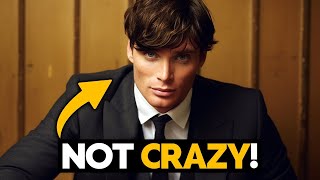
Cillian Murphy talks about playing diverse characters, collaborating with directors like Christopher Nolan, and why chemistry tests are absurd. He stresses research, from studying shell-shock soldiers to understanding his characters' trauma, and values working with strong actors like Tom Hardy and Helen McCrory.
Chapters
The challenge should be to try and play as diverse characters as possible. It would get boring for the audience and for the actor if you played characters that were similar all the time. What I want is to work with people with strong visions. They do this crazy thing now, more for boys and girls, they do this kind of chemistry test. I'm like, that's the most absurd thing in the world to me. I don't know, sometimes you feel like a total waste of space, really, when you look at people who have proper jobs. And then you go, what am I doing?
Hello, Believe Nation, it's Evan. My one word is believe, and I believe in people more than they believe in themselves. And my sincere hope is that if you see in yourself what I see in you, you'll be able to change the planet. So to help you on your journey today, we're gonna learn from actor Cillian Murphy and my take on his top 10 rules of success. Rule number 7 is my personal favorite, and I'd love to know which one you guys like the best. Also, as you're watching, if you hear something that really resonates with you, please leave it down in the comments below and put quotes around it so other people can be inspired by it as well. And if you leave it within the first couple hours of this video going live, you have a chance to win one of two daily prizes.
The challenge should be to try and play as diverse characters as possible. It would get boring for the audience and for the actor if you played characters that were similar. The time. Hop 1, hop 2, hop 1, 2, 3. Tish, tish, tish. Flap, flap, flap. We're actors, you know, we're supposed to be able to inhabit different characters. That's kind of the— that's our job. That's what acting should be, surely. It could be action flick, innit? I'm Cillian Murphy and I'm an actor, I suppose. Cillian, I've also heard you say that one of your happiest places is on set when you hear the word action. Why? I mean, if I'm in the film, I'll be hiding watching. Otherwise it's just awkward for everyone involved. Isn't that Cillian Murphy? What's he doing here? He's just watching. He'll leave soon.
He's happy now.
Yeah, well, it is. It's that thing of where, you know, that's the kind of the moments you've been looking forward to and building up towards. And it is It is true to say that time kind of slows down and you stop sensing things in a kind of a normal way. And, and I love it. I mean, it's my favorite part of the whole, the whole thing. And it's the thing you kind of live for.
What was the hardest scene or moment for you as an actor this season on the show?
I mean, the whole thing is challenging due to the nature of the schedule and the, you know, it's a very talky show. There's a lot of dialogue and there's a lot of big scenes for Tommy, and he's kind of, you know, this season particularly, there was a lot of trauma that he had to endure. I don't know, man. I love doing it. I love all the big— I love the big scenes. I love working with Helen McCrory. I love working with Paul Anderson. I love working with Tom Hardy. You know, I relish those big scenes, those confrontational scenes. They're very, very satisfying for an actor when you get that caliber of actor acting opposite, you know. So there's never— there's nothing that— you always go home from work going, wow, I went to work today, you know. So this would be— I'm trying to think now— is this like your third or fourth film with Chris Renauld? Well, people are saying fifth, but, you know, I only pop up in the Batman thing a little bit. Yeah. What you want as a An actor, certainly what I want is to work with people with strong visions, you know, and you can't find anybody with a stronger vision than Christopher Nolan, you know what I mean? He's written, produced, and directed this thing, and it's kind of phenomenal. And it is still collaborative, like we spent a lot of time on the phone talking about this character and talking about how to pitch it, and he just kind of left me off to go and do my research and then bring my research to him and say, look, I've thought this, this, and this might be appropriate, so what do you think? So yeah, I mean, there is, Absolutely scope to collaborate, but you want to work with someone who is that.
He'll guide you.
Yeah, or just has. I mean, he knows exactly every frame of the film as he's shooting it, you know, which is so comforting. It's a real privilege to work with him every time. I mean, there's no argument that he's one of the greatest directors around at the moment. I think everyone accepts that. So as an actor, selfishly, you want to work with the best people, and he's definitely one of those. But every relationship between a director Director and actor should be collaborative. I mean, you know, they're the boss and they're the leader, but, you know, it has to be an exchange of ideas always. I just was realizing that I was really into performing, you know, and I wasn't quite sure. I just— live performance. I really liked playing the guitar and singing, and I really liked acting on stage. This director of a theater company came in and worked with us for— over the course of a few months, and I loved it, and I kind of— I thought he was just the coolest guy ever. I just developed a huge man crush on him. And then I'd see him out in Cork drinking, like in pubs and things, and I was like, "You gotta give me an audition for a play." So I played to him, he gave me an audition, and it was for this play called Disco Pigs. And it became quite successful. We made the play and then we made a film. We man and woman now. We little babbas no more. That kind of changed everything, really. I had never ever envisaged ever being in a film or being on television or anything like that. I wanted to be a theater actor. That's what I saw happening, you know, when I decided to go for it. I moved to London and started to get slightly bigger parts. I did this film called 28 Days Later. Hello! People saw that film, and people saw it in America. And that definitely was a marker as well because, you know, I was working with Danny Boyle, and it was the lead part. Water. Oh, I shouldn't have done that. I was really aware of the script being fantastic and Danny being Danny. And I really, really worked at the auditions. I did like 5 auditions. And auditioning is a terrible, terrible experience, you know, because you're not giving a performance. It's a different skill. Not one that I'm very good at or was very good at. Danny saw something and took a chance. And that is a film I'm very proud of. And for some reason it resonated with people and people went to see it. So that's where people, you know, began to attempt to pronounce my name. Um, I've been attempting ever since. And you're both actors who tend to star in more dramatic roles than comedic ones. Is that a conscious decision as an actor, or is it literally the scripts that come in the ones that you like are the ones with those roles? Yes, actually, it tends to be that. I mean, I love, love watching comedies or whatever, but the films that I really, really— the ones that are close to my heart, I guess, are the dramatic ones, you know, and the pieces of it generally, not just films, like pieces of art and literature and everything. They tend to be the ones, I think, where the stakes are raised. And to me, that is drama. Yeah. The greater the stakes, the greater the drama. And that to me is more compelling to watch. And that's, I guess, the sort of material that I'm drawn to. It's always a gamble, that casting thing, you know. And they, in fact, they do this crazy thing now, more for boys and girls. They do this kind of chemistry test. I'm like, that's the most absurd thing in the world to me. How can you manufacture that? It's some weird alchemy. You can't. It's just there or it isn't there. And we just You know, it was the same for me. We went for dinner. It happened that I myself and my wife were obsessed with The Fall at the time, and I was like, you know, he did such an incredible job and I love that show. And then we just met and, and it just seemed to work. And there's a similar sense of humor and a similar approach to work, as Jamie said. And, you know, I forgot. I mean, I forgot how, how intense that film is and we forgot like it doesn't really let up. So we had to, the three of us I think together, we managed to make the atmosphere on set quite an enjoyable one despite everything else. And I think again, it's to Sean's testament, that's the wrong word, but Sean should take the credit for the fact, there was families around and it was a very, very lovely environment to work in and then we had fun and I think you have to do that. You're lucky to be working on such a good project. You know, you can't go around all sort of sad and intense, you know. It's gotta— you've gotta get through the day. I don't know, sometimes you feel like a total waste of space, really, when you look at people who have proper jobs. And then you go, what the— what am I doing flouncing around putting on voices and dressing up? But people need to go to the pictures, and people need some sort of escape. Artists don't let people down like politicians let people down and bankers let people down. The quality of the work may fluctuate, but they keep making it, they keep trying, and they keep giving some sort of sucker, I think, you know, kind of overpaid. And there's a huge amount of stupidity and hot air that surrounds it all, and a lot of that I don't subscribe to. But I think sometimes the film can change someone's life. If you can do that through a piece of art, then that's— I feel like you're giving something important back. Well, I think you always— you have to learn from each job you do as an actor. You're constantly learning. It's an ongoing learning process, really. But this is unique for me, certainly, in having to develop a character over a long period of time and sort of grow with a character. I've never done that before. And I suppose to have the confidence in going that once you've established it and people you know, have invested in it to a degree, then you can be brave. So I suppose it's that. I've tried to take that from it as a lesson, that you can actually be brave with the character and take it places that you mightn't have necessarily thought of at the beginning. There's such an amount of, um, resources out there for an actor, you know, nowadays to, to You can research everything, and I think that it's your duty to do that. But again, you know, I always, with every role, I try to do as much research as possible to have it all available. And once you've done that, kind of leave it behind because you have to focus on the truth of the character, and you have to make the character as believable as possible. In terms of the research, though, I mean, were there any performances that you drew upon? I mean, was there any kind of film or— you know, theater or play or anything like that that you've kind of watched or drew upon to give you a sense of the character? No, I don't really go to other performances for inspiration, really. I did a lot of research kind of about soldiers that had shell shock, and that was kind of what sort of informed it mostly. On that, I mean, what did you do? I mean, did you meet with, you know, PTSD survivors? No, I didn't. I mean, I wanted to try and sort of, because there's a lot about it nowadays, obviously, but back then they didn't have a clue. They didn't really know how to treat it, and the symptoms were so kind of bizarre. Like, I read about this one soldier who actually went blind for no physiological reason other than he was, the trauma made him blind. So that was the power of what they had seen. So they were kind of, you kind of have to interpret it as sensitively and as kind of, I don't know, as carefully as he can. It's very clear that this is a damaged guy whose sort of violence is a form of expression for him, and it's a big distance to travel for me as well to get to that, you know. And he's the most sort of capable person I've ever played. And that's not me either. How much did you pay for the suit you will be wearing? Oh, I don't pay for suits. My suits are on the house. Or the house burns down. You're inhabiting this character all the time. It affects you in a sort of subliminal way, I think. It affects you sort of by osmosis. But I'm not very aware of it. It's only people that are around you that are more aware of it. Like, my wife will be aware of when I'm playing him, I think. But I'll come back. Tell her she's in charge for good. You have to concentrate a lot, and he talks a lot, smokes a lot of fags, and is constantly fighting, so he's exhausting. <LYRICS>The ceiling is moving, moving in time.</LYRICS> I thought it was a terrible idea at the beginning to put contemporary music on a period show. I thought that was silly. But then it just seemed to work because the artists that they chose were these kind of outlaws you know, artists, and that seemed to work. For me, it was huge that like Nick Cave had to watch it and say, yeah, I'll give you my music for it. So the fact that he had actually watched it was a big deal for me.
Thank you guys so much for watching. I made this video because George Sid asked me to. If there's someone you'd like me to profile in a future top 10, please check out the link down in the description below and you can cast your vote on who we should do next. I also want to give a quick shout out to Pedro Colon. Pedro, thank you so much for picking up the audio version of my book, Your One Word. You said that you didn't expect it to be such an amazing book, so I'm glad we were able to overdeliver on those expectations. But I really appreciate you sharing it on Twitter with your audience as well. It really means a lot to me and I'm glad you enjoyed the book. Thank you guys again for watching. I believe in you. I hope you continue to So believe in yourself and whatever your one word is. Much love. I'll see you soon.
More from Evan


How the Biggest Mistake in History Created A Trillion-Dollar Empire | Sergey Brin



9 Machiavelli Principles That Force People To Respect You | Machiavellian Philosophy



The First 10 Words That Instantly Ruin A Sales Conversation | Vanessa Van Edwards

The Top 1% Mindset Behind The First $5 Trillion Company | Jensen Huang (Nvidia)

