Who are the Top 10 Greatest Basketball Players of All Time?
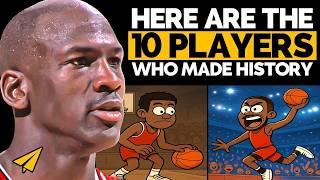
Evan Carmichael ranks the ten greatest basketball players and extracts a life lesson from each: Steph Curry's underdog perseverance, Kobe Bryant's Mamba mentality, Michael Jordan's competitive drive, and others. He ties their stories to principles like resilience, teamwork, and using your platform for impact.
Chapters
Basketball has produced some of the most inspiring figures in sports, and in this countdown, we'll explore the top 10 greatest basketball players ever. Not just for their stats and championships, but for their mindset, leadership, hard work, and the impact they've had on and off the court. Each of these legends from different eras faced challenges and overcame obstacles. Their stories teach us lessons in perseverance, teamwork, and the power of dedication. Let's dive into the list from 10 to 1 and discover what makes made each of these players truly great. If you've been here before, drop a hashtag #Believe in the comments below so I can feature you here in a future video. And if you're new, welcome to Believe Nation, the only channel that helps you believe in yourself daily, one video at a time. Believe. Number 10 on our list is Steph Curry. Steph Curry is the sharpshooting superstar who revolutionized modern basketball with his 3-point shooting. At 6'2" and not as physically imposing as many of his peers, Curry became a 2-time MVP and 4-time NBA champion through skill, vision, and relentless practice. He's often called the greatest shooter of all time, but his greatness isn't just about his shooting. It's about his heart and his hard work off the court. He's known for his humility, philanthropy, and leadership by example. Now, Curry's journey is the classic underdog story. Came out of high school, many top college programs thought he was too small. He had to prove himself at tiny Davidson College, where he lit up the NCAA tournament and put himself on the map. Even after reaching the NBA, he faced serious ankle injuries early in his career that almost derailed him. And instead of giving up, Curry strengthened his body and refined his skills. He turned every doubt into motivation. If you don't fall, how are you going to know what getting up is like? Curry once said, reminding us that setbacks teach us resilience. And those early stumbles fueled his rise to MVP status. Curry's success is not an accident. It's a choice he made to work extremely hard and believe in himself. He is proof that you don't need to be the tallest or the strongest if you master your craft and stay dedicated. By perfecting his long-range shot, he changed the way basketball is played. Today's teams emphasize 3-point shooting largely because of him. His leadership is also defined by joy and team spirit. He plays with a contagious enthusiasm that lifts up his teammates. The lesson from Steph Curry's story is that confidence plus effort can rewrite the rules. Young players who might be overlooked can look to Curry and remember that with enough practice and passion, nothing will be given to us, and we must earn every success. Steph's journey from underdog to all-time great inspires us to embrace our own challenges as opportunities to rise. At number 9 on the list, Tim Duncan. Tim Duncan, nicknamed the Big Fundamental, is the cornerstone of the San Antonio Spurs dynasty and widely considered the greatest power forward of all time. Let's talk stats. He won 5 NBA championships and 3 Finals MVPs, anchoring a franchise that made the playoffs in every season of his 19-year career. Duncan was never flashy. Instead, he was consistent, humble, and team-oriented. He earned the respect of everyone by doing the little things right and putting the team first game after game. In fact, his legacy is being a model of humility and teamwork in the modern NBA. Duncan's path to basketball greatness was unusual. As a child growing up in the US Virgin Islands, his first dream was to become an Olympic swimmer. A hurricane destroyed his island's only Olympic-sized pool, and around the same time, his mother passed away from cancer when Tim was 14. Now, these hardships could have crushed him, but instead they led him to basketball. Duncan only started playing basketball as a teenager, far later than most pros. He embraced the new sport with the same level of discipline that he learned from swimming. He'd also promised his mom that he'd get his college degree, and he did. Graduating before entering the NBA. Now, despite being the number one draft pick, he stayed humble and coachable. He focused on fundamentals—his footwork, his defense, his bank shots. His mother had taught him a simple motto: good, better, best. Never let it rest until your good is better and your better is best. Duncan lived by those words, constantly turning his good into better through effort. Duncan's leadership was quiet but powerful. He never sought the spotlight or trash talk. Instead, he lifted others up. He led by example, showing that consistency and integrity win in the long run. Younger teammates saw how he never took plays off, how he stayed calm under pressure, and they followed his lead. Over nearly two decades, he helped build one of the most consistent winning franchises in sports. For entrepreneurs and young achievers, Tim Duncan proves that you can be both humble and the best. You don't need to brag or show off. If you put in the work every day, your results will speak for you. His career is a testament to fundamentals, patience, and staying true to your values, no matter the challenges that forced you to change course. At number 8 on the list, Shaquille O'Neal. Shaquille O'Neal, simply known as Shaq, is one of the most dominant forces basketball has ever seen. Standing 7'1" and over 300 pounds in his prime, Shaq overpowered entire teams with his size and strength. He was a 4-time NBA champion, 3 with the Lakers alongside Kobe Bryant and 1 with the Miami Heat, and a league MVP in 2000. Beyond the stats, Shaq's huge personality made him a global icon. He was famous for breaking backboards with dunks, but also for making people laugh with his jokes and bringing fun to the sport. On the court, he was a physical force, and off the court, he became a successful businessman and entertainer. Now, it might seem like Shaq had it easy because of his height, but he faced his own challenges growing up. As a kid, he was often the biggest in his class and felt awkward and out of place. He moved frequently because his stepfather was in the military, which meant he had to constantly adapt to new environments. Shaq also had a glaring weakness in his game. Free throw shooting. Opponents often fouled him on purpose, called the Haka Shaq, because they knew free throws were hard for him. Instead of letting that humiliation break his confidence, Shaq kept practicing and maintained a sense of humor about it, famously saying, me shooting 40% from the foul line is just God's way to say nobody's perfect. He learned to turn criticism into motivation. I had to learn at an early age to turn criticism into motivation, Shaq recalls. Early in his NBA career, some doubted if he could ever win a championship. Shaq answered by training harder, even learning from legends like Hakeem and eventually became a 3-time Finals MVP with the Lakers. Shaq's mindset blends hard work with a positive outlook. One of his favorite personal quotes is, "Never worry about the problem, always worry about the solution." In other words, don't get stuck complaining, focus on fixing things. On the court, that meant if another team exposed a weakness, Shaq and his coaches would adjust their strategy, for example, improving his passing out of double teams. In life after basketball, Shaq applied the same philosophy. He went back to school and earned a doctorate degree in education. And he invested wisely, from tech stocks to franchise businesses. He's expanded his reach into entertainment and business, becoming a successful entrepreneur. For young fans and entrepreneurs, Shaq shows the value of adaptability and big-hearted leadership. He reminds us to embrace who we are, even our flaws, keep learning, and use our success to make others smile. Whether dominating the paint or cracking a joke on TV, Shaq's approach is about confidence with a smile. Tackle challenges head-on, but have fun along the way. Coming in at number 7 is Larry Bird. Larry Bird is a Boston Celtics legend and one of the most complete players in basketball history. A 3-time NBA champion and 3-time MVP in the 1980s, Bird could do it all. He was an elite shooter, a clever passer, a tough rebounder, and a notorious clutch performer. Bird wasn't the fastest or highest jumping player, but his competitiveness and skill were unmatched. Along with Magic Johnson, Boston, he helped save and popularize the NBA in the 1980s thanks to their famed rivalry that captivated the nation. Larry Bird's swagger, work ethic, and will to win made him an icon. Fans in Boston called him Larry Legend, and to this day he's revered as the embodiment of hard-nosed, blue-collar excellence. Now, Bird's journey from a small-town kid in French Lick, Indiana, to NBA superstardom is full of challenges. He grew up in a poor family and faced tragedy when his father took his own life during Larry's teen years. Bird briefly attended Indiana University but felt out of place and dropped out, later enrolling at tiny Indiana State University. Many thought he'd thrown away his chance at big-time basketball, but Bird found his confidence at Indiana State, carrying them to the NCAA championship game where he faced Magic Johnson in 1979. Critics said he wasn't athletic enough for the NBA, but he proved them wrong from his rookie year, winning Rookie of the Year and transforming the Celtics. Bird also battled through serious injuries during his career, He played through back pain and even finished games after smashing his head on the court. His solution to every setback was the same: outwork everyone. Bird was famous for arriving at the gym early and shooting hundreds of practice shots every single day. A winner is someone who recognizes his God-given talents, works his tail off to develop them into skills, and uses those skills to accomplish his goals, Bird said, explaining his philosophy. Even when he lost the game, he'd study what he did wrong and come back better. Even when I lost, I learned what my weaknesses were and went out the next day to turn those weaknesses into strengths, he said. This relentless drive turned a slow small-town kid into an NBA legend. Now, Larry Bird's mindset can be summed up in one word: competitive. He absolutely hated losing and was willing to do whatever it took to win— dive for loose balls, talk trash to opponents, or spend extra hours in the gym. His confidence was legendary. He once told opponents exactly how he'd beat them with a last-second shot, and then he did it. Bird's leadership was about elevating his teammates' play. He led by example with toughness and by making the smart pass to the open man. Off the court, Bird stayed humble and true to his roots, never seeking the spotlight. His story teaches us that hard work beats pure talent when talent doesn't work hard. For entrepreneurs and young fans, Larry Bird is proof that if you put in the effort to master your craft, you can compete with anyone. He showed that believing in yourself, even when others underestimate you, is key. Bird once said, I wasn't real quick and I wasn't real strong, so I beat them with my mind and my fundamentals. He turned his mind into his greatest weapon. So the takeaway for you was know your strengths, shore up your weaknesses, and never ever back down from a challenge. Coming in at number 6 is Kobe Bryant. Kobe Bryant is often hailed as the closest thing to Michael Jordan since Michael Jordan, a 5-time NBA champion with the Los Angeles Lakers. Kobe's combination of of skill, drive, and clutchability made him one of the most feared competitors ever. He scored 33,643 points in his career. That's fourth all time and once dropped 81 points in a single game. But what truly defines Kobe's legacy is the Mamba mentality, his term for relentless focus, ultra-competitive fire, and constant self-improvement. Kobe approached basketball and later business and storytelling with an almost obsessive dedication. He would practice in the early morning hours while others slept. Always looking for an edge. His passion and dedication inspired a global fan base. And even after his playing days, athletes across sports cite Kobe's work ethic as a major influence. Now, Kobe's road to greatness had its share of bumps. He entered the NBA at age 18, straight out of high school, and at first he really struggled. In one of his first playoff series, he shot multiple air balls in clutch moments, failing in front of millions of viewers. Now, rather than losing confidence, Kobe used that as fuel to get better. That summer, he reportedly spent hours improving his jump shot. Through his career, whenever Kobe failed or fell short, he came back stronger. Everything negative— pressure, challenges— is all an opportunity for me to rise, Kobe famously said. He truly believed that adversity was the best teacher. In 2003, Kobe faced a serious personal and legal crisis. A sexual assault charge was later resolved out of court that could have ended his career and damaged his reputation. It was an extremely dark period, but Kobe focused on basketball as his sanctuary and worked through it. Eventually rebuilding his image. He also endured tough seasons on the court, like in 2008 when the Lakers lost the NBA Finals, or when star teammate Shaq left and critics said Kobe couldn't win without him. Kobe responded by leading the league in scoring and winning back-to-back championships in 2009 and 2010, proving the doubters wrong. But perhaps his biggest physical challenge came in 2013, when at 34 years old, he tore his Achilles tendon, one of the most devastating injuries for a basketball player. In a display of pure determination, Kobe walked to the free throw line and made 2 free throws on the torn Achilles before leaving the game. He attacked rehabilitation and managed to return to play again, defying expectations for someone his age. While he wasn't the same explosively after that injury, he adjusted his game and still had a memorable 60-point performance in the final game of his career. Kobe's mindset was ultra-aggressive. He believed in working harder than anyone else and never shied away from the big moments. He once said, if you're afraid to fail, then you're probably going to fail. Capturing his fearless approach. He was known to seek out challenges. If there was a tough defender, Kobe wanted to go at him. His Mamba mentality is essentially about constant improvement and resilience. As he described it, the moment you give up is the moment you let someone else win. So he never gave up. Kobe's intense approach wasn't always easy on his teammates. He could be very demanding, but he lifted those who embraced the challenge. Young players like Julius Randle later said they learned immensely from Kobe's mentorship and mindset. Off the court, Kobe applied the same passion to new endeavors. He won an Academy Award for a short film that he made, wrote books for young athletes, and launched ventures in media and investments. He showed that the principles of success carry over from basketball to business—discipline, learning, creativity. The lesson from Kobe Bryant is that greatness isn't a gift, it's a choice. He chose to put in the extra work every day, to play through the pain, and to never be satisfied with past success. For anyone chasing a dream, Kobe's life stands as a great a great testament. Embrace that grind, face the pressure, and use the setback as your opportunity to rise to a new level. In the end, his legacy isn't just his 5 rings. It's an example of pursuing excellence with every fiber of your being. Coming at number 5 is Bill Russell. Bill Russell is the ultimate champion in basketball history. He led the Boston Celtics to 11 NBA championships in 13 years during the late 1950s and 1960s. An astonishing record that has never been equaled. Russell was not known for scoring points. Instead, he revolutionized the game with his defense, his rebounding, and his leadership. He made blocking shots and teamwork into an art form. At 6'10", Russell used his intelligence and timing to shut down opponents. But perhaps more importantly, he was the heart and soul of one of sports' greatest dynasties. He became the first African-American head coach in NBA history while still playing on the team and won 2 titles as a player-coach. Now, off the court, Russell was a civil rights pioneer who marched with Dr. Martin Luther King and spoke out for equality in an era of harsh segregation. His impact on the game truly goes beyond statistics. It's about his leadership, his sacrifice, and justice. Now, Russell grew up in the segregated American South and later California, facing racism and poverty from a young age. When he arrived in Boston, he encountered racist treatment even from some fans of his own team. At one point, vandals broke into his home and destroyed his property because of the color of his skin. Now, instead of lashing out, Russell responded by becoming even stronger mentally. He used the negativity as the fuel to bond with his teammates and create an unbreakable team spirit. On the court, Russell often faced Wilt Chamberlain, a towering rival who put up huge scoring numbers. Many saw Wilt as the more talented individual player, but Russell consistently found ways to help his team beat Wilt's. How? By focusing on defense and teamwork rather than personal statistics. Russell famously said, the most important measure of how good a game I played was how much better I'd made my teammates play. This philosophy of selflessness was key to Boston's success. He made everyone around him better. Russell also had to overcome the pressure of constant winning. Every year, the expectation was championship or bust, which is a heavy load to carry. He met that pressure head-on, serving almost like a player-coach on the floor. Even before he officially took on coaching duties. In 1966, when he was named the Celtics coach, he broke a significant racial barrier in sports. It was not easy to be the first, but Russell handled it with dignity and led by example. He guided the team to two titles as coach while still playing. And through all these challenges—racial hostility, high expectations, fierce competition—Russell maintained an unwavering focus on what mattered: winning together. Bill Russell's mindset was all about team above self. He absolutely defined what it means to be a leader. Rather than chase personal glory, he whatever the team needed. Some nights that meant scoring, but usually it meant grabbing every rebound. It meant playing tough defense. It meant starting fast breaks with his outlet passes. He cultivated unselfishness as a Celtics core value. Russell would often make a huge play and not celebrate himself, but rather clap for a teammate who finished the play. His leadership was quiet but profound. Teammates knew he had their backs off the court. Russell's courage in standing up for civil rights demonstrated leadership in life. He refused to accept second-class treatment, and by speaking out, he paved the way for future generations of athletes to use their platform for social justice. For entrepreneurs and young achievers, Bill Russell teaches that success is a shared effort. He exemplifies that if you build up those around you, you all rise higher. Russell's 11 rings weren't won by accident. They were won by a mindset that everybody's contribution matters. He showed that character and principles are as much a part of greatness as talent. And in business or any team endeavor, following Russell's example means fostering collaboration, measuring your success by the success of those around you. His life also reminds us to stand firm for what's right, even when it's hard. Bill Russell didn't just win games, he changed the game and society for the better through his integrity, resilience, and relentless commitment to excellence for a greater good. If you want to take real action after this video, I made a free worksheet just for you. It covers the top lessons from today gives you space to write your biggest takeaways and helps you build a simple action plan. It's 100% free. Just click the link in the description to go grab it. Let's start building real momentum in your life and business. I'll see you there. Coming in at number 4 is Magic Johnson. Ervin Magic Johnson is the charismatic leader of the 1980s Showtime Los Angeles Lakers and one of the greatest point guards of all time. Standing at 6'9", which is very tall for a point guard, Magic used his height and incredible court vision to revolutionize the game. He could see passes that nobody else saw, turning basketball into entertaining theater. Magic won 5 NBA championships with the Los Angeles Lakers and 3 league MVP awards. In the 1980 NBA Finals, as a 20-year-old rookie, he famously filled in at center for an injured Kareem Abdul-Jabbar in the clinching game and put up 42 points, 15 rebounds, and 7 assists winning the Finals MVP. It was a performance that announced a new superstar to the world. Magic's infectious smile and love for the game helped bring the NBA into a golden age of popularity. He made everyone around him better with his unselfish play and enthusiasm. Now, Magic's biggest challenge in life came off the court. In 1991, at the peak of his career, Magic Johnson stunned the world by announcing he had tested positive for HIV, the virus that causes AIDS. AIDS. At the time, HIV/AIDS was widely misunderstood and often seen as a death sentence. Magic had to abruptly retire from basketball to focus on his health. The news could have been a crushing end to his story, but Magic faced this challenge with courage and optimism. He became a spokesman, educating people about HIV, fighting stigma, and advocating for safe practices. In 1992, he demonstrated his competitive spirit and love for the game by returning to play in the NBA All-Star Game, where he won MVP, and by captaining the 1992 USA Dream Team to a gold medal in the Olympics. His brief comeback showed that people with HIV could still lead full, active lives, changing perceptions worldwide. Magic did eventually retire for good, but instead of fading away, he turned to entrepreneurship and philanthropy. He overcame the health scare and built a second career as a highly successful businessman, investing in movie theaters, restaurants, and even becoming a part owner of sports teams. On the court, Magic also overcame competitive challenges. He entered the league as a young man with a flashy style, and some wondered if that style could win championships. He proved that it could. But he also learned from defeats like the 1984 Finals loss to the Celtics to improve his game management and defense. Magic dealt with pressure constantly, from being a superstar in the media capital of L.A. to living up to the name Magic. He took those pressures in stride with a grin. When the Lakers were in tight spots, Magic's confidence never wavered. As a leader would say, 'Ask not what your teammates can do for you. Ask what you can do for your teammates.' A twist on a famous quote that showed his team-first mentality. Now, that approach helped him overcome any chemistry issues and unite his team towards a common goal. Magic Johnson's mindset is all about joyful leadership. He had fun playing, and that fun was contagious. But make no mistake, he was deadly serious about winning. Magic had an uncanny ability to remain cool and make clutch plays, which earned him the name him Captain Clutch in big moments. On the fast break, he would often perform no-look passes and dazzling assists, but those weren't just for show. They were smart basketball plays to get the best shot for his team. As a leader, Magic knew how to bring out the best in diverse personalities, from Kareem Abdul-Jabbar's calm focus to Pat Riley's intensity. He listened, communicated, and led with positivity. Off the court, his impact has been just as profound. Magic became a symbol of resilience after publicly battling HIV. He showed millions of people that HIV is a disease can live with, and that compassion and education are vital. Through the Magic Johnson Foundation, he worked to improve urban communities and provide health services. And as a businessman, he broke barriers for Black entrepreneurs owning companies and even a stake in the Los Angeles Dodgers and other teams, thereby creating opportunities for others. For entrepreneurs and young people, Magic Johnson exemplifies the power of passion and adaptability. He teaches us to love what we do, to lead with a generous spirit, and to face unexpected hurdles with courage and grace. Magic's life also underlines the importance of team, even in business. He often talks about having a great team of people and making sure everyone wins together. If you can uplift those around you with a smile, a kind word, or an assist, you create magic both on the court and in life. At number 3 is Kareem Abdul-Jabbar. So Kareem Abdul-Jabbar is a towering figure in basketball, literally at 7'2", and figuratively. He dominated the sport for 20 years from the late 1960s to late 1980s, winning 6 NBA championships and a record 6 MVP awards. Kareem scored 38,387 points in his NBA career, making him the league's all-time leading scorer for decades, a record only just recently broken in 2023 by LeBron James. His trademark skyhook shot was nearly impossible, a graceful one-handed hook shot that he could hit from many angles. But Kareem's greatness extends beyond the court. He's also a New York Times bestselling author, a cultural ambassador, and a social justice advocate. He's known for his intellect and was a trailblazer for athlete activism, using his platform to fight for racial and religious equality. Born Ferdinand Louis "Lou" Alsindor, he dominated college basketball at UCLA, then changed his name to Kareem Abdul-Jabbar after converting to Islam. Throughout his life, Kareem had stood tall both as a sports legend and as a principled, thoughtful leader off the court. Kareem's journey had its own set of challenges. As a very tall, talented teenager in the 1960s, he faced immense expectations and also the harsh realities of racism. In one famous instance, Kareem, then Lew Alcindor, was the star of the UCLA basketball team at the height of the civil rights era. In 1968, he refused to participate in the Olympic team as a protest against discrimination in America. Taking that stand was controversial, and he received a ton of backlash. But he held to his principles. On the basketball front, one interesting challenge came during college. The dunk was banned in NCAA basketball largely because of Elsindor's dominance. Instead of letting that frustrate him, he developed the skyhook as an alternate way to score, turning a roadblock into an iconic weapon. In the NBA, Kareem won early a championship and Finals MVP in 1971 with Milwaukee, but then went through some middling years after moving to Los Angeles as the Lakers struggled Critics wondered if his best days were behind him by the late 1970s. Kareem answered by embracing a new challenge. When Magic Johnson arrived on the Lakers in 1979, Kareem, then in his 30s, could have resented the attention the young star got. Instead, he formed a partnership with Magic built on mutual respect. Kareem adjusted his leadership style, sharing the spotlight and mentoring the younger players. This resulted in a 5-title run in the 1980s for the Lakers. And as he aged in his late 30s, Kareem faced the challenges of keeping his body in shape. He adopted yoga, a healthy diet, and meticulous training long before it uncommon for athletes to do so, allowing him to play effectively until the age of 42. Off the court, Kareem also faced personal challenges. For example, in the 1970s, he dealt with the aftermath of a house fire that destroyed his belongings and nearly his life. He also sometimes felt misunderstood or underappreciated by fans who didn't see the outgoing personality of someone like Magic. Kareem met those challenges by continuing to speak through his craft, winning Finals MVP in 1983 at age 38. On the court, proving that age is just a number, and through his writing. Kareem Abdul-Jabbar's mindset is one of quiet excellence and integrity. He wasn't a loud motivator. He led by example and with a thoughtful approach. His patience and consistency were legendary. He focused on mastering the fundamentals and staying disciplined. Kareem once said, you can't win unless you learn how to lose. In other words, every setback is a lesson. This perspective helped him stay on top for decades. He's also known for saying, I think that the good and the great are only separated by the willingness to sacrifice. Kareem indeed sacrificed personal accolades for team success and sacrificed his comforts to stand up for his beliefs. On the court, he sacrificed flashiness for reliability. The skyhook wasn't a showy dunk, but it was brutally effective. Off the court, he sacrificed time and energy to write books and articles educating others on history and social issues. Issues. His impact is immense. As a player, he paved the way for big men to have longer careers and a bigger cultural presence. As an activist and writer, he broadened the definition of what an athlete can be— an intellectual and an advocate. For young people and entrepreneurs, Kareem's story teaches the value of adaptability and lifelong learning. When circumstances change, like a rule that bans dunks, adapt and invent something new, like the skyhook. Remain consistent Be consistent. Small improvements every day lead to legendary results. And above all, stand for something greater than yourself. Kareem used his fame to advance causes that he believed in, showing that success is not just about personal gain, but about lifting others up too. His legacy as a trailblazer for athlete activism reminds us that true greatness is measured not just by the titles, but by the positive changes that we create. All right. Number 2, LeBron James. LeBron James is a generational talent, often compared with Michael Jordan in the debate over basketball's greatest player of all time. Now in his 20th-plus season, LeBron is the NBA's all-time leading scorer, a 4-time champion with 3 different teams, and a 4-time MVP. But LeBron's greatness isn't only in numbers, it's in his unmatched versatility and the enormous expectations he's lived up to since he was a teenager. Nicknamed the Chosen One in high school, LeBron entered the NBA at 18 years old with hype unlike any player before him, and somehow he exceeded those sky-high expectations. He could play any position on the court. He scores, rebounds, passes like a point guard, and defends all 5 positions. Beyond basketball, LeBron has become a leader off the court, a voice for social justice, an entrepreneur, and a philanthropist, notably founding the I Promise School in his hometown of Akron, Ohio, for at-risk children. He embodies a modern athlete who uses his platform for empowerment. If Michael Jordan defined the globalization of the NBA in the 1990s, LeBron James defines the player empowerment of the 2000s and 2010s, where athletes take control of their narratives and businesses. LeBron's rise came from very humble beginnings. He was born in Akron, Ohio, to a 16-year-old single mother, and they moved frequently in his early childhood, sometimes struggling to have stable housing. As a As a fourth grader, LeBron missed a lot of school because of his living situation, but he found escape and hope in basketball. By high school, he was a national sensation, which was a blessing and a burden. Imagine being on magazine covers and hailed as the future of basketball at age 17. The pressure was intense. LeBron had to grow up in the spotlight and made few mistakes. When he entered the NBA in 2003 as the number one overall pick, struggling or failing could have tagged him as a bust. Instead, LeBron worked tirelessly to improve each year. One early challenge was criticism of his shooting, so he kept refining his shot until it became a weapon. Another challenge in his first stint with the Cleveland Cavaliers, his hometown team, he carried an underdog team to the 2007 NBA Finals but got swept, leading to doubts about his ability to win it all. The biggest public challenge was the fallout from The Decision in 2010 when LeBron chose to leave Cleveland for the Miami Heat. On a nationally televised special. He was vilified by many for how he handled it, and he suddenly became a villain in the eyes of some fans in Miami. He then lost the 2011 Finals in upset, and media pundits were ruthless, calling him unclutch. This was a low point for LeBron's public image. How did he respond? By looking inward, accepting the criticism, and coming back stronger and freer. In 2012 and 2013, he led Miami to championships, silencing a lot of the doubt. He then took on the challenge of an even greater legacy move, returning to Cleveland in 2014, promising to deliver the city a championship. In 2016, he did just that, leading the Cavaliers to a historic title and overcoming a 3-1 Finals deficit against a 73-win Golden State Warriors team. It's one of the greatest comeback stories in sports. Through these ups and downs, LeBron showed resilience. He kept evolving his game, improving his post moves, his 3-point shooting, routine and even his free throw routines to address his weaknesses. He also faced a challenge of father time. In his mid-30s and now late 30s, he invests heavily in maintaining his body, reportedly spending 7 figures a year on trainers, nutrition, and recovery to continue playing at an elite level. He overcame a significant injury in 2019, a groin tear, and came back to win a championship with the Lakers in 2012. Off the court, LeBron overcame the odds of a tough childhood environment where many of his peers fell victim to violence or poverty. He stayed focused and also kept those childhood lessons in his heart. I think the reason why I'm the person who I am today is because I went through those tough times when I was younger, LeBron has reflected. Those struggles gave him perspective and drive. LeBron James's mindset blends high IQ, hard work, and social consciousness. On the court, he is often the smartest player. He famously remembers the tendencies of every player and can recite sequences of plays from memory. He prepares his mind and body methodically showing that success is not just an accident, but the result of dedication. LeBron emphasizes teamwork. He often says his proudest achievement is how he elevates his teammates' games. He's unselfish with the ball, always making the right basketball play, even if it means trusting a teammate with a big shot. This has taught many that leadership sometimes means empowering others to shine. His mantra, strive for greatness, is something he signs on social media, which captures his daily drive. Importantly, LeBron isn't afraid of failure. Don't be afraid of failure. This is the way to succeed, he advises. And now look, that's evident in how he didn't let early Finals losses define him. Now, off the court, LeBron has been a very vocal leader. He speaks out on issues of racism, violence, injustice, understanding that his platform can influence millions of people. He famously once said, I'm more than an athlete. I'm pushing back against critics who told him to stick to sports. He's proven that one can dominate in sports and make an impact in the community at the same time. The I Promise School he founded in Cleveland offers wraparound services for at-risk kids and their families, a project born from remembering his own childhood challenges. Now, for entrepreneurs and young people, LeBron's story is a lesson in leveraging your platform and staying true to your values. He showed that you can be immensely successful and still care deeply about your community. Business-wise, he took control of his brand, partnering in ownership stakes like in production company SpringHill Entertainment and being an active voice in team management decisions. This empowerment mindset has spread among other players. But maybe the greatest lesson LeBron offers is resilience in face of criticism. He's been under the microscope since a teenager, and he stumbled in public, but each time he has owned it and grown. His ability to handle pressure and still perform at an all-time level is extraordinary. As a result, he has redefined greatness across multiple teams and over a very long career. The biggest takeaway from LeBron: work hard, adapt constantly, uplift others as you climb, and use your success as a tool to help those who come after you. By doing that, you don't just win games, you leave a legacy. And number 1, the GOAT, Michael Jordan. Michael Jordan is widely regarded as the greatest basketball player of all time, a living legend whose impact on the sport and popular culture is immeasurable. He won 6 NBA championships with the Chicago Bulls in the 1990s, going a perfect 6 for 6 in the finals and earning Finals MVP each time. Time. Jordan's individual accolades include 5 MVP awards, 10 scoring titles, and countless iconic moments that have been seared into sports history. Known as Air Jordan for his leaping ability and spectacular dunks, he became the face of basketball worldwide, sparking a globalization of the NBA. Beyond the court, he built the Jordan brand into a massive business, demonstrating how an athlete could become a global marketing powerhouse. But what really sets Michael Jordan apart is his unmatched unmatched competitive drive and will to win. His intensity, work ethic, and clutch gene are the standard by which all other players are measured. Quite simply, when you think basketball greatness, you think of Michael Jordan. Now, might be surprising to some that Jordan had to overcome significant challenges on his road to superstardom. One famous story: as a sophomore in high school, Michael Jordan tried out for the varsity basketball team, and he didn't make it. The coach cut him, selecting older, taller players instead. Michael was devastated. He went home, locked himself in his room and cried. But that disappointment lit a fire inside him. Rather than give up, he used it as motivation. I thought I worked hard. When I got cut, I was really hurt, but I think that just made my determination a lot stronger, Jordan later said. He spent the next year obsessively practicing, arriving at school early to shoot in the gym. He grew taller and stronger, and by the next season, he made the varsity and quickly became its star. That pattern—facing failure and coming back better—would define Jordan's career in the NBA Jordan was individually brilliant from the start, but it took time for him to become a champion. For years in the late 1980s, his Bulls were defeated by tougher teams like the Detroit Pistons, who employed physical intimidation called the Jordan Rules to wear him down. Jordan had to build his body up in the weight room and learn to trust his teammates more. He did both. Eventually, he and the Bulls broke through and won their first title in 1991. After 3 consecutive championships At the peak of his powers, Jordan faced an immense personal challenge. His father, James Jordan, was tragically murdered in 1993. Grief-stricken and a bit burned out, Michael stepped away from basketball to play minor league baseball for a year and a half. This was an unprecedented move. The best player in the world walking away. Many were skeptical of his baseball attempt. He faced a lot of critique. Jordan worked hard at it, but he missed missed basketball. And in 1995, he returned to the NBA with two simple words: I'm back. Initially, he wasn't in top basketball shape, and his Bulls were eliminated in the playoffs. Some commentators even dared to say he'd lost his edge. Jordan treated that like the high school cut— fuel. He trained ferociously that offseason. The result: the Bulls went 72-10 in a '95-'96 season, and Jordan led them to three more championships from 1996 to 1998. '88, including grabbing another Finals MVP at age 35. Later, he faced the challenge of coming back again at age 38 to play for the Washington Wizards, in part to share his knowledge with younger players and fuel his competitive fire, even though the team wasn't a contender. Through every phase, Jordan turned setbacks into motivation for him. I failed over and over and over again in my life, Jordan said in one famous Nike and that is why I succeed. He embraced failure as a step towards victory. In that same message, he recounted missing over 9,000 shots and losing hundreds of games, including 26 game-winning shots he was trusted to take and missed. Instead of those misses breaking his confidence, he learned from each and kept attacking. Michael Jordan's mindset is often summed up as win at all costs. He was ultra-competitive in everything. Everything, not just games, but in practice, in ping pong, in card games, you name it. He once punched a teammate in practice because he thought the teammate wasn't pushing hard enough. That's how intense he was about effort. Jordan demanded the best from himself and everyone around him. His work ethic was legendary—first to practice, last to leave—and he constantly worked on adding new skills. When critics said he was just a dunker, he developed a deadly fadeaway jump shot. When they said he didn't pass, he racked up seasons with 8 assists per game. Importantly, Jordan had supreme confidence. He wanted the ball in his hands in the final seconds. He famously said, I never feared failure. I would rather risk losing than not try. And this confidence was contagious. His teammates believed that if Michael was on their side, they could not lose. Jordan also had a remarkable ability to live in the moment. He described how in pressure situations, he wouldn't worry about the shot he missed a few minutes before or the consequences if he'd missed the next one. He'd just focus on that play. That mental toughness and focus made him arguably the most clutch player ever. Off the court, Jordan's impact was enormous in inspiring athletes to think globally. He was one of the first athletes to become a global brand unto themselves. His famous Nike Air Jordan sneakers and worldwide popularity paved the way for today's endorsements and international NBA fanbase. Base. Culturally, he was a hero to millions, an icon of excellence. He also had setbacks off the court. For example, he was criticized for not being more politically outspoken during his career, summed up by a quote attributed to him, "Republicans buy sneakers too," suggesting he stayed neutral to not alienate anyone. In his later years though, he has become more philanthropic and involved in social issues, donating to charities and speaking out at times. The lessons from Michael Jordan are countless, but maybe the biggest one is about resilience and an unwavering belief in oneself. When you get knocked down or get cut from something, use it as a motivation to improve. Jordan teaches that talent matters, but drive matters even more. He maximized his talent with an unrivaled competitive spirit. And another lesson is to seize the moment. Jordan treated each big play as a chance to shine, not a chance to fear. That fearless approach is something any entrepreneur or student can emulate. Don't be afraid of the big opportunity. Go for it wholeheartedly, and if it doesn't work out, learn and try again. Jordan's life also illustrates the importance of loving the process. He often said he played every game as if it might be his last, because somewhere a kid might be seeing him for the first time. He was passionate about basketball itself, not just winning. In the end, Jordan's legacy is that of the ultimate champion and competitor. As one ESPN writer put it, the rings, the MVPs, the scoring titles, the shoes, the GOAT. He achieved everything, yet it was his mindset that got him there. His story inspires us to push beyond our limits. Jordan showed that with enough hard work, a refusal to quit, and a willingness to take risks, we can achieve more than we ever imagined. He defined greatness in basketball, and the principles he lived by— the hard work, determination, and a belief in oneself can help anyone in any field aim for greatness in their own life. So what do these top 10 players all have in common? They each had incredible talent. Yes, but more importantly, they had the mindset of champions. They faced adversity, defeats, injuries, personal tragedies, naysayers, and they refused to give up. They constantly honed their craft and lifted up people around them. Michael Jordan used failure as the fuel to drive. LeBron James turned childhood struggles into strength and became a leader on and off the court. Kareem Abdul-Jabbar combined longevity with a willingness to stand up for his beliefs. Magic Johnson brought joy to the game and courage to life's biggest fight. Bill Russell defined team leadership and principled resilience. Kobe Bryant's Mamba mentality taught us to embrace challenges. Larry Bird proved hard work and confidence can beat the odds. Shaq showed how to be dominant yet never stop learning or laughing. Tim Duncan exemplified humility, consistency, and doing things the right way every day. And Steph Curry, the modern underdog who changed the game, reminds us that no dream is out of range if you put in the work. As entrepreneurs, students, or anyone with a goal, we can draw inspiration from these legends. They teach us to dream big, work hard, and stay persistent. They remind us to lead both with our heads and our hearts, to value our team, to lift others up, and to never lose faith, even when the odds are stacked against us. Each of these players started out as a kid with a dream and turned it into reality through dedication and courage. And now it's your turn. Carry their lessons with you. Whether you're trying to build a business, ace an exam, or overcome a personal hurdle, approach it with the determination of Michael Jordan, the resilience of LeBron, the focus of Kobe, the leadership of Russell, or the innovation of Curry. In your own field, be the Magic that brings others together, or the Duncan that quietly excels, or the Shaq that finds solutions. Solutions. The ball is in your hands. What will you do with it? As Michael Jordan said, some people want it to happen, some people wish it would happen, others make it happen. The greatest make it happen. So now you know who the top 10 basketball GOATs are and why they're not just champions on the court but champions in life. Now it's time for you to get out there and create your own legacy. And remember to never let it rest until your good is better and your better is best. And congratulations, you're one video closer to who you're meant to be. Believe. To watch the top 10 video I did on Michael Jordan, check the video right there next to me. I think you'll love it. Continue to believe, and I'll see you there. My name is Michael Jordan. I play professional basketball for the Chicago Bulls. 32 seconds to go, a 1-point lead for Georgetown. Jordy, the block, the tie, 18.
More from Evan


How the Biggest Mistake in History Created A Trillion-Dollar Empire | Sergey Brin



9 Machiavelli Principles That Force People To Respect You | Machiavellian Philosophy



The First 10 Words That Instantly Ruin A Sales Conversation | Vanessa Van Edwards

The Top 1% Mindset Behind The First $5 Trillion Company | Jensen Huang (Nvidia)

