Why Bill Gates Doesn’t CARE What Critics Say | Lessons in Persistence and LEADERSHI
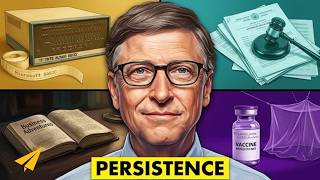
Bill Gates shares his top rules for success, from betting on the internet early to taking years perfecting Windows. He argues that empathy must guide optimism if innovation is to help the world's poorest, and that staying competitive means watching rivals like Linux.
Chapters
Yes, I believe in the internet. I believe it'll get increasingly popular, and we're doing some neat new things to take advantage of that. When you have the level of success that we've had, when you have a business that's important as this with this many competitors, you're going to have people saying some nasty things. The lives all over the world should be treated with the same value that we treat lives here in the, in the rich world. If you ask people across the United States Is the future going to be better than the past? Most say no.
He's an American entrepreneur, author, investor, and philanthropist. In 1975, he co-founded Microsoft, which went on to become the world's largest PC software company. He's currently the richest person in the world with an estimated net worth of $84 billion. He's Bill Gates, and here's my take on his top 10 rules for success Volume 2. Rule number 2 is my personal favorite, and stick around all the way to the end for a special bonus clip. And as always, as Bill is talking, if he says something that really resonates with you, please leave in the comments below and put quotes around it so other people can be inspired as well. Enjoy.
And so you really have to believe the internet's going to be mainstream. A lot of people are going to get out there and use it, and that they're going to be willing to pay for some content.
Is that the operating idea that you have?
Well, each of these businesses is an entrepreneurial business. The overreaching theme is that, yes, I believe in the internet. I believe it'll get increasingly popular, and we're doing some neat new things to take advantage of that.
You've got a lot of cash on hand. Yes.
Right.
All right. It puts you in an enviable position. You can experiment with a lot of entrepreneurial ideas and see what sticks and what flies.
Well, we're in business to make money and—
But the other thing is providing such a cash flow for you.
Well, it all belongs to the shareholders. We're not dilettantes. No, I know. We are business people and It is true that if you find an idea that requires 3 or 4 years of improvement and patience and really sticking with it, uh, that we're very good at that. Take Windows, which we bet our company on. Everybody doubted that would succeed. IBM did not support us in that. Uh, it took longer than we expected, uh, over 4 years before finally graphical interface got popular. And now people take it for granted. It's part of every personal computer, and you just You just expect it to be there. That was one of the grand successes of the company. In the same way, we're betting on the internet, that our tools there will be popular, and that a few of these content plays that we've decided to get involved in, that the scale and, and the users will make those into great businesses. Well, certainly every product we do is absolutely as capable as it can possibly be. There's no holding back. We are The people at Microsoft come into work every day building the best products they can, and they're very proud. You know, you go out, go into schools and see how kids are using this stuff, go and ask people about how their jobs have changed because of the personal computer. You know, we're sitting there listening to our customers saying how they'd like to make things better. So we're— we do absolutely our best job, and in fact, that's why we've been successful. You know, anybody who holds back in this business isn't gonna be around for long because this is a business where you always have to be moving at a very rapid pace.
You have for years, ever since you were a little boy, I hear, been called a nerd. Do you care? Does it hurt you?
Well, nerd means a lot of things. I'm somebody who can sit and read a book about science for hours on end, and, you know, I don't mind being labeled as somebody who finds that interesting.
There is hardly a day in which something is not written about Microsoft. It has become almost a frenzy. You're being called the evil empire. You forget being called a nerd. You are now being called arrogant, greedy, the devil. You've read all this stuff or heard that this has been said. What do you say about all of this?
Well, it's a very competitive business, and it's all Oh, absolutely. When you have the level of success that we've had, when you have a business that's important as this with this many competitors, you're going to have people saying some nasty things. And so you have to learn a little bit not to take it too personally. You went to Harvard and you dropped out. Have you ever thought how your life could be better off if you had gotten your Harvard degree? Well, I, I'm a weird dropout because I take college courses all the time. I love Learning Company courses and things. So I loved being a student. And there were smart people around. And they fed you. And they gave you these nice grades that made you feel smart. So I feel it was unfortunate that I didn't get to stay there. But I don't think I missed any knowledge because whatever I needed to learn, I was still in a learning mode. People who end up being successful are often— not always— but pretty fanatical about the thing they're trying to do. I remember one industry panel where there were about 7 people and the debate was, would the computer interface be this character mode thing or would it be graphics user interface? And at the time, the graphics user interface stuff was so slow, it was laughable. And writing software was so bad, it was Windows 1.0. And so the people on the panel were saying, no, no, this This is kind of a stupid thing. And I was saying, no, no, believe me, this will be great. And one of the guys on the panel said that, hey, Bill is wrong, but Bill works harder than the rest of us. So even though it's the wrong solution, he's likely to succeed. And that was the best compliment I ever had, was just by working day and night, I could send the industry in some funny direction. I was fanatical in that period of time. That is, I didn't believe in vacation, I didn't believe in weekends. So it turned out that worked for me, that we got our company going at a speed that allowed us to make mistakes faster than other people were and kind of see those mistakes.
Do you worry about Linux as a competition for operating systems?
Yes. The, you know, we've competed against various forms of Unix over the years, and Linux is growing in popularity and definitely a competitor.
How threatening a competitor?
Well, it's a competitor we take very seriously. I think, you know, part of Microsoft's success is that we don't underestimate the importance of the work that other companies are doing. And so we look out, we You know, we think, are there aspects of that that are best practices? For example, online support, some of the community things that are done around Linux are done very well. So, you know, we're thinking about it and making sure that our innovation will make sure that our value and our leadership stays in front. First time I met Warren, we were talking about getting together and doing something again, and he pulled out his calendar And the pages were so blank. And I said, wow, you know, you've managed to avoid getting tied into a lot of kind of meaningless activity. And Warren said, yeah, you have to be good at saying no and picking the things that really make a difference. And that's one of many things I've learned from Warren, but that's one of my favorites. And so I can blame it on him whenever I'm turning things down.
You have made significant contribution in the fight against AIDS in Africa. You have funded to a large degree vaccines and vaccine research. Give me a sense of where that's directed and what success you think we're making and your own particular interest in public health in the world.
Well, this is a real passion for me. I'll give a succinct answer. People, I think, don't have a full awareness how 4 billion of the 6 billion people on this planet don't have basic health needs met. The death rate of infants, the epidemic infectious diseases that are just a way of life in most of the world. Don't exist in the, in the developed world. And yet the research isn't going on for the medicines that would get rid of these diseases. Even diseases like tuberculosis, where for a few hundred dollars lives can be saved, that's not being done. Vaccines aren't being moved from the rich world to the poor world. AIDS is the most extreme, where the prevention measures that could prevent this from becoming a huge epidemic in countries like India, Nigeria, many countries where it's not in huge percentages today. [Speaker:JUAN GONZÁLEZ] Hasn't reached proportions of Africa. [Speaker:DR. ROBERT LIEBERMAN] You know, the right things, I think, are not being prioritized. So, the foundation that my wife and I have has taken as its top priority these world health issues, the research, getting the vaccines out. And it's been fascinating to learn about this and to try and say that all these lives, the lives all over the world, should be treated with the same value that we treat lives here in the rich world.
So you're— just to sum up in a sense, I mean, what you have learned from your own involvement, from funding it in terms of more money than had ever been applied, is that it can make a difference.
Absolutely. Millions of lives can be and should be saved through these efforts. And, uh, you know, we, we can make a difference and we can encourage others to get involved.
That was my last question. Is that happening as you fund these efforts? Are you— I mean, is it becoming a kind of wedge that other governments and other foundations and other sources are following suit or matching?
Yeah, we've seen a good start, I would say. Uh, the vaccine fund we put together We put in $750 million now. Governments have agreed to put up $500 million in addition to that. In the AIDS area, some of the things we backed have been able to attract additional money. Having said that, this is a cause that somehow deserves more visibility, because when you talk to people about this and they hear about malaria or AIDS, they really do care and they think their government's doing more. And so, you know, when I'm not working, a lot of my creativity is going into what could be done to show people that their money would be well spent, it would make a difference, and, you know, try and make sure that, that world health gets, gets more priority.
Then you can save lives.
That's what it's all about. If you ask people across the United States, is the future going to be better than the past? Most say no, my kids will be worse off than I am. They think innovation won't make the world better for them or their children. So who's right? The people who say innovation will create new possibilities and make the world better, or the people who see a trend toward inequality and a decline in opportunity and don't think innovation will change that. The pessimists are wrong, in my view, but they're not crazy. If innovation is purely market-driven and we don't focus on the big inequities, then we could have amazing advances and inventions that leave the world even more divided. We won't improve public schools. We won't cure malaria. We won't end poverty. We won't develop the innovations poor farmers need to grow food in a changing climate. If our optimism doesn't address the problems that affect so many of our fellow human beings, then our optimism needs more empathy. If empathy channels our optimism, we will see the poverty, and the disease and the poor schools. We will answer with our innovations and we will surprise the pessimists. Over the next generation, you Stanford graduates will lead a new wave of innovation. Which problems will you decide to solve? If your world is wide, you can create the future we all want. If your world is narrow, You may create the future the pessimists fear. I started learning in Soweto that if we're going to make our optimism matter to everyone and empower people everywhere, we have to see the lives of those most in need. If we have optimism without empathy, then it doesn't matter how much we master the secrets of science. We're not really solving problems, we're just working on puzzles. I think most of you have a broader worldview than I had at your age. You can do better at this than I did. If you put your hearts and minds to it, you can surprise the pessimists. We're eager to see it.
I mean, you're obviously going to go down in history as history books already said, kind of thing. But what's the greatest misunderstanding between you and your relationship and about each each other, what would you say would be this idea of catfight, this idea of— which one of the many?
We've kept our marriage secret for over a decade now.
Canada.
That trip to Canada. Mm-hmm. Was there—
I don't think either of us have anything to complain about in general. And I know that the projects, like the Mac project, was just an incredible thing, a fun thing where we were taking a risk. We did look a lot younger in that video. We did.
You looked 12 in the first one.
That's how I try and look.
He was 12.
But, you know, it's been fun to work together. I actually kind of miss some of the people who aren't around anymore, you know? People come and go in this industry. It's nice when somebody sticks around and, you know, have some context of all the things that have worked and not worked. And the industry gets all crazy about some new thing, you know, like You know, there's always this paradigm of the company that's successful is going to go away and stuff like that. It's nice to have people seeing the waves and waves of that and yet been willing when it counted to take the risk to bring in something new. Has it been important?
One last question and then we'll go to the audience.
He didn't answer because he just said—
I haven't answered.
He only talked about his secret gay marriage.
I thought that was your answer. No, that wasn't my answer. You know, when Bill and I first met each other and worked together in the early days, generally we were both the youngest guys in the room, right, individually or together. I'm about 6 months older than he is, but roughly the same age. And now when we're working at our respective companies, I don't know about you, but I'm the oldest guy in the room most of the time. And that's why I love being here.
Happy to oblige. Happy to oblige.
And, you know, I think of most things in life as either a Bob Dylan or Beatles song, but there's that one line in that one Beatles song, "You and I have memories longer than the road that stretches out ahead," and that's clearly true here. Well, you know what?
I think we should end it there. Let's just end it there.
I'm gonna have a little tear right here.
Thank you.
Thank you very much.
Thank you so much.
Thank you.
Thank you.
Thank you. Thank you.
Thank you guys so much for watching. This was an experimental video doing a volume 2 of a top 10 rules. So I'm curious to figure out, did you guys like this? Do you want me to do more like this in the future or not? Leave in the comments below, let me know. I also am curious to figure out which of the rules did you like the best? What is most applicable to your life or to your business right now? What immediate change are you gonna make after watching this video? Leave in the comments and I'm gonna join in the discussion. Finally, I wanna give a quick shout out to Tuan Nguyen. Thank you so much for picking up 10 copies of my book, Your One Word, and sharing it with some of your friends and clients. I really, really, really, really appreciate it. So thank you guys again for watching. Watching. I believe in you. I hope you continue to believe in yourself and whatever your one word is. Much love. I'll see you soon.
Even in the early days, if you set a computer on every desk in every home and you'd say, okay, how many homes are there in the world? How many desks are there in the world? You know, can I make $20 for every home, $20 for every desk? You know, if you get these big numbers, But part of the beauty of the whole thing was we were very focused on the here and now. Should we hire one more person? If our customers didn't pay us, would we have enough cash to meet the payroll? You know, we really were very practical about that next thing and so involved in the deep engineering that we didn't get ahead of ourselves. We never thought, you know, how big we'd be. I remember when one of the early lists of wealthy people came out and one of the Intel founders was there, the guy around Wang Computers actually was still— Wang was still doing well. And we thought, hmm, boy, if the software business does well, the value of Microsoft could be similar to that. But it wasn't a real focus. The everyday activity of just doing great software drew us in. And some decisions we made, like the quality of the people, the way we were very global, the vision of how we thought about software, that was very long-term. But, you know, other than those things, you know, we just came into work every day and wrote more code and, you know, hired more people. It wasn't really until the IBM PC succeeded, and perhaps even until Windows succeeded, that there was a broad awareness that Microsoft was very unique as a software company, that these other companies had been one-product companies, hadn't hired people, couldn't do a broad set of things, didn't renew their excellence, didn't do research. So, you know, we thought we were doing something very unique, but it was easily not until 1995 or even 1997 that there was this wide recognition that we were the company that had revolutionized software.
More from Evan


How the Biggest Mistake in History Created A Trillion-Dollar Empire | Sergey Brin



9 Machiavelli Principles That Force People To Respect You | Machiavellian Philosophy



The First 10 Words That Instantly Ruin A Sales Conversation | Vanessa Van Edwards

The Top 1% Mindset Behind The First $5 Trillion Company | Jensen Huang (Nvidia)

