Why No ONE Supports Small Business Anymore
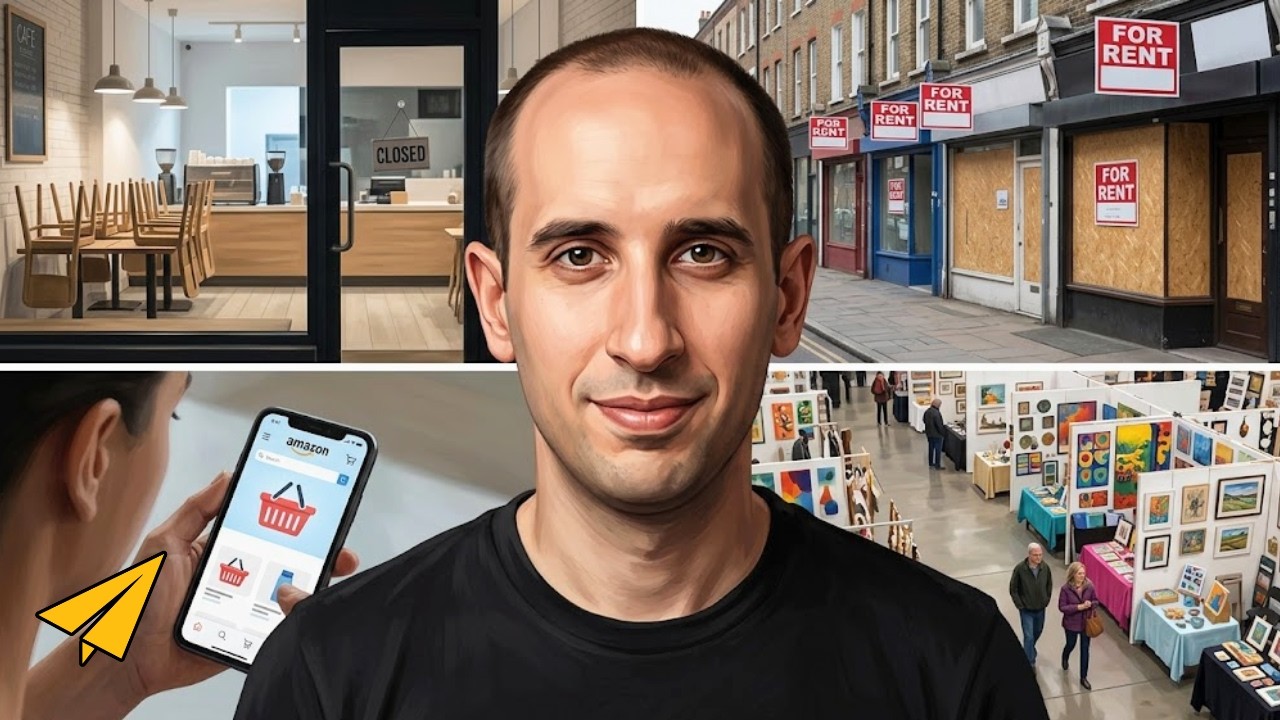
Evan Carmichael explains why small businesses struggle to get customers and what actually works instead. Being known beats being best, asking directly for sales matters more than you think, and boring businesses like laundromats and storage units often outperform sexy startups.
Chapters
People still want to buy from you. They just don't know you exist. The Federal Reserve asked over 6,000 small business owners to name their biggest operational problem, and the answer that came back more than any other was reaching customers. That decides whether you make payroll, whether you even hire people at all, and whether the thing that you built is still here in 5 years. In 1984, a man named Jim Cook walked out of the Boston Consulting Group and quit a 6-figure job. He was a 6th generation brewer, and he had his great-great-grandfather's recipe. The The only person who came with him was his 23-year-old secretary, Rhonda Coleman, who tended bar at night. He brewed the first batch in his kitchen. Now look at what he was up against. He didn't have a brewery. He rented spare capacity in someone else's plant in Pittsburgh. He didn't have a distributor. He didn't have an advertising budget. He had no shelf space. And he decided to charge $20 a case when a bar could buy Heineken for $14. So he did the only thing left. He put cold bottles in a briefcase and started walking into bars. Every single day, he'd go in, find the owner, and ask Then he'd tell them about the ingredients and why the beer costs more. Bar to bar, owner to owner, one mouth at a time. The objection was always the same, and it came pretty quickly for him. I can get Heineken for $14 a case and you're charging me $20 for a domestic beer? He heard that in almost every bar he walked into. His answer wasn't the discount. It was the taste in their mouth and a 2-minute explanation of why it tasted like that. He wasn't asking anybody to just support a small business. He was giving a bar a reason to charge more for a pint. He was creating a story. Samuel Adams Boston Lager went on tap in the spring of 1985 at a place called Doyle's Cafe in Jamaica Plain. 6 weeks later, it was voted the best beer in America at the Great American Beer Festival against 93 national and regional beers. By his own account, they did about $1 million that first year, 3 times what he planned for. He didn't have an ad budget, no brewery, just a guy with a briefcase who made sure people knew about him. Now you might be thinking, okay, I'm not a salesman. You didn't get into this to go walk in the rooms and pitch yourself. You got into this because you're actually good at the thing. thing that you're doing, the work, and the self-promotion part makes you feel awkward and uncomfortable. And listen, I understand, and I'm going to tell you the truth anyways because that's better than just sympathy. People who need you right now have never heard of you, so staying quiet isn't a great strategy. It costs you money, it costs your family, and it costs the person down the street who needed your help and they never found you. If you have the ability, then you have the responsibility. If you can, then you must. So today, let's talk about what actually gets people through your door. If you've been here before, drop a hashtag believe in the comments below so I can feature you here in a future video. And if you're new, welcome to Believe Nation, the only channel that helps you believe in yourself daily, one video at a time.
Believe.
Best known beats best. Best known beats best. You've probably been operating on the opposite theory for years, like do excellent work and word gets around. And your work probably is excellent, which is exactly why this actually hurts the most, because the customer you lost last month didn't compare you to the big chain and choose them. They just never had you on the list because they didn't know about you. That's what actually happened. And it had nothing to do with how good you actually are. Somebody in your town needed exactly what you sell at the exact moment you were open at the price that they could afford. And they gave their money to a worse option because that option was the one that they could name. I've met craftspeople who are the best in their city at what they do and are 3 months away from closing down their business. Being the best doesn't pay if nobody has heard of you. So change where your effort goes. You've been putting it into just being better. Put a real share of your time into being known starting this week. That means showing up somewhere every day that has your name attached to it. A post, a video, a talk at a local business group, a conversation with somebody who has your customers. Put an actual number on it. 20 new people a day who didn't know your name this morning. That's 7,300 a year. And if 1% of them ever buy, that's 73 new customers out of a habit that takes 20 minutes a day. Then measure the right thing. So stop asking whether your work is good enough. Start asking how many new people found out you exist this week. If the honest answer is zero, that's the part of the problem that we need to fix. And it's bigger than anything that the economy is doing to you right now. Your work is already good enough. Almost nobody knows about you yet, and that's where your next 20 minutes should go. And it has to be a habit, not just as one push that you do. Business owners do this in bursts, right? They panic in a slow month, post every day for 2 weeks, then get buried in the actual work and then go silent for 5 months. The pipeline dries up right when they need it, and then they decide marketing It just doesn't work. 20 minutes every day will beat 2 crazy weeks because the person who needs you Thursday has to find you on Thursday. Put your face on it. Nobody wants to follow a corporate brand anymore. They want to follow the person behind the company. Look at your own website through a stranger's eyes. If what they see is a gray logo, stock photo of people shaking hands, and a paragraph of being committed to excellence since 2012, there's no person there for them to actually trust. When so much online now looks AI-generated, a faceless website makes people nervous. Your customer is worried about price, but they're also worried about getting burned by somebody who isn't actually real. Nobody says that out loud. They don't talk about it, but it's often the real reason that they don't buy. A nicer logo is not going to fix that. Put your face on it, your face on the homepage, your voice on video, saying the words yourself badly if you need to, your name on the emails instead of the team, your story about why you started in simple language people can understand. This is one advantage that a chain store cannot copy, and it costs you nothing. The national competitor cannot put a person on screen who owns the place, who remembers the customer's name, and who shows up when something actually goes wrong. You can do that this afternoon and stop waiting to look professional. Almost nobody decides against you because you look human on camera. Being leads to doing here. So decide that you are the face of the business and the filming, the posting, and the talking all gets easier after that. Give them a reason instead of a discount. So when things get tight, the instinct is to cut the price, right? Fight that instinct with everything that you have. You cannot win the cheap game. The chain buys in volume that you will never be able to reach. And if the entire reason to choose you is that you're $2 less, then you've entered a race that you are guaranteed to lose, and you've told the customer that your work isn't worth very much. So instead, we go the other direction. Be the boutique. The premium option in your category doesn't discount. It explains, it storytells, it tells you what's inside, where it came from, why it costs what it costs, and then it lets you decide. That's what was happening with those bars with the expensive beer. He was $6 a case more expensive and he didn't discount. He explained the ingredients until the price made sense, and then the bar owner could charge more too. So write down the 3 reasons your thing is worth more than the cheap version. Real reasons that you can actually talk about, not quality service, the exact material, the extra step that nobody sees, the 14 years that you've been doing it, the fact that you answer the phone yourself at And then talk about those reasons to every single person who asks about price before they ask for a deal. A lot of owners answer a price question with an apology. Answer it with an explanation and a story and watch what happens. Also, if you want to take real action after this video, I made a free worksheet just for you. It covers the top lessons from today, gives you space to write your biggest takeaways, and helps you build a simple action plan. It's 100% free. Just click the link in the description below to go grab it, and I'll see you there. Shrink your map. A lot of small business owners try to market to the entire internet. Right? You are not building a national brand this year. You need the people who can actually get to you. So draw a circle around your business and make it small. For a shop or a service that people physically visit, that's a 5 to 10 mile radius. For something regional where people will drive, maybe 100 miles. That circle is your entire world now. And now the numbers get pretty workable. So say there are 8,000 households inside your circles. You probably need 200 customers to have a very good year. That's one household in 40. You're not trying to convince an entire city, you're You're trying to be the one name that people on your street can think of. So do the things that only work at a small scale because those are the things that the giants can't be bothered with. It's too small for them. Learn the names of the businesses on your street, sponsor the team, show up at the market, get into the local paper, which is desperate for stories and will print yours. The big competitor is running the same campaign in 40 cities at once. That's how they get their price low, and it's also their weakness. They can't mention your street by name, but you can. Say the neighborhood out loud in your marketing over and over Until people hear their street and your name in the same sentence. Borrow trust from people who already have it. So this one brings in the most business per hour and almost nobody does it. Somewhere near you, there are people who already have a trusting relationship with your exact customer and they aren't your competitors. If you are a contractor, that's the real estate agents, that's the architects, that's the insurance brokers. If you're a bookkeeper, that's the lawyers and the business coaches. Every one of them is standing right next to your customer at the moment that your customer needs So write down 50 of them by name, not competitors and not people who already buy from you. 50 local people whose introduction would change your year. Then here's the move. Interview them. Start a simple show, a podcast. We call it a Biz Dev Show. It's a video series and you invite them to have them come on as your guests. And almost all of them will say yes because nobody's asking these people for an interview. You spend 30 to 60 minutes on their story and make them look great. You publish it, send them the link so they can send it to their own customers who are also your potential customers. You've now given them a platform. Giving them something valuable before ever asking for anything. And at the end, all you say is that if any of their clients ever want a second opinion on what you do, you're glad to give them one. Do this once a week, and in a year you have 50 relationships with the people who touch your customers every day. That's a referral pipeline that a chain store can't build because nobody wants to interview a regional manager. Go where the noise isn't. So everybody crowded onto the same few apps— Facebook, Instagram, TikTok, Google, Those got pretty expensive and everywhere else got pretty quiet. Physical mail is still a very clear example. Your customer's inbox has hundreds of emails in it and they delete most without reading a word. Their mailbox has 2 or 3 things in it now these days, and they look at all of them standing over that recycling bin, right? That's a level of attention that you can't buy online at any price. So send something physical, a handwritten card after a job, a postcard to the 300 houses closest to you, a real letter to those 50 people that you wrote down. It's slow and I know it's a pain, and that's why exactly nobody does it. Same idea everywhere else. Answer the phone on the first ring when your competitor makes people wait through an entire menu of options. Reply to reviews in your own words. Show up in person where your customers already are gathering. The giant competitor only does what works in 40 cities at once. Everything too small for them to bother is yours to take. Ask for the money. I've watched a lot of good business owners, great business owners do everything else in this video and still not get paid. And it comes down to one moment at the end of a conversation. They do the consultation, they explain the work, the customer is nodding, interested, clearly ready. And then the owner says something like, okay, so have a think about it and let me know. And the customer leaves and never comes back. And the owner decides that the market is just tough. You have to ask for the sale, for the credit card in that room, on that call. And I know why it's hard because asking for money feels like you're taking something, especially from a neighbor, especially for someone if you know their situation. So you soften it into a maybe and you think you're being polite, right? This isn't polite. That customer walked in with a problem. You have the solution and you just made them do the awkward part themselves on their own. Later with no help from you. Most of them will never get around to it and that problem stays completely broken. So make asking part of the job every time. When you've explained the work, you say the price, then you stop talking. Don't fill the silence. Then ask a question that gives them 2 choices, not a yes or a no. Do you want to start Tuesday or the following Monday? Do you want to do this on the card that you used last time or a different one? Now write down what you do after a no. A customer who says no usually means not right now. So get a date. Ask when you should check back in. Again, put that date on your calendar and actually call them. A lot of money this year is with people you already talked to and just never followed up with. Say what you actually do. The last one is the most common and the easiest one to fix for, for entrepreneurs. Your customer often doesn't buy because they just don't understand what they're buying. They can't picture how it works for them. And you can't see this problem because you have been inside this business For years and every single part of it is super obvious to you. So write it down like you're explaining it to a neighbor or to a 7-year-old, right? What you do, what happens first, second, third, what it costs, what they need to have ready, how long it takes, how they'll know that it worked. Then show it instead of just describing it. You could film the before and after. You could walk through the actual process on camera. If somebody in your industry does it really badly, get on camera and show What a bad job looks like and how to spot one. That teaches and sells at the same time, and it makes you the person who explained it, which is usually the person who gets hired. And say it simply. Simple always beats clever. The business that explains itself best wins the customer, even when it isn't the best business in town. You can be the best in town and the one who explains it best. Be both. They'll support you when they know you. Nobody's going to buy from you out of sympathy for you being a small business, and you don't want them to either. That's them doing you a favor, and Nobody does you a favor twice. They'll buy from you because they know you exist. They can see your face. They understand what you do, and you gave them a reason worth paying for. Every one of those is inside your control, and none of them requires a giant ad budget to operate. You already did the hard part. You built the thing. Now go make sure people know. And congratulations! You're one video closer to who you're meant to be.
Believe.
Now let's learn the twenty forgotten businesses that can make you wealthy. The businesses that actually make people rich are almost never the ones that people brag. According to the US Small Business Administration, the typical self-employed family in America has a median net worth of $380,000, over 4 times the $90,000 of a family who only works a regular job. So the boring little business that you'd be too embarrassed to tell your friends about could be the exact thing that changes your entire family tree. So let me tell you about a guy named Nick Huber. Nick went to Cornell, one of the best schools in the country. He could have walked into any shiny tech job or startup that he wanted, but instead he decided Instead, to start his own. while he was still in college, he started a business helping students store their stuff over the summer. Not glamorous, just picking up boxes and mini fridges and keeping them safe until fall. That little idea grew into a company called Storage Squad, and in 2020, he sold it for $1.65 million. But this is where it gets really good. He took what he learned and went all in on the most boring business you can imagine, self-storage units.
Mm-hmm.
Metal boxes in a parking lot that people rent to hold their junk. And today his company Bolt Storage owns around 1.9 million square feet of storage across 62 locations in 11 states. Nick built a fortune out of the kind of business you'd normally drive past without a glance. And he says it out loud. He started a whole platform called the Sweaty Startup because he believes the Shark Tank and tech world has poisoned people into thinking that you need a genius idea to get rich. You don't. You need a real business that solves a real problem and throws off real cash. The unsexier the better, because nobody wants to compete with you. When everyone else is chasing the same trendy app idea, the field is crowded and it's pretty brutal. But how many of your friends are racing to start a storage facility or a bin cleaning route? None. That empty field, that's where the money is. Your purpose comes from your pain, and Nick's whole message is that the unglamorous grind everyone avoids is exactly where the wealth has been hiding for you whole time. He could have chased status. He chose cash flow, and cash flow is what ultimately set him free. Now here's what you might be thinking. Those businesses sound boring, and you didn't dream about cleaning gutters or scooping dog poop when you imagined being successful. And I get it, but that feeling is exactly why these businesses become so profitable. The reason nobody starts them is the reason they pay so well. When a job sounds unglamorous, the competition, it goes away, it vanishes, disappears. The customers can't shop you around, and you get to charge what you're worth. Rich people don't chase what looks impressive. They chase what puts cash in their pocket every single month. And a lot of these you can start for a few hundred dollars on the weekend while you keep your current job if that's your situation. So let go of the idea that your business has to look cool. It has to work. Let me show you exactly what I mean. The boxes and machines that pay you while you sleep. Start with the businesses that basically run themselves once they're set up. Up self-storage like Nick Huber built runs at 30 to 45% profit margins with an average occupancy rate of around 92% across the country. People pay every month and mostly forget that they're paying. Then there are laundromats. A guy named Dave Menz bought a beat-up struggling laundromat on Craigslist for $85,000. Everybody thought he was crazy. Today his company Queen City Laundry runs four locations in Cincinnati with 250 machines and brings in well over $1.8 million a year at close to 40% margins. A single machine can make you around $90,000 a year. And then there's vending. Adam Hill started Hill Vending by himself with zero experience in 2014. He now runs over 100 machines across more than 40 locations, pulls in about $700,000 a year, and does it working roughly 2 days a week. 2 days a week. ATM routes are another one worth a serious look. Here you place cash machines in busy shops and bars and you collect a small fee on every withdrawal. A single well-placed machine can bring in $300 to $500 a month for almost no work, and you can start with just a few machines and grow from there. These businesses share one beautiful trait: the machine does the selling. You're not trading every hour for a dollar. You set it up, you service it, and it keeps ringing that register while you're at your kid's soccer game. That's the difference between a job and an asset. And these are the assets you can actually afford to buy. You don't need to invent anything. You just need to own the box, plug it into the spot where people are already spending money, and let it do the work for years. The recurring money routes nobody talks about. The real magic word in business is recurring. That means the customer Customers pay you again and again without you having to sell them again and again. So look for the boring jobs people need done on a schedule forever. Trash bin cleaning is a perfect example. You show up after trash day with a hot water rig and sanitize people's disgusting garbage cans. You can start it for as little as $400 to $800, charge $25 to $35 a month per household, and run 35 to 50% profit margins. One operator running a tight route of 35 stops a day can pull in over $1,000 in a single day. Pet waste removal is the same story, just with dog yards. Startup costs under $2,000 for a solo operator. You charge $85 to $150 a month per yard to scoop. And if you do the work yourself, margins run 70 to 80%. There are companies doing millions a year picking up dog poop. Draft beer line cleaning is another one that could be awesome. Every bar has to clean its beer lines every couple of weeks or the beer tastes terrible. So you show up on a schedule and you charge a flat fee per visit, 35 to 50% margins. Junk removal belongs here too. People always have a garage, a basement, an estate full of stuff they need gone, and they pay $150 to $600 a load to just make it disappear. You can start with a truck and a strong back, right? And scale into multiple crews. Add in pressure washing where you blast the grime off driveways and decks and house sidings for a few hundred dollars a job with margins over 50%. And you've got another simple rote business. See the pattern? None of these are one-time jobs. You land the customer once and they pay you month after month, year after year. That's how you build income that shows up even if you don't. The ick factor businesses that print money. So here's a rule that will make you rich. The more disgusting or uncomfortable the job, the fewer people will do it and the more you get to charge. Grave care is a beautiful example. Families move away and can't tend to their loved ones. And cemeteries only mow the grass. So you clean and maintain grave sites. You can start for $3,000 to $10,000, charge $100 to $300 per cleaning. And because your material cost is almost nothing, margins run 60 to 80%. Luxury restroom trailers are another one. Nobody wants to rent a nasty plastic porta-potty at a wedding. So high-end mobile bathrooms rent for $1,200 to $2,000 per event at 40 to 50% profit margins. A small fleet in a growing city can throw off a quarter million a year in owner's cash flow. Even something as simple as dryer vent cleaning fits here. Clogged dryer vents are a leading cause of house fires. So homeowners and apartment managers pay $100 to $300 for a job that takes under an hour, and margins are north of 60%. Portable toilet rentals for construction sites work the same way. It's not pretty, but every job site needs them. They rent by the month, and one route can throw off serious recurring money. The thing that they all have in common is they make people a little uncomfortable to think about. That discomfort is your profit margin. While everyone else is fighting over the pretty businesses, You get a quiet lane all to yourself where you can charge your premium and barely have any competition. The businesses the law forces customers to buy. Now, this is one of the strongest kind of boring businesses of all—the ones that the law requires. So when a customer is legally required to hire you, you never have to convince them. So take commercial kitchen exhaust hood cleaning. Fire codes force every restaurant, every school, every hospital kitchen to deep clean their exhaust systems on a schedule. Or they get shut down. So you work overnight when the kitchen is closed, charge $500 to $2,000 a job, run 40 to 60% margins. A solo operator with one helper can bring in $10,000 to $30,000 a month. Chimney sweeping is the same. Safety codes call for annual inspections of anything that burns wood. So it's steady repeat business at $120 to $390 a sweep. And it's so reliable that big investors are now buying up chimney companies. That's not a joke. There are private equity firms rolling up chimney sweeps. Commercial fire inspection, backflow testing on water systems, dryer vent cleaning in apartment buildings. All of it is driven by rules that never go away. The customer isn't buying because they want to, they're buying because they have to. And that makes your income about as stable as it gets. So you're not at the mercy of trends or the economy or an algorithm or whatever's popular this year. You're riding on a rule that isn't going anywhere. And rules like these usually get stricter over time, not That means your customer list only grows. Once you become the reliable person a building manager can call, you often keep the account for years, and they refer you to every other manager that they know if you do a good job. The skilled trades you can run out of a van. You don't need a storefront as well to get rich. Some of the best boring businesses fit in the back of a van and go straight to the customer's driveway. Asphalt seal coating is a great one. So driveways and parking lots need to be resealed every couple of years. Years, and you can start with a basic setup for under $3,300. Pros charge $100 to $250 an hour, run 40 to 60% margins, and a single parking lot can pay for your whole starter kit. Mobile auto glass paired with mobile sensor calibration is another. When someone cracks a windshield today, replacing it and recalibrating the car's cameras runs $800 to $1,500 a job, and one mobile technician can do $150,000 to $200,000 a year. Mobile car detailing is another easy one. You bring the soap, the water, vacuum right to someone's driveway and hand back a car that looks brand new, charging $150, $300 a vehicle with very little overhead. Even mobile bike repair, fixing bikes in people's driveways can hit 6 figures in year 1 because you skip the expensive shop rent that everyone else is paying. So notice what all these have in common. The customer stays home, you come to them, and that convenience alone lets you charge more than the guy with the fixed location. So the lesson here is pretty simple. A skill plus a van plus a phone number beats a fancy office every time. Your customers don't care where you're based. They care that you show up That you did the work and you made their problem go away. Deliver that and you'll never run out of people who are willing to pay you. The businesses you can start from your kitchen table. So not every boring business needs a van or a machine. Some of the best ones you can run from a laptop with almost no money down. Virtual bookkeeping is a quiet giant here. Every business on earth needs clean books. Most owners hate doing the books and good bookkeepers are in short supply. You can learn the software, charge businesses a monthly retainer, and stack up recurring clients from your spare room. Accounting firms are so desperate for reliable help that they'll pay a premium for it. Commercial cleaning is another one that you can start lean, just you and a vacuum cleaning offices at night when everyone else has gone home. Small operators run at healthy margins doing $50,000 to $60,000 a month before they even hire a team. And here's one that's built for right now, in-home senior tech support. Older people are getting left behind by phones and apps and passwords, and their families live too far away to help. You go to their home, you patiently set things up for them, you answer their questions and teach them, charging around $75 an hour. You can start it for under $1,000. The point is, if you've got a skill and a little bit of patience, you can begin with almost no money at all. The one thing you truly need is just your first customer. Land one, do incredible work, ask them who else they know, and let that snowball effect carry you. How the smart ones turn boring into a future. So here's the final piece, and it's how the truly wealthy play the game. It's not enough to run one boring business. The real money comes from owning them and then combining them. So a single small business like an accounting firm or a chimney company might sell for around 5 to 7 times its yearly profit. But if you buy up 30 or 40 of them, put them under one name, one back office, one system, the whole bundle can sell for 13 times profit or more. Same businesses, but worth almost double just because you organize them together. Big investors will pay a premium because they'd rather write one big check than chase 40 of these small ones. And that gap, buying at 6 times profit and selling at 13 times times is where generational wealth gets made. And it's happening right now in the most boring industries you can name: plumbing, HVAC, uh, pest control, uh, landscaping, chimney sweeps. So think bigger than a job that you own. Start one boring business, get it running without you, then buy or start another and another. And each one is a building block. Being leads to doing here. So the day you start thinking like an owner instead of an operator is the day that the whole game starts to change for you. You, you don't have to do all of this at once. You just have to start with one, prove that it works, and let it teach you the rest. That's a great start, and it's within reach for you starting this week. Your unfair advantage. So the businesses I just walked you through, they're not going to impress anybody at a dinner partner. That's the point. While everyone else is chasing the shiny new idea, you can steadily build real cash flow with your laundromat, your van, or route that nobody else You don't need to be a genius. You just need to be willing to do the boring but valuable work that other people are too proud to do. Ready isn't real, so don't wait around to feel ready. Pick one, start small today, and let it grow. Now let's learn the worst business deals in history explained to you like you're a 5-year-old. Some of the smartest people on the planet running billion-dollar companies make catastrophically bad decisions all the time, and it's almost always for money. For one boring little reason. Most people don't take enough risk. You got to leave your home. You got to leave your comfort. Everybody can do 10 times more than you think you can. And before you get to 10x, you'll end up changing the goal to 10 times more. Study after study shows that 70% to 90% of major mergers and deals actually fail, according to Harvard Business Review, which means even the so-called experts get it wrong far more often than they get it right. I find it Really powerful. I found power in saying yes to so many things.
I'm in yes culture. My whole game is yes, comma. I'm not a great person to ask the no thing. I think there's people that are more disciplined at no. I just like the value of yes. And then if I'm a week, an hour, a year in and I've realized it's not right, I leave.
And here's why it matters to you, because the exact same blind spot that cost these giants billions of dollars is quietly costing you opportunities in your own life and business right now too. If you want to be successful, learn from the other people's mistakes. Let me tell you the greatest example of this in all of history, I think. Picture the year 2000. There's a tiny, struggling little company called Netflix that mails DVDs to people in little red envelopes. It's losing money, and its young founder Reed Hastings is nervous about the future. So Reed Did you go to Blockbuster or did they come to you?
No, we tried going to Blockbuster for months. We tried reaching out to them, but this was this ultimate— I mean, listen, we were doing $5 million a year. They were doing $6 billion a year. It took months and finally we got the call. That's when Blockbuster calls and goes, we'd like to see you tomorrow in Dallas.
Back then, Blockbuster was a monster. It had 9,000 stores. It pulled in $6 billion a year. a year, and it made a fortune charging people late fees on their rentals. Reed walks into that meeting and makes Blockbuster a simple offer.
We make our pitch, we go, we'll combine forces, um, you'll run the stores, we'll run the online business, we'll build a blended model, which our research has shown is a game changer, and everything will work out.
He asked them to buy his little company Netflix for $50 million and let his team run their brand new online business for them. And here's the moment that changed everything. The Blockbuster executives basically laughed him out of the room. $50 million for some tiny website that mails DVDs around? No thanks.
And then they asked the big question, you know, how much? We figured we're $50 million in the hole, so $50 million. And there's this silence. in the room, and I'm looking at, uh, Blockbuster execs trying to piece together what the reaction is, and it finally dawns on me they're trying to suppress laughter.
They were making way too much money on late fees to care about some silly little internet idea, so they said no, and Reed flew home stung. Now here's how the story ends. Blockbuster, the giant, kept right on doing exactly what was already All the way up until the world quietly changed. In 2010, Blockbuster filed for bankruptcy. Gone. And that tiny little company they laughed at, Netflix, the one they could have owned for just $50 million, is now worth hundreds of billions of dollars. One single word, no, ended up costing Blockbuster absolutely everything. And the scary part is they didn't say no because they were stupid. They said no because they were comfortable. Now you might be sitting there thinking. This has nothing to do with me. You could be thinking, Evan, these are giant corporations with billions of dollars on the line, and I'm just a regular person. I'm an entrepreneur. What does Blockbuster's mistake have to do with my business or my life right now? I think all progress begins with telling the truth. Blockbuster didn't fail because of money or size. It failed because of a mindset, and it's the exact same mindset that is quietly ruining a lot of people's decisions every day too. It's the fear of letting go of. What feels comfortable. It's the little voice, the whispers that say, don't risk the safe thing for the unknown thing. You feel it every time you stay in the job that you've already outgrown, or you sit on the idea that you're too scared to actually start. So in the next few minutes, let me walk you through the simple patterns hiding behind history's worst business deals so you can spot them coming and never make the same mistake in your company. Word in business is no. Here's the first pattern, and once you see it, you'll start seeing it absolutely everywhere. The most expensive word in all of business is the tiny word no. Blockbuster said no to Netflix, but they are nowhere near alone. Back in 1999, a search engine called Excite had the chance to buy a little startup named Google for just $750,000. They said no. The greatest interest came from Excite, and actually came from Vinod. You were the the investor in Excite. And we spent a while talking to them and talking to you, Vinod.
Yeah.
You remember that. In the end, I don't think the management team there was quite as excited about it, no pun intended. Google's now worth trillions of dollars. Yahoo had the chance to buy Facebook for $1 billion back in 2006. Then they got greedy and tried to lower the price at the very last second, and a young Mark Zuckerberg Mark Zuckerberg just walked right out of the room.
Zuckerberg's decision not to sell Facebook to early bidders has become legend in Silicon Valley. After he rejected a bid from Viacom, Yahoo offered to buy Facebook for $1 billion in the summer of 2006. But when Yahoo stock fell more than 20% after a disappointing earnings report that July, Yahoo reduced its offer and Facebook again walked away from a deal.
worth over a trillion dollars too. Do you see the pattern forming? Every single one of those nos came from a smart, wildly successful company. They weren't dumb people. They simply couldn't see the future because they were too busy protecting their comfortable present. So here is the takeaway. The next time a scary opportunity shows up, the kind that makes your stomach turn and flip over a little bit, don't reflexively just say no just to feel safe again. Stop and Pause. Ask yourself if you're saying no because the thing is truly wrong for you or just because it feels new and unfamiliar. Because saying no to the right thing is quietly the most expensive mistake a human being can make. Good is the enemy of great. Here's the second pattern, and it's a sneaky one that hides in plain sight often. Good is the enemy of great. So think about it. Blockbuster was not struggling at all when it said no to Netflix. It was absolutely thriving. It had 9,000 stores and billions in revenue rolling in. And that right there was the whole problem. When something in your life is going badly, you fix it fast because the pain forces you to. But when something is going fine, you protect it, you cling to it, and you quietly stop reaching for what could be next. That comfortable, good enough kind of success is exactly what lulled Blockbuster to sleep while a tiny little Netflix quietly built the entire future. And the same silent killer could be running loose in your business, your life too, right Now, it's the decent enough job that's good enough, so you never chase the great one. It's the relationship, the fine little routine, the comfortable plateau that you've settled onto. Good feels safe and it's warm, but good is exactly where greatness quietly goes to die. So look really hard at your own life right now and ask, where am I settling for good and calling it finished? That cozy little spot you don't ever want to leave might be the exact thing that is holding you back from something truly incredible. Ego writes the checks that bankrupt you. Pattern number 3 is maybe the deadliest of all, and it all comes down to pure ego. Smart people make genuinely terrible choices because they are flat-out terrified to walk away from a process that already made them rich. I call this moment the death of an ego, and almost nobody is brave enough to go through it. So look at Kodak. All the way back in 1975, a young Kodak engineer in invented the world's very first digital camera. Kodak engineer Stephen Sasson invented the prototype that would eventually become the digital camera. Kodak literally held the entire future of photography in their own two hands, but the executives took that invention and buried it. Why on earth would they do that? Because they were making an absolute fortune selling film, and a digital camera that needs no film would kill their golden goose. In the mid-'70s, 1976, Kodak Kodak owned 95% of the film market and 85% of the camera market in the United States. Their ego and their past success completely blinded them to what was coming, and by the time they finally tried to catch up to everybody else, it was way too late, and Kodak filed for bankruptcy in 2012. With the failure to successfully pivot to digital complete, on January 19th, 2012, Kodak filed for bankruptcy. They didn't lose because they lacked the technology— they literally invented it. They lost because they couldn't let go of who they used to be. So ask yourself honestly, what old way of doing things are you still clinging to just because it worked for you once before? Sometimes the exact thing that got you here is the same thing keeping you from getting there to the next spot. The tiny decision you regret for the rest of your life. Here's a pattern that's much smaller but somehow even more painful. Sometimes one tiny fear based decision ends up haunting you forever. So meet Ronald Wayne. Most people have never heard his name, but he was actually the 3rd co-founder of Apple, sitting right alongside Steve Jobs and Steve Wozniak back in 1976. Ronald owned a full 10% of Apple. Think about that. But only 12 days in, he got scared. The young company felt risky. He was worried about the debt and he just wanted out. So he sold his entire 10% stake back to Jobs and Wozniak. For a grand total of $800. That very same stake today could be worth tens of billions of dollars. $800. He didn't lose it in some complicated deal or some giant market crash. He simply gave it away in a moment of panic, right when things got a little scary. And that's an important lesson. The most painful regrets in life usually aren't the big dramatic gambles that didn't pan out. They're the moments you bailed on something that you believed in the second it got a little uncomfortable. Comfortable. So before you walk away from something that you know deep down has real potential, stop and ask if you're leaving for a genuinely smart reason or just because the fear got way too loud for a minute. Bet on people, not just on numbers. Now here's a pattern that runs in the complete opposite direction. The quiet secret of the people who actually win big: they bet on people, not just on spreadsheets. Sheets. So picture 2 different investors looking at the very same young, broke, totally unproven founder named Jack Ma, the man who would build Alibaba. One investor, a famous Wall Street firm, looked only at the shaky numbers, got nervous, and ended up selling their early stake way too soon. They missed out on billions of dollars. But another investor, a man named Masayoshi Son, met Jack Ma for just a few short minutes and said yes almost instantly. He wasn't betting on the messy numbers because the business looked shaky on paper. He later said he could simply see that Jack's eyes were shining, and he chose to bet on the person. That one decision to back a human being instead of a spreadsheet became one of the greatest investments in all of history. So the lesson: numbers can only tell you what has already happened, but people show you what's actually possible. When you're deciding who to trust, who to partner with, or even when to finally bet on Don't just stare at the safe, provable numbers on the page. Learn to see the fire in a person's eyes, especially your own. Don't choke the golden goose. So here's a pattern: when you finally do win on something great, don't smother the very thing that made it special in the first place. In 1994, Quaker Oats bought the quirky little drink Sample for a massive $1.7 billion. Sample was fun; it was weird. People loved it. So what did Quaker do with? With it, they stripped out all the fun and they treated it like a boring grocery store product and alienated the exact customers who loved it the most. And just 27 months later, they sold Snapple for $300 million. They lost $1.4 billion, which works out to losing more than a million dollars for every single day they owned it. MySpace did the same kind of thing to itself after News Corp bought it for $580 million. They crammed it so full of ads that users led to a cleaner, simpler Facebook, and MySpace later sold for $35 million. So the takeaway: when something in your life is generally working, whether it's a business, a relationship, a daily routine, the worst thing you can do is start changing it before you truly understand why it works. When you finally get your hands on something great, your first job is not to fix it. Your job is to protect the magic that made it great to begin with. Overthinking is its own decision. Pattern number 5 is one you might be doing at this very moment, and I'm guilty of too— overthinking. While you sit there gathering just a little bit more information, waiting for the perfect moment, and running the same numbers for the 100th time, the opportunity often will stand up and walk out the door. So here's a question that I, I want you to burn into your brain forever: what's the real opportunity cost of you overthinking yet another chance? Yahoo didn't just say no to buying Google one single They hesitated, they debated, they tried to squeeze out a slightly better price. And while they were busy overthinking it all, Google quietly became completely unstoppable. Waiting felt safe to them. It was actually the opposite of safe. Choosing not to decide is still a decision, and it's almost always the worst one available. You will basically never have all the information that you want. That, that perfect moment you're waiting for is a complete myth. The only way to know 100% is when it's already happened. So you know when the actual best time to act on a real opportunity is? Now. How about right now? The longer you sit and analyze and stall, the more those Blockbuster and Yahoo-style moments show up in your life. Done and moving forward beats perfect and frozen every single time. Never hand your future to a rival. Here's one of the sneakiest patterns of them all. Sometimes a company literally hands its entire future straight to a rival without even realizing that it's happening. And the greatest example, I think, is Xerox. So back in the 1970s, Xerox built a secret research lab, and inside that lab, they invented the actual future of computing— the mouse in your hand and the graphical screen that you're literally looking at right this second. They had it first, but Xerox was completely obsessed with selling photocopiers, so they never saw what they were truly sitting on. They even invited a young Steve Jobs in for a friendly tour and Jobs walked right back out of the door with the blueprint for the personal computer. Xerox handed Apple the future on a silver platter, and Apple ran with it to become one of the most valuable companies on the entire planet. So the lesson here, and it's a big one: never give away the one thing that's going to define your future. It's totally fine to get help with the small stuff, but the core idea or skills that decides whether you win or lose Guard that one thing and build it yourself. Don't trade your future away just because you're too busy protecting your comfortable present. Decide from your future, not from your fear. This is a fun last pattern, and it quietly ties all the other ones together. The worst deals in all of history were made from a place of fear, never from vision. Blockbuster, Kodak, Yahoo—all of them—they decided out of fear. Of losing what they already had instead of excitement for what still could become. So the simple tool that you can apply in your business, your life, when you're staring down a big scary choice, don't ask the fear-based questions. What could I possibly lose here? Instead, imagine yourself at 80 years old sitting in a chair and looking back over your entire life. Then ask, will I deeply regret not doing this? And if the honest answer is yes, then you absolutely have to do it. Personally, I would generally rather know and fail than spend my whole life wondering what if. And that is exactly how the people who change the world make their decisions, instead of the comfortable giants who get left behind in the dust. Because if you have the ability to see a better future for yourself, then you have the responsibility to actually move towards it. And being the kind of person who decides from vision is precisely what to actually building the life you really want. You can see the patterns now so you'll never repeat them. Here's what I really want you to walk away from this video today with: every single one of these billion-dollar disasters came down to the same thing— fear, ego, and comfort beating out courage and vision. And now you can see those patterns hopefully coming from a mile away, which means you never have to become the next Blockbuster in your own life. You are already ahead of the giants. To learn all of business explained in 58 minutes, check the video right there next to me. I think you'll love it. Continue to believe, and I'll see you there. Business is not complicated. It's just solving a problem for someone else. Most people fail because they overthink the plan instead of falling in love with the person that they are serving. If you don't shift your focus from your fears to who you can serve,
More from Evan


How the Biggest Mistake in History Created A Trillion-Dollar Empire | Sergey Brin



9 Machiavelli Principles That Force People To Respect You | Machiavellian Philosophy



The First 10 Words That Instantly Ruin A Sales Conversation | Vanessa Van Edwards

The Top 1% Mindset Behind The First $5 Trillion Company | Jensen Huang (Nvidia)

