Why Warren Buffett Believes These Are the Key to Success | Motivational Speech
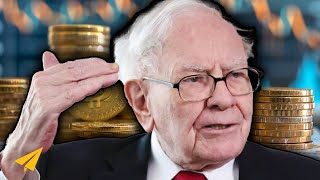
Warren Buffett explains why staying in your circle of competence matters more than raw intelligence. He warns against credit-card debt and cheap, failing businesses, citing his own costly mistakes with Berkshire Hathaway and airlines. Success, he says, is doing work you love with people you respect.
He's often referred to as the Wizard of Omaha and is one of the most successful investors of all time. He's known for his belief in value investing and his living in frugality despite his immense wealth. He's also one of the world's greatest philanthropists, having pledged to give away 99% of his fortune to charity. Mentor me, Warren.
I was wondering how you define success personally. Well, I can certainly define happiness because that's what, that's what I am. I mean, I get to do what I like to do every single day of the year. I get to do it with people I like. I get to— I don't have to associate with anybody that causes my stomach to churn. And the only thing in my job I don't like, and this only happens about every 3 or 4 years, occasionally I have to fire somebody, and I don't like that. That's the only thing. Other than that, I tap dance to work, and I get down there and I think I'm supposed to lie on my back and paint the ceiling, you know, or something like Michelangelo. I mean, that's the way And it doesn't diminish. It's tremendous fun. So, you know, they say that success is getting what you want and happiness is wanting what you get. Well, I don't know which one applies in this case, but I do know that I wouldn't be doing anything else. I mean, I do advise you, you know, when you go out to work, go to work for an organization that you admire. People you admire because it'll turn you on. And you ought to be happy where you are working. And I always worry about people who say, you know, I'm going to do this for 10 years, I really don't like it very well, then I'll do 10 more years of this. I mean, that's a little like saving up sex for your old age. I mean, not a very good idea. So get right in. You don't recommend that. Get right into what you enjoy, you know, and you'll be You'll be successful at it. You really will. I mean, you won't be able to miss. And, you know, that's— I don't regard what I do as the most important thing in the world at all, but it's right for me. I mean, I happen to be wired in a certain way that what I do works in this. If I had to do what, you know, Bill does, I mean, it'd last about 10 minutes. And that's true of a lot of things, but I luckily, I kind of stumbled into the thing that I do best, and that You know, it's worked out well. The whole Long-Term Capital Management, I hope most of you are familiar with it, but the whole story is really fascinating because if you take John Merriweather and Eric Rosenfeld, Larry Hillenbrand, Greg Hawkins, Victor Agani, the two Nobel Prize winners, Merton and Scholes, if you take the 16 of them, they probably have as high an average IQ as any 16 people working together in one business in the country, including at Microsoft or wherever you want to name. So, that an incredible amount of intellect in that room. Now you combine that with the fact that those 16 had had extensive experience in the field they were operating. I mean, this was not a bunch of guys who had made their money, you know, selling men's clothing and then all of a sudden went into the securities business or anything. They'd had, in aggregate, the 16 had probably had 350 or 400 years of experience doing exactly what they were doing. And then you throw in the third factor that most of them had virtually all of their very substantial net worths in the business. So they had their own money up, hundreds and hundreds of millions of dollars of their own money up, super high intellect, working in a field they knew, and essentially they went broke. And that to me is absolutely fascinating. I mean, if I ever write a book, it's going to be called Why Smart People Do Dumb Things. My partner says it should be autobiographical, but this might be an interesting illustration And these are perfectly decent guys. I, you know, I respect them and they helped me out when I had problems with Solomon. And so they're not bad people at all. But to make money they didn't have and didn't need, they risked what they did have and did need. And that's foolish. That is just plain foolish. It doesn't make any difference what your IQ is. If you risk something that is important to you for something that is unimportant to you, It just does not make any sense. I don't care whether the odds are 100 to 1 that you succeed or 1,000 to 1 that you succeed. If you hand me a gun with 1,000 chambers, or 1 million chambers in it, and there's a bullet in one chamber, and you said put it up to your temple, how much do you want to be paid to pull it once? I'm not going to pull it. You know, you can name any sum you want, but it doesn't do anything for me on the upside. And I think the downside is fairly clear. So I'm not interested in that kind of a game, and yet people do it financially then without thinking about it very much. I have an old-fashioned belief that I can only— should expect to make money in things that I understand. And when I say understand, I don't mean understand, you know, what the product does or anything like that. I mean understand what the economics of the business are likely to look at— look like 10 years from now or 20 years from now. I know in general what the economics of, say, Wrigley chewing gum will look like 10 years from now. The internet isn't going to change the way people chew gum. It isn't going to change which gum they chew. You know, if you own the chewing gum market in a big way and you've got Doublemint and Spearmint and Juicy Fruit, those brands will be there 10 years from now. So I can't pinpoint exactly what the numbers are going to look like on Wrigley, but I'm not going to be way off if I try to look forward on something like that. Evaluating that company is within what I call my circle of competence. I understand what they do. I understand the economics of it. I understand the competitive aspects of the business. So figuring out the economic consequences. TV. I think there's, I don't know, 20, 25 million sets a year sold in the United States. I don't think there's one of them made in the United States anymore. I mean, you'd say TV set manufacturer, what a wonderful business. I mean, everybody— nobody had a TV in 1950 or thereabouts, '45 to '50. Everybody has multiple sets now. Nobody in the United States has made any real money making the sets. They're all out of business. You know, the Magnavoxes, the RCAs, all of those companies. Radio was the equivalent of the '20s. Over 500 companies making radios in the 1920s. Again, I don't think there's a US radio manufacturer at the present time. But Coca-Cola, you know, what was it, 1884, Jacobs Pharmacy or whatever, this fellow comes up with something. A lot of copiers over the years. But now you've got a company that is selling roughly 1.1 billion 8-ounce servings of its product, not all Coke, Sprite, and some others, daily. Throughout the world 117 years later. So understanding the economic characteristics of a business is different than predicting the fact that an industry is going to do wonderfully. And so when I look at the internet businesses, or I look at tech businesses, I say this is a marvelous thing, and I love to play around on the computer, and I order my books from Amazon and all kinds of things, but I don't know who's going to win. And unless I know who's going to win, I'm not interested in investing. I'll just play around on the computer. And Defining your circle of competence is the most important aspect of investing. It's not how important, how large your circle is. You don't have to be an expert on everything, but knowing where the perimeter of that circle of what you know and what you don't know is, and staying inside of it, is all-important. Tom Watson Sr., who started IBM, said in his book, he said, I'm no genius, but I'm smart in spots, and I stay around those spots. And you know, that is the key. Me. So if I understand a few things and I stick in that arena, I'll do okay. And if I don't understand something but I get all excited about it because my neighbors are talking about it and stocks are going up and everything, I start fooling around someplace else, eventually I'll get creamed. And I should. Avoid credit cards. Just forget about them. We're in various businesses that issue credit cards. The American public loves credit cards. But if you start revolving debt on credit cards, you're going to be paying 18 or 20%, and you can't make progress in your financial life going around borrowing money at 18 or 20%. You can make a lot of money by lending it out at 18 or 20% over time, you know, if you can find anybody that's good that will borrow from you. But you don't want to be on the side of the equation that's always behind in life. Uh, you know, I was lucky. I'd saved about $10,000 by the time I got out of school. That $10,000 was really worth millions I might have earned later on, because after you get a family and everything, the expenses roll in. But those were my tools to work with, but it was only because I was ahead of the game. If you're behind the game by $10,000 at some point and paying 18% or 20% interest on it, you will never, you know, you'll never get out of it. So the trick— I've got a partner that says, all I want to know is where I'm going to die so I'll never go there, you know. And, uh, And that's true in financial matters as well. You want to figure out where you don't want to be ahead of time and avoid that. And I get about a dozen letters a day from people who are having terrible problems. And there are two reasons why they have terrible problems. One is a number of them have had health problems of some sort. I mean, they have really been hit by some, or somebody in their family has been hit by some kind of catastrophic illness. And that is a, you know, it's a terrible thing to happen to any family. And they get in, they run up bills they can't pay. And really, only society can solve that one, uh, uh, in terms of protecting people against that. That's just plain bad luck. But the other one is from people who run up credit card debt and they're facing bankruptcy, or they've been through bankruptcy once before, and they owe a whole bunch of money and they can't— they can't even pay the interest, let alone pay any principal. And half of my letters come from people like that. And that, that, that problem is avoidable. Catastrophic illness is not, but credit card debt is something you bring on yourself. And it's way better, it's way easier to stay out of trouble than to get out of trouble financially. And I will guarantee, if you run up big credit card debt, you will be in trouble probably the rest of your life in terms of your financial situation. On the other hand, if you get ahead of the game, even on a very modest scale, so that money is coming in from investing and you're— you're— people owe you money, or equities owe you ownership, uh, you'll be way ahead of the game compared to paying it, uh, be always being paying, uh, your creditors every month. So my advice to you is, uh, if you can't pay for it, don't buy it. And, uh, get yourself in a position where you can pay for anything, and then we'll be glad to see you at Borsheim's or the Nebraska Furniture Mart. I always look at IQ and and talent is sort of representing the horsepower of the motor. But then in terms of the output, the efficiency with which the motor works, that depends on rationality because a lot of people start out with 400 horsepower motors and get 100 horsepower of output. And it's way better to have a 200 horsepower motor and get it all into output. And so why do smart people do things that interfere with really getting the output they're entitled to? It gets into the habits and the character and the temperament, and it really gets into behaving in a rational manner and not getting in your own way. As I say, everybody here has the ability absolutely to do anything I do and much beyond. And some of you will and some of you won't. But the ones that won't, it will be because you get in your own way. It won't be because the world doesn't allow you to. It will be because you don't allow yourself So I want a simple business, easy to understand, great economics now, honest and able management, and then I can see about in a general way where they're going to be 10 years from now. And if I can't see where they're going to be 10 years from now, I don't want to buy it. Basically, I don't want to buy any stock where if they close the New York Stock Exchange tomorrow for 5 years, I won't be happy owning it. I buy a farm and I don't get a quote on it for 5 years, and I'm happy if the farm does is okay. You know, I buy an apartment house, don't get a quote on it for 5 years. I'm happy if the apartment house produces the returns that I expect. But people buy a stock and they look at the price the next morning and they decide whether they're doing well or not doing well. That's crazy because they're buying a piece of a business. That's what Graham— the most fundamental part of what he taught me. You know, you're not buying a stock, you're buying a part ownership in a business. You will do well if the business does well and if you didn't pay a totally silly price. And that's what it's all about. And you ought to buy businesses you understand, just like if you're buying farms, you ought to buy farms you understand. It's not complicated. Well, I've made a lot of mistakes. Biggest mistake— well, not necessarily the biggest, but buying Berkshire Hathaway itself was a mistake because Berkshire was a lousy textile business, and I bought it very cheap. I'd been taught by Ben Graham to buy things on a quantitative basis. Look around for things that are cheap. And that— I was taught that, we'll say, in 1949 or '50. It made a big impression on me. So I went around looking for what I call used cigar butts of stocks. And the cigar butt approach to buying stocks is that you walk down the street and you're looking around for cigar butts, and you find this on the street, this terrible-looking, soggy, ugly-looking cigar, one puff left in it. But you pick it up and you get your one puff. Disgusting, you throw it away, but it's free. I mean, it's cheap. And then you look around for another soggy, you know, one-puff cigarette. Well, that's what I did for years. It's a mistake. Although you can make money doing it, but you can't make it with big money. It's so much easier just to buy wonderful businesses. So now I would rather buy a wonderful business at a fair price than a fair business at a wonderful price. But in those days, I was buying cheap stocks, and Berkshire was selling below its working capital per share. You got the plants for nothing, you got the machinery for nothing, you got the inventory and receivables at a discount. It was cheap. Cheap. So I bought it, and 20 years later I was still running a lousy business, and that money did not compound. You really want to be in a wonderful business because the time is the friend of the wonderful business. You keep compounding, it keeps doing more business, and you keep making more money. Time is the enemy of the lousy business. I could have sold Berkshire, perhaps liquidated it, and made a quick little profit, you know, one puff. But staying with those kind of businesses is a big mistake. So you might say I learned something out of that mistake, and I would have been way better off taking what I did with Berkshire. I kept buying better businesses. I started an insurance business, See's Candy, the Buffalo, all kinds of things. I would have been way better doing that with a brand new little entity that I'd set up rather than using Berkshire as the platform. Now I've had a lot of fun out of it. I mean, everything in life seems to turn out for the better, so I don't have any complaints about that, but it was a dumb thing thing to do. I went into US Air, I bought a preferred stock in 1989. As soon as my check cleared, the company went into the red and never got out. I mean, it was really dumb. I mean, I've got an 800 number I call now whenever I think about buying an airline stock. I call them up any hour that— fortunately I can call them at 3 in the morning and I just dial and I say, "My name's Warren, I'm an aeroholic, you know, and I'm thinking about buying this thing." And they talk me down. I mean, it takes hours sometimes, but it's worth it, believe me. If you ever think about buying an airline stock, call me and I'll give you the 800 number because you don't want to do it. But we got lucky in terms of how we eventually came out on it, but it was a dumb, dumb decision, all mine. I would go to work, I would go to work in whatever turns you on. It may turn out that it'll be more profitable than you can think, but Almost everybody here will make enough money unless they get some terrible habits along the way to do reasonably well. And doing reasonably well in this country really is pretty darn good. I mean, it is. It's not necessary to have huge amounts of money in order to enjoy yourself. I enjoyed myself when I had my $10,000, and I live in the same house that I lived in when I was making— when I had about that. I bought it 41 years ago. I liked the house then. I like the house now. I mean, if you think about it, if you have a reasonable job, you'll be eating at McDonald's and I'll be eating at McDonald's. So we're to push on food. I mean, you know, in fact, I hope it's Dairy Queen actually. And if you come to Dairy Queen, you'll see me and you can order anything on the menu I can order and we both can afford it. You know, you'll wear the same clothes I wear. I'll pay more for my suits, but as soon as I put them on, they look cheap on me. So we'll look about the same. We'll both live in the same kind of houses. I live in that house from 41 years ago, and it's warm in winter and it's cool in summer and it's comfortable. And you'll live in a house that's similar. And what difference does it make if you have 50 more rooms or, you know, guest houses or all that? You know, it'll probably just bring you problems. I mean, you have to worry about the greenskeeper or something when you get through. So I have been in the houses of people where the houses are worth Oh, probably 200 times what my house is worth, and I would not be any happier in those houses at all. In fact, I'd be less happy. I just have one more thing to worry about, and, you know, the dozens of people around the place and people quitting and people stealing from you and all kinds of things. To hell with it. Yeah, uh, we drive— we'll drive the same kind of car. In fact, you'll probably drive a better car. I drive a car, it's about 8 years old. I don't know I don't know what it's worth now, but it gets me around fine. I mean, I'm perfectly happy. We'll watch the same television, you know. We'll work on the same computer pretty much. The only difference will be how we travel long distances. You know, I will fly in a plane that's more comfortable than flying Southwest Airlines or something, which I've got nothing against. But that's the one real big difference. And other than that, I do what I like every day. I hope you'll do what you like every day to do. And I work with nice people. I hope you work with nice people. And that's— there's 24 hours in the day, and those are where the hours go. So great wealth is the tiniest bit different in a real sense than having just a decent income. And to trade a decent income and something you love doing and something where you feel worthwhile doing it, for huge wealth where you trade off a lot of your principles, would be a terrible mistake. If you tell me who your heroes are, I can tell you how you're going to turn out to quite an extent by this point in life. And I have been extraordinarily lucky in that none of my heroes ever let me down. I mean, the ones I came up with throughout their lives, I've never felt that I've been let down in any way with it. Number one was my dad, and had a huge impression on me. My wife, who is here, is one of my heroes. I mean, she is, in terms of— she's taught me a tremendous amount, and never seen anybody any better with human beings than she is. You can, Yogi Berra again said, you can observe a lot just by watching. And I watched my dad and I've watched her. I had a professor, Ben Graham, back at Columbia and had a huge impact on me. So I have been lucky in that I've had terrific heroes and they haven't let me down. And that, That takes you a long, long way. I've gone through one or two periods where we're kind of tough in life, but not— I mean, everybody's had that, but having the right heroes will take you right through it. I have a lot of spare time because the managers at Berkshire do all the work. I just sit there in the office and read and talk on the phone occasionally. And it may surprise you, I Leaving out the question of email, I spend more time on the computer than Bill Gates does. We use that as a trick question sometimes when we appear together. And I spend about 12 hours, at least 12 hours a week playing bridge on the internet. I play on something called OK Bridge most of the time. My name is T-Bone. I put my age as 103, so when I do something dumb, people will say, well, for a guy 103, he's not so bad. And I play almost every night. I play on the weekends. I can't get enough of it. My partner, incidentally, almost all of the time is an Italian woman who lives in the United States who's come along on this trip, actually, and she was twice world champion. And we have a terrific time. And that's my favorite activity. I used to play golf. I still play a little bit, but I've gotten so bad that I can hardly bear to watch myself play golf. And I do a lot of reading. I like movies. But the best thing I like is running Berkshire Hathaway.
Thank you guys so much for watching. I made the Mentor Me series happen because I wanted to spend a little bit more time with these super successful entrepreneurs and hope some of their magic pixie dust rubs off on us by spending a little bit more time with them. So I hope you guys enjoyed this video. Let me know what you think of it. Let me know what you took from the speeches that we played. Leave a comment below. I will join in the discussion. Thank you so much for watching. Continue to believe, and I'll see you soon.
More from Evan


How the Biggest Mistake in History Created A Trillion-Dollar Empire | Sergey Brin



9 Machiavelli Principles That Force People To Respect You | Machiavellian Philosophy



The First 10 Words That Instantly Ruin A Sales Conversation | Vanessa Van Edwards

The Top 1% Mindset Behind The First $5 Trillion Company | Jensen Huang (Nvidia)

