Why Your 401k Is a Financial Trap | Robert Kiyosaki Reveals the Truth
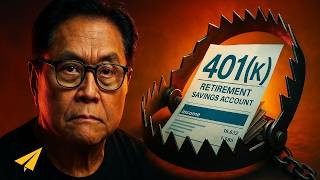
Andy Tanner explains how 401(k)s trap savers and why you should model your finances on Warren Buffett: hold cash for downturns, stocks for inflation. He compares options to insurance and argues that learning to invest yourself beats following generic advice.
Chapters
So today I think the best investment in the world is you go to a coin dealer and buy a Silver Eagle. They're about $25 apparently, but 50 years ago they were $50. So silver coins, the Silver Eagles, are still 50% below, 100% below their all-time high. I think so everybody can afford a $25 silver coin, but the thing is, is exactly as I said, most people do nothing. And they hope Biden is going to save them or Kamala is going to save them or whoever the puppet master is. Again, the question is not what Biden or Kamala or the puppet master are going to do. What are you going to do? My rich dad was my best friend's father. He says, you've got to study real estate because what you'll understand is debt. And you have to understand gold because gold is money. And when you have those two things and oil, they can't fire you. Because you're a sovereign individual over your wealth.
Money Revealed is an exclusive video series where self-made millionaires share their secrets on how they got rich. In this video, you'll learn how to make smart investments, create wealth through risk, and educate yourself financially. These are the lessons that they don't teach you in school about making money, and we've partnered with the series creator Jeff Hays to bring it to you on my YouTube channel. Enjoy. Robert Kiyosaki is famous. He's a household name. He's had massive impact on my life. He probably has on yours too. There's very few people who don't know about Rich Dad Poor Dad. Very few people who haven't read something that Robert Kiyosaki has written, hasn't seen a video that Robert Kiyosaki has made. And I have to tell you, the guy just isn't slowing down. Every time I've had a conversation with him, and I've had a few now, He keeps upping the ante. His vim, his vigor, his intelligence, his perspectives are completely unabashed and something that absolutely can change your life. It's changed mine, and I can tell you that this interview is something that's going to make a difference. So I was really excited that he agreed to sit down, have this conversation, be interviewed. He really cares about what he's putting out into the world. He really cares about impacting people's lives, and with all the success that he's had, it doesn't slow down the fact that he wants to help you. So enjoy this interview with Robert Kiyosaki. Robert, I've been very much looking forward to this interview. I regard you as, I think, the most influential money philosopher in the world right now, and I think that's really— yeah, well, so there's a lot of weird stuff going on in the world, and I think we need context and And that's why I'm excited to have this conversation. So let's maybe just start with some of the highlights. You've been around a lot of years, you've seen a lot of cycles, a lot of economic cycles and so on. And right now we got, you know, we just came out of COVID who knows if we're really out of it as far as what the governments are going to do. We've got inflation that is, you know, extraordinary, you know, the so-called pain at the pump, grocery prices, all that stuff that's happening. In the meantime, they're printing money in an unprecedented way. Then we have Russia invade the Ukraine. So there's so many things happening all at once. Have you seen anything like this through all your decades in your own life and career, or do you think we're in new territory?
Well, just FYI, on April 8th, I turned 75 years old. So I've been around for a while.
You look great.
And I hate to say this, But I've been a pessimist for much of that time. And the reason is, is I had a sense that what we're experiencing today might happen. So while everybody else was dancing with the tulips and floating with the butterflies and positive thinking, I always had this kind of a dark cloud over my head, sensing something wasn't right. And the problem is I never thought it would be this bad. Now the good news is I prepared for it. So the good news is as the price of oil goes up, I make more money. You know, when they print more dollars, I make more money. I'm not, I have nothing in the stock market. And because of this dark cloud over my head, I took a different path in life. And I think that's why I'm upset. I'm disturbed. I don't like what's happening. But I was prepared for it. I just didn't think it'd be this bad.
So we've had prior conversations and you've spoken about the positions you're taking from wealth development and protection standpoint. Prior to a lot of this stuff going on. And so you are prepared, as you said, that as things are happening, because you did anticipate negative things. So it's simultaneously, I guess, disturbing on one aspect that it's disturbing that, you know, it's worse than you even thought. On the other hand, you were prepared because of what you've been doing in the past years. Is it too late for other people maybe to change their positions, or is there opportunity here as we're having this conversation today?
That's a great question because I personally see this period of time as the worst period of time in history, but the good news is you can still make changes. But, you know, I don't make recommendations. For example, Dave Ramsey is a friend of mine, always says live debt-free. I do everything the opposite. I'm a billion dollars in debt. So what I do, I don't recommend people do. And that's kind of the difference here. So the most important thing that people can do is listen to different points of view, like, you know, YouTube and podcasts like these will offer different points of view. But I just caution people, I think it's going to get worse.
Worse in what ways do you think?
Civil unrest.
Civil unrest. Okay, so that goes to the extreme.
Right.
Well, it's not extreme. I tweeted a few days ago about some guy who was shot, and I said it was just starting. And the number of violence in the cities has continued to escalate. But that's not a mistake also, because that's why we have defund the police and they're soft on crime. They leave the southern border open. I mean, this stuff has been I didn't think it was going to be this bad. I knew they were going to screw it up, but not this bad.
Yeah. You know, what's interesting in some respects is, you know, you came up through the Vietnam era and, you know, fought in the Vietnam War. You'd spoken about that before. And there was protests and things, you know, back then when all that stuff was going on. But this seems like a different animal when you look at, you know, the types of civil unrest that's going on, that's already started today, but also it seems like it could degenerate pretty quickly. And so if you are— and you said you have no money in the stock market, so you're not investing in equities at all. Before we started speaking, you did say that you just bought a gold mine. Can you tell me a little bit about that?
Well, I think this show is about money, and the question is, what is money? And money is God's— gold is God's money. Silver is God's money. Copper is God's money. I'm not really religious. I know you're in Utah. I'm not Mormon, not preaching. I just call it the way— I'm a US Marine. And I call it as I see it. God put gold here, God put silver, put copper. And that's why I call it God's money. Bitcoin is people's money. So it's made by the people. And the US dollar and most fiat currencies are government or fiat money. And I've never trusted fiat money. So that kind of led me to be the guy walking with a cloud over my head because I just didn't trust the US government. And I still don't trust the US government. And this guy Biden, I'm not political either, but he is the worst president we have ever had. I mean, how in the world Can you leave the southern border open? How can your son be caught dealing with China and Ukraine and pulling all this money in? Oh my God. And people say nothing about it. My God.
So, so now, you know, you've, you said, okay, you look at gold, silver, precious metals, God's money, meaning, hey, it's, it's a part of a natural resource that's here. It's scarce and it's not, it's not subject to fiat, you know, and government whim. You started to mention Bitcoin as the people's money. So what is your view right now around crypto? Do you think it's— I guess there's two questions, the moral question about the fact that there's decentralized finance and non-government-controlled currency. But then there's also the practical question. Does this have a shot? Do you think that the governments might try to interfere with people investing in this. Where do you think that might go?
Well, let me ask you this. You know, if I went to China and I said, I'm going to start my own little currency, the Chinese government would shut me down because they're tyrants. America's going to do the same. So I think we're going to have the Fed coin. And my concern is that's a surveillance technique. So they can interfere with my lives and know what I'm doing, what I'm buying, and all this stuff. Tracking devices. So the reason I— that when I understood what Fedcoin or the U.S. government coin would do, I became more of an advocate for gold, silver, and in that case Bitcoin would not fall in that category because I want money that I can spend that's not traceable. Not that I do anything illegal, but I have boxes and boxes and boxes of Silver Eagles. That if push came to shove, I could pay you in silver eagles. It's not traceable. So I hate to say this, but I just tell you the truth. I have this black cloud over my head when it comes to my government. And the reason you mentioned earlier, because as a US Marine flying for the Marine Corps in Vietnam, I got very disenchanted with America.
So when you say America, you mean the American government?
Yeah, because when I was in Vietnam, I went there in '72 and '73. First time was '66 as a student. I went to the academy. And my rich dad wrote me a letter in '72 and he says, hey, Nixon took the dollar off the gold standard. This is '72. I'm sitting on an aircraft carrier flying strikes into Vietnam. And I go, what the heck does that mean? We're off the gold standard. I didn't know anything. So my co-pilot and I decide, well, let's go buy some gold. So we look at the map of Vietnam and there's this little hammer and sickle, whatever it is. It says AU gold. Hey, it's a gold mine over here. And so we're off the coast of Vietnam and we fly. It's only one problem. The gold mine is now behind enemy lines. And we were losing the war, in other words. So being Marines, weren't that bright, we said, well, let's go anyway. So we flew behind enemy lines and there's this little Vietnamese woman with red teeth, all chewed betel nut. And I walk up to her and gold was $35 an ounce, which was started in 1933 with Roosevelt, President Roosevelt. But when Nixon took the dollar off the gold standard, gold was now pushing $50. So I went from $35 approximately to $50. So I said, well, because we're behind enemy lines, I can buy gold at a discount. Here I am, enemy all over me. I'm standing with this little Vietnamese woman, my co-pilot and I. And we want a discount. She laughs her ass off at us. Here we are, two college-educated Marines. And she looks at her, she goes, 'Spot! Spot!' I said, 'What the heck is she talking about?' I didn't know what spot meant. That woman knew more about money than I ever did. Wow.
I, I have never— I haven't heard that story before, and it's, it's, it's very entertaining. But the real, uh, sort of irony in it is now fast forward, you know, 50 years or so, and, uh, now you are are buying gold mines. So what's interesting is you had the instinct back then to say, money's taken off the gold standard, let's go behind enemy lines and buy some gold. And then now here you are buying gold mines, but your understanding of money and why you're buying it is, I think, a whole different level. But the dynamics haven't changed.
Yeah, well, and it's worse than that because being Marines, we're not that bright. I'll say it again. So I went up to Canada in British Columbia. I love Vancouver, British Columbia. And I went looking for gold mines, and I found one in China. So we bought the biggest gold mine in China. I took it public on the Toronto Stock Exchange. And that's why I don't own any stocks, is once I found out how the stock market process, how you go from a private placement to taking a company public. I said, I'll never, I don't trust the stock market either. And so then what happened, it got, but wait, it gets worse. So I raised $27 million in Toronto. This is 1990, around 1995, around that. And we took the company public and all this, and we found gold in China. And I found out what country risk means. The freaking Chinese government took it from us. And so ever since then, I still like Chinese food, but I don't like the Chinese government either. So when this gold mine came up in Utah, it's the biggest, richest gold mine in the world. Nobody knew anything about it because it was already 120 years old. And due to new technology, we went in there And the veins of gold are so deep in this mine, it's the richest in the world. So that screw-up in Vietnam, the screw-up in China, helped me make a better decision 3 months ago in Utah.
Wow.
So basically we're seeing— and it's not just the US currency, but all the varying fiat currencies in the world are— I hear the phrase, I kind of like this phrase, that maybe we're still the tallest pygmy. But none of them are good, right? So, so all the currencies are going bad, which has got— so people should be, for lack of a better term, fleeing or moving toward precious metals, maybe Bitcoin, anything else? Like, if you— if let's say that I'm somebody who's been working for a couple decades, I've got some savings, some retirement, you know, I've had money in the market. Yeah, what advice do you give people? Where could they move now? Is it just as simple as gold, Precious metals and maybe some crypto, or what else do you see? Real estate? How do you feel about real estate right now, given what's going on?
People don't know something about real estate. Real estate is debt and taxes. So because I make so much money in business, I have to buy real estate with debt so I don't pay any taxes. If you get that offset in there, so I make millions of dollars, but I pay no taxes legally because of real estate. So I'm always making more money in business, but always investing in real estate. And there's one more form of money. I don't recommend what I do because what I do is pretty outside the box. I buy oil wells. So I have oil wells in North Dakota and Louisiana. And when that communist President Biden took the, you know, shut down the Keystone XL pipeline, He screwed the American public because when he shut down the pipeline, inflation went up. Then he blames Putin for it.
Right.
But when inflation goes up because of oil and oil runs everything, fertilizer, you know, for your food, for the trucks, for everything. When the price of oil goes up, inflation goes up. But it makes it harder for 50% of the American population. So the irony of it is I get richer. But the American public gets more dangerously towards revolution. And ultimately, I think that's what's going to happen. I think that's what Biden is trying to do, is start a revolution inside this country.
That's actually an interesting question or point insofar as, is this just sheer incompetence or are they actually trying to incite something? You know, we go back and forth when I have these types of conversations offline. I can't, you know, I, and to me he seems just completely incompetent, but it could be chilling, more chilling in the sense that this is actually on purpose to create some destabilization.
Well, just understand he and Kamala are just puppets. They're not the puppet master. Right. So if you understand that, then I don't get so upset with Biden and Kamala. And I think you can get stuck down the rabbit hole of conspiracy and all all that stuff, it doesn't do you any good. The question is, what are you gonna do? You know, I can study who the puppet master is, but what good does it do me? So that's why years and years and years ago, that little Vietnamese woman told me what spot was. You know, it's the price of gold all over the world, idiot. I went, I better wake up here. So that's why I own gold, silver, oil, real estate, And I don't play the stock market. But that's what I do. But I study it for most of my life. So I'm not recommending what I do. I just tell you what I do.
One of the things that you'd mentioned, which is really, I think, one of the painful aspects of observing what's going on right now, is that, you know, these people are supposed to be championing the middle class, you know, are completely just because When people say to me, or as you're talking about saying, I'm fine. Actually, I'm actually doing financially better because of these circumstances, because I anticipated them and I positioned myself properly. But what good is all that if there's civil unrest anyway? But I look at the middle class who, when they go to fill up their tank to get to work and recognize that they might have to make a decision between putting food on the table and filling their tank or what it might be. They're the ones who are getting squeezed the hardest. I don't care when I fill up my tank, it doesn't matter what the cost is, it has no impact on my life whatsoever. But the people that are supposedly, that the current administration is championing are the ones who are getting really, really tortured right now. And do you feel like we're at the front end, this is going to get much, much worse before there's any, it gets better, or where do you think we are in the cycle?
Well, because I said, you shouldn't talk to me because I got this thundercloud over my head. But another thing I made a fortune on was bullets. I would, you know, America is great for those gun shows. So while some guys were buying boxes, I was buying pallets. But we started this conversation. It's worse than I thought it would be. I kind of hoped I was just being a pessimist. But now I don't know. I'm very concerned. Exactly as you say, you know, I think before this, before COVID 50% of Americans didn't have $1,000 in savings. And when Biden cut off the pipeline, that $1,000 disappeared. And then what happens is, so I get richer and I own cattle. And so I'm making more money off of food also. So I basically invest in the basics of life— guns, bullets, butter.
So I think there's a lot of paralysis right now for many people not knowing what to do. And, you know, how do they— you know, should everybody get the cash? Because again, it sounds like, wow, if I get the cash, I'm in trouble. Because of how the dollar is being devalued, I guess gold is a safe hedge against inflation. What's interesting, though, is that it seems like gold prices are extremely manipulative also, as far as the government and so on. Is that something you think that they can't keep a handle on, or that's going to finally get— it might start moving the way that it should?
Well, let me tell you another story. It was in 1964. I was looking at my silver coins in my pocket, and the silver coins got a copper tinge around it. And so I did some research into it. It's because they debased the silver, like the quarter, the dimes, and the half dollars. And that copper tinge was what the Romans did years and years and years ago. And so although I wasn't very good at school, I did study history. And when they put that copper tinge around silver coins, I started saving silver. So today I think the best investment in the world is you go to a coin dealer and buy a Silver Eagle. They're about $25 apparently, but 50 years ago they were $50. So silver coins, the Silver Eagles, are still 50% below, 100% below their all-time high. And I think so, everybody can afford a $25 silver coin. But the thing is, is exactly as I said, most people do nothing. They do nothing. And they hope Biden's going to save them or Kamala's going to save them or whoever the puppet master is. Again, the question is not what Biden or Kamala or the puppet master are going to do, is what are you going to do? And so I would just buy some silver coins. That's a start, you know.
Yeah, I think that's a great start. Now, if let's say some people were like getting ready to buy some real estate and let's say it's cash flowing real estate, which I know you recommend, and, and but you're looking, you know, interest rates are starting to climb. Do you think, do you think there is a bubble right now in the real estate market that or is this is the increased pricing going to going to continue? And then, of course, there's the issue of supply and demand, rents, etc. So if somebody's got some extra money to be able to invest in cash flowing real estate, is that still a good idea today or not so much?
I own 12,000 rental units and commercial buildings and golf courses and hotels. I don't recommend people get into real estate unless they're willing to study and understand it. The reason is, if I buy, let's say, 10 shares of Apple and I make a mistake, I can sell it tonight. You buy a rental property, you can't get rid of it. You might have the tenant from hell in it. So I would be very careful with real estate. My friend Ken McElroy, he's a Rich Dad advisor, he wrote the ABCs of Real Estate Investing. He's my partner. I trust him implicitly with my money. So he wrote the ABCs of real estate investing and finance and management. Because real estate is a business, it's not a stock. You know, the average punter should just have a 401(k), and they're going to die anyway, so, or an IRA. But if you want to be a professional investor, I would get Ken McElroy's books. They're under the Rich Dad Advisor Series, and that's how you start. Get some ideas, because real estate, you make a mistake, you're the skipper of the Titanic. And I think we're going through the biggest real estate crash in history coming up.
Oh, wow.
And that's when you buy. But I bought after 2008. I was happy as Larry.
So that's interesting. So do you have any sense of a timeframe for when you think this crash is going to happen?
It doesn't really matter to me because I'm always in the market. I'm never out of it. I just heard something else because I own property in Hawaii. There's a guy named General Robert Spalding, is an Air Force B-2 pilot, and he was part of the Pentagon and all this. And he says what China is doing right now is watching Russia meddle with Ukraine. And he says what China is doing is finding out what America knows as Biden piddles around with Russia. And he says they're going to take Taiwan. Now, that's what General Robert Spalding says. That's good news for me because the Chinese will run to Hawaii. You know what I mean? So those are the things that I'm paying attention to with this dark cloud over my head watching Biden screw up in Ukraine.
So this, I think if we look at the dark cloud and I guess, you know, you had pessimism for, as you said, for a while now there's, you know, good cause. Yeah, I think who shouldn't have pessimism right now with everything that's going on? And it seems like the tools to fix it, I don't know. I think they're kind of, you know, the music stopped playing and they're out of chairs and, you know, what? What can possibly be done right now. Is there— do you think that this is recoverable? I mean, could there be decisions made by our government, you know, to avert, you know, some kind of disaster here, or are they too far gone at this point?
I think we're too far gone. I mean, I've never seen such incompetence in government. We can't even say anything. Our freedom of speech is gone. And that's the most tragic part of it, because as a U.S. Marine, I fought primarily for our freedom of speech.
Being as outspoken as you are, have they attempted to cancel you? I mean, has that— have they come after you very hard trying to say that you should be canceled, nobody should listen to you? And if so, what have the effects been?
Well, I mean, if they came after me, I didn't like them anyway. My latest book just came out. It's called The Capitalist Manifesto. Yeah. You know, it just came out, it's 2022, and I go against the teachers unions, the NEA. Yeah. Because my poor dad was head of the NEA. I know those guys, they're a bunch of criminals. And so I attacked the teachers, the teachers attacked me. Now this is the good news. Some teachers fight back. Yeah. And just recently, Arizona State University, which is the largest university in America, has invited me to come onto campus and teach entrepreneurship. Okay. So it's— we gotta fight back, that's what I'm saying, you know.
Right. Tell me the central theme of The Capitalist Manifesto. Why did you write it and what's the central theme about it?
Well, in '65 I left Hawaii as a goofy surfer kid, you know, and I got appointments at Naval Academy and Merchant Marine Academy. I took Merchant Marine Academy in New York and my my economics teacher had me, had us read the Communist Manifesto. It's only 48 pages. It was written, oh, 50 pages. It was written in 1848. So we had to read the Communist Manifesto and Hitler's book Mein Kampf and Mao's little book. So we studied, you got to know thy enemy. So we studied communism. And it was shocking when I realized that 95% of all school teachers are communists. That's my family. They're not bad people, don't get me wrong. They just believe in Marxism. They believe in a graduated income tax. And America was founded in 1773 on the Boston Tea Party. Yet Marx says a graduated income tax is essential for communism. They also believe in labor unions. Workers of the world unite. So everything I was reading in Capitalist Communist Manifesto in 1965, I went, "Oh my God, it's being taught in our school system." And that's what disturbed me.
It's chilling because I think there's no question on the practical side that capitalism is superior. I mean, it's just you can't ignore the history. There's too much evidence, right? So on the practical level, Everybody's better off in a capitalist society than in the shared misery of communism, let's say. But I believe how they've been able to persist in these communistic views is saying that, well, it's the morally superior way of culture and community and humanity is the communistic way. I think the moral argument's got to be made for capitalism and can and should be made. So in your book, what are some of the key points that you make relative to capitalism? And is there the moral argument for it?
Well, first of all, it starts in our school system. If you understand that, that's why there's so many parents are fighting back, you know, in school, because they're wondering what the heck are the teachers teaching the kids? And if you don't take control of what's being taught to our kids, we're lost anyway. We've lost. Frickin' lost. But the biggest thing I agree with you is America thinks capitalism is superior, except those that are globalists. So a globalist is somebody like Silicon Valley or Jeff Bezos and all these guys. They make so much money from China, they're not going to say anything. They're not going to say anything. The way you want to stop fentanyl in America is you basically say to China, if you don't stop shipping fentanyl, we'll stop buying or selling computers to you. But Bezos and Gates and those guys, they're not going to do that. They make too much money. So they'll let fentanyl come in because they want to keep the money flowing. So we're screwing ourselves. And that's why I wrote "Capitalist Manifesto." It's how you fight back. The positioning statement is how do you counter communism taught in our schools by teaching capitalism in our homes. So I make millions and millions and millions and millions of dollars using debt, and I pay no taxes because I'm a capitalist. But the leftists in America say, well, you're dodging taxes. I said, yeah, but 1773, America was founded as a tax-free country, the Boston Tea Party. But they don't recognize that. It's really horrible what's happening in America. So "Capitalist Manifesto" is about all the things the left has done in America to bring communism to America. And I hate to say that happened in 2020 when our elections were stolen. That's the problem. Yeah, we all know they were stolen. My friend is Donald Trump, but you can vote for who you want, just don't steal our elections.
And I think when we look at the potential for civil unrest and the schisms that are at play that are widening and getting more heated, there's a lack of trust in the government almost on all sides at this point. It's just, nobody can be woke enough for the people who are in that particular arena. And at the same time, if you are legally avoiding paying taxes, somehow that makes you a bad person. No consideration to the wealth that you create and the jobs that you create and, you know, all of that, which is value creation into the culture. It's just a matter that you must be a bad guy if you are legally finding ways to avoid taxes, which is, you know, an incomprehensible, you know, view in my point. But in the end, is there a resignation? I guess, you know, where do we land now? Do we try to fight back for it? Are we resigned that the whole thing has got to collapse and be rebuilt? You know, how are you feeling about that?
Well, there's a guy, Edmund Burke, who said, "Evil persists when good men do nothing." So I had to write this, I had to write "Capitalist Manifesto." I'll probably get, Uncle get my, you know, you said, "I've been taken down." I've been pounded. I've been pounded. School teachers don't like me. I don't like them. It's mutual.
Yeah.
But don't take away— say, I don't care if you don't like me, just don't take away my freedom of speech. Do not censor me.
Yeah.
And they're going to try and censor me.
And I could see the, you know, the, the whole idea of censorship, I think, is the biggest threat right now. You know, and it's, it's, it's an interesting— and I think, you know, I was talking to somebody through COVID. You know, we did a whole series on COVID and all the lies and you know, all the censorship and all the stuff that was going on. And, you know, one person, I think, very astutely said, they've— their playbook plan for everything that's going on right now is they create more tyrannical controls. The only way that we can beat this is if we do something unexpected, something that wasn't anticipated, that wasn't in their playbook. Do you feel like Elon Musk looking to buy Twitter, is that an unexpected or disruptive thing that is a Positive sign?
Yeah, I took the statue of Jesus down and I put Elon Musk up. And he's right. If he opened up to free speech, it would be a better company. Yeah. But those rats running Twitter, they're just running for cover right now because they've covered up a lot of crime. You know, like what happened to Hunter Biden's laptop. Why did the FBI suddenly lose it all of a sudden? Give me a break. They've covered up so much stuff in this country. We don't have freedom of speech, but we have no freedom of press also. And that's why what Elon Musk is doing, he's my hero, man. You know, he is my hero right now.
Yeah, well, and I think for good reason. So have you found any attempts at censoring or shutting down the distribution of your book? The Capitalist Manifesto?
I'd be disappointed if they didn't try and censor me. One of the first things they did was they cut off my paper supply. They cut everybody's paper supply, but for some reason they printed my other books but not this book. It was kind of interesting, you know.
Yeah. You know, you said something I thought that was very poignant also relative to this, is that, you know, what's taught in the schools, you know, this has got to get taught in the homes. 'Cause we've already pretty much lost the schools at this point, you know, it seems like, as far as there being any sort of a non-agenda-driven curriculum. But, you know, here I think it becomes now the responsibility of the parents to take back and have tools to be able to teach their kids independent of what they're getting in, as well as one guy interviewed said, you know, education now is not education, it's indoctrination. And that's got to be fought. So any final words that you might have for people that are literally looking at the predicament that they're experiencing right now, certainly don't have control over their destiny in the way that you might. What should they be doing?
Well, you look at the power of money, you know, because I have so many friends who are doctors who couldn't say anything because they would get fired. You know, they couldn't go on— if they went on YouTube or Twitter, they'd get taken down and get fired. So that's why years and years ago, when I came back from Vietnam, you know, my rich dad, who was my best friend's father, he says, you've got to study real estate because what you'll understand is debt. And you have to understand gold. Because gold is money. And when you have those two things and oil, they can't fire you because you're a sovereign individual over your wealth. And then because I was a Marine, I have bullets and guns. Just leave me alone, you know, don't you mess with me. So that's what I recommend to people, that I'm not afraid. You know, they can shut me down, but it doesn't stop my oil from pumping.
Right. So I guess maybe the value to move toward in your decision-making, you know, that kind of can be the North Star is saying, what moves me towards sovereignty? That's really what the decision is. Not necessarily here's the biggest money opportunity. If that money opportunity doesn't give you freedom or independence or sovereignty, it's— you're probably better off saying, I'll take a lesser opportunity that moves me towards more autonomy. Is that— Is that something you'd agree with?
Well, you know, the name of my board game, which came out in 1996, is called Cash Flow. I want things that people will always spend on. So I just bought a whole bunch of Wagyu cattle because rich guys will always eat cattle. The vegans, the Marxists won't eat cattle, but the rich guys eat the best cattle. So while everybody else is chewing on their celery and broccoli, I'm selling Wagyu beef steaks.
Well, I could see the posts coming from some people from the vegan community today. Although I will say I know some very good capitalist vegans. Well, I have to say, you know, I always appreciate your time to share your ideas, share your thoughts. And what I especially appreciate is how unabashed you are in doing so. And as I said earlier, I mean, I really, after having been able to interview you a few times and read your books and understand where you come from, your influence is profound in the culture in general, but it's really philosophical in nature. It really speaks to values and understanding a view of reality that can lead you toward the right decisions as compared to mechanized, do this, do this, do this. It's like, no, learn to think and understand things. So I thank you for being here. I thank you for what you do in the world. And I hope that one day in the future, as things unfold, maybe we'll have a further conversation.
Well, thank you. I hope you don't get pulled down. I had Eric Trump on my show. They pulled me down for that. But anyway, I think you said the word that's probably the most important. It's called sovereignty.
Yeah.
Leave me alone. Just leave me alone. That's all I ask. And that's why I went to Vietnam twice for. Don't mess with me.
Powerful words. And I agree. That's what this whole country was built on, was the sacrosanct, unalienable individual rights for, you know, to live our life the way we see fit, as long as we're not violating other people's rights.
And as a non-white guy, you know, it really pisses me off that they say America is a racist country. That is the biggest crock of shit I've ever heard. Yeah. So, I mean, give me a break. Anybody calls you a racist, yeah, it's terrible. It's terrible what they're doing.
I think the worst thing you can do to a human being is get them to accept an unearned guilt. Yeah. And that's why I think that's directed toward—
yeah.
Yeah. So thank you for what you do.
I appreciate that. Thanks so much, Robert.
Thank you.
Coming up for you, I have a real treat. One of the people that I love to talk to and get information and education and inspiration from is Andy Tanner. Now, Andy Tanner is bigger than life in the sense that you're looking at a guy that's 6'8", has a big personality. He also has a big heart, and he loves teaching people things that improves their lives. And he is the person that has a context of how to approach these markets in an understandable way through options trading that can really change your future. Options is one of the most confusing things in the world of investment as far as I'm concerned. People explain it all the time and it's like you can't quite make sense of it and it doesn't really add up. But when Andy explains it it makes sense, you get the feeling that you can do it, and you also start to see the opportunity that lies there. So Andy Tanner's got something here that you need to know and understand. Let's dive in. Andy, great to be with you once again. You're like our go-to person, uh, and why I always have such joy when I spend time with you. And, you know, I've spent time with you off camera, you know, uh, where you're explaining things to me and walking me through things. And, you know, it's a spiritual experience talking about this stuff with you because you genuinely have this heartfelt desire to teach. You get excited when people are learning something and you get even more excited when it's enriching them, when people are taking what they're learning and they're putting it on the ground and they're gaining wealth. And you just have this uncanny talent to be able to translate kind of complex things and teach them in a way that makes sense. Or maybe it's just me, because maybe I have a hard time.
It's probably just you.
I'm saying maybe my brain has a harder time wrapping around things like options and so on. But you've been— you just make it stick the way you teach it.
Well, that's kind of you to say. I have a simple brain. I really struggled in school, really struggled as a young man in school. And so when I could grasp hold of something, I was pretty thrilled if I ever did get something. My father was a teacher.
Oh, wow.
And so I try to, try to be like my dad.
So, you know, I know that most people probably have seen us have some conversations around money before, but in your background, what led you here? I mean, you were, you're 6'8", you're a college basketball player, right? And then, you know, you got out of school, but how did you end up, you know, working with Robert Kiyosaki and kind of moving into those realms and getting into what you're doing today?
Yeah, well, Robert just has more and more bad luck all the time. And no, we— what happened was, is I, I never found my way in school. And as you mentioned, I was probably the worst basketball player in the history of my school. I— the joke I tell over and over again is, I can't jump, I can't shoot, but I could foul, so they found a place for me. When college was over, I never found my way into the catalog of a accounting, biology, down to zoology. I never found that. So I wound up in sales. And it was the '90s, and the trading software had come out. And I was a pretty good pitchman. And I started pitching software and trainings to trade stock. I thought, well, I can either sell this stuff, or I could learn it and do it. And so I thought, I'm going to do my best to learn it and do it. And one thing led to another. One day Robert's office called and I had been teaching things in his book. And when he called, someone said, "Hey, we hear you use the Cashflow Quadrant in your speeches." I thought, "Oh, they're gonna sue me. I'm using their stuff." And actually it was the opposite. They said, "No, we really would like to have someone come and teach about stocks a little bit." And so we became acquainted and I've been a Rich Dad advisor in that volunteer role. For about 15 years.
Well, so the world, every time we talk, seems to be changing. And, you know, if I go back to like, you know, the series, the Money Series we did a few years ago and, you know, what you delivered there and what we talked about, so much has changed since then. COVID has happened and that's impacted things. And now, you know, this stuff going on with Russia and Ukraine, this war, that's kind of impacted things. We're seeing inflation right now that is I've seen it in my lifetime because I was alive in the '70s under Carter. But this is new to almost everybody, like seeing this kind of inflation and the pain at the pumps and how much groceries are costing. And then we also see this stock market and this real estate market, which looks like a bubble. And I mean, so many dynamics of what's happening. How has what's going on in the world right now impacted your thinking and perspective?
I see opportunity. Maybe that's just me and my default setting, but I've always known that there's, there's opportunity everywhere. You know, one person's tragedy is another person's opportunity. If a hurricane's coming, the insurance companies are freaking out, but Home Depot can't wait for the new rush of customers. And so in my brain, the way I think about it, the opportunity is in positioning. It's not really what happens in the world, it's how you're positioned when it happens. And so what I do my best to do is think, how might I best position myself or teach students on how they might position themselves to not only survive difficult times, but to do better, to take advantage of the opportunity, to improve their situation. And I think With the forces of— I don't think of inflation and deflation as a period of inflation, a period of deflation, chronologically. I think about it as a battle between forces that force prices down and the value of a dollar up, and forces that force a value of a dollar down and prices up. And of course, in the middle of this, everyone should learn about The history of money in the Federal Reserve. And so as we get into the conversation, I think there are some things out there right now to pay attention to concerning the US dollar. That's really what's on my mind. If you can figure out the general inflation, whether in real estate or stocks or business or oil or even crypto, if you can figure out the force of inflation-deflation, you're better prepared to position yourself advantageously.
Let's dig into that. So explain that tug of war.
Well, I'm a big fan of history, not because I enjoy it— I do— but mostly when you understand the narrative of how something came to be, you can understand why it is and how it might behave or how fragile or strong it is. A good example of this is when I wrote Forewarned Chaos, I spent a lot of time with the narrative, and people have— really? That's That's how that started? How did that even work, right? So the history of the dollar, what is a dollar? Well, it comes from Europe. The word dollar is a European word. In the early times of the United States, they had these little silver coins that were called a dollar. And they were generally accepted and generally used, and people had confidence in them. And so the powers that be said, that's what we're going to have is a dollar. And there were lots of different legislations that went on. In the '40s after World War II, that Bretton Woods agreement is a big deal.
When you say Bretton Woods, what is Bretton Woods?
In New Hampshire after the war, all the countries got together, almost all of them, the big ones anyway, and they said, hey, how are we going to do commerce? What are we going to use? And they said, well, you know, the U.S. has Fort Knox. They got a big store of gold in New York. Why not? And in Kentucky. Why not make— let's just use dollars. Let's price things in dollars. Let's put oil and trade in dollars. And so they said, OK, it's backed by gold. We'll do that. That gave the United States a huge advantage. And the tentacles of that dollar reached into the system of how money is moved and converted and things are bought and sold. And it just gave the US an advantage. Well, now, 1971, they're pulling all the gold out. Nixon says, we can't keep up. We've got to print it. He gives his little political speech. And says, we're going to pull off the gold standard. Why didn't that just collapse it right there? Why didn't everyone just say, well, the whole reason— that's why the narrative's important. The whole reason that we did this is because you're backed by gold. I mean, that's the reason we voted for you guys to be the safe currency. But because the infrastructure became so dependent— it's like, you know, live your life without email now once you got it. And so what I see is more and more countries feeling that they have to use the dollar, not that they get to. In Bretton Woods, they voted and said, we want to use the dollar. That's changed to where I feel they look at the United States and say, what makes them just be able to hang on to this power of a dollar? They get to print as much as they want. Everyone buys their bonds because they're supposedly risk-free. Why is this? And so a good example—
dig into that a little bit. Yeah, there's some questions about your perspectives on this. Number one, is there any other currency that's backed by gold or something that would say that they, you know, that there's a better alternative at the moment?
Well, the rumor is, is that Vladimir Putin would like to start one. Yes, because he's been hoarding gold and he'd like to start one. But I think the bigger threat is is China. For example, the Saudis sell oil to the United States. They have a surplus. Russia has a surplus. We make 10— I think it's 10 million barrels a day or something. We have a shortfall of about— I think we use 17 to every 10 we pump. And so the Saudis sell us oil, and that's all done in dollars. Well, China has gone to the Saudis and said, hey, we don't like Bitcoin, but we'll have our own little cryptocurrency we have. Will you take it? And the Saudis are saying, yeah, I think we will. Well, that changes things. When people are willing to do business outside of the dollar and circumvent all of the fees and problems that come with trying to use a dollar, that would mean to me, well, maybe there's going to be less demand for dollars. And if there's less demand for dollars at the rate we print, I think that gives a little bit of an edge to the inflation side of the equation. And I think when you go to the gas pump, next time you go, think about your positioning. Take this thought to heart. You know, if you've tuned in and you're interested in money, study money. If you'd like to have more of it, study it. If you want to improve, study it. And think about your position at the gas pump. When I go to the gas pump and I see it's up, I think about all the shares of ExxonMobil that I own. And I see someone across there, and it's heartbreaking because maybe it's a mother who's trying to make ends meet. Her income didn't change. Her expenses did, and her free cash that she has for piano lessons or for— she's got to make some decisions now about the quality of her life. Why? Because she's positioned as a consumer of items, and other people, stock owners, are positioned as producers. A friend of mine, he was poo-pooing stocks. Well, I can hold gold in my hand and I can touch real estate. I'm like, well, what's in your pocket? It's an Apple phone. Oh, and it's on the AT&T network or the Verizon network or whatever. And you're using Apple TV. What else? Oh, you got an American Express card in there. That's as real— those businesses are as real to you as your rent. And I gave him a challenge. I go, try to go a month without giving money to Warren Buffett. He goes, what do you mean? I go, well, let's list all the companies he owns, everything from Heinz Ketchup to Coca-Cola to American Express to GEICO to See's Candies to furniture to everything. It's almost impossible not to live in the United States and not give that guy some money every month. And so since he's positioned himself as a producer of goods, goods, that no matter how much equality they try to have income-wise, no matter how much socialism they want to put out there, the problem is, is consumers are always going to get money and give it right back to the producers. So when you position yourself as a producer value, the more people you can serve, the more wealthy you become. Most people serve one guy, a boss.
Is this a part of the reason why there's such a huge wealth transfer during— and the gap And the increased wealth gap as a result.
Yeah, and that gap's not good. It's not a healthy thing. It's not a good thing. And there's two approaches to it. Some people think, well, we need a systemic solution that's legislative. We need to get some type of legislation to balance this out. Maybe that's true, I don't know. My feeling is the solution is educational. I think that people feel trapped Because in school they learn to go to school, get a job, put your money in a 401(k) and maybe retire someday. And that hasn't worked for a lot of people. So the fact that their whole mindset and context is job, job, job, job, job, job, consume, job, consume. They're seeking money rather than seeking assets. There's other people that break out of that and when I get some cash, I don't want the cash, I want the assets. So the producers are constantly trying to get rid of cash and get assets, and the consumers are constantly trying to get more cash from their job. And that context creates a wealth gap and concentrates wealth in the people that study the acquisition of assets.
And then when you have— because the big heartbreak, at least in part, is the people who probably are nearing or at retirement age who did the— I went to work, I funded my 401(k), et cetera, et cetera, et cetera. And now they have inflation, which, you know, it's interesting that especially the current administration, you know, talking about, you know, we're not going to tax the middle class, we're going to tax the wealthy, et cetera, et cetera. But it's a sleight of hand, isn't it? Because, you know, when you have inflation the way it is, because— and what's that? We're printing all this money, we're— and they're giving it supposedly the middle class, and middle class, like you said, is taking it and giving it to producers, and next thing you know, the producers are wealthier. They're no wealthier, but the value of the dollar, or the dollar is devalued. And now they're sitting there with, ready to retire and saying, my buying power is gone. I can't retire now.
What's crazy is, is it kills people who save money because their savings has lost value. But what's more important is it enriches people who are in debt. Yes, because if you're— think about it— if your asset column grows, your net worth grows. If your liability column shrinks, your net worth grows.
Yeah.
And so people that went out and went into millions and millions of dollars of debt, say, to buy real estate, and that debt's at a fixed rate and it's fixed, it's not going to change. Dollar loses value, home prices double, equity is through the roof.
They're wealthy, right?
And so it's the debtors, the people that— so I don't disagree with like the gurus of in the Dave Ramsey world and Suze Orman world, but those guys aren't creative.
No.
They say, look, quit drinking a cappuccino and, you know, go get Maxwell House.
It's about deprivation.
It's about discipline, right? It's simply parental restriction and discipline. There's no creativity in creating new money. There's like, here's your job, that's what you got to work with, take everything else down. That's not an expansive life, right? What I try to teach people is the creativity of building businesses, or which stocks— an expansion of assets to increase income rather than just decrease expenses. Part of that's using debt, which makes sense, to borrow things that are going down in value, namely the US dollar, right?
And I think, you know, the distinction that's important is we're talking about, you know, consumer debt, like if If you're living on credit cards to go on vacations or something, that's not— we're not talking about that kind of debt.
Investment debt.
We're talking about you're borrowing money to invest in something. Because their idea, maybe to your point, is, oh, you'll get your mortgage paid off, accelerate the payoff of your house, as compared to say, maybe pull the equity out and buy another home and rent it.
Yeah, right. Beautifully simple example.
Yeah.
So, and that's the difference between saying you're taking dollars, putting it into an asset to pay it off, but now you don't have the wherewithal to expand the assets. So your point being the game the government plays is what? We take in a lot of debt, devalue the dollar, so we're paying it back with dollars worth less than what we borrowed, so we end up ahead. We could play the same game is what you're saying.
Yeah. What's brutal about that is the consumer or the— you and I play the debt game where we would say, well, Debt's like fire. It's a tool. It could burn you, but it could heat your home. You could wave it in front of the bear and scare him away, or, you know, scar yourself for life. So it's a very dangerous tool if you don't know what you're using. But if you're in the Boy Scouts, the first thing they do is teach you how to make a fire so you don't freeze to death, right? Well, we play that game with debt. Debt's, well, like you said, if it's not consumer debt, we can go in debt and we can pay it off. Government doesn't play that game. Government goes as much debt as they want to. They go in— there's this hilarious joke called the debt ceiling where Congress says this is all the debt by law we can go into. Then they hit it, and then there's saber rattling. Well, it's your fault, it's your fault. But they raise it every time. They don't care about the debt. They'll just borrow more to pay off what they borrowed. They'll Ponzi scheme that. They'll borrow new money to pay off old debt.
Debts.
Fine. The game they play is the inflation game. We can print as much money as we want to pay our debts, so we have unlimited debt we can go into. What we have to do is keep the value of our currency. And in their brain, the modern monetary theorists, the Warren Moslers, Stephanie Keltons, the Bernie Sanders of the world, they say, well, you can just do this by taxation. If you tax people, they have to come up with dollars, and if they have to come up with dollars or go to jail, that creates demand for dollar, so we can issue it, and we can pull it out with taxes and control it. Well, that hasn't worked for dictators like the people in Venezuela or the people in Zimbabwe. What's interesting is if the US loses that position of the world's reserve currency— think about that— if China now is going to buy oil without a dollar, they don't need one anymore. That's less of a demand or a need for a dollar. That really puts the Fed, the United States, in kind of a tough spot because they operate on a framework of assuming, well, everyone needs dollars. Come on, we're the world reserve currency. If that changes— and this is why I think it might. I mentioned earlier that in the '40s, we voted and said we— the world said we want to use the dollar, and now they feel somewhat burdened by being forced to use the dollar. Even if you're a communist, communists and socialists love rules as long as the rules agree with what they want. But the moment you throw a rule at them that makes them uncomfortable and takes their freedom down, they turn into capitalists pretty quick. So if the rest of the world feels forced to use the dollar, Every day, they're going to wake up in the morning and say, how do we change this? How do we change this? And so I think the US, their position of the world's reserve currency, if it's one of leverage, pretty soon it comes down to military might and are you willing to use it. And I don't think we're that way. Putin would use military might, but I don't think we would. And if the rest of the world says, you know what, we can do better for ourselves if we get a different system than the— US dollar the world reserve currency, why wouldn't they work towards that? So I think the energy of the world would work against kind of dethroning the dollar if they could. That's just an opinion.
How catastrophic would it be if the dollar ceased being the reserve currency?
Well, I think it's tough because there's so much infrastructure that requires it right now, or they'd probably be gone today. So it would take some time to do. And it's a lot like the war in Ukraine. Ukraine. You know, let's shut off— let's quit buying— Germany quit buying natural gas from Russia. Okay, that hurts Russia, but also hurts Germany, right? So they have to be able to do commerce and do it well. And right now that means they have to use the dollar whether they like it or not. But if they— but like, Bitcoin's a game changer. Crypto's a game changer.
You're anticipating my next question. So where's crypto come into all this?
Yeah, crypto. People like crypto. You know me, that I'm very measured in If you can't poke a hole in it, you don't understand it, right? Like, there is no perfect investment. Stocks aren't perfect. Real estate isn't perfect. And people get almost religiously into the dogma, oh, crypto's the thing. I'm going to be a crypto millionaire. Crypto is a capital gain investment, doesn't cash flow. It's not a business that produces anything well. It does circumvent central banking, which a lot of people like. That's why the gold bugs like it. But it also becomes very— this is what I like about it. It's very inexpensive to exchange massive amounts of money. Like billions of dollars change hands more efficiently with crypto than in other traditional banking systems. But crypto is still not bigger than the military might of a country. China can say, we're not going to use it. They can ban it. And people say, well, they really can't enforce that. Well, if you want to break the law, take the chance, go for it. But the people that make the laws still have the power. I think Bitcoin is the first in a generation of crypto. Eventually, it's going to land with electronics, it's going to land with some type of crypto. I don't think it's going to be Bitcoin long-term. And the reason I think that is Ethereum is already a better technology. You can have an algorithm exchange inside of a block in the blockchain that is better— that's a better technology than Bitcoin. And Bitcoin has, as we know, a growing carbon footprint that is just insane. I mean, it just grows and grows as all those computers have to solve all those problems and verify an ever-expanding ledger. So someone will figure out a problem with that. Solutions out. An entrepreneur somewhere will say, okay, crypto is awesome, Bitcoin is awesome, here's its downside. There'll be a better mousetrap. But I do think blockchain— God, why can't we vote with that? That would be nice, right?
We should be voting with it.
Yeah, Vladimir wouldn't like that.
Unfortunately, I don't think some people in this country would either.
Yeah.
So, and I think, but Bitcoin The distinction they make is that it's the most pure form of currency, if you will, in the sense that we take Ethereum and the other technologies, they're managed by people and it still have a centralized component, where Bitcoin is left to its own devices. It's inviolate, you can't really do anything to corrupt it, and it's just really for a store of value as compared to saying there's utility in it. You know, the Ethereum network's got utility because so much stuff is built on it, right? So they're kind of different, different ways.
Yeah, a little bit. Bitcoin to me is like the Netscape. You know, we come out with this hypertext transfer protocol where we have a web now, and Netscape was it. I'm gonna get on Netscape. And who uses Netscape now? I just think that Bitcoin will is like it's a— like Netscape was a watershed breakthrough first thing. And I just look— any technology I've ever seen, the first round of it is just the CD. You don't even have one in your computer anymore. It was going to be the way the future was. So I just know that the way technology grows, there's just a better mousetrap. And that happens faster and faster now with people working. But, but it does, it does take away from the demand for gold, and it does take away from a demand for dollars. Think about, we have another place to store value, right, other than a dollar, other than gold. And so as that expands, that obviously, if, if money, if dollars are leaving, wealth is leaving dollars and going into that, yeah, wealth is leaving gold and going into that, that's created another space. So Yeah, that's a devaluer, I would think, of a dollar.
You're making an important point there, because all this— I think people understand dollars as a commodity, right? And I think this is the study that you're encouraging, saying you got to really understand what a dollar is, the history of it, what it means today, because what makes a dollar valuable is a demand for it. And that demand, every time they're printing more, right, there's less demand because because there's more dollars. But every time somebody's saying, I'd rather— I'm going to trade some dollars for gold, I'm going to trade some dollars for Bitcoin or any cryptocurrency, et cetera, then they want dollars less, they want something else more. And that's when it starts devaluing. And it's not so much that, like, at the gas pump, it's that that gallon of gas isn't worth any more money. It has the same value in your car as it did when it was half that price. It's just that the dollars have less value, therefore you need more of them to buy the same amount of gas.
That's perfectly said. The caloric value, its energy value doesn't change. You have a 2,000-square-foot rental house, the square footage hasn't changed. You have an acre of land, the acre hasn't changed, just the dollar that's gone down. And all the dollars, like if you were to ask someone, what's a dollar? Well, it's just paper in my wallet, right? It's really just a credit on a ledger. That's what it is. And that little piece of paper, you know, it used to be redeemable for something. What can you redeem it for? Well, it's a credit on a ledger. So the word fiat means by decree, right? We just— it is. And people say, well, how can you do that? And I says, well, you ever been to a basketball game? I remember, you know, I played in an alumni tournament. And the way they do the alumni tournament is every year older you are than your underclassmen, they give you a point to start the game to make it, you know, because I'm playing since 20 years old, they got to spot me 34 points, right? And so one year, you know, we had a pretty good team. The other team says, well, they don't get points, they're better than us even though they're old. And the guy on the ledger says, it's the way it is. You know, you can, you can invent points, you just mark them down there and it's by decree, right? And when you have that kind of ability to print. We know this on the fiscal side. We talked about the borrowing. The words that are always used by the Congressional Budget Office, you know, by the Comptroller of the United States, in those government agencies, the word is always unsustainable. That is the word, the perpetual borrowing When you look at the financial statement of the United States, it's not the $30 trillion we borrowed, it's the $200 trillion we promised. And that's what no one ever talks about on either side of the aisle.
Talk about what did we promise? Medicare?
Yeah, Social Security, pensions. Pensions, the idea of paying people, whether they're medical dependent or pensioner, the idea of paying people that don't work is a very new idea. You used to work in the farm until you died or work in the coal mine until you died. Now, you know, in the late 1800s we had this idea, well, let's retire for the first time. Let's start with the friars, you know, and you say, hey, poor old friar, let's just give him a pension. And then American Express was the first corporate one. And they said— back then they were a rail system like UPS. They were not a credit card company back then. And they said, let's give people pensions. Well, the problem with that is, is on a financial statement, that's not money that's borrowed, it's money that's promised. It's like saying to your son, hey, if you get good grades, I'll pay for your college.
It's still a liability though.
It's still— you still owe the money. If you tell your son, I'll pay for your college, that doesn't show up anywhere on your financial state. It's just a promise, but you still owe him.
But on a financial statement for a company—
unfunded liabilities.
Yeah, exactly. It's still a liability there. So for the United States—
About $165 trillion in unfunded liabilities right now and $30 trillion in what we already owe. So it's about $200 trillion, just shy.
There's just no way. I mean, and there's no conceivable way that this gets handled.
GDP— there's 3 ways you could attack that. You either tax more, you spend less, or you grow the economy. Those are the 3 things. And our economy is about $20 trillion. $220,000, you tax the whole thing. Great. And the interest on it's low because the bonds now are low interest. There's so many things. I would encourage people to study the Fed because if you look at the Fed's balance sheet in 2006 before the subprime meltdown, basically it's just currency. They had a little repo stuff. There's 4 accounts: reverse repo, Treasury, that's where they keep their money.
What's reverse repo?
A reverse repo agreement is where you take— if I had, say, a bond and I sell it to you where we have an agreement where it's repurchased at a higher amount. So in other words, you could take anything, you know, you sell it to a person and then you agree to buy it back at a higher rate.
Yeah, what they used to call government savings bonds.
Yeah, and the reason they do that is member banks— there's 4 accounts. There's the Treasury, there's the reverse repo, there's the currency in circulation, and then there's the big member banks can store money there and pay, get interest on it, like the Wells Fargos and the big banks. Well, they can control interest rate. When the Fed says we're going to set the interest rate at X, they can't— it's not like a law that says everyone has to do this interest rate. What it really is, is it's a competitor. So if I say, well, my interest rate is 1%, how are you gonna charge 2% because I have risk-free stuff at 1%, right? Or, and how can you charge a half, right? And so they, they set a floor on how low that goes. Well, the international banks and the money markets can't get that because they're not members, but they can do reverse repos. And so that helps keep a floor, helps interest rates from going negative because otherwise competitively they could, they could go negative.
And they did actually.
They do, they are in some banks.
Where basically people are saying, I'm paying you to store my money.
It's hard for people to wrap their head around that, but think of a bank. A bank has to make money, so there's two ways they could do it. Okay, give us your savings and we'll pay you to have some savings. So that's an expense. So then they take that and they loan it to you for more and they get that. Well, if all of a sudden they can't get people to borrow, okay, great. We'll pay you to borrow but we'll charge you to save. And they just flip it. Well, you know, and crazy. Yeah, but it happens, you know. Yeah, it does some weird things to the economy. But the big picture is this, and this is what I would tell people in these times of inflation: study deflationary pressure and inflationary pressure and learn to get your own personal balance sheet arranged in such a way, like Warren Buffett does, to where either way you have some exposure to some good things. You know, inflationary stuff— debt is, like, awesome if it's inflationary. Cash is awesome in deflation. Warren Buffett has $143 billion ready to deploy when things fall. He's also got a few hundred billion dollars in stocks. And stocks benefit from inflation, whereas cash does not. But when it flips and the stocks fall, the cash now is more valuable to go buy more asset. And so having a balance of doing that, I think Warren Buffett has the best, the most balanced balance sheet for inflation. He's ready to pounce if there's deflation, but he's going to have massive more wealth if we have inflation.
And it's an interesting concept, because people would say, well, do I need to— don't stay in cash because of inflation, and that money's worth less money every day. But what you're talking about really is sort of hedging and risk management and being able to take advantage of opportunity either way. I mean, I started doing this in my crypto account, for example, where I said, you know, a couple of weeks ago, I saw it kind of peaking up. I said, I'm going to sell off probably 30%, right, and take some profit here. And I'm going to leave it in cash. So if it happens to come back down, I'll buy more again.
Cash is more valuable.
But if it keeps going up, I'm happy because I'm holding it. And I guess in some respects, you look at it and say, but then you don't get any— it feels like a trade-off. Treading water because you're never really taking the full up or the full down, you know, side advantage. But at the same time, you're sort of prepped. And so there's got to be some aspect of this where you're making sure that you're staying, I guess, profitable as things are moving along. Do you understand what I'm saying? I think you do that through options.
Yeah, options are really important. We've had some great conversations about options. I wouldn't trade stocks or invest in stocks without options. I wouldn't even do it.
So explain what an option is, just, you know, first, if somebody doesn't understand.
Yeah, there's two types of options. So it's pretty simple. There's only two things to learn. Options is another word for choice. And what it does is it locks in my choice for a certain amount of time. So it's kind of nice. Let's say you were in the department store, you're at Nordstrom, and you see some jeans. And you think, you know, do I have a pair like that at home, or do these, you know, your wife might say, well, do these color jeans match my blouse? And so she doesn't want to buy right now because she doesn't want to have to go and return it, all this. And she goes to the clerk and says, hey, you know what, you put this on layaway for me for just a minute. Will you just hold these and, you know, don't let anyone else buy them, but just put them in the back with my name on it for a couple days, and I'll be back and tell you whether I want to buy them or not. That's an option. Now she She doesn't have to come back, right? But she can if she wants, right? And the clerk has made a promise and she has the choice. The only difference is in the stock market, when you go shopping for stocks, that clerk won't put it there for free. They're going to charge you a small amount and say, "Yeah, I'll hold it for a couple days or a month or 6 months, however long you want the option." There's something called a premium. That gives you a lot of power. Think about that. What's the damnable misery of the stock market? Well, most people think that stock investing is about the prices of stocks. Stock goes up, it's good. Stock goes down, it's bad. That's what the people on CNBC— there's very little talk about dividends and cash flow, which is really where, if you read Warren Buffett's yearly statement, first thing he'll say is cash flow's king. We own businesses. Are they selling stuff? He's never talking about the prices of the stocks. He's talking about, are they making me money in dividends? Are they profitable? So, but with that said, the risk of stocks is there's no control over the price. You just can't control it. Well, an option gives you that control. Look, I want to have the right to sell my stock at this price anytime I want during the next 6 months. You could do the same thing with crypto. You know, if you have a Bitcoin, say it's about in the 40s, let's say $40,000, and you say, you know what, I'm not comfortable with it going below $35,000. If it went below $35,000, that'd be more than I could take. You can buy an option that would give you the right or the choice to sell at $35,000. No matter how far down it went below that, a person made you that promise, you do have that choice. So it's insurance that way.
So that's a put or a call?
I'd be a put. A put gives me the right to sell something. A call gives me the right to buy something. What I generally do is I'm on the sell side of that stuff. An insurance company charges a premium. And to me, I think the best business in the world is insurance. I think it's the best business bar none in the world because they don't have any manufacturing costs. They don't have any raw materials. Their raw materials aren't near short. In a pandemic. Basically, they make money by making promises to people. And all that takes is a pen and a paper, I promise, and someone buys that. That's what underwriting is. They buy that. When you can sell promises, you don't even have a factory to make anything. And I think that's why insurance companies and banks are the biggest buildings on Wall Street.
Is it sort of like the— the house at the casino too, meaning they've done the math and there's going to be a bunch of money moving through this place. And we really understand the dynamics of the math here that we're always going to be making money, you know, in the dynamic of that process. So it's kind of a similar— they play the house.
Yeah. With insurance company, they call it an actuary. You know, they have actuarial tables. They can take the amount of cars in San Francisco and say, well, here's their make, model, density, here's how many wrecks are going to happen, here's what's going to— they can do all that stuff. And if you have a hurricane come through or an earthquake that's catastrophic, well, great, they'll just raise the premiums for the next round. It just goes up.
Yeah, because they've been around for hundreds of years. And I don't know of any that have failed, but I probably don't know the full history, not the big ones at least.
No.
And they also somehow have survived black swan events, meaning that things that that they couldn't calculate in a typical actuarial table.
Yeah, I mean, they have, well, but they can just raise the premium the next year for everybody. I mean, they can always raise future premiums because people have to have insurance. And so that mentality is why I like to sell options, because all I'm doing is if you have the choice, I'm making the promise. And I love getting paid to promise things I want to do anyway. I'll give you an example, not to get too wonky for the newbies. But right now, when you'll see a war and something drop because of a war in Ukraine, I'll have my eye on several companies I think are very strong, very strong fundamentals, good balance sheets, but their price has just been a little too high for my liking. Well, when there's commotion or a pandemic or whatever the event is and these drop, there's some emotion that Warren Buffett will tell you. He says, I'll tell you how to be rich. Close the doors. Right? This is the quote. Close the doors. Be greedy when people are fearful and be fearful when people are greedy. So, when people are fearful and the emotion of those prices going down, they're seeing it. They're freaking out because prices are going down. They're selling more. I'm losing, losing. And Buffett sits back there and says, "Boy, this is a sale. I can't— This is Black Friday in the stock market, man. This is fantastic. Look at these bargain And so he'll wait. Well, I'll do the same and I'll wait until they get down and then I'll sell a promise to buy it clear down here, which is something I want to do anyway. That's the beauty of that insurance. And sometimes it will get down there and I'll get paid to buy that stock. And sometimes it just goes up, but I keep the premiums.
And if for some reason there's some dynamic happening that was unanticipated, I guess that you are promising to buy it, so you're buying it.
I want it.
When it triggers.
I want it.
It's a— so you have to exercise the option.
Yeah, don't bluff. Don't make promises you don't want to keep. Yeah, right.
Well, you can't, right?
Right.
Yeah, in this particular scenario. But, um, uh, but basically you're buying it— you don't have any obligation other than to say that if it hits there, I'll buy it.
Yeah.
And I guess on the flip side, if you— you can get paid if you're willing to, uh, if somebody else is willing to buy it but they they don't exercise their option.
I mean, if it goes below there, they'll exercise their option. They'll unload it for you. But the way I teach my son is, you know, he's— I started trading heavily with him when he was 14, 15. He's 16 now. And I always say, son, where, you know, there's risk, okay? We don't know what won't be around and what will be obsolete 20 years from now. So there's risk. So get used to that. And if you have no tolerance for risk, then go get a job. Right? So there's risk. You can lose money, son. I go, but think about this. You think you'll still be having Coca-Cola with your— you think you'll have a grandson, you go out, have a Coke and a smile? And you think you'll buy that Oscar Mayer wiener with some Ore-Ida french fries and some Heinz ketchup on top 20 years from now? Go to a restaurant. You know, when people say stocks aren't real— oh, gold's real, real estate's real— go to a restaurant and ask for a bottle of ketchup. They will bring you a bottle of Heinz ketchup. 99% of the time.
It'll be high.
Won't be Del Monte, it'll be frickin' Heinz. It's like, and people say, well, oh, I can't. Heinz is going to be there. It's just going to be there, in my opinion. So I said, son, if you promise to buy it low and it goes a little lower, where's it going to be in 30 years for you by the time you're my age? Through the roof. Inflation.
Yeah.
Your long-term bet is on inflation. So as long as they're printing money, and if I promise to buy, if it's here and I promised to buy it here, and it goes a little low and I have to buy it higher than it is now, I don't care. Because people get obsessed with trying to get the perfect low and sell the perfect high when it doesn't matter. Look, I remember I was in New York once, and my kid was really young, and we were at Rockefeller Center to see the Christmas tree. And the ice rink is there where you can skate. OK, I can play basketball. I don't skate. This is not Wayne Gretzky you're interviewing. And my son says, Dad, can you take me out there? So I rent these skates.
So now you're almost 7 feet wide.
I'm like this, and I'm holding on. I've got one hand on the rail, one hand on his hood. We're going around like idiots. Well, there's this kid that's doing spins. And this guy comes up and he says, hey, let me take your boy around. And so he takes him around, and we— and he's like, you're awesome. My dad's a moron.
We—
and he goes around. And when he was done, I shook his hand, and when I pulled it back, there's a $100 bill in there. And he said, "Hey, I can't do that." I mean, took him around a couple— that's not worth $100. And I said, "It was worth it to me." Value's in the eye of the beholder. And so when Warren Buffett does this, he doesn't think, "Well, gee, I got screwed because it went a little lower." He says, "Look, this is the company I'm buying." This is their financial statement. This price makes sense to me. I can make money at this price. The dividend fits my formula at this price. And long-term, I think inflation drives up anyway. So if I buy those jeans and then they go on sale in 2 weeks, nothing bothers me more than the person that goes back 2 weeks later and says, well, I bought these and now they're on sale and you're screwing me. No, no. They had a a product, you felt it was a fair exchange. If it goes down after that, why all of a sudden is there no value there all of a sudden? So when you get into finance, understanding what value is and that it's in the eye of the beholder, understanding that big picture of inflation and deflation, and choosing assets that you like, assets that you're comfortable with, whether it's real estate, stock, business, commodities, crypto, whatever your thing is going to be, Understand you have an asset column, a liability column, and you want to structure that and lean towards inflation or deflation slightly, being prepared for both as best you can. And that comes with just some simple study. And, you know, the study's fun. When I was in college, you know, organic chemistry, that's just as well been written in Japanese. I mean, I don't even know— she came in through— I was up there with all these I'm a dumb jock and all these pre-med guys are in there killing me and keeping the curve high. And she'd come in in the side door and write for an hour and I'd try to take notes. I was panicking because I knew there'd be a quiz on Friday and I didn't know what was going on. And to me, that's what education was, is trying to survive and swim with smart guys. After I got out of school, what I found was, is there's teachers that can really simplify this, that won't give you a test on Friday. They'll say, well, if it takes 2 Fridays to learn it, we'll work with you. And what I discovered is learning can be awesome. It's illumination, it's discovery, those aha moments that click. And then all of a sudden you put it in your balance sheet. Mine's so imperfect, you know, I would be so out of line if I were to portray myself as some financial genius because I'm Rich Dad Advisor. Man, I've got bumps, bruises, scar tissue, blood, failure, but you know what? But if you just keep swimming and keep buying assets, keep buying assets, over time you look back and you go, "Golly, I got a couple of assets. I got something to my name here." And when the market crashes or when there's a pandemic or when there's— you feel, you breathe a little easier because you decided to learn to buy some assets imperfectly as you might have done it.
[Speaker:JT] Yeah. Well, you're constantly sculpting, aren't you? The environment changes, your age changes, everything changes. So you're constantly just remodeling a little bit. But you have to at least have some— you have to have some clay in your hands to do it. I guess is the whole point, right?
For sure.
There'll be a point where people will see money not leave the context of job, earn, spend, job, earn, spend. Rather than they look at the gas pump and think, oh, this is killing me. What if all of a sudden you've pull out your smartphone, in one hand you got the gas pump filling your car, the other hand you got your ExxonMobil and it's up 30%. Right.
Yeah.
And you're like, yeah.
That's paying for that.
Even more so.
Right.
You know, I'm not a prepper, but I'm a Boy Scout that likes to be prepared. And we'll keep food in the freezer because you never know when it might be hard to get something, you know. And it's funny because the insurance I buy for inflation meaning I might buy an option on maybe an exchange-traded fund that is tied to staples, consumer staple type stuff. Let's say I make a little trade and it goes up. You go to the butcher and you buy $1,000 worth of stuff and throw it in your deep freeze. But you have $10,000 in your trade over here, on your inflation trade. It's like, wow, the inflation trade more than paid for the inflation of food. And those are fun games to play when you can get lucky enough to do well with them.
Somehow, I don't think luck ties into it. I mean, there is the old adage, I'd rather be lucky than smart. But so luck is nice when it happens. But I think there's a lot of planning and thinking that goes into all this, right?
There is. I guess I say that because I just feel lucky. I got good friends. I got a good family. Education, so I feel like I would call you fortunate.
But I think, I think you made your luck. So just kind of like summarize it, because now people say, okay, you seem to have great context, you understand things, you understand historical context, you understand money, inflation, deflation, the markets, etc. So for you personally, you have some investment in real estate?
A little bit.
A little bit.
No, Well, when I say a little bit, I'm probably more than the average person, but I hang out with Kenny McRory, who's got like $2 billion in real estate.
Yeah, well, let's, let's not— yeah, but let's just say, but as far as a percentage of your investment portfolio, significant, you have a pretty good amount in real estate. And then you also— do you hold crypto, any crypto at all?
I have a little crypto. I'll confess, my crypto is mostly for my students.
Okay.
I have so many students who want to learn it that last September I says, I'd had crypto accounts here and there and bought it and sold it. But I said, if they want to learn the crypto, I guess I should learn it too. And so I started it in November. We started a crypto account. And I've done a lot better than I thought I would. I thought I'd stink at it, but we've done pretty well.
And I happen to know, because you spent some time with me on a Zoom call showing me that you're trading options in there. And you're kind of— there's a burgeoning options market in crypto that's starting— it's got a long ways to go, but it's starting to mature.
Yeah, it's— of all the options markets I'll trade, it's the worst one. Yeah, but I'll tell you, it still works. And if you know what you're doing, it's been fun for the students to watch it over 6 months because crypto, from when we started, is down huge, right? But our account's just fine. And they— and those that have been there understand why that is. Yeah, and it really is— it's gone better than I thought. It would.
Yeah, and that's interesting because when you showed me that account, you showed me it saying here's what was the total investment, here's the current balance, and there was a significant drop from when you bought in.
For sure.
But you've balanced that whole thing out from, you know, the options trading.
That's right.
And that's how you protected against it going down, which is what options are all about, right? So that was pretty fascinating.
Yeah, you know, if a person is tuning in, they're obviously interested in the topic of wealth and they want to improve their situation. And the thing I would tell them to start with is there's two paths you can go right here. You can go with an advice mindset of trying to find people to tell you what the right thing to buy is. That's Wall Street. That's how they get rich. That's the newsletter people. That's how they get rich. And stop for a moment and ask yourself, why am I asking advice? Why am I going to this person, this person, asking advice? Often when I'm interviewed, you don't do this, but a lot of them, "Andy, what would you buy right now if you had $10,000?" They're just looking for a fish. They don't want to learn to fish. They're looking for a tip. If you can get away from the CNBC Wall Street culture of tip giving and just say, "You know what? What if I— how would it feel if I could look at a financial statement of a company in their chart?" and feel like I can make my own decision with confidence? How would that feel? What if I could look at a piece of real estate and not just be dying about whether or not I should buy or not? What if I knew what a good deal looked like? You can learn it. Yeah, because even imperfect guys that have made huge mistakes, that were average students in school like me, you can learn it. You can learn it. And that's where I would start, is Do I want to free myself of the 401(k) advice culture where other people do this and decide, you know what, tying my shoes is a life skill, brushing my teeth is a life skill, I could hire those out, but you know what, money is a life skill too. I think I'm going to learn it. That's the first step. That's the first step into a totally new context and really a new life.
Of course, what you're suggesting is self-responsibility.
Oh boy. Don't put me in that camp in this day and age. That's the camp I'm in.
That's the camp we— that's the camp all producers are in.
Patrick, that is so important what you've just said. I was having an interview with a lady who wants to change the system. She'll go in front of Congress and say retirement's broken. We need more laws. And she and I agree on the problem. We need something. But I really don't have any faith in a government to systemically fix the wealth gap. But I have every bit of faith in the individual person, every bit of faith that as an individual you can position yourself come what may. There is no government policy that has the horsepower to compensate for a really poor personal policy on finance. If you are not solid personally, there is no strength, no government policy is so strong No safety net so high that can save a person with a bad personal financial policy. On the other side of that, there is also no government with such a horrible policy that is unfair and makes everyone a victim. It cannot overcome the horsepower of a strong individual personal financial policy.
And I think that's, you know, what's the solution? People would say it's get out of the way. And let the market take over, let people who are producers come in and produce and create value, which will rebuild the middle class and lower that wealth gap. It seems like to me at this point, we're past the failsafe, meaning $200 trillion roughly.
Isn't that incredible?
It's breathtaking. I don't see any way out. It's a matter of how long can they keep deferring or kicking the can down the road? Down the road? And I guess the answer is nobody knows. And I think that circles back to self-responsibility, saying, listen, if you're watching, you and I have this conversation right now. What my mentor taught me, Nathaniel Branden, you know, he wrote The Six Pillars of Self-Esteem. But one of his pillars was the practice of self-responsibility. And what he would say is no one is coming to save you.
No.
And he got in front of his— he'd get in front of his audiences and workshops, and he'd repeat over and over, and no one is coming to save you. Do you hear me? No one is coming to save you. And at one of these workshops, somebody raised their hand and said, but Nathaniel, you came. He said, yes, I came to tell you that no one's coming. So this is, you know, this is, you know, I think why we are creating this series is to say time for people to take personal responsibility because, you know, the government is not only not going to save you, they are, as Frank said, they are the problem. They're causing the problem.
You know, this is a really core part of our conversation because when someone hears you say that, that it's about personal responsibility, if that person feels pain or any type of discomfort with the idea of being self-responsible, what an opportunity for personal development that they can have because in reality reality. My son got to a point where I used to tie his shoes, tie his shoes, and one day he said, Dad, I want to do this myself. There is a pride and a joy in that. It's a good feeling to say, I don't want to be subject to a corporate policy with a boss. Financial freedom. I don't want to be subject to a government policy, because the moment I rely on them, they now will control my standard of living. I can't change corporate policy, I can't change government policy with just one vote or one, you know, note to my boss. But when a person says, well, I will be dependent on myself, that truly is what makes a person free from a government. I'm not very political. Some of my friends become very passionately political. I still, probably to my detriment, I still believe that no matter what country you live in, you can take your personal rules, your personal stuff, your personal development, and you can create a really nice life if you create your own personal rules. So I don't see it. So again, if someone feels pain or discomfort over the idea of personal responsibility, it's probably because they're afraid that they couldn't do it. They're probably afraid that I can't go out there and survive, and the world is too big, it's too tough. What solves that? Two things: education and temperament. Toughness, a little bit of toughness, you can do it. Yeah, you can do it. And so for me, personal responsibility is a very attractive idea because it means freedom.
Yeah, and, and it starts independently. It's your point, saying it starts with you, freedom. It's not like somebody has to hand it to you. You have to assume it, you know, in any ways that you can given the context of your circumstances. As you said, you know, certainly there's countries and even locales in this country that are, you know, oppressive in many respects, but it doesn't mean that you just surrender. And the whole point, I think, is not having excuses.
And it doesn't mean you're alone. That's the other thing. You know, someone gave me a nice I compliment them and they say, "Well, Andy's a self-made man." I'm like, "No, I'm not." I may not have started with a lot of money myself. I might have started out poor, but I'm not self-made because I look around and I have so many wonderful teachers and friends and people that I can call and get help from. So don't think that personal responsibility means you're alone because when you surround yourself with great teachers and great mentors and good advisors and a team. You're not alone in this. You can still be self-responsible, but you don't want to be alone. Being alone sucks.
Exactly. Yeah, isolation doesn't, doesn't work in any way, shape, or form. And that's why I am so appreciative of you coming and sitting with me and, you know, sharing so freely, as you often do and always do, with the people who are here to learn something.
So I tend to be a little bit verbose verbose, because you know how much I love talking about this. But I think this has been one of our, my favorite conversations we've had, because people want the details of nitty-gritty, tell me what to buy, what about gold, but really, we've talked about some life-changing, big-picture concepts that I think can take people exactly where they want to go. So, thank you.
Thank you. And to that point, incidentally, I think this is important, because it's, you know, It's not about coming here and just saying, "We'll do this, this, and this," because when people do that, again, they're not taking responsibility if they're just following an instruction. They're being that employee mentality, following the boss's instructions. Not that that's a bad thing necessarily, that there need to be employees that go out and follow a boss's instructions, but in this particular case, what does it really do psychologically? If it works, great, look, I'm here, but if it doesn't work, Oh, well, it's his fault. He's the one who told me to do that. And that's, I think, the whole point is you got to do the work, you got to do the study, and then draw your own conclusions about what's the right thing for you. And I started out saying that whenever I sit with you and have a conversation, it's a spiritual experience. And that's why. It's because this isn't a mechanized process that you just go and check these boxes, do do these things and you're done, you did your work. No, you have to search your own soul and you have to understand yourself and what your dreams and visions are and what freedom means to you and all those kinds of things. And that's what you get people to do. And I think that's what makes you extremely unique and valuable to other human beings in this world. So I thank you for it.
Well, it's spiritual for me too in that, well, for me, I mean, I have a I have spiritual experience when I eat a steak. But what spirit means, it comes from the word inspire, which means to put breath in, to put life in. And in times like this, people need spirit. They need to put breath in. And I would just say we started, you know, they said, Andy, how do you see the world? I said, boy, there's so much opportunity. Opportunity right now. And if a person can't see that, learn a little bit. And it's great. That advice culture, you know, if I tell you to buy gold, you didn't learn anything about gold. If I tell you to buy crypto, you didn't learn anything about crypto. And when the world changes, that good advice became bad. So I'll choose education over advice. And thank you, just, you know, everyone at Revealed Films. You know, I've known people at Revealed Films for for many, many years. And they're among my special and dear friends. So I'm just so grateful when you extend the opportunity to come and share what little I've learned so far as a student about investing.
Thanks for being humble. I think you learned more than a little, and you certainly have shared a lot. So I really appreciate it. Thank you.
Thank you.
That completes my interview with Andy Tanner. Really appreciate the fact that you're here with me, and I hope you learned a ton.
To see the next episode in the Money Revealed series, check the video right there next to me. I think you'll love it.
Continue to believe, and I'll see you there.
The crypto world, the fundamentals are very, very different. The two primary areas are the technology of the crypto, how robust is that technology, how sustainable is it, and the adoption of the crypto.
More from Evan


How the Biggest Mistake in History Created A Trillion-Dollar Empire | Sergey Brin



9 Machiavelli Principles That Force People To Respect You | Machiavellian Philosophy



The First 10 Words That Instantly Ruin A Sales Conversation | Vanessa Van Edwards

The Top 1% Mindset Behind The First $5 Trillion Company | Jensen Huang (Nvidia)

