WRONG Mindset vs. TRUE Entrepreneur | Unlock Success in 60 Minutes
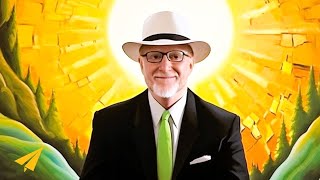
Michael Gerber, author of The E-Myth, tells Evan Carmichael that most small-business owners are technicians, not entrepreneurs. The shift happens when you work on the business, not in it, by building repeatable systems. Gerber contrasts the "yes-but" mindset that kills ideas with "why-not" thinking that drives action.
Chapters
Welcome everybody to another YouTube Hangout. I am super excited to be here with my special guest, Michael Gerber. Now most of you probably already know him, but just in case you don't, Inc. Magazine called him the world's number one small business guru. He's helped inspire and motivate millions of entrepreneurs around the world. He's the author behind the legendary book, The E-Myth, which is required reading for any entrepreneur. I've read it and, and The lesson of working on the business and not just in the business really struck a chord with me. And now in his 80th year, he's working on a new project called The Course: Beyond the E-Myth. Michael, welcome aboard.
Well, thanks. Love being here. Cool.
So there's a, there's a live audience watching. There's a bunch of people already having questions. And for those of you guys who are watching live, on the right side you can ask the questions and we'll get to them. Throughout this hour. But Michael, I have my own questions for you first before we get started. You know, the E-Myth, such a legendary book. I'm curious as to where the idea came from for you and why you decided to turn that into a book.
Well, it's a long story, and it actually is included in the E-Myth Revisited. So if anybody's read the E-Myth Revisited, they know that years and years and years ago, way back in the 1970s, I was in transition from one reality to another reality, and in the process stopped by my brother-in-law's home, my sister, my brother-in-law, who owned a small advertising agency in Silicon Valley. He got there by being a tech writer, and then he was writing copy, and then he was doing this, and then he was doing that. So why not? And his advertising company called Cuneiform. He was a rather abstract kind of guy, my buddy. In any case, he asked me to come visit one of his clients, and his client was having difficulty converting leads that his advertising was creating into sales. And I told Ace at the time, I don't know why you'd want me to go visit your high-tech client. First of all, I don't know anything about business. And second of all, I don't know anything about technology. So why? And he said, please just do it. You don't realize what you know until you actually sit down with somebody that stymies you with this problem. So I said, sure, why not? I mean, I'm a why not guy. So I went and I met Bob. And I sat down with Bob and Ace takes off and he says, I'll be back in an hour to pick Michael up. So Bob asked me, so what do you know about my business, Michael? And I said, nothing, Bob. And he looks a little disgruntled and he says, well, if you don't know anything about my business, how can you help me? I said, I haven't a clue, Bob. He said, well, what do you know about my product? And I said, less than that, Bob. So if you don't know anything about my product and my business, how in the world can you help me? I haven't a clue, Bob, but Ace thinks I can. So we got an hour to kill, let's do it. So I started with the assumption that I don't know anything about business and Bob does because he owns one. Well, in the hour that I spent with Bob, I learned that in fact I did know something about business. I knew that selling is a system. Bob didn't know that. And because Bob didn't know that, Bob didn't realize what was missing in his business. A selling system. Now, how did I know that? I knew that because I learned how to sell encyclopedias. I knew that because I learned how to sell insurance. I knew that because I learned how to sell just about anything that was calling to be sold by creating a system to do it. Because if I couldn't create a system to do it, I couldn't replicate myself, meaning there was no ability to scale. The business you follow. Otherwise, it just depended upon Michael or Jerry or Jim or you or whomever. And he became my first client. So when Ace came back to pick me up, he said, so what happened with Bob? I said, great, he just hired me. He said, what do you mean he just hired you? You don't know anything about business. You don't know anything about his product. How in the world can you possibly go to work for Bob. I said, Ace, I told you that before I met Bob. But what I learned is I know something Bob doesn't. And he asked me if I could help him create that selling system. So that was the beginning of the E-Myth, Evan. First it was Bob, then it was Jerry, then it was Jim, then it was Judy. And suddenly, rather than going to Mendocino County, to chill out framing houses as I was going to do, I'm in Silicon Valley chilling out framing businesses. And sooner or later, it ultimately came to the fact that Ace wasn't going to do what I was doing in his business for his clients. So I said, I'm going to go off and do it myself. Ace brought a guy in to replace me. In his business doing what Ace wanted him to do. And the guy asked me what I was going to go do. And I told him, and he said, I'm going with you. So that was my introduction to Tom. And that was the beginning of the Michael Thomas Corporation. And the Michael Thomas Corporation led to Gerber Business Development Corporation. And Gerber Business Development Corporation led to the E-Myth. And the E-Myth was published. And now it was the E-Myth Academy. And then it became E-Myth Worldwide. And now it's Michael D. Gerber Companies. And during all of that time, we've worked with over 100,000 small business clients in 145 countries doing exactly what I did with Bob, but bigger, to teach them how to go to work on their company rather than in their company to create a scalable company so that you could in fact grow it and grow it as grandly as you wish to. And we created the system for doing that.
I love it. I love the start to how you just said, I'm a why not kind of guy, and you took it, you took a leap to go have a conversation. For entrepreneurs who are afraid to have that mentality, a lot of people, they get an opportunity, then they would say, well, I don't know anything about business. I don't know how I can help them. And they just close the door. Do you have advice for them on how to adopt a why-not attitude or how that's helped you as an entrepreneur be successful?
Well, let me say rather than advice, I suggest there's a process. And a process is simply a system over time. Step 1, step 2, step 3, step 4, and each of those steps is a system. Meaning this is how you do it, this is how you do it. And so when somebody comes face to face with that pushback, meaning, "But I don't know enough," but about all the yes-buts that come up, all I'm suggesting is you just let that go and persist. Let that go and persist. Every single time you hear yes-but, Yeah, but I don't know that. Yeah, but he doesn't know me. Yeah, but he can't do that. Yeah, but the world is hard. Yeah, but my life is different. Yeah, but, yeah, but all the yeah, buts that everybody comes up with every single day, they're automatic. I'm saying that is the clue to resistance in you. And so my being brought up as a young guy, naturally developed that consciousness. But it lives inside of me all the time. Meaning, because I am so congruent with why not, why not, let's see, let's see, because there's always something so surprising on the other side of that. That I never could have anticipated. I mean, you got to understand, I'm sitting here at 80 years of age, having done something in my life, starting my life at 41. So this entire thing that, you know, this Gerber thing, this E-Med thing didn't start until I was 41 years of age. And before that, I was a saxophone player, and I was a poet, and I was a hippie, and I was a beatnik, and I was a framer of homes, and I was an encyclopedia salesman, and I was a— I mean, I was all these things and nothing. So how in the world could I, at age 41, have an insight into a a reality in the world that nobody else had had. How was that even possible? When I discovered that most people in small businesses aren't entrepreneurs at all, they're technicians suffering from an entrepreneurial seizure. When I saw that, it was obvious to me. But it was remarkable to me that nobody else saw that. When it came to me, go to work on your business rather than in your business, I saw that in a way that I realized nobody had ever seen that. Where does that come from? Genius? No. It comes from being open to the reality that exists around you. And as you begin to do that, you suddenly see opportunities that are just They're flooding the gates, these opportunities for every single person listening to us today. I'm saying the entrepreneur is born within us. In short, if we're born in the image of God, and that's what it said, and I believe that, we're born to create. Each of us were born to create. And everything we learn how to do from that moment on is don't create, don't create, don't create. Our parents tell us that, our teachers tell us that, our bosses tell us that.
Why?
Because creativity creates conflict. Creativity always conflicts with the powers that be, always conflicts with all of the controls that are placed upon us or attempted to be placed upon us in our lives. So my job is to awaken the spirit of entrepreneurship in every single person on the face of this earth. That's what I made my calling only because it's so big, Evan. You follow? That if that in fact could happen, Do you realize the profound impact that would have on the world? Just astonishing. I love it. I love it, man.
And our missions are aligned. I love the fire coming out. It's great. Just to follow up on that, you know, you see an opportunity that nobody else sees. A lot of people then have the they get excited, but then they also have the fear of failure, or, you know, how other people will judge them, and they don't have a great environment around them, and they don't have parents or teachers or friends who support them. And here you are, you know, thinking, I'm 41 years old, I don't have any experience in business, but I've come across this revelation. How do you get the confidence? Because it's something that a lot of entrepreneurs face. How do you get the confidence to believe in this crazy thing that you think is true that nobody else around you sees and drive forward on that? How did that happen for you?
Well, you understand it doesn't start with confidence. It starts with curiosity. It starts with curiosity, creativity, and need. So it starts with curiosity, creativity, and need. And all of those things work together in a way harmoniously and sometimes not. But constantly moving it forward. So you understand the confidence comes from the reaction you get as you take a step in that direction. So you gotta understand, it's not that opportunity is sitting there waiting. It's that problems are sitting there waiting. Every place you look, there's a problem. Every place, every person you talk to, he's got a problem. And if they don't say they've got a problem, they're just hiding the problem because they don't want to admit to the problem. People think, Michael, you're so negative. I mean, why aren't you positive about all of these things? I'm saying I'm the most positive guy you've ever met, but I'm positively certain that everybody is suffering from limitations. And these limitations say, yes, but, yes, but, yes, but, yes, but— that voice I spoke about earlier. And I'm suggesting that that is in itself an invitation to discover, so what's missing in this picture? So when I went to meet Bob, what was missing in this picture was in fact a method to sell his product. He instead was fixated on the experience his people had prior to coming to work for him. So he got sales engineers presuming that they understood how to sell and they understood the technology, so therefore they could successfully sell his product. And of course, some could. But in reality, most couldn't. So then what is missing in this picture? What's missing in this picture obviously is a way to sell. And it's the way to do whatever it is we're setting out to do that's always missing in this picture. So it's not the guy, it's not the person, it's not the product. It's the absence of a methodology, a system, a way to do it, and the focus on the way to do it, which is a process. So you understand everything ends up being a process. I love it.
I'm trying to keep an eye on the live chat because it's blowing up. Everybody's loving it. But I'm enthralled in your story. So it's hard to multitask, but I'm loving it. And I apologize to the live viewers. I'm not really paying attention. You just listen to Michael's stories. I mean, I wish I had that much energy when I'm 82. This is great. And so now your next project, the course called The Course Beyond the E-Myth. You're in your 80th year. This is your new baby. Tell us what that's all about.
Well, up to this point in my life, I've written now 23 books. You might say they're all E-Myth-centric books, but The E-Myth Accountant, The E-Myth Attorney, The E-Myth The E-Myth Manager, and so forth and so forth and so forth. And the original book, The E-Myth, and then its sequel, The E-Myth Revisited. And in every single one of these books, I speak about this process and I speak about it in many different ways. And this process, of course, that I call going to work on your business rather than just in your business. Essentially, the E-myth is the entrepreneurial myth. So at the core of my E-mythology, you might say, my paradigmatic way of thinking is that people who go into business aren't truly entrepreneurs. Yes, some are, but very, very few. You'd be absolutely amazed at how few people who own a small business are actually entrepreneurs. They're not entrepreneurs. They're software guys doing software. They're graphic designer guys doing graphic design. They're coaches doing coaching. They're consulting doing consulting. You follow? In other words, a technician who created a job for himself, become his own boss. And what I'm saying to them is you've left behind the true opportunity. And the true opportunity is to awaken the entrepreneur within. So all of these years since I founded the company in 1977, we've worked with over 100,000 small business clients, each of whom were attracted to us because of my message. That in fact, you got to go to work on it, not in it, if you're ever going to scale it, that is grow it. And that's the work we've been doing. On the other hand, what we've discovered over all these years with all these clients and the millions of readers of my books, while they're attracted to the idea of the E-myth, they're attracted to the idea of creating a company that works. They're attracted to the idea of fixing the problems they've got. In reality, they don't really want to become entrepreneurs. They just want to become more comfortable. So in fact, most people simply want a lifestyle business. And a lifestyle business simply means it's all about me, meaning I want to have a business, I want to be in business, I want to be my own boss. To create a lifestyle that I would enjoy, to take time off, maybe 4 hours a week I'll do this, maybe 2 hours a month I'll do that, maybe I'll go to Spain when I'm called to, maybe I'll go play golf 16 hours a day. I don't know, whatever it might be. But they're not Steve Jobs. You understand? They're not Steve, but of course they're not Steve Jobs. But they're not Bill Gates either. And they're not Howard Schultz either. And they're not Mary Kay Ash of Mary Kay Cosmetics either. Meaning they don't want to create something hugely beyond what's comfortable for them. And I'm suggesting that in fact, with all of the people we've worked with, only a very small of you ever truly started out to awaken the entrepreneur within. They started out to make their business work better, but not to make it grow beyond where it is right now. So in these later years of my life, I decided, screw it. I'm going to get them to do it. And I'm going to do that by making it easier for them to see the totality of the process from going— for going from a company of one, you, to a company of 1,000, all them. And I refer to a great client of mine, Infusionsoft. I'm sure you must know of Infusionsoft. Yep. And when the guys of Infusionsoft came to the Dreaming Room that I was leading, it was a 2.5-day intensive that I did so that you could discover your dream, your vision, your purpose, and your mission to discover the why you're doing this and why you wish to grow this and what it's going to look like when it's finally done. When these guys came to the Dreaming Room, What they were really looking for was the emet, meaning they really wanted to get the systems down. They were engineers, they were computer guys, they were software guys, they were— you understand, they wanted to get the system down. So they asked me, so what's going to happen here in the Dreaming Room that's going to help us get the system down? I said, let's not worry about getting the system down. Let's just open the door to your unconscious in a way that you've never done before. And let's discover, in fact, what's really there waiting to be born. So 2 and a half days later, these guys left the Dreaming Room with this impassioned view, not only of what they're here to do, but of the people who are here to do it. When I met them, they had about 15 people. Today, they're going just beyond 700 people in their company. When I— when they left the Dreaming Room, they had a handful of small business clients and software. Today, they have 30,000+ small business clients globally and growing to $1 billion a year in revenue. Now, these are the same guys, you understand, they were when they walked into the Dreaming Room. What happened in the Dreaming Room is they discovered the dream, the vision, the purpose, and the mission, and the absolute necessity for that to be there if anything untoward is going to happen. So I said to myself, I've got to be able to deliver this to every single person on the face of this earth at a price that every single person on the face of the earth— and I've got to be able to do that without me doing that, without coaches, without facilitators, without mentors, without trainers. It's got to be self-sufficient to enable any single person who's awakened by this promise that you can grow beyond anything you've ever imagined you could grow. Not to create a lifestyle business, not to become your own boss, to produce a profound impact in the world. So unless it's about them, it's meaningless. Because if it's just about you, it's a waste of our time. In short, a dream isn't a personal dream. It's an impersonal dream. So you understand the extreme delight I get from knowing that hundreds of thousands, indeed millions of my readers have been impacted positively by what I brought to them. And you also understand it's not Michael Gerber, it's Ray Kroc, the founder of McDonald's. It's Howard Schultz, the founder of Starbucks. It's Steve Jobs, the founder of Apple. It's Mary Kay Ash, the founder of— Mary Kay Cosmetics. The impact each of those individuals have had on worldwide is just stunning. But the impact they've had without even setting out to have it is even more stunning. That is, they gave us a model, a way of thinking. And with that way of thinking, a way of behaving. And with that way of behaving, a way of producing results we never imagined we could produce before. That's what I'm inviting people to do when I invite them to participate in the course. Now, the course is a 3.5-hour video of yours truly walking people through the process from the dream to the vision to the purpose to the mission to the job to the practice to the business, to the enterprise. And evolution, the hierarchy of growth, the philosophy of growth, and why unless and until you accept the responsibility personally to grow, you'll never truly realize the amazing things that are waiting to be realized within you. So I'm saying that to everybody, and I'm inviting everybody to join me in the movement. Become the preeminent provider of economic development services worldwide, because it's all about the economy, stupid. It's all about the economics of it, stupid. It's not about getting chilled and being cool and just doing what you really want to do. It's not about that at all. You're responsible here in this world for optimizing the creativity, imagination, innovation, purpose that in fact every human being is blessed to pursue. To the degree you fail to pursue it, shame on you. To the degree you're open to it, welcome to the club. And so my job is to bring that to every human being I can bring it to. And that's what you're helping me to do here, Evan.
I love it. I love the fire. He's bringing fire. People are asking in the comments, uh, where people can find it. I've actually added a link in the description of this video that has the full link to go check out the course and all the information on it. So you can, you can check it out there.
Um, and tell everybody who's on this call Every single one of you hear this. Don't say yes, but because any resistance whatsoever to just clicking on and doing it is more of the same. It's just yes, but and keeps you muffled in the incongruency of passion and resistance. And the incongruency of passion and resistance describes it perfectly. Because I want, I want, I want, I want, but I push back, push back, push back, push back. How many of you are willing to take the dare to simply click on and do it? Watch the course 3 times. And once you've watched the course 3 times, then contact me directly and I'll tell you what's next because what's next is transforming the world. You get to do that, everybody. I love it.
Go from yes, but to why not?
You got it.
Touching on a point you made, you were talking about how a lot of entrepreneurs don't think bigger, they don't see themselves as world changers and it may be a fact of their environment. Is it, you know, So I mean, by watching the video, I'm going to learn more. Is it just that they don't have people in their lives that support them? Is it that nobody's ever made them aware of the impact and so they think small? Like, why do entrepreneurs play such a small game in general? What do you think?
Well, it's simply first, Evan, because they're not entrepreneurs. So understand when you say entrepreneurs, I understand that, and solopreneurs, I understand that, and da da da da da da da, if this, then that, if they own a business, they're entrepreneurs. It's just a tag for most people who aren't really entrepreneurs. Entrepreneurs, entrepreneurship, the entrepreneurial spirit is that intense curiosity that I talked about earlier. It's that intense curiosity asking the question, what's missing in this picture? Why is it people are so screwed up? Why is it the world is so screwed up? Why is it that— you understand what I'm saying? This constant— and as you begin to do that, your curiosity takes over. And your curiosity is the heart of that entrepreneurial spirit within. It always starts with why. Why is it? Who am I? What am I doing here? Why am I here? What is life? What is death? What is God? What does it mean to be a human being? What does being mean? And on and on. And if you're curious about that, you then open yourself to all of the channels of influence that are simply sitting there around you. And as you open yourself to those channels of influence, you're inundated with promise. Because every single question has an answer that leads you to another question, which has an answer, which leads you to another question. And it's a never-ending process of continuous pursuit of improvement. The world can be a stunningly creative place, but only if you cease 'yes, but' and open the doors to your imagination. So join me in opening the doors to your imagination, and you'll suddenly see things you've never seen before. It's that which is so absolutely astonishing. I love it.
I've been monopolizing all the questions while we have a live audience that's demanding to get in and ask their questions. So I was only supposed to ask 2 questions, but I got, I don't know, I got the curiosity in me, I had to go deeper. That's what happened. Thank you for the time. Okay, let's get to some questions. So, WeeSheeCupTV is asking, "Hi Evan and Michael. Michael, on some of your videos you've talked about how big businesses are really just small businesses that did the right things. What are some of those right things we should focus on?" Well, it's very, very great question.
And I discuss what every single one of the right things are in the course. The importance of the course is it is the evolution of an enterprise. That's the subtitle of it, Beyond the E-Myth: The Evolution of an Enterprise from a Company of One to a Company of 1,000. All of the right things, every single one of the right things are included in that 3.5-hour video. So I'm going to say to you, go watch the video and you will have the complete answer to your question. But first and most importantly, the first and most important right thing is to open the doors. To the possibility that there is something in your life you have never seen before. And someone inside of you, you have no relationship with. It's opening the doors to your imagination, your curiosity, without triggering yes, but resistance. But if only, but I can't, but I don't, but I didn't. But I never, etc., etc. All of those things that keep on coming up as simply excuses why I'm unwilling to open the doors to my imagination for fear of what might walk in. So the terror of the unknown is what keeps everybody tiny, everybody small, shivering in their timbers. Terrified that, "Ooh, if I listen to this madman with his Panama hat, he's going to ask me to wear a Panama hat. I don't want to wear a Panama." You see how it goes. It goes on and on and on. So my gift has been, I've been blessed by the teachers that I've had in my life. To open the doors. And as I open the doors, stuff walks in. My saxophone teacher said, you don't make music, Michael. Music finds you. Your job is to practice. So you'll sound stupid at the beginning, and you continue to practice, and you sound a little less stupid. As you continue and you continue to practice. And one moment the music shows up. And that happens. It's such a shock when that happens because you are completely unprepared for it. It's in fact opening yourself up to what you're completely unprepared for, not what you're prepared for. You can't get prepared for this. You'll absolutely do the wrong thing. Simply do what I'm suggesting that you do. And do it. It's that simple. Just freaking do it.
A lot of people are really resonating with the yes, but why not, but having questions about how do I get over the fear of failure? How do I say why not instead of yes, but they're worried about the execution of it. How do I, how do they do it? What advice do you have for them? It's coming up repeatedly.
I've got a little note, you know, those little note things. Yeah. And someone once asked me, yeah, but I'm afraid, but I'm afraid, but I'm afraid. You were so unafraid, Michael. And I said, but that's ridiculous. Everybody's afraid. Everybody. Einstein was afraid. Steve Jobs was afraid. I'm afraid. You're afraid. Every one of us are afraid. So what do I do about fear? I wrote down in this little note thing, I create my way through fear. Hmm. Write it down. I create my way through fear. I accept the fact that yes, but is simply a sign that I'm afraid. So my inner voice comes up with all the reasons why not. I'm suggesting the minute you know that, you simply go beyond it. So how do you overcome your fear of success? You become successful. And then how do you overcome your fear of becoming even more successful? You become even more successful. And how do you overcome your fear of becoming even more, more, more successful? You simply become more, more, more successful. Meaning you just keep doing it. You understand? You just keep doing it. What do you keep doing? What you're called to do. If it's beyond where you are, if it is where you are, more of the same, I'm saying you attract to you this mindset. Old co, new co. New co is what's next. Old co is what exists today. Old co is always what exists today. And most people hang on to old co for fear of losing old co. So they don't risk creating new co. You follow? Let go. The minute you let go, you understand there's just now. And now there's no fear. Because there's no then, there's no past, there's no future, there's no— there's just now. Now we're in it. Now we are it. Now we're creating it. Now we're evolving with it. Now we're discovering what in fact is true, what isn't true, what inhibits me from seeing what's true, etc., etc., etc. I mean, it's called being alive. That's all it is. It's called being fully alive. When you talk about fire, it's just energy. You understand? It's just energy. What's life? Energy. What's creativity? An expression of energy. What's an opportunity? It's an opportunity to express your energy in a more Perfect way. So if that's true, there's all that potential sitting here waiting inside of us. Yes, but will kill that potential.
What about the people who— I think once you understand the yes, but, it becomes easier to solve it, right? When you catch yourself saying yes, but, like, oh, I'm saying yes, but, and, you know, Michael told me not to say yes, but, and when you have the awareness. What do you do when you don't have the awareness? When it's just that, that fear or that reaction is just so subconscious that you're, you don't even realize that you're holding yourself back constantly. How do you break free of that? Is awareness the first step?
You, you, you talk about it with somebody else. You describe it to somebody else. I can't whatever. I don't whatever. And they say, well, why is that a problem? Blah, blah, blah, blah, blah. And you suddenly realize that because they're not so identified with it, they can easily see through it. What are they called? Mastermind groups. The whole theme of a mastermind group is when somebody is not identified with it, personally, they can see it more clearly. So understand, I happen to be able to create my own mastermind group with myself. So there's Michael who this, Michael who that, Michael who the other, Michael the other. There are all these different parts inside of me I've grown accustomed to having a relationship with. So I'm suddenly discovering stuff that I couldn't discover on my own. The Michael who, the Michael who, the Michael who. You follow what I'm saying? This might sound terribly confusing to everybody, but the reality is it doesn't need to be confusing. All you got to do is just let go of all this crap that you're hanging on to and just pursue it. Pursue what? Well, it's very simple. Buy the course. As you buy the course, I'll take you through the process. Step 1, step 2, step 3, step 4, et cetera, and will make complete unavoidable sense to you. And when that happens, then it's going to be yes, but, yes, but, yes, but. It always ends up with yes, but. Hear me, always. But you understand now that you're aware of that creature, yes, but, the one who says no. Without saying no, but gives you the reasons why saying no makes such great sense. The yes, but. The yes, but is in every single one of you. You're saying it right now. Yeah, but, yeah, but, yeah, but, yeah, that's good, Michael, but, yeah, but, yeah, but. Every single time somebody does that, all he or she is doing is providing themselves with an excuse. To not act. Period. So when they said, come over here to see Sam, well, hey, why, blah, blah, blah. And he said, yeah, okay, well, let's do it. Who the hell knows what's gonna happen? In fact, had I not gone to that meeting, I wouldn't be talking to you today. I'd be framing houses in Mendocino County or something. Do you understand? I mean, just get that. And the minute you get that, you'll understand that all of this is already here for every single one of you. You just don't see it. And you don't see it because you're enclosed in this prison Your mind has enclosed you in a prison that will not allow you to see outside of it. I'm opening the doors to your prison. You're free. Now what? I love it.
And I love that you mastermind with yourself too. I think that's interesting. I feel like we need t-shirts that say, yes, but with like an X through it or something. I think that could take off. I think people would enjoy that.
I believe this is true of everybody. I mean, my mastermind is better than any mastermind that's ever existed on the earth. You understand? I could sit down and talk to all these people and I discover that in fact, there are more solutions inside me than I've ever discovered outside of me. Now that sounds terribly narcissistic, but it really isn't. I'm suggesting that rather than needing to go out and, already within you are the answers to questions you haven't even asked yet. It's knowing what the questions are that's most important. Somebody could ask me a question, and this happens to me all the time in the Dreaming Room, for example, or even on calls like this, they'll ask me a question. And I'll give them a completely different answer to a different question. My wife always says to me, Michael, you're always answering questions they never asked you. I said, no, I'm answering the question they should have asked me. They just didn't know what the question was. So having said that, any more questions?
Well, there's tons of questions, but now I'm curious what What questions should we ask you that we're not asking?
Why am I here? Why am I here? We think we know the answer to that question, to do this. Why am I here? Now that sounds terribly abstract. But in reality, we don't know why we're here. We don't even know what here is. We have no understanding, or true understanding, of what a human being is. And if we have no true understanding of what a human being really is, really, I don't mean like sort of, I don't mean like they teach us in stupid school, I don't mean like what coaches tell us and consultants tell us and personal growth people tell us, and I don't mean all that crap. I mean, really. So why am I here? You know that old question, who am I? And the minute you begin to ask questions, everybody shuts off or it gets very, very quiet in the room. And it gets very, very quiet in the room, Evan Carmichael, because there's an innate understanding that I don't know who I am or why I'm here. And because I don't know who I am and why I'm here, I have all of these other seeming problems of being dissatisfied with how I am here. And then I become distracted by a whole subset a want, want, want, want, want, want, which takes me away from the question, who am I? Why am I here? To how can I get what I want? How can I get what I want? How can I get what I want? And in fact, all of the millions of buyers of my books, I would suggest bought my books to get what they want. Why Most Small Businesses Don't Work and what to do about it. My business doesn't work. I want my business to work so I can be happier, so I can have more money, so I can have more free time, so I can get— so I can get— you follow me? All for the wrong reason. So everybody does everything for the wrong reason. Well, that leads me to ask the question, so what's the right reason? So you understand, if we got involved in these kinds of questions, something could happen that can't happen when people ask all the questions that they ask. So when my wife says to me, Luz Delia says to me, Michael, you're always asking, answering a question nobody asked. I'm saying, yeah, but I'm answering the question he should have asked. Because underlying the question he did ask is this question he didn't ask because he didn't know to ask it, which then suggests he's going to discover something deeper, more meaningful, more genuine, more authentic as he pursues the questions and the answers and the process I'm leading him to. And that's not my narcissism or my ego saying that. It's just freaking true.
It's hard to ask another question after that answer.
But that's good because you see what happens then is you begin to go, you begin to realize it stops you. And there's something very, very powerful about stop because it brings you to a different place in yourself. Your entire expression on your face changed as I was sharing this with you. Because you were trying to— remember that expression, grok? You were trying to understand, experience what I'm talking about. But because you're not accustomed to doing that, it stops you in your tracks. You can no longer simply be the interviewer, the Evan Carmichael everybody knows and loves. So then it says, so who am I? And what are the questions I want to ask, in quotes, these people who have been so successful in their lives? How do I get to what really moved him, what really motivated him, what really inspired him rather than his rap. I'm sure you've seen as you interview people and you do this all the time and you interview some pretty heavyweight people, I'm sure you see that they've got their responses down. I mean, you know, boom, boom, boom. It's so cool because you don't have to really work to get it, right? Well, it's because they just— they're just programmed. We're all— I'm programmed. We're all just programmed. We got our shtick, so we do our shtick. And it's rare that anybody ever stops me with a question that I've not responded to before, that I don't have my answer for.
You follow?
But what an extraordinary moment should that occur, because the tenor of the entire conversation changes. So let's not worry about that now.
I like it. Maybe time for one more to finish up. People are asking, uh, what your morning routine is that gives you such energy.
Say that again.
Uh, what is your morning routine that gives you such energy?
I wake up. It's the first thing I do every morning. I wake up.
Good start.
And what's been happening prior to my waking up is a whole unconscious thing. That whole unconscious thing creates thoughts, questions, sentences, paragraphs, insights, and I start writing all those down. And the new day begins. So I'm suggesting the most exquisite time in anybody's life is just before you wake up. And just before you wake up, you woke up. And all of that is present there, really, really right there, early, early in the morning. And so the question then becomes, so how do you capture that? You just allow it to go down on a piece of paper. You allow it to go down in an email. You allow it to go down in a notepad and whatever, whatever. You just get it down. Starts your day in a completely unique way, from the unconscious to the conscious. And the bridge between those two is astonishing. I'm always astonished with what comes to mind. It's like, where did that come from? Where did that come from? Where did that come from? Where did that come from? It happens every morning.
So you get, you get a new idea from the morning. Do you then act on it? Do you write it down? Do you—
I write it down. It always relates to something I'm doing. It always relates to something I'm working on. It always relates to something that's present. If it's relating to something that's not present, I put it down typically in an email to myself. So I email Michael E. Gerber. Subject, da da da da da da da, note, note, note, note, note, note, and there it sits. And I flag it, and then I go back to review it. Now, what's also true about that is, I don't know if you're familiar with the Dreaming Room monologues, Evan. Are you familiar with them?
A little bit, but—
Let me tell you.
For the audience too to have an introduction.
Everybody in your audience is now invited to subscribe to Michael Gerber's Dreaming Room Monologues. And all they have to do is to go to our website, michaelgerber.companies.com, and you'll see a free subscription. Just fill it in, your name, your email address, and every week, every Wednesday afternoon, you will receive a new Dreaming Room monologue for the rest of my life. Those monologues come to me like that. And so the monologues are simply written and recorded by me, and you open them up every Wednesday. And they're all about inspiration, imagination, creativity, living in a space unlike the space you currently live in, discovering something you never discovered before, blah, blah, blah, blah, the stuff we're talking about. It's free, it's a gift, and that's all they have to do. Those monologues come to me just like that. So also, I'm suggesting your best ideas come to you just like that. So what if you were to sit down and write those best ideas just like that every day and created a form for them. The form I created for them is called the Dreaming Room Monologues. And welcome to the Dreaming Room. Every single one of you get to do that from now on at absolutely no cost. All you have to do is click on and boom, It's done.
I just went to look it up and signed up, and, uh, it wasn't in the initial description of this video, but I'm going to add it in for those who are watching. Um, so after it— after it— after we finish, you'll be able to check it out in the description.
It's a gift from Michael to everybody who you know.
It's cool. Wednesdays, uh, just come in the morning. When does it come on Wednesdays?
Wednesday afternoon.
Wednesday afternoon, okay, California time.
Afternoon. And then every other Saturday you'll get a note from me. It's essentially saying that a monologue is my speaking to you. A dialogue is you responding. So my whole intent is to create an infinite number of dialogues with people throughout the world. The monologue is the beginning of it. Every other week you'll receive a note from me which essentially is me talking to you, who in fact is a subscriber to my monologues, suggesting an opportunity for you to take advantage of. So it's all about a relationship. So my commitment, Evan Carmichael, in this stage of my life is to create a relationship with a billion people on the face of the earth, each of whom are struggling to go beyond where they are. My aim is that by suggesting, by inspiring, by teaching, by engaging, they will go beyond where they are, because it's very simple for somebody to do that. All you have to do is ask. It is very simple for somebody to do that. That was the reason for creating the course, something very simple so that you could do that, go beyond where you are.
I love it. We're bumping up against the clock. It's crazy how quickly an hour can go. The comments are off the charts. People are really, really excited. People are writing in, thank you for inviting this man, what great advice. Guys watching, I've updated the description so you can learn about the course in there. You can also sign up for Michael's Dream Room Monologues. I just did myself. I'm looking forward to Wednesday getting my first message. Michael, thank you so much for spending your time with us. The energy you have is amazing. I took some notes myself and I know it's going to have a huge impact on my audience and I really appreciate your time.
Well, it's my delight, Evan, and thank you to all of you. Who have joined us, and I look forward to seeing you all again. My pleasure.
Take care. Thank you, Michael.
More from Evan


How the Biggest Mistake in History Created A Trillion-Dollar Empire | Sergey Brin



9 Machiavelli Principles That Force People To Respect You | Machiavellian Philosophy



The First 10 Words That Instantly Ruin A Sales Conversation | Vanessa Van Edwards

The Top 1% Mindset Behind The First $5 Trillion Company | Jensen Huang (Nvidia)

