YOU Are Not Working Hard Enough | 10-Minute Motivation
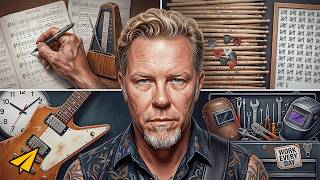
Evan Carmichael argues that success requires relentless hard work, not talent. He cites James Hetfield on consistent effort, shares how he went from worst to best at his agency by making three videos a day, and points to Michael Jordan's practice regimen as proof that repetition produces mastery.
Chapters
Good morning, Believe Nation! It's Evan. My one word is believe, and I believe that you have something special that when you unleash it, it will be able to change the world. So to help you on your journey, today's message is work hard. Over to you, James Hetfield.
Most things in life that are worthwhile, you gotta work at. You gotta work at. You get out what you put in. As simple as that. That's a kind of a universal law. So yeah, it's not pick up the guitar and go, "Haha!" Which I've done, you know, in front of the mirror lots. You know, "Hey, I'm really good!" And you gotta have that attitude too, but it does take work. It does take You know, some dedication, you know. But if you love doing it, it's not as hard as it could be if you're, you know, you're doing something that's not— you're not as interested in.
So on this channel, we've covered more successful people maybe than any other channel on YouTube. I'd put it up against a lot of other internet properties just in general. We've covered entrepreneurs and athletes and musicians and innovators and politicians and people who've had success from all walks of life. And one of the most consistent themes that come up is you need to work hard. Everybody works hard. There's nobody who is really crushing it who's spending 10 hours a week working on their thing. And you have to love what you're doing because that's the only way you're going to keep doing it. The only way you're going to deal with all of the crap of learning your craft and all the rejection and all the failure and all the things that don't work out at the beginning The only thing that gets you through is you actually love the process. You love the work so it doesn't feel like work. It's one of the most repeated pieces of advice that come over and over and over and over again on this channel. And so if you want to become world-class at something, you want to be the Michael Jordan of your industry, then you have to put in the work to get really, really, really, really good. And yes, you're working smart, but you have to work hard as well. And so quick story with Alex from Toronto Dance Salsa, who I hired to help me run the business, and he's also an instructor here. And recently we made a video where we were talking about him wanting to be the best instructor in Canada at salsa, and he was trying to figure out his schedule, and he wanted to go down to 1 or 2 days a week. And I told him that if you want to be the best, once or twice a week is is not enough. In your world, you think the ideal is just teaching level 6 and just teaching Mondays? Is that enough, you think? Not enough for you to get good?
I think you'll lose it.
Really? Yeah. If you wanted to just be a manager and just be a coach, then it's a different story. But if you want to be the best instructor, doing one night a week is not going to be enough.
Mm-hmm.
Yeah, I didn't think about that. I don't want to be mediocre. And then if I bring that to my own business, if I want to have more success on YouTube, I need to put in more reps. Like, I'm doing 3 videos a day. We've done over 5,000 videos on this channel, right? Like, you better get better at something if you're doing it 5,000 times over and over and over and over and over again. When I started work with my agency, I was considered the worst and I became the best in a couple months, not because I had talent or skill, was because I was doing 3 videos a day when everybody else is having a hard time trying to do 1 video a week, right? You're just, you're just going to get better faster because you're putting in the work. And so whatever it is that you want to get great at, and obviously there's some restrictions. Maybe you have a full-time job, you know, maybe you can't dedicate 100% of your time to it yet. It's understandable, but you need to work every day on your craft and you need to get better and better and better and better and better consistently. Michael Jordan became Michael Jordan because of all the practice that he did. Did he have natural talent? Yes, but he worked and he worked and he worked. And if you just write people off, you look at anybody who's at the top of their field and you say, well, they're there because they're just— they were naturally gifted. If that's the reasoning for why they're successful and why you aren't more successful, you're gonna lose. Don't disrespect the amount of effort and hard work that they are putting in. Don't disrespect the amount of hard work Michael Jordan put into becoming Michael Jordan, 'cause if you just chalk it up to natural talent, you're gonna lose. You're gonna lose at whatever it is that you're doing. Hard work almost always beats natural talent in almost any field. And that sucks because it's a lot of hard work, But it's also great in that anybody can win. Like, if you badly wanna win at what you're doing as an entrepreneur, as an actor, as a singer, as a guitarist, whatever it is, if you badly wanna win, you can. You just have to pay the price of hard work. So the question of the day today is, I'm curious, are you working hard enough on the thing that you say you wanna be great at? Are you really putting in enough work to become the best? I'd love to hear from you. Leave your thoughts down in the comments below. I also want to give a quick shout out to Boaz. Boaz, thank you so much for picking up a copy of my book, Your One Word. I appreciate the support and I hope you enjoy the read. So thank you guys again for watching. I believe in you. I hope you continue to believe in yourself and whatever your one word is. Much love, and I'll see you guys again tomorrow morning for another shot of espresso. I wake up every morning, espresso keep me going.
Being in a band, you have to constantly reinvent yourself. You have to constantly be reminded, you know, how there's someone better than you every other weekend. And you have to constantly— you're constantly reminded how you would have nothing without your fans, you know? So you have to take into account what they're thinking and what they're interested in. And all those things matter. But it doesn't matter what art you do. It doesn't matter if it's making an album or a movie or a book or whatever. You have to think— thinking about all those types of things is important. The hard work involved. I mean, if you wanna have, like, a casual life and you don't wanna be in a band, I mean, you never sleep. It's really, really hard work, you know? And you're exhausted all the time, and you're almost always sick, and you're fighting with your business partners all day long, and it's just how it is. But I have a very, very strong work ethic because I had nothing when I was a kid. Nothing. I've been working— I had my first job when I was 13. I had 2 jobs when I was 16, you know, and, um, but I would— I think it's a lot of it's probably because I'm extraordinarily fearful about having to do what someone tells me to do. So I'd rather be doing everything because at least no one's telling me to do that.
You literally are, for many of us in this room and watching, movie-wise, you are the soundtrack of our lives. So much of your stuff is obviously well known. To your point, some stuff maybe not as well known, but how do you know? Is there something inside of you? How do you know when you get it right?
What's that?
Do you know when you get it right?
Very, very rarely. You hope that you've gotten 90% of it or as close to it as you can. But at least with me, and I think with most writers of any kind, you really don't say, "Eureka! This is it." It's working this, come back the next week and reshape it and do it like a sculpt— you know, keep honing away at it. I'm not so brilliant that I can sit down and write a melody or a theme or a whole scene or a whole work as Mozart might have done, we're told, you know, dashing it off like a letter and the grammar is perfect. It's very— writing music, at least what I— it's very, very hard work and for orchestra particularly, you know, it's a labor-intensive thing. I have to be in a room alone all the time because that's the way— that's the life that it is. And—
It's hard work and it's lonely work.
It's hard work, it's lonely work, it's labor-intensive. I still use a pencil and paper. I don't have a computer or anything.
You're old school.
The old school. I've been so busy, fortunately, that I haven't been able to go back and retool. When I was studying music, there were no computers. Yeah, we didn't have it.
Secret to success. There's a couple of elements that are important in success. First of all is your own level of expectation. You also have to learn to be happy with what you achieve sometimes. It's impossible in life to always achieve exactly what you have in the back of your head, so you need to learn also to be happy with what you achieved, even if it's only half of what you had in mind at first. Um, I like a quote of John Lennon, uh, life's what's happening to you, life's what's happening to you when you're busy making other plans. And that is what I keep telling my wife as well, and, and all a lot of people around me. You always expect something, and then something along the way comes, and then you have to alter your path again. And if you can learn to live with that, if you can be practical like that, then success is more easy, maybe. It's good to have a plan, but it's also good if you're working really hard and you're walking up against a door and you can't go through that door, then you just find a back door, just find your way around it. And that's just the way that life is. Sometimes you cannot get exactly what you want or what you had in the back of your mind. Yes, it's very important that you have to have a good work ethic. Nobody gets anywhere without hard work, and you'll have good and bad days. Even myself as a producer, I run into disappointments almost on a daily basis because I try to work with artists that on the last moment pull back their song or, you know, you don't see that, you don't read that in the news, but it's a fact of the matter. And I think all artists have to deal with stuff like that. You don't get the set times you want, you don't get the billing you want, you don't get the hotel room that you requested. It's something you have to deal with and it defines your character, how easy you are to deal with stuff like that. You know, life is a roller coaster ride for everybody. It has its ups and its downs. But if everything goes well, you'll have more ups than downs, and you'll remember the ups more than you'll remember the downs. But it's a fact of the matter that everybody, no matter if you're a big artist, a successful artist, or a successful businessman, everybody works hard to get somewhere.
More from Evan


How the Biggest Mistake in History Created A Trillion-Dollar Empire | Sergey Brin



9 Machiavelli Principles That Force People To Respect You | Machiavellian Philosophy



The First 10 Words That Instantly Ruin A Sales Conversation | Vanessa Van Edwards

The Top 1% Mindset Behind The First $5 Trillion Company | Jensen Huang (Nvidia)

