YOU Get Stronger by Saying NO: Oprah on Boundaries & Wealth | 20 Minute Insight
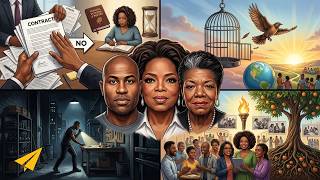
Oprah, Brené Brown, Tom Ferry, and Priyanka Chopra discuss why saying no builds wealth and strength. Oprah shares her first deliberate no after becoming a billionaire. Tom Ferry says the richest people protect their time by refusing requests. Concrete tactics include writing no lists and setting explicit time limits.
Chapters
I try out my first no.
Say no.
Learn how to say no.
Say no.
Say no.
Learning to say no.
Say no to things.
What's up, Believe Nation? It's Evan. My one word is believe, and I believe in you. I believe in your potential, and I want to see that thing that you have inside here come out and explode into the world to make it a better place. And so to help you on your journey today, we're gonna learn how to say no. And as always, guys, as you're watching, if you hear something that really resonates with you, please leave it in the comments below and put quotes around it so other people can learn and be inspired. And when you write it down, it's much more likely to stick with yourself as well. Enjoy.
I have a ritual where even if you're my closest friend I have boundaries. So just because it's my company, it doesn't mean I can take calls all day, right? I have boundaries. So you can't call me at a certain time. Why? I'm working. So if I'm on the phone all day, just be— and I'm saying this to entrepreneurs because one of the gaps— and we'll talk about this later in the show— but you got to find the gaps. And one of the gaps with entrepreneurs is that they feel like because they own their day, they can spend it like they want to. You cannot spend it like you want to. You, so if you were working for IBM or you're working for Ford, whoever you're working for, you couldn't be on the phone all day at a major corporation talking on the phone. So, so why do you allow yourself to talk on the phone when it's your business? Matter of fact, it's yours. You should probably, you should make sure there's no phone calls going on because it's your business. So one of my rituals is when I get started, there are no interruptions. When I get started, I don't care if it's my wife, my children, they know that from a certain time frame I'm going all in and I can't go all in answering the phone. I can't go all in watching TV. I can't go in with the distraction. And so some entrepreneurs are like, why am I not blowing up? Because you don't, you're not in abstraction. You don't have that moment of your day. I don't care if it's 2 hours, 4 hours where you shut the entire world out. No Twitter, no Facebook, no nothing.
No Instagram, which we love the most.
No Instagram. We love that Instagram.
So, but just for 2 hours, I'm going in.
And once I come out, then we can do Instagram. And I'll be honest, your content probably would be stronger if you had that time of isolation, of solitude, where you give yourself a chance to think, you give yourself a chance to go in, and when you go in, you go 120%. So yeah, that's how I do it.
You know, 'cause when I first started making money and it was, you know, my salary, or my earnings were published all over the place. I mean, the first year I was like, really, did I make that much money? Oh my God. It was very difficult for me to figure out where my boundaries were because I'd grown up poor and didn't have anything. So it's easy when you don't have anything and people ask you for money. They say, I need $500. You say, I don't have it, because I'm just trying to get my rent paid. It's harder when your multi-billion-dollar salary is now in the paper, and you get a lot of friends and cousins you didn't have before. So how do you set boundaries for yourself? I was having trouble setting boundaries myself, for myself, for even strangers. People would just show up at my door in Chicago and say, "Oprah, I left my husband, please help me." And I would, because She knows I have it. So don't try that now though, okay? Don't try that now. I figured it out. So what I learned was is that, oh, the reason why people keep showing up is because my intention is to make them think that I'm such a nice person that you can ask me for anything. You can get me to do anything, I'm gonna say yes, I'm gonna say yes. So when Stevie called me this time, I thought I'd try out my first no on Stevie. Let's start big. He wanted me to donate some money to a charity, and I didn't want to donate to the charity because I have my own charities and I care about a lot of people, but the problem is when you have money, everybody thinks you just want to give to everything. So every letter I ever get starts with, "we know you love the children." Yes, I do love the children, but somebody else is gonna have to help the children. So I said to Stevie, I said to Stevie, "No." And as a person who has that disease to please, I was waiting for him then to say, "I will never speak to you again. I will never call you. I will never sing a thing." I have a song for you. And he didn't. He just said, okay. Okay? Okay, it's okay? He said, okay, check you later. And what I learned from that is many times you will have angst and worry about things and put yourself in a state, like someone said this morning, because their phone went off, they were mortified. Over a phone, I said, really? You will put yourself in a state when the other person really isn't even thinking about you. So learning that I could specifically determine for myself what the boundaries were for me, what I wanted to do, give my money, give my time, give of my service to who I wanted to give it to, when I did, that I get to make that decision. And just because you get 100 requests a week doesn't mean you have to try to fulfill all of that. Just because you have all of these demands on your time and on you doesn't mean that you have to say yes. You get to decide, 'cause you're the master of your fate, the captain of your soul, as William Ernest Henley said in Invictus. And understanding that really changed the meaning of my life in that I was not— no longer driven by what other people wanted me to do, but took charge of my own destiny, making choices based upon what do I feel is the next right move for me.
It's 8:00 AM, like, I gotta get to the office. And I was like, why? Like, why do I have to get— like, "I always wanted to be a writer, I accomplished this thing, I can make a living being a writer, I have a home, like, I haven't been there in weeks, like, why am I here?" And I was like, "I was here because like, I just said yes, and I didn't think about like, I didn't actually weigh like the pros and cons of this scenario." And again, it's like sometimes you gotta do what you don't wanna do to figure out what you wanna do, but it was like, I'd sort of distanced myself from a lot of things and I'd gotten my life in a good place and then someone called me and offered me money on the phone and I said yes. Because it's so hard to say, like, it's so hard to say no to stuff, like especially if you're like a doer, it's so hard to say like, I wanna do this, but I also wanna do that, I have to choose. It's easy to say like, I'm gonna try to do both at the same time. And I said yes to both, like, I don't think I've ever quit anything, like I've just added new stuff. And so for me, that certainly has added up over time to an unsustainable load.
Oh, I'm great at boundaries. I'm not great at boundaries, I'm kidding. I so thought that was gonna be a laugh line. I thought you guys knew me. I thought you knew me well enough to know that What? No, I don't have any boundaries. I'm the permeable membrane. I don't know. I let the— I'm a little better at it. But I have— I don't know. I have learned one important thing, which is that I think you sort of get to a point in your life where you think, I have to learn how to say no to things I don't want to do. And that's a big mature moment when you start to begin to do that. The bigger mature moment is when you learn how to say no to things you do want to do, because you know that you just don't have time, or you don't have energy, or there just isn't— you know, you have to sort of triage your life, and there just isn't an opportunity. And that only came to me very recently, that sometimes you have to turn down even the wonderful things in order to take care of your health, or to take care of what you truly, truly, truly care about, not just what you truly care about.
In order to know when to say no, you have to know what you stand for. It's why I wrote this book, to figure out what your most important core value is, your one word. That's what you stand for, and therefore you know what you stand against. To know how to say no and when to say no, you have to know this is not what I'm about. I'm not willing to touch this. I'm not willing to go there. And if you don't know what you stand for and you don't know what you stand against, then you're always going to be subject to other people's opinions, other people's plans, other people's values and beliefs. Because if you have uncertainty, if you don't have clarity over what your values are, then you'll just follow somebody else's values, and that's very rarely in your best interest. And so getting really clear on what your values are, whether you want to use the One Word Methodology or you have a different plan for yourself, that's fine. But having a self-awareness awareness to figure out, this is what I stand for, this is what I want out of life, and this is also what I am no longer willing to accept. When people cross these boundaries, I'm not going to play anymore. I'm going to say no. Until you understand what your values are, then it can be really tricky to understand the difference between what is your value and what is a limited belief. So as an example, I was on a call with an entrepreneur a couple days ago, and he was struggling at his business and he was working for a client and the client was asking him to get more involved in their business, to do more work with them. And he was having a hard time figuring out whether he should do it or not. And there's two reasons why. One is because they were kind of shady and he wasn't sure how much, you know, in bed he wanted to get with them. And two, because they were asking him to take on more of a leadership role and to manage people and he wasn't sure that he wanted to be a leader. He didn't know if he was good enough to be a leader. Those are two totally different processes that you need to break up, right? So if they are shady, that's against your core value. Like, if you know what your core value is and then these people are against it, then no matter how much they're paying you or, you know, what they want to push you through, or even the good that they're necessarily doing, it's not worth it because they're asking you to cross the line that you're not willing to cross. You know, my one word The word is believe. If you want me to do something that's gonna tear somebody else down, and you're gonna pay me a million dollars to do it, I don't wanna do it. Because it's against my core value. It's easier to say no. It becomes hard to say no when there's a lot of money being thrown at you, right? The devil always comes carrying a bag of cash. So to know that this is where I'm gonna say no and draw the line, 'cause I know what I stand for. So working with a shady company is a reason to say no, potentially. The other side is the leadership. He hasn't done leadership before, he hasn't managed a team before, he hasn't been involved in that process before, and he's scared. That is a limiting belief. That's not necessarily a value thing. It's a limiting belief, feeling like you're not good enough, pushing yourself to get out of your comfort zone and try doing something new, acquiring a new skill that you're afraid of potentially acquiring. Jump into that next level. So there's a lot of different reasons to say no here, and be able to separate them. If you're saying no because they're a shady organization, then great, then say no because you're standing firm on your values. If you're saying no because they want you to be a leader and you're just afraid because you haven't done that before and you feel like you're not good enough, that's not a good reason to say no. That's a limiting belief, that is worth you testing out. Try it and see if you're a good leader, right? And if you get into it and you really feel like this isn't for you, then you found that out. But to make an assumption about something you haven't tried before is going to hold you back. And so until you understand what it is that you stand for and then stand against, it's going to be hard to make the important decisions in your life. It's going to be hard to say no when you really should be saying no. It's gonna be hard to say yes to something when everything inside you is just afraid because it's a limiting belief, but you really should do it to push your comfort zone and get to that next place for yourself. And so it comes down to the self-awareness. When you know what you stand for, you know what you stand against, you figure out your value system, you figure out your one word, the path forward becomes so much more clear. They can go so much faster, get so much more done. Because you're following the path that you're meant to follow.
Be more explicit in communicating your boundaries. Be more explicit in communicating your time. So if you're gonna go in a meeting, sit down and say, guys, I have 45 minutes today for this meeting. Can't go a second over. And they're like, oh, okay. And stop going over on your times. If you said you were gonna work out for an hour, work out for an hour, stop, go. A lot of the, what I call bleed time, ends up taking away from our balance. Bleed time is those things where you go over on things that you didn't need to go over on. You know, that one cocktail with your friend ended up being 16, you know? And you lost the entire night now. Or that one lunch meeting you were gonna have turned into 4 hours, and now you've lost the day of work. Or that one show you were gonna watch before getting back to work turned into a whole season, and you're like, oh no! The day, the night is gone. That's called bleed time. It's where so much time just dissipates because you didn't stick to your mark. So set your boundary, communicate it clearly with people, and don't go over on things anymore. A lot of people, if they just started with the intention, said, "We're only gonna do this for this much time and then we gotta go," if they stuck to that, they would get better balance.
Priyanka, as an actor, do you have any lines in your head in terms of what you will do and you won't do? Yeah, nudity, for sure.
I wouldn't—
for sure, like, never. Um, also, I'm— I play bold parts, but I, I don't like a lot of skin show. I don't know how to explain it. Like, in Aitraaz, I was always in pantsuits, but the intensity in the part was sexual. I didn't have to dress it. You don't have to dress provocatively.
Yeah.
I mean, I do it for a magazine cover here and there, whatever, because it's glamorous and it's pretty, but like, one of the big reasons I did the show with ABC was because they're Disney. So there's only that much, for American standards, that we can do on the show, which is pretty much as much as Hindi films. There's a difference between wearing a bikini and a bra, you know? And I'm Indian enough, I understand that. So, and I want to— those lines are important to me.
There's a place in you that you must keep inviolate. You must keep it pristine, clean, so that nobody has the right to curse you or treat you badly. Nobody. No mother, father, no wife, no husband, no— nobody. Because that may be the place you go to when you meet God. You have to have a place that you say, stop it. Back up.
Not him.
You must not. No. No. Absolutely. And that's one I told you 25 years ago. Yes. Say no when it's no.
Yeah.
Say so. Back it up. Because that place has to remain clean and clear. And that has to be a place within yourself. Yes, ma'am. Yeah.
How can you find the time, the energy, the effort, and the nerve to start, to make that first call, to put out that first bandit sign, to put up a Craigslist ad, to start the 25 to 1, to call banks. How do you do that? Well, this one today is learning to say no. Now, one thing I've learned from the most successful people on the planet, if you wanna say millionaires, I've been lucky enough to meet billionaires, the one thing I've learned, the more they say no, the wealthier they get. You may have heard me say this before, but it's that important of a success principle. It took you a lot of yeses to get here. Yes to overtime, yes to missing your kids' soccer or dance class, yes to your wife or your husband getting upset 'cause you're working later, yes to getting my program, yes to going to a live event, yes to getting the education, yes, yes, yes, yes to your friends. You know, if you're watching this, you are the busiest people other people know. They say if you want something done, ask somebody busy 'cause they know how to get things done, that's you. You're the person in your family, amongst your friends— I know it or else you wouldn't be watching me— that get asked for emotional support, financial support, for a ride, for help, for advice. So you are used to saying yes. So this week I want you to say no. I want you to make a list of the things that you must say no to so you can focus on you, so you can make a massive impact for your family. You want to help family members that need money? Say no to them for a year. Become an incredible real estate investor, and then if you want to cut them checks, you can. If you want to give more to your church, you want to give more to charity, say no for a little while to so many things so your brain's not all over the place. We think we have ADD. Most of us don't have ADD. There's just too much coming at us, and we say yes to too many things. So here's the assignment: what can you figure out to say no to this week? Because if you say no to things that don't improve your your life, don't improve your family's life, don't possibly increase your future income or put you on a path to the goals that you have to spend more time with your family, to get out of a job you hate, to pay off bills. I don't know what they are, but you have to make a— not a to-do list, but you have to make a list of what not to do. Who are you going to say no to? Who are you going to disappoint? What are you going to let go? What habits are eating up your time?
We all have the same amount of time in the day. But it's just we have filled the day up with all these things that we think we need to do, like commitments. One thing, I was coaching soccer because I thought that was important for my kids. I was on the board of the PTO at one of my kids' school because I thought that was important. But I realized that I was spending time doing stuff with other people instead of the actual kids. So I realized if I let go of those commitments, even though I thought they were important, I'd have time then to actually spend with people who are important to me. So you learn to let go of commitments and say no to things so you can say yes to the things you really want that are really important to you. So I had to— I mean, sometimes it's simple as like just an email saying, "I can't do this anymore. I don't have the time." You know, and you feel like you're gonna disappoint people, so you don't want to say no to them. But you know what I learned? Life goes on. They figure it out.
Thank you guys so much for watching. I hope you enjoyed. I'd love to know what did you think of this video? What was the message that stuck most true to you? What are you going to immediately apply somehow to your life or to your business? Please leave it down in the comments below. I look forward to hearing what you have to say. I also want to give a quick shout out to Neil from the Stream of Thought podcast. Neil, thank you so much for picking up a copy of my book Year One Winning. Word and sharing it online. I really appreciate the support and I hope you enjoyed the read. Our guest today is Evan Carmichael. So thank you guys again for watching. I believe in you. I hope you continue to believe in yourself and whatever your one word is. Much love. I'll see you soon.
So let me give you the one word secret to happiness. One word. This is all you need to be happy.
The most important word ever. If you had to think of one word Is there a word that's most important to you or that sums you up or that would be kind of like a little beacon?
Hey, Believe Nation!
If you want to know what the most important one word is for Tony Robbins, Gary Vaynerchuk, Oprah Winfrey, will.i.am, and Howard Schultz, I have a very special secret video for you. Check the description for details.
More from Evan


How the Biggest Mistake in History Created A Trillion-Dollar Empire | Sergey Brin



9 Machiavelli Principles That Force People To Respect You | Machiavellian Philosophy



The First 10 Words That Instantly Ruin A Sales Conversation | Vanessa Van Edwards

The Top 1% Mindset Behind The First $5 Trillion Company | Jensen Huang (Nvidia)

