You NEED This Strategy to Start Your Business | Top Tips from Experts
Start part-time with just 15 minutes daily to build habit and cash flow. Talk to customers before building anything, focus on their pain points, and consider a low-cost service first to stay close to the market. Consistency and genuine passion compound into a sustainable business.
Chapters
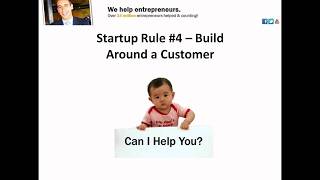
So we're talking about starting small, starting part-time, making sure that you take steps every day to move that business forward is going to be extremely important. You're much more likely to keep with it if you know that you're making a little bit of money, and it's more important to spend time every day doing the business than to spend, you know, a month full-time on the business and then quit because you're not making enough money to support yourself. So, you know, you have to let time for momentum to build, and that's going to come from spending time every day to move that business forward. And again, it should be something that you are excited and passionate about. You should come home wanting to do it. If you're not excited about it and you feel like it's work and it's, you know, boring, especially at the beginning, like, if you don't love it at the beginning, you're not going to love it. It's hard to grow into something like that. You've got to really love it right from the start. As it goes on, it may take its toll on you, but you gotta love it, especially at the beginning. And if you don't, then go back to exercise number 1, figure out a different business. It's not that you may not be the right fit for an entrepreneur, you just may not have the right idea. You should want to come home and work on your business. Alright, moving on. Another quick quote, John Johnson, creator of the Ebony magazines. "The secret of a big success is starting small and dreaming bigger and bigger dreams." And this is important. A lot of entrepreneurs have a huge vision for what they want to do, and that's great. And it's good to map out a lifestyle that you want. If you want to, you know, work 20 hours a week or live from an island or whatever it is that you want, that's great. But it's important to realize that that big dream starts with small steps and doing those small steps every day. So just because you're doing something small, it doesn't mean that you're not doing something important. Those small steps gather up, and if you take action every day, they become big, important steps. So start small and keep dreaming bigger and bigger dreams. Next thing is a quick launch plan. So if you are just starting your business, quick task is create something that you're going to do every day, and at least 15 minutes. I don't want to make it too onerous, and ideally you're able to spend a couple hours on some of these days, right? You won't get a lot done if you're only doing 15 minutes a day, but I want that to be a minimum. Like, if you can't spend 15 minutes a day, especially in your first month launching your business, it's going to be hard to make that a success. So what helps, at least I found, is if you sit down and plan out a list of things that you're going to do every day. So day 1, I'm going to do this, 2, do this, and then you check it off as you get them done. And just by having those checks going, it gives you momentum. It feels like you're doing something and you have a little bit of power behind you, some steam that's building up. So it's important. You don't want to miss a day. If you do the first 10 days and it's going really well, you don't want to miss that day 11. You want to get that 11th thing in, and the 12th thing, and the 13th thing. So the tasks may vary depending on what business you're in, and we can get into some of the specifics later or with the questions. But I think it's really important to have something that you create, and you can either have it on your desktop or print it off or put it on the wall and mark off what you're going to do every day and slowly start checking them off as you get them done. And that will start boosting your plan, and especially if you had a really hard day at work, it comes home and you can see what you've done and you know you're working towards this bigger dream. So I found that to be really helpful to keep me motivated. Keep you on track and keep you working every day. Startup rule number 4: Build around the customer. And this is another big mistake that a lot of entrepreneurs make. They think that they have a great idea, and so they start working in isolation of talking to the people who are going to end up buying whatever product or service that they have. And the best way to build a business is to start talking to your customers before you actually launch your company. You want to talk to the guys who are going to pay you, right? So talk to the people, find out what their challenges are, and build a solution around those challenges. And a quick example from my first company, and something what not to do, I hope you guys can learn from that. I had a biotech software company. I was 19 years old. And it was pretty complex stuff. Our software was being used by NASA and Johnson Johnson, being used to try to find cures for cancer. And of all the features that are in that software, the most complicated one was the ability to do undo, redo unlimited times. If you make a mistake, you can undo and you can go back. In Word or Excel, you can go back, I don't know, maybe 20 steps. In our software, you can go back all the way to the beginning. And we thought, wow, this is so great, people are going to love this feature. It turns out nobody cared. And we spent all this time developing this feature that nobody cared about because we did it in isolation without talking to our customers. And so you really want to make sure you're talking to your potential clients before you start building your product or service. Now luckily for us, we had enough in our software that people still wanted to buy it. It was still helpful and valuable for them, so we were still able to build a successful company, but we could have done a lot more if we didn't make those mistakes early on. So you guys have a great opportunity now here if you're just starting your business or thinking about it before you start spending money, because anybody can spend money, right? It's not hard to spend money. If I gave you $1 million, you can go spend $1 million in a million different ways, I'm sure. But not everybody can make money. And the making money comes from helping your customers solve their challenges. So start talking to your customers, start talking to people who are facing problems and offer a potential solution to them. I like starting with a service if you can over a product because there's very low cost to start it up and it gets you really close to the customer. So as much as you can, build around their specific problems and pain points and they will guide you and tell you what they want. You just listen to them and hopefully be able to really explode your business. So a couple of quick quotes. Ray Kroc is from McDonald's. If you work just for money, you'll never make it. But if you love what you're doing and you always put the customer first, success will be yours. So this also ties to that first point about passion. You know, again, if you're just doing it for the money, you're never going to make it, according to Ray Kroc. But it's important to love what you're doing. And the second part there is always put the customer first. So you're learning about your customer, figuring out what their problems are, and building an experience or a product or service specifically designed to help them solve whatever challenges that they're facing. Next one, Mark Cuban, owner of the Dallas Mavericks now and successful entrepreneur with Broadcast.com. It got acquired by Yahoo for billions of dollars. "I just tried to learn the technology better than anyone else and find the best way to help my customers." So he was going in against big competitors, and this is an opportunity for any entrepreneur. You know, what we don't have in money and resources, we have the ability to be flexible and to service our customers. If you look at any big company, the service usually sucks, right? You call in and you're put on hold and you can't get through to somebody and they're really slow and the products or services are delayed and nobody really has a lot of good things to say about most big companies. And that's where you as an entrepreneur have an opportunity. You can go up against these big guys by better listening to the customer and creating a solution that is exactly tailored to what they need, and then also providing awesome service, right? If people can call up and talk to a person or email and get a response really quickly and know that somebody is there listening to them and helping them, then they're more likely to buy more, tell their friends, you know, tell potential partners, spread the word, and that's your goal as an entrepreneur. The more you can get people to talk about you, it saves you a lot of time on sales and marketing, a lot of expenses as well. So as much as you can, know your business and then try to build a product or service that really tailors to your customers and the problems that they're facing.
More from Evan


How the Biggest Mistake in History Created A Trillion-Dollar Empire | Sergey Brin



9 Machiavelli Principles That Force People To Respect You | Machiavellian Philosophy



The First 10 Words That Instantly Ruin A Sales Conversation | Vanessa Van Edwards

The Top 1% Mindset Behind The First $5 Trillion Company | Jensen Huang (Nvidia)

